

10 Best Deadlift With Chains Alternatives
The Deadlift With Chains is done standing with a barbell. Ranked closest by our scoring: the Deficit Deadlift, the Stiff Leg Barbell Good Morning and Seated Good Mornings.
Updated Ranked by our 12-factor similarity model How it works
Original Exercise: Deadlift With Chains
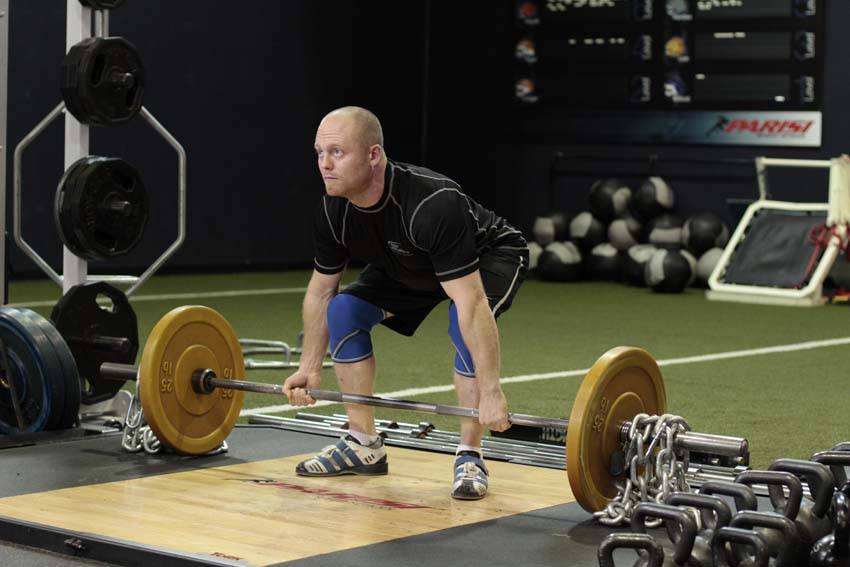
- Primary muscle
- Erector Spinae
- Equipment
- Barbell
- Difficulty
- Advanced
- Type
- Compound
Secondary muscles: Forearms, Glutes, Hamstrings, Middle Back, Quadriceps, Traps
How to perform Deadlift With Chains
- You can attach the chains to the sleeves of the bar, or just drape the middle over the bar so there is a greater weight increase as you lift.
- Approach the bar so that it is centered over your feet. You feet should be about hip width apart. Bend at the hip to grip the bar at shoulder width, allowing your shoulder blades to protract. Typically, you would use an overhand grip or an over/under grip on heavier sets. With your feet, and your grip set, take a big breath and then lower your hips and bend the knees until your shins contact the bar.
- Look forward with your head, keep your chest up and your back arched, and begin driving through the heels to move the weight upward. After the bar passes the knees, aggressively pull the bar back, pulling your shoulder blades together as you drive your hips forward into the bar.
- Lower the bar by bending at the hips and guiding it to the floor.
Ranked Deadlift With Chains Alternatives
10 substitutes, ranked by how closely each one matches the Deadlift With Chains on movement pattern, muscles worked, equipment and body position. The higher the score, the less you change. Open "How to perform this exercise" on a card for the steps; every card title links to that exercise's own alternatives page.
Best match 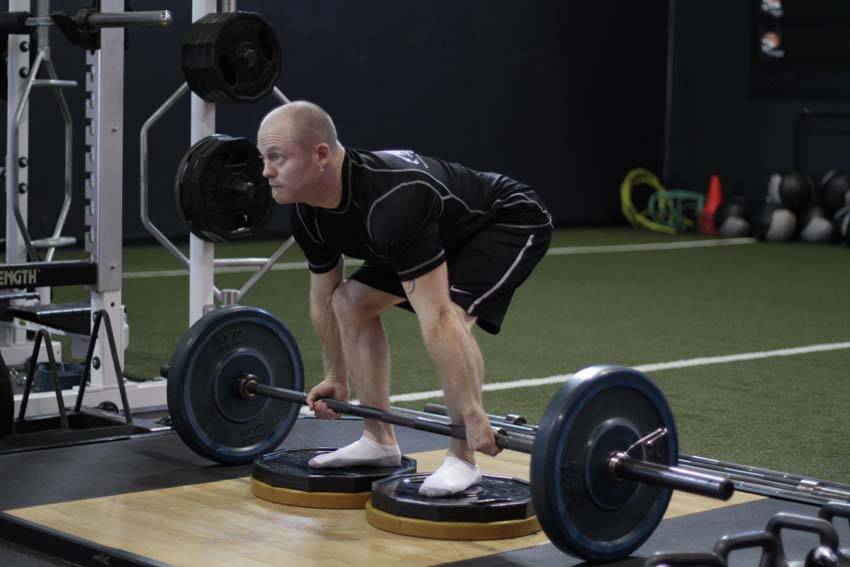
1. Deficit Deadlift
99% match- Erector Spinae
- Barbell
- Advanced
- Compound
It uses the same equipment and still works the erector spinae.
How to perform this exercise
- Begin by having a platform or weight plates that you can stand on, usually 1-3 inches in height. Approach the bar so that it is centered over your feet. You feet should be about hip width apart. Bend at the hip to grip the bar at shoulder width, allowing your shoulder blades to protract. Typically, you would use an overhand grip or an over/under grip on heavier sets.
- With your feet, and your grip set, take a big breath and then lower your hips and bend the knees until your shins contact the bar. Look forward with your head, keep your chest up and your back arched, and begin driving through the heels to move the weight upward. After the bar passes the knees, aggressively pull the bar back, pulling your shoulder blades together as you drive your hips forward into the bar.
- Lower the bar by bending at the hips and guiding it to the floor.
Sets and reps: 3 to 5 sets of 5 to 8 reps.
Why this matches
- Movement: deadlift hinge, the same as the Deadlift With Chains
- Primary muscle: erector spinae, the same as the Deadlift With Chains
- Equipment: free weights, the same as the Deadlift With Chains
- Body position: standing, the same as the Deadlift With Chains
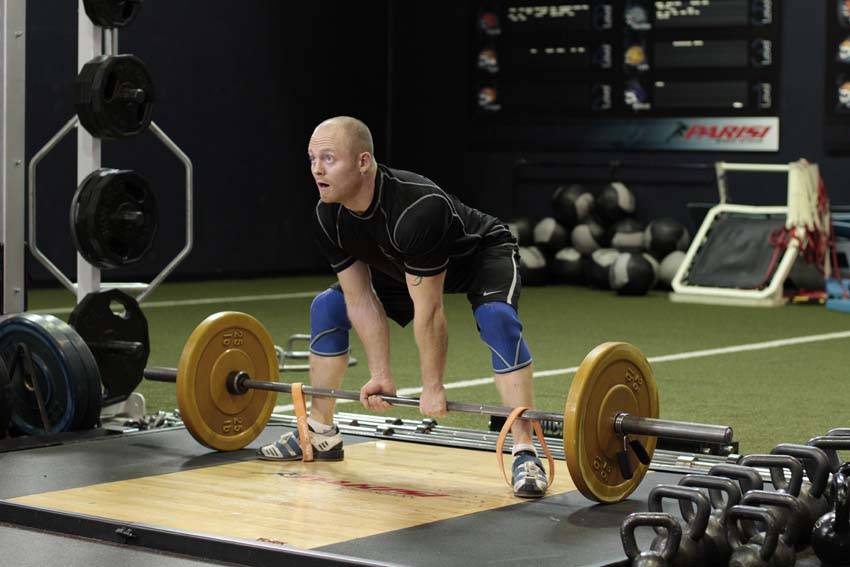
2. Sumo Deadlift With Bands
85% match- Hamstrings
- Barbell
- Advanced
- Compound
A looser match: it uses the same equipment, but it works the hamstrings rather than the erector spinae.
How to perform this exercise
- To deadlift with short bands, simply loop them over the bar before you start, and step into them to set up. Ensure that they under the back half of your foot, directly where you are driving into the floor.
- Begin with a bar loaded on the ground. Approach the bar so that the bar intersects the middle of the feet. The feet should be set very wide, near the collars. Bend at the hips to grip the bar. The arms should be directly below the shoulders, inside the legs, and you can use a pronated grip, a mixed grip, or hook grip.
- Take a breath, and then lower your hips, looking forward with your head with your chest up. Drive through the floor, spreading your feet apart, with your weight on the back half of your feet. Extend through the hips and knees.
- As the bar passes through the knees, lean back and drive the hips into the bar, pulling your shoulder blades together.
- Return the weight to the ground by bending at the hips and controlling the weight on the way down.
Sets and reps: 3 to 5 sets of 5 to 8 reps.
Why this matches
- Movement: deadlift hinge, the same as the Deadlift With Chains
- Primary muscle: hamstrings, not erector spinae
- Equipment: free weights, the same as the Deadlift With Chains
- Body position: standing, the same as the Deadlift With Chains
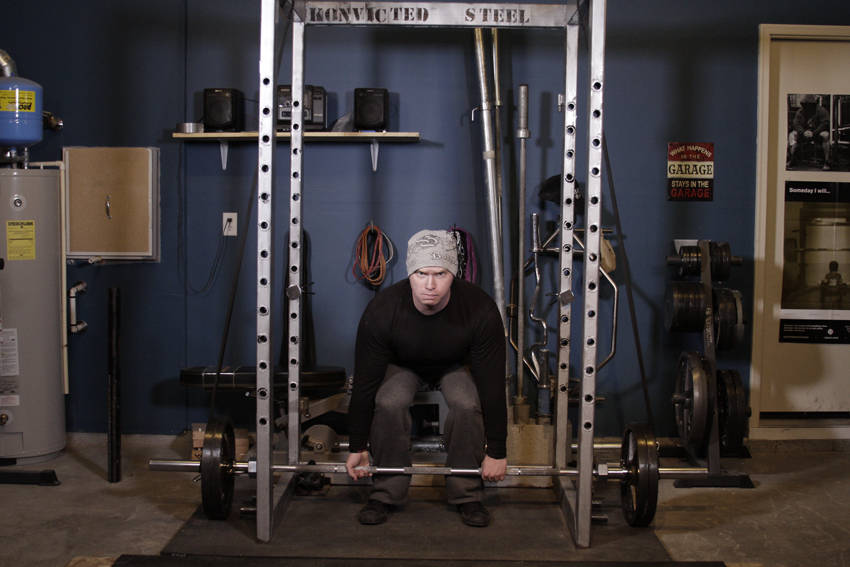
3. Reverse Band Deadlift
84% match- Hamstrings
- Barbell
- Advanced
- Compound
How to perform this exercise
- Set the bar up in a power rack. Attach bands to the top of the rack, using either bands pegs or the frame itself. Attach the other end of the bands to the bar.
- Approach the bar so that it is centered over your feet. You feet should be about hip width apart. Bend at the hip to grip the bar at shoulder width, allowing your shoulder blades to protract. Typically, you would use an overhand grip or an over/under grip on heavier sets.
- With your feet, and your grip set, take a big breath and then lower your hips and bend the knees until your shins contact the bar. Look forward with your head, keep your chest up and your back arched, and begin driving through the heels to move the weight upward.
- After the bar passes the knees, aggressively pull the bar back, pulling your shoulder blades together as you drive your hips forward into the bar.
- Lower the bar by bending at the hips and guiding it to the floor.
Sets and reps: 3 to 5 sets of 5 to 8 reps.
Why this matches
- Movement: deadlift hinge, the same as the Deadlift With Chains
- Primary muscle: hamstrings, not erector spinae
- Equipment: free weights, the same as the Deadlift With Chains
- Body position: standing, the same as the Deadlift With Chains
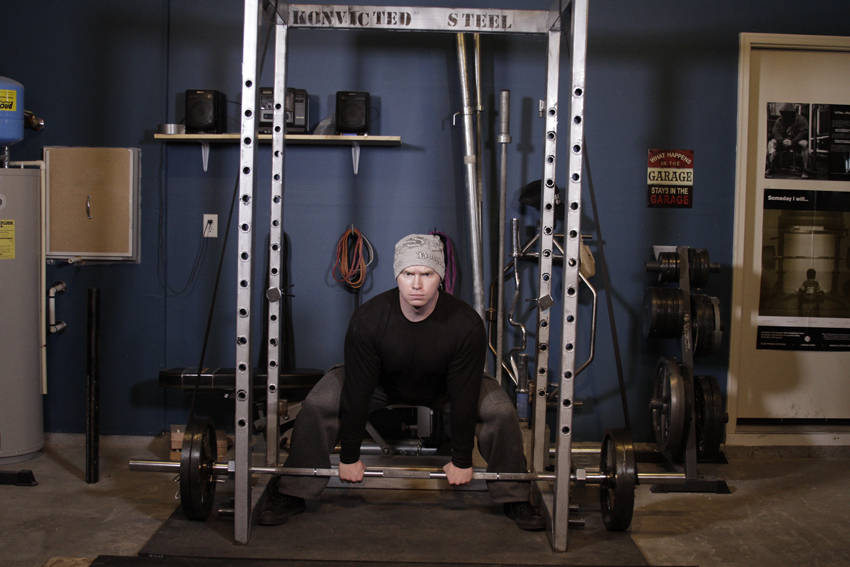
4. Reverse Band Sumo Deadlift
84% match- Hamstrings
- Barbell
- Advanced
- Compound
How to perform this exercise
- Begin with a bar loaded on the floor inside of a power rack. Attach bands to the top of the rack, using either pegs or the frame itself. Attach the other end to the barbell.
- Approach the bar so that the bar intersects the middle of the feet. The feet should be set very wide, near the collars. Bend at the hips to grip the bar. The arms should be directly below the shoulders, inside the legs, and you can use a pronated grip, a mixed grip, or hook grip. Relax the shoulders, which in effect lengthens your arms.
- Take a breath, and then lower your hips, looking forward with your head with your chest up. Drive through the floor, spreading your feet apart, with your weight on the back half of your feet. Extend through the hips and knees.
- As the bar passes through the knees, lean back and drive the hips into the bar, pulling your shoulder blades together.
- Return the weight to the ground by bending at the hips and controlling the weight on the way down.
Sets and reps: 3 to 5 sets of 5 to 8 reps.
Why this matches
- Movement: deadlift hinge, the same as the Deadlift With Chains
- Primary muscle: hamstrings, not erector spinae
- Equipment: free weights, the same as the Deadlift With Chains
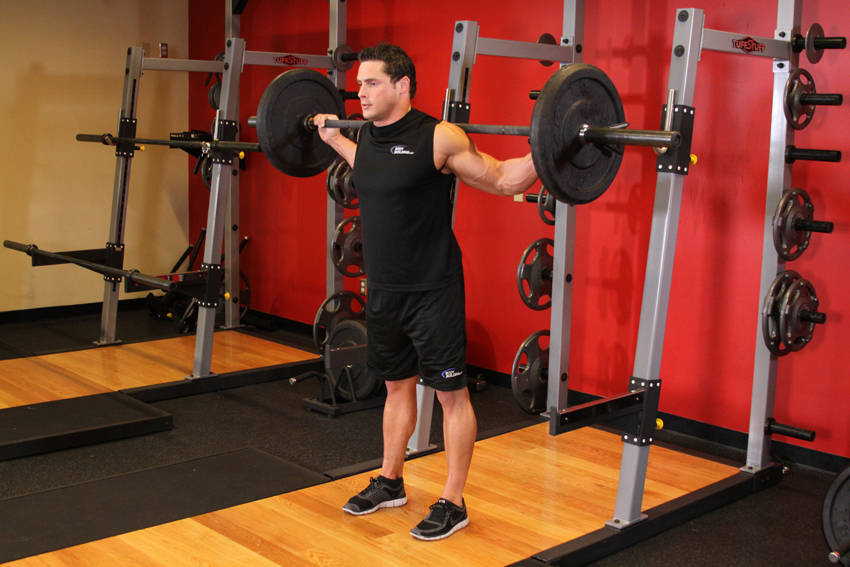
5. Stiff Leg Barbell Good Morning
82% match- Erector Spinae
- Barbell
- Advanced
- Compound
How to perform this exercise
- This exercise is best performed inside a squat rack for safety purposes. To begin, first set the bar on a rack that best matches your height. Once the correct height is chosen and the bar is loaded, step under the bar and place the back of your shoulders (slightly below the neck) across it.
- Hold on to the bar using both arms at each side and lift it off the rack by first pushing with your legs and at the same time straightening your torso.
- Step away from the rack and position your legs using a shoulder width medium stance. Keep your head up at all times as looking down will get you off balance and also maintain a straight back. This will be your starting position.
- Keeping your legs stationary, move your torso forward by bending at the hips while inhaling. Lower your torso until it is parallel with the floor.
- Begin to raise the bar as you exhale by elevating your torso back to the starting position.
- Repeat for the recommended amount of repetitions.
Sets and reps: 3 to 5 sets of 5 to 8 reps.
Why this matches
- Primary muscle: erector spinae, the same as the Deadlift With Chains
- Equipment: free weights, the same as the Deadlift With Chains
- Body position: standing, the same as the Deadlift With Chains
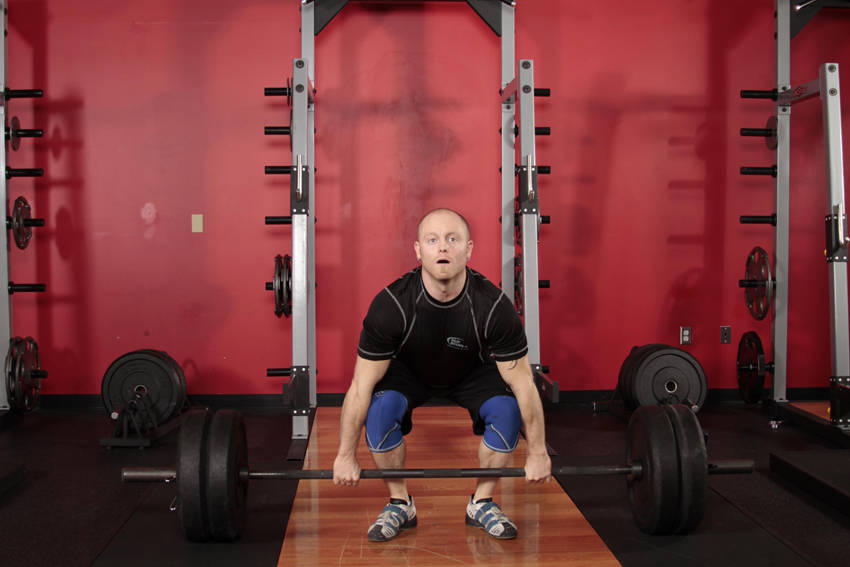
6. Clean Deadlift
80% match- Hamstrings
- Barbell
- Intermediate
- Compound
How to perform this exercise
- Begin standing with a barbell close to your shins. Your feet should be directly under your hips with your feet turned out slightly. Grip the bar with a double overhand grip or hook grip, about shoulder width apart. Squat down to the bar. Your spine should be in full extension, with a back angle that places your shoulders in front of the bar and your back as vertical as possible.
- Begin by driving through the floor through the front of your heels. As the bar travels upward, maintain a constant back angle. Flare your knees out to the side to help keep them out of the bar's path.
- After the bar crosses the knees, complete the lift by driving the hips into the bar until your hips and knees are extended.
Sets and reps: 3 or 4 sets of 6 to 10 reps.
Why this matches
- Movement: deadlift hinge, the same as the Deadlift With Chains
- Primary muscle: hamstrings, not erector spinae
- Equipment: free weights, the same as the Deadlift With Chains
- Body position: standing, the same as the Deadlift With Chains
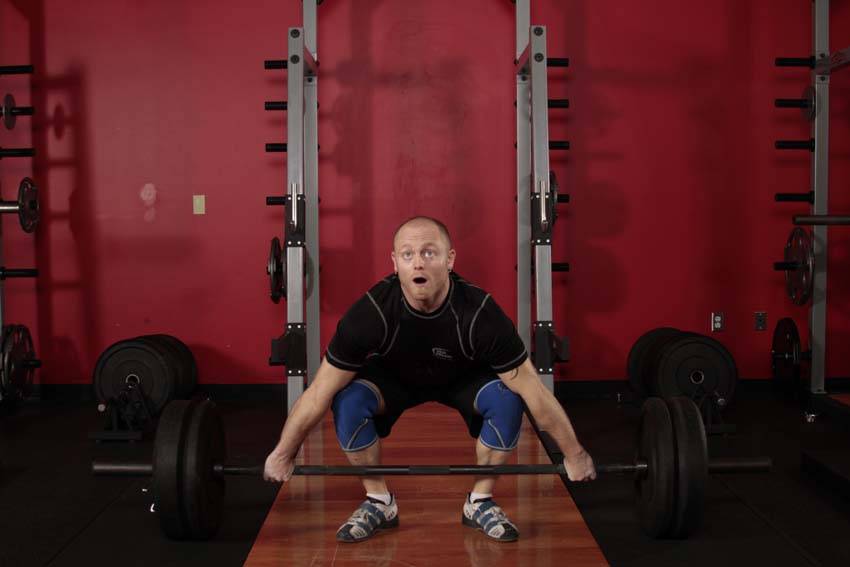
7. Snatch Deadlift
80% match- Hamstrings
- Barbell
- Advanced
- Compound
How to perform this exercise
- The snatch deadlift strengthens the first pull of the snatch. Begin with a wide snatch grip with the barbell placed on the platform. The feet should be directly under the hips, with the feet turned out. Squat down to the bar, keeping the back in absolute extension with the head facing forward.
- Initiate the movement by driving through the heels, raising the hips. The back angle should remain the same until the bar passes the knees.
- At that point, drive your hips through the bar as you lay back. Return the bar to the platform by reversing the motion.
Sets and reps: 3 to 5 sets of 5 to 8 reps.
Why this matches
- Movement: deadlift hinge, the same as the Deadlift With Chains
- Primary muscle: hamstrings, not erector spinae
- Equipment: free weights, the same as the Deadlift With Chains
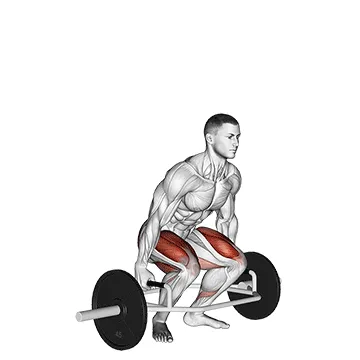
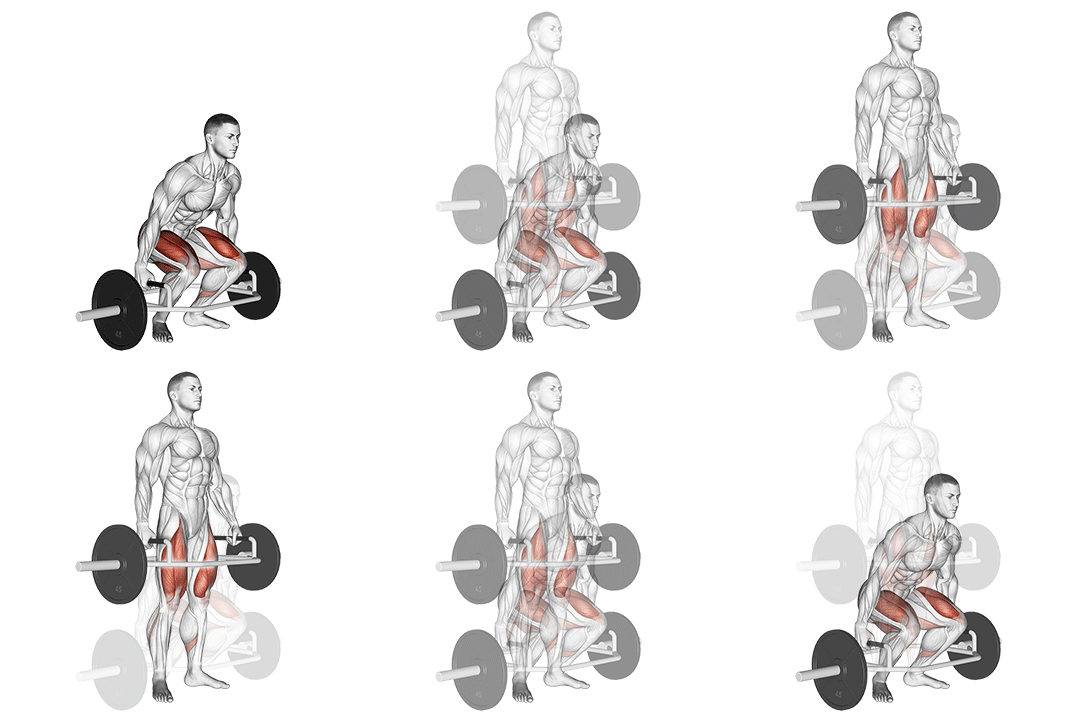
8. Trap Bar Deadlift
79% match- Glutes
- Trap-bar
- Intermediate
- Compound
How to perform this exercise
- Stand with your feet shoulder-width apart and the trap bar on the ground in front of you.
- Bend at the hips and knees to lower yourself down and grip the handles of the trap bar with an overhand grip.
- Keep your back straight and chest up as you begin to lift the trap bar off the ground by extending your hips and knees.
- As you lift, focus on driving through your heels and squeezing your glutes at the top of the movement.
- Lower the trap bar back down to the ground by bending at the hips and knees, keeping your back straight throughout the movement.
- Repeat for the desired number of repetitions.
Sets and reps: 3 or 4 sets of 6 to 10 reps.
Why this matches
- Movement: deadlift hinge, the same as the Deadlift With Chains
- Primary muscle: glutes, not erector spinae
- Equipment: free weights, the same as the Deadlift With Chains
- Body position: standing, the same as the Deadlift With Chains
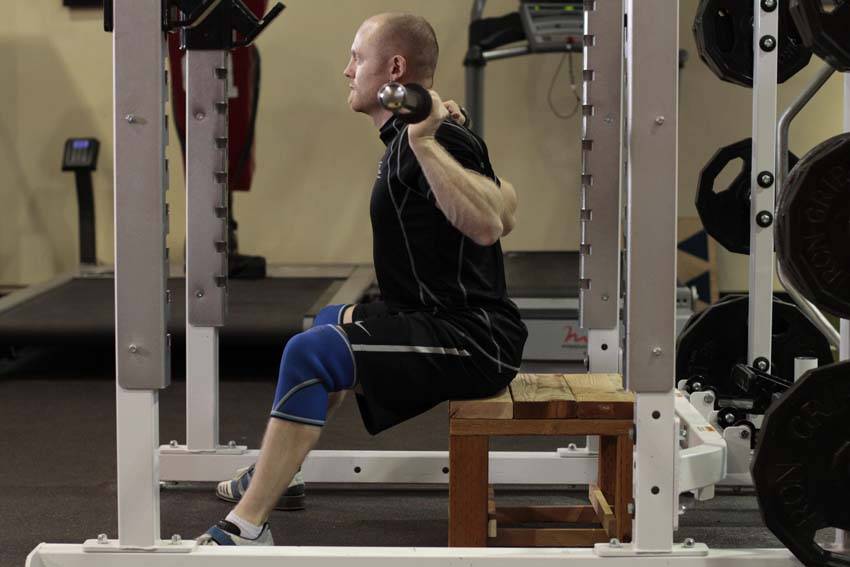
9. Seated Good Mornings
77% match- Erector Spinae
- Barbell
- Advanced
- Compound
How to perform this exercise
- Set up a box in a power rack. The pins should be set at an appropriate height. Begin by stepping under the bar and placing it across the back of the shoulders, not on top of your traps. Squeeze your shoulder blades together and rotate your elbows forward, attempting to bend the bar across your shoulders.
- Remove the bar from the rack, creating a tight arch in your lower back. Keep your head facing forward. With your back, shoulders, and core tight, push your knees and butt out and you begin your descent. Sit back with your hips until you are seated on the box. This will be your starting position.
- Keeping the bar tight, bend forward at the hips as much as possible. If you set the pins to what would be parallel, you not only have a safety if you fail, but know when to stop.
- Pause just above the pins and reverse the motion until your torso it upright.
Sets and reps: 3 to 5 sets of 5 to 8 reps.
Why this matches
- Primary muscle: erector spinae, the same as the Deadlift With Chains
- Equipment: free weights, the same as the Deadlift With Chains
- Body position: seated, not standing
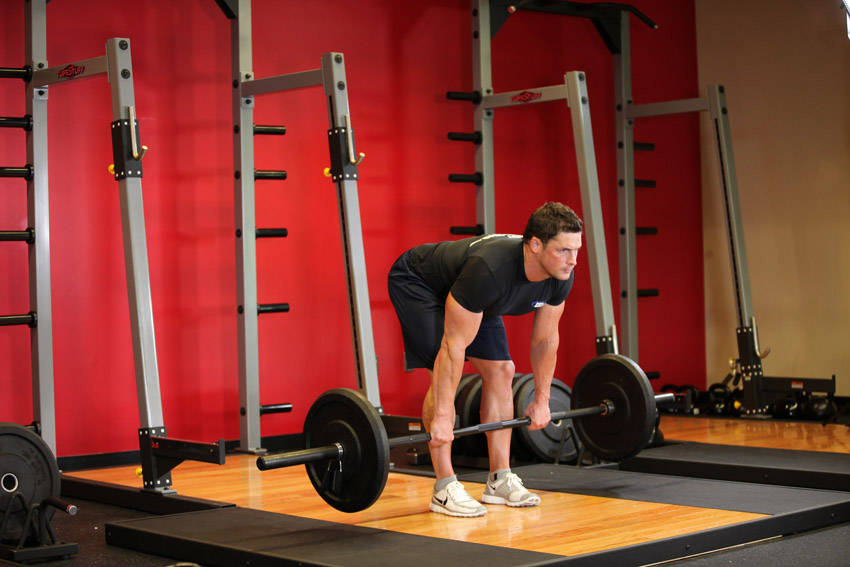
10. Stiff-legged Barbell Deadlift
76% match- Hamstrings
- Barbell
- Intermediate
- Compound
How to perform this exercise
- Grasp a bar using an overhand grip (palms facing down). You may need some wrist wraps if using a significant amount of weight.
- Stand with your torso straight and your legs spaced using a shoulder width or narrower stance. The knees should be slightly bent. This is your starting position.
- Keeping the knees stationary, lower the barbell to over the top of your feet by bending at the hips while keeping your back straight. Keep moving forward as if you were going to pick something from the floor until you feel a stretch on the hamstrings. Inhale as you perform this movement.
- Start bringing your torso up straight again by extending your hips until you are back at the starting position. Exhale as you perform this movement.
- Repeat for the recommended amount of repetitions.
Sets and reps: 3 or 4 sets of 6 to 10 reps.
Why this matches
- Primary muscle: hamstrings, not erector spinae
- Equipment: free weights, the same as the Deadlift With Chains
- Body position: standing, the same as the Deadlift With Chains
Deadlift With Chains FAQ
What muscles does Deadlift With Chains work?
Deadlift With Chains primarily targets the erector spinae along with the glutes and hamstrings as prime movers. The lats and core act as stabilizers to maintain a neutral spine, and the chains change the load curve so the erectors face heavier resistance through lockout.
Find Alternatives for Any Exercise
Search the exercise database and filter the ranked substitutes by the equipment you own.
Similarity scores compare exercise metadata such as movement pattern, muscles, equipment and body position. They are not a safety rating or a check that you own the equipment. Learn about our methodology