

10 Best Hyperextensions With No Hyperextension Bench Alternatives for Home
Hyperextensions With No Hyperextension Bench are done lying face down. Ranked closest by our scoring: Seated Good Mornings and the Stiff Leg Barbell Good Morning.
Updated Ranked by our 12-factor similarity model How it works
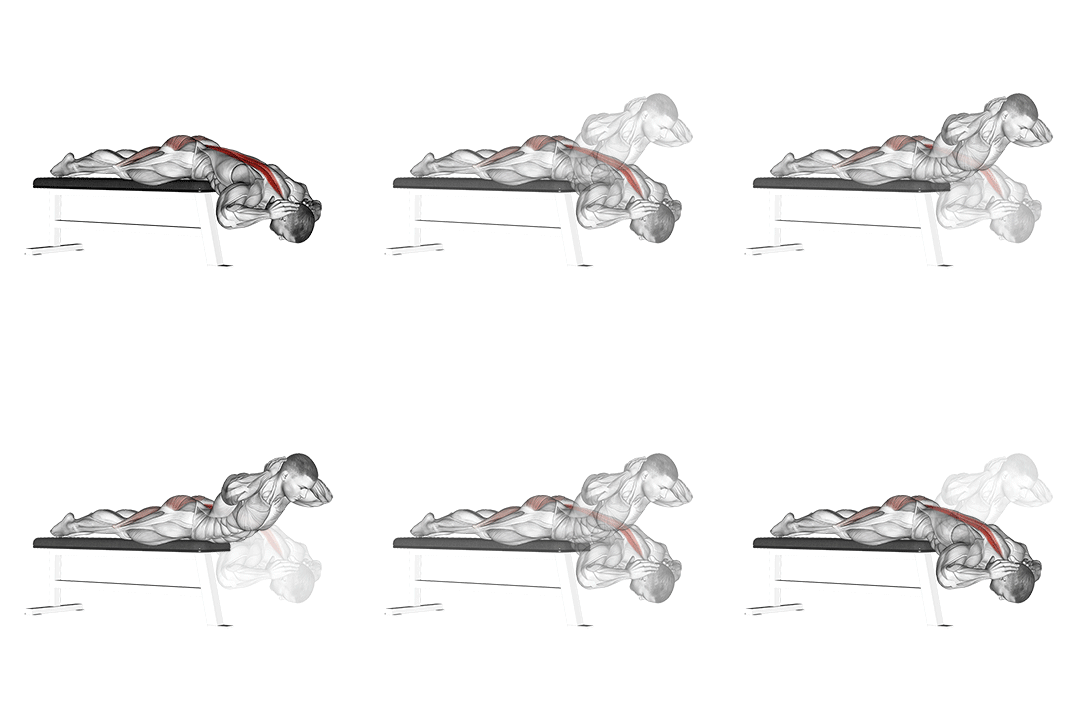
Original Exercise: Hyperextensions With No Hyperextension Bench
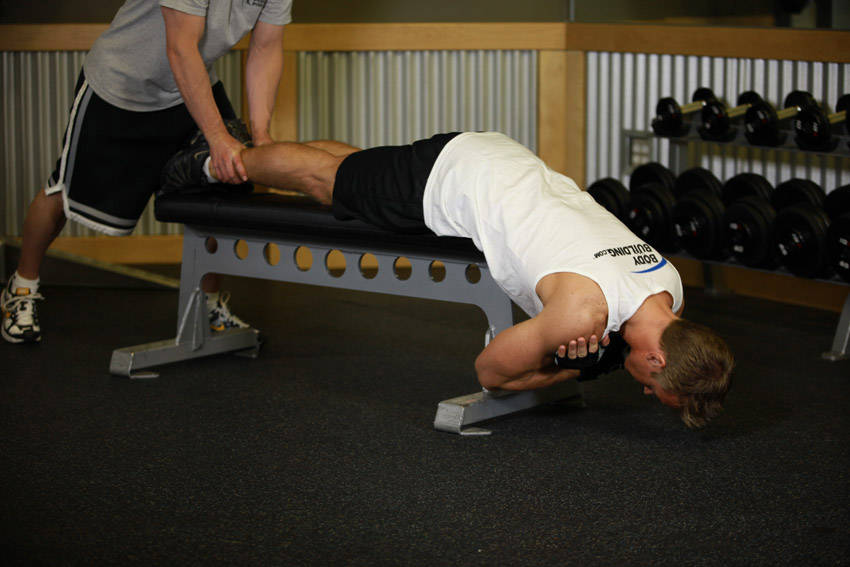
- Primary muscle
- Erector Spinae
- Equipment
- Bodyweight
- Difficulty
- Intermediate
- Type
- Compound
Secondary muscles: Glutes, Hamstrings
How to perform Hyperextensions With No Hyperextension Bench
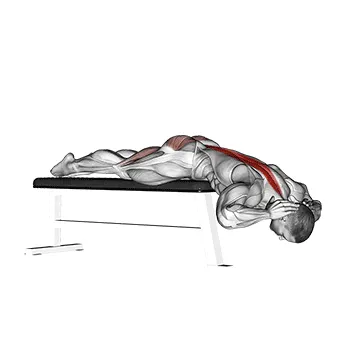
- With someone holding down your legs, slide yourself down to the edge a flat bench until your hips hang off the end of the bench. Tip: Your entire upper body should be hanging down towards the floor. Also, you will be in the same position as if you were on a hyperextension bench but the range of motion will be shorter due to the height of the flat bench vs. that of the hyperextension bench.
- With your body straight, cross your arms in front of you (my preference) or behind your head. This will be your starting position. Tip: You can also hold a weight plate for extra resistance in front of you under your crossed arms.
- Start bending forward slowly at the waist as far as you can while keeping your back flat. Inhale as you perform this movement. Keep moving forward until you almost touch the floor or you feel a nice stretch on the hamstrings (whichever comes first). Tip: Never round the back as you perform this exercise.
- Slowly raise your torso back to the initial position as you exhale. Tip: Avoid the temptation to arch your back past a straight line. Also, do not swing the torso at any time in order to protect the back from injury.
- Repeat for the recommended amount of repetitions.
Ranked Hyperextensions With No Hyperextension Bench Alternatives
10 substitutes, ranked by how closely each one matches Hyperextensions With No Hyperextension Bench on movement pattern, muscles worked, equipment and body position. The higher the score, the less you change. Open "How to perform this exercise" on a card for the steps; every card title links to that exercise's own alternatives page.
1. Hyperextensions (Back Extensions)
83% match- Lower Back
- Other
- Intermediate
- Compound
A looser match: it works the lower back rather than the erector spinae.
How to perform this exercise
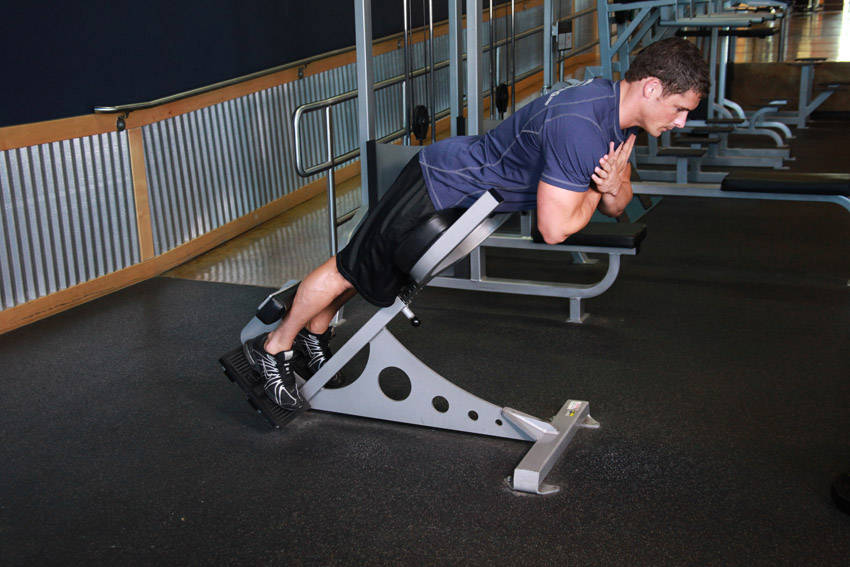
- Lie face down on a hyperextension bench, tucking your ankles securely under the footpads.
- Adjust the upper pad if possible so your upper thighs lie flat across the wide pad, leaving enough room for you to bend at the waist without any restriction.
- With your body straight, cross your arms in front of you (my preference) or behind your head. This will be your starting position. Tip: You can also hold a weight plate for extra resistance in front of you under your crossed arms.
- Start bending forward slowly at the waist as far as you can while keeping your back flat. Inhale as you perform this movement. Keep moving forward until you feel a nice stretch on the hamstrings and you can no longer keep going without a rounding of the back. Tip: Never round the back as you perform this exercise. Also, some people can go farther than others. The key thing is that you go as far as your body allows you to without rounding the back.
- Slowly raise your torso back to the initial position as you inhale. Tip: Avoid the temptation to arch your back past a straight line. Also, do not swing the torso at any time in order to protect the back from injury.
- Repeat for the recommended amount of repetitions.
Sets and reps: 3 or 4 sets of 6 to 10 reps.
Why this matches
- Primary muscle: lower back, not erector spinae
- Equipment: bodyweight only, the same as Hyperextensions With No Hyperextension Bench
- Body position: lying face down, the same as Hyperextensions With No Hyperextension Bench
- Spine
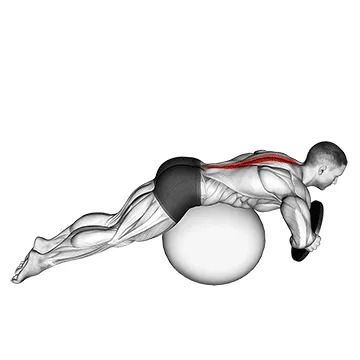
- Stability-ball
- Beginner
- Compound
A looser match: it works the spinal erectors rather than the erector spinae.
How to perform this exercise
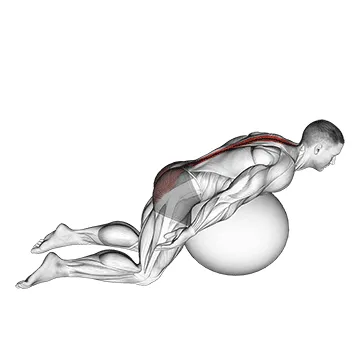
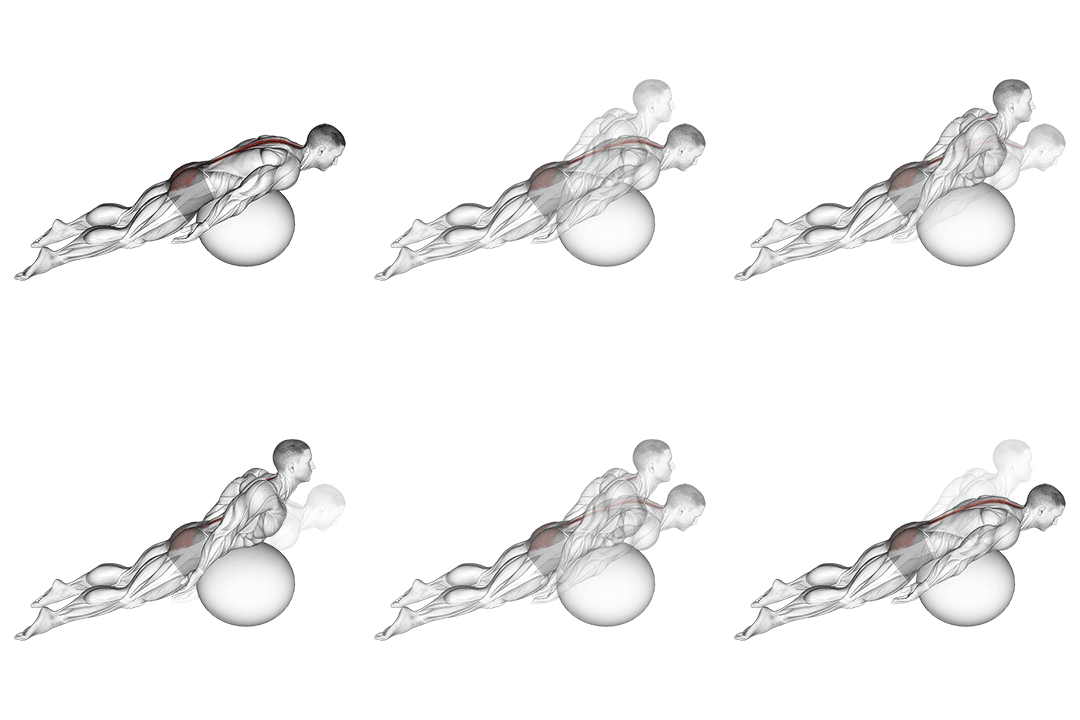
- Place the stability ball on the ground and lie face down on top of it, with your hips resting on the ball and your feet against a wall for stability.
- Extend your arms straight out in front of you, with your palms facing down.
- Engage your core and slowly lift your upper body off the ball, keeping your back straight and your neck in line with your spine.
- Pause for a moment at the top, then slowly lower your upper body back down to the starting position.
- Repeat for the desired number of repetitions.
Sets and reps: 3 sets of 8 to 12 reps, and add reps before you add load.
Why this matches
- Primary muscle: spine, not erector spinae
- Equipment: bodyweight only, the same as Hyperextensions With No Hyperextension Bench
- Body position: lying face down, the same as Hyperextensions With No Hyperextension Bench
- Spine
- Stability-ball
- Beginner
- Compound
How to perform this exercise
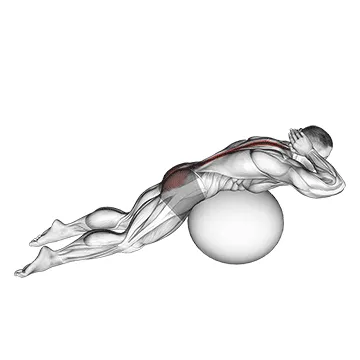
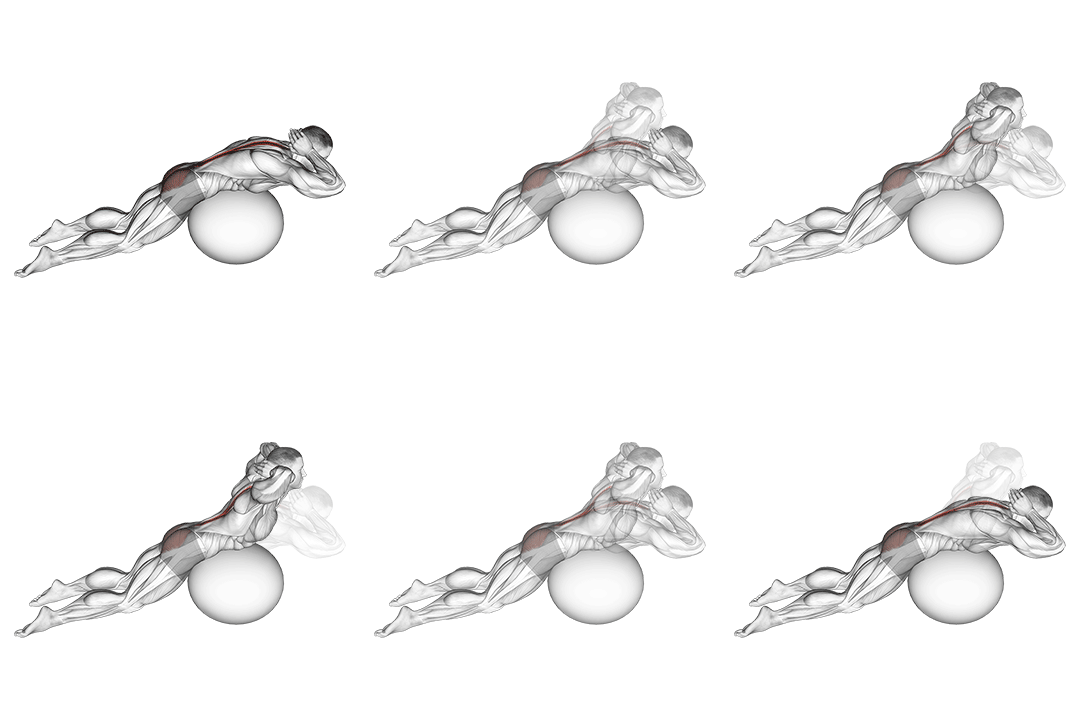
- Place the stability ball on the ground and lie face down on top of it with your hips resting on the ball.
- Position your feet against a wall or other stable surface for support.
- Cross your arms behind your head, with your hands touching the back of your head.
- Engage your core and slowly lift your upper body off the ball, extending your back until your body forms a straight line from your head to your hips.
- Pause for a moment at the top of the movement, then slowly lower your upper body back down to the starting position.
- Repeat for the desired number of repetitions.
Sets and reps: 3 sets of 8 to 12 reps, and add reps before you add load.
Why this matches
- Primary muscle: spine, not erector spinae
- Equipment: bodyweight only, the same as Hyperextensions With No Hyperextension Bench
- Body position: lying face down, the same as Hyperextensions With No Hyperextension Bench
- Spine
- Stability-ball
- Intermediate
- Compound
How to perform this exercise
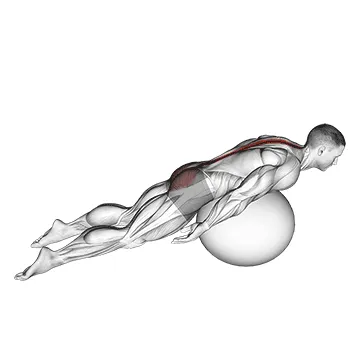
- Place the stability ball on the ground and lie face down on top of it, with your hips resting on the ball and your feet against a wall for stability.
- Position your hands behind your head or crossed over your chest.
- Engage your core and slowly lift your upper body off the ball, extending your back until your body forms a straight line from your head to your heels.
- Pause for a moment at the top, then slowly lower your upper body back down to the starting position.
- Repeat for the desired number of repetitions.
Sets and reps: 3 or 4 sets of 6 to 10 reps.
Why this matches
- Primary muscle: spine, not erector spinae
- Equipment: bodyweight only, the same as Hyperextensions With No Hyperextension Bench
- Body position: lying face down, the same as Hyperextensions With No Hyperextension Bench
Best match 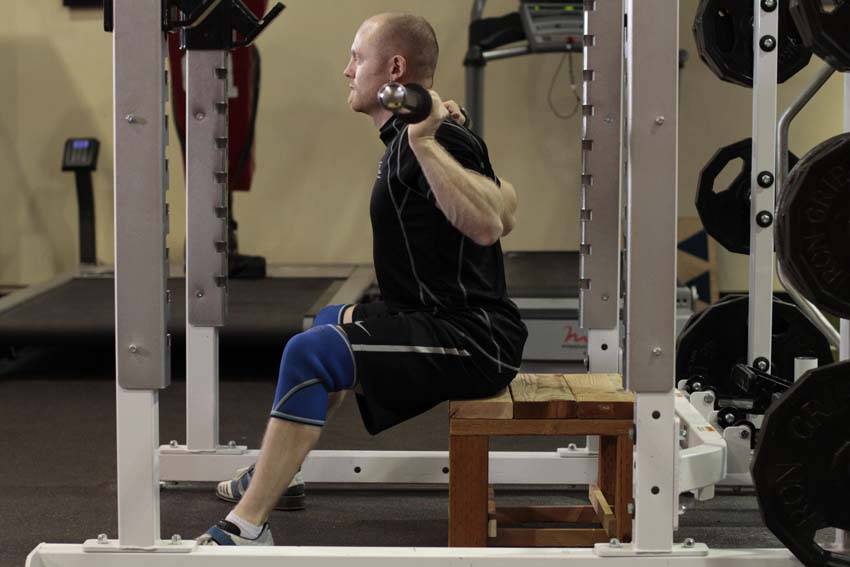
5. Seated Good Mornings
66% match- Erector Spinae
- Barbell
- Advanced
- Compound
A good swap when you have a barbell to work with, and it still works the erector spinae.
How to perform this exercise
- Set up a box in a power rack. The pins should be set at an appropriate height. Begin by stepping under the bar and placing it across the back of the shoulders, not on top of your traps. Squeeze your shoulder blades together and rotate your elbows forward, attempting to bend the bar across your shoulders.
- Remove the bar from the rack, creating a tight arch in your lower back. Keep your head facing forward. With your back, shoulders, and core tight, push your knees and butt out and you begin your descent. Sit back with your hips until you are seated on the box. This will be your starting position.
- Keeping the bar tight, bend forward at the hips as much as possible. If you set the pins to what would be parallel, you not only have a safety if you fail, but know when to stop.
- Pause just above the pins and reverse the motion until your torso it upright.
Sets and reps: 3 to 5 sets of 5 to 8 reps.
Why this matches
- Primary muscle: erector spinae, the same as Hyperextensions With No Hyperextension Bench
- Equipment: free weights, not bodyweight only
- Body position: seated, not lying face down
- Spine
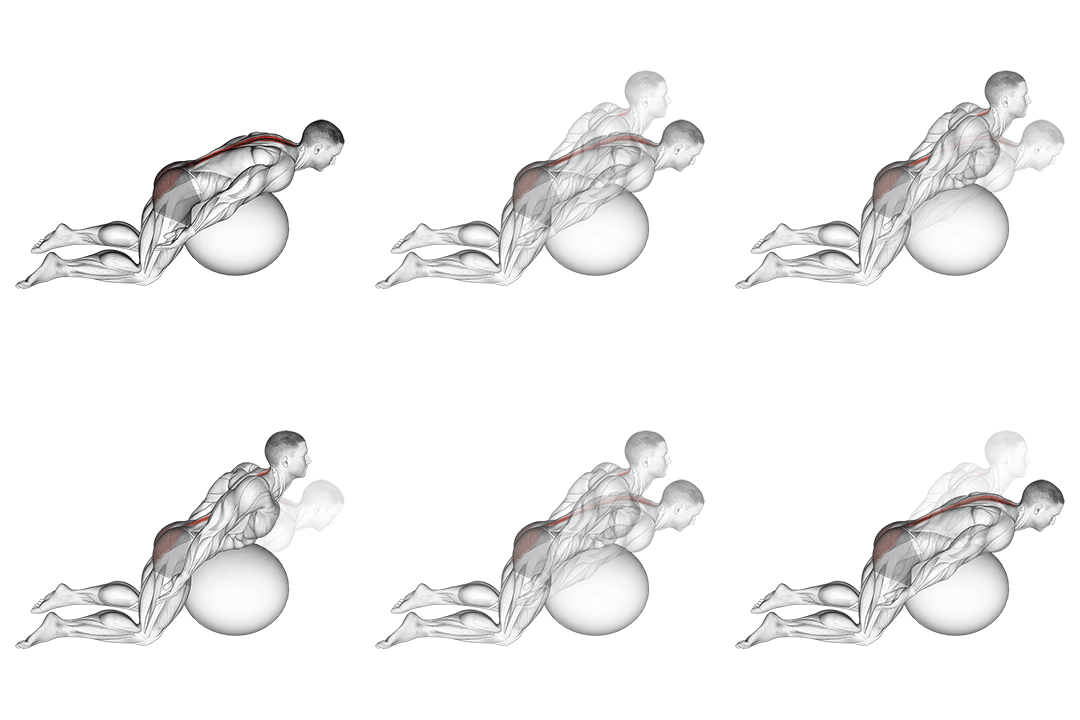
- Stability-ball
- Intermediate
- Isolation
How to perform this exercise
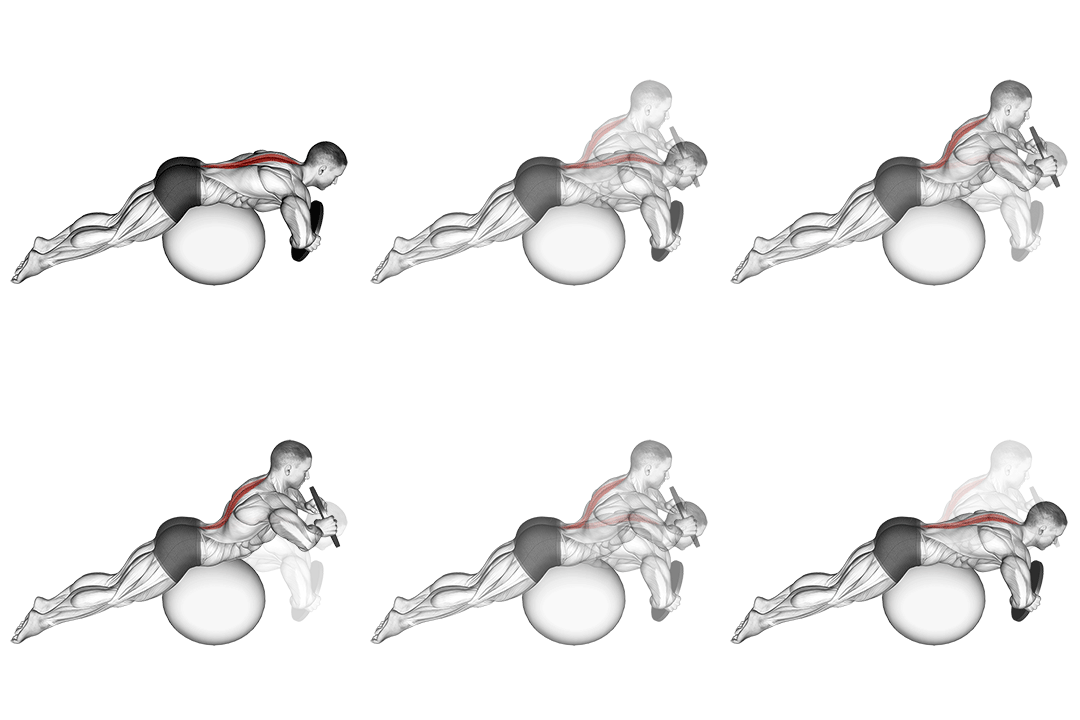
- Position yourself face down on a stability ball with your hips resting on the ball and your feet against a wall for stability.
- Place your hands behind your head or cross them over your chest.
- Engage your core and slowly lift your upper body off the ball, extending your back until your body forms a straight line.
- Pause for a moment at the top, then slowly lower your upper body back down to the starting position.
- Repeat for the desired number of repetitions.
Sets and reps: 3 sets of 10 to 15 reps.
Why this matches
- Primary muscle: spine, not erector spinae
- Body position: lying face down, the same as Hyperextensions With No Hyperextension Bench
7. Stiff Leg Barbell Good Morning
63% match- Erector Spinae
- Barbell
- Advanced
- Compound
How to perform this exercise
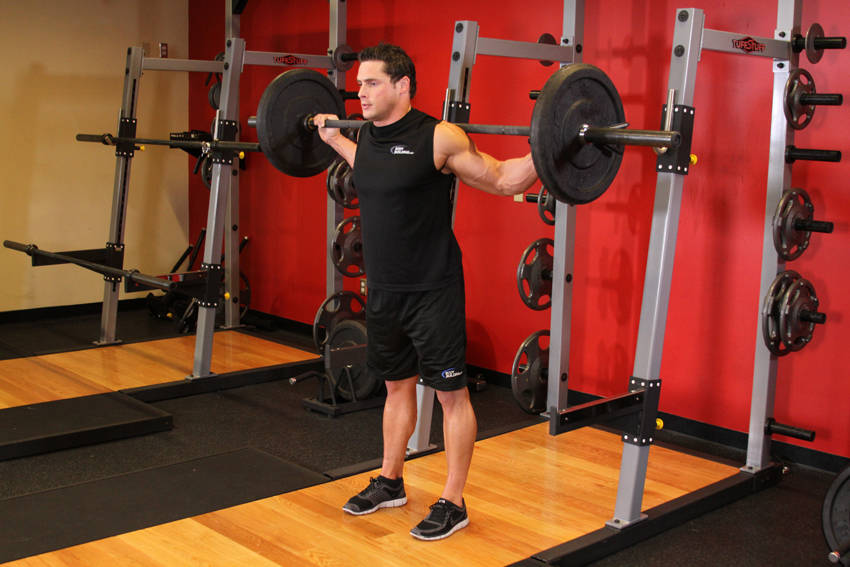
- This exercise is best performed inside a squat rack for safety purposes. To begin, first set the bar on a rack that best matches your height. Once the correct height is chosen and the bar is loaded, step under the bar and place the back of your shoulders (slightly below the neck) across it.
- Hold on to the bar using both arms at each side and lift it off the rack by first pushing with your legs and at the same time straightening your torso.
- Step away from the rack and position your legs using a shoulder width medium stance. Keep your head up at all times as looking down will get you off balance and also maintain a straight back. This will be your starting position.
- Keeping your legs stationary, move your torso forward by bending at the hips while inhaling. Lower your torso until it is parallel with the floor.
- Begin to raise the bar as you exhale by elevating your torso back to the starting position.
- Repeat for the recommended amount of repetitions.
Sets and reps: 3 to 5 sets of 5 to 8 reps.
Why this matches
- Primary muscle: erector spinae, the same as Hyperextensions With No Hyperextension Bench
- Equipment: free weights, not bodyweight only
- Body position: standing, not lying face down
8. Hyperextension
62% match- Spine
- Bodyweight
- Intermediate
- Compound
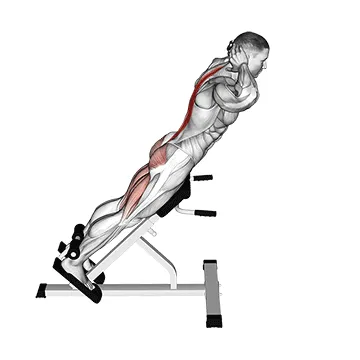
How to perform this exercise
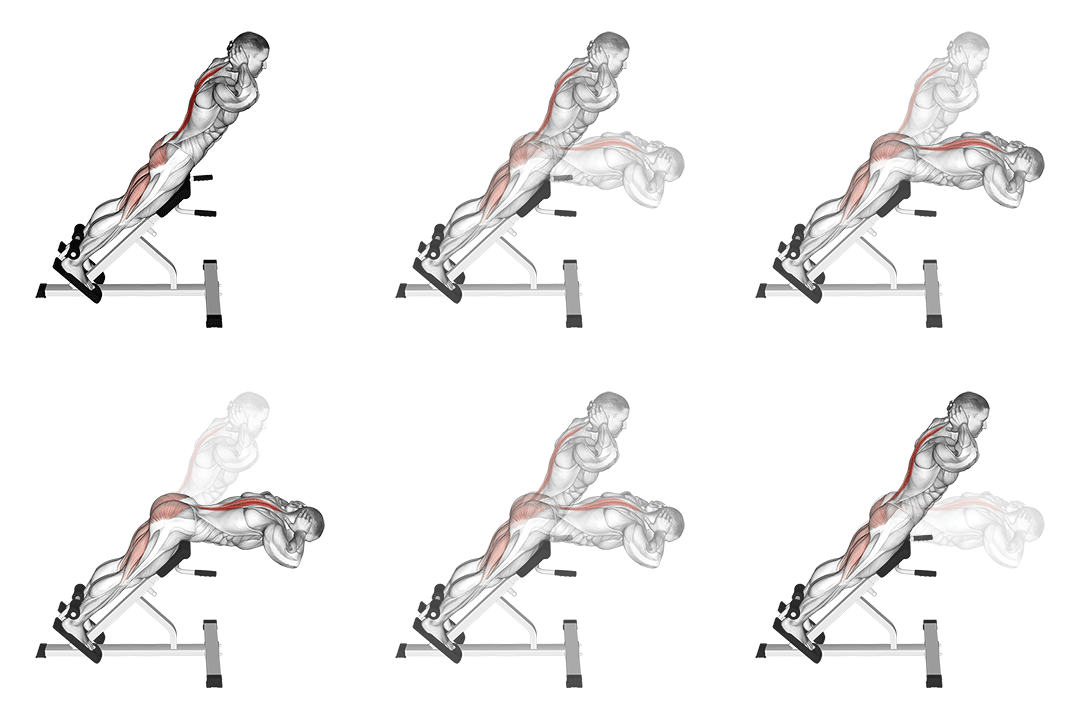
- Adjust the hyperextension bench so that your upper thighs are resting on the pad and your feet are secured.
- Cross your arms over your chest or place your hands behind your head.
- Lower your upper body towards the ground while keeping your back straight.
- Pause for a moment at the bottom, then raise your upper body back up until it is in line with your legs.
- Repeat for the desired number of repetitions.
Sets and reps: 3 or 4 sets of 6 to 10 reps.
Why this matches
- Primary muscle: spine, not erector spinae
- Equipment: bodyweight only, the same as Hyperextensions With No Hyperextension Bench
- Body position: lying face down, the same as Hyperextensions With No Hyperextension Bench
- Balance: easier to stay steady on than Hyperextensions With No Hyperextension Bench
9. Hyperextension (On Bench)
62% match- Spine
- Bodyweight
- Intermediate
- Compound
How to perform this exercise
- Adjust the hyperextension bench so that your hips are resting comfortably on the pad and your feet are secured.
- Cross your arms over your chest or place your hands behind your head.
- Slowly lower your upper body towards the ground while keeping your back straight.
- Pause for a moment at the bottom, then raise your upper body back up until it is in line with your legs.
- Repeat for the desired number of repetitions.
Sets and reps: 3 or 4 sets of 6 to 10 reps.
Why this matches
- Primary muscle: spine, not erector spinae
- Equipment: bodyweight only, the same as Hyperextensions With No Hyperextension Bench
- Body position: lying face down, the same as Hyperextensions With No Hyperextension Bench
- Balance: easier to stay steady on than Hyperextensions With No Hyperextension Bench
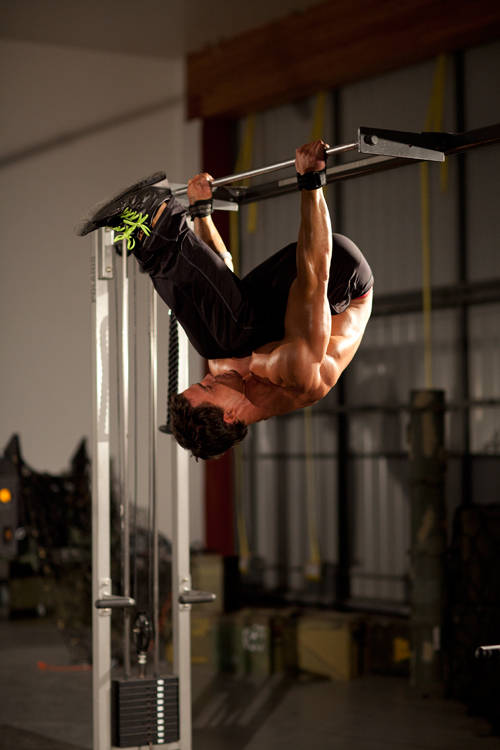
10. Bodyweight Mid Row
61% match- Middle Back
- Other
- Intermediate
- Compound
How to perform this exercise
- Begin by taking a medium to wide grip on a pull-up apparatus with your palms facing away from you. From a hanging position, tuck your knees to your chest, leaning back and getting your legs over your side of the pull-up apparatus. This will be your starting position.
- Beginning with your arms straight, flex the elbows and retract the shoulder blades to raise your body up until your legs contact the pull-up apparatus.
- After a brief pause, return to the starting position.
Sets and reps: 3 or 4 sets of 6 to 10 reps.
Why this matches
- Primary muscle: middle back, not erector spinae
- Equipment: bodyweight only, the same as Hyperextensions With No Hyperextension Bench
- Body position: lying face down, the same as Hyperextensions With No Hyperextension Bench
Why You Might Need a Hyperextensions With No Hyperextension Bench Alternative
You may substitute hyperextensions for several reasons: no equipment, low back pain, travel, or a desire for varied loading patterns. Bodyweight alternatives reduce compressive lumbar load while preserving spinal extension and hip-hinge mechanics. For example, bird dogs emphasize anti-rotation with a neutral spine, while single-leg RDLs challenge the posterior chain through unilateral hip extension. Use tempo and partial range to limit shear forces; cue a firm pelvic brace, hinge at the hips, and lead the movement with the glutes to keep erector-spinae activation controlled.
How to Choose the Right Hyperextensions With No Hyperextension Bench Substitute
Pick an alternative based on your goal, pain history, and available equipment. For lumbar rehab or pain, choose anti-extension patterns like bird dogs that train spinal stability with low load, keep the pelvis level and extend opposite arm and leg slowly. If your goal is strength, use single-leg RDLs or slow, loaded glute bridges to increase time under tension and hip-hinge torque. Prioritize exercises that let you maintain a neutral spine and progressive overload through reps, tempo, or unilateral variations.
Hyperextensions With No Hyperextension Bench FAQ
What muscles does Hyperextensions With No Hyperextension Bench work?
Hyperextensions target the erector spinae primarily, with secondary load on the glutes and hamstrings during hip extension. Cue: maintain a neutral spine and initiate movement from the hip hinge to maximize erector activation while minimizing shear.
What is the best bodyweight alternative to Hyperextensions With No Hyperextension Bench?
The best bodyweight alternative for most people is the prone Superman (floor back extension) or the bird dog for a stability-focused option. Cue: for Superman, squeeze the scapulae and lift the chest and legs together, keeping the neck neutral to engage the lower erectors safely.
Can I build muscle without doing Hyperextensions With No Hyperextension Bench?
Yes, you can build the erector spinae with progressive bodyweight and unilateral exercises like single-leg RDLs and elevated glute bridges. Cue: increase time under tension, use slow eccentrics, and ensure a strong hip hinge and pelvic brace to maximize muscle recruitment.
Find Alternatives for Any Exercise
Search the exercise database and filter the ranked substitutes by the equipment you own.
Similarity scores compare exercise metadata such as movement pattern, muscles, equipment and body position. They are not a safety rating or a check that you own the equipment. Learn about our methodology