

10 Best Decline Dumbbell Bench Press Alternatives for Lower-Pec Development
The Decline Dumbbell Bench Press is done lying on your back with dumbbells. Ranked closest by our scoring: the Chest Dip (On Dip-pull-up Cage), Korean Dips and Push-ups With Feet Elevated.
Updated Ranked by our 12-factor similarity model How it works
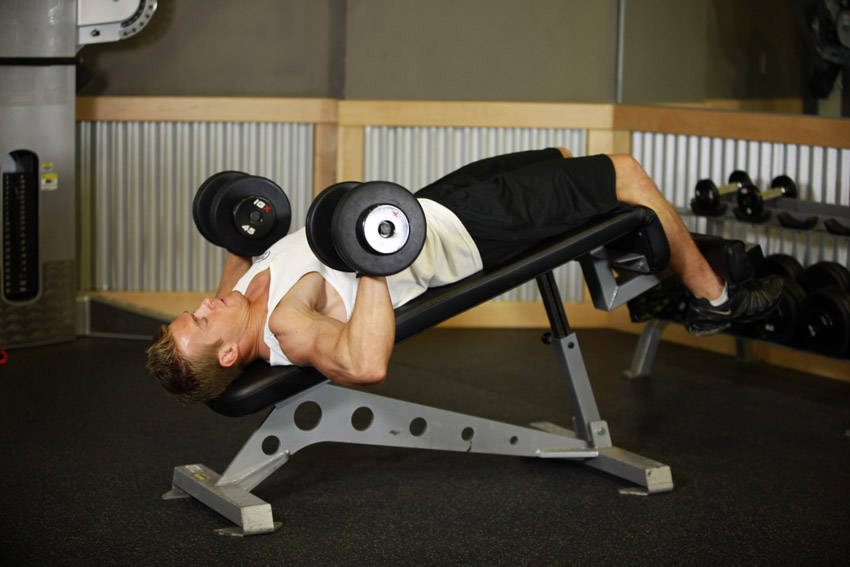
Original Exercise: Decline Dumbbell Bench Press
- Primary muscle
- Pectorals
- Equipment
- Dumbbell
- Difficulty
- Intermediate
- Type
- Compound
Secondary muscles: Shoulders, Triceps
How to perform Decline Dumbbell Bench Press
- Secure your legs at the end of the decline bench and lie down with a dumbbell on each hand on top of your thighs. The palms of your hand will be facing each other.
- Once you are laying down, move the dumbbells in front of you at shoulder width.
- Once at shoulder width, rotate your wrists forward so that the palms of your hands are facing away from you. This will be your starting position.
- Bring down the weights slowly to your side as you breathe out. Keep full control of the dumbbells at all times. Tip: Throughout the motion, the forearms should always be perpendicular to the floor.
- As you breathe out, push the dumbbells up using your pectoral muscles. Lock your arms in the contracted position, squeeze your chest, hold for a second and then start coming down slowly. Tip: It should take at least twice as long to go down than to come up..
- Repeat the movement for the prescribed amount of repetitions of your training program.
Ranked Decline Dumbbell Bench Press Alternatives
10 substitutes, ranked by how closely each one matches the Decline Dumbbell Bench Press on movement pattern, muscles worked, equipment and body position. The higher the score, the less you change. Open "How to perform this exercise" on a card for the steps; every card title links to that exercise's own alternatives page.
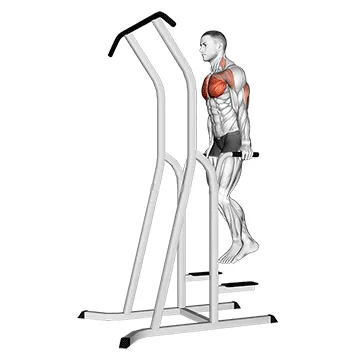
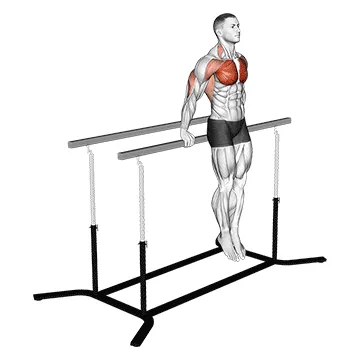
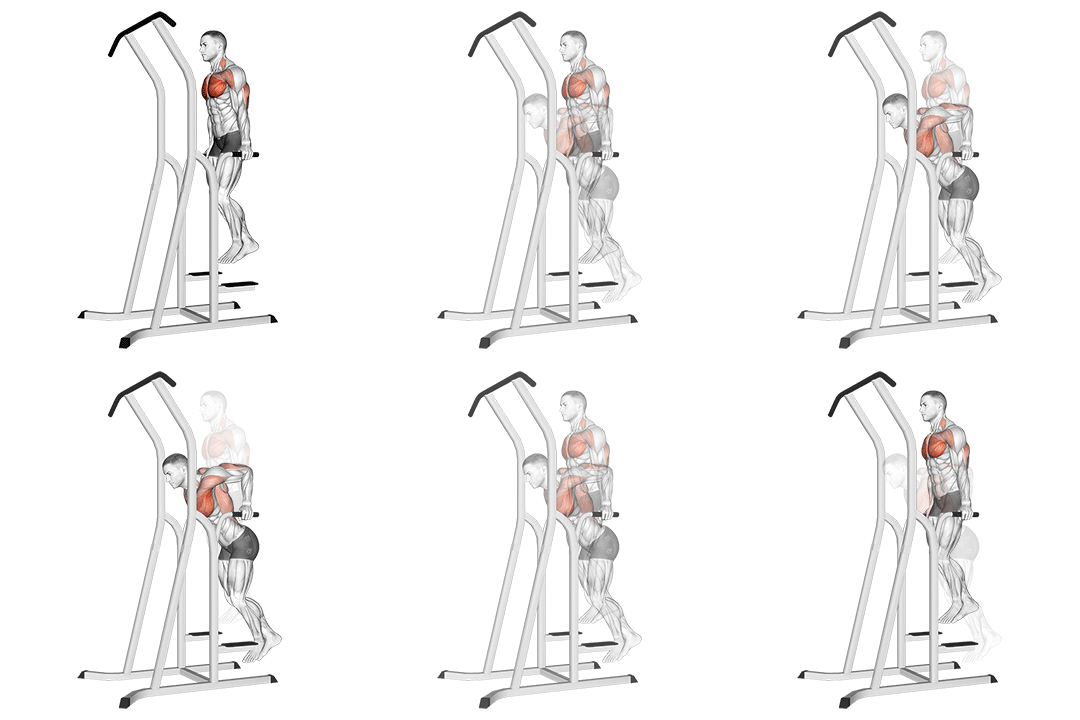
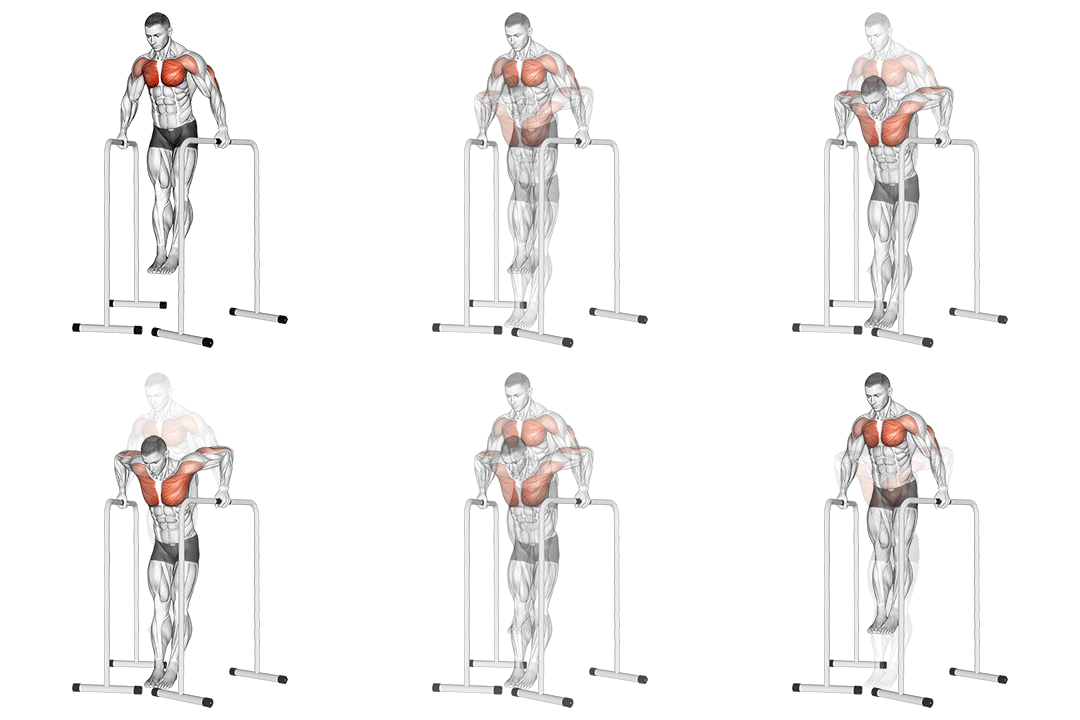
Best match 1. Chest Dip (On Dip-pull-up Cage)
80% match- Pectorals
- Bodyweight
- Intermediate
- Compound
Use this when you have nothing to train with, because it works the pectorals with bodyweight alone.
How to perform this exercise
- Adjust the dip bars to a height that allows you to comfortably grip them.
- Stand between the bars and place your hands on each bar, slightly wider than shoulder-width apart.
- Jump up and straighten your arms, supporting your body weight on the bars.
- Bend your knees and cross your ankles behind you.
- Lower your body by bending your elbows, keeping your chest up and your shoulders down.
- Continue lowering until your shoulders are below your elbows or until you feel a stretch in your chest.
- Push through your palms and extend your elbows to raise your body back up to the starting position.
- Repeat for the desired number of repetitions.
Sets and reps: 3 or 4 sets of 6 to 10 reps.
Why this matches
- Primary muscle: pectorals, the same as the Decline Dumbbell Bench Press
- Equipment: bodyweight only, not free weights
- Body position: hanging, not lying on your back
- Balance: harder to stay steady on than the Decline Dumbbell Bench Press
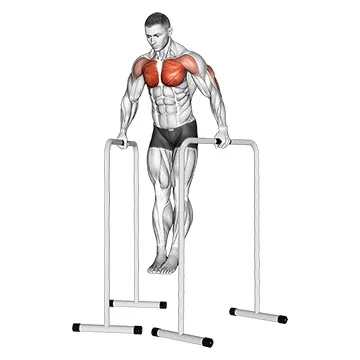
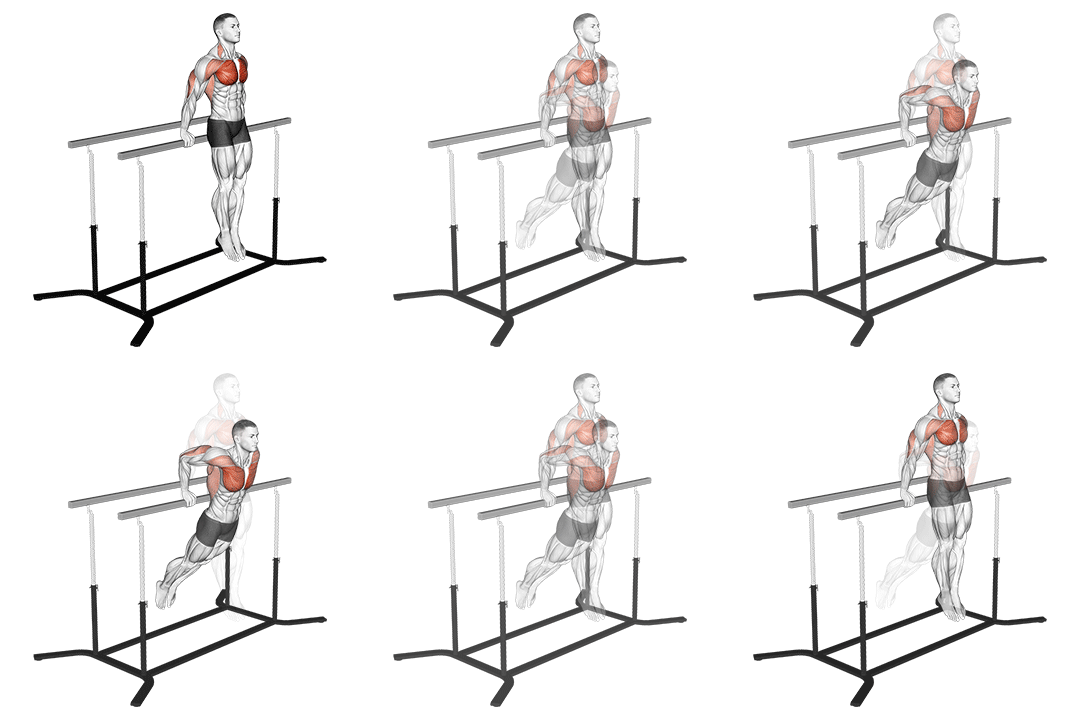
2. Korean Dips
78% match- Pectorals
- Bodyweight
- Advanced
- Compound
How to perform this exercise
- Position yourself between two parallel bars with your arms extended and supporting your body weight.
- Lower your body by bending your elbows until your upper arms are parallel to the ground.
- Pause for a moment, then push yourself back up to the starting position by straightening your arms.
- Repeat for the desired number of repetitions.
Sets and reps: 3 or 4 sets of 6 to 10 reps.
Why this matches
- Primary muscle: pectorals, the same as the Decline Dumbbell Bench Press
- Equipment: bodyweight only, not free weights
- Body position: standing, not lying on your back
- Balance: harder to stay steady on than the Decline Dumbbell Bench Press
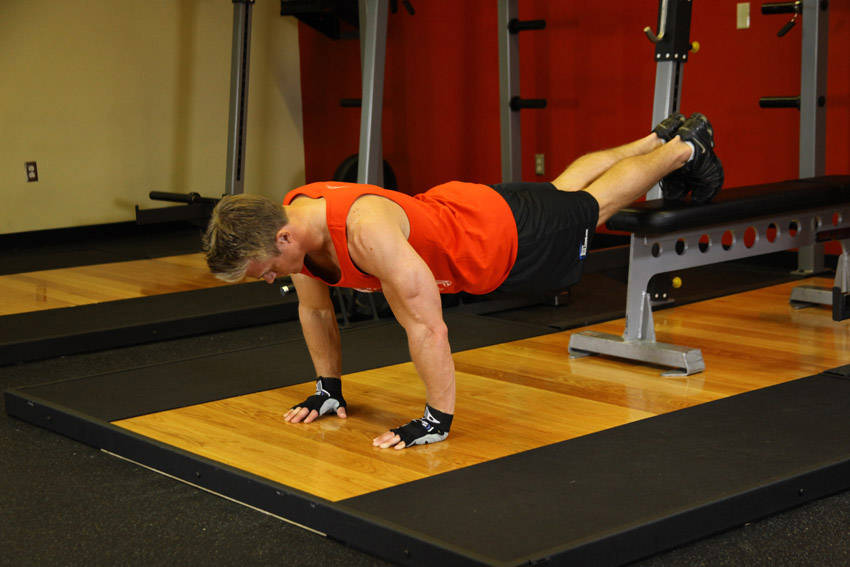
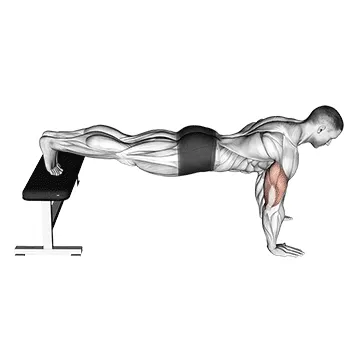
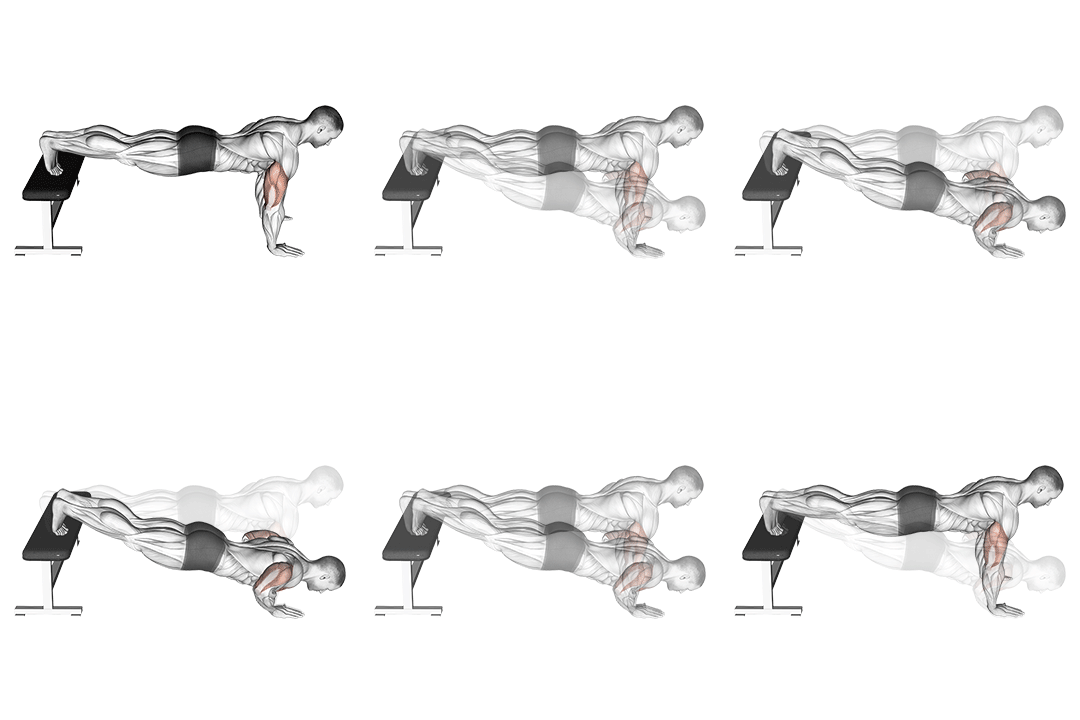
3. Push-ups With Feet Elevated
77% match- Pectorals
- Bodyweight
- Intermediate
- Compound
How to perform this exercise
- Lie on the floor face down and place your hands about 36 inches apart from each other holding your torso up at arms length.
- Place your toes on top of a flat bench. This will allow your body to be elevated. Note: The higher the elevation of the flat bench, the higher the resistance of the exercise is.
- Lower yourself until your chest almost touches the floor as you inhale.
- Using your pectoral muscles, press your upper body back up to the starting position and squeeze your chest. Breathe out as you perform this step.
- After a second pause at the contracted position, repeat the movement for the prescribed amount of repetitions.
Sets and reps: 3 or 4 sets of 6 to 10 reps.
Why this matches
- Primary muscle: pectorals, the same as the Decline Dumbbell Bench Press
- Equipment: bodyweight only, not free weights
- Body position: lying face down, not lying on your back
- Pectorals
- Bodyweight
- Advanced
- Compound
How to perform this exercise
- Position yourself on the parallel bars with your arms fully extended and your body suspended in the air.
- Lean forward slightly and lower your body by bending your elbows until your chest is just above the bars.
- Pause for a moment, then push yourself back up to the starting position by straightening your arms.
- Repeat for the desired number of repetitions.
Sets and reps: 3 or 4 sets of 6 to 10 reps.
Why this matches
- Primary muscle: pectorals, the same as the Decline Dumbbell Bench Press
- Equipment: bodyweight only, not free weights
- Body position: hanging, not lying on your back
5. Decline Push-up
72% match- Pectorals
- Bodyweight
- Intermediate
- Compound
How to perform this exercise
- Place your hands on the ground slightly wider than shoulder-width apart, with your feet elevated on a stable surface.
- Keep your body in a straight line from head to toe, engaging your core muscles.
- Lower your chest towards the ground by bending your elbows, keeping them close to your body.
- Push through your palms to extend your arms and return to the starting position.
- Repeat for the desired number of repetitions.
Sets and reps: 3 or 4 sets of 6 to 10 reps.
Why this matches
- Movement: decline press, the same as the Decline Dumbbell Bench Press
- Primary muscle: pectorals, the same as the Decline Dumbbell Bench Press
- Equipment: bodyweight only, not free weights
- Body position: lying face down, not lying on your back
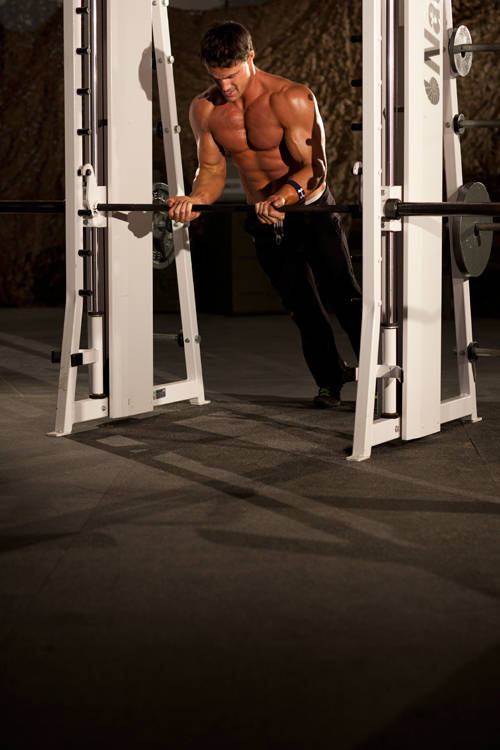
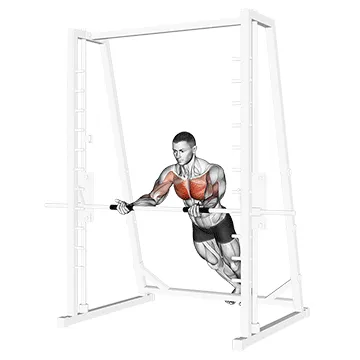
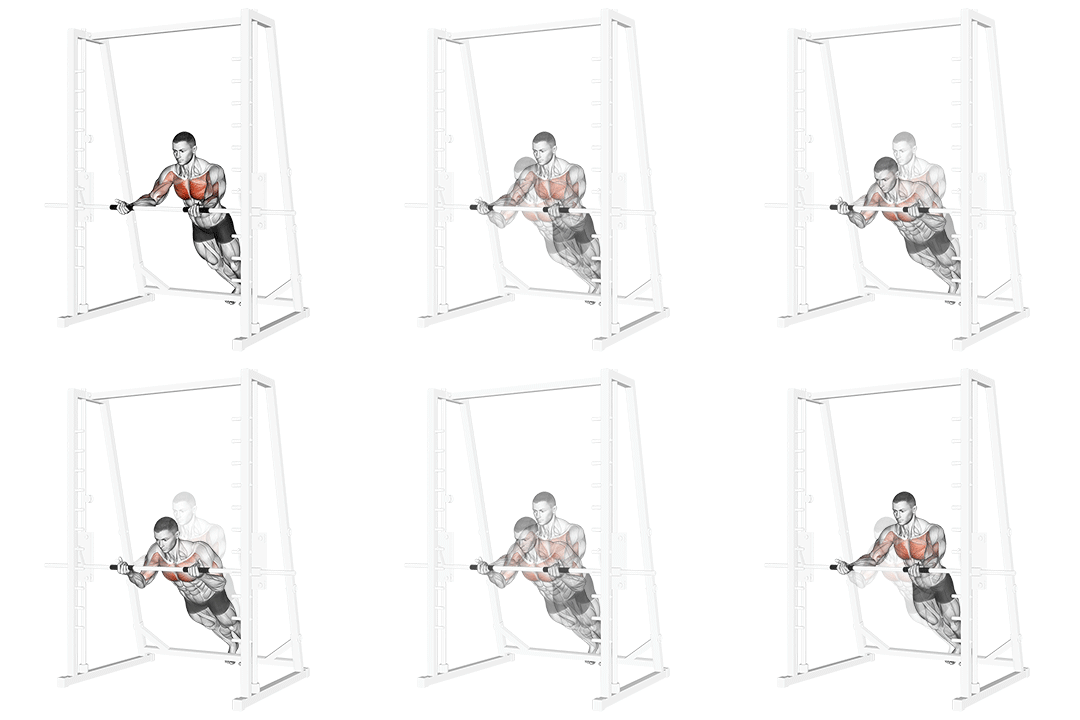
6. Incline Push-up Reverse Grip
68% match- Pectorals
- Bodyweight
- Intermediate
- Compound
How to perform this exercise
- Stand facing a Smith machine bar or sturdy elevated platform at an appropriate height.
- Place your hands on the bar palms up, with your hands about shoulder width apart.
- Position your feet back from the bar with arms and body straight. This will be your starting position.
- Keeping your body straight, lower your chest to the bar by bending the arms.
- Return to the starting position by extending the elbows, pressing yourself back up.
Sets and reps: 3 or 4 sets of 6 to 10 reps.
Why this matches
- Primary muscle: pectorals, the same as the Decline Dumbbell Bench Press
- Equipment: bodyweight only, not free weights
- Body position: lying face down, not lying on your back
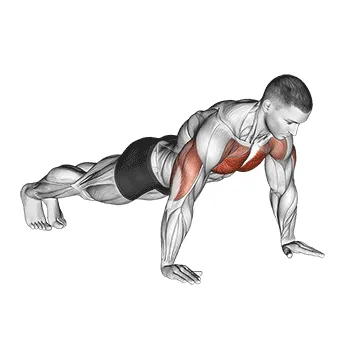
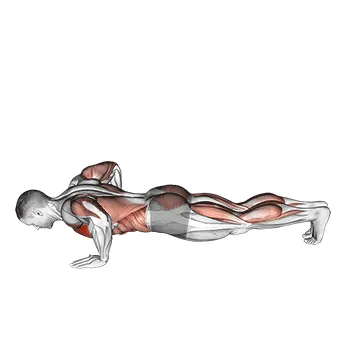
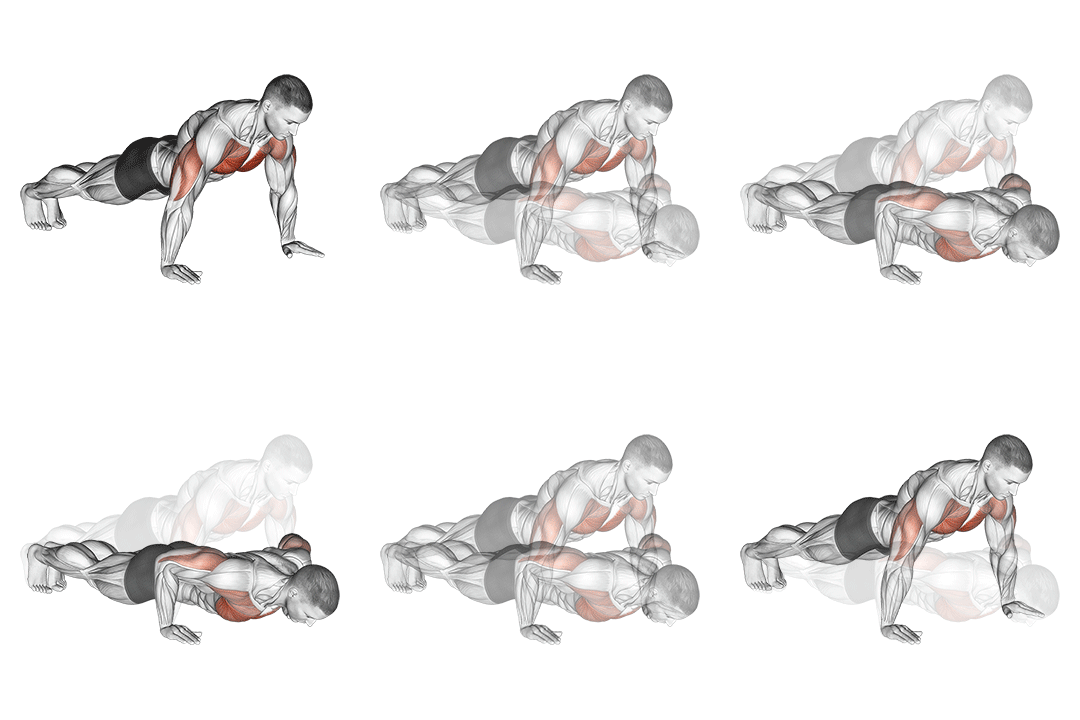
7. Push-up
67% match- Pectorals
- Bodyweight
- Intermediate
- Compound
How to perform this exercise
- Start in a high plank position with your hands slightly wider than shoulder-width apart and your feet together.
- Engage your core and lower your body towards the ground by bending your elbows, keeping your body in a straight line.
- Pause for a moment when your chest is just above the ground, then push yourself back up to the starting position by straightening your arms.
- Repeat for the desired number of repetitions.
Sets and reps: 3 or 4 sets of 6 to 10 reps.
Why this matches
- Primary muscle: pectorals, the same as the Decline Dumbbell Bench Press
- Equipment: bodyweight only, not free weights
- Body position: lying face down, not lying on your back

- Pectorals
- Bodyweight
- Intermediate
- Compound
How to perform this exercise
- Lie on the floor face down and body straight with your toes on the floor and the hands wider than shoulder width for a wide hand position and closer than shoulder width for a close hand position. Make sure you are holding your torso up at arms length.
- Lower yourself until your chest almost touches the floor as you inhale.
- Using your pectoral muscles, press your upper body back up to the starting position and squeeze your chest. Breathe out as you perform this step.
- After a second pause at the contracted position, repeat the movement for the prescribed amount of repetitions.
Sets and reps: 3 or 4 sets of 6 to 10 reps.
Why this matches
- Primary muscle: pectorals, the same as the Decline Dumbbell Bench Press
- Equipment: bodyweight only, not free weights
- Body position: lying face down, not lying on your back
9. Incline Reverse Grip Push-up
67% match- Pectorals
- Bodyweight
- Intermediate
- Compound
How to perform this exercise
- Place your hands on the edge of a bench or elevated surface, slightly wider than shoulder-width apart.
- Extend your legs behind you, resting on the balls of your feet, creating a straight line from your head to your heels.
- Lower your chest towards the bench by bending your elbows, keeping them close to your sides.
- Pause for a moment at the bottom, then push yourself back up to the starting position by extending your arms.
- Repeat for the desired number of repetitions.
Sets and reps: 3 or 4 sets of 6 to 10 reps.
Why this matches
- Primary muscle: pectorals, the same as the Decline Dumbbell Bench Press
- Equipment: bodyweight only, not free weights
- Body position: lying face down, not lying on your back
10. Modified Hindu Push-up
67% match- Pectorals
- Bodyweight
- Intermediate
- Compound
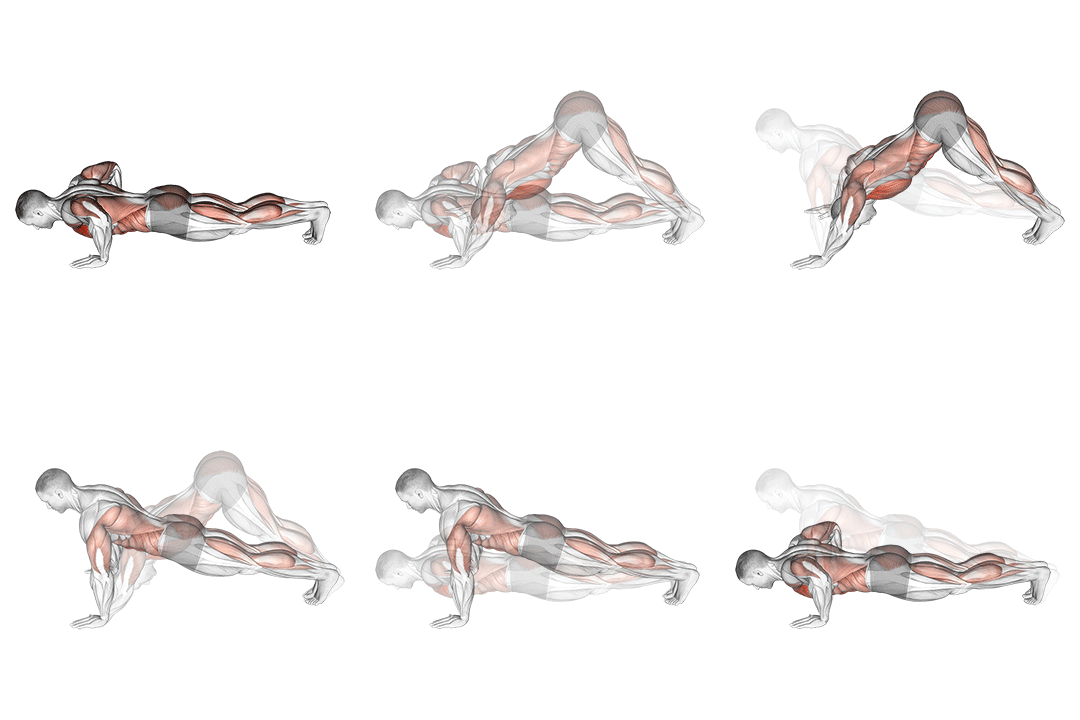
How to perform this exercise
- Start in a push-up position with your hands slightly wider than shoulder-width apart and your feet hip-width apart.
- Lower your body towards the ground, bending your elbows and keeping your core engaged.
- As you lower your body, shift your weight back and lift your hips up towards the ceiling, creating an inverted V shape with your body.
- Continue to lower your body until your chest is just above the ground, then reverse the movement, pushing your hips back down and extending your arms to return to the starting position.
- Repeat for the desired number of repetitions.
Sets and reps: 3 or 4 sets of 6 to 10 reps.
Why this matches
- Primary muscle: pectorals, the same as the Decline Dumbbell Bench Press
- Equipment: bodyweight only, not free weights
- Body position: standing, not lying on your back
Why You Might Need a Decline Dumbbell Bench Press Alternative
You may need substitutes because of equipment limits, shoulder or sternum pain, rehabilitation needs, or programming variety. A decline bench isn't always available, and some lifters experience anterior shoulder discomfort under deep decline range-of-motion. Choose exercises that preserve the decline line of pull on the pectoralis major, for example, leaning dips shift load to the lower pecs, while cable flyes let you control line and time under tension. Technique cues: when substituting, maintain scapular retraction, keep elbows at about 45° to torso, and drive horizontal adduction rather than pure elbow extension to maximize chest activation.
Decline Dumbbell Bench Press FAQ
What muscles does Decline Dumbbell Bench Press work?
The decline dumbbell bench press primarily targets the lower fibers of the pectoralis major, with secondary involvement from the anterior deltoid and triceps brachii. The decline angle shifts the line of pull so horizontal adduction emphasizes lower-pec activation; cue: keep scapula retracted and elbows at ~45° to maximize chest recruitment.
What is the best bodyweight alternative to Decline Dumbbell Bench Press?
Weighted or unweighted dips performed with a forward-leaning torso are the best bodyweight alternative to bias the lower pecs. Cue: lean the torso 25–30°, maintain a slight arch, and keep elbows tucked to around 45° so the movement emphasizes horizontal adduction rather than pure elbow extension.
Can I build muscle without doing Decline Dumbbell Bench Press?
Yes. You can build lower-pectoral mass with substitutes that match the decline's biomechanics and progressive overload, such as decline barbell press, leaning dips, or decline cable flyes. Focus on controlled eccentric loading, increasing resistance over time, and technique cues like scapular retraction and elbow positioning to ensure targeted pec activation.
Find Alternatives for Any Exercise
Search the exercise database and filter the ranked substitutes by the equipment you own.
Similarity scores compare exercise metadata such as movement pattern, muscles, equipment and body position. They are not a safety rating or a check that you own the equipment. Learn about our methodology