

10 Best Dumbbell Seated Alternate Shoulder Alternatives
The Dumbbell Seated Alternate Shoulder is done seated with dumbbells. Ranked closest by our scoring: Handstand Push-ups and the Left Hook. Boxing.
Updated Ranked by our 12-factor similarity model How it works
Original Exercise: Dumbbell Seated Alternate Shoulder
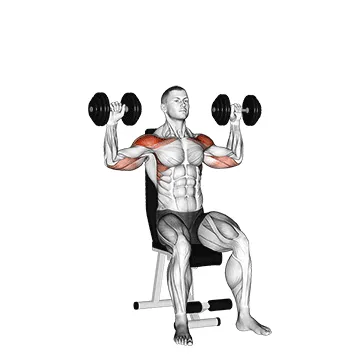
- Primary muscle
- Delts
- Equipment
- Dumbbell
- Difficulty
- Intermediate
- Type
- Compound
Secondary muscles: Triceps, Upper Back
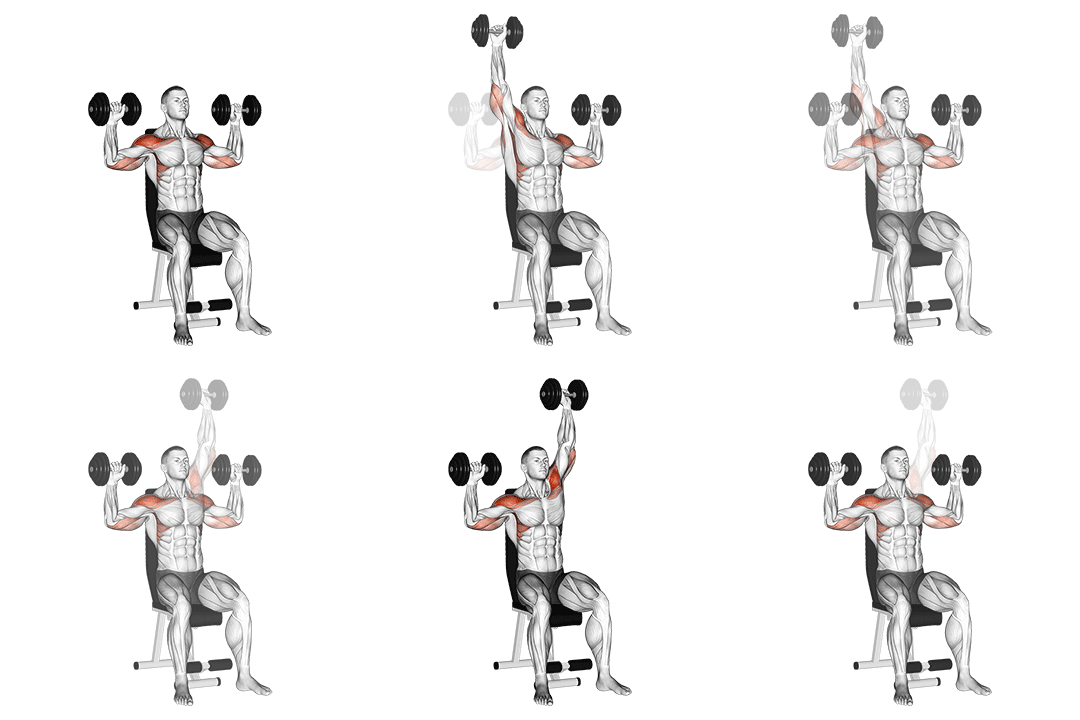
How to perform Dumbbell Seated Alternate Shoulder
- Sit on a bench with your back straight and feet flat on the ground.
- Hold a dumbbell in each hand, palms facing inwards, and raise them to shoulder height.
- Press one dumbbell up overhead while keeping the other dumbbell at shoulder height.
- Lower the raised dumbbell back to shoulder height while simultaneously pressing the other dumbbell up overhead.
- Continue alternating between arms for the desired number of repetitions.
Ranked Dumbbell Seated Alternate Shoulder Alternatives
10 substitutes, ranked by how closely each one matches the Dumbbell Seated Alternate Shoulder on movement pattern, muscles worked, equipment and body position. The higher the score, the less you change. Open "How to perform this exercise" on a card for the steps; every card title links to that exercise's own alternatives page.
Best match 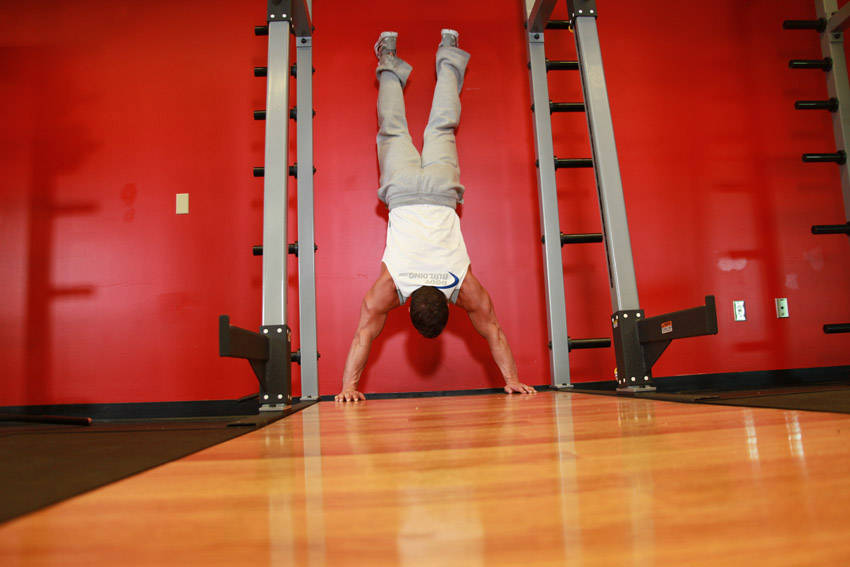
1. Handstand Push-ups
58% match- Delts
- Bodyweight
- Advanced
- Compound
Use this when you have nothing to train with, because it works the delts with bodyweight alone.
How to perform this exercise
- With your back to the wall bend at the waist and place both hands on the floor at shoulder width.
- Kick yourself up against the wall with your arms straight. Your body should be upside down with the arms and legs fully extended. Keep your whole body as straight as possible. Tip: If doing this for the first time, have a spotter help you. Also, make sure that you keep facing the wall with your head, rather than looking down.
- Slowly lower yourself to the ground as you inhale until your head almost touches the floor. Tip: It is of utmost importance that you come down slow in order to avoid head injury.
- Push yourself back up slowly as you exhale until your elbows are nearly locked.
- Repeat for the recommended amount of repetitions.
Sets and reps: 3 or 4 sets of 6 to 10 reps.
Why this matches
- Primary muscle: delts, the same as the Dumbbell Seated Alternate Shoulder
- Equipment: bodyweight only, not free weights
- Body position: inverted, not seated
- Balance: harder to stay steady on than the Dumbbell Seated Alternate Shoulder
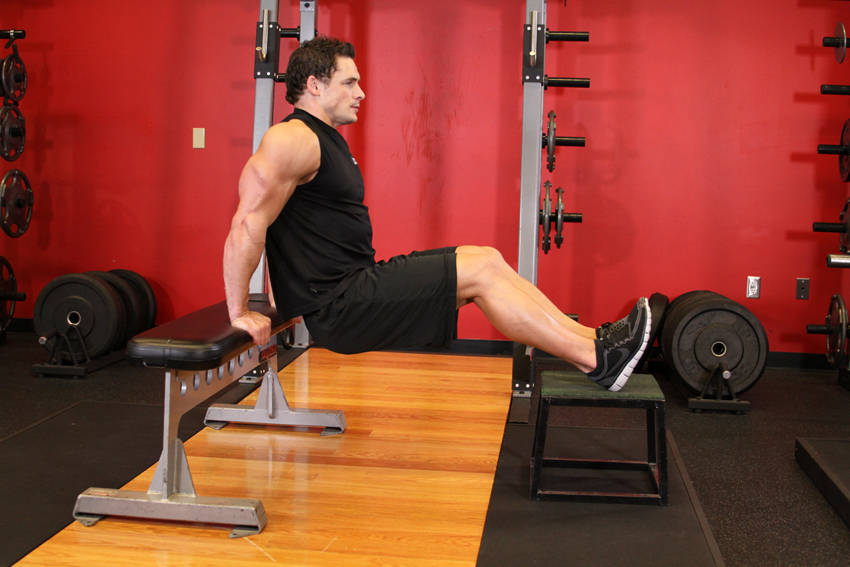
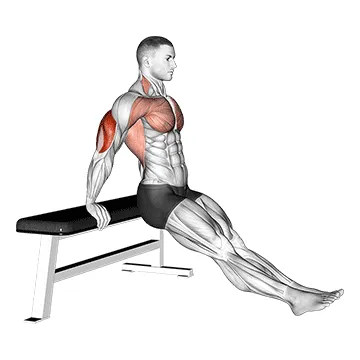
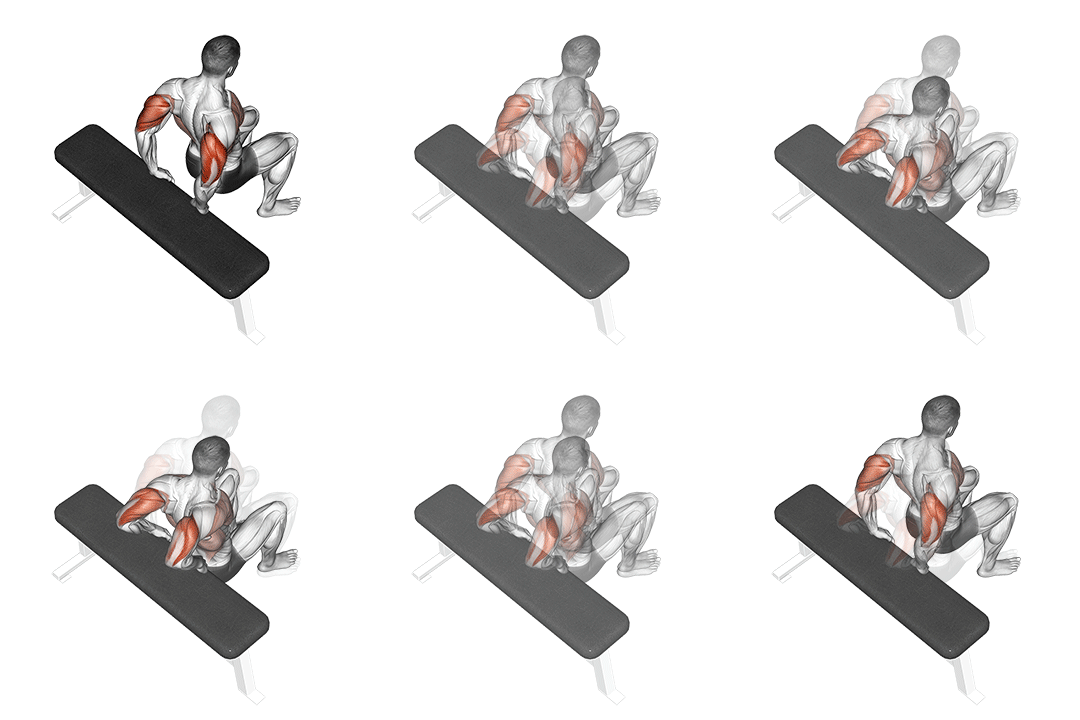
2. Bench Dips
48% match- Triceps
- Bodyweight
- Intermediate
- Compound
A looser match: it works the triceps rather than the delts.
How to perform this exercise
- For this exercise you will need to place a bench behind your back. With the bench perpendicular to your body, and while looking away from it, hold on to the bench on its edge with the hands fully extended, separated at shoulder width. The legs will be extended forward, bent at the waist and perpendicular to your torso. This will be your starting position.
- Slowly lower your body as you inhale by bending at the elbows until you lower yourself far enough to where there is an angle slightly smaller than 90 degrees between the upper arm and the forearm. Tip: Keep the elbows as close as possible throughout the movement. Forearms should always be pointing down.
- Using your triceps to bring your torso up again, lift yourself back to the starting position.
- Repeat for the recommended amount of repetitions.
Sets and reps: 3 or 4 sets of 6 to 10 reps.
Why this matches
- Primary muscle: triceps, not delts
- Equipment: bodyweight only, not free weights
- Body position: seated, the same as the Dumbbell Seated Alternate Shoulder
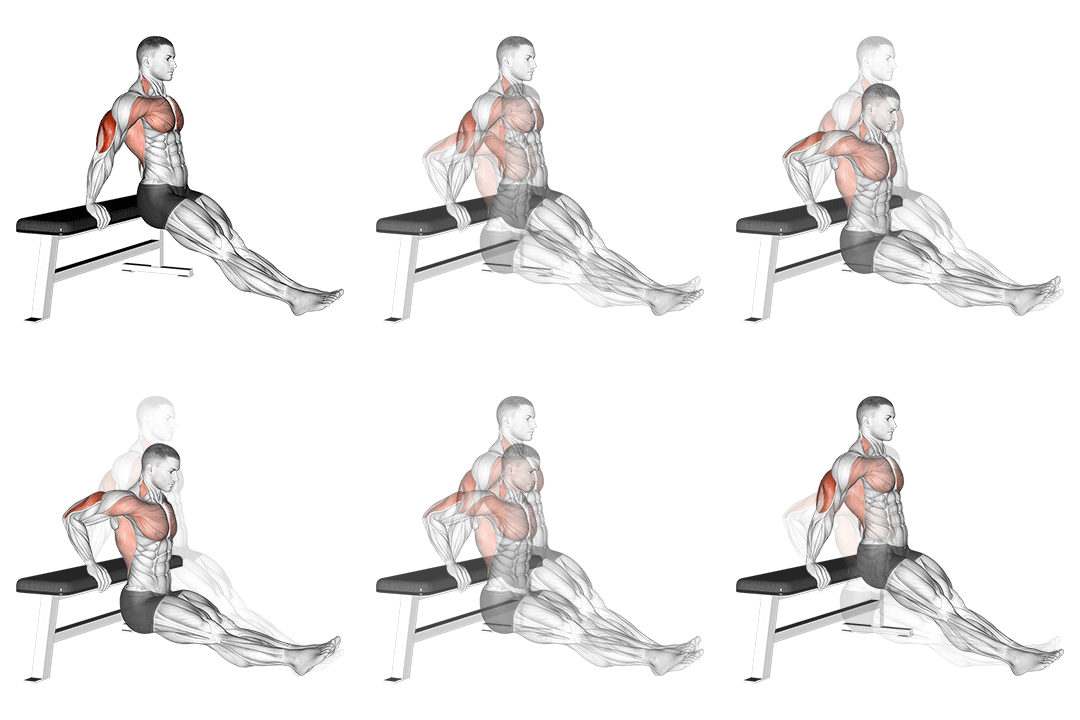
3. Bench Dip (Knees Bent)
46% match- Triceps
- Bodyweight
- Beginner
- Compound
How to perform this exercise
- Sit on the edge of a bench or chair with your hands gripping the edge next to your hips.
- Slide your butt off the bench and straighten your legs in front of you, keeping your heels on the ground.
- Bend your elbows and lower your body towards the ground, keeping your back close to the bench.
- Pause for a moment at the bottom, then push yourself back up to the starting position.
- Repeat for the desired number of repetitions.
Sets and reps: 3 sets of 8 to 12 reps, and add reps before you add load.
Why this matches
- Primary muscle: triceps, not delts
- Equipment: bodyweight only, not free weights
- Body position: seated, the same as the Dumbbell Seated Alternate Shoulder
- Balance: harder to stay steady on than the Dumbbell Seated Alternate Shoulder
4. Bench Dip On Floor
46% match- Triceps
- Bodyweight
- Intermediate
- Compound
How to perform this exercise
- Sit on the edge of a bench or chair with your hands gripping the edge, fingers pointing forward.
- Slide your butt off the bench, supporting your weight with your hands.
- Lower your body by bending your elbows until your upper arms are parallel to the floor.
- Push yourself back up to the starting position by straightening your arms.
- Repeat for the desired number of repetitions.
Sets and reps: 3 or 4 sets of 6 to 10 reps.
Why this matches
- Primary muscle: triceps, not delts
- Equipment: bodyweight only, not free weights
- Body position: seated, the same as the Dumbbell Seated Alternate Shoulder
- Balance: harder to stay steady on than the Dumbbell Seated Alternate Shoulder
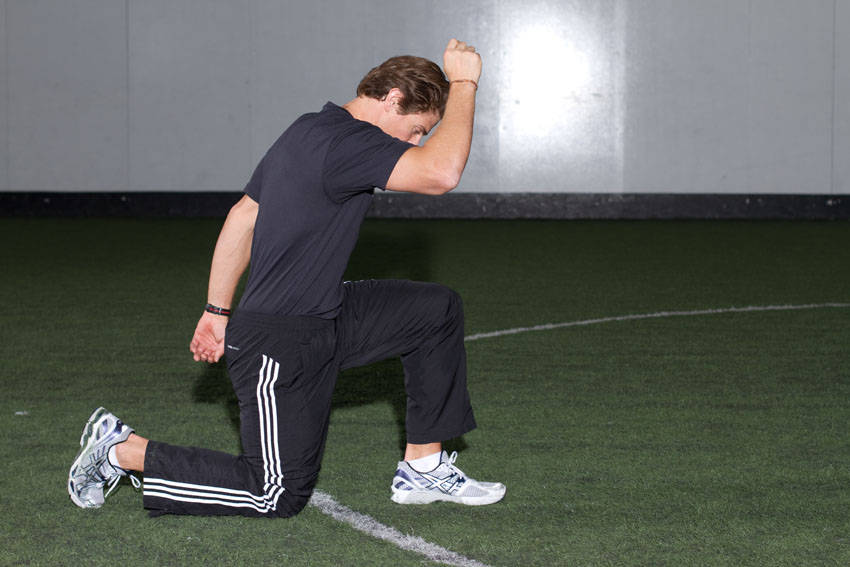
5. Kneeling Arm Drill
46% match- Shoulders
- Bodyweight
- Beginner
- Isolation
A looser match: it works the shoulders rather than the delts.
How to perform this exercise
- This drill helps increase arm efficiency during the run. Begin kneeling, left foot in front, right knee down. Apply pressure through the front heel to keep your glutes and hamstrings activated.
- Begin by blocking the arms in long, pendulum like swings. Close the arm angle, blocking with the arms as you would when jogging, progressing to a run and finally a sprint.
- As soon as your hands pass the hip, accelerate them forward during the sprinting motion to move them as quickly as possible.
- Switch knees and repeat.
Sets and reps: 3 sets of 8 to 12 reps on each side, and add reps before you add load.
Why this matches
- Primary muscle: shoulders, not delts
- Equipment: bodyweight only, not free weights
- Body position: kneeling, not seated
- Balance: harder to stay steady on than the Dumbbell Seated Alternate Shoulder
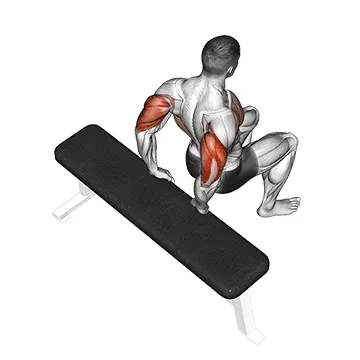
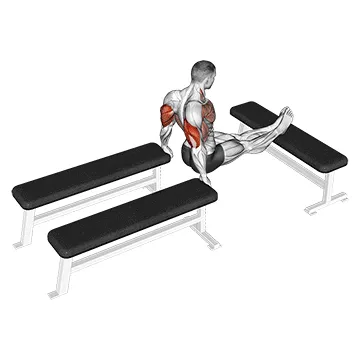
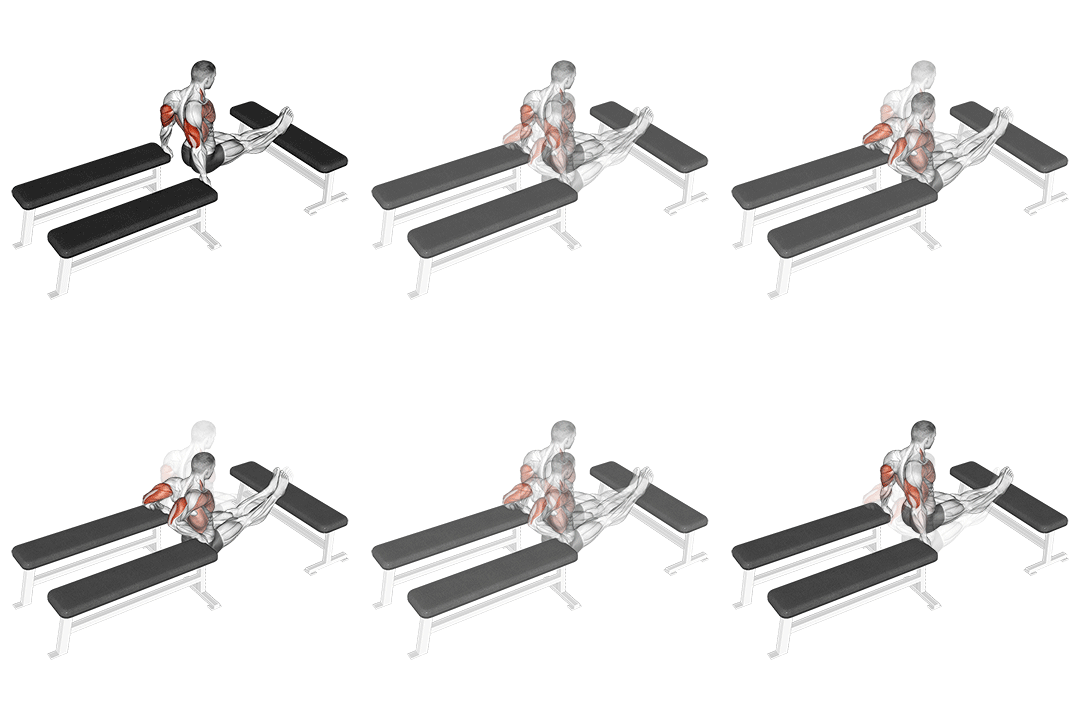
6. Three Bench Dip
43% match- Triceps
- Bodyweight
- Intermediate
- Compound
How to perform this exercise
- Sit on a bench with your hands gripping the edge, fingers pointing forward.
- Slide your butt off the bench, supporting your weight with your hands.
- Bend your elbows and lower your body until your upper arms are parallel to the ground.
- Push yourself back up to the starting position.
- Repeat for the desired number of repetitions.
Sets and reps: 3 or 4 sets of 6 to 10 reps.
Why this matches
- Primary muscle: triceps, not delts
- Equipment: bodyweight only, not free weights
- Body position: seated, the same as the Dumbbell Seated Alternate Shoulder
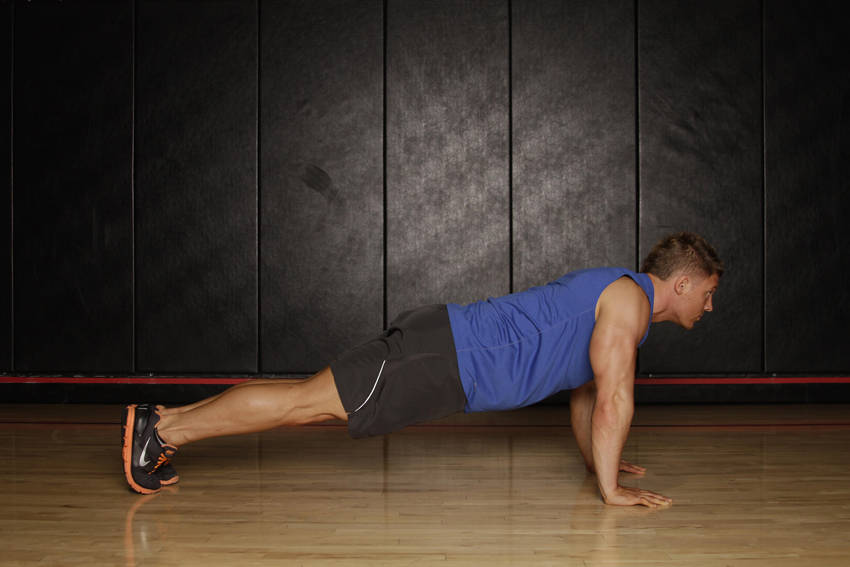
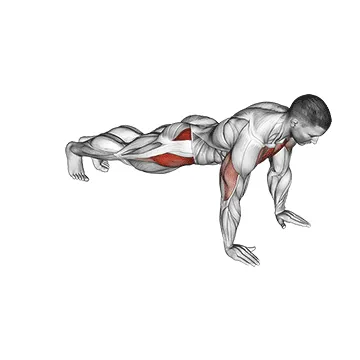
7. Push Up To Side Plank
43% match- Pectorals
- Bodyweight
- Intermediate
- Compound
A looser match: it works the pectorals rather than the delts.
How to perform this exercise
- Get into pushup position on the toes with your hands just outside of shoulder width.
- Perform a pushup by allowing the elbows to flex. As you descend, keep your body straight.
- Do one pushup and as you come up, shift your weight on the left side of the body, twist to the side while bringing the right arm up towards the ceiling in a side plank.
- Lower the arm back to the floor for another pushup and then twist to the other side.
- Repeat the series, alternating each side, for 10 or more reps.
Sets and reps: 3 or 4 sets of 6 to 10 reps on each side.
Why this matches
- Primary muscle: pectorals, not delts
- Equipment: bodyweight only, not free weights
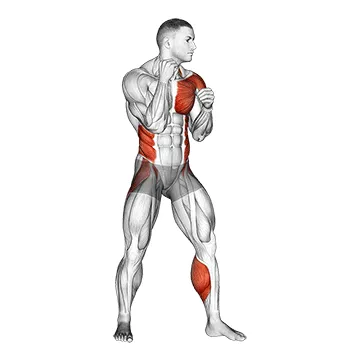
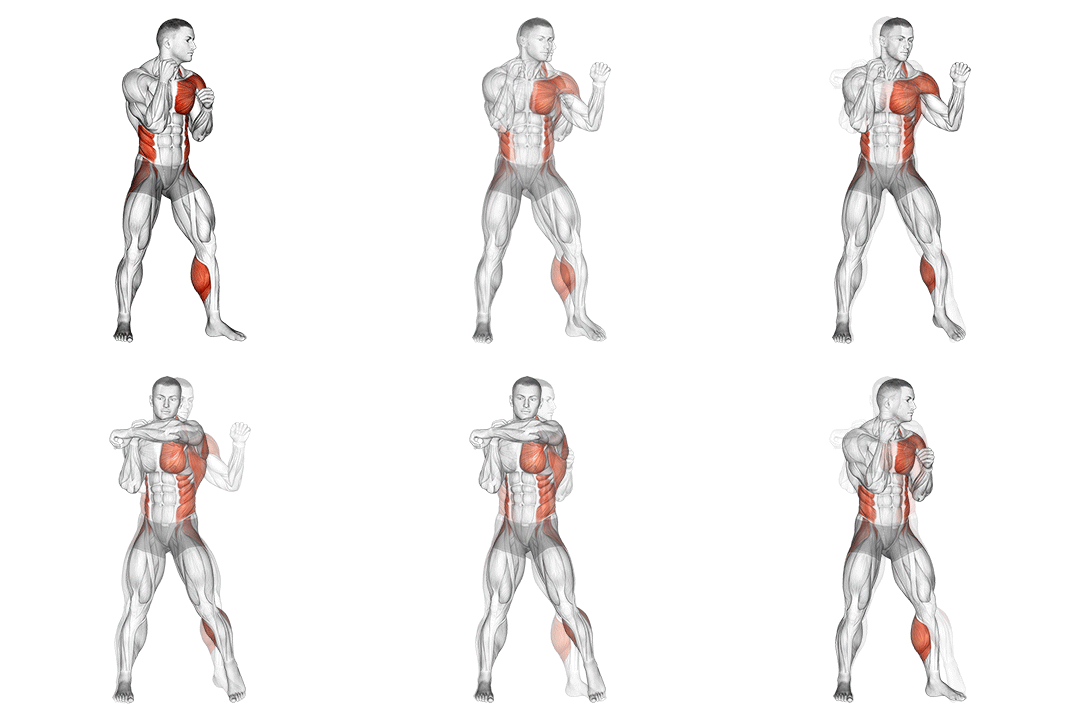
8. Left Hook. Boxing
42% match- Delts
- Bodyweight
- Intermediate
- Compound
How to perform this exercise
- Stand with your feet shoulder-width apart and your knees slightly bent.
- Keep your left hand up to protect your face and your right hand by your chin.
- Rotate your hips and pivot on your left foot as you extend your left arm forward in a punching motion.
- Twist your torso and engage your core muscles to generate power in the punch.
- Snap your arm back to the starting position and repeat for the desired number of repetitions.
Sets and reps: 3 or 4 sets of 6 to 10 reps on each side.
Why this matches
- Primary muscle: delts, the same as the Dumbbell Seated Alternate Shoulder
- Equipment: bodyweight only, not free weights
- Body position: standing, not seated
- Balance: harder to stay steady on than the Dumbbell Seated Alternate Shoulder
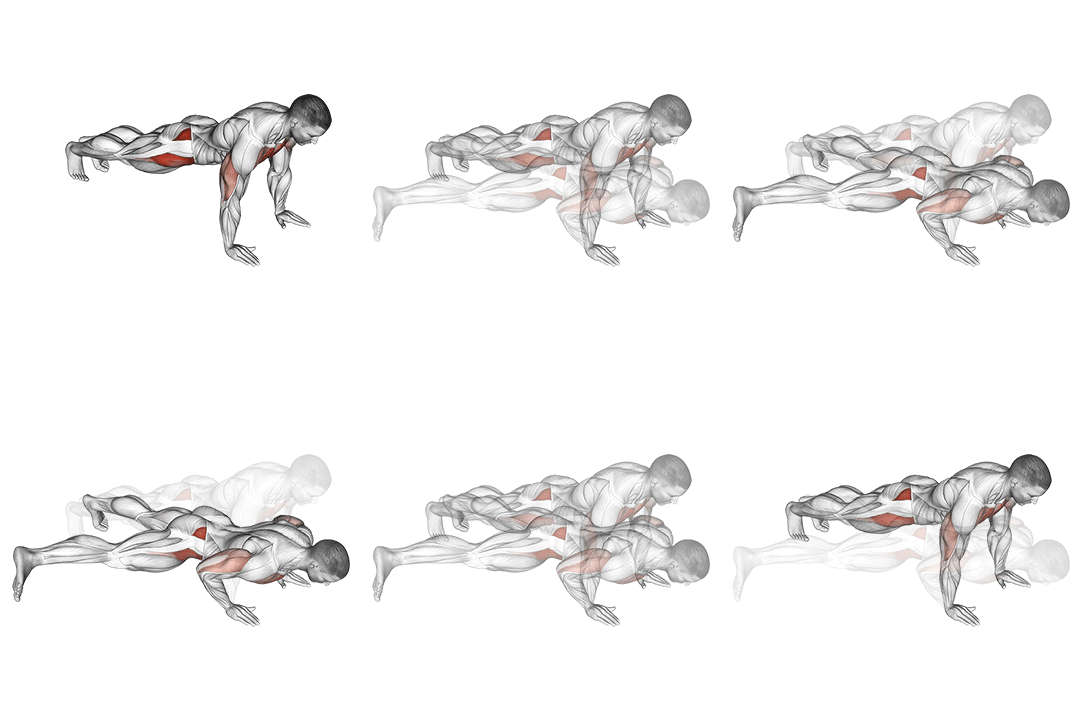
9. Push-up Inside Leg Kick
42% match- Pectorals
- Bodyweight
- Intermediate
- Compound
How to perform this exercise
- Start in a push-up position with your hands slightly wider than shoulder-width apart and your feet together.
- Lower your body towards the ground by bending your elbows, keeping your back straight and your core engaged.
- As you push back up, lift one leg off the ground and kick it out to the side, keeping it straight.
- Lower your leg back down and repeat the push-up, then switch to the other leg.
- Continue alternating leg kicks with each push-up repetition.
Sets and reps: 3 or 4 sets of 6 to 10 reps on each side.
Why this matches
- Primary muscle: pectorals, not delts
- Equipment: bodyweight only, not free weights
- Body position: lying face down, not seated
- Balance: harder to stay steady on than the Dumbbell Seated Alternate Shoulder
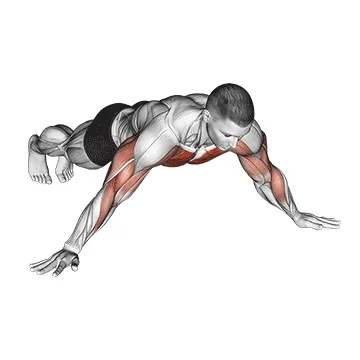
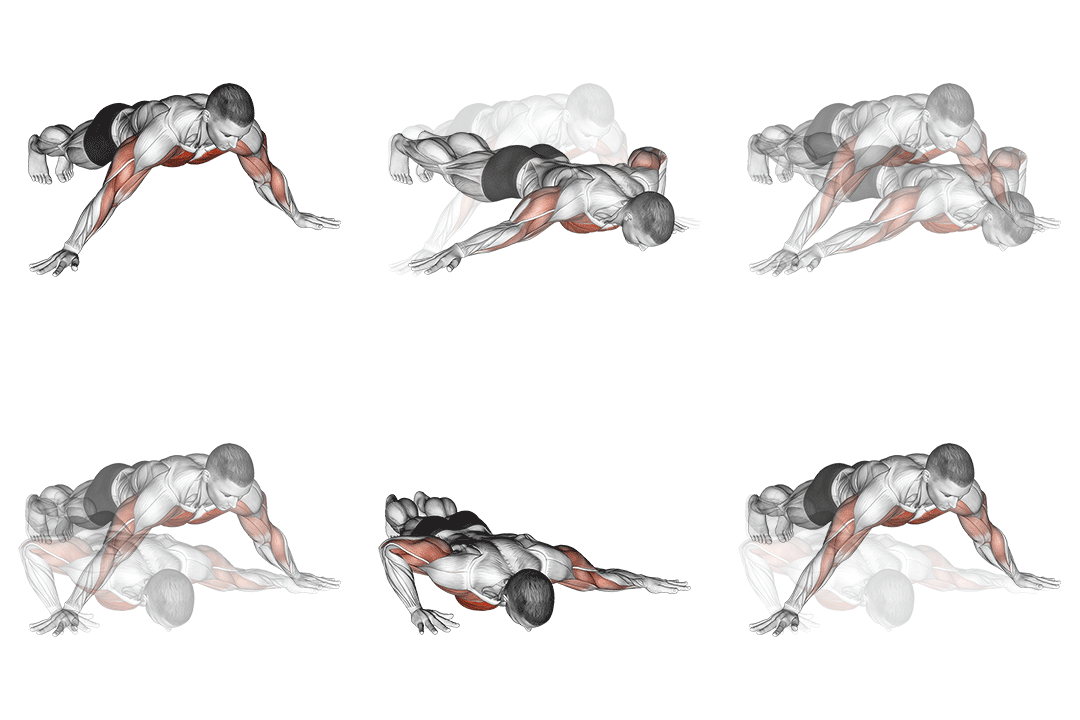
10. Archer Push Up
40% match- Pectorals
- Bodyweight
- Advanced
- Compound
How to perform this exercise
- Start in a push-up position with your hands slightly wider than shoulder-width apart.
- Extend one arm straight out to the side, parallel to the ground.
- Lower your body by bending your elbows, keeping your back straight and core engaged.
- Push back up to the starting position.
- Repeat on the other side, extending the opposite arm out to the side.
- Continue alternating sides for the desired number of repetitions.
Sets and reps: 3 or 4 sets of 6 to 10 reps on each side.
Why this matches
- Primary muscle: pectorals, not delts
- Equipment: bodyweight only, not free weights
- Body position: lying face down, not seated
- Balance: harder to stay steady on than the Dumbbell Seated Alternate Shoulder
Why You Might Need a Dumbbell Seated Alternate Shoulder Alternative
You might substitute the Dumbbell Seated Alternate Shoulder for several reasons: shoulder pain, lack of bilateral stability, limited dumbbell weight, or a need to focus a specific deltoid head. Someone with impingement may avoid deep internal rotation and pick neutral-grip presses; cue: keep thumbs pointed slightly up to reduce anterior shoulder stress. Other times you want more transverse-plane work for the lateral delts or posterior chain engagement for posture. Substitutes let you vary load, range of motion, and scapular mechanics while still driving deltoid hypertrophy and strength.
Dumbbell Seated Alternate Shoulder FAQ
What muscles does Dumbbell Seated Alternate Shoulder work?
The exercise primarily targets the deltoids, especially the anterior and lateral heads, while recruiting the upper trapezius, triceps for lockout, and rotator cuff muscles for stabilization. Scapular stabilizers engage to maintain posture during each unilateral press.
Find Alternatives for Any Exercise
Search the exercise database and filter the ranked substitutes by the equipment you own.
Similarity scores compare exercise metadata such as movement pattern, muscles, equipment and body position. They are not a safety rating or a check that you own the equipment. Learn about our methodology