

10 Best Dumbbell Front Raise Above Head Alternatives for Limited Gear
If you can’t do the Dumbbell Standing Front Raise Above Head, use movements that still load the anterior deltoid and limit shoulder impingement. Try cable front raises to press, plate front raises, seated dumbbell presses, barbell front raises, or a landmine press. Cue: lead with the elbow and lower slowly to load the anterior deltoid eccentrically.
Original Exercise: Dumbbell Standing Front Raise Above Head
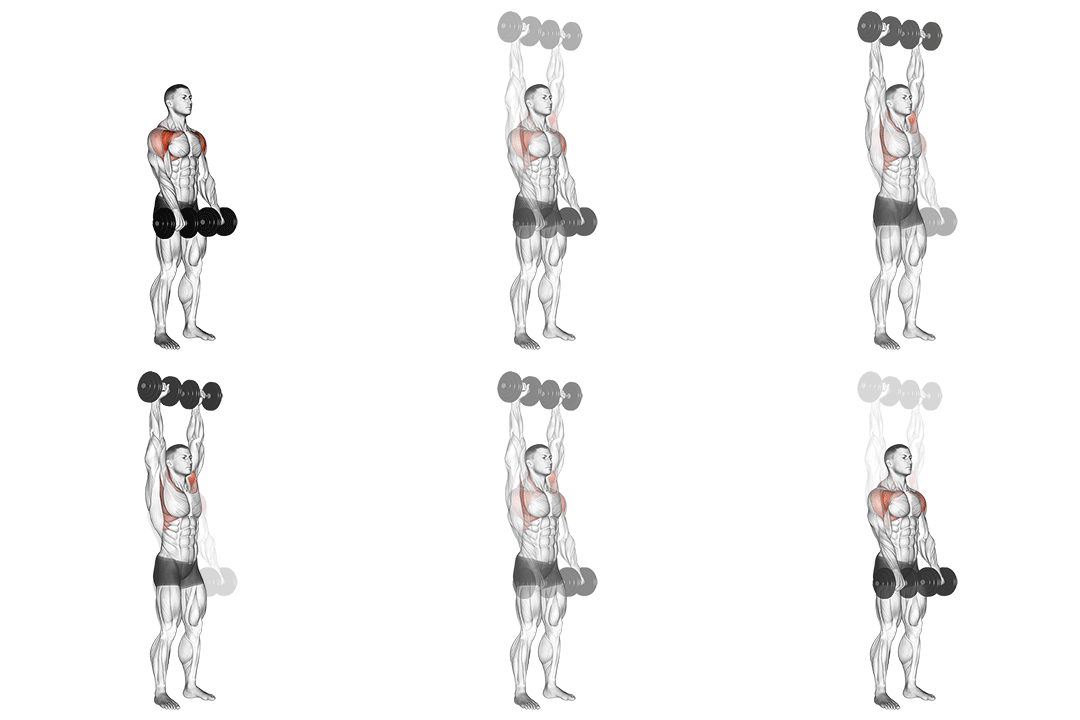
How to Perform Dumbbell Standing Front Raise Above Head
- Stand with your feet shoulder-width apart, holding a dumbbell in each hand with an overhand grip.
- Keep your arms straight and lift the dumbbells in front of you, raising them above your head.
- Pause for a moment at the top, then slowly lower the dumbbells back to the starting position.
- Repeat for the desired number of repetitions.
Ranked Dumbbell Standing Front Raise Above Head Alternatives
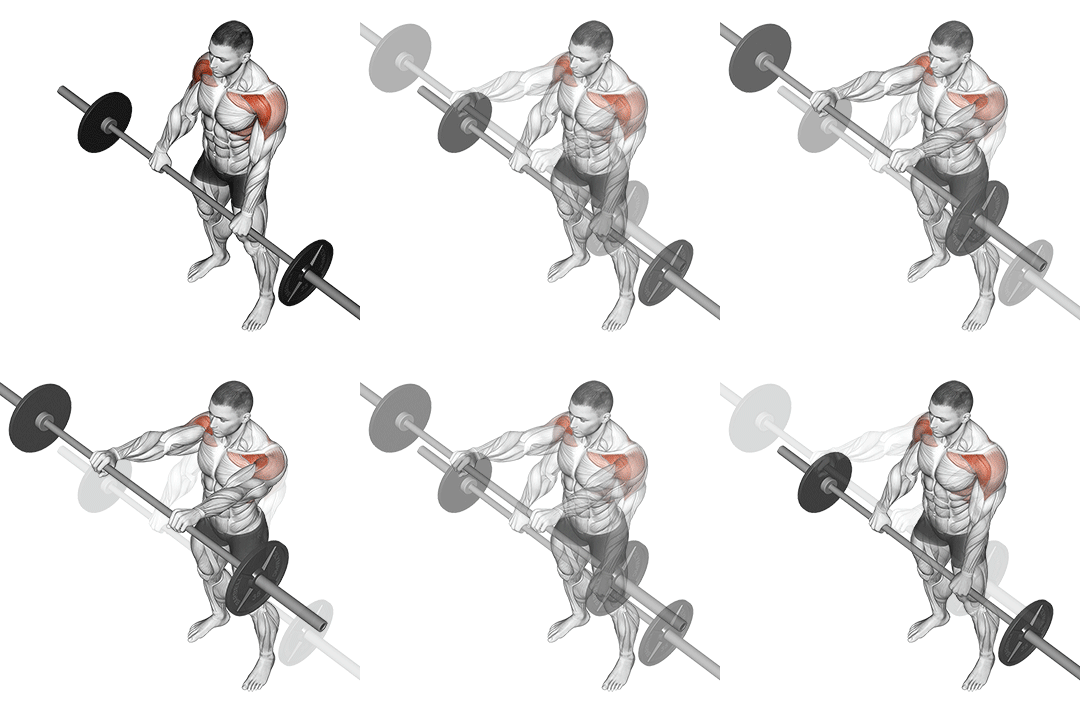
1. Barbell Front Raise
99.2% MatchHow to perform this exercise
- Stand with your feet shoulder-width apart and hold a barbell in front of your thighs with an overhand grip.
- Keep your arms straight and lift the barbell forward and upward until it reaches shoulder level.
- Pause for a moment at the top, then slowly lower the barbell back down to the starting position.
- Repeat for the desired number of repetitions.
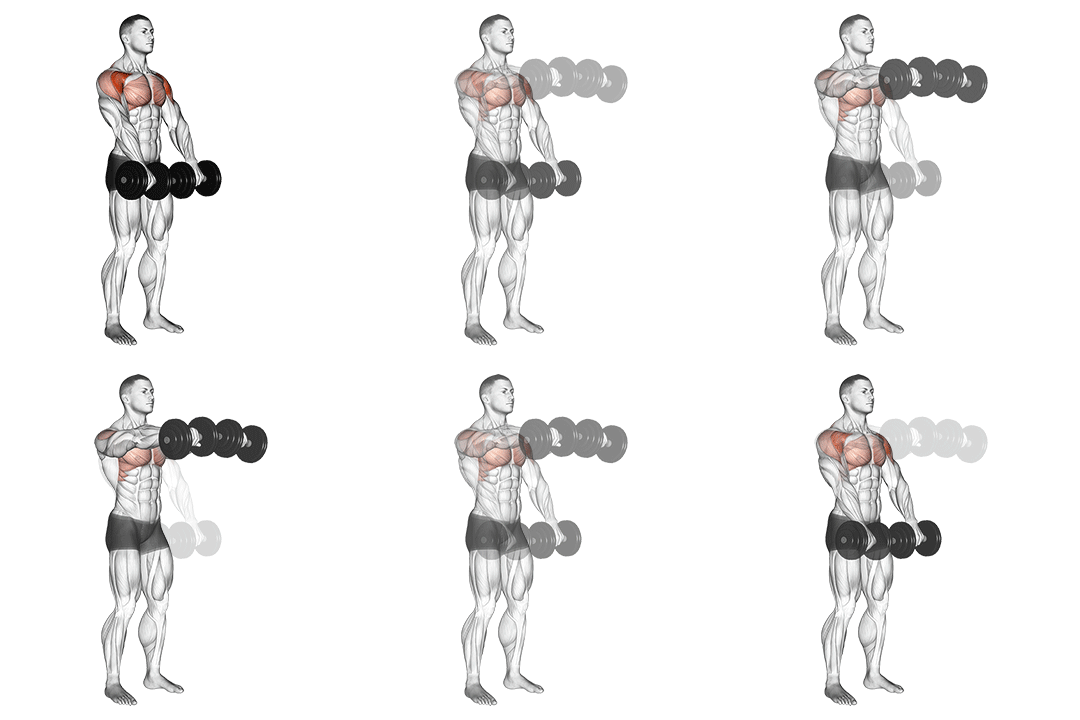
2. Dumbbell Front Raise
95% MatchHow to perform this exercise
- Stand with your feet shoulder-width apart, holding a dumbbell in each hand with your palms facing your thighs.
- Keeping your arms straight, exhale and lift the dumbbells in front of you until they are at shoulder level.
- Pause for a moment at the top, then inhale and slowly lower the dumbbells back down to the starting position.
- Repeat for the desired number of repetitions.
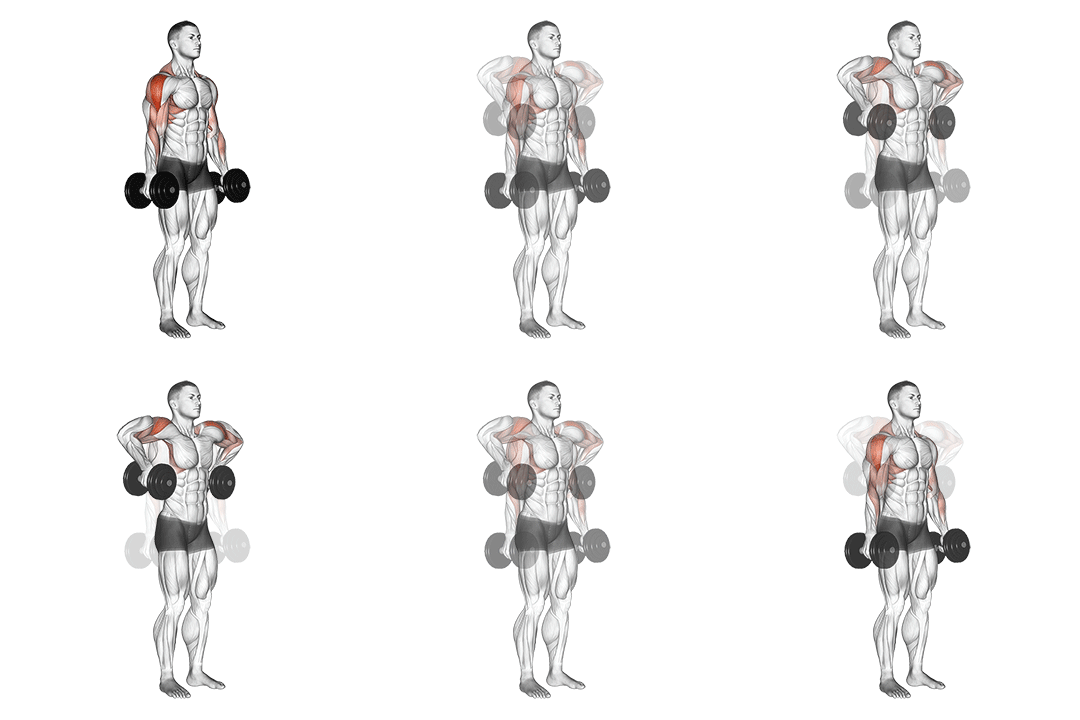
3. Dumbbell Raise
95% MatchHow to perform this exercise
- Stand with your feet shoulder-width apart and hold a dumbbell in each hand, palms facing your body.
- Keep your back straight and engage your core.
- Raise your arms out to the sides until they are parallel to the floor, keeping a slight bend in your elbows.
- Pause for a moment at the top, then slowly lower your arms back down to the starting position.
- Repeat for the desired number of repetitions.
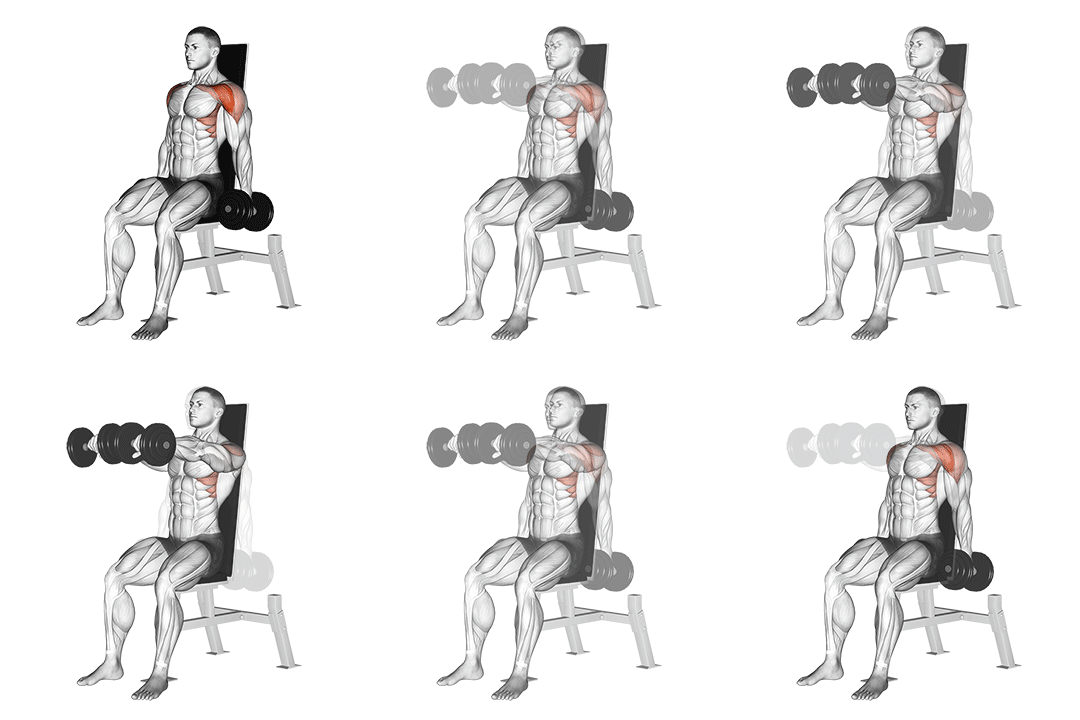
4. Dumbbell Seated Front Raise
90.4% MatchHow to perform this exercise
- Sit on a bench with your feet flat on the ground and a dumbbell in each hand, resting on your thighs.
- Keep your back straight and core engaged.
- Raise the dumbbells in front of you, with your palms facing down, until they are at shoulder level.
- Pause for a moment at the top, then slowly lower the dumbbells back down to the starting position.
- Repeat for the desired number of repetitions.
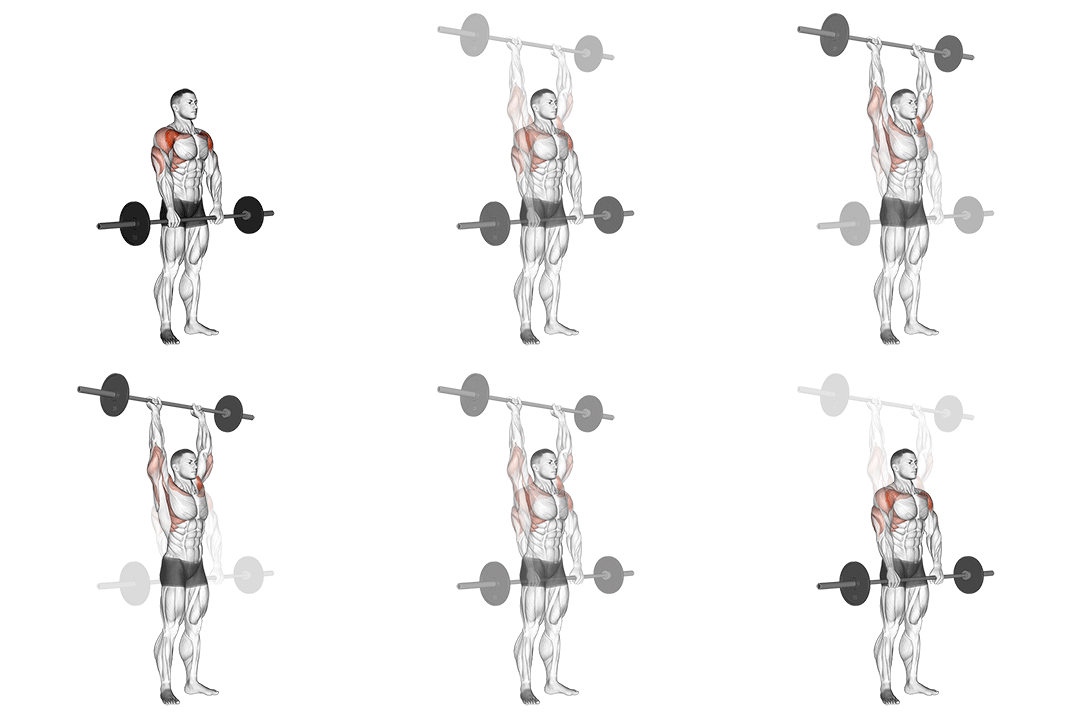
5. Barbell Standing Front Raise Over Head
90.2% MatchHow to perform this exercise
- Stand with your feet shoulder-width apart, holding a barbell in front of your thighs with an overhand grip.
- Keep your back straight and engage your core.
- Slowly raise the barbell in front of you, keeping your arms straight and your palms facing down.
- Continue lifting until the barbell is slightly above shoulder level.
- Pause for a moment at the top, then slowly lower the barbell back down to the starting position.
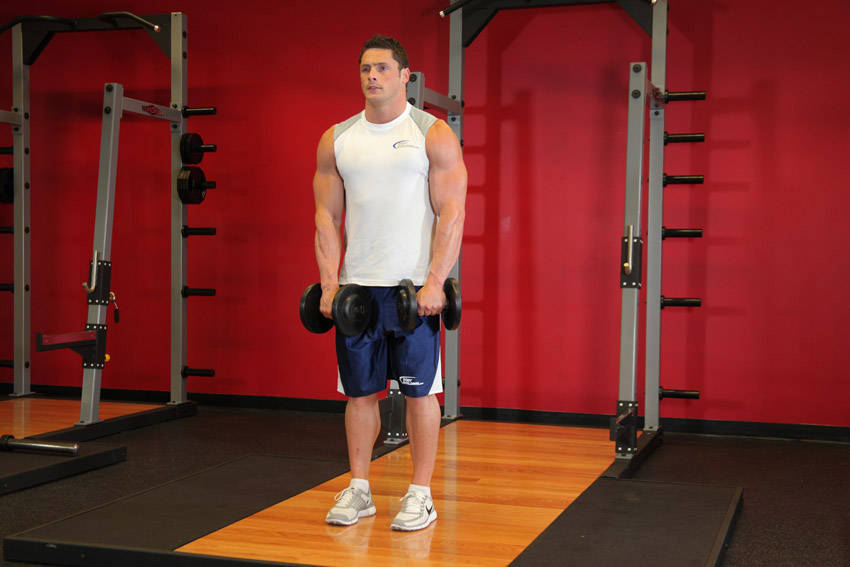
6. Front Two-Dumbbell Raise
90% MatchHow to perform this exercise
- Pick a couple of dumbbells and stand with a straight torso and the dumbbells on front of your thighs at arms length with the palms of the hand facing your thighs. This will be your starting position.
- While maintaining the torso stationary (no swinging), lift the dumbbells to the front with a slight bend on the elbow and the palms of the hands always facing down. Continue to go up until you arms are slightly above parallel to the floor. Exhale as you execute this portion of the movement and pause for a second at the top.
- As you inhale, lower the dumbbells back down slowly to the starting position.
- Repeat for the recommended amount of repetitions.
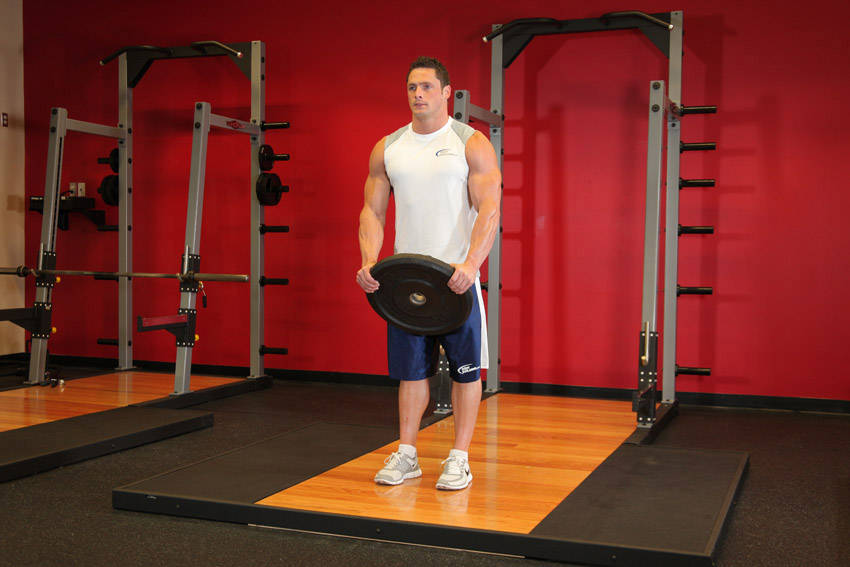
7. Front Plate Raise
90% MatchHow to perform this exercise
- While standing straight, hold a barbell plate in both hands at the 3 and 9 o'clock positions. Your palms should be facing each other and your arms should be extended and locked with a slight bend at the elbows and the plate should be down near your waist in front of you as far as you can go. Tip: The arms will remain in this position throughout the exercise. This will be your starting position.
- Slowly raise the plate as you exhale until it is a little above shoulder level. Hold the contraction for a second. Tip: make sure that you do not swing the weight or bend at the elbows. Your torso should remain stationary throughout the movement as well.
- As you inhale, slowly lower the plate back down to the starting position.
- Repeat for the recommended amount of repetitions.
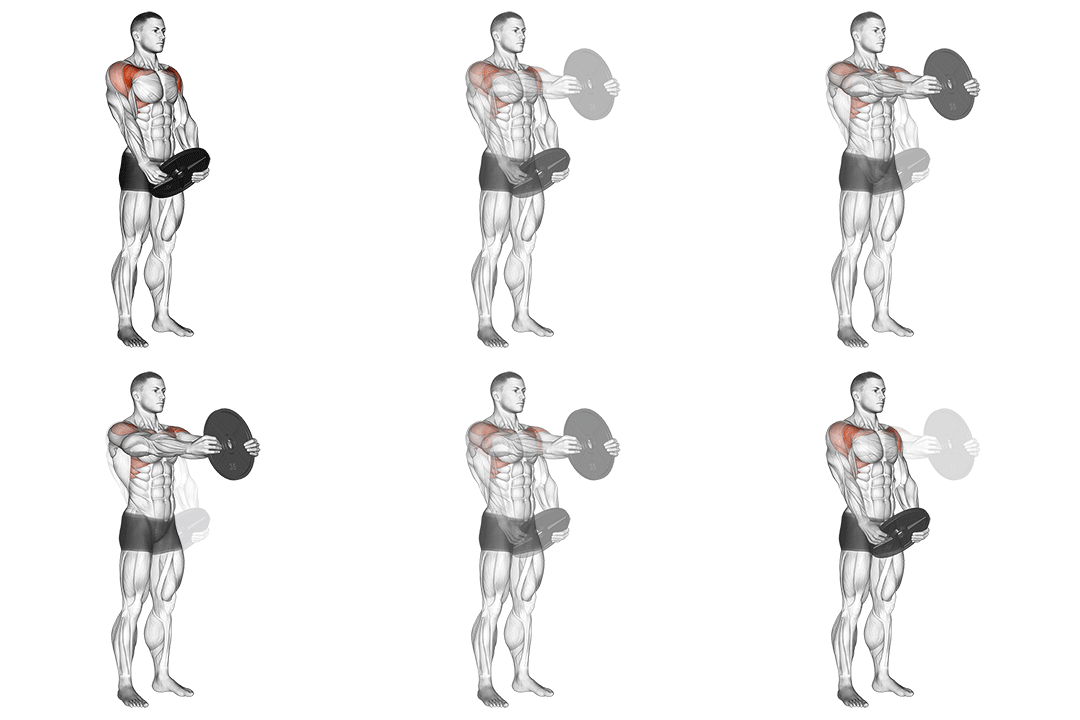
8. Weighted Front Raise
90% MatchHow to perform this exercise
- Stand with your feet shoulder-width apart, holding a dumbbell in each hand with your palms facing your thighs.
- Keeping your arms straight, exhale and lift the dumbbells in front of you until they are at shoulder level.
- Pause for a moment at the top, then inhale and slowly lower the dumbbells back down to the starting position.
- Repeat for the desired number of repetitions.
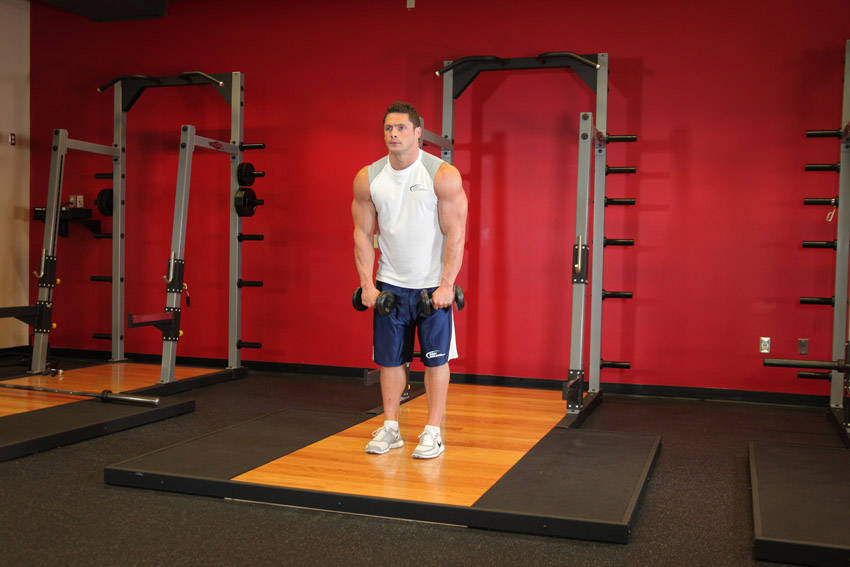
9. Standing Dumbbell Straight-Arm Front Delt Raise Above Head
89.4% MatchHow to perform this exercise
- Hold the dumbbells in front of your thighs, palms facing your thighs.
- Keep your arms straight with a slight bend at the elbows but keep them locked. This will be your starting position.
- Raise the dumbbells in a semicircular motion to arm's length overhead as you exhale.
- Slowly return to the starting position using the same path as you inhale.
- Repeat for the recommended amount of repetitions.
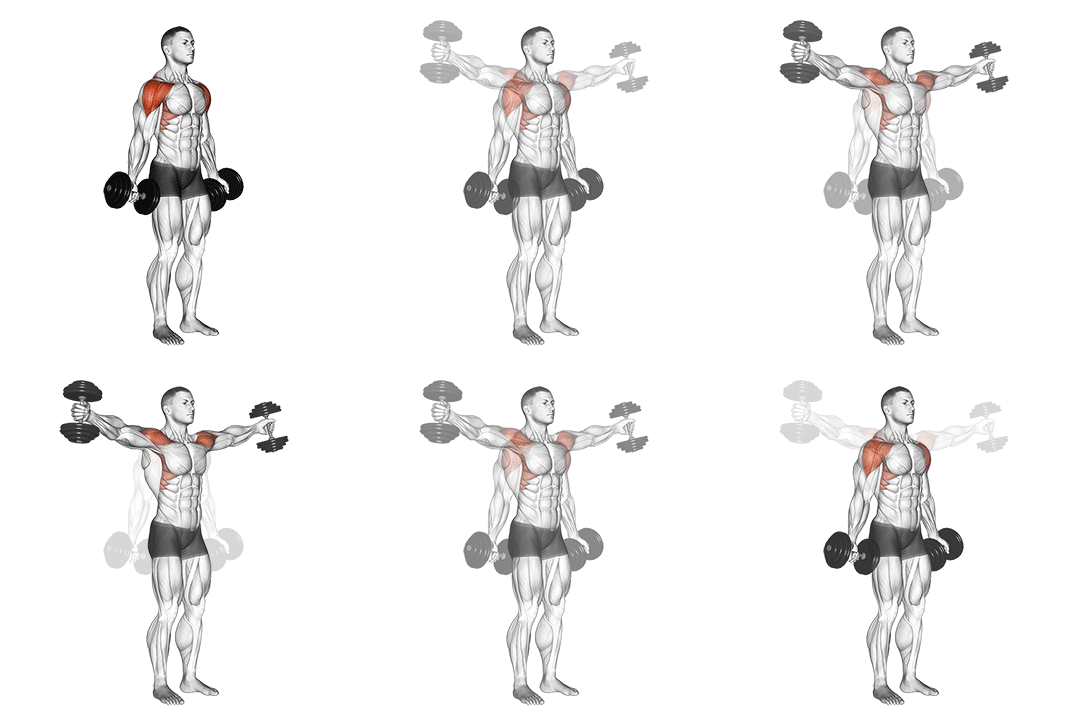
10. Dumbbell Full Can Lateral Raise
89.1% MatchHow to perform this exercise
- Stand with your feet shoulder-width apart, holding a dumbbell in each hand with your palms facing your body.
- Keep your back straight and engage your core.
- Raise your arms out to the sides, keeping a slight bend in your elbows, until they are parallel to the ground.
- Pause for a moment at the top, then slowly lower your arms back down to the starting position.
- Repeat for the desired number of repetitions.
Why You Might Need a Dumbbell Standing Front Raise Above Head Alternative
You swap this exercise for several practical reasons: acute shoulder pain with overhead motion, lack of dumbbells, poor scapular control, or the need for progressive overload. Substitutes let you isolate the anterior deltoid while changing loading patterns and range of motion to reduce impingement risk. For example, a cable front raise maintains constant tension on the anterior deltoid and reduces momentum, cue: keep a slight bend in the elbow and avoid shoulder shrugging. Choosing a variant can shift torque, change scapular mechanics, and either unload the rotator cuff or increase stability via a supported seated press.
How to Choose the Right Substitute
Match the substitute to your limiting factor. If pain or impingement limits you, pick a cable or plate front raise to shorten ROM and control the eccentric, cue: lead with the elbow and keep the scapula down. If you lack dumbbells but want progressive overload, use a barbell front raise or landmine press to change lever length. For core stability or unilateral imbalances, choose single-arm landmine or seated unilateral presses and brace your ribs. Prioritize movements that emphasize anterior deltoid activation while maintaining neutral scapular movement and a controlled tempo.
Frequently Asked Questions
What muscles does Dumbbell Standing Front Raise Above Head work?
It primarily targets the anterior deltoid with secondary activation of the clavicular pecs and upper traps. The movement also stresses the rotator cuff eccentrically during lowering; keep the scapula stable and lead with the elbow to bias the anterior deltoid.
What is the best bodyweight alternative to Dumbbell Standing Front Raise Above Head?
A pike push-up or elevated pike push-up is the best bodyweight option because it loads the shoulders in a vertical plane and recruits the anterior deltoid and upper traps. Cue: drive the crown of your head toward the floor, tuck the pelvis, and keep the shoulders stacked over the hands to maximize deltoid loading.
Can I build muscle without doing Dumbbell Standing Front Raise Above Head?
Yes. You can hypertrophy the anterior deltoid using many alternatives, cable front raises, plate raises to press, barbell front raises, landmine presses, or overhead presses. Use progressive overload, controlled eccentrics, and proper elbow-leading technique to ensure the anterior deltoid receives the primary stimulus.
More Exercise Alternatives
Find Alternatives for Any Exercise
Use the exercise substitution finder to compare ranked alternatives for your available equipment and training preference.
Try the Exercise Substitution Finder →