

10 Best Inchworm Alternatives for Core Stability
The Inchworm is done standing. Ranked closest by our scoring: the Hip Raise (Bent Knee). Four harder versions, among them the Arms Apart Circular Toe Touch and the Janda Sit-up, are listed below as progressions rather than swaps.
All the Inchworm asks for is your own bodyweight: you bend forward, walk your hands out to a plank and walk them back to standing. Hip Raise (Bent Knee) is the closest swap because it needs nothing more than bodyweight and still has you brace your core to hold a straight line from knees to shoulders, without the shoulder-loaded walkout. If you want to curl your torso up instead of hinging at the hips, the Janda Sit-up is also bodyweight only.
Updated Ranked by our 12-factor similarity model How it works
Original Exercise: Inchworm
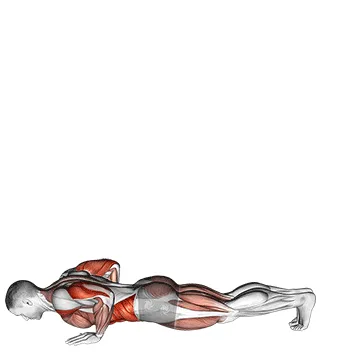
- Primary muscle
- Abs
- Equipment
- Bodyweight
- Difficulty
- Beginner
- Type
- Compound
Secondary muscles: Shoulders, Hamstrings
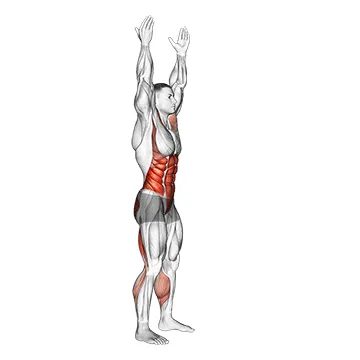
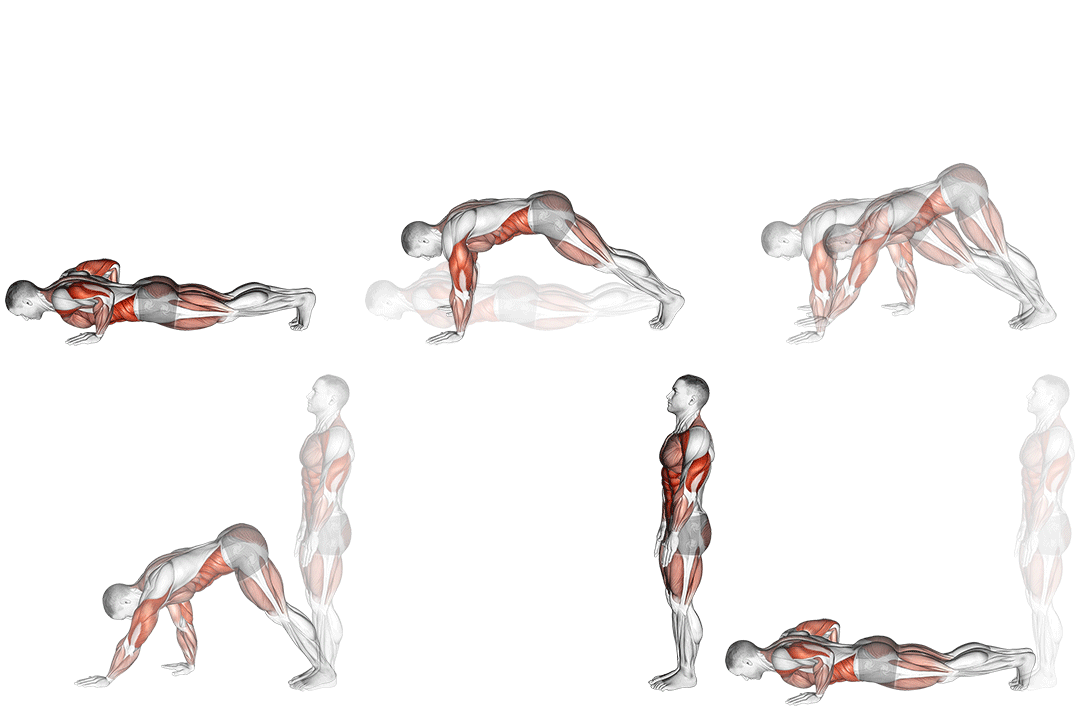
How to perform Inchworm
- Start in a standing position with your feet hip-width apart.
- Bend forward at the waist and place your hands on the ground in front of you.
- Walk your hands forward until you are in a high plank position, with your body in a straight line from head to toe.
- Pause for a moment, then walk your hands back towards your feet, keeping your legs as straight as possible.
- Once your hands reach your feet, stand back up to the starting position.
- Repeat for the desired number of repetitions.
Ranked Inchworm Alternatives
10 substitutes, ranked by how closely each one matches the Inchworm on movement pattern, muscles worked, equipment and body position. The higher the score, the less you change. Open "How to perform this exercise" on a card for the steps; every card title links to that exercise's own alternatives page. Harder versions are tagged as progressions and kept out of the top spot even when they score higher.
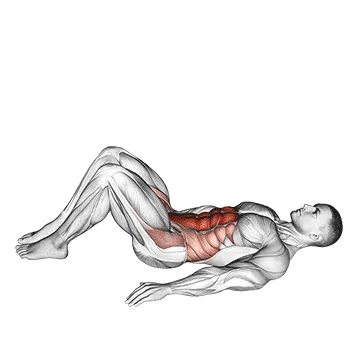
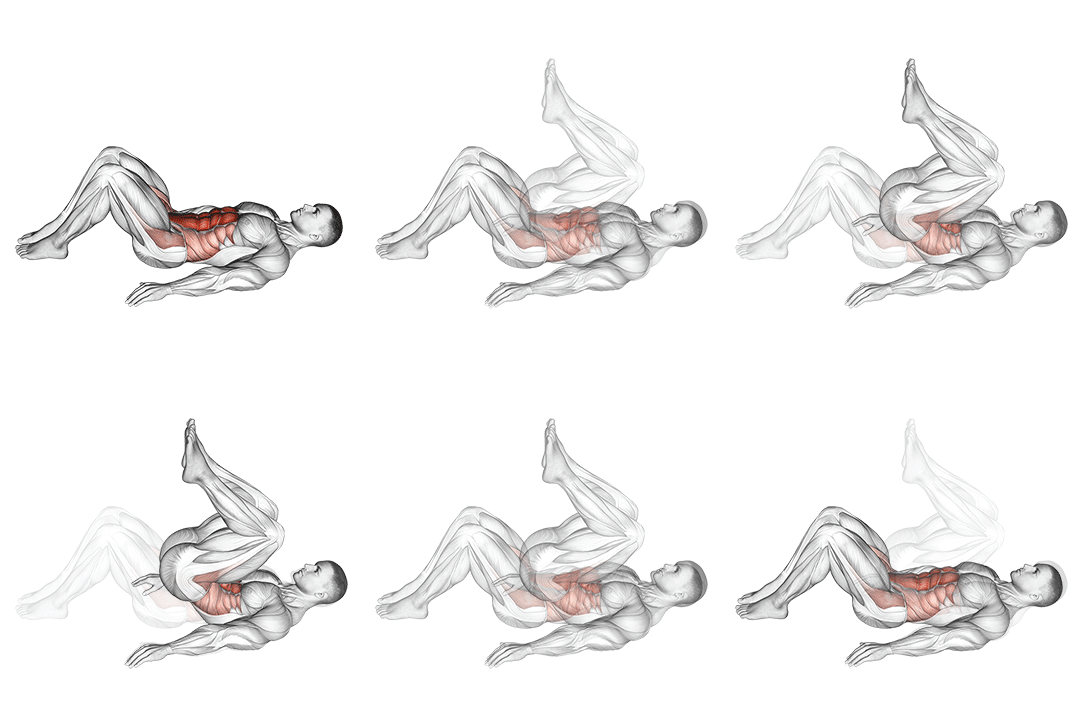
Best match 1. Hip Raise (Bent Knee)
73% match- Abs
- Bodyweight
- Beginner
- Compound
Pick this when you want to work the abs with less balance to manage.
How to perform this exercise
- Lie flat on your back with your knees bent and feet flat on the ground.
- Place your hands by your sides, palms facing down.
- Engage your core and glutes, then lift your hips off the ground until your body forms a straight line from your knees to your shoulders.
- Pause for a moment at the top, then slowly lower your hips back down to the starting position.
- Repeat for the desired number of repetitions.
Sets and reps: 3 sets of 8 to 12 reps, and add reps before you add load.
Why this matches
- Primary muscle: abs, the same as the Inchworm
- Equipment: bodyweight only, the same as the Inchworm
- Body position: lying on your back, not standing
Progression
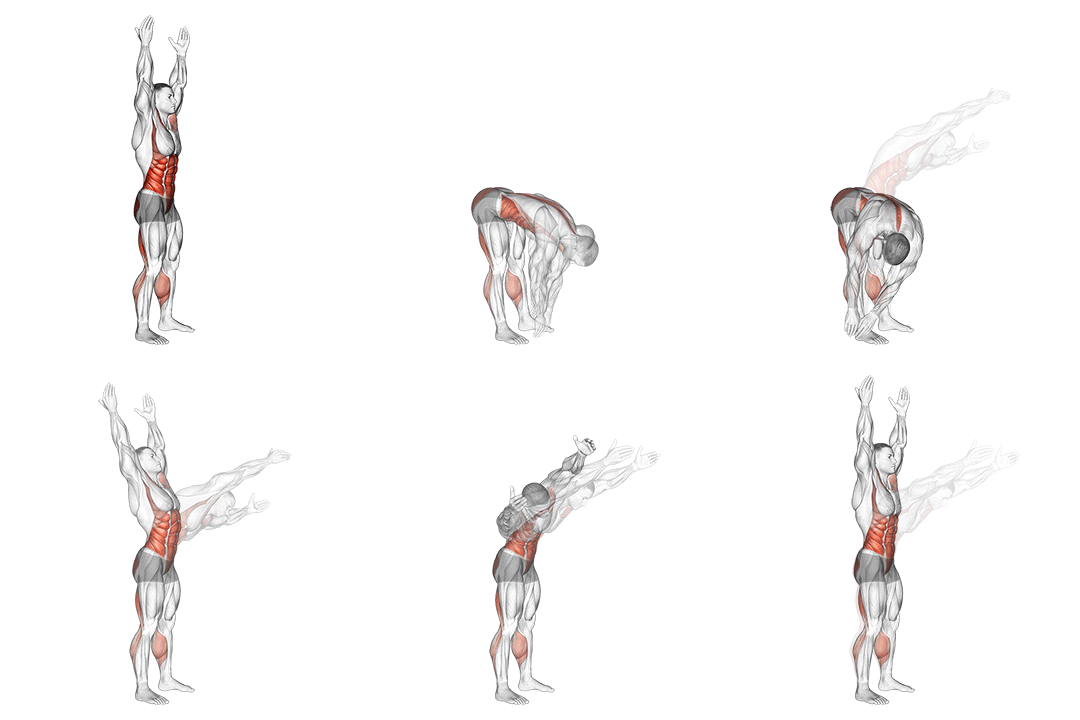
2. Arms Apart Circular Toe Touch
81% match- Glutes
- Bodyweight
- Intermediate
- Compound
A looser match: it uses the same equipment, but it works the glutes rather than the abs.
How to perform this exercise
- Stand with your feet shoulder-width apart and arms extended to the sides.
- Keeping your legs straight, bend forward at the waist and reach down towards your toes with your right hand.
- As you reach down, simultaneously lift your left leg straight up behind you, maintaining balance.
- Return to the starting position and repeat the movement with your left hand reaching towards your toes and your right leg lifting up behind you.
- Continue alternating sides for the desired number of repetitions.
Sets and reps: 3 or 4 sets of 6 to 10 reps.
Why this matches
- Primary muscle: glutes, not abs
- Equipment: bodyweight only, the same as the Inchworm
- Body position: standing, the same as the Inchworm
- Balance: easier to stay steady on than the Inchworm
Progression
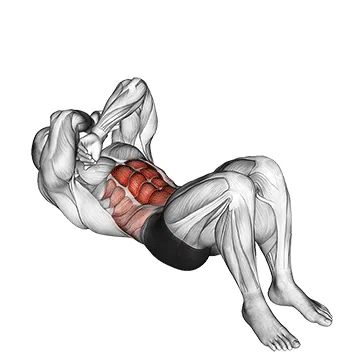
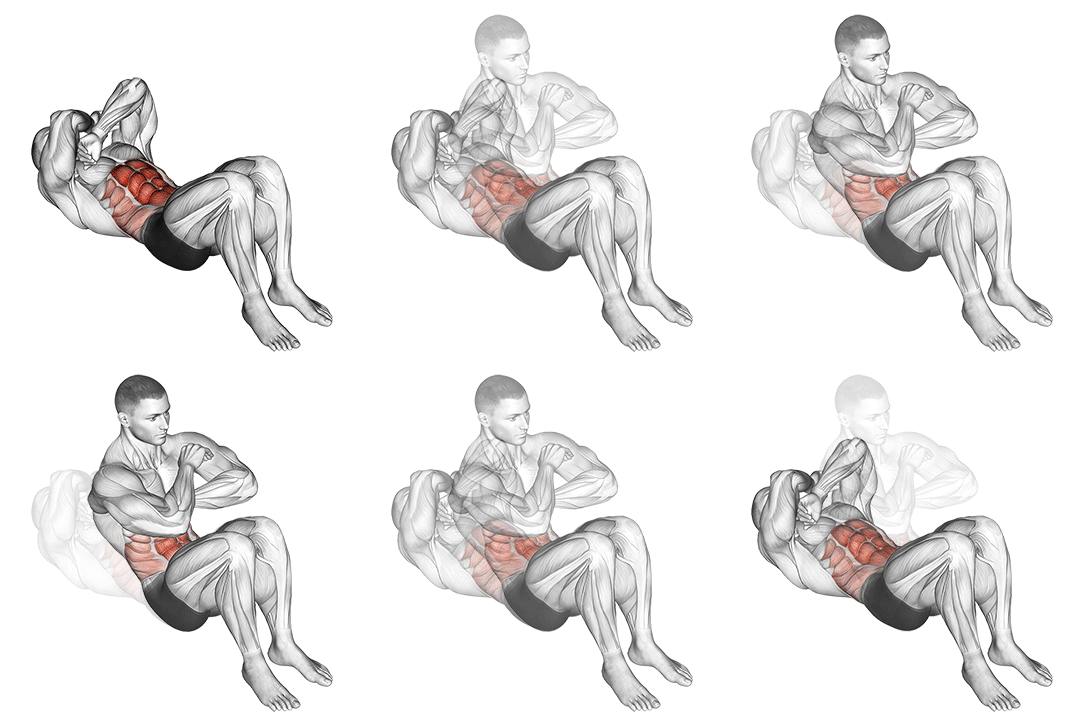
3. Janda Sit-up
74% match- Abs
- Bodyweight
- Advanced
- Compound
Pick this when you want a harder version that still works the abs.
How to perform this exercise
- Lie flat on your back with your knees bent and feet flat on the ground.
- Place your hands behind your head with your elbows pointing outwards.
- Engaging your abs, slowly lift your upper body off the ground, curling forward until your torso is at a 45-degree angle.
- Pause for a moment at the top, then slowly lower your upper body back down to the starting position.
- Repeat for the desired number of repetitions.
Sets and reps: 3 or 4 sets of 6 to 10 reps.
Why this matches
- Primary muscle: abs, the same as the Inchworm
- Equipment: bodyweight only, the same as the Inchworm
- Body position: lying on your back, not standing
Progression
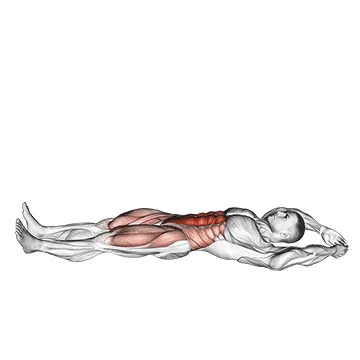
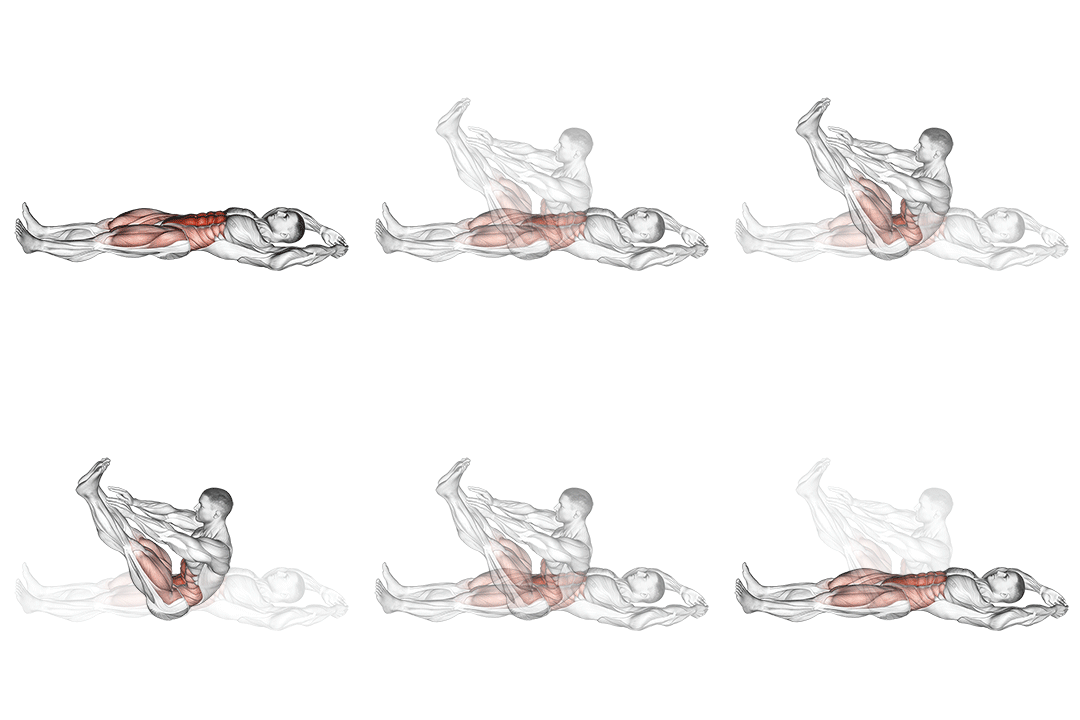
4. Jackknife Sit-up
73% match- Abs
- Bodyweight
- Intermediate
- Compound
How to perform this exercise
- Lie flat on your back with your legs extended and your arms overhead.
- Engage your core and lift your legs and upper body simultaneously, reaching your hands towards your toes.
- Pause for a moment at the top, then slowly lower your legs and upper body back down to the starting position.
- Repeat for the desired number of repetitions.
Sets and reps: 3 or 4 sets of 6 to 10 reps.
Why this matches
- Primary muscle: abs, the same as the Inchworm
- Equipment: bodyweight only, the same as the Inchworm
- Body position: lying on your back, not standing
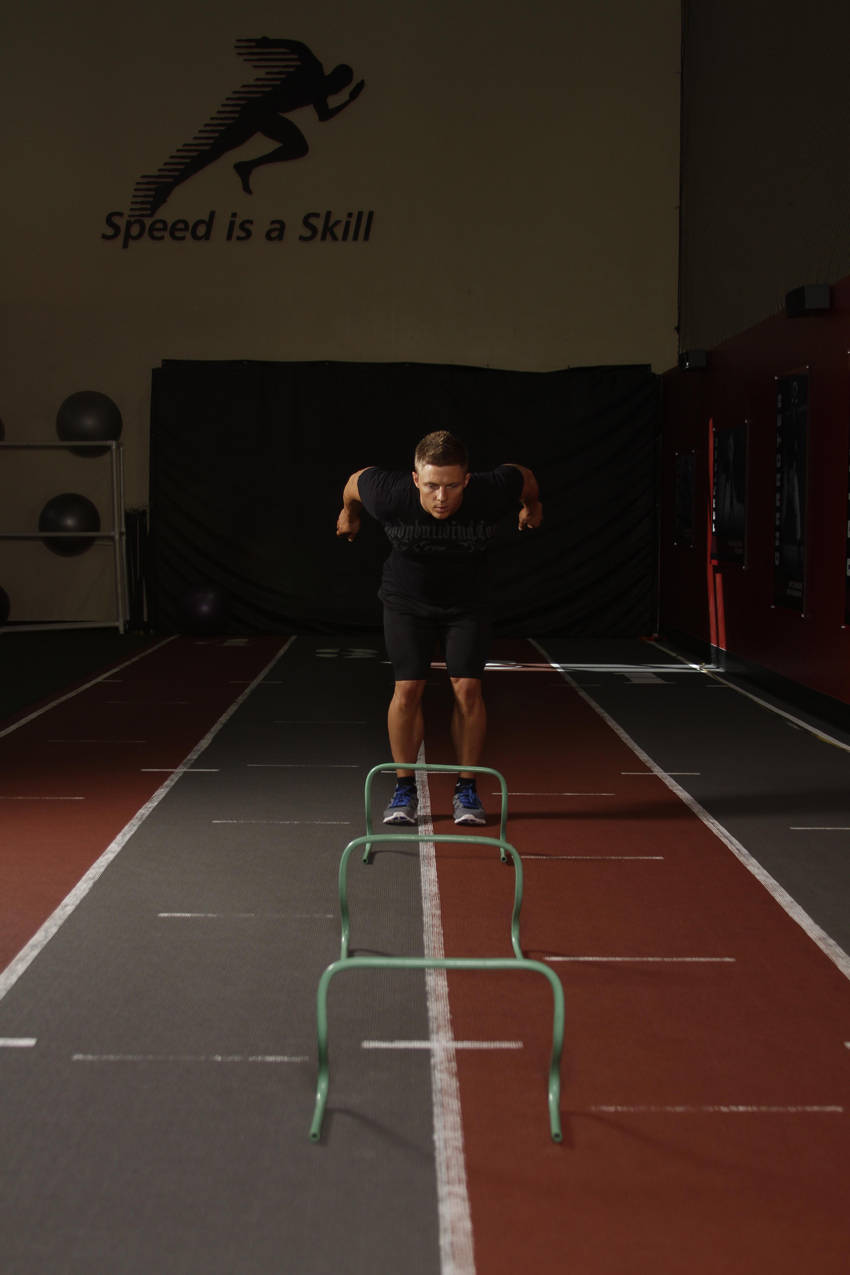
5. Hurdle Hops
70% match- Hamstrings
- Other
- Intermediate
- Compound
A looser match: it works the hamstrings rather than the abs.
How to perform this exercise
- Set up a row of hurdles or other small barriers, placing them a few feet apart.
- Stand in front of the first hurdle with your feet shoulder width apart. This will be your starting position.
- Begin by jumping with both feet over the first hurdle, swinging both arms as you jump.
- Absorb the impact of landing by bending the knees, rebounding out of the first leap by jumping over the next hurdle. Continue until you have jumped over all of the hurdles.
Sets and reps: 3 or 4 sets of 6 to 10 reps.
Why this matches
- Primary muscle: hamstrings, not abs
- Equipment: bodyweight only, the same as the Inchworm
- Body position: standing, the same as the Inchworm
Progression
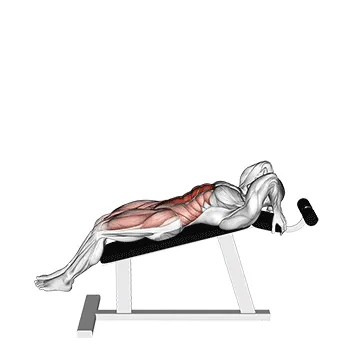
- Abs
- Bodyweight
- Intermediate
- Isolation
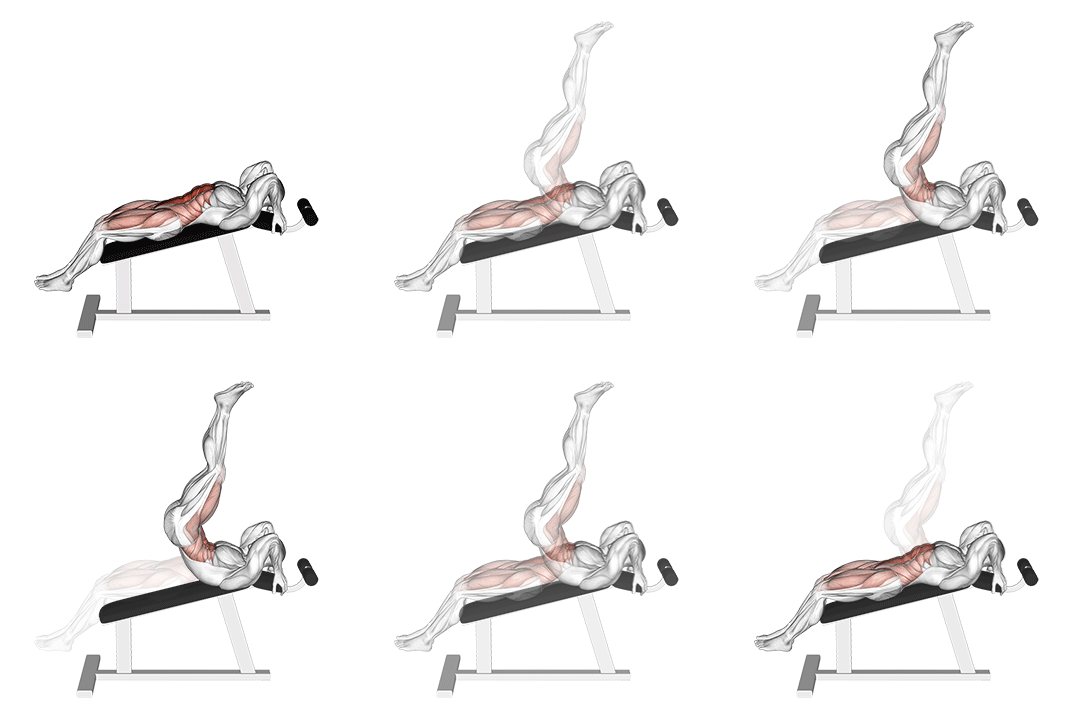
How to perform this exercise
- Lie on an incline bench with your back flat against the bench and your legs extended straight out in front of you.
- Place your hands on the sides of the bench for support.
- Engaging your abs, lift your legs off the bench, raising them as high as you can while keeping them straight.
- Pause for a moment at the top, then slowly lower your legs back down to the starting position.
- Repeat for the desired number of repetitions.
Sets and reps: 3 sets of 10 to 15 reps.
Why this matches
- Primary muscle: abs, the same as the Inchworm
- Equipment: bodyweight only, the same as the Inchworm
- Body position: lying on your back, not standing
- Balance: easier to stay steady on than the Inchworm
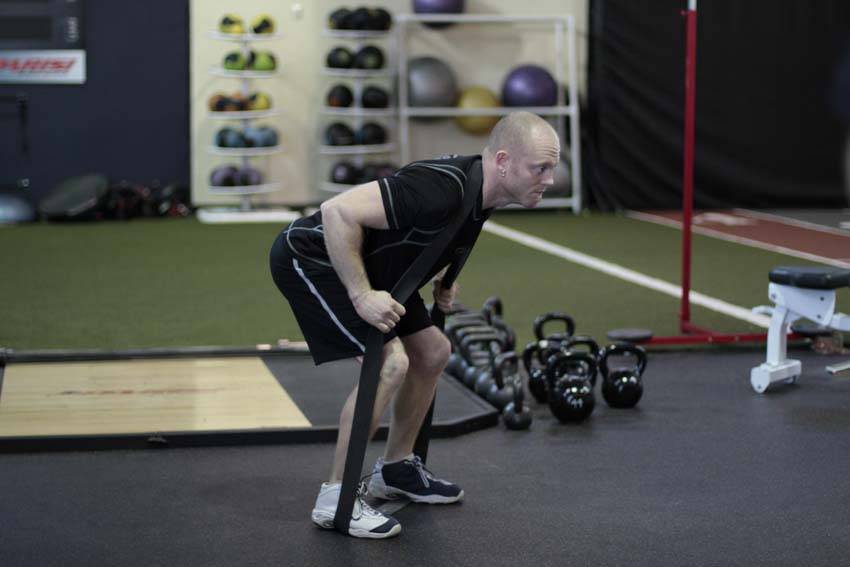
7. Band Good Morning
68% match- Hamstrings
- Band
- Intermediate
- Compound
How to perform this exercise
- Using a 41 inch band, stand on one end, spreading your feet a small amount. Bend at the hips to loop the end of the band behind your neck. This will be your starting position.
- Keeping your legs straight, extend through the hips to come to a near vertical position.
- Ensure that you do not round your back as you go down back to the starting position.
Sets and reps: 3 or 4 sets of 6 to 10 reps.
Why this matches
- Primary muscle: hamstrings, not abs
- Equipment: a band, not bodyweight only
- Body position: standing, the same as the Inchworm
- Balance: easier to stay steady on than the Inchworm
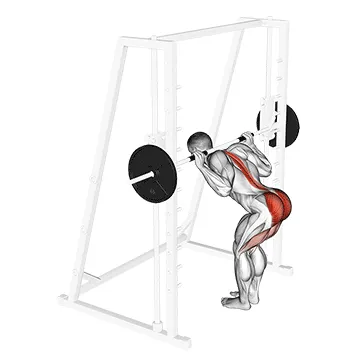
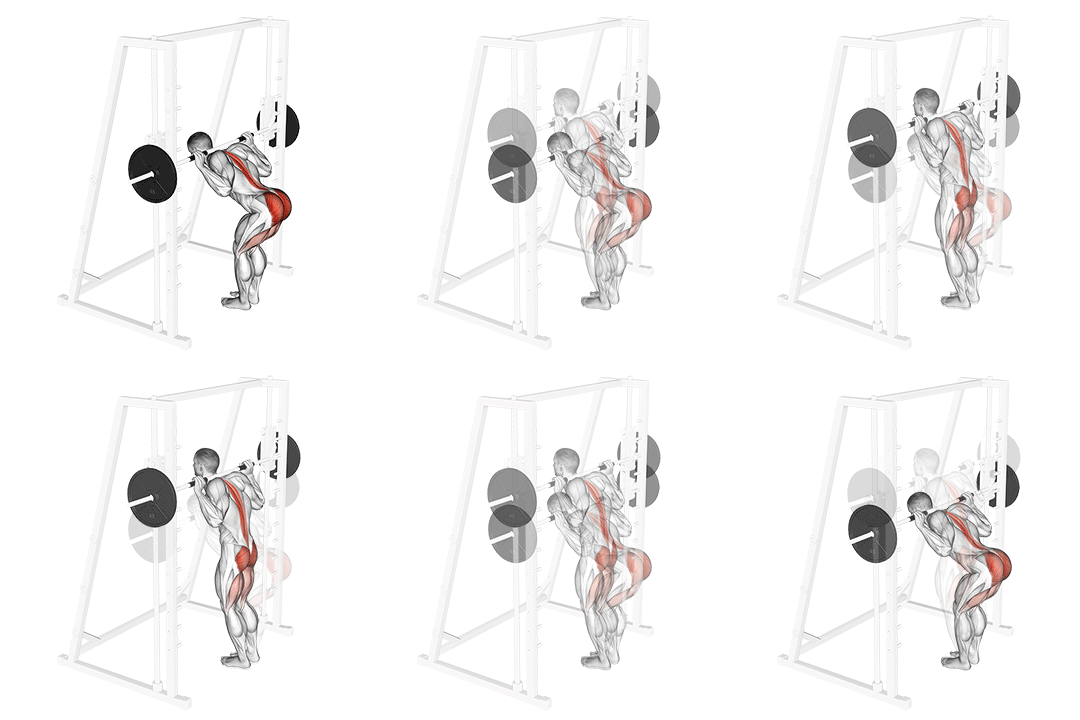
8. Smith Bent Knee Good Morning
67% match- Glutes
- Smith-machine
- Intermediate
- Compound
How to perform this exercise
- Start by standing with your feet shoulder-width apart, toes pointing forward.
- Place the barbell across your upper back, resting it on your traps.
- Bend your knees slightly and hinge forward at the hips, keeping your back straight.
- Lower your torso until it is parallel to the ground, feeling a stretch in your hamstrings.
- Engage your glutes and hamstrings to raise your torso back up to the starting position.
- Repeat for the desired number of repetitions.
Sets and reps: 3 or 4 sets of 6 to 10 reps.
Why this matches
- Primary muscle: glutes, not abs
- Equipment: a machine, not bodyweight only
- Body position: standing, the same as the Inchworm
- Balance: easier to stay steady on than the Inchworm
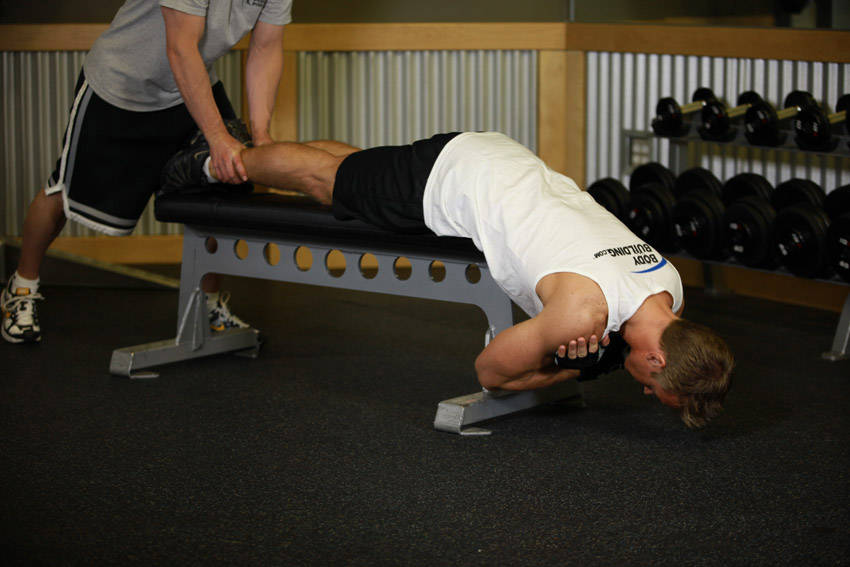
- Erector Spinae
- Bodyweight
- Intermediate
- Compound
How to perform this exercise
- With someone holding down your legs, slide yourself down to the edge a flat bench until your hips hang off the end of the bench. Tip: Your entire upper body should be hanging down towards the floor. Also, you will be in the same position as if you were on a hyperextension bench but the range of motion will be shorter due to the height of the flat bench vs. that of the hyperextension bench.
- With your body straight, cross your arms in front of you (my preference) or behind your head. This will be your starting position. Tip: You can also hold a weight plate for extra resistance in front of you under your crossed arms.
- Start bending forward slowly at the waist as far as you can while keeping your back flat. Inhale as you perform this movement. Keep moving forward until you almost touch the floor or you feel a nice stretch on the hamstrings (whichever comes first). Tip: Never round the back as you perform this exercise.
- Slowly raise your torso back to the initial position as you exhale. Tip: Avoid the temptation to arch your back past a straight line. Also, do not swing the torso at any time in order to protect the back from injury.
- Repeat for the recommended amount of repetitions.
Sets and reps: 3 or 4 sets of 6 to 10 reps.
Why this matches
- Primary muscle: erector spinae, not abs
- Equipment: bodyweight only, the same as the Inchworm
- Body position: lying face down, not standing
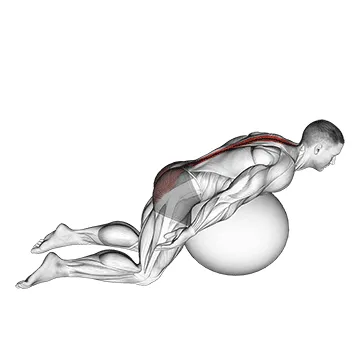
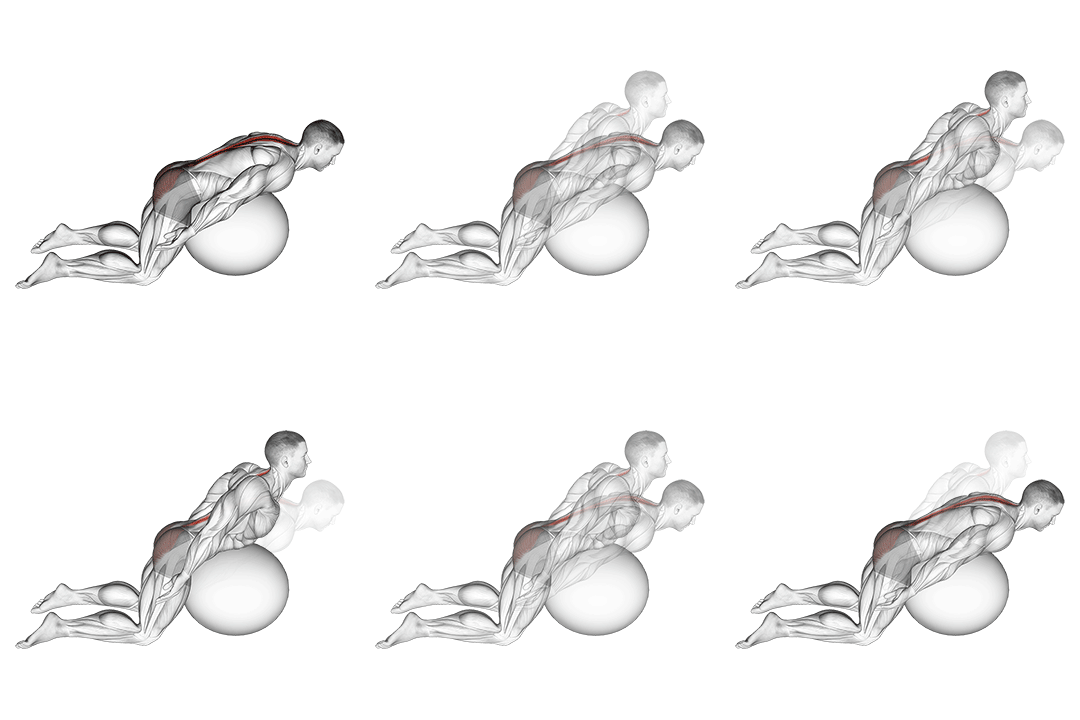
- Spine
- Stability-ball
- Beginner
- Compound
How to perform this exercise
- Place the stability ball on the ground and lie face down on top of it, with your hips resting on the ball and your feet against a wall for stability.
- Extend your arms straight out in front of you, with your palms facing down.
- Engage your core and slowly lift your upper body off the ball, keeping your back straight and your neck in line with your spine.
- Pause for a moment at the top, then slowly lower your upper body back down to the starting position.
- Repeat for the desired number of repetitions.
Sets and reps: 3 sets of 8 to 12 reps, and add reps before you add load.
Why this matches
- Primary muscle: spine, not abs
- Equipment: bodyweight only, the same as the Inchworm
- Body position: lying face down, not standing
Why You Might Need an Inchworm Alternative
You need floor space and steady wrists to do the Inchworm, since you bend forward, plant your hands and walk out to a plank before walking back to standing again, and that walk puts weight through your shoulders as well as your abs. Not every room gives you space to walk your hands out, and if you would rather keep your wrists off the floor or skip the deep forward fold, Hip Raise (Bent Knee) and Jackknife Sit-up keep your abs working from your back with no hands on the floor. The Band Good Morning and the Smith Bent Knee Good Morning keep the standing forward bend but load your hamstrings and glutes as you hinge and stand back up, so treat them as hinge work rather than a like-for-like abs swap.
How to Choose the Right Inchworm Substitute
Start with your level. If you are new to this, Hip Raise (Bent Knee) needs only body weight and trains the same abs the Inchworm does, making it the easiest start. Once that feels light, the Janda Sit-up curls your torso to about 45 degrees, hands behind your head, still with only body weight. Jackknife Sit-up needs only floor space and lifts your legs and torso together toward your toes, while the Incline Leg Hip Raise (Leg Straight) asks for an incline bench and lifts straight legs instead of curling your spine. If it is the standing bend you miss rather than the abs work, the Smith Bent Knee Good Morning needs a smith machine and the Band Good Morning needs a band; both have you hinge at the hips and drive back up through your hamstrings and glutes.
Inchworm FAQ
Can I do the Inchworm at home?
Yes, all it needs is body weight and enough floor space to walk your hands out and back. If you want a swap that also stays at home, Hip Raise (Bent Knee) and Jackknife Sit-up need nothing but a bit of floor, so either one fits without buying anything.
Which Inchworm alternative suits a beginner?
Hip Raise (Bent Knee) is built for that. It needs only your body weight, keeps your core braced as you hold a straight line from knees to shoulders, and leaves out the walkout entirely, so there is no plank to hold and no hands on the floor.
How do I make the swap harder?
Move up to the Janda Sit-up once Hip Raise (Bent Knee) feels easy. It still needs nothing but body weight, but it curls your torso up to about a 45 degree angle with your hands behind your head instead of lifting your hips, so it is a natural next step rather than a full restart.
Which alternatives need a machine or a band?
Smith Bent Knee Good Morning needs a machine; Band Good Morning needs a band. Hurdle Hops need a row of hurdles, Exercise Ball Back Extension With Arms Extended needs a stability ball, Incline Leg Hip Raise (Leg Straight) needs an incline bench, and Hyperextensions With No Hyperextension Bench needs a flat bench and someone to hold your legs. Hip Raise (Bent Knee), Jackknife Sit-up, Janda Sit-up and Arms Apart Circular Toe Touch work with body weight alone.
Find Alternatives for Any Exercise
Search the exercise database and filter the ranked substitutes by the equipment you own.
Similarity scores compare exercise metadata such as movement pattern, muscles, equipment and body position. They are not a safety rating or a check that you own the equipment. Learn about our methodology