

10 Best Kettlebell One-arm Push Press Alternatives for Shoulder Strength
The Kettlebell One Arm Push Press is done standing with a kettlebell. Ranked closest by our scoring: the One-arm Kettlebell Para Press, the Kettlebell Double Push Press and the Push Press - Behind The Neck.
Updated Ranked by our 12-factor similarity model How it works
Original Exercise: Kettlebell One Arm Push Press
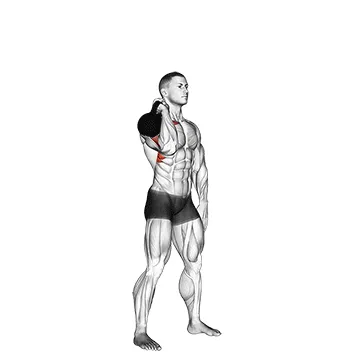
- Primary muscle
- Delts
- Equipment
- Kettlebell
- Difficulty
- Intermediate
- Type
- Compound
Secondary muscles: Triceps, Core
How to perform Kettlebell One Arm Push Press
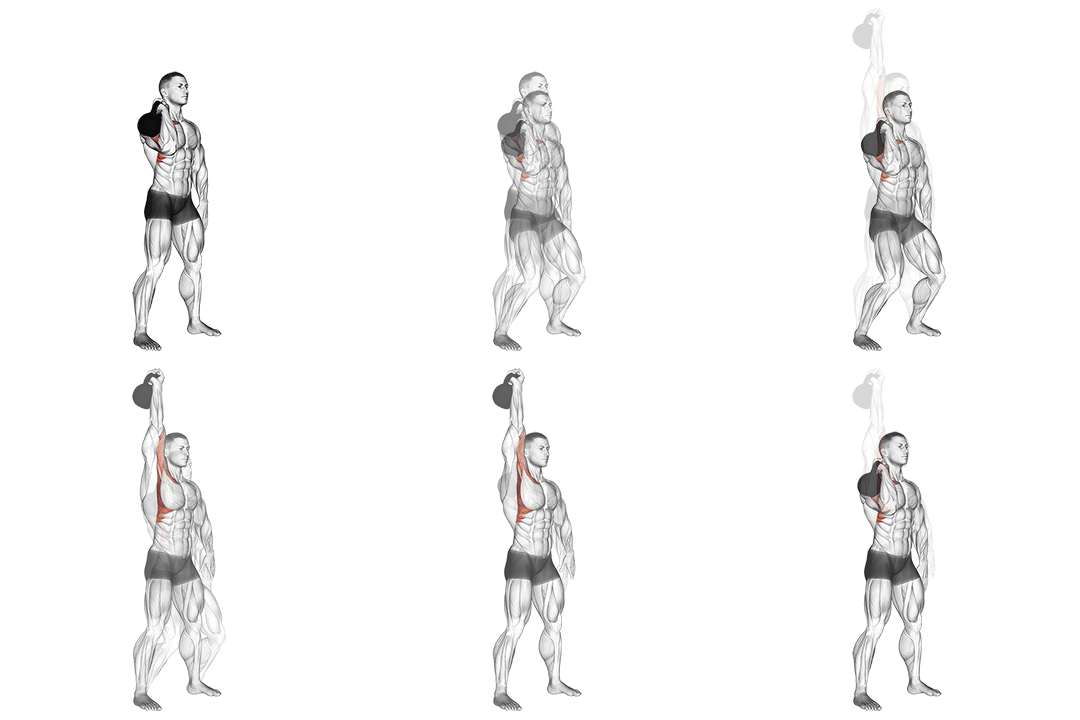
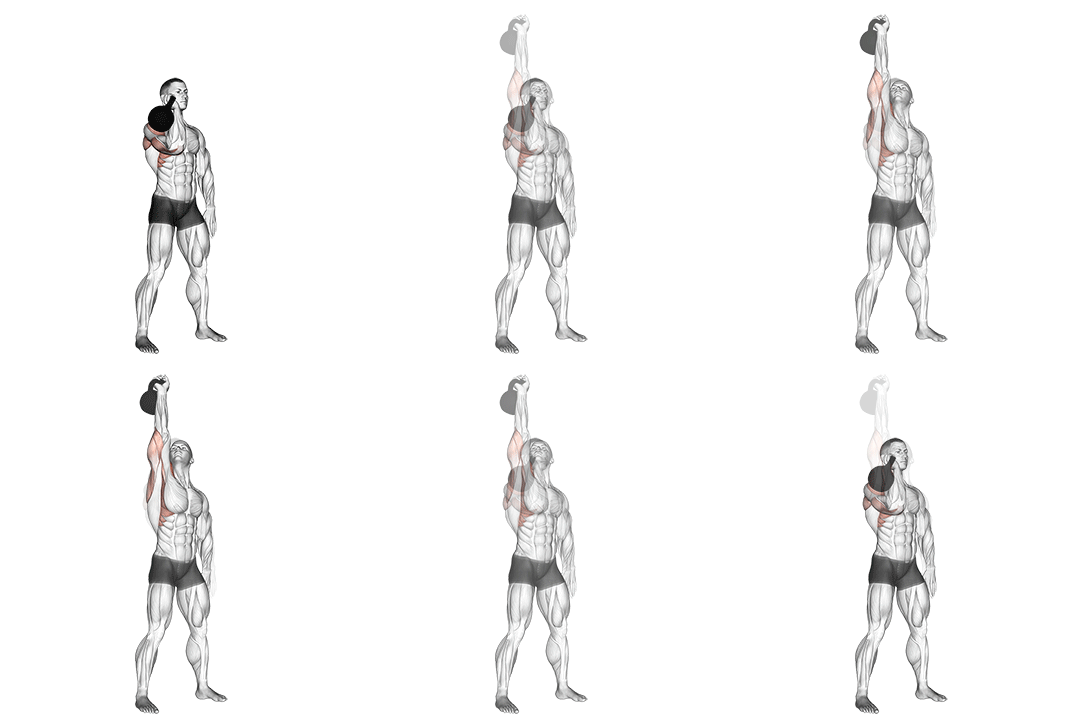
- Stand with your feet shoulder-width apart, holding a kettlebell in one hand at shoulder level.
- Bend your knees slightly and engage your core.
- Press the kettlebell overhead by extending your arm and fully extending your legs.
- Lower the kettlebell back to the starting position by bending your knees and bringing the kettlebell back to your shoulder.
- Repeat for the desired number of repetitions, then switch sides.
Ranked Kettlebell One Arm Push Press Alternatives
10 substitutes, ranked by how closely each one matches the Kettlebell One Arm Push Press on movement pattern, muscles worked, equipment and body position. The higher the score, the less you change. Open "How to perform this exercise" on a card for the steps; every card title links to that exercise's own alternatives page.
Best match 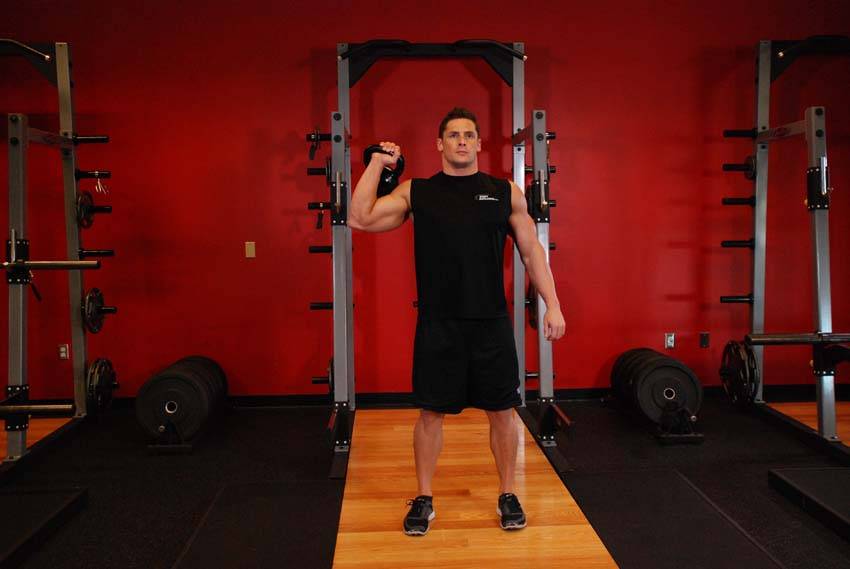
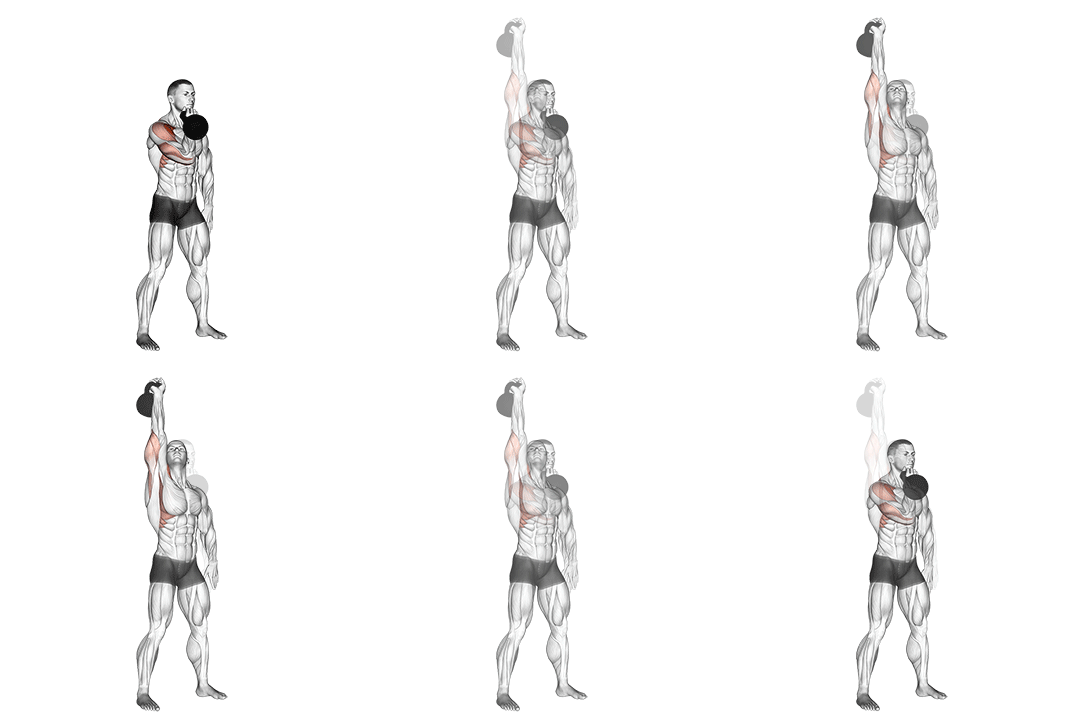
1. One-arm Kettlebell Para Press
95% match- Delts
- Kettlebell
- Intermediate
- Compound
It uses the same equipment and still works the delts.
How to perform this exercise
- Clean a kettlebell to your shoulder. Clean the kettlebell to your shoulder by extending through the legs and hips as you pull the kettlebell towards your shoulder. Rotate your wrist as you do so, so that the palm faces forward. This will be your starting position.
- Hold the kettlebell with the elbow out to the side, and press it up and out until it is locked out overhead.
- Lower the kettlebell back to your shoulder under control and repeat. Make sure to contract your lat, butt, and stomach forcefully for added stability and strength.
Sets and reps: 3 or 4 sets of 6 to 10 reps on each side.
Why this matches
- Primary muscle: delts, the same as the Kettlebell One Arm Push Press
- Equipment: free weights, the same as the Kettlebell One Arm Push Press
- Body position: standing, the same as the Kettlebell One Arm Push Press
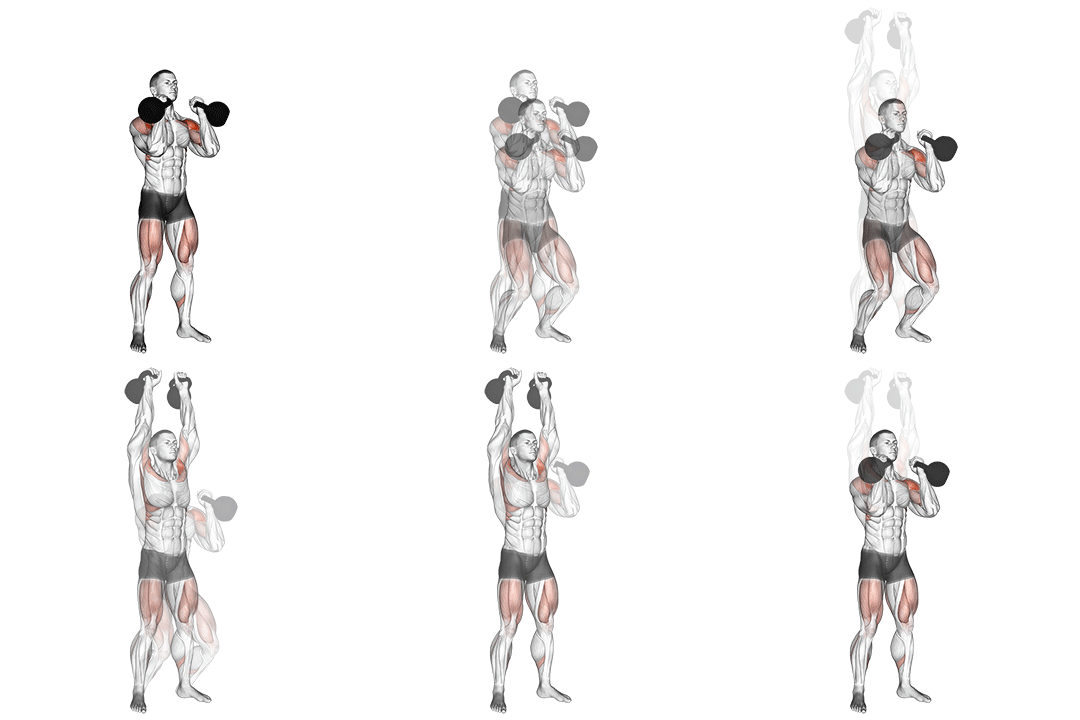
2. Kettlebell Double Push Press
93% match- Delts
- Kettlebell
- Intermediate
- Compound
How to perform this exercise
- Start by standing with your feet shoulder-width apart, holding a kettlebell in each hand at shoulder height.
- Bend your knees slightly and engage your core.
- Initiate the movement by explosively extending your hips, knees, and ankles, driving the kettlebells overhead.
- As the kettlebells reach the top, press them fully overhead, locking out your arms.
- Lower the kettlebells back to the starting position by bending your elbows and bringing them back down to shoulder height.
- Repeat for the desired number of repetitions.
Sets and reps: 3 or 4 sets of 6 to 10 reps.
Why this matches
- Movement: overhead push press, the same as the Kettlebell One Arm Push Press
- Primary muscle: delts, the same as the Kettlebell One Arm Push Press
- Equipment: free weights, the same as the Kettlebell One Arm Push Press
- Body position: standing, the same as the Kettlebell One Arm Push Press
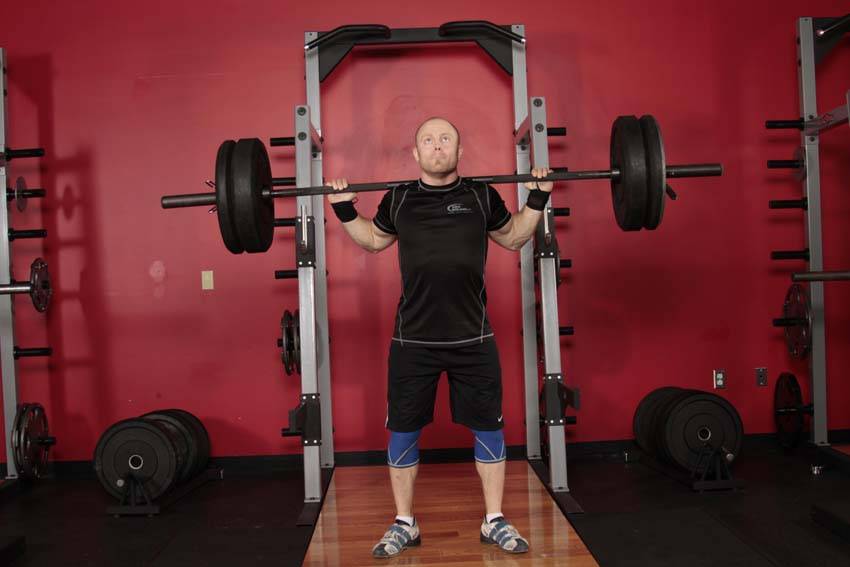
3. Push Press - Behind The Neck
88% match- Delts
- Barbell
- Advanced
- Compound
A good swap when you have a barbell to work with, and it still works the delts.
How to perform this exercise
- Standing with the weight racked on the back of the shoulders, begin with the dip. With your feet directly under your hips, flex the knees without moving the hips backward. Go down only slightly, and reverse direction as powerfully as possible. Drive through the heels create as much speed and force as possible, moving the bar in a vertical path.
- Using the momentum generated, finish pressing the weight overhead be extending through the arms.
- Return to the starting position, using your legs to absorb the impact.
Sets and reps: 3 to 5 sets of 5 to 8 reps.
Why this matches
- Movement: overhead push press, the same as the Kettlebell One Arm Push Press
- Primary muscle: delts, the same as the Kettlebell One Arm Push Press
- Equipment: free weights, the same as the Kettlebell One Arm Push Press
- Body position: standing, the same as the Kettlebell One Arm Push Press
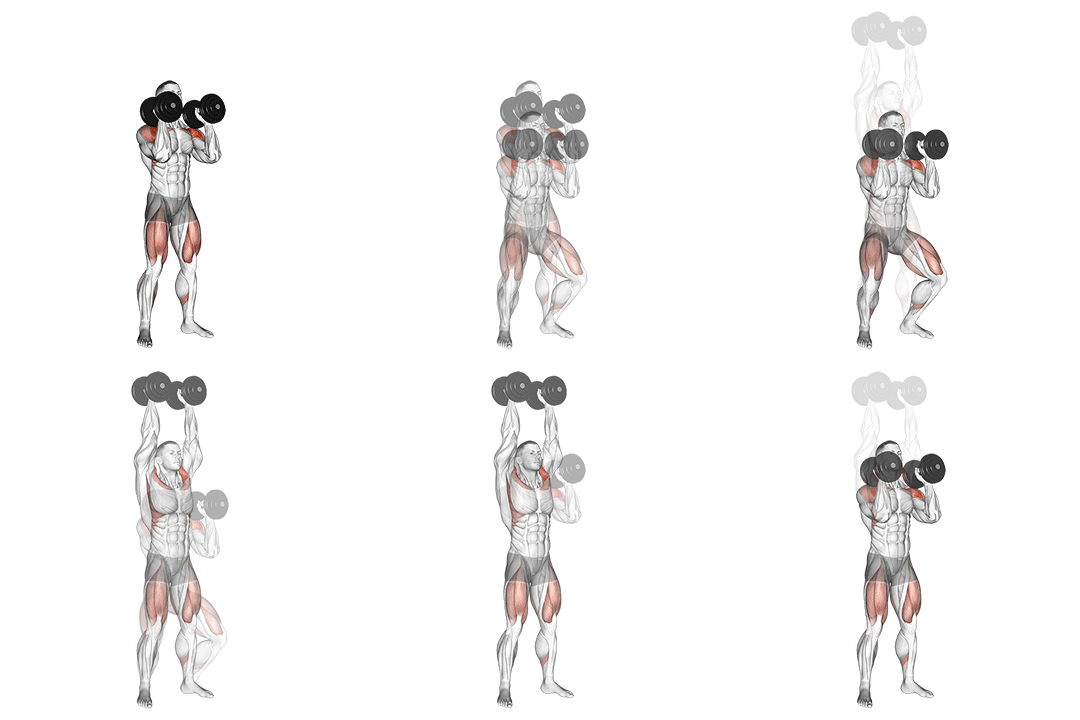
4. Dumbbell Push Press
88% match- Delts
- Dumbbell
- Intermediate
- Compound
A good swap when you have dumbbells to work with, and it still works the delts.
How to perform this exercise
- Stand with your feet shoulder-width apart, holding a dumbbell in each hand at shoulder level.
- Bend your knees slightly and dip your body down, then explosively extend your legs and press the dumbbells overhead.
- Lock out your arms at the top of the movement, then lower the dumbbells back to shoulder level.
- Repeat for the desired number of repetitions.
Sets and reps: 3 or 4 sets of 6 to 10 reps.
Why this matches
- Movement: overhead push press, the same as the Kettlebell One Arm Push Press
- Primary muscle: delts, the same as the Kettlebell One Arm Push Press
- Equipment: free weights, the same as the Kettlebell One Arm Push Press
- Body position: standing, the same as the Kettlebell One Arm Push Press
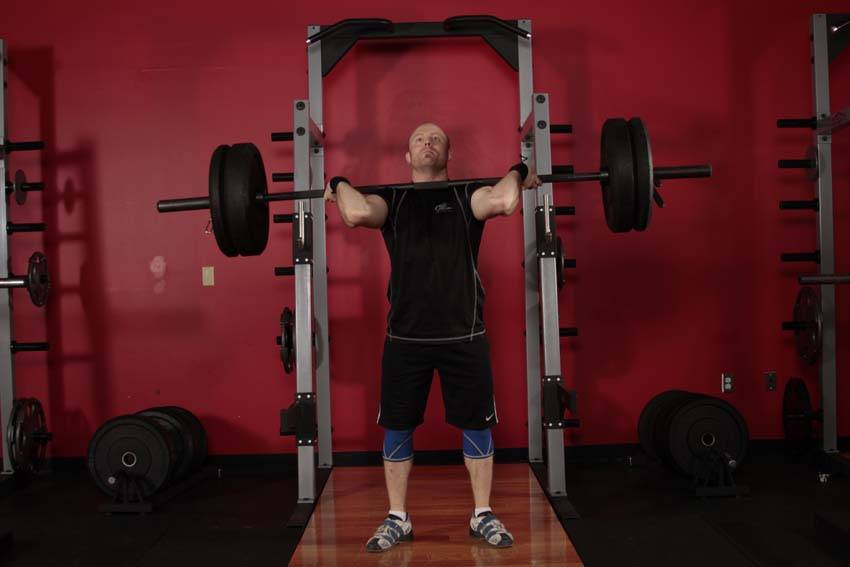
5. Push Press
88% match- Delts
- Barbell
- Intermediate
- Compound
How to perform this exercise
Sets and reps: 3 or 4 sets of 6 to 10 reps.
Why this matches
- Movement: overhead push press, the same as the Kettlebell One Arm Push Press
- Primary muscle: delts, the same as the Kettlebell One Arm Push Press
- Equipment: free weights, the same as the Kettlebell One Arm Push Press
- Body position: standing, the same as the Kettlebell One Arm Push Press
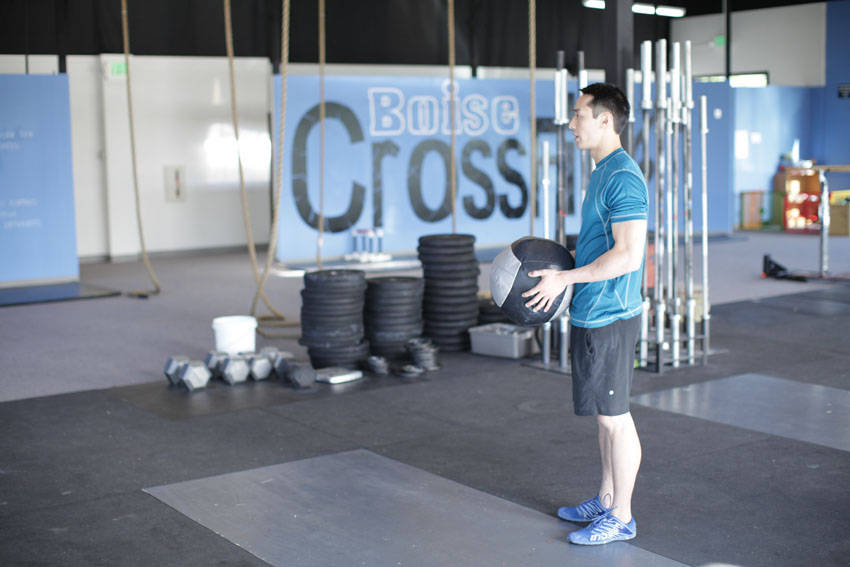
6. Standing Two-arm Overhead Throw
88% match- Delts
- Medicine-ball
- Intermediate
- Compound
A good swap when you have a medicine ball to work with, and it still works the delts.
How to perform this exercise
- Stand with your feet shoulder width apart holding a medicine ball in both hands. To begin, reach the medicine ball deep behind your head as you bend the knees slightly and lean back.
- Violently throw the ball forward, flexing at the hip and using your whole body to complete the movement.
- The medicine ball can be thrown to a partner or to a wall, receiving it as it bounces back.
Sets and reps: 3 or 4 sets of 6 to 10 reps.
Why this matches
- Primary muscle: delts, the same as the Kettlebell One Arm Push Press
- Equipment: free weights, the same as the Kettlebell One Arm Push Press
- Body position: standing, the same as the Kettlebell One Arm Push Press
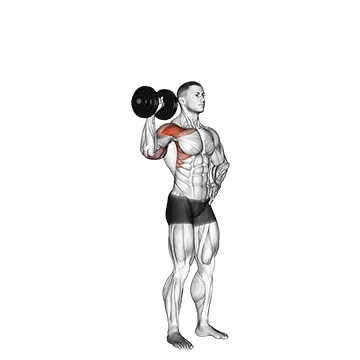
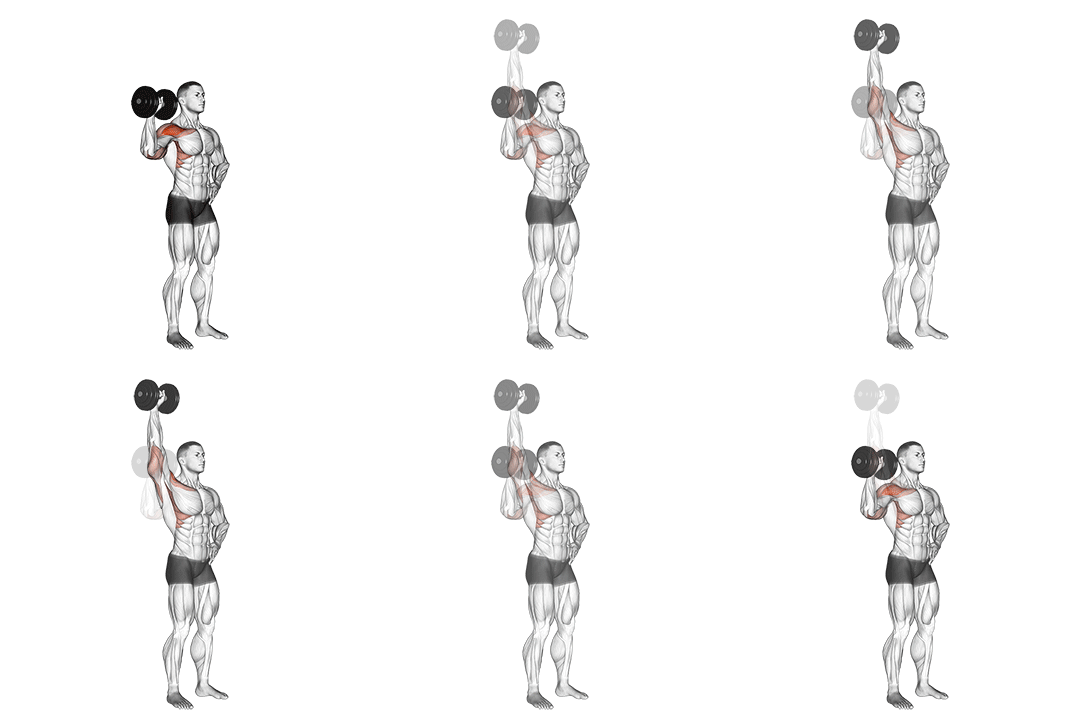
7. Dumbbell One Arm Shoulder Press
86% match- Delts
- Dumbbell
- Intermediate
- Compound
How to perform this exercise
- Stand with your feet shoulder-width apart and hold a dumbbell in one hand at shoulder level, palm facing forward.
- Engage your core and press the dumbbell straight up overhead, fully extending your arm.
- Pause for a moment at the top, then slowly lower the dumbbell back to shoulder level.
- Repeat for the desired number of repetitions, then switch to the other arm.
Sets and reps: 3 or 4 sets of 6 to 10 reps on each side.
Why this matches
- Primary muscle: delts, the same as the Kettlebell One Arm Push Press
- Equipment: free weights, the same as the Kettlebell One Arm Push Press
- Body position: standing, the same as the Kettlebell One Arm Push Press
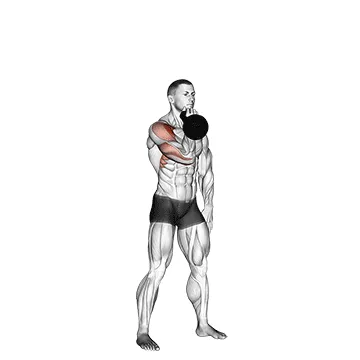
8. Kettlebell Arnold Press
85% match- Delts
- Kettlebell
- Intermediate
- Compound
How to perform this exercise
- Stand with your feet shoulder-width apart, holding a kettlebell in each hand at shoulder height with your palms facing towards you.
- Engage your core and press the kettlebells overhead, rotating your palms to face forward as you extend your arms.
- Pause at the top of the movement, then slowly lower the kettlebells back to the starting position.
- Repeat for the desired number of repetitions.
Sets and reps: 3 or 4 sets of 6 to 10 reps on each side.
Why this matches
- Primary muscle: delts, the same as the Kettlebell One Arm Push Press
- Equipment: free weights, the same as the Kettlebell One Arm Push Press
- Body position: standing, the same as the Kettlebell One Arm Push Press
- Delts
- Kettlebell
- Intermediate
- Compound
How to perform this exercise
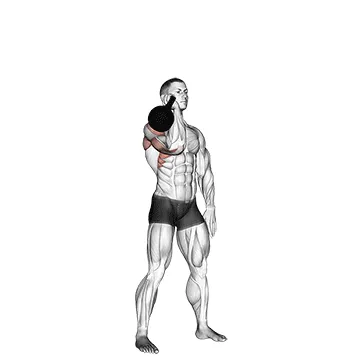
- Stand with your feet shoulder-width apart, holding a kettlebell in one hand at shoulder height.
- Engage your core and keep your back straight.
- Press the kettlebell overhead, extending your arm fully.
- Pause for a moment at the top, then slowly lower the kettlebell back to the starting position.
- Repeat for the desired number of repetitions, then switch sides.
Sets and reps: 3 or 4 sets of 6 to 10 reps on each side.
Why this matches
- Primary muscle: delts, the same as the Kettlebell One Arm Push Press
- Equipment: free weights, the same as the Kettlebell One Arm Push Press
- Body position: standing, the same as the Kettlebell One Arm Push Press
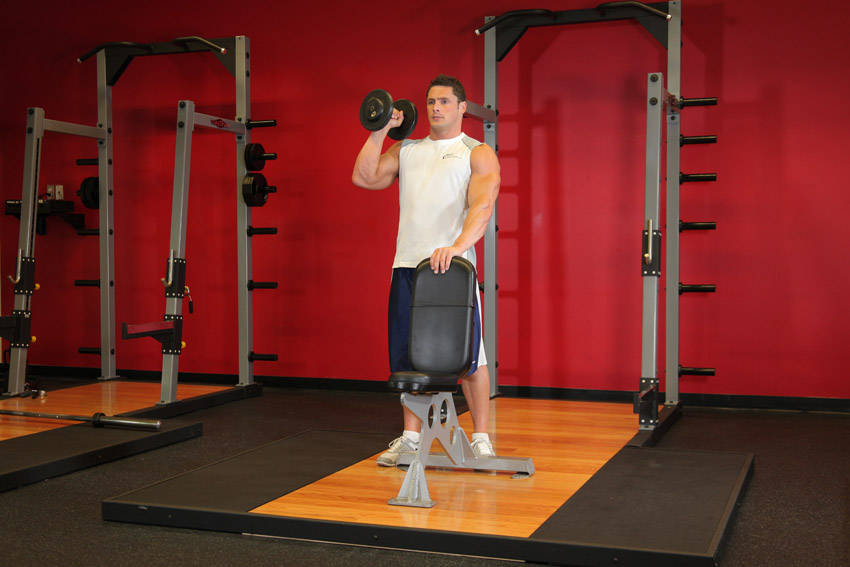
- Delts
- Dumbbell
- Intermediate
- Compound
How to perform this exercise
- Start by having a dumbbell in one hand with your arm fully extended to the side using a neutral grip. Use your other arm to hold on to an incline bench to keep your balance.
- Your feet should be shoulder width apart from each other. Now slowly lift the dumbbell up until you create a 90 degree angle with your arm. Note: Your forearm should be perpendicular to the floor. Continue to maintain a neutral grip throughout the entire exercise.
- Slowly lift the dumbbell up until your arm is fully extended. This the starting position.
- While inhaling lower the weight down until your arm is at a 90 degree angle again.
- Feel the contraction for a second and then lift the weight back up towards the starting position while exhaling. Remember to hold on to the incline bench and keep your feet positioned to keep balance during the exercise.
- Repeat for the recommended amount of repetitions.
- Switch arms and repeat the exercise.
Sets and reps: 3 or 4 sets of 6 to 10 reps on each side.
Why this matches
- Primary muscle: delts, the same as the Kettlebell One Arm Push Press
- Equipment: free weights, the same as the Kettlebell One Arm Push Press
- Body position: standing, the same as the Kettlebell One Arm Push Press
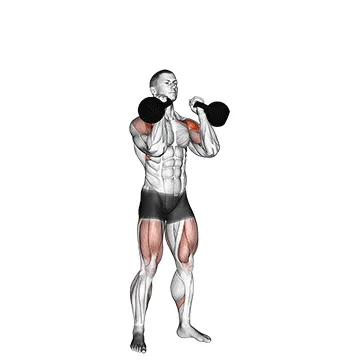
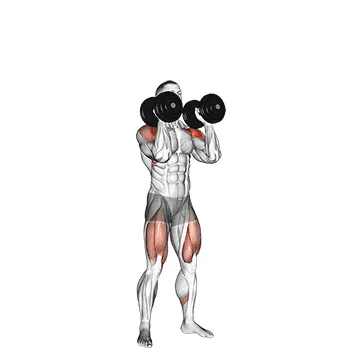
Why You Might Need a Kettlebell One Arm Push Press Alternative
You may swap the kettlebell one-arm push press for several reasons: limited equipment, shoulder pain with the axial load, or a need to emphasize strict pressing mechanics. Substitutes let you control load distribution and range of motion while maintaining deltoid and triceps activation. For example, a landmine single-arm press reduces shear through the glenohumeral joint and shifts activation to the anterior and lateral deltoids; cue a vertical forearm at lockout to maximize anterior delt recruitment. If instability is the issue, choose a seated strict press to remove leg drive and isolate the shoulder stabilizers.
How to Choose the Right Kettlebell One Arm Push Press Substitute
Pick a substitute based on equipment, shoulder health, and training goal. If you need to preserve leg drive and power, choose a dumbbell push press and cue an aggressive hip extension to transfer force. For shoulder isolation and hypertrophy, use a strict single-arm dumbbell press and maintain a slow eccentric to increase time under tension and lateral delt activation. If you have mobility limits or pain, select a landmine press and keep the wrist neutral while driving from the hips to reduce impingement. Progress load, range of motion, and tempo depending on whether you prioritize strength, power, or size.
Kettlebell One Arm Push Press FAQ
What muscles does Kettlebell One Arm Push Press work?
The one-arm push press primarily targets the anterior and lateral deltoids, with secondary activation of the triceps, upper pectoralis, and traps. Hip extension and quadriceps contribute via the dip-drive, so you also recruit glutes and core to transfer force into the shoulder.
Can I build muscle without doing Kettlebell One Arm Push Press?
Yes. You can build shoulder mass with other pressing variations that provide progressive overload, dumbbell strict presses, landmine presses, and slow-tempo lateral raises all work. Use controlled eccentrics and full lockout to maximize deltoid tension and hypertrophic stimulus.
Find Alternatives for Any Exercise
Search the exercise database and filter the ranked substitutes by the equipment you own.
Similarity scores compare exercise metadata such as movement pattern, muscles, equipment and body position. They are not a safety rating or a check that you own the equipment. Learn about our methodology