

10 Best Kettlebell One-legged Deadlift Alternatives for Rehab & Strength
The Kettlebell One-legged Deadlift is done standing with a kettlebell. Ranked closest by our scoring: One-arm Kettlebell Swings, the Kick Out Sit and the Romanian Deadlift.
Updated Ranked by our 12-factor similarity model How it works
Original Exercise: Kettlebell One-legged Deadlift
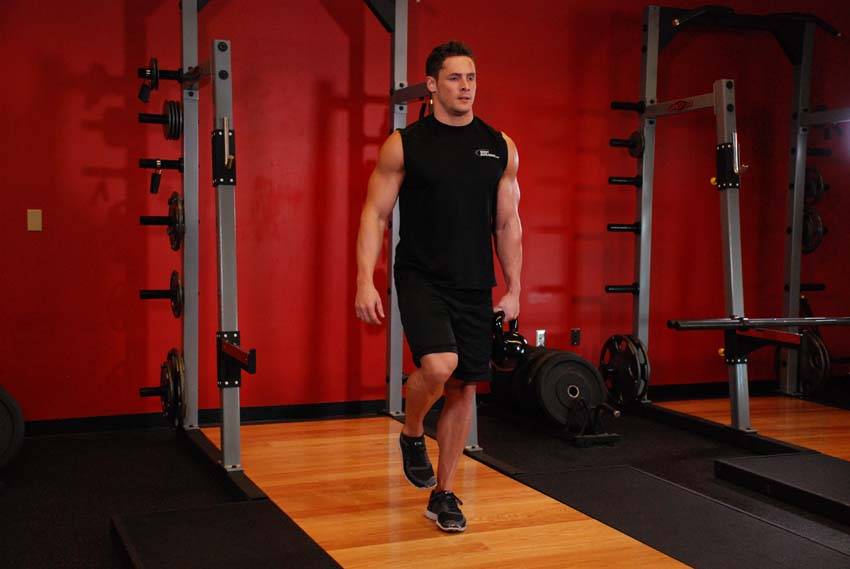
- Primary muscle
- Hamstrings
- Equipment
- Kettlebell
- Difficulty
- Intermediate
- Type
- Compound
Secondary muscles: Glutes, Lower Back
How to perform Kettlebell One-legged Deadlift
- Hold a kettlebell by the handle in one hand. Stand on one leg, on the same side that you hold the kettlebell.
- Keeping that knee slightly bent, perform a stiff legged deadlift by bending at the hip, extending your free leg behind you for balance.
- Continue lowering the kettlebell until you are parallel to the ground, and then return to the upright position.
Ranked Kettlebell One-legged Deadlift Alternatives
10 substitutes, ranked by how closely each one matches the Kettlebell One-legged Deadlift on movement pattern, muscles worked, equipment and body position. The higher the score, the less you change. Open "How to perform this exercise" on a card for the steps; every card title links to that exercise's own alternatives page.
Best match 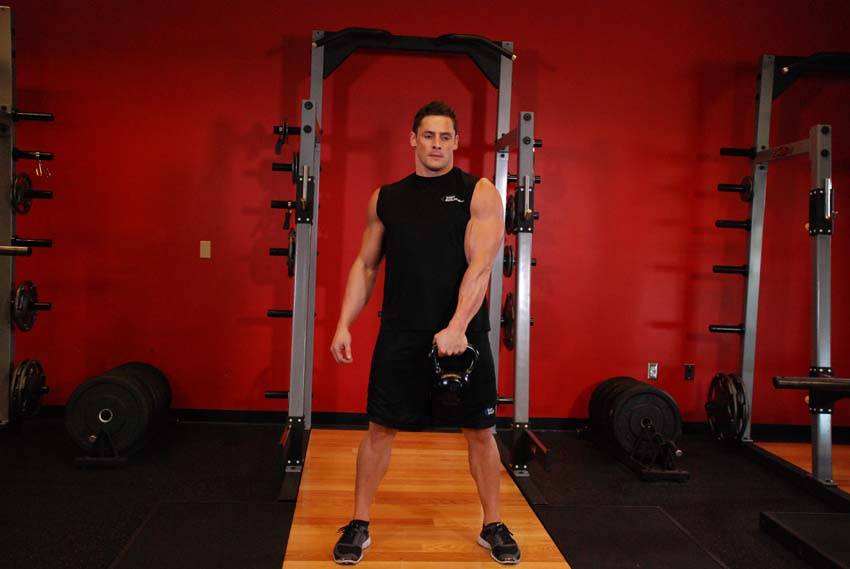
1. One-arm Kettlebell Swings
94% match- Hamstrings
- Kettlebell
- Intermediate
- Compound
Pick this when you want to work the hamstrings with less balance to manage.
How to perform this exercise
Sets and reps: 3 or 4 sets of 6 to 10 reps on each side.
Why this matches
- Primary muscle: hamstrings, the same as the Kettlebell One-legged Deadlift
- Equipment: free weights, the same as the Kettlebell One-legged Deadlift
- Body position: standing, the same as the Kettlebell One-legged Deadlift
- Balance: easier to stay steady on than the Kettlebell One-legged Deadlift
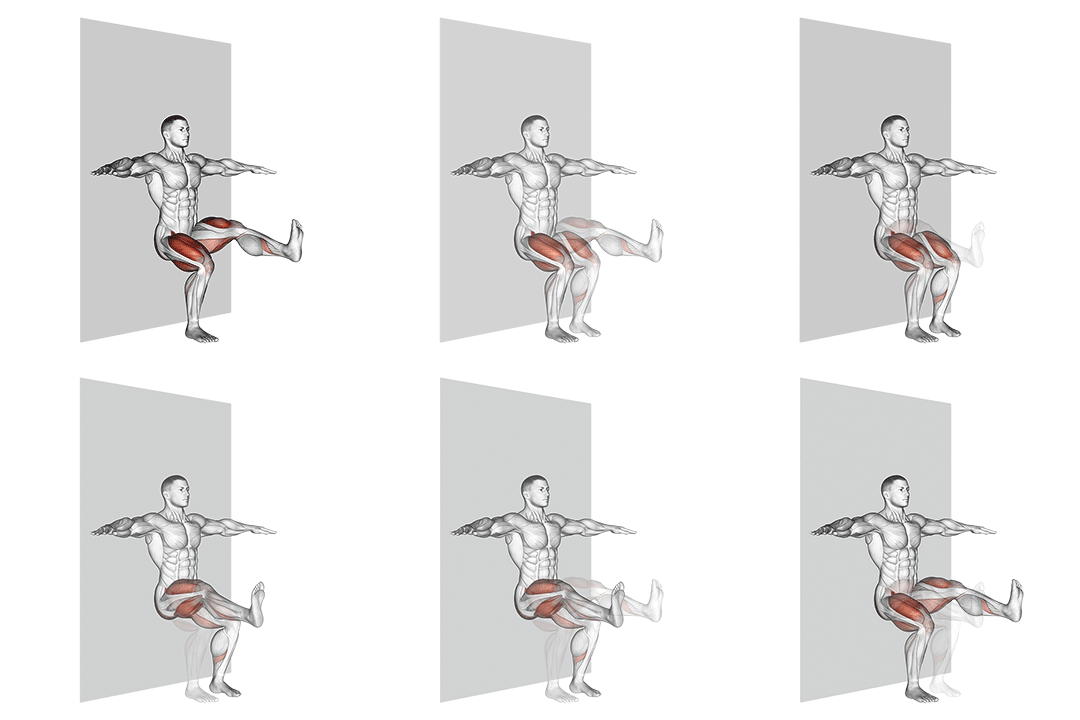
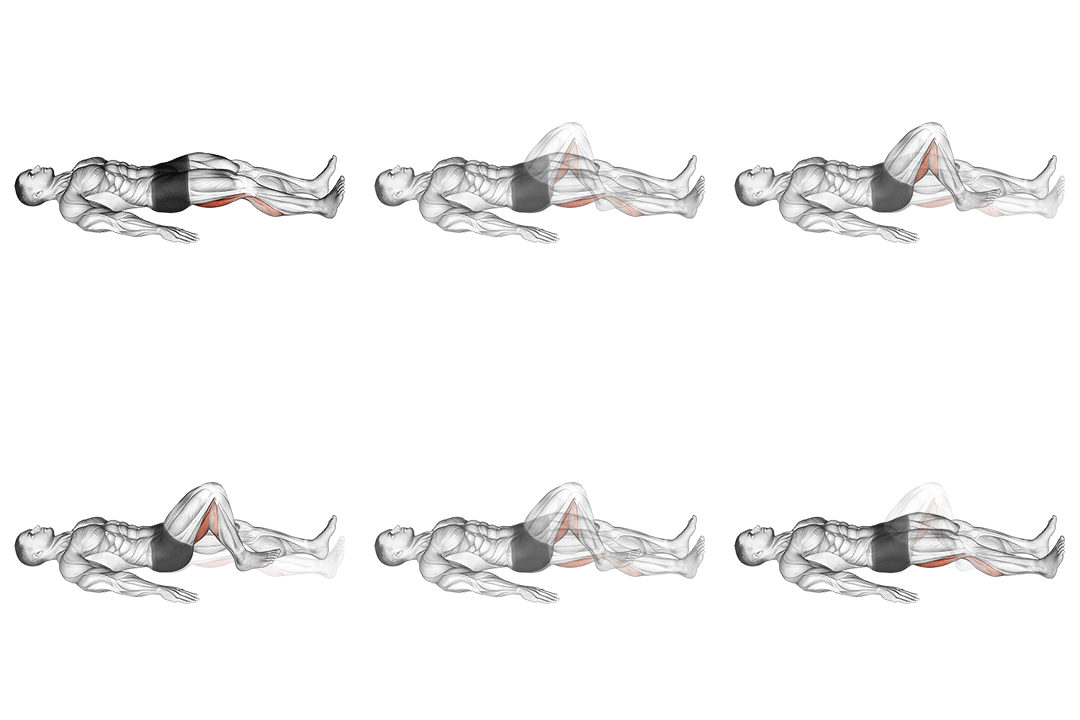
2. Kick Out Sit
88% match- Hamstrings
- Bodyweight
- Intermediate
- Compound
Use this when you have nothing to train with, because it works the hamstrings with bodyweight alone.
How to perform this exercise
- Sit on the edge of a bench or chair with your feet flat on the ground and your knees bent at a 90-degree angle.
- Lean back slightly and place your hands on the edge of the bench or chair for support.
- Engaging your hamstrings, lift your feet off the ground and extend your legs straight out in front of you.
- Pause for a moment at the top, then slowly bend your knees and bring your feet back towards your body.
- Repeat for the desired number of repetitions.
Sets and reps: 3 or 4 sets of 6 to 10 reps on each side.
Why this matches
- Primary muscle: hamstrings, the same as the Kettlebell One-legged Deadlift
- Equipment: bodyweight only, not free weights
- Body position: standing, the same as the Kettlebell One-legged Deadlift
- Balance: easier to stay steady on than the Kettlebell One-legged Deadlift
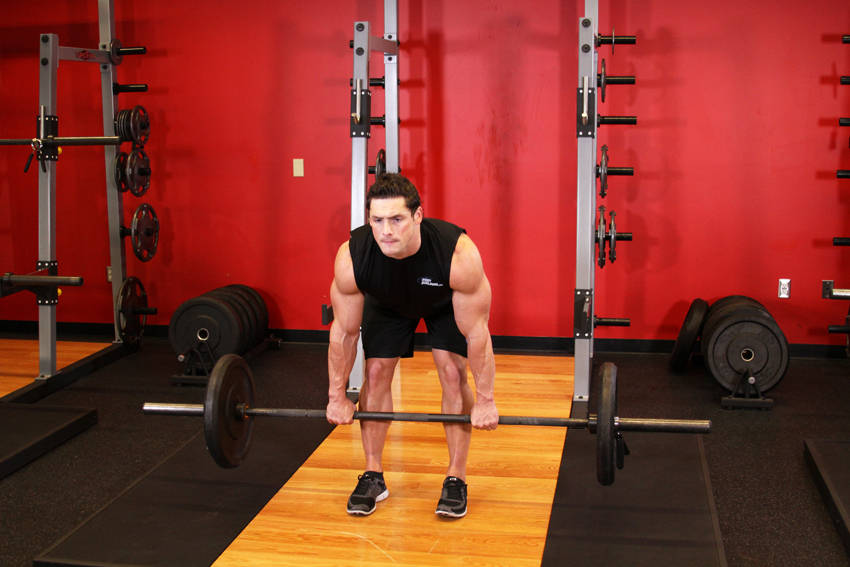
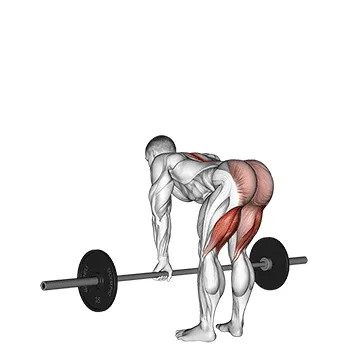
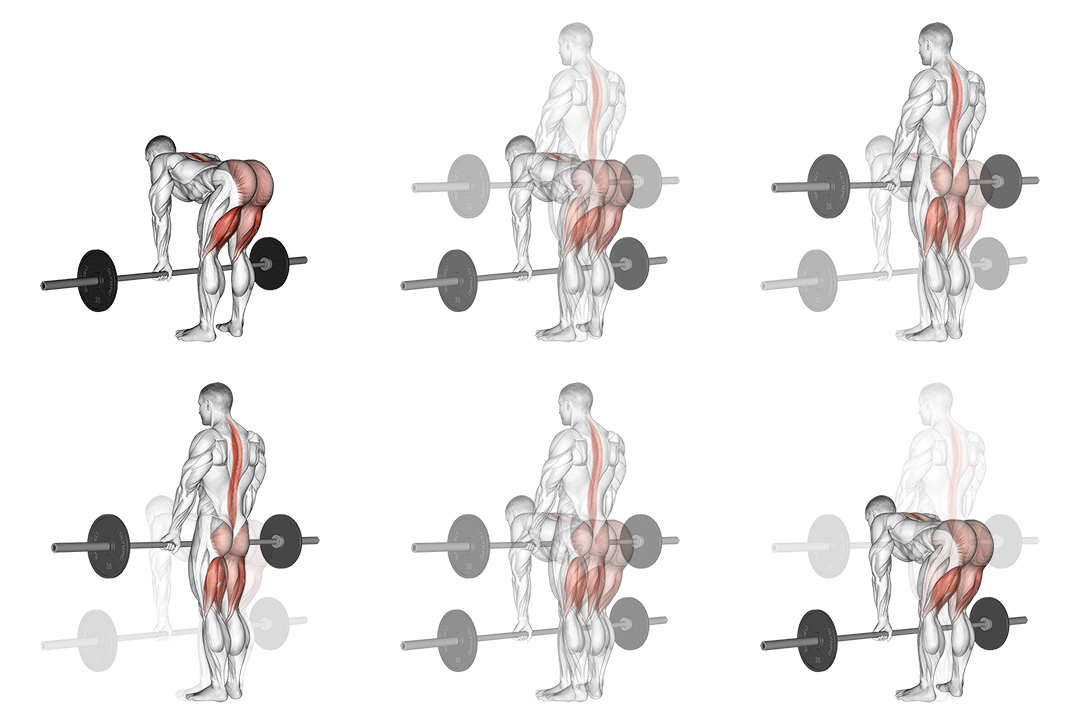
3. Romanian Deadlift
87% match- Hamstrings
- Barbell
- Intermediate
- Compound
A good swap when you have a barbell to work with, and it still works the hamstrings.
How to perform this exercise
- Put a barbell in front of you on the ground and grab it using a pronated (palms facing down) grip that a little wider than shoulder width. Tip: Depending on the weight used, you may need wrist wraps to perform the exercise and also a raised platform in order to allow for better range of motion.
- Bend the knees slightly and keep the shins vertical, hips back and back straight. This will be your starting position.
- Keeping your back and arms completely straight at all times, use your hips to lift the bar as you exhale. Tip: The movement should not be fast but steady and under control.
- Once you are standing completely straight up, lower the bar by pushing the hips back, only slightly bending the knees, unlike when squatting. Tip: Take a deep breath at the start of the movement and keep your chest up. Hold your breath as you lower and exhale as you complete the movement.
- Repeat for the recommended amount of repetitions.
Sets and reps: 3 or 4 sets of 6 to 10 reps.
Why this matches
- Primary muscle: hamstrings, the same as the Kettlebell One-legged Deadlift
- Equipment: free weights, the same as the Kettlebell One-legged Deadlift
- Body position: standing, the same as the Kettlebell One-legged Deadlift
- Balance: easier to stay steady on than the Kettlebell One-legged Deadlift
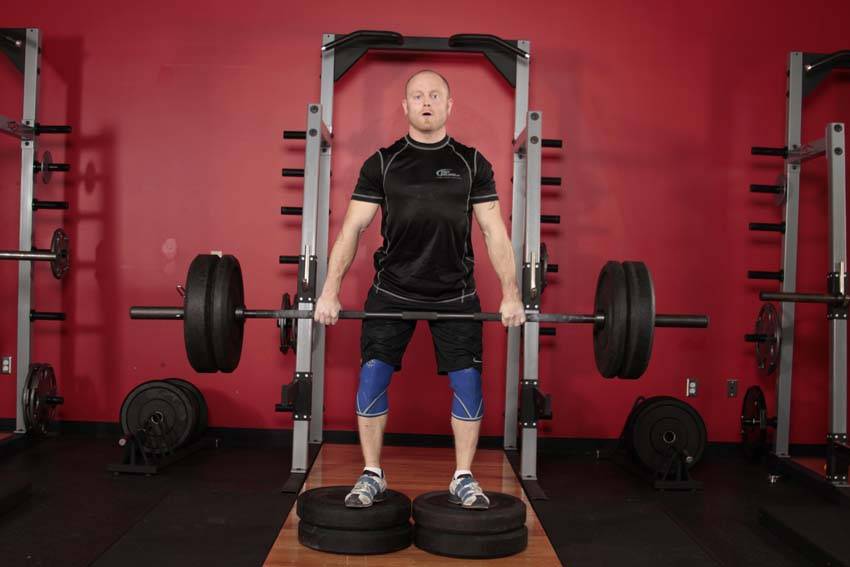
4. Romanian Deadlift From Deficit
86% match- Hamstrings
- Barbell
- Advanced
- Compound
How to perform this exercise
- Begin standing while holding a bar at arm's length in front of you. You can stand on a raised platform to increase the range of motion.
- Begin by flexing the knees slightly, and then flex at the hip, moving your butt back as far as possible, lowering the torso as far as flexibility allows. The back should remain in absolute extension at all times, and the bar should remain in contact with the legs. If done properly, there should be heavy tension felt in the hamstrings.
- Reverse the motion to return to the starting position.
Sets and reps: 3 to 5 sets of 5 to 8 reps.
Why this matches
- Primary muscle: hamstrings, the same as the Kettlebell One-legged Deadlift
- Equipment: free weights, the same as the Kettlebell One-legged Deadlift
- Body position: standing, the same as the Kettlebell One-legged Deadlift
- Balance: easier to stay steady on than the Kettlebell One-legged Deadlift
5. Single Leg Platform Slide
85% match- Hamstrings
- Bodyweight
- Intermediate
- Compound
How to perform this exercise
- Start by standing with one foot on a platform or slide board.
- Bend your knee slightly and slide the foot on the platform backward, extending your leg.
- Keep your core engaged and maintain a straight posture throughout the movement.
- Slowly return to the starting position by sliding your foot back to the initial position.
- Repeat the movement for the desired number of repetitions, then switch legs.
Sets and reps: 3 or 4 sets of 6 to 10 reps on each side.
Why this matches
- Primary muscle: hamstrings, the same as the Kettlebell One-legged Deadlift
- Equipment: bodyweight only, not free weights
- Body position: standing, the same as the Kettlebell One-legged Deadlift
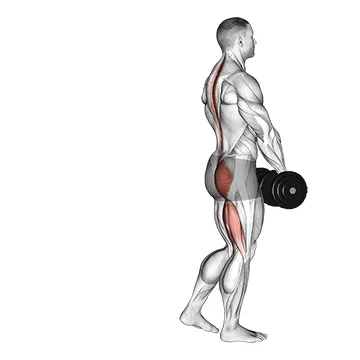
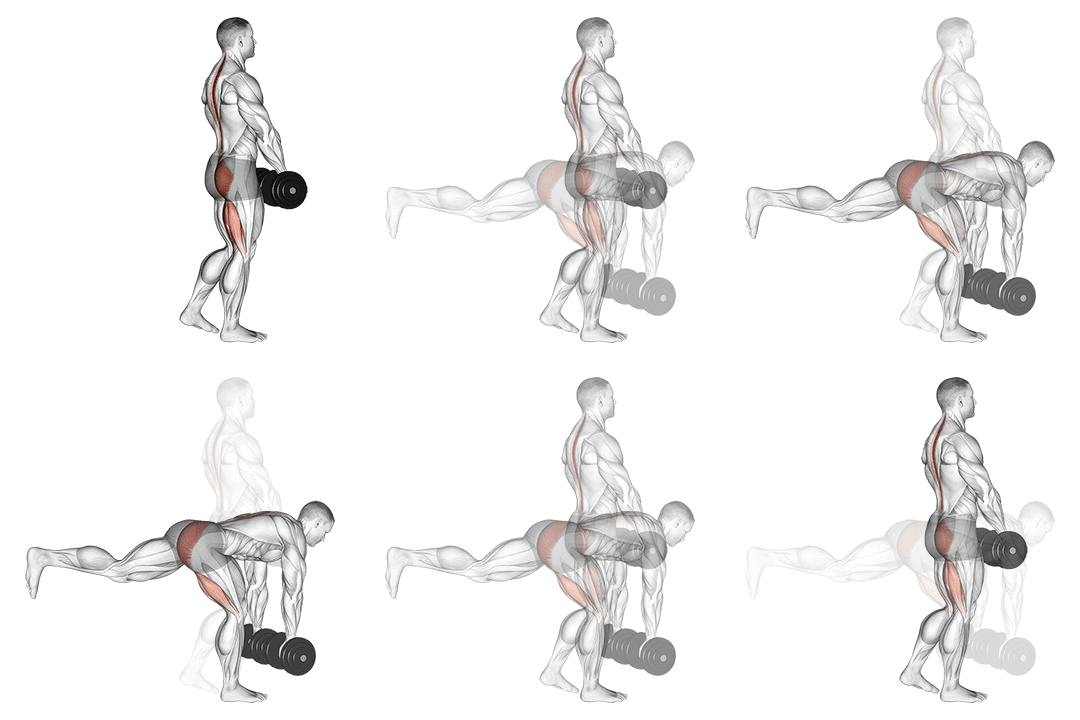
6. Dumbbell Single Leg Deadlift
84% match- Glutes
- Dumbbell
- Intermediate
- Compound
A looser match: it works the glutes rather than the hamstrings.
How to perform this exercise
- Stand with your feet hip-width apart, holding a dumbbell in your right hand.
- Shift your weight onto your left leg and lift your right foot slightly off the ground.
- Keeping your back straight, hinge forward at the hips and lower the dumbbell towards the ground.
- At the same time, extend your right leg straight behind you, maintaining a slight bend in your left knee.
- Lower the dumbbell until your torso and right leg are parallel to the ground.
- Pause for a moment, then engage your glutes and hamstrings to return to the starting position.
- Repeat for the desired number of repetitions, then switch sides.
Sets and reps: 3 or 4 sets of 6 to 10 reps on each side.
Why this matches
- Primary muscle: glutes, not hamstrings
- Equipment: free weights, the same as the Kettlebell One-legged Deadlift
- Body position: standing, the same as the Kettlebell One-legged Deadlift
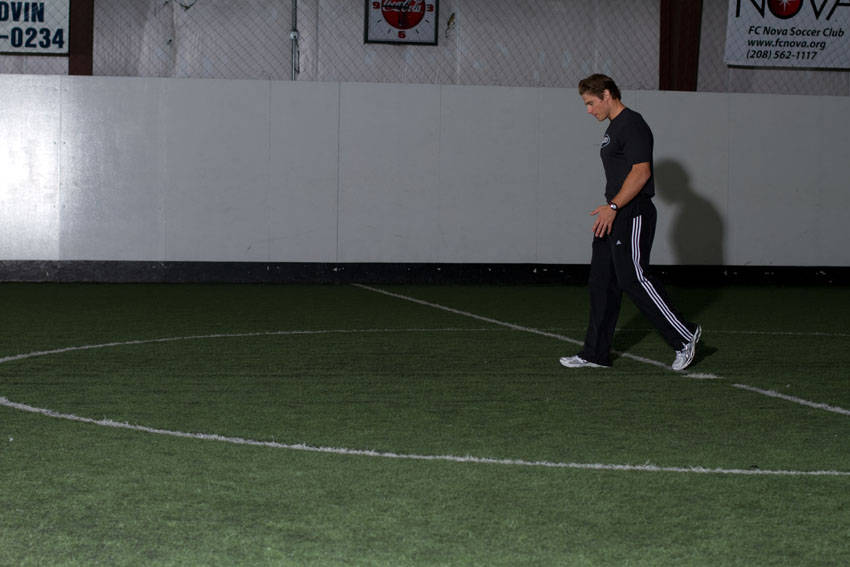
7. Moving Claw Series
82% match- Hamstrings
- Bodyweight
- Intermediate
- Compound
How to perform this exercise
- This move helps prepare your running form to help you excel at sprinting. As you run, be sure to flex the knee, aiming to kick your glutes as the hip extends.
- Reload the quad as the leg moves back forward, attacking the ground on the next step.
- Ensure that as you run, you block with the arms, punching through in a rapid 1-2 motion.
Sets and reps: 3 or 4 sets of 6 to 10 reps on each side.
Why this matches
- Primary muscle: hamstrings, the same as the Kettlebell One-legged Deadlift
- Equipment: bodyweight only, not free weights
- Body position: standing, the same as the Kettlebell One-legged Deadlift
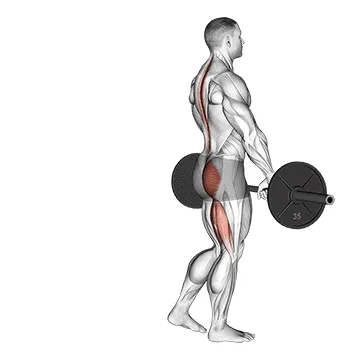
8. Barbell Straight Leg Deadlift
82% match- Hamstrings
- Barbell
- Intermediate
- Compound
How to perform this exercise
- Stand with your feet shoulder-width apart and your toes pointing forward.
- Hold the barbell with an overhand grip, hands slightly wider than shoulder-width apart.
- Bend at your hips and lower the barbell towards the ground, keeping your back straight and your knees slightly bent.
- Lower the barbell until you feel a stretch in your hamstrings.
- Engage your hamstrings and glutes to lift the barbell back up to the starting position.
- Repeat for the desired number of repetitions.
Sets and reps: 3 to 5 sets of 5 to 8 reps.
Why this matches
- Primary muscle: hamstrings, the same as the Kettlebell One-legged Deadlift
- Equipment: free weights, the same as the Kettlebell One-legged Deadlift
- Body position: standing, the same as the Kettlebell One-legged Deadlift
- Balance: easier to stay steady on than the Kettlebell One-legged Deadlift
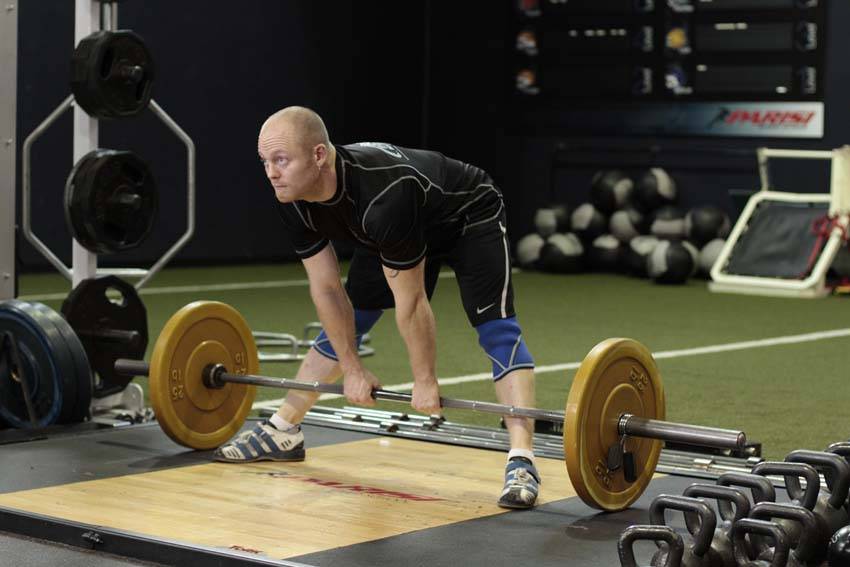
9. Wide Stance Stiff Legs
82% match- Hamstrings
- Barbell
- Intermediate
- Compound
How to perform this exercise
- Begin with a barbell loaded on the floor. Adopt a wide stance, and then bend at the hips to grab the bar. Your hips should be as far back as possible, and your legs nearly straight. Keep your back straight, and your head and chest up. This will be your starting position.
- Begin the movement be engaging the hips, driving them forward as you allow the arms to hang straight. Continue until you are standing straight up, and then slowly return the weight to the starting position. For successive reps, the weight need not touch the floor.
Sets and reps: 3 to 5 sets of 5 to 8 reps.
Why this matches
- Primary muscle: hamstrings, the same as the Kettlebell One-legged Deadlift
- Equipment: free weights, the same as the Kettlebell One-legged Deadlift
- Balance: easier to stay steady on than the Kettlebell One-legged Deadlift
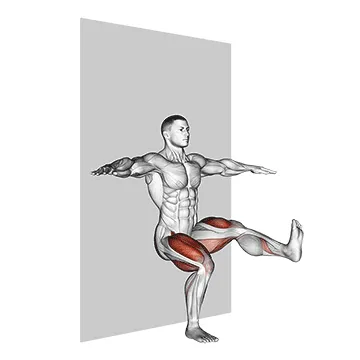
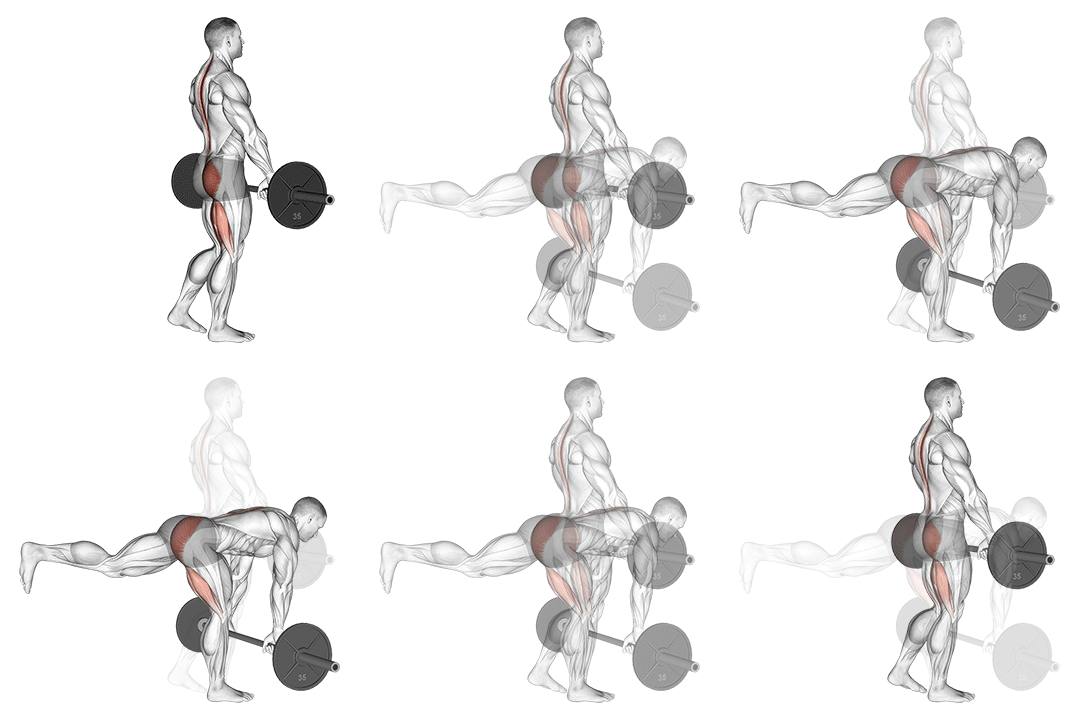
10. Barbell Single Leg Deadlift
80% match- Glutes
- Barbell
- Advanced
- Compound
How to perform this exercise
- Stand with your feet hip-width apart, holding a barbell in front of your thighs with an overhand grip.
- Shift your weight onto your left foot and lift your right foot slightly off the ground.
- Hinge forward at the hips, keeping your back straight and your right leg extended behind you for balance.
- Lower the barbell towards the ground, keeping it close to your body and your left leg slightly bent.
- Pause for a moment at the bottom, then engage your glutes and hamstrings to lift your torso back up to the starting position.
- Repeat for the desired number of repetitions, then switch sides.
Sets and reps: 3 to 5 sets of 5 to 8 reps on each side.
Why this matches
- Primary muscle: glutes, not hamstrings
- Equipment: free weights, the same as the Kettlebell One-legged Deadlift
- Body position: standing, the same as the Kettlebell One-legged Deadlift
Why You Might Need a Kettlebell One-legged Deadlift Alternative
You might substitute the kettlebell one‑legged deadlift for balance issues, limited kettlebell access, or pain that appears under unilateral loading. Some athletes lack ankle or hip mobility and need bilateral or assisted variations to preserve hamstring lengthening. Other times you want to change the stimulus, switching from a stabilizer‑heavy unilateral lift to a bilateral RDL increases absolute load and hypertrophic stimulus. For rehab, choose controlled eccentrics (3–4 second lowering) to emphasize hamstring tendon adaptation. Technique cue: keep the weight close to the shins and lead with the hips so you load the hamstrings rather than the lumbar spine.
How to Choose the Right Kettlebell One-legged Deadlift Substitute
Select a substitute based on your goal, equipment, and stability. For balance deficits or ankle instability pick a two‑foot RDL or Romanian deadlift with a barbell to maintain heavy, symmetrical load. For unilateral carryover but less balance demand use a split‑stance RDL: front foot planted, hinge from hips, keep torso vertical to target hamstrings and glute medius. For high hamstring activation with minimal equipment choose Nordic curls or slow eccentric sliders. Always monitor lumbar neutral and ensure hamstring tension at the top of the hinge; if pain occurs, reduce range of motion and focus on eccentric control.
Kettlebell One-legged Deadlift FAQ
What muscles does Kettlebell One-legged Deadlift work?
The kettlebell one‑legged deadlift primarily targets the hamstrings and gluteus maximus through hip extension, while spinal erectors and the core stabilize the torso. Unilateral balance also recruits the gluteus medius and adductors to control pelvis alignment; cue a long torso and hip hinge to feel hamstring activation.
What is the best bodyweight alternative to Kettlebell One-legged Deadlift?
A single‑leg bodyweight Romanian hinge is the best bodyweight substitute: hinge at the hips with a soft knee, reach toward the floor, and keep your weight over the standing midfoot. This preserves unilateral hip extension and trains hamstring lengthening without external load.
Find Alternatives for Any Exercise
Search the exercise database and filter the ranked substitutes by the equipment you own.
Similarity scores compare exercise metadata such as movement pattern, muscles, equipment and body position. They are not a safety rating or a check that you own the equipment. Learn about our methodology