

10 Best Dumbbell Single Leg Deadlift Alternatives for Glute and Hamstring Strength
The Dumbbell Single Leg Deadlift is done standing with dumbbells. Ranked closest by our scoring: the Barbell Single Leg Deadlift, the Dumbbell Romanian Deadlift and the Dumbbell Stiff Leg Deadlift.
A single dumbbell only loads so heavy before your grip gives out, not your glutes. The Dumbbell Single Leg Deadlift hinges forward at the hips while you balance on one leg, and the closest swap is the Barbell Single Leg Deadlift, which lets both hands drive more weight through the same hinge. With both feet on the floor instead of one, the Dumbbell Romanian Deadlift bends forward at the hips the same way, without the balancing act.
Updated Ranked by our 12-factor similarity model How it works
Original Exercise: Dumbbell Single Leg Deadlift
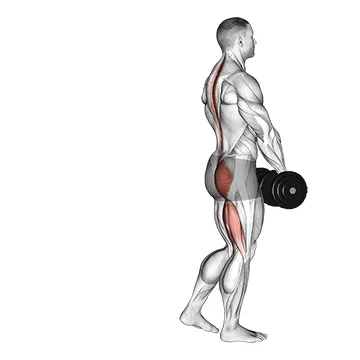
- Primary muscle
- Glutes
- Equipment
- Dumbbell
- Difficulty
- Intermediate
- Type
- Compound
Secondary muscles: Hamstrings, Lower Back
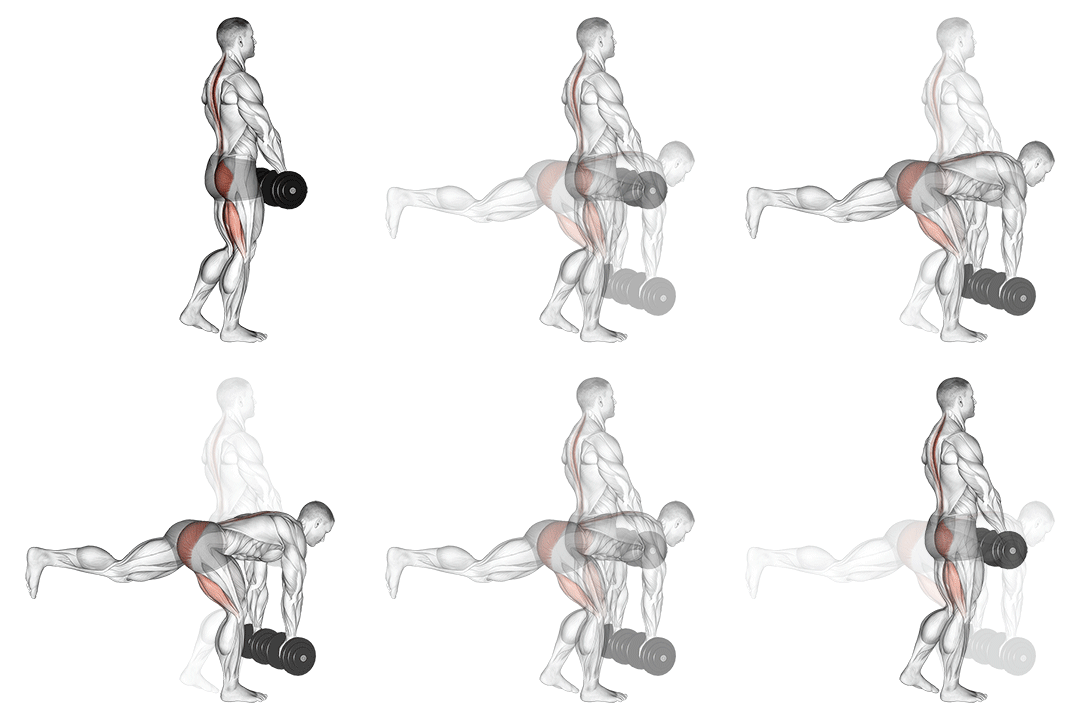
How to perform Dumbbell Single Leg Deadlift
- Stand with your feet hip-width apart, holding a dumbbell in your right hand.
- Shift your weight onto your left leg and lift your right foot slightly off the ground.
- Keeping your back straight, hinge forward at the hips and lower the dumbbell towards the ground.
- At the same time, extend your right leg straight behind you, maintaining a slight bend in your left knee.
- Lower the dumbbell until your torso and right leg are parallel to the ground.
- Pause for a moment, then engage your glutes and hamstrings to return to the starting position.
- Repeat for the desired number of repetitions, then switch sides.
Ranked Dumbbell Single Leg Deadlift Alternatives
10 substitutes, ranked by how closely each one matches the Dumbbell Single Leg Deadlift on movement pattern, muscles worked, equipment and body position. The higher the score, the less you change. Open "How to perform this exercise" on a card for the steps; every card title links to that exercise's own alternatives page.
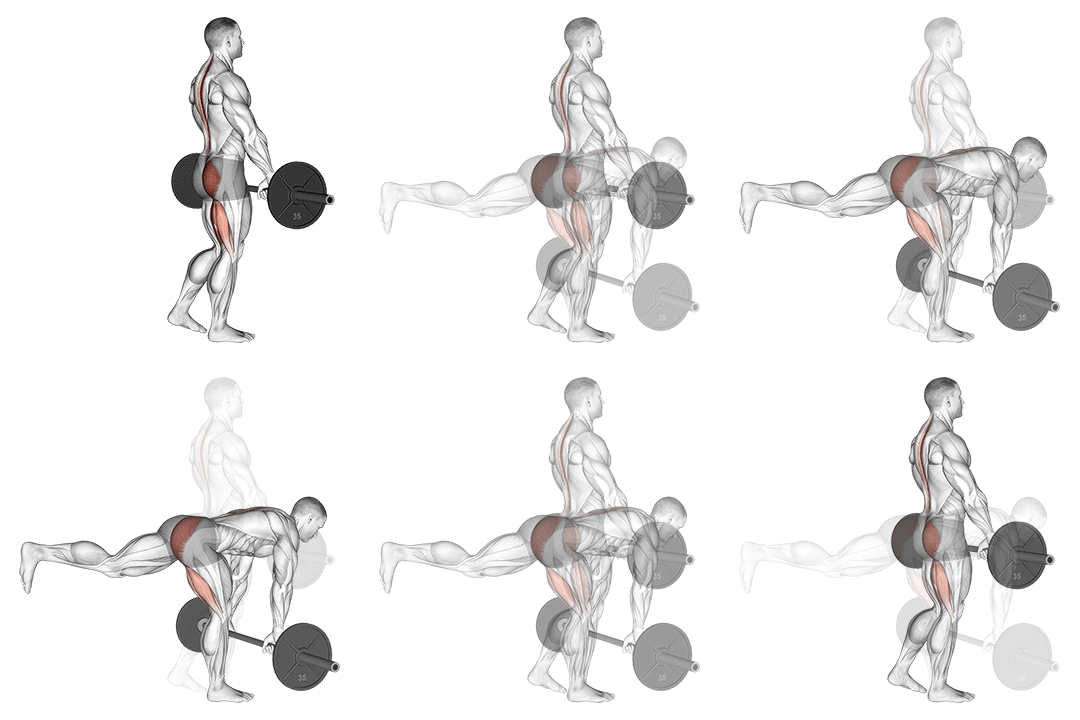
Best match 1. Barbell Single Leg Deadlift
96% match- Glutes
- Barbell
- Advanced
- Compound
A good swap when you have a barbell to work with, and it still works the glutes.
How to perform this exercise
- Stand with your feet hip-width apart, holding a barbell in front of your thighs with an overhand grip.
- Shift your weight onto your left foot and lift your right foot slightly off the ground.
- Hinge forward at the hips, keeping your back straight and your right leg extended behind you for balance.
- Lower the barbell towards the ground, keeping it close to your body and your left leg slightly bent.
- Pause for a moment at the bottom, then engage your glutes and hamstrings to lift your torso back up to the starting position.
- Repeat for the desired number of repetitions, then switch sides.
Sets and reps: 3 to 5 sets of 5 to 8 reps on each side.
Why this matches
- Primary muscle: glutes, the same as the Dumbbell Single Leg Deadlift
- Equipment: free weights, the same as the Dumbbell Single Leg Deadlift
- Body position: standing, the same as the Dumbbell Single Leg Deadlift
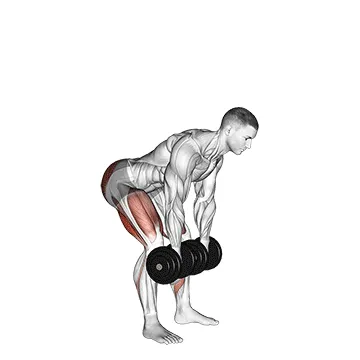
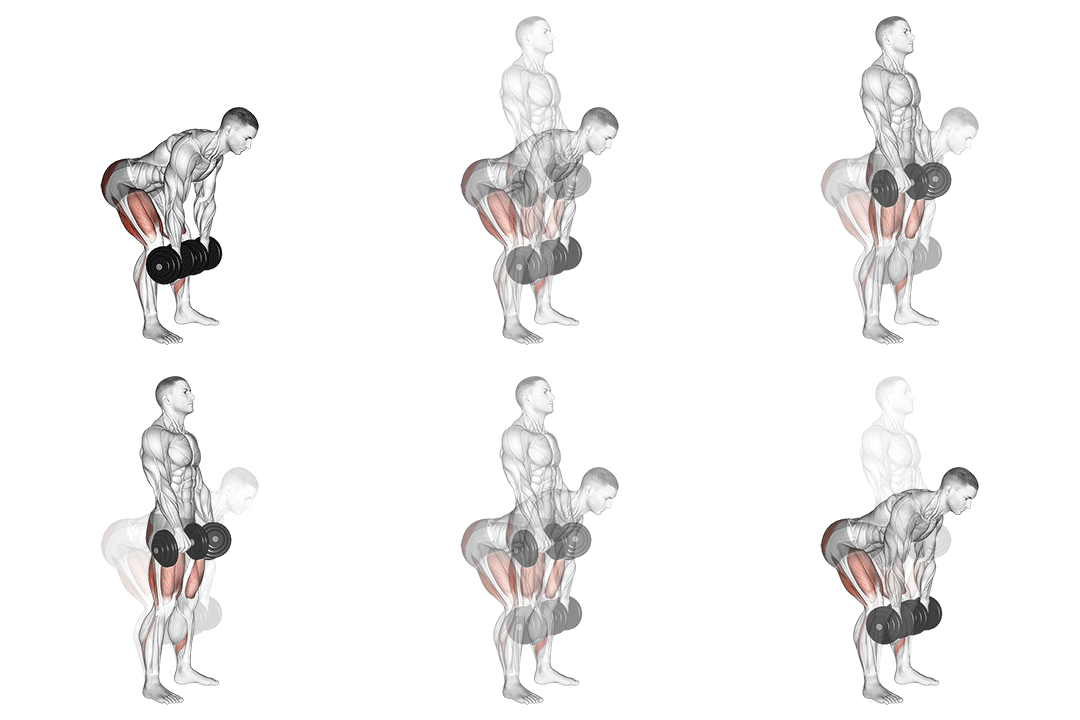
2. Dumbbell Romanian Deadlift
91% match- Glutes
- Dumbbell
- Intermediate
- Compound
Pick this when you want to work the glutes with less balance to manage.
How to perform this exercise
- Stand with your feet shoulder-width apart, holding a dumbbell in each hand with an overhand grip.
- Keeping your back straight and your core engaged, hinge at the hips and lower the dumbbells towards the ground, allowing your knees to bend slightly.
- Lower the dumbbells until you feel a stretch in your hamstrings, then push through your heels and engage your glutes to return to the starting position.
- Repeat for the desired number of repetitions.
Sets and reps: 3 or 4 sets of 6 to 10 reps.
Why this matches
- Primary muscle: glutes, the same as the Dumbbell Single Leg Deadlift
- Equipment: free weights, the same as the Dumbbell Single Leg Deadlift
- Body position: standing, the same as the Dumbbell Single Leg Deadlift
- Balance: easier to stay steady on than the Dumbbell Single Leg Deadlift
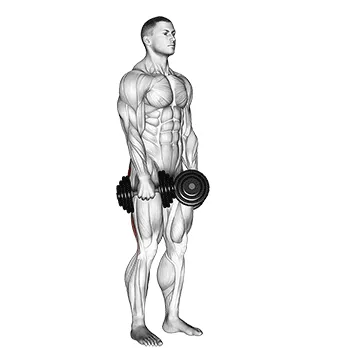
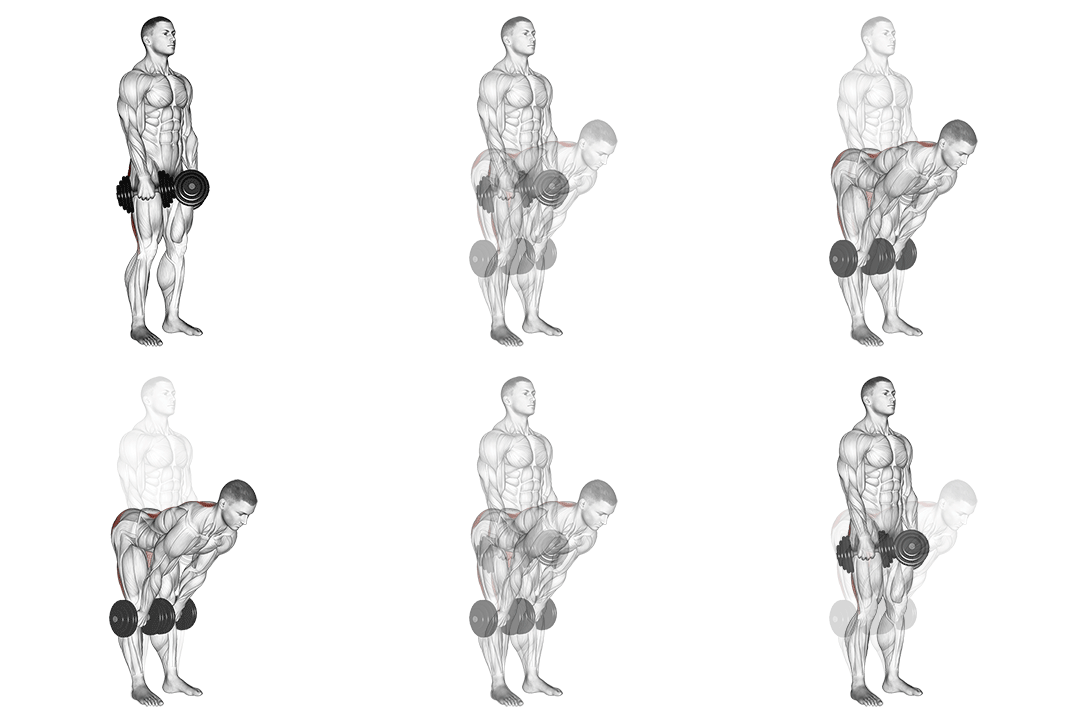
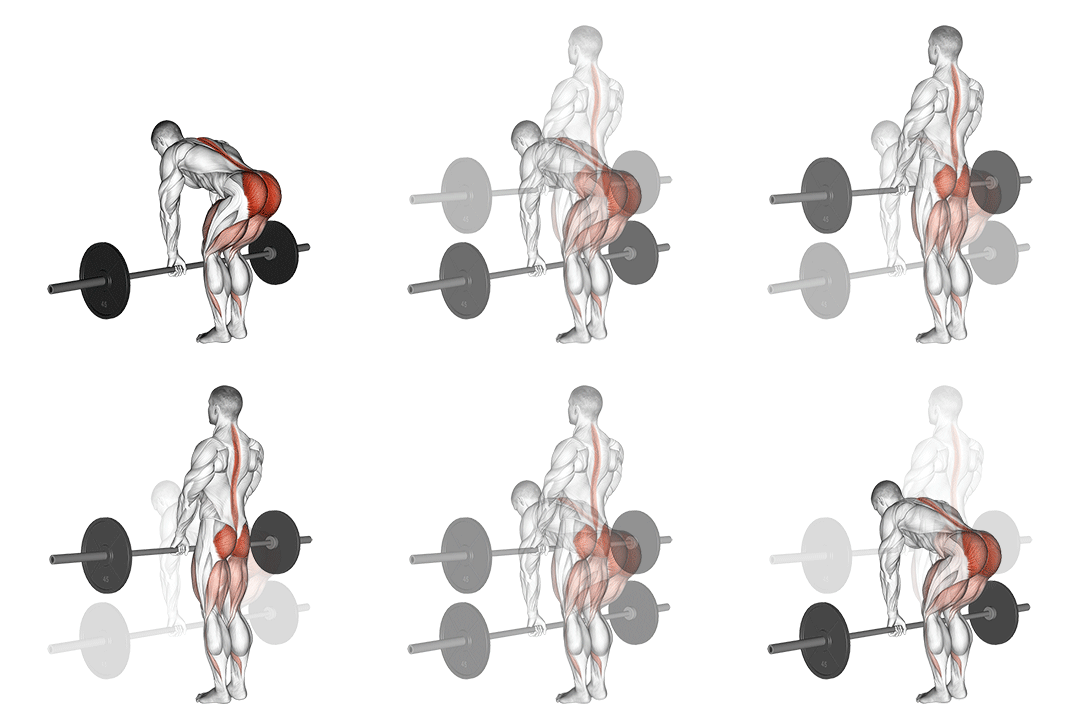
3. Dumbbell Stiff Leg Deadlift
86% match- Glutes
- Dumbbell
- Intermediate
- Compound
How to perform this exercise
- Stand with your feet shoulder-width apart, holding a dumbbell in each hand with an overhand grip.
- Keeping your back straight and your core engaged, hinge at the hips and lower the dumbbells towards the ground, allowing a slight bend in your knees.
- Lower the dumbbells until you feel a stretch in your hamstrings, then squeeze your glutes and push through your heels to return to the starting position.
- Repeat for the desired number of repetitions.
Sets and reps: 3 or 4 sets of 6 to 10 reps.
Why this matches
- Primary muscle: glutes, the same as the Dumbbell Single Leg Deadlift
- Equipment: free weights, the same as the Dumbbell Single Leg Deadlift
- Body position: standing, the same as the Dumbbell Single Leg Deadlift
- Balance: easier to stay steady on than the Dumbbell Single Leg Deadlift
- Glutes
- Dumbbell
- Intermediate
- Compound
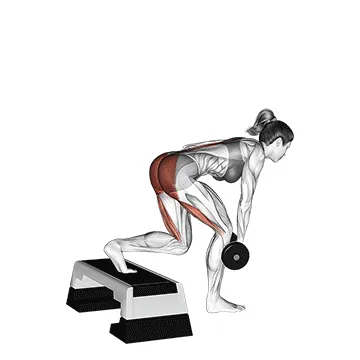
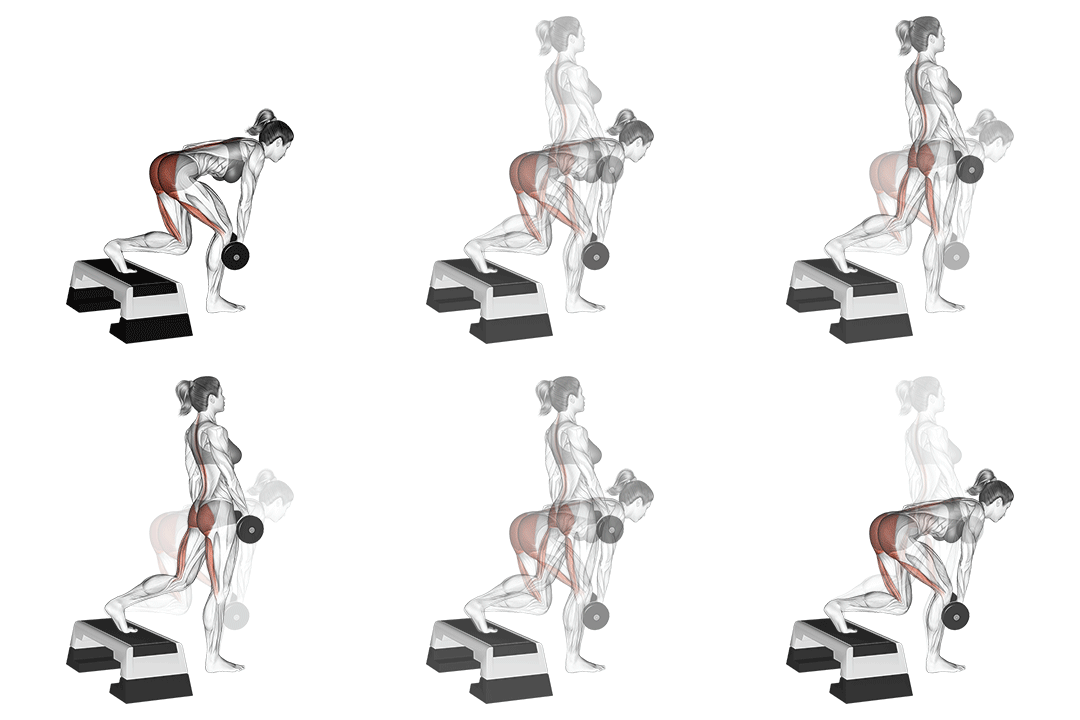
It uses the same equipment and still works the glutes.
How to perform this exercise
- Stand with your feet hip-width apart, holding a dumbbell in your right hand.
- Place your left foot on a stepbox or elevated surface behind you.
- Keeping your back straight and core engaged, hinge forward at the hips, lowering the dumbbell towards the ground.
- As you lower the dumbbell, simultaneously lift your left leg behind you, maintaining a straight line from head to heel.
- Lower the dumbbell until you feel a stretch in your right hamstring, then return to the starting position.
- Repeat for the desired number of repetitions, then switch sides.
Sets and reps: 3 or 4 sets of 6 to 10 reps on each side.
Why this matches
- Primary muscle: glutes, the same as the Dumbbell Single Leg Deadlift
- Equipment: free weights, the same as the Dumbbell Single Leg Deadlift
- Body position: standing, the same as the Dumbbell Single Leg Deadlift
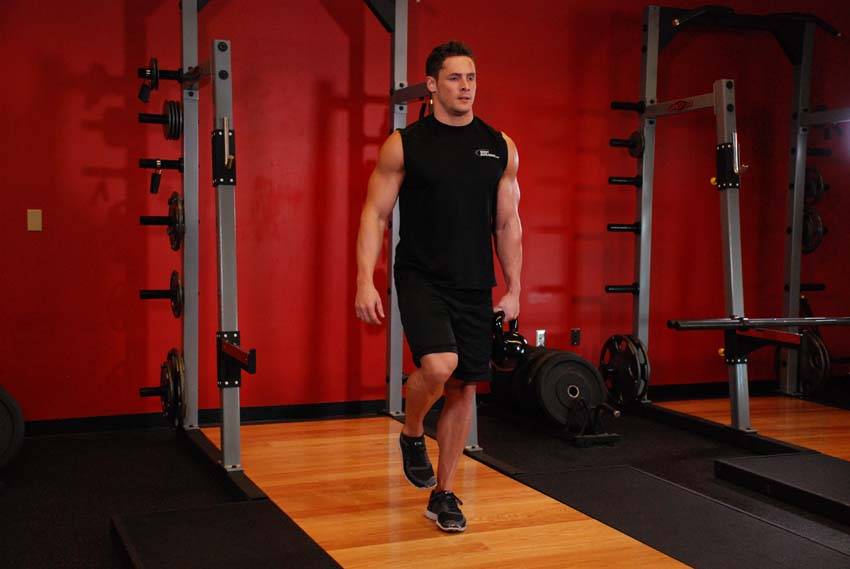
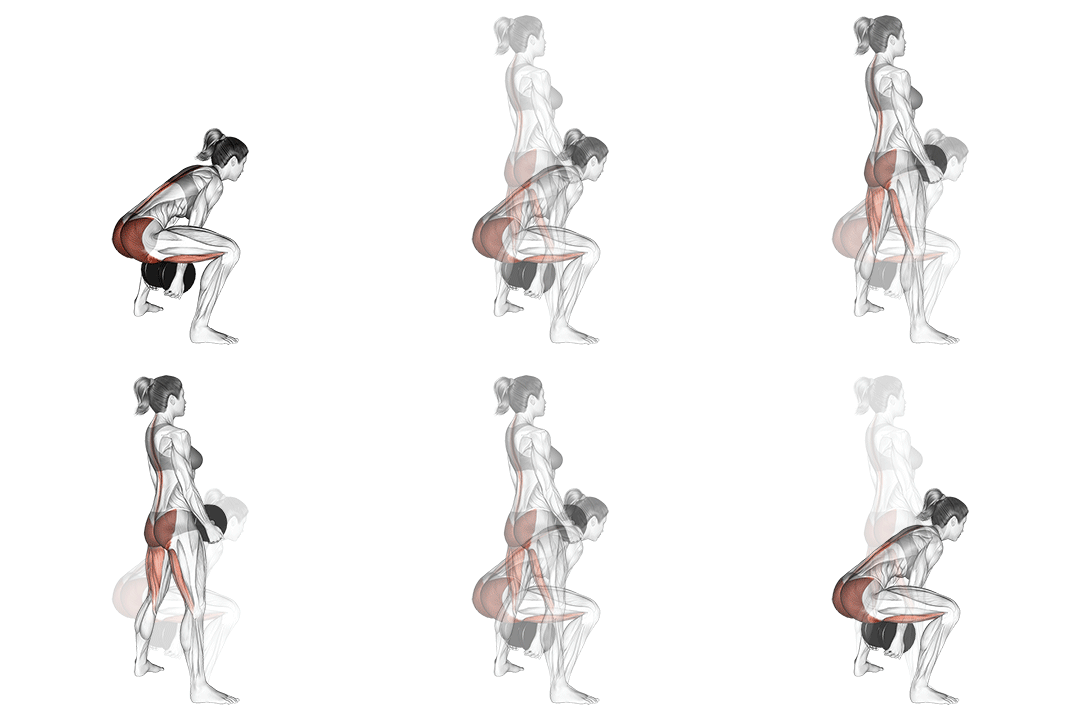
5. Kettlebell One-legged Deadlift
84% match- Hamstrings
- Kettlebell
- Intermediate
- Compound
A looser match: it works the hamstrings rather than the glutes.
How to perform this exercise
- Hold a kettlebell by the handle in one hand. Stand on one leg, on the same side that you hold the kettlebell.
- Keeping that knee slightly bent, perform a stiff legged deadlift by bending at the hip, extending your free leg behind you for balance.
- Continue lowering the kettlebell until you are parallel to the ground, and then return to the upright position.
Sets and reps: 3 or 4 sets of 6 to 10 reps on each side.
Why this matches
- Primary muscle: hamstrings, not glutes
- Equipment: free weights, the same as the Dumbbell Single Leg Deadlift
- Body position: standing, the same as the Dumbbell Single Leg Deadlift
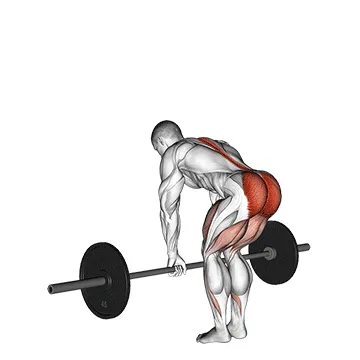
6. Barbell Romanian Deadlift
82% match- Glutes
- Barbell
- Intermediate
- Compound
How to perform this exercise
- Stand with your feet shoulder-width apart and your toes pointing forward.
- Hold the barbell with an overhand grip, hands slightly wider than shoulder-width apart.
- Bend at the hips, keeping your back straight and your knees slightly bent.
- Lower the barbell towards the ground, keeping it close to your body.
- Feel the stretch in your hamstrings as you lower the barbell.
- Once you feel a stretch in your hamstrings, push your hips forward and stand up straight.
- Squeeze your glutes at the top of the movement.
- Lower the barbell back down to the starting position and repeat for the desired number of repetitions.
Sets and reps: 3 to 5 sets of 5 to 8 reps.
Why this matches
- Primary muscle: glutes, the same as the Dumbbell Single Leg Deadlift
- Equipment: free weights, the same as the Dumbbell Single Leg Deadlift
- Body position: standing, the same as the Dumbbell Single Leg Deadlift
- Balance: easier to stay steady on than the Dumbbell Single Leg Deadlift
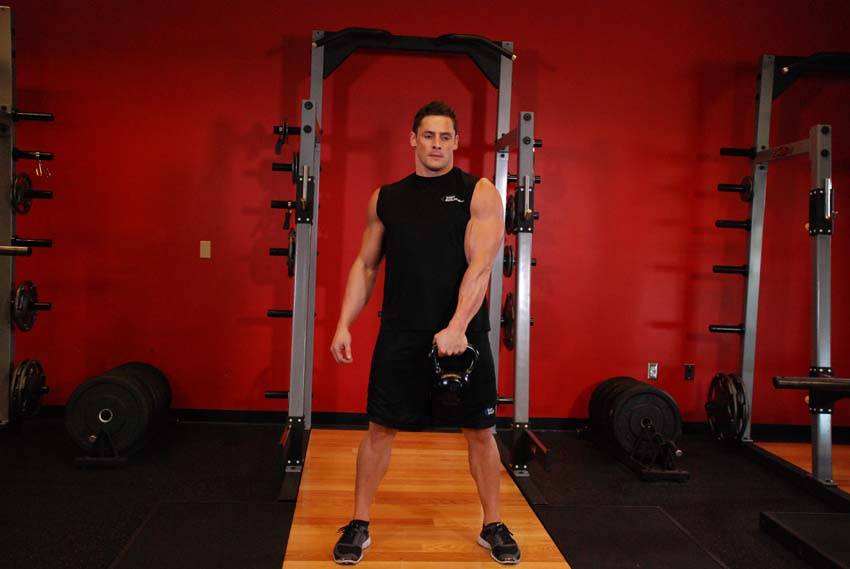
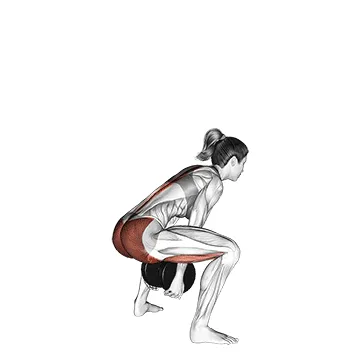
7. One-arm Kettlebell Swings
80% match- Hamstrings
- Kettlebell
- Intermediate
- Compound
How to perform this exercise
Sets and reps: 3 or 4 sets of 6 to 10 reps on each side.
Why this matches
- Primary muscle: hamstrings, not glutes
- Equipment: free weights, the same as the Dumbbell Single Leg Deadlift
- Body position: standing, the same as the Dumbbell Single Leg Deadlift
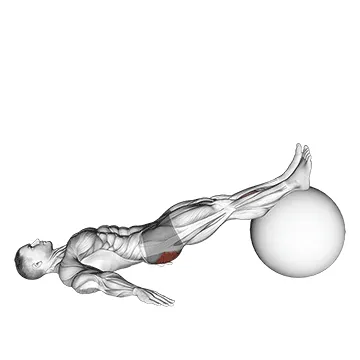
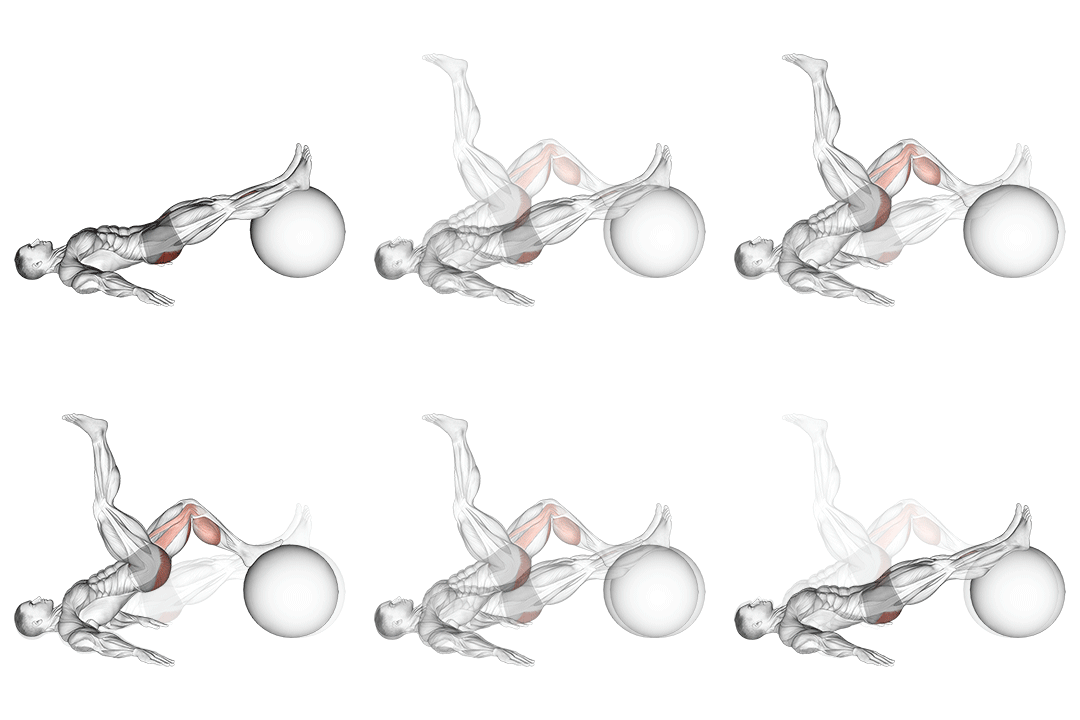
- Glutes
- Stability-ball
- Intermediate
- Compound
How to perform this exercise
- Start by lying on your back with your legs extended and your heels resting on top of the stability ball.
- Place your arms by your sides for stability.
- Engage your glutes and core muscles to lift your hips off the ground, creating a straight line from your shoulders to your heels.
- Bend your right knee and bring it towards your chest, keeping your left leg extended and your foot flexed.
- Kick your right leg diagonally across your body, extending it fully and engaging your hamstrings.
- Slowly return your right leg to the starting position, maintaining control and stability.
- Repeat the movement with your left leg, alternating sides for the desired number of repetitions.
Sets and reps: 3 or 4 sets of 6 to 10 reps on each side.
Why this matches
- Primary muscle: glutes, the same as the Dumbbell Single Leg Deadlift
- Equipment: bodyweight only, not free weights
- Body position: lying face down, not standing
9. Barbell One Arm Side Deadlift
77% match- Glutes
- Barbell
- Intermediate
- Compound
How to perform this exercise
- Stand with your feet shoulder-width apart, holding a barbell in one hand with an overhand grip.
- Keep your back straight and your core engaged.
- Bend at the hips and lower the barbell towards the outside of your leg, keeping your arm straight and your chest up.
- Lower the barbell as far as you can while maintaining good form.
- Pause for a moment, then slowly return to the starting position.
- Repeat for the desired number of repetitions, then switch sides.
Sets and reps: 3 to 5 sets of 5 to 8 reps on each side.
Why this matches
- Primary muscle: glutes, the same as the Dumbbell Single Leg Deadlift
- Equipment: free weights, the same as the Dumbbell Single Leg Deadlift
- Body position: standing, the same as the Dumbbell Single Leg Deadlift
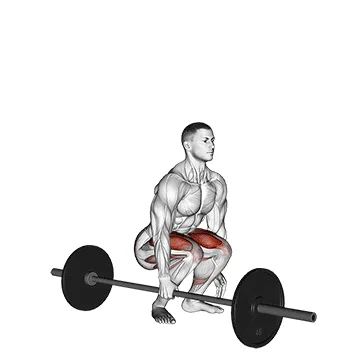
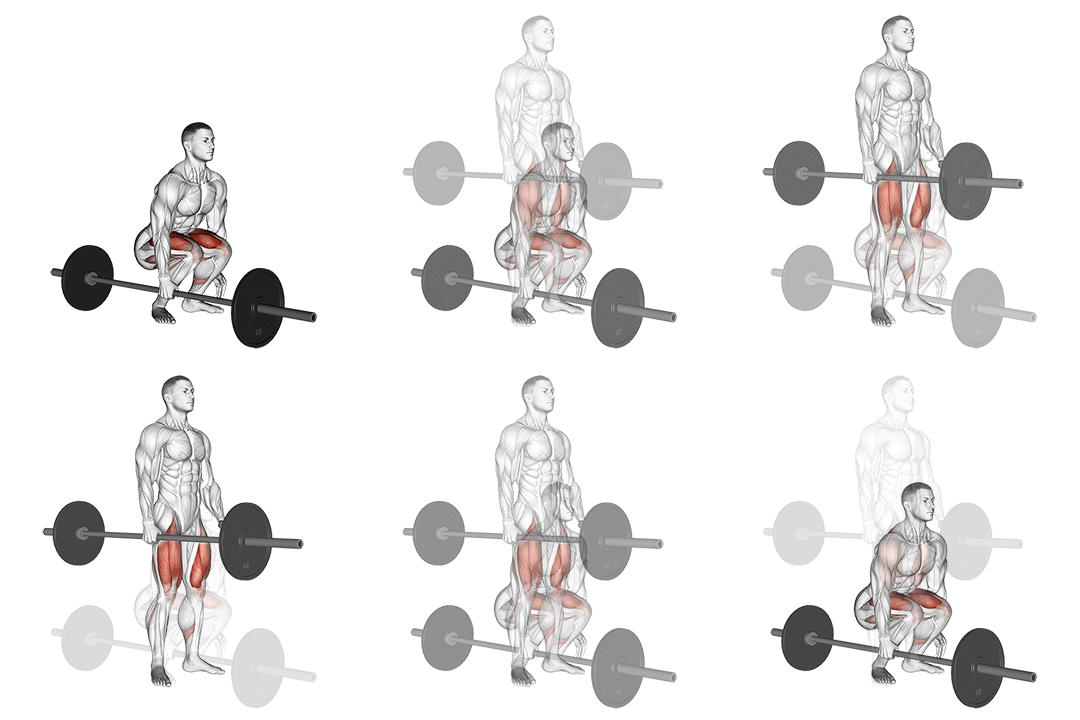
10. Dumbbell Sumo Pull Through
77% match- Glutes
- Dumbbell
- Intermediate
- Compound
How to perform this exercise
- Stand with your feet wider than shoulder-width apart, toes pointed outwards.
- Hold a dumbbell with both hands in front of your body, arms extended.
- Bend your knees and lower your hips down into a squat position, keeping your back straight.
- Lower the dumbbell down between your legs, keeping your arms straight.
- Drive through your heels and extend your hips forward, pulling the dumbbell up and in front of your body.
- Squeeze your glutes at the top of the movement, then lower the dumbbell back down between your legs.
- Repeat for the desired number of repetitions.
Sets and reps: 3 to 5 sets of 5 to 8 reps.
Why this matches
- Primary muscle: glutes, the same as the Dumbbell Single Leg Deadlift
- Equipment: free weights, the same as the Dumbbell Single Leg Deadlift
- Body position: standing, the same as the Dumbbell Single Leg Deadlift
- Balance: easier to stay steady on than the Dumbbell Single Leg Deadlift
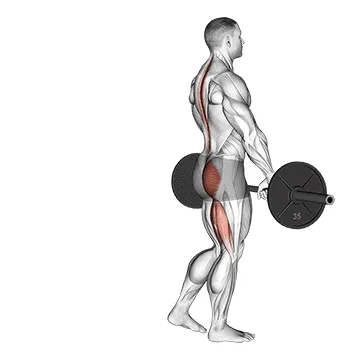
Why You Might Need a Dumbbell Single Leg Deadlift Alternative
The Dumbbell Single Leg Deadlift stops being useful once your grip gives out before your glutes do, and a barbell removes that ceiling by putting the load in both hands. Others land here because balancing on one leg while hinging forward is the hard part, not the muscles worked, and want both feet on the floor while they learn the hinge first. A home gym with dumbbells but no barbell needs a different route, and a kettlebell trades straight in for the dumbbell: it is the same one-leg hinge with a different handle in your hand. What stays the same across these swaps is the forward hinge at the hips and the stretch through the glutes and hamstrings; what changes is how much weight you hold, how much balance it demands, and whether one leg or both stay planted.
How to Choose the Right Dumbbell Single Leg Deadlift Substitute
If a barbell is free, take the Barbell Single Leg Deadlift: it hinges the same way but lets both hands share the load, so treat it as the upgrade once the dumbbell version stops feeling heavy. When balance is what stops you rather than strength, the Dumbbell Romanian Deadlift puts both feet down and trains the same hinge while you build strength first. Rest your back foot on a step with the Dumbbell Single Leg Deadlift With Stepbox Support if you want the one leg carryover without the wobble. If a kettlebell is what you own, the Kettlebell One-legged Deadlift asks for the same standing hinge on one leg, so swap it in without changing anything else.
Dumbbell Single Leg Deadlift FAQ
Which swap lets me add the most weight?
The Barbell Single Leg Deadlift or the Barbell Romanian Deadlift. Both put the load in a bar across two hands instead of one dumbbell, so your grip stops being the limit long before your glutes and hamstrings do, and you can keep adding plates well past what a single dumbbell lets you hold.
What helps if balance is the problem, not strength?
The Dumbbell Single Leg Deadlift With Stepbox Support rests your back foot on a step, so you keep the one leg feel with far less wobble. The Dumbbell Romanian Deadlift removes the balance test entirely by keeping both feet on the floor.
Can I do the Dumbbell Single Leg Deadlift with just dumbbells at home?
Yes. The Dumbbell Romanian Deadlift and the Dumbbell Stiff Leg Deadlift use the same dumbbells you already own and train the same forward hinge with both feet planted. The Dumbbell Sumo Pull Through also stays in the dumbbell family if you want a wider stance instead.
What should I use instead if I only own a kettlebell?
The Kettlebell One-legged Deadlift trains the same standing hinge on one leg with a kettlebell in your hand, bending at the hip and extending your free leg behind you for balance. The One-arm Kettlebell Swings use that same single kettlebell, so either one works with the kettlebell you already own.
Find Alternatives for Any Exercise
Search the exercise database and filter the ranked substitutes by the equipment you own.
Similarity scores compare exercise metadata such as movement pattern, muscles, equipment and body position. They are not a safety rating or a check that you own the equipment. Learn about our methodology