

10 Best Lever Shoulder Press Alternatives for Shoulder Strength
If you can’t use the Lever Shoulder Press V. 2, use exercises that preserve the vertical pressing pattern and load the delts. Try seated dumbbell presses, barbell overhead press, landmine presses, single-arm kettlebell presses, or pike push-ups. Cue: brace the core, keep the elbow under the wrist, and avoid excessive lumbar extension to target the middle deltoid.
Original Exercise: Lever Shoulder Press
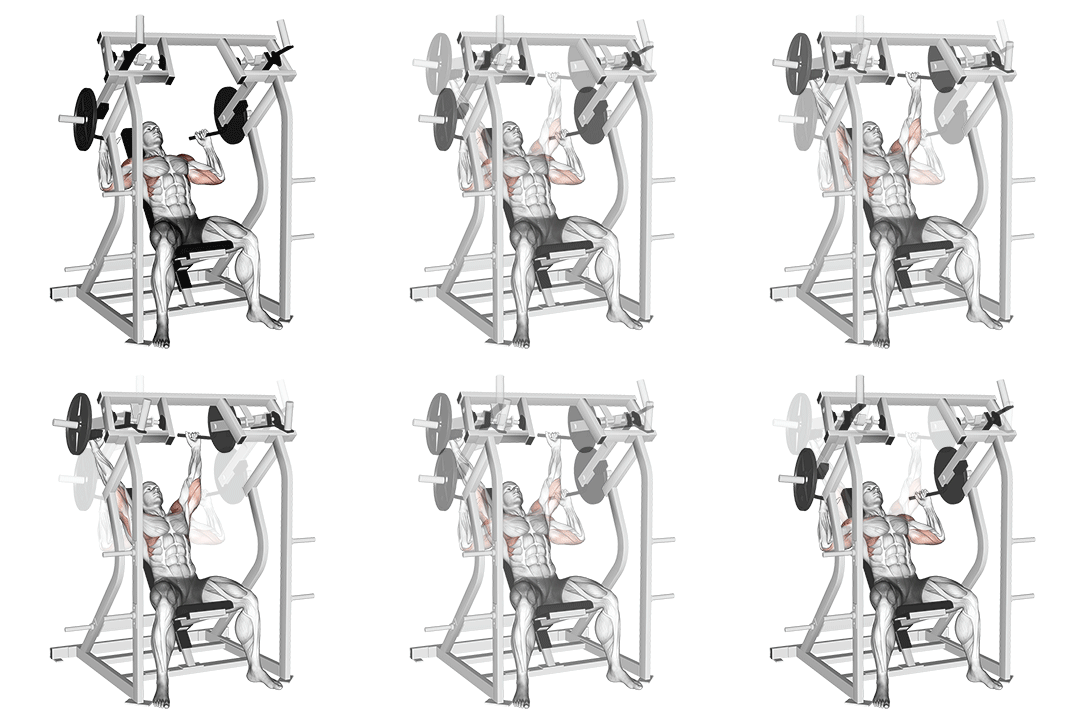
How to Perform Lever Shoulder Press
- Adjust the seat height and backrest of the leverage machine to a comfortable position.
- Sit on the machine with your back against the backrest and your feet flat on the floor.
- Grasp the handles of the machine with an overhand grip, slightly wider than shoulder-width apart.
- Push the handles upward and forward until your arms are fully extended, but not locked.
- Pause for a moment at the top, then slowly lower the handles back down to the starting position.
- Repeat for the desired number of repetitions.
Ranked Lever Shoulder Press Alternatives
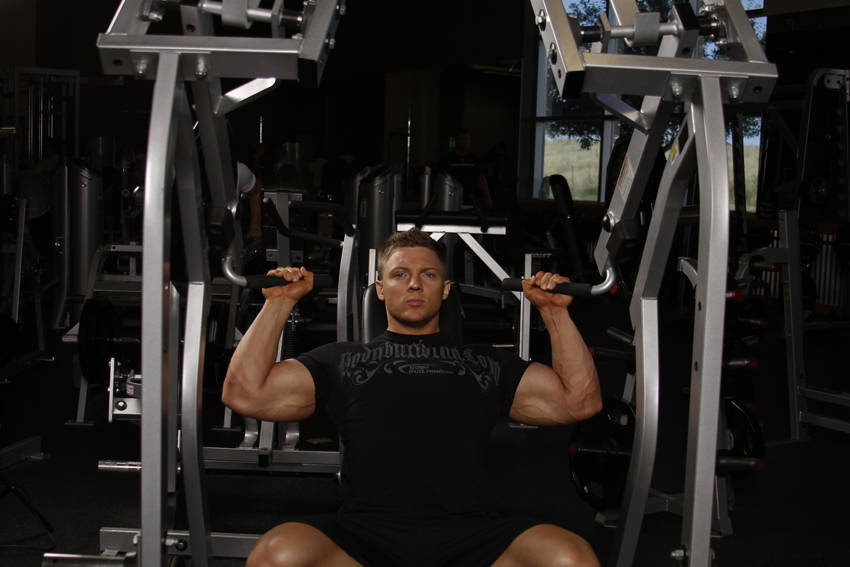
1. Leverage Shoulder Press
99.9% MatchHow to perform this exercise
- Load an appropriate weight onto the pins and adjust the seat for your height. The handles should be near the top of the shoulders at the beginning of the motion. Your chest and head should be up and handles held with a pronated grip. This will be your starting position.
- Press the handles upward by extending through the elbow.
- After a brief pause at the top, return the weight to just above the start position, keeping tension on the muscles by not returning the weight to the stops until the set is complete.
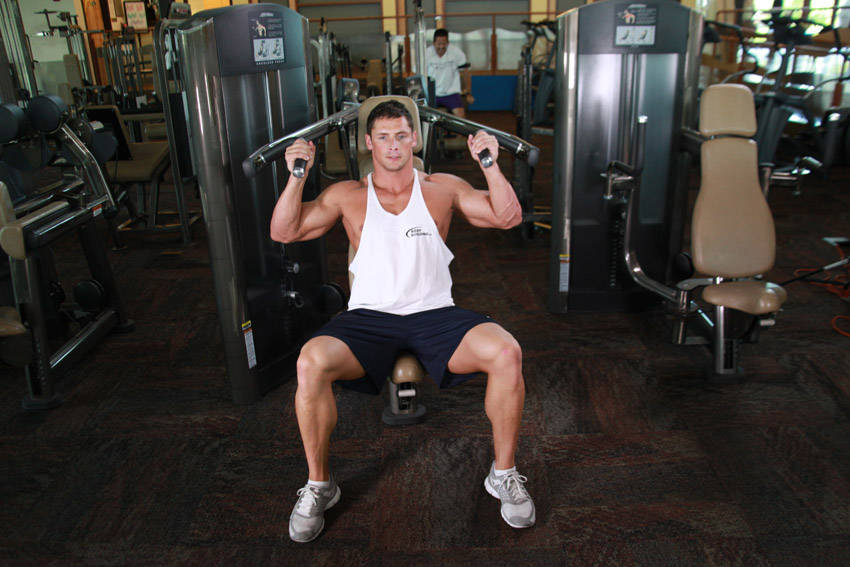
2. Machine Shoulder (Military) Press
99.4% MatchHow to perform this exercise
- Sit down on the Shoulder Press Machine and select the weight.
- Grab the handles to your sides as you keep the elbows bent and in line with your torso. This will be your starting position.
- Now lift the handles as you exhale and you extend the arms fully. At the top of the position make sure that you hold the contraction for a second.
- Lower the handles slowly back to the starting position as you inhale.
- Repeat for the recommended amount of repetitions.
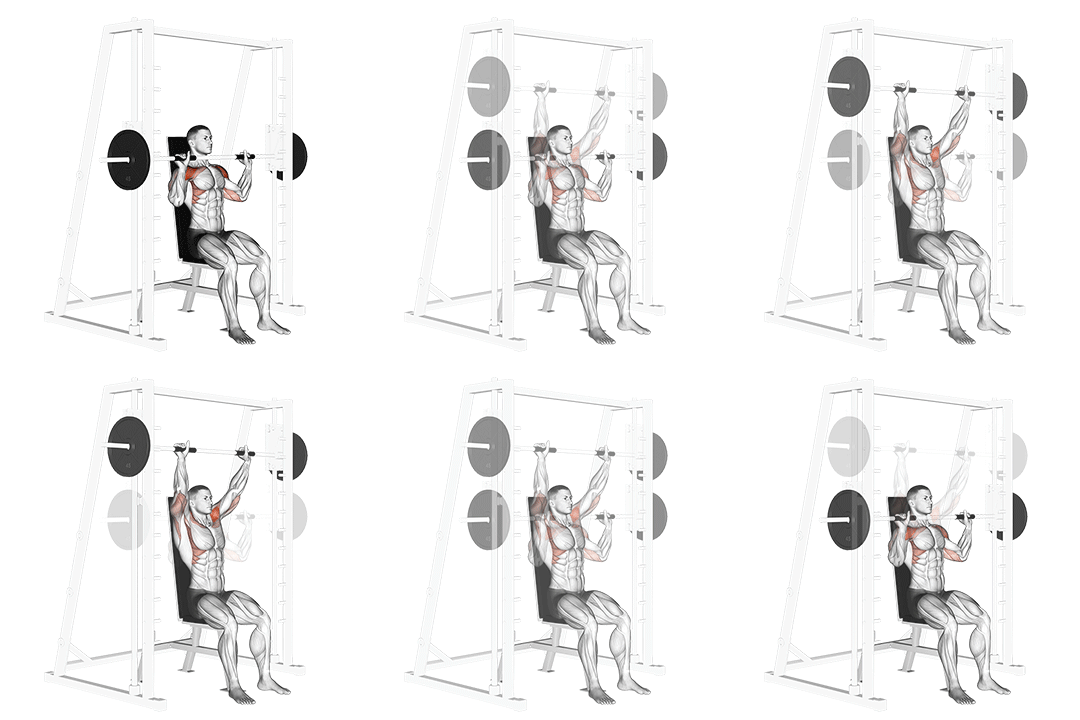
3. Smith Seated Shoulder Press
98.9% MatchHow to perform this exercise
- Adjust the seat height so that the handles are at shoulder level.
- Sit on the machine with your back against the pad and your feet flat on the floor.
- Grasp the handles with an overhand grip and lift them off the supports, extending your arms fully.
- Lower the handles down to shoulder level, keeping your elbows slightly bent.
- Press the handles up overhead until your arms are fully extended.
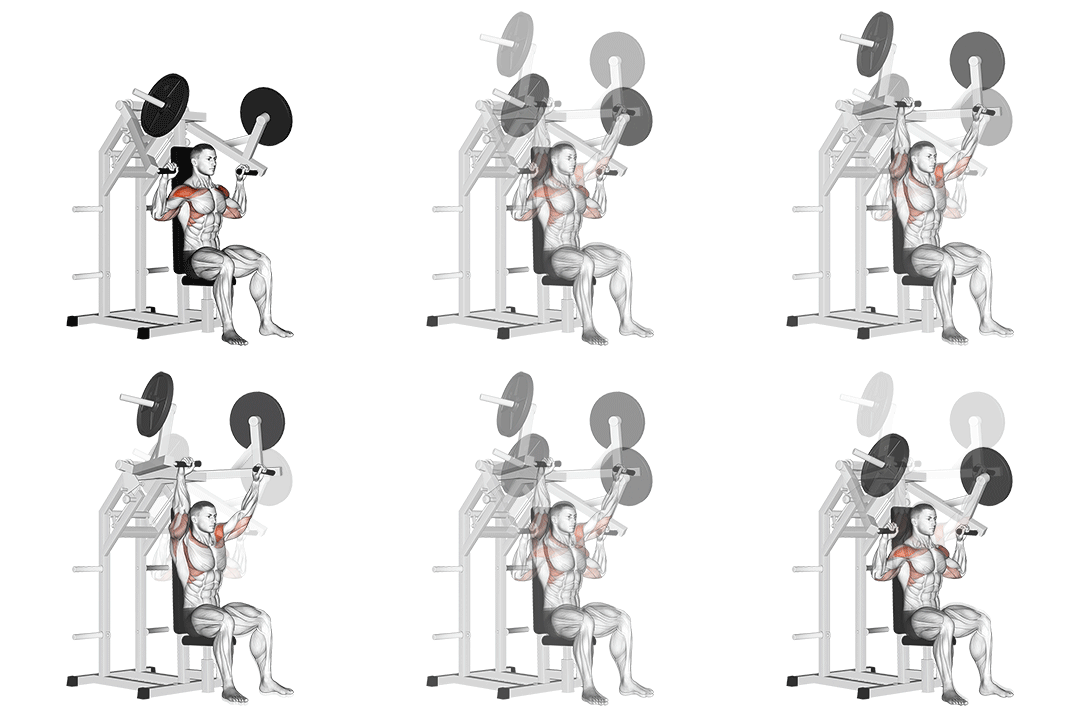
4. Lever Military Press
91.2% MatchHow to perform this exercise
- Adjust the seat height and position yourself on the machine with your back against the backrest.
- Grasp the handles with an overhand grip and position your hands slightly wider than shoulder-width apart.
- Push the handles upward until your arms are fully extended, but do not lock your elbows.
- Pause for a moment at the top, then slowly lower the handles back down to the starting position.
- Repeat for the desired number of repetitions.
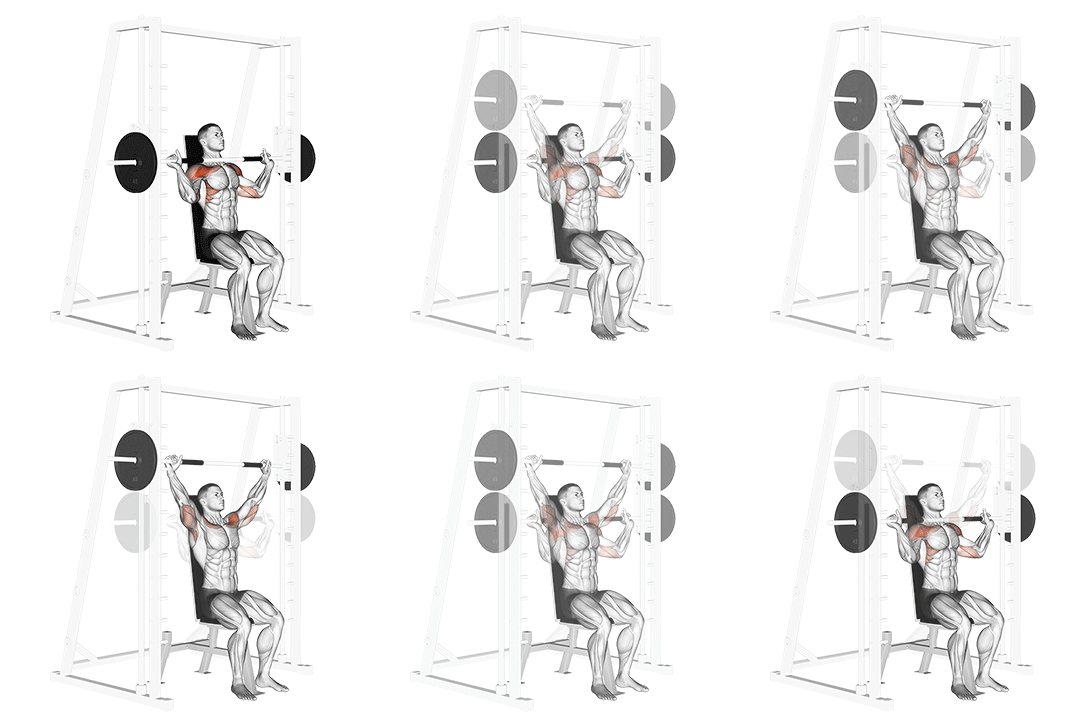
5. Smith Shoulder Press
90.9% MatchHow to perform this exercise
- Adjust the seat height and position yourself on the smith machine with your feet shoulder-width apart.
- Grasp the bar with an overhand grip, slightly wider than shoulder-width apart.
- Lift the bar off the rack and position it at shoulder level, with your elbows bent and palms facing forward.
- Press the bar upward until your arms are fully extended overhead.
- Pause for a moment at the top, then slowly lower the bar back down to shoulder level.
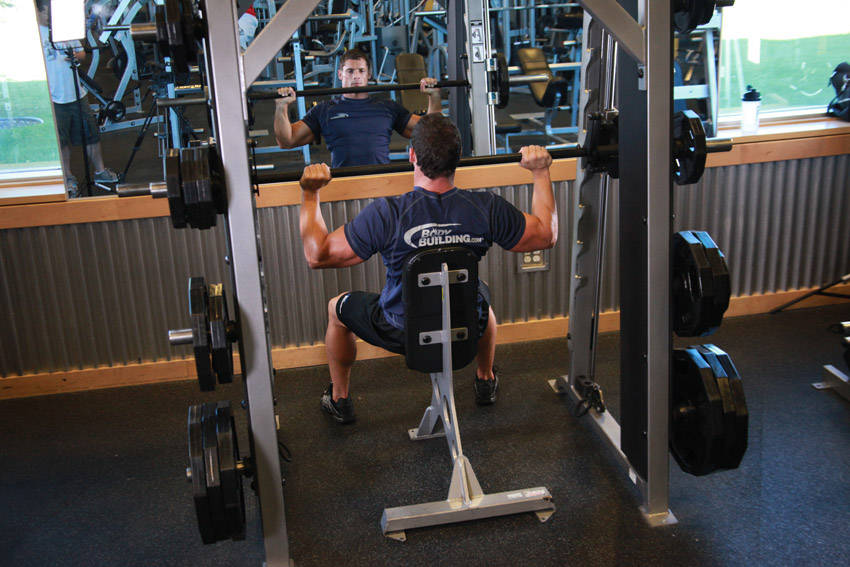
6. Smith Machine Overhead Shoulder Press
89.6% MatchHow to perform this exercise
- To begin, place a flat bench (or preferably one with back support) underneath a smith machine. Position the barbell at a height so that when seated on the flat bench, the arms must be almost fully extended to reach the barbell.
- Once you have the correct height, sit slightly in behind the barbell so that there is an imaginary straight line from the tip of your nose to the barbell. Your feet should be stationary. Grab the barbell with the palms facing forward, unlock it and lift it up so that your arms are fully extended. This is the starting position.
- Slowly begin to lower the barbell until it is level with your chin while inhaling.
- Then lift the barbell back to the starting position using your shoulders while exhaling.
- Repeat for the recommended amount of repetitions.
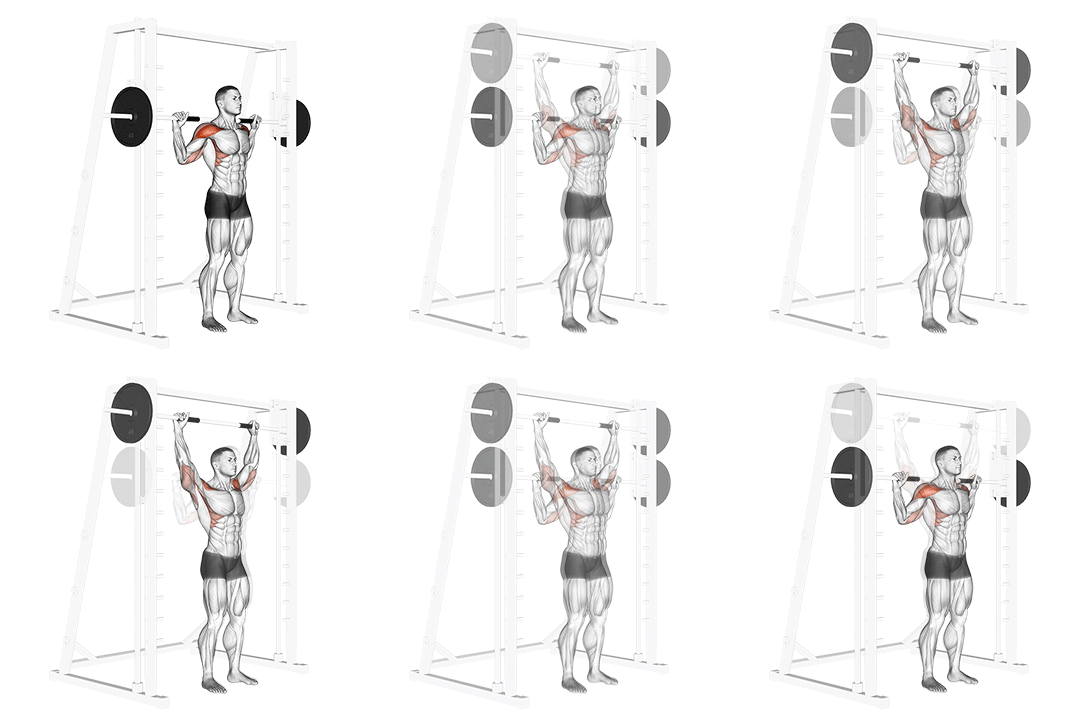
7. Smith Standing Behind Head Military Press
88.8% MatchHow to perform this exercise
- Adjust the seat height of the smith machine so that the bar is at shoulder level.
- Stand with your feet shoulder-width apart and your knees slightly bent.
- Grasp the bar with an overhand grip, slightly wider than shoulder-width apart.
- Lift the bar off the rack and step back, maintaining a stable stance.
- Position the bar behind your head, resting on your upper traps.
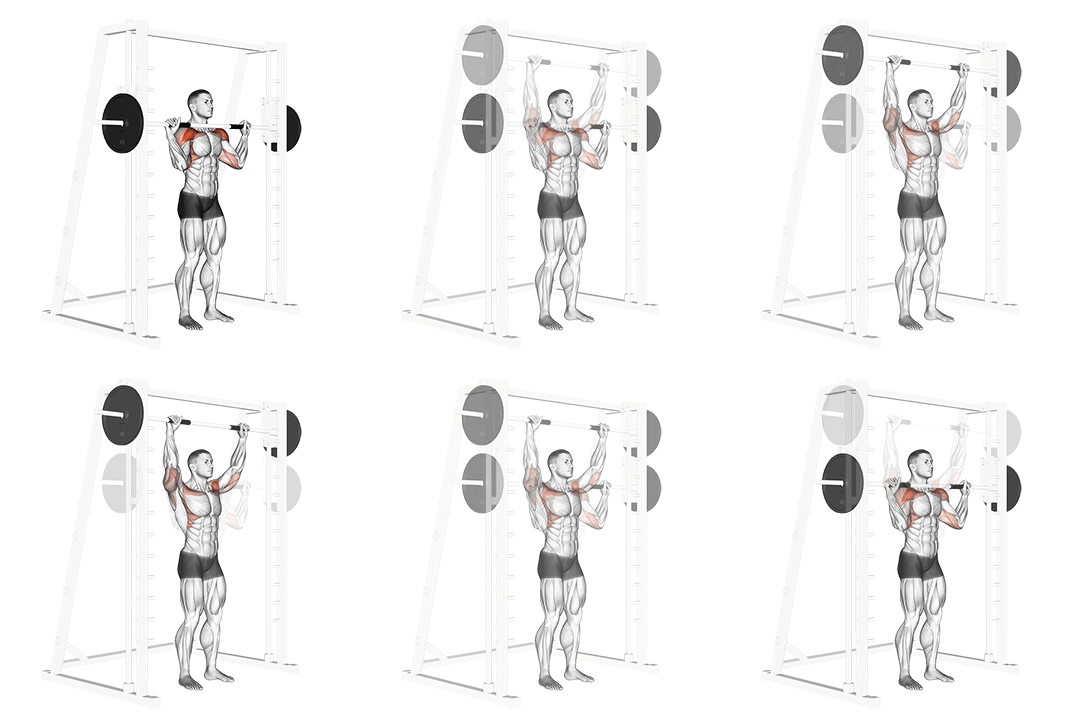
8. Smith Standing Military Press
88.8% MatchHow to perform this exercise
- Stand with your feet shoulder-width apart and your knees slightly bent.
- Grasp the barbell with an overhand grip, slightly wider than shoulder-width apart.
- Lift the barbell off the rack and bring it down to shoulder level, with your palms facing forward.
- Press the barbell upward until your arms are fully extended overhead.
- Pause for a moment at the top, then slowly lower the barbell back down to shoulder level.
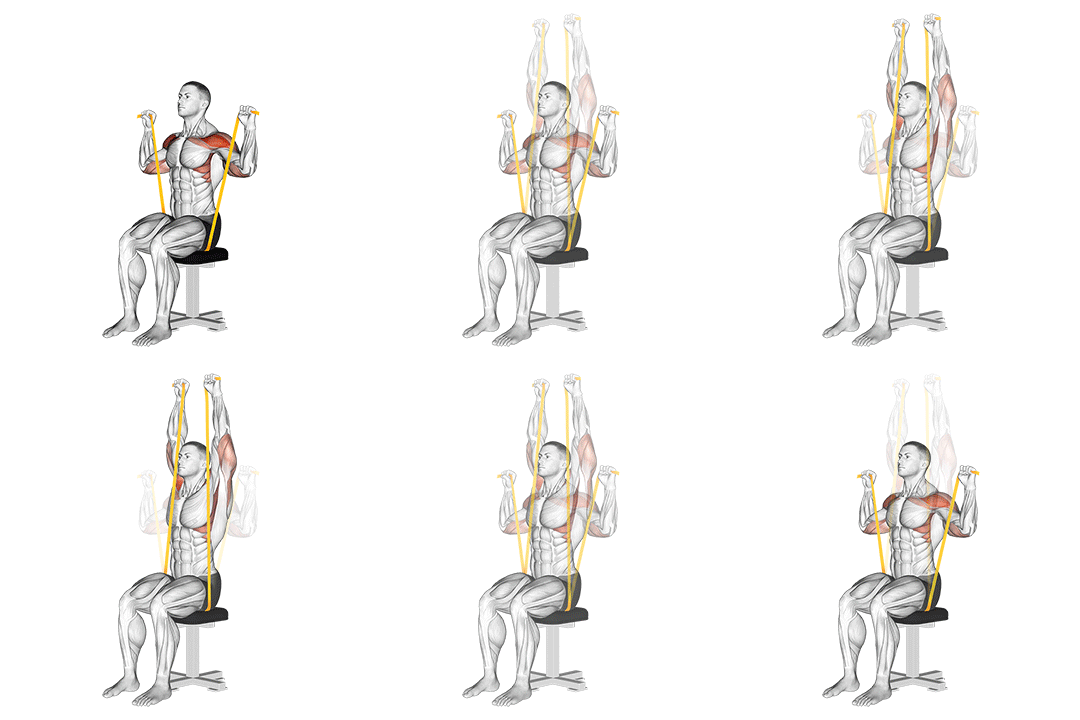
9. Resistance Band Seated Shoulder Press
88.1% MatchHow to perform this exercise
- Sit on a chair or bench with your back straight and feet flat on the ground.
- Hold the resistance band with both hands, palms facing forward, and bring it up to shoulder level.
- Press the band overhead, extending your arms fully.
- Pause for a moment at the top, then slowly lower the band back down to shoulder level.
- Repeat for the desired number of repetitions.
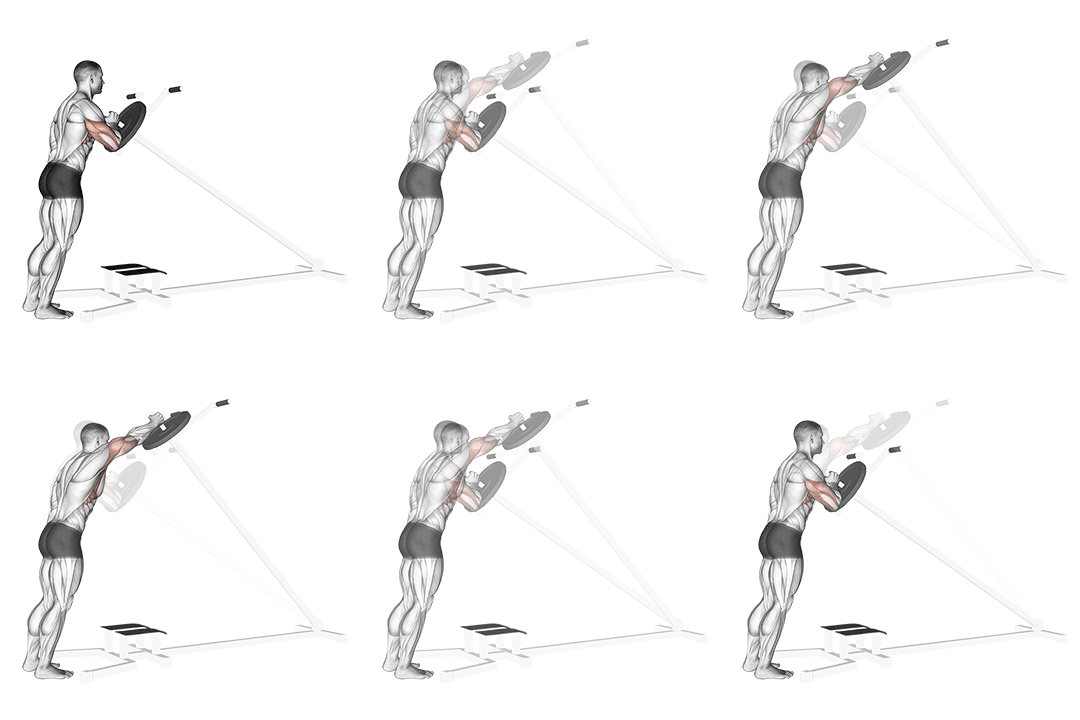
10. Lever One Arm Shoulder Press
87.7% MatchHow to perform this exercise
- Adjust the seat height and position yourself on the machine with your back against the pad.
- Grasp the lever handle with one hand and position your elbow at a 90-degree angle.
- Press the lever upward until your arm is fully extended overhead.
- Pause for a moment at the top, then slowly lower the lever back down to the starting position.
- Repeat for the desired number of repetitions, then switch to the other arm.
Why You Might Need a Lever Shoulder Press Alternative
You might swap the Lever Shoulder Press V. 2 for shoulder pain, limited overhead mobility, or lack of a lever machine. Free-weight and bodyweight presses let you alter grip, arc, and stability to reduce impingement and recruit stabilizers differently. For example, a neutral-grip single-arm kettlebell press reduces external rotation and offloads the rotator cuff, while a landmine press limits shoulder abduction past 90° to ease tendon stress. Substitutes also let you address unilateral imbalances and progressive overload by changing load, tempo, or range of motion; cue: maintain thoracic extension and upward scapular rotation to preserve efficient overhead mechanics.
How to Choose the Right Substitute
Choose a substitute based on equipment, shoulder health, and training goal. If you lack overhead mobility pick a landmine press or neutral-grip kettlebell press to reduce impingement; cue: press slightly forward with the elbow leading to keep the humeral head centered. For hypertrophy, use seated dumbbell presses to increase time under tension and achieve even delt activation. If you need stability work, choose single-arm presses to force scapular control and core bracing. Prioritize movement pattern (vertical press), grip (neutral vs pronated), and ability to progressively load the deltoids.
Frequently Asked Questions
What muscles does Lever Shoulder Press V. 2 work?
The Lever Shoulder Press V. 2 primarily targets the anterior and lateral deltoids, with secondary loading of the triceps and upper trapezius. Biomechanically it’s a vertical press that requires scapular upward rotation and serratus anterior stabilization; cue: drive the elbow up while keeping the scapula neutral to maximize mid-delt recruitment.
What is the best bodyweight alternative to Lever Shoulder Press V. 2?
A pike push-up or handstand push-up progression is the best bodyweight substitute because it preserves vertical loading and forces high deltoid activation. Cue: tuck the hips, push the head between the hands, and protract the scapula at the top to load the anterior and lateral delts and challenge shoulder stabilizers.
Can I build muscle without doing Lever Shoulder Press V. 2?
Yes, you can develop delt size with barbell overhead presses, dumbbell seated presses, landmine presses, and targeted bodyweight progressions by using progressive overload and full range of motion. Focus on controlled eccentrics, sufficient volume, and cues like keeping the elbow under the wrist to ensure proper deltoid activation.
More Exercise Alternatives
Find Alternatives for Any Exercise
Use the exercise substitution finder to compare ranked alternatives for your available equipment and training preference.
Try the Exercise Substitution Finder →