
10 Best Muscle Up Alternatives
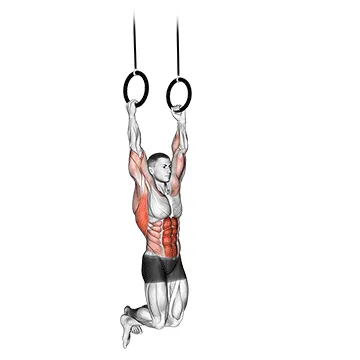
The Muscle Up is done hanging. Ranked closest by our scoring: the Kipping Muscle Up, the Weighted Muscle Up (On Bar) and the L-pull-up.
Updated Ranked by our 12-factor similarity model How it works
Original Exercise: Muscle Up
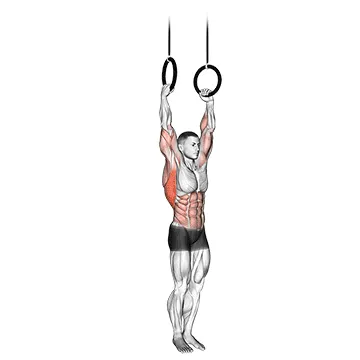
- Primary muscle
- Lats
- Equipment
- Bodyweight
- Difficulty
- Advanced
- Type
- Compound
Secondary muscles: Biceps, Triceps, Shoulders, Chest
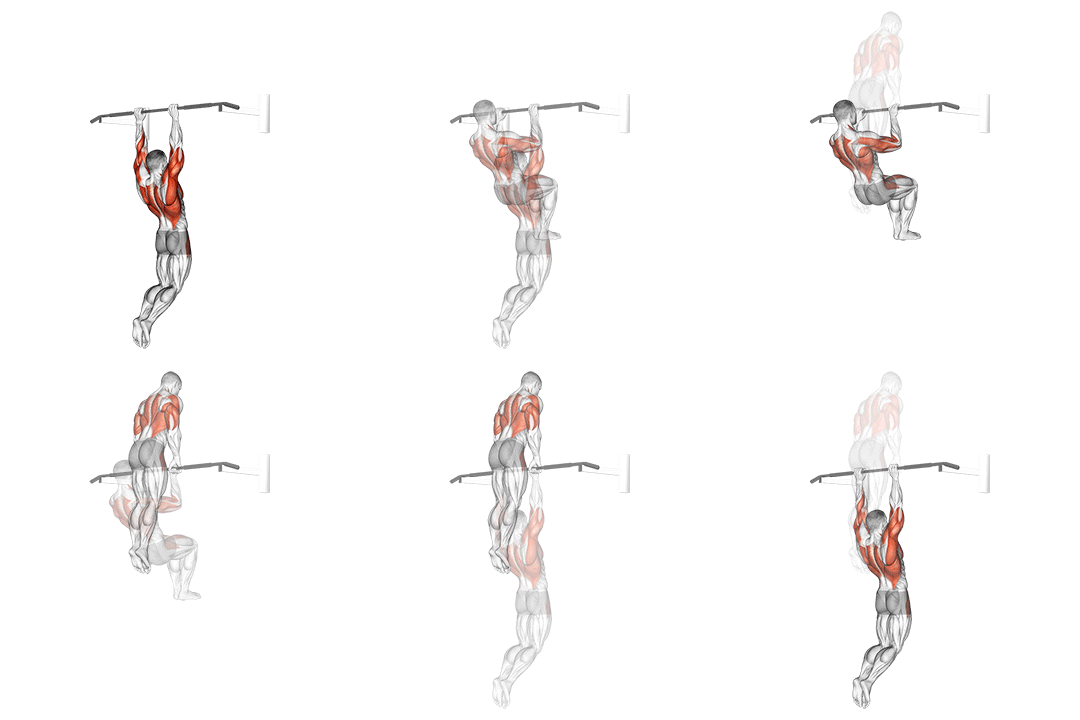
How to perform Muscle Up
- Start by hanging from a pull-up bar with your palms facing away from you and your arms fully extended.
- Engage your core and pull your body up towards the bar, leading with your chest.
- As you reach the top of the movement, transition your grip so that your palms are facing towards you.
- Continue pulling yourself up until your chest is above the bar and your arms are fully flexed.
- Reverse the movement by slowly lowering yourself back down to the starting position.
- Repeat for the desired number of repetitions.
Ranked Muscle Up Alternatives
10 substitutes, ranked by how closely each one matches the Muscle Up on movement pattern, muscles worked, equipment and body position. The higher the score, the less you change. Open "How to perform this exercise" on a card for the steps; every card title links to that exercise's own alternatives page.
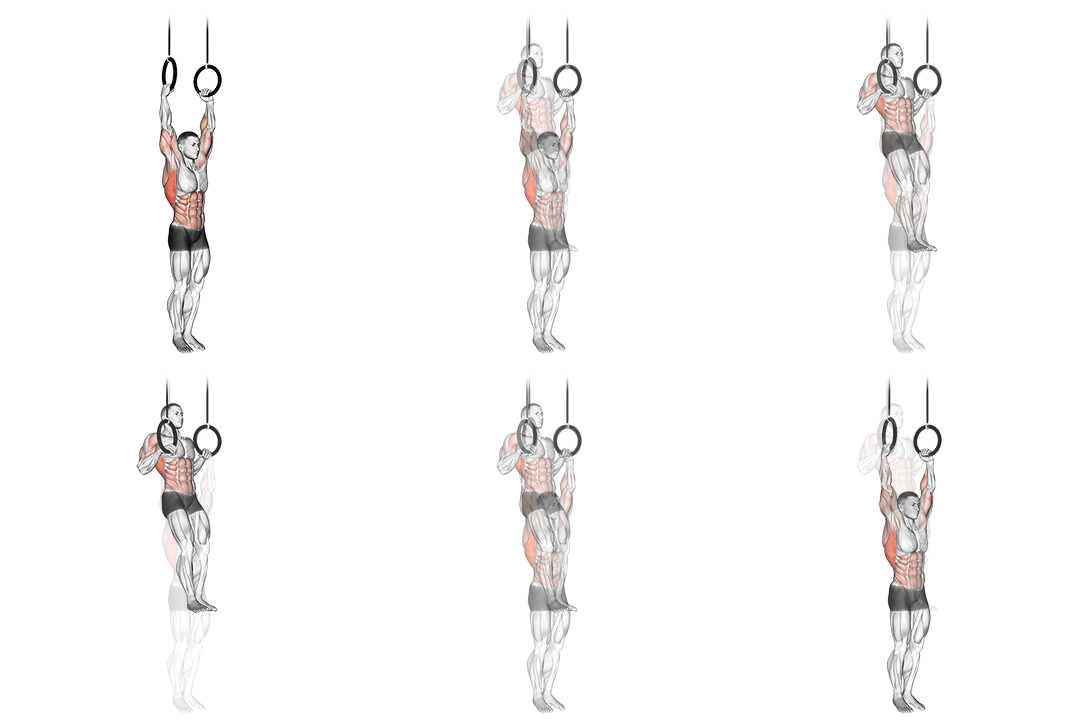
Best match 1. Kipping Muscle Up
94% match- Lats
- Bodyweight
- Advanced
- Compound
Pick this when you want to work the lats with less balance to manage.
How to perform this exercise
- Start by hanging from a pull-up bar with an overhand grip, hands slightly wider than shoulder-width apart.
- Engage your core and use a swinging motion to generate momentum.
- As you swing forward, pull your chest towards the bar, using your lats and biceps to initiate the movement.
- Continue the upward motion until your chest reaches the bar, then transition into a dip position by pushing down on the bar and extending your arms.
- Lower yourself back down to the starting position by bending your arms and controlling the descent.
- Repeat for the desired number of repetitions.
Sets and reps: 3 or 4 sets of 6 to 10 reps.
Why this matches
- Primary muscle: lats, the same as the Muscle Up
- Equipment: bodyweight only, the same as the Muscle Up
- Body position: hanging, the same as the Muscle Up
- Balance: easier to stay steady on than the Muscle Up
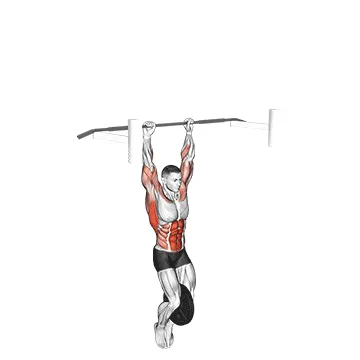
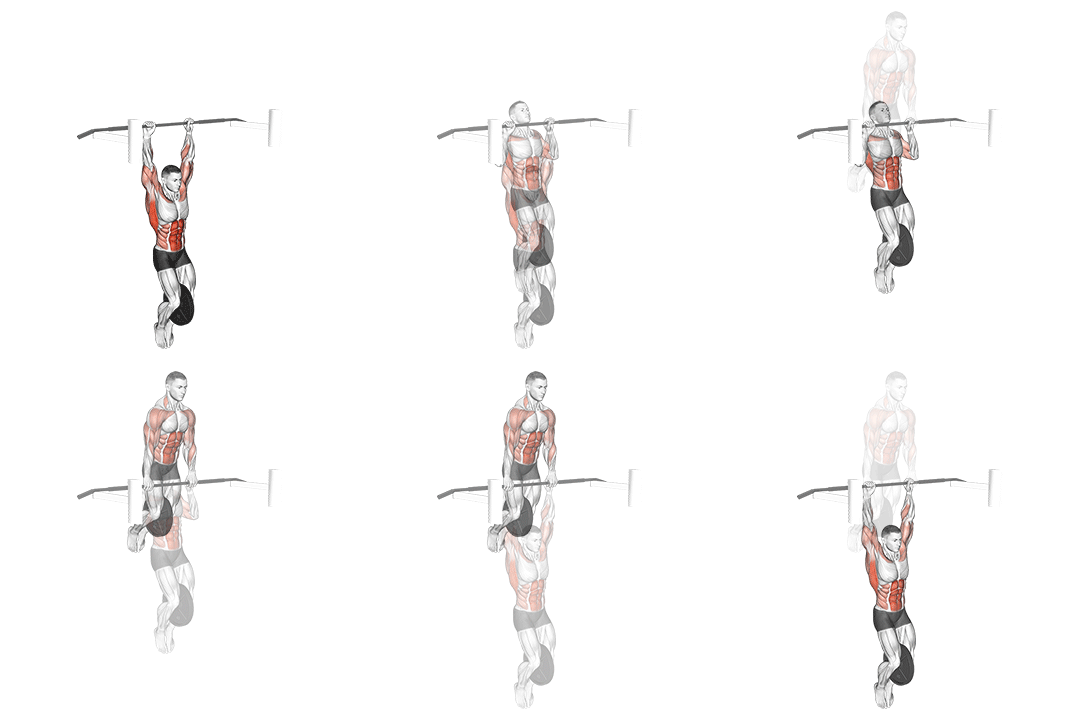
2. Weighted Muscle Up (On Bar)
89% match- Lats
- Weighted
- Advanced
- Compound
A straight swap when you want to keep working the lats.
How to perform this exercise
- Start by hanging from a pull-up bar with your palms facing away from you and your hands slightly wider than shoulder-width apart.
- Engage your core and pull your shoulder blades down and back.
- Bend your elbows and pull your chest towards the bar, keeping your body straight.
- Once your chest reaches the bar, push down with your hands and drive your elbows back, lifting your body above the bar.
- Pause at the top of the movement, then slowly lower yourself back down to the starting position.
- Repeat for the desired number of repetitions.
Sets and reps: 3 to 5 sets of 5 to 8 reps.
Why this matches
- Primary muscle: lats, the same as the Muscle Up
- Equipment: free weights, not bodyweight only
- Body position: hanging, the same as the Muscle Up
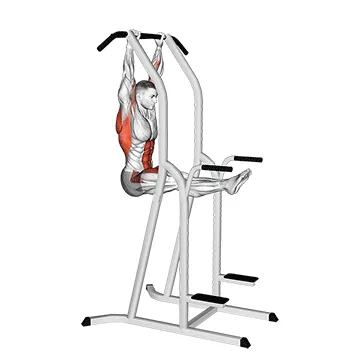
3. L-pull-up
79% match- Lats
- Bodyweight
- Intermediate
- Compound
It still works the lats, through a different movement.
How to perform this exercise
- Grab the pull-up bar with an overhand grip, slightly wider than shoulder-width apart.
- Hang with your arms fully extended and your body straight.
- Engage your lats and biceps to pull your body up towards the bar, keeping your elbows close to your body.
- Continue pulling until your chin is above the bar.
- Pause for a moment at the top, then slowly lower your body back down to the starting position.
- Repeat for the desired number of repetitions.
Sets and reps: 3 or 4 sets of 6 to 10 reps.
Why this matches
- Primary muscle: lats, the same as the Muscle Up
- Equipment: bodyweight only, the same as the Muscle Up
- Body position: hanging, the same as the Muscle Up
- Balance: easier to stay steady on than the Muscle Up
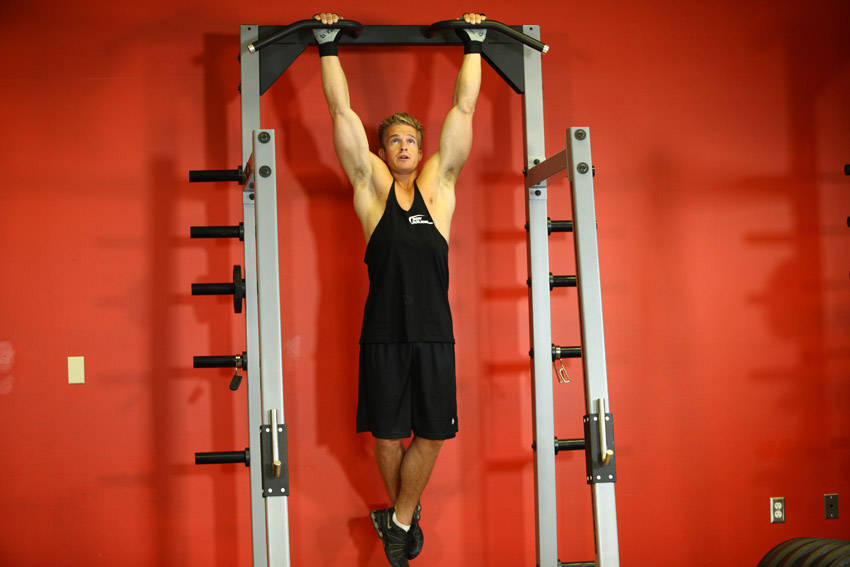
4. Rocky Pull-ups/pulldowns
78% match- Lats
- Other
- Intermediate
- Compound
How to perform this exercise
- Grab the pull-up bar with the palms facing forward using a wide grip.
- As you have both arms extended in front of you holding the bar at the chosen grip width, bring your torso back around 30 degrees or so while creating a curvature on your lower back and sticking your chest out. This is your starting position.
- Pull your torso up until the bar touches your upper chest by drawing the shoulders and the upper arms down and back. Exhale as you perform this portion of the movement. Tip: Concentrate on squeezing the back muscles once you reach the full contracted position. The upper torso should remain stationary as it moves through space and only the arms should move. The forearms should do no other work other than hold the bar.
- After a second on the contracted position, start to inhale and slowly lower your torso back to the starting position when your arms are fully extended and the lats are fully stretched.
- Now repeat the same movements as described above except this time your torso will remain straight as you go up and the bar will touch the back of the neck instead of the upper chest. Tip: Use the head to lean forward slightly as it will help you properly execute this portion of the exercise.
- Once you have lowered yourself back down to the starting position, repeat the exercise for the prescribed amount of repetitions in your program.
Sets and reps: 3 or 4 sets of 6 to 10 reps.
Why this matches
- Primary muscle: lats, the same as the Muscle Up
- Equipment: bodyweight only, the same as the Muscle Up
- Body position: hanging, the same as the Muscle Up
- Balance: easier to stay steady on than the Muscle Up
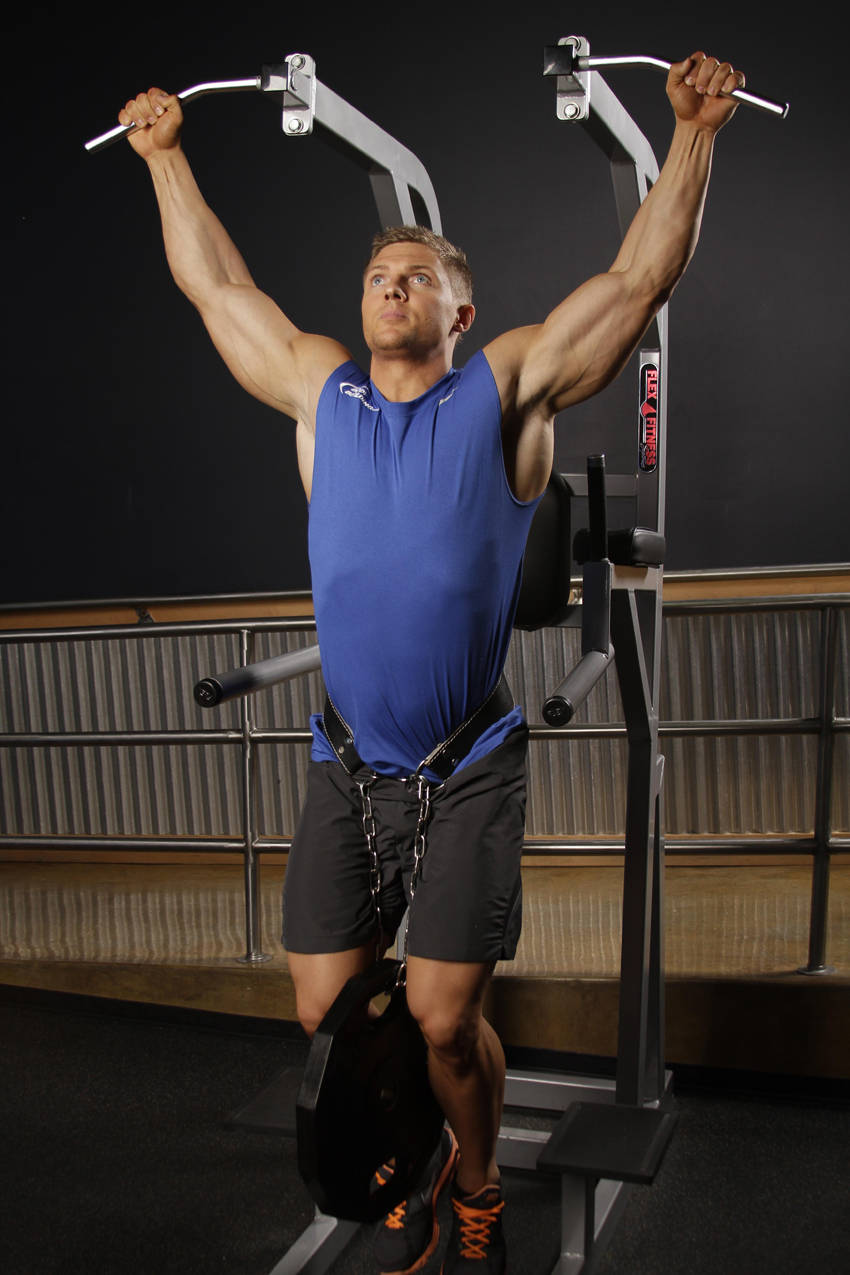
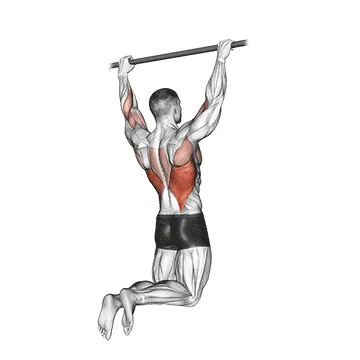
5. Weighted Pull Ups
78% match- Lats
- Other
- Advanced
- Compound
How to perform this exercise
- Attach a weight to a dip belt and secure it around your waist. Grab the pull-up bar with the palms of your hands facing forward. For a medium grip, your hands should be spaced at shoulder width. Both arms should be extended in front of you holding the bar at the chosen grip.
- You'll want to bring your torso back about 30 degrees while creating a curvature in your lower back and sticking your chest out. This will be your starting position.
- Now, exhale and pull your torso up until your head is above your hands. Concentrate on squeezing yourshoulder blades back and down as you reach the top contracted position.
- After a brief moment at the top contracted position, inhale and slowly lower your torso back to the starting position with your arms extended and your lats fully stretched.
Sets and reps: 3 or 4 sets of 6 to 10 reps.
Why this matches
- Primary muscle: lats, the same as the Muscle Up
- Equipment: bodyweight only, the same as the Muscle Up
- Body position: hanging, the same as the Muscle Up
- Balance: easier to stay steady on than the Muscle Up
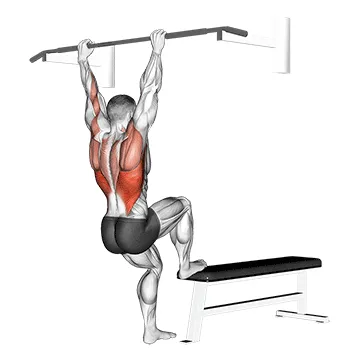
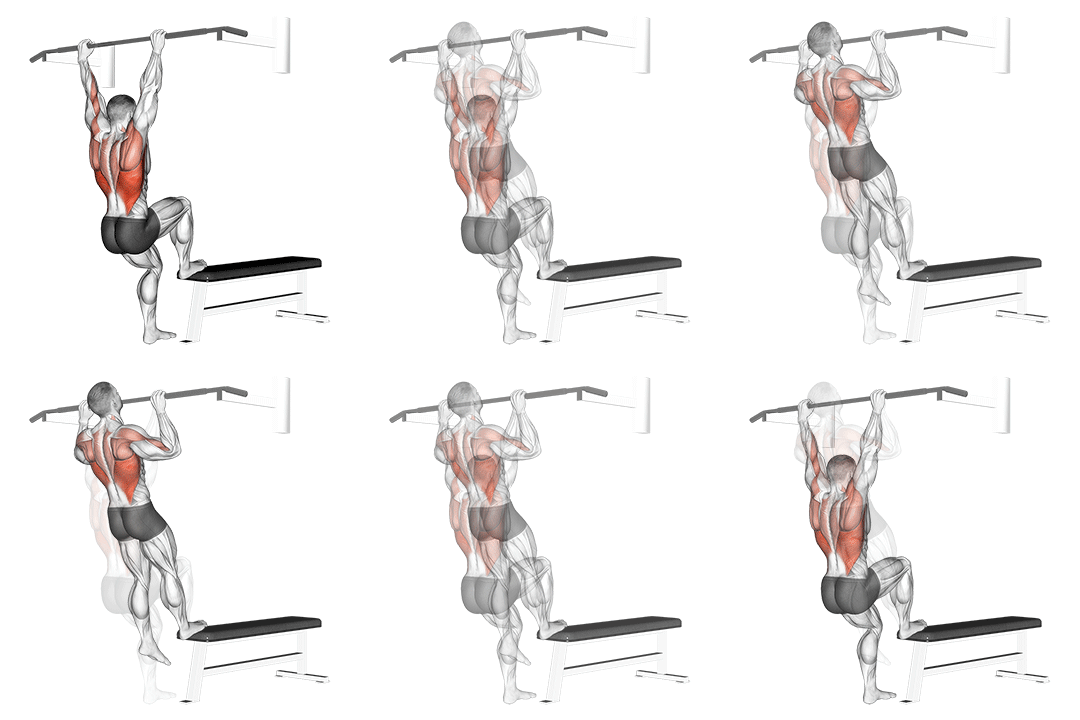
6. Bench Pull-ups
78% match- Lats
- Bodyweight
- Intermediate
- Compound
How to perform this exercise
- Position yourself under a bar or a sturdy horizontal surface that is at chest height.
- Grab the bar or surface with an overhand grip, slightly wider than shoulder-width apart.
- Hang with your arms fully extended and your body straight.
- Pull your chest towards the bar or surface by squeezing your shoulder blades together and bending your elbows.
- Continue pulling until your chin is above the bar or surface.
- Lower yourself back down to the starting position with control.
- Repeat for the desired number of repetitions.
Sets and reps: 3 or 4 sets of 6 to 10 reps.
Why this matches
- Primary muscle: lats, the same as the Muscle Up
- Equipment: bodyweight only, the same as the Muscle Up
- Body position: hanging, the same as the Muscle Up
- Balance: easier to stay steady on than the Muscle Up
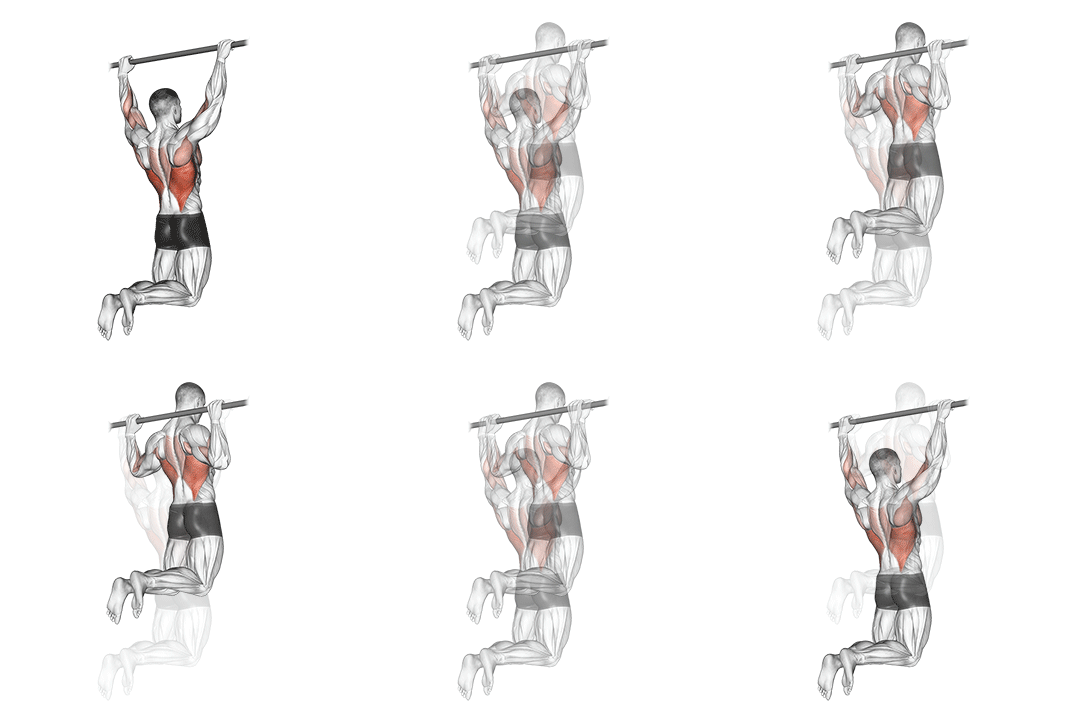
7. Rear Pull-up
77% match- Lats
- Bodyweight
- Intermediate
- Compound
How to perform this exercise
- Grab the pull-up bar with an overhand grip, slightly wider than shoulder-width apart.
- Hang from the bar with your arms fully extended and your body straight.
- Engage your back muscles and pull your body up towards the bar, keeping your elbows close to your body.
- Continue pulling until your chin is above the bar.
- Pause for a moment at the top, then slowly lower your body back down to the starting position.
- Repeat for the desired number of repetitions.
Sets and reps: 3 or 4 sets of 6 to 10 reps.
Why this matches
- Primary muscle: lats, the same as the Muscle Up
- Equipment: bodyweight only, the same as the Muscle Up
- Body position: hanging, the same as the Muscle Up
- Balance: easier to stay steady on than the Muscle Up
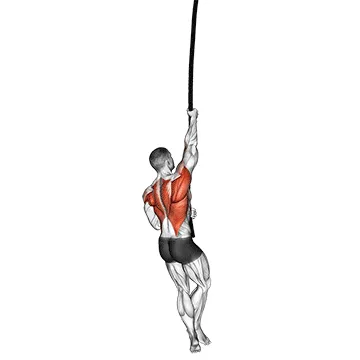
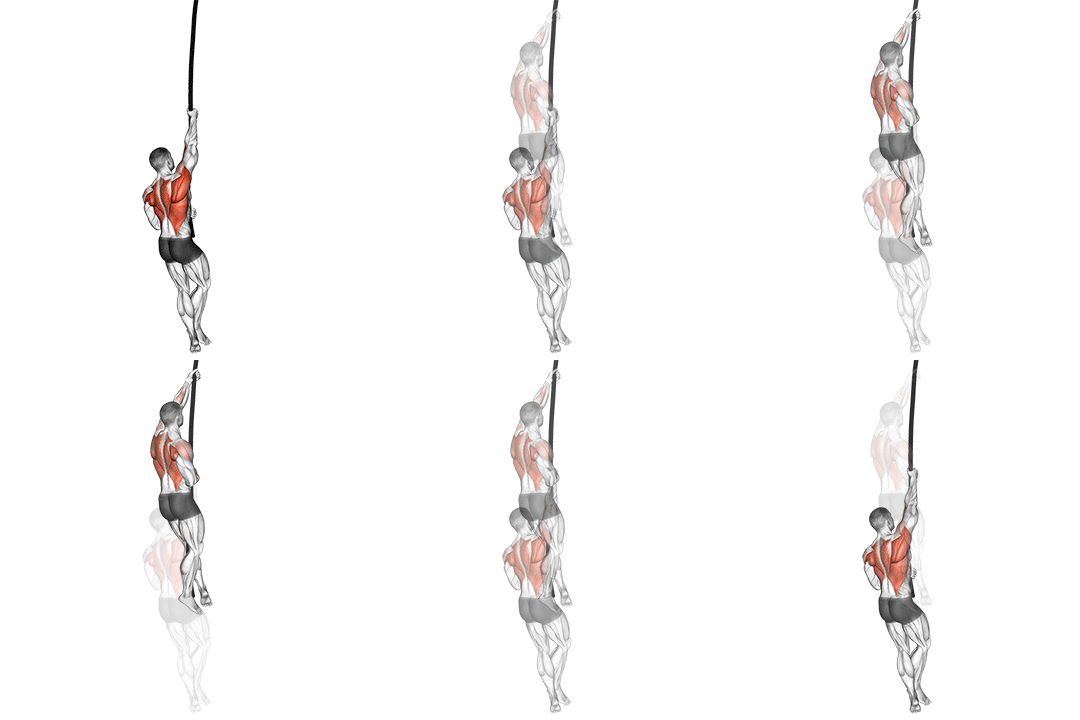
8. Rope Climb
76% match- Upper Back
- Rope
- Advanced
- Compound
How to perform this exercise
- Stand facing the rope with your feet shoulder-width apart.
- Grab the rope with both hands, palms facing towards you.
- Bend your knees slightly and engage your core.
- Begin pulling yourself up the rope by alternating hand-over-hand movements.
- Use your legs to assist in the upward movement.
- Continue climbing until you reach the desired height or the top of the rope.
- To descend, reverse the hand-over-hand movement while controlling your descent.
- Repeat for the desired number of repetitions.
Sets and reps: 3 or 4 sets of 6 to 10 reps.
Why this matches
- Primary muscle: upper back, not lats
- Equipment: bodyweight only, the same as the Muscle Up
- Body position: hanging, the same as the Muscle Up
9. Gironda Sternum Chin
75% match- Lats
- Bodyweight
- Advanced
- Compound
How to perform this exercise
- Stand facing a high bar with your feet shoulder-width apart.
- Reach up and grab the bar with an overhand grip, slightly wider than shoulder-width apart.
- Hang from the bar with your arms fully extended and your body straight.
- Engage your lats and biceps to pull your chest up towards the bar, leading with your sternum.
- Pause for a moment at the top, then slowly lower yourself back down to the starting position.
- Repeat for the desired number of repetitions.
Sets and reps: 3 or 4 sets of 6 to 10 reps.
Why this matches
- Primary muscle: lats, the same as the Muscle Up
- Equipment: bodyweight only, the same as the Muscle Up
- Body position: hanging, the same as the Muscle Up
- Balance: easier to stay steady on than the Muscle Up
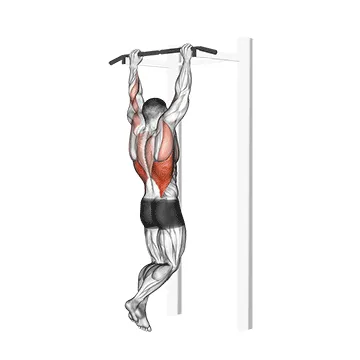
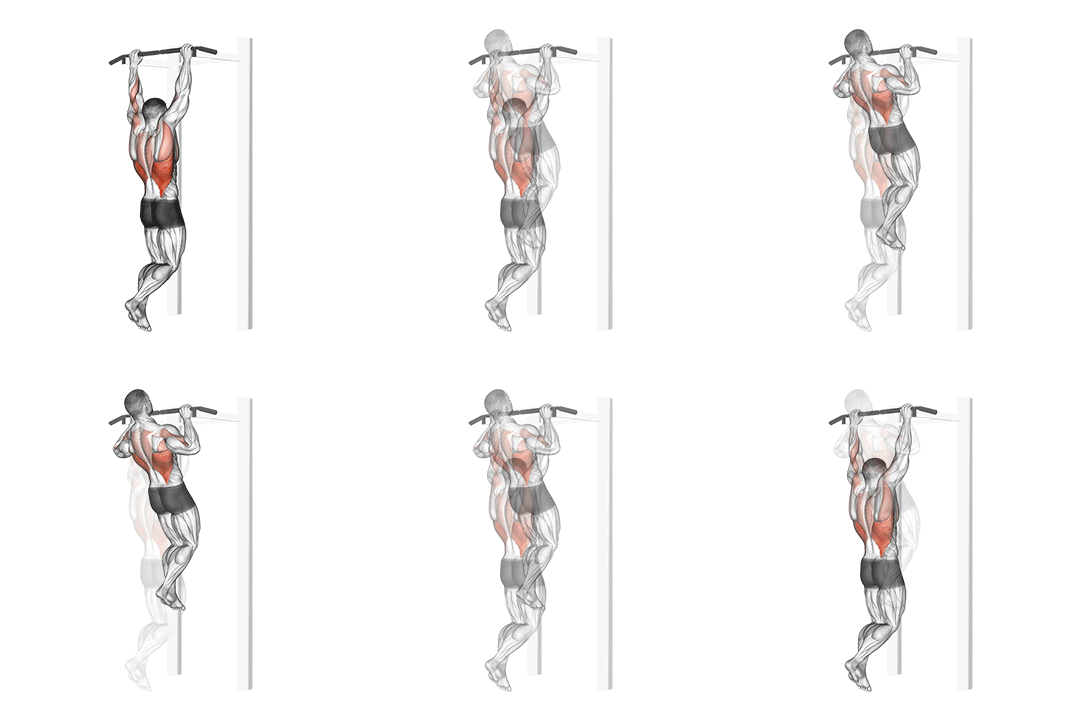
10. Muscle-up (On Vertical Bar)
74% match- Lats
- Bodyweight
- Advanced
- Compound
How to perform this exercise
- Start by hanging from a vertical bar with your palms facing away from you and your arms fully extended.
- Engage your core and pull your body up towards the bar, leading with your chest.
- As you pull yourself up, lean back slightly and bring your elbows towards your sides.
- Continue pulling until your chest reaches the bar and your elbows are fully bent.
- Pause for a moment at the top, then slowly lower yourself back down to the starting position.
- Repeat for the desired number of repetitions.
Sets and reps: 3 or 4 sets of 6 to 10 reps.
Why this matches
- Primary muscle: lats, the same as the Muscle Up
- Equipment: bodyweight only, the same as the Muscle Up
- Body position: hanging, the same as the Muscle Up
- Balance: easier to stay steady on than the Muscle Up
Muscle Up FAQ
What muscles does Muscle Up work?
The Muscle Up primarily targets the lats (humeral adduction and extension), teres major, rhomboids, and posterior delts during the pull, then shifts load to anterior delts, pecs, and triceps during the transition and dip. Cue: think strong scapular retraction on the pull and rapid elbow drive through the transition.
Can I build muscle without doing Muscle Up?
Yes. You can build lats and overall back mass with progressive bodyweight variations, weighted pull-ups, and tempo eccentrics (3–6s negatives) to increase time under tension. Cue: emphasize full scapular retraction and controlled humeral extension on each rep to maximize lat activation.
Find Alternatives for Any Exercise
Search the exercise database and filter the ranked substitutes by the equipment you own.
Similarity scores compare exercise metadata such as movement pattern, muscles, equipment and body position. They are not a safety rating or a check that you own the equipment. Learn about our methodology