

10 Best Seated Good Mornings Alternatives for Back Strength
What can you do instead of Seated Good Mornings? Use standing Romanian deadlifts, back extensions, single-leg RDLs, band good mornings, or reverse hypers to target the erector spinae. Emphasize the hip hinge: push hips back, keep a neutral spine, and load the posterior chain through controlled eccentrics to maintain spinal extension strength.
Original Exercise: Seated Good Mornings
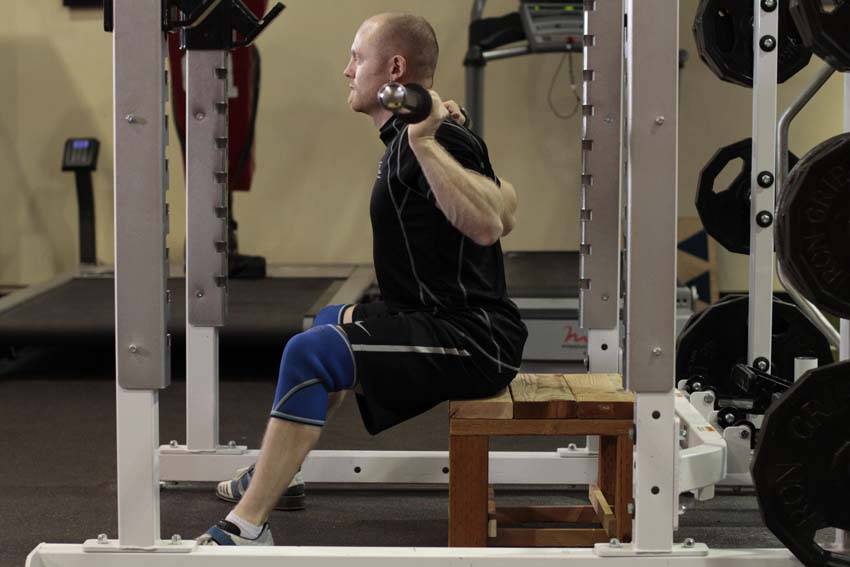
How to Perform Seated Good Mornings
- Set up a box in a power rack. The pins should be set at an appropriate height. Begin by stepping under the bar and placing it across the back of the shoulders, not on top of your traps. Squeeze your shoulder blades together and rotate your elbows forward, attempting to bend the bar across your shoulders.
- Remove the bar from the rack, creating a tight arch in your lower back. Keep your head facing forward. With your back, shoulders, and core tight, push your knees and butt out and you begin your descent. Sit back with your hips until you are seated on the box. This will be your starting position.
- Keeping the bar tight, bend forward at the hips as much as possible. If you set the pins to what would be parallel, you not only have a safety if you fail, but know when to stop.
- Pause just above the pins and reverse the motion until your torso it upright.
Pro Tips
- Category: Powerlifting
- Force: Pull
- Movement type: Compound
Ranked Seated Good Mornings Alternatives
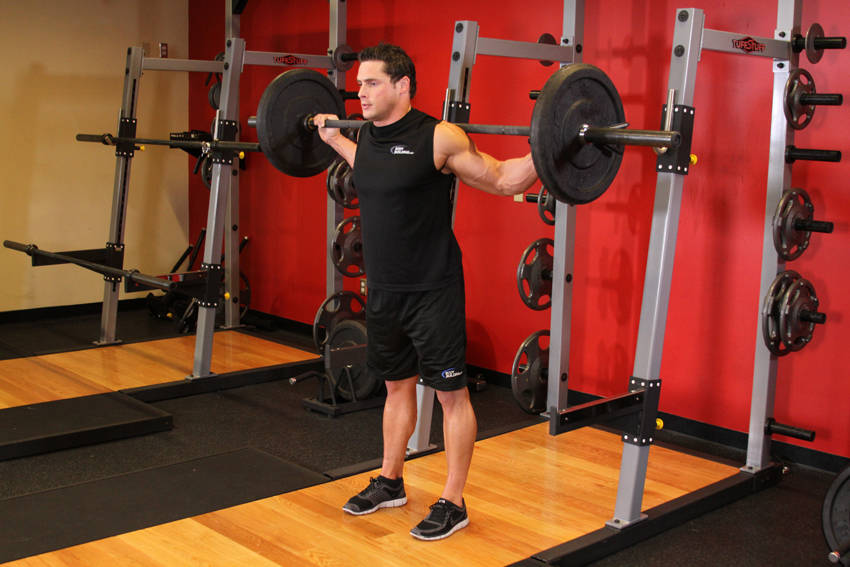
1. Stiff Leg Barbell Good Morning
87.2% MatchHow to perform this exercise
- This exercise is best performed inside a squat rack for safety purposes. To begin, first set the bar on a rack that best matches your height. Once the correct height is chosen and the bar is loaded, step under the bar and place the back of your shoulders (slightly below the neck) across it.
- Hold on to the bar using both arms at each side and lift it off the rack by first pushing with your legs and at the same time straightening your torso.
- Step away from the rack and position your legs using a shoulder width medium stance. Keep your head up at all times as looking down will get you off balance and also maintain a straight back. This will be your starting position.
- Keeping your legs stationary, move your torso forward by bending at the hips while inhaling. Lower your torso until it is parallel with the floor.
- Begin to raise the bar as you exhale by elevating your torso back to the starting position.
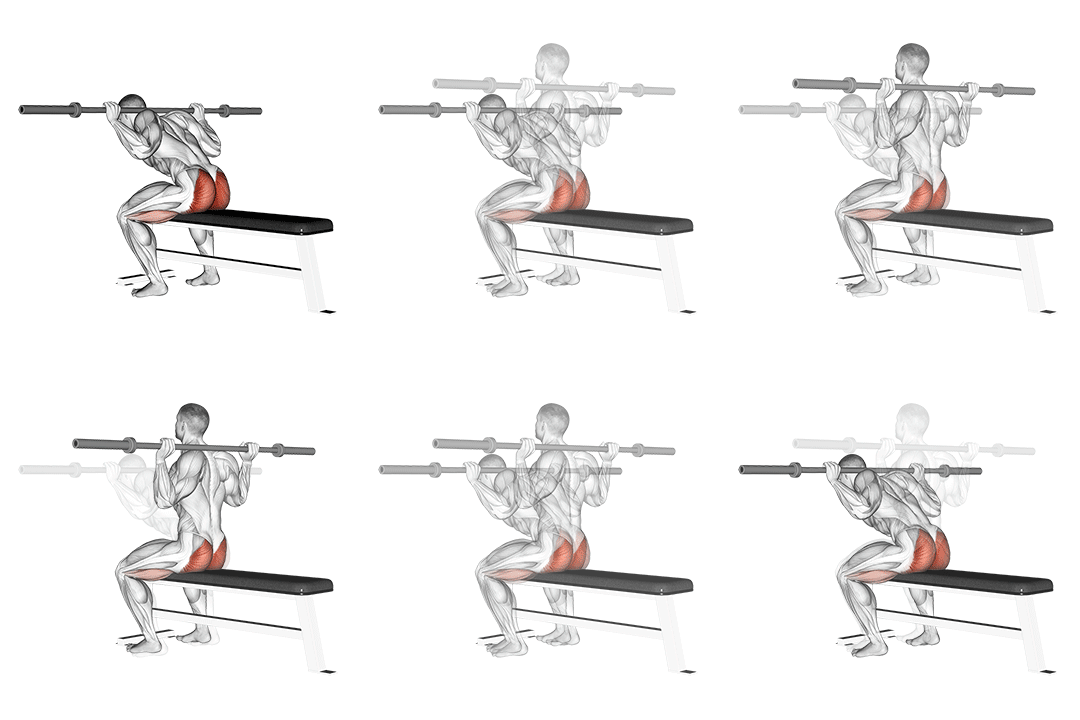
2. Barbell Seated Good Morning
79.4% MatchHow to perform this exercise
- Sit on a bench with your feet flat on the ground and a barbell resting on your upper back.
- Keep your back straight and your chest up.
- Slowly hinge forward at the hips, lowering your torso towards the ground.
- Pause for a moment at the bottom, then push through your heels to return to the starting position.
- Repeat for the desired number of repetitions.
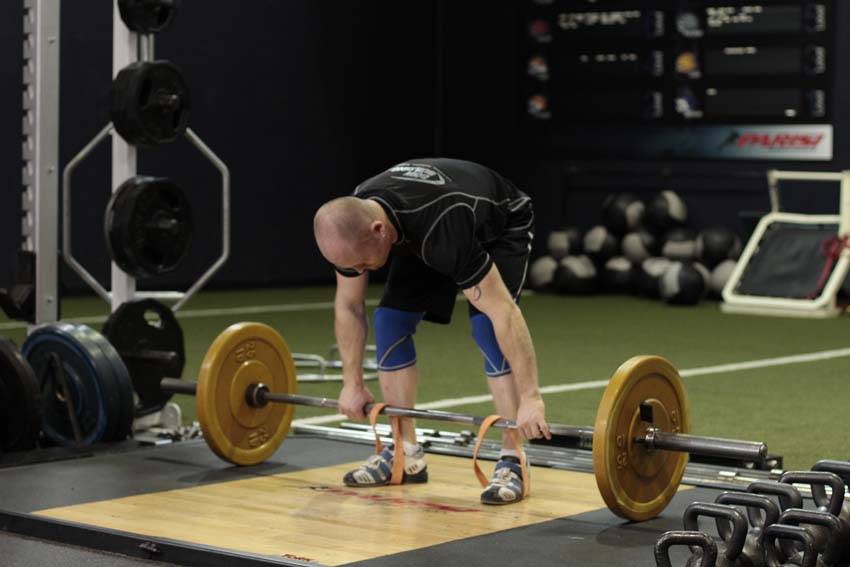
3. Deadlift With Bands
77.2% MatchHow to perform this exercise
- To deadlift with short bands, simply loop them over the bar before you start, and step into them to set up. For long bands, they will need to be anchored to a secure base, such as heavy dumbbells or a rack.
- With your feet, and your grip set, take a big breath and then lower your hips and bend the knees until your shins contact the bar. Look forward with your head, keep your chest up and your back arched, and begin driving through the heels to move the weight upward. After the bar passes the knees, aggressively pull the bar back, pulling your shoulder blades together as you drive your hips forward into the bar.
- Lower the bar by bending at the hips and guiding it to the floor.
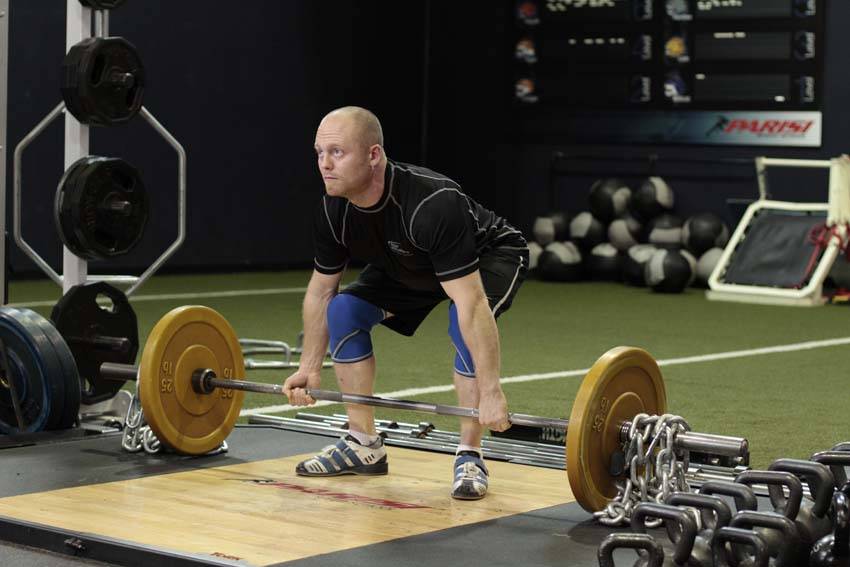
4. Deadlift With Chains
77.2% MatchHow to perform this exercise
- You can attach the chains to the sleeves of the bar, or just drape the middle over the bar so there is a greater weight increase as you lift.
- Approach the bar so that it is centered over your feet. You feet should be about hip width apart. Bend at the hip to grip the bar at shoulder width, allowing your shoulder blades to protract. Typically, you would use an overhand grip or an over/under grip on heavier sets. With your feet, and your grip set, take a big breath and then lower your hips and bend the knees until your shins contact the bar.
- Look forward with your head, keep your chest up and your back arched, and begin driving through the heels to move the weight upward. After the bar passes the knees, aggressively pull the bar back, pulling your shoulder blades together as you drive your hips forward into the bar.
- Lower the bar by bending at the hips and guiding it to the floor.
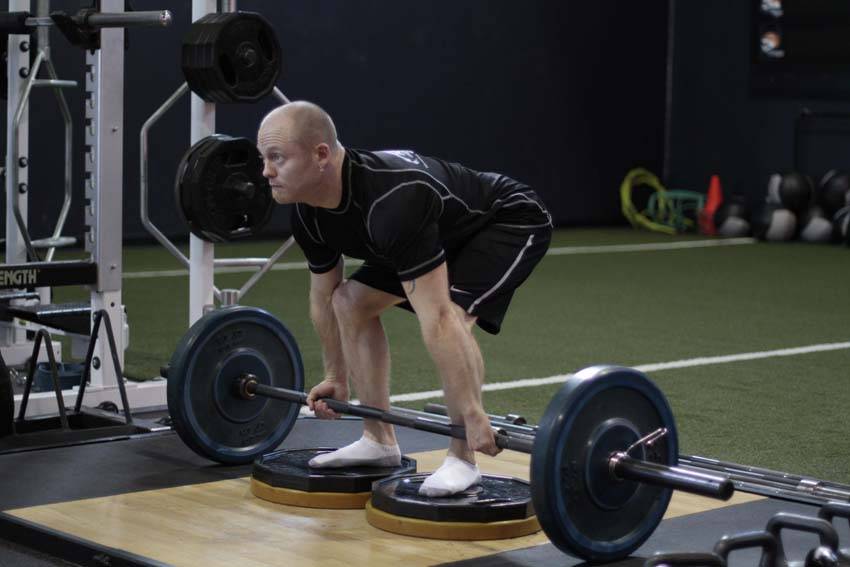
5. Deficit Deadlift
77.2% MatchHow to perform this exercise
- Begin by having a platform or weight plates that you can stand on, usually 1-3 inches in height. Approach the bar so that it is centered over your feet. You feet should be about hip width apart. Bend at the hip to grip the bar at shoulder width, allowing your shoulder blades to protract. Typically, you would use an overhand grip or an over/under grip on heavier sets.
- With your feet, and your grip set, take a big breath and then lower your hips and bend the knees until your shins contact the bar. Look forward with your head, keep your chest up and your back arched, and begin driving through the heels to move the weight upward. After the bar passes the knees, aggressively pull the bar back, pulling your shoulder blades together as you drive your hips forward into the bar.
- Lower the bar by bending at the hips and guiding it to the floor.
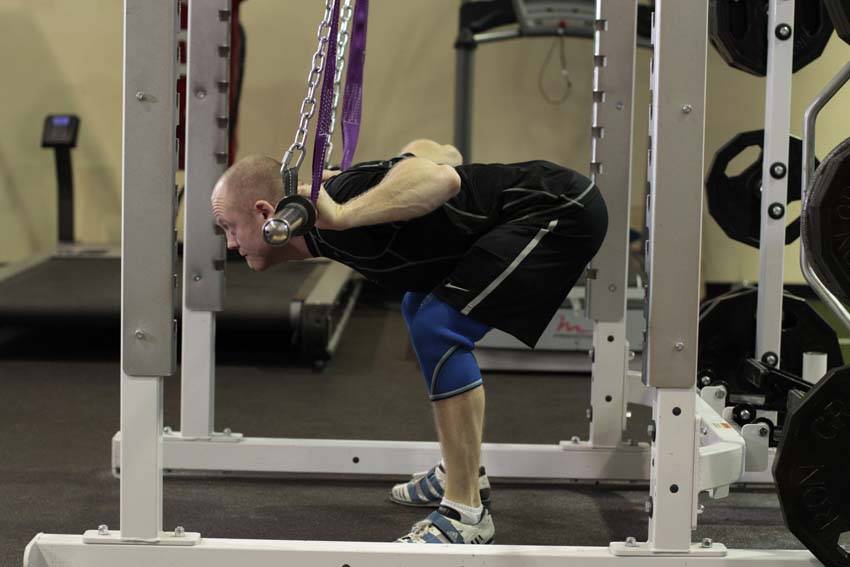
6. Hanging Bar Good Morning
74.7% MatchHow to perform this exercise
- Begin with a bar on a rack at about the same height as your stomach. Suspend the bar using chains or suspension straps.
- Bend over underneath the bar and rack the bar across the rear of your shoulders as you would a power squat, not on top of your traps. At the proper height, you should be near parallel to the floor when bent over. Keep your back tight, shoulder blades pinched together, and your knees slightly bent. Keep your back arched and your cervical spine in proper alignment.
- Begin the motion by extending through the hips with your glutes and hamstrings, and you are standing with the weight.
- Slowly lower the weight back to the starting position, where it is supported by the chains.
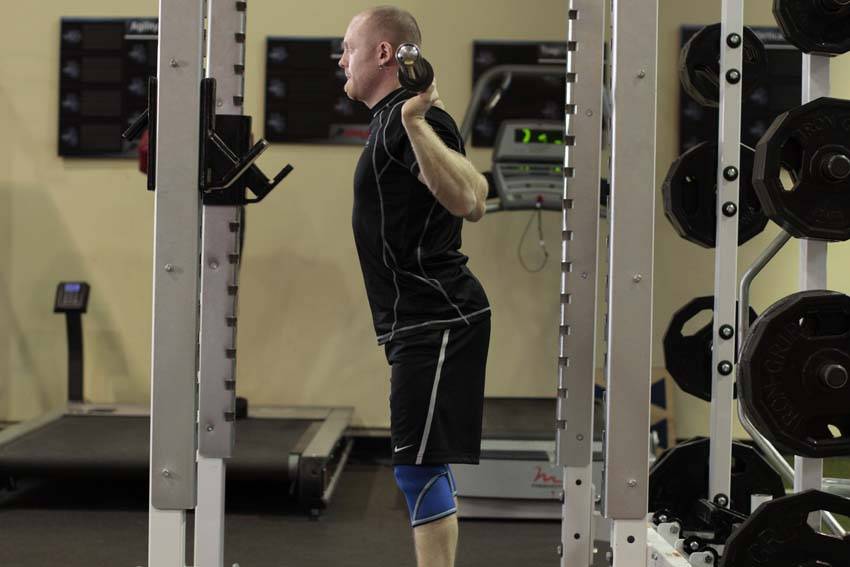
7. Good Morning
72.2% MatchHow to perform this exercise
- Begin with a bar on a rack at shoulder height. Rack the bar across the rear of your shoulders as you would a power squat, not on top of your shoulders. Keep your back tight, shoulder blades pinched together, and your knees slightly bent. Step back from the rack.
- Begin by bending at the hips, moving them back as you bend over to near parallel. Keep your back arched and your cervical spine in proper alignment.
- Reverse the motion by extending through the hips with your glutes and hamstrings. Continue until you have returned to the starting position.
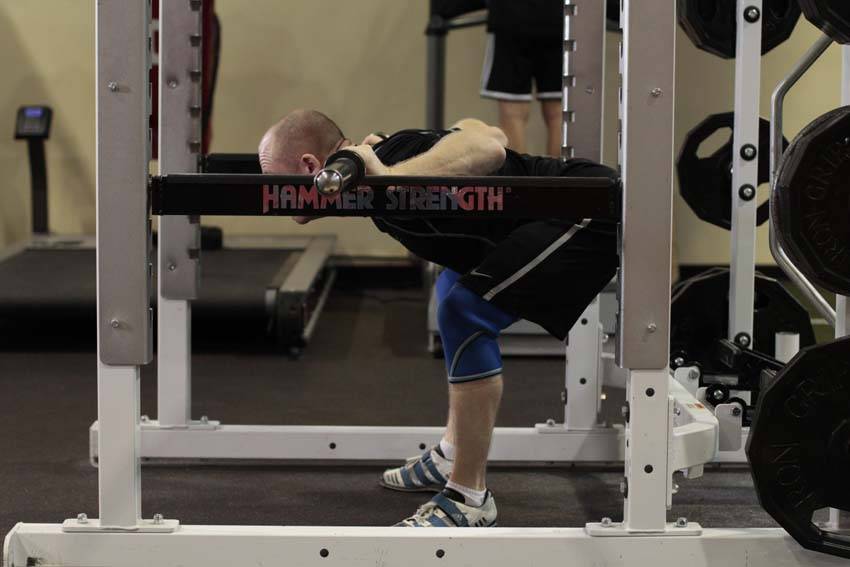
8. Good Morning Off Pins
72.2% MatchHow to perform this exercise
- Begin with a bar on a rack at about the same height as your stomach. Bend over underneath the bar and rack the bar across the rear of your shoulders as you would a power squat, not on top of your shoulders. At the proper height, you should be near parallel to the floor when bent over. Keep your back tight, shoulder blades pinched together, and your knees slightly bent. Keep your back arched and your cervical spine in proper alignment.
- Begin the motion by extending through the hips with your glutes and hamstrings, and you are standing with the weight. Slowly lower the weight back to the pins returning to the starting position.
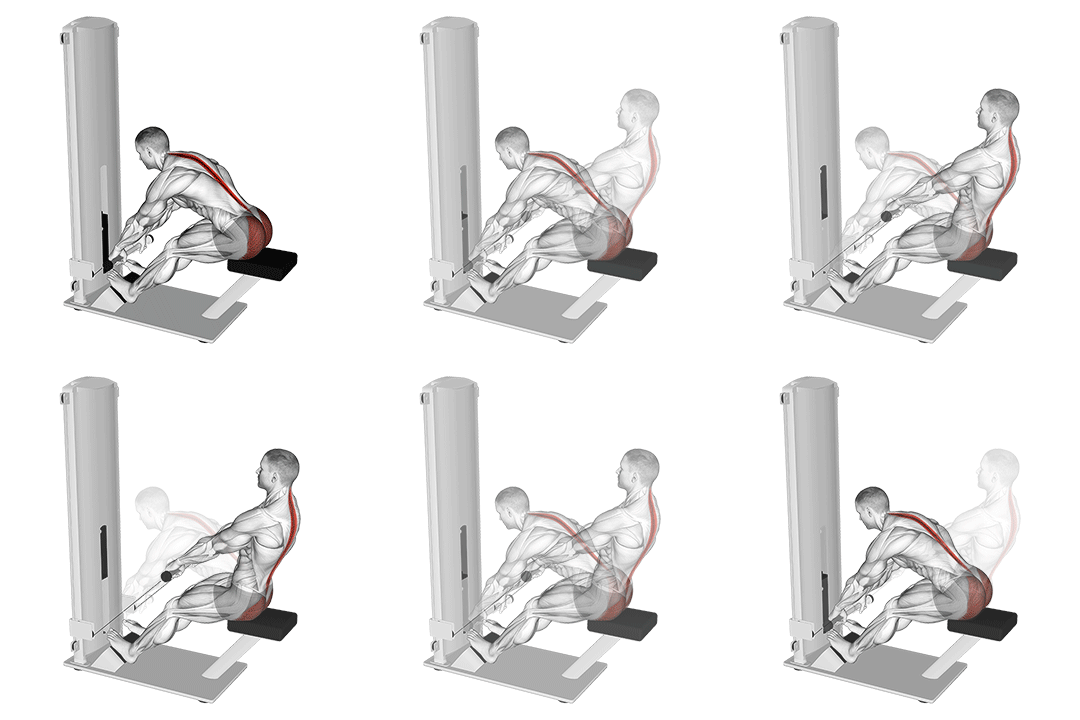
9. Lever Seated Good Morning
67% MatchHow to perform this exercise
- Adjust the seat height so that your hips are slightly higher than your knees.
- Sit on the machine with your back against the pad and your feet flat on the footrests.
- Grasp the handles or the sides of the seat for stability.
- Keeping your back straight, slowly lean forward from your hips until your upper body is parallel to the ground.
- Pause for a moment, then slowly return to the starting position by pushing through your glutes and hamstrings.
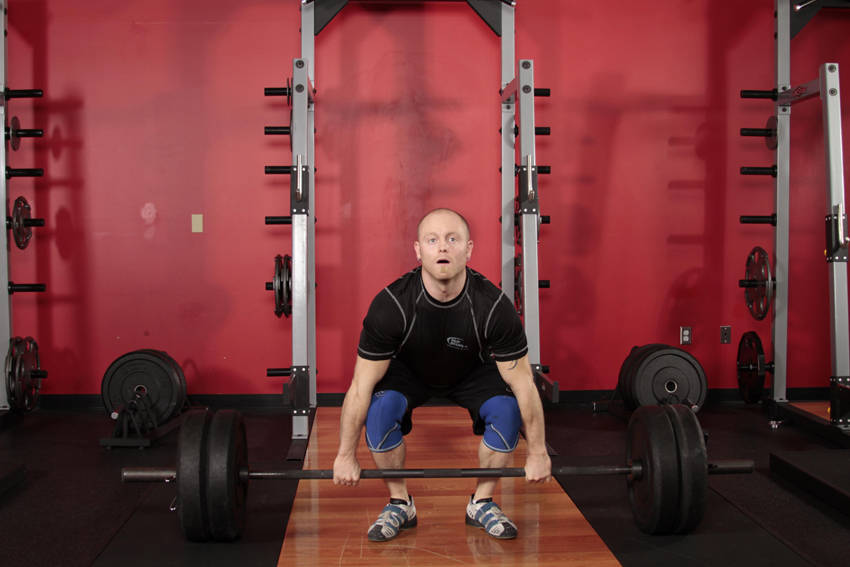
10. Clean Deadlift
66.4% MatchHow to perform this exercise
- Begin standing with a barbell close to your shins. Your feet should be directly under your hips with your feet turned out slightly. Grip the bar with a double overhand grip or hook grip, about shoulder width apart. Squat down to the bar. Your spine should be in full extension, with a back angle that places your shoulders in front of the bar and your back as vertical as possible.
- Begin by driving through the floor through the front of your heels. As the bar travels upward, maintain a constant back angle. Flare your knees out to the side to help keep them out of the bar's path.
- After the bar crosses the knees, complete the lift by driving the hips into the bar until your hips and knees are extended.
Why You Might Need a Seated Good Mornings Alternative
You might swap seated good mornings because of lower-back pain, lack of a barbell setup, or a need for safer loading patterns. Injured or rehabbing spines often respond better to exercises that offload compressive force and let you control range of motion, such as back extensions or reverse hypers. Equipment limits, no squat rack or bench, push you toward single-leg RDLs or band good mornings. Preference for unilateral training or improved hip-hinge mechanics also motivates change. When you substitute, focus on muscle activation cues: hinge at the hips, maintain posterior pelvic tilt control, and feel the erectors lengthen under load rather than rounding through the lumbar spine.
How to Choose the Right Substitute
Pick a substitute based on load tolerance, desired muscle emphasis, and equipment. If you need spinal unloading, choose reverse hypers or back extensions and cue a soft lumbar neutral while driving the hips; these shift stress to the posterior chain without high axial compression. If you want hypertrophy with limited gear, use single-leg RDLs or band good mornings, push the hips back, keep the torso long, and feel tension through the erectors and hamstrings. For balance and core carryover, prioritize unilateral RDLs and cue ankle stability and hip drive. Match range of motion and tempo to the original exercise to preserve erector-spinae activation.
Frequently Asked Questions
What muscles does Seated Good Mornings work?
Seated Good Mornings primarily target the erector spinae through spinal extension under load. They also recruit the hamstrings and glutes as secondary hip-hinge muscles, with core and oblique activation for trunk stability during the movement.
What is the best bodyweight alternative to Seated Good Mornings?
A strict back extension (superman) is the best bodyweight option to target the erectors: lie prone and lift chest and thighs while squeezing the glutes and retracting the scapulae. For progressive challenge, use slow eccentrics and pause at peak contraction to increase time under tension for the spinal extensors.
Can I build muscle without doing Seated Good Mornings?
Yes. You can build the erector spinae and posterior chain with Romanian deadlifts, back extensions, reverse hypers, and single-leg RDLs while using progressive overload. Focus on consistent loading, controlled eccentrics, and cues that maintain a neutral spine and strong hip hinge to drive hypertrophy.
More Exercise Alternatives
Find Alternatives for Any Exercise
Use the exercise substitution finder to compare ranked alternatives for your available equipment and training preference.
Try the Exercise Substitution Finder →