

10 Best Weighted Straight Bar Dip Alternatives for Chest Strength
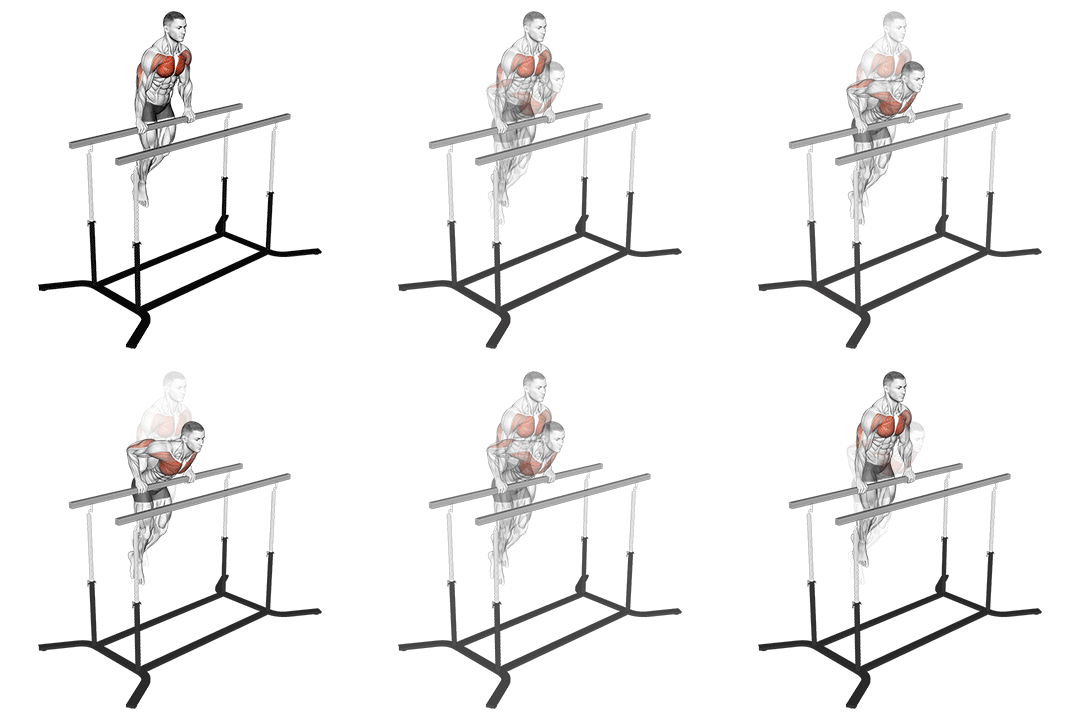
The Weighted Straight Bar Dip is done hanging. Ranked closest by our scoring: the Chest Dip On Straight Bar, the Plyo Push-up and the Clap Push Up.
Updated Ranked by our 12-factor similarity model How it works
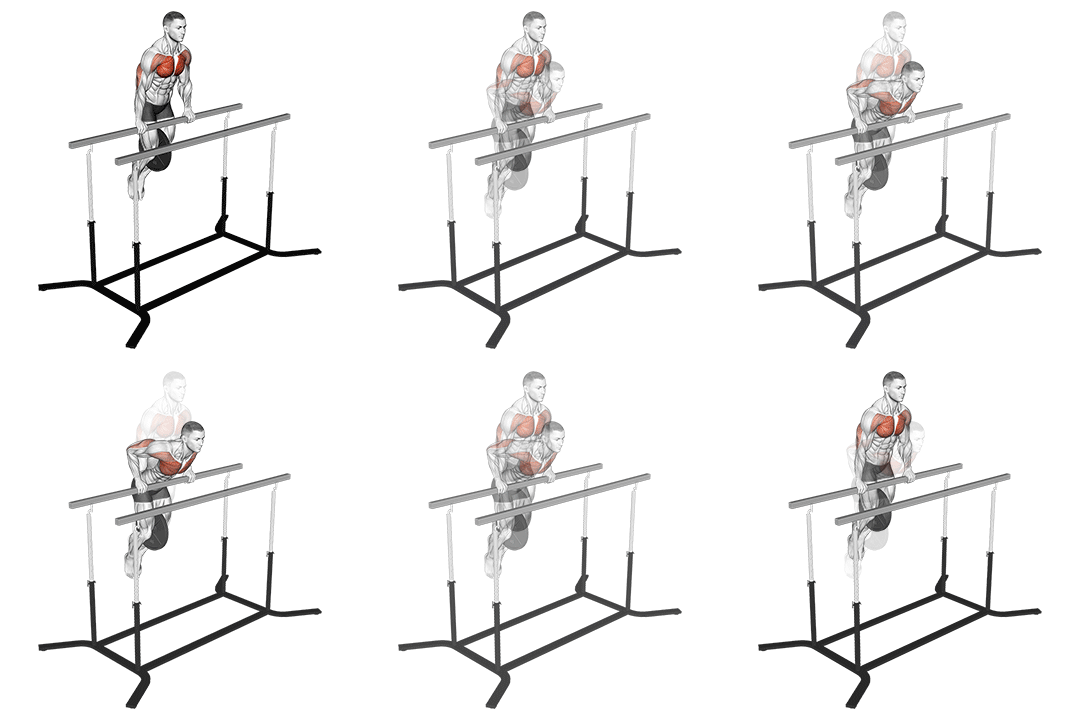
Original Exercise: Weighted Straight Bar Dip
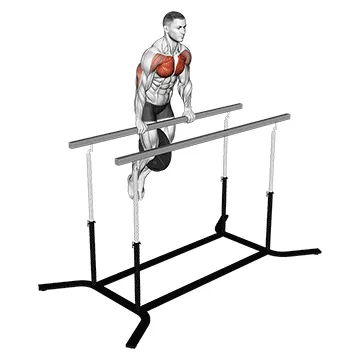
- Primary muscle
- Pectorals
- Equipment
- Weighted
- Difficulty
- Advanced
- Type
- Compound
Secondary muscles: Triceps, Shoulders
How to perform Weighted Straight Bar Dip
- Position yourself between parallel bars with your arms fully extended and your body straight.
- Lower your body by bending your elbows until your upper arms are parallel to the ground.
- Pause for a moment, then push yourself back up to the starting position by straightening your arms.
- Repeat for the desired number of repetitions.
Ranked Weighted Straight Bar Dip Alternatives
10 substitutes, ranked by how closely each one matches the Weighted Straight Bar Dip on movement pattern, muscles worked, equipment and body position. The higher the score, the less you change. Open "How to perform this exercise" on a card for the steps; every card title links to that exercise's own alternatives page.
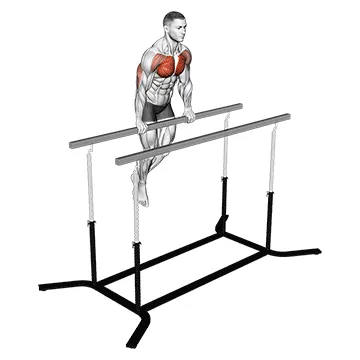
Best match 1. Chest Dip On Straight Bar
84% match- Pectorals
- Bodyweight
- Intermediate
- Compound
Pick this when you want an easier version that still works the pectorals.
How to perform this exercise
- Grab the parallel bars with your palms facing down and your arms fully extended.
- Bend your knees and cross your ankles.
- Lower your body by bending your arms until your shoulders are below your elbows.
- Push yourself back up to the starting position by straightening your arms.
- Repeat for the desired number of repetitions.
Sets and reps: 3 or 4 sets of 6 to 10 reps.
Why this matches
- Primary muscle: pectorals, the same as the Weighted Straight Bar Dip
- Equipment: bodyweight only, not free weights
- Body position: hanging, the same as the Weighted Straight Bar Dip
- Balance: easier to stay steady on than the Weighted Straight Bar Dip
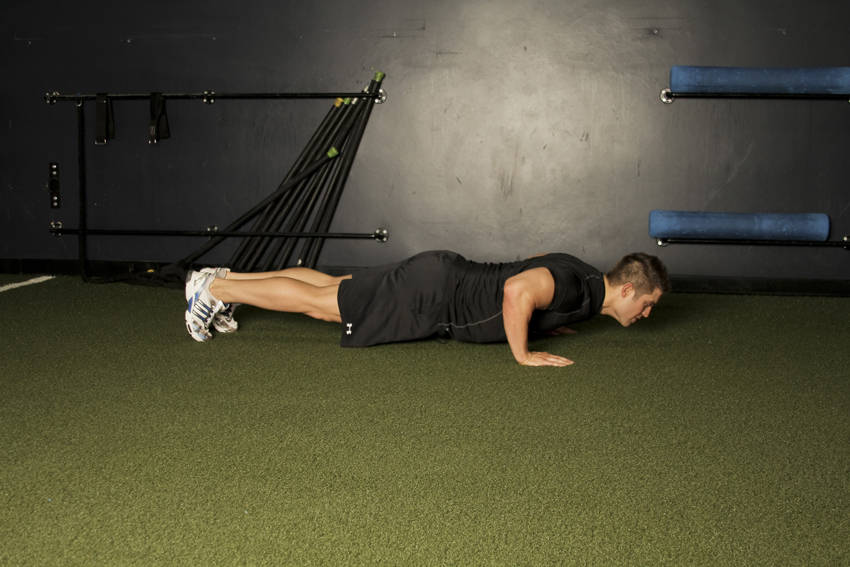
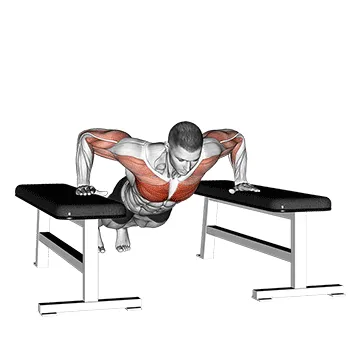
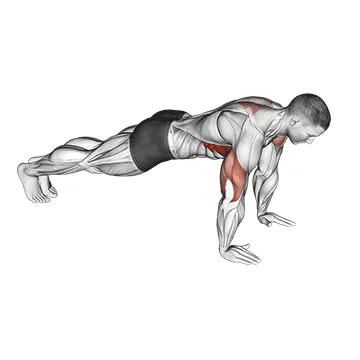
2. Plyo Push-up
82% match- Pectorals
- Bodyweight
- Advanced
- Compound
A straight swap when you want to keep working the pectorals.
How to perform this exercise
- Move into a prone position on the floor, supporting your weight on your hands and toes.
- Your arms should be fully extended with the hands around shoulder width. Keep your body straight throughout the movement. This will be your starting position.
- Descend by flexing at the elbow, lowering your chest towards the ground.
- At the bottom, reverse the motion by pushing yourself up through elbow extension as quickly as possible. Attempt to push your upper body up until your hands leave the ground.
- Return to the starting position and repeat the exercise.
- For added difficulty, add claps into the movement while you are air borne.
Sets and reps: 3 or 4 sets of 6 to 10 reps.
Why this matches
- Primary muscle: pectorals, the same as the Weighted Straight Bar Dip
- Equipment: bodyweight only, not free weights
- Body position: lying face down, not hanging
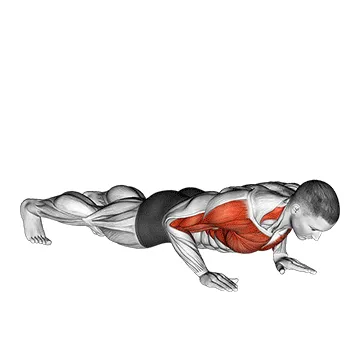
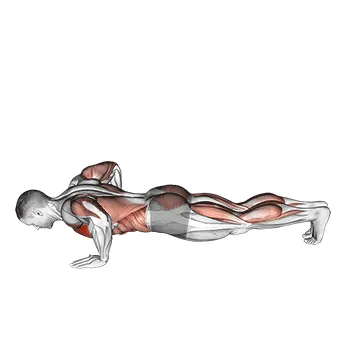
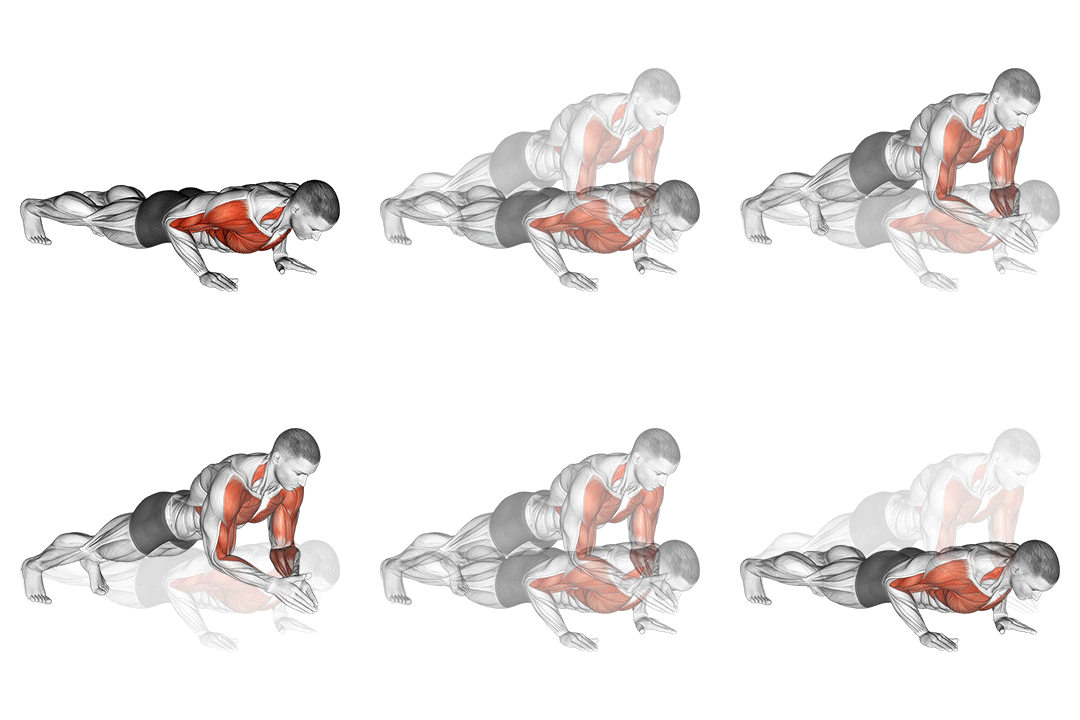
3. Clap Push Up
81% match- Pectorals
- Bodyweight
- Advanced
- Compound
How to perform this exercise
- Start in a high plank position with your hands slightly wider than shoulder-width apart.
- Lower your body towards the ground by bending your elbows, keeping your core engaged.
- Push through your palms explosively to propel your body off the ground.
- While in mid-air, clap your hands together before landing back in the starting position.
- Repeat for the desired number of repetitions.
Sets and reps: 3 or 4 sets of 6 to 10 reps.
Why this matches
- Primary muscle: pectorals, the same as the Weighted Straight Bar Dip
- Equipment: bodyweight only, not free weights
- Body position: lying face down, not hanging
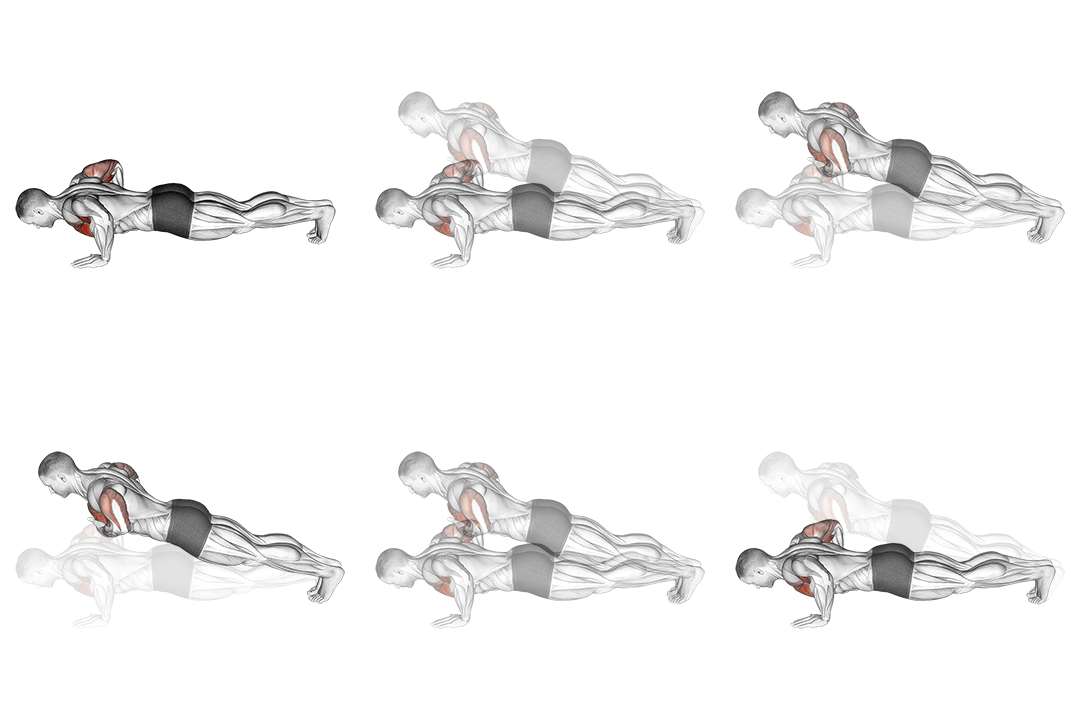
4. Chest Tap Push-up
81% match- Pectorals
- Bodyweight
- Advanced
- Compound
How to perform this exercise
- Start in a high plank position with your hands slightly wider than shoulder-width apart and your body in a straight line.
- Lower your body towards the ground by bending your elbows, keeping them close to your sides.
- As you lower yourself, tap your chest with your right hand.
- Push yourself back up to the starting position.
- Repeat the movement, this time tapping your chest with your left hand.
- Continue alternating sides for the desired number of repetitions.
Sets and reps: 3 or 4 sets of 6 to 10 reps.
Why this matches
- Primary muscle: pectorals, the same as the Weighted Straight Bar Dip
- Equipment: bodyweight only, not free weights
- Body position: lying face down, not hanging
5. Drop Push Up
76% match- Pectorals
- Bodyweight
- Intermediate
- Compound
How to perform this exercise
- Start in a high plank position with your hands slightly wider than shoulder-width apart.
- Lower your chest towards the ground, keeping your elbows close to your body.
- Once your chest is just above the ground, quickly drop your knees to the ground.
- Push yourself back up to the starting position by extending your arms.
- Repeat for the desired number of repetitions.
Sets and reps: 3 or 4 sets of 6 to 10 reps.
Why this matches
- Primary muscle: pectorals, the same as the Weighted Straight Bar Dip
- Equipment: bodyweight only, not free weights
- Body position: lying face down, not hanging
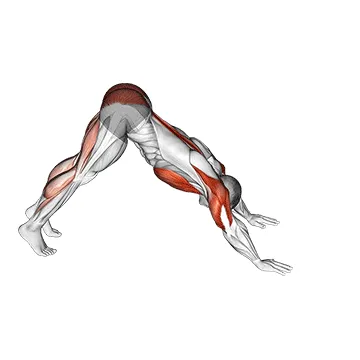
6. Pike-to-cobra Push-up
76% match- Pectorals
- Bodyweight
- Intermediate
- Compound
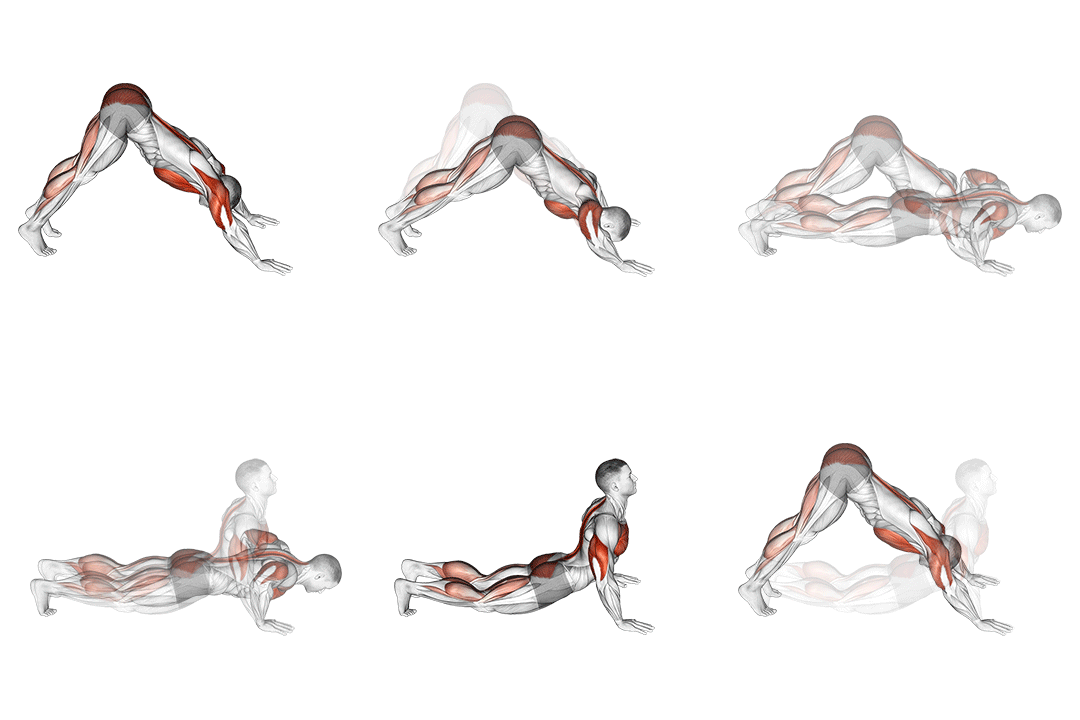
How to perform this exercise
- Start in a push-up position with your hands slightly wider than shoulder-width apart and your feet together.
- Engage your core and lift your hips up towards the ceiling, forming an inverted V shape with your body.
- Lower your upper body towards the ground by bending your elbows, keeping them close to your body.
- As you lower down, shift your weight forward and transition into a cobra pose by straightening your arms and lifting your chest up.
- Reverse the movement by bending your elbows and lowering your chest back down towards the ground.
- Push through your hands to return to the inverted V position.
- Continue the movement by lowering your hips back down towards the ground, returning to the starting push-up position.
- Repeat for the desired number of repetitions.
Sets and reps: 3 or 4 sets of 6 to 10 reps.
Why this matches
- Primary muscle: pectorals, the same as the Weighted Straight Bar Dip
- Equipment: bodyweight only, not free weights
- Body position: lying face down, not hanging
- Balance: easier to stay steady on than the Weighted Straight Bar Dip
7. Push And Pull Bodyweight
76% match- Pectorals
- Bodyweight
- Intermediate
- Compound
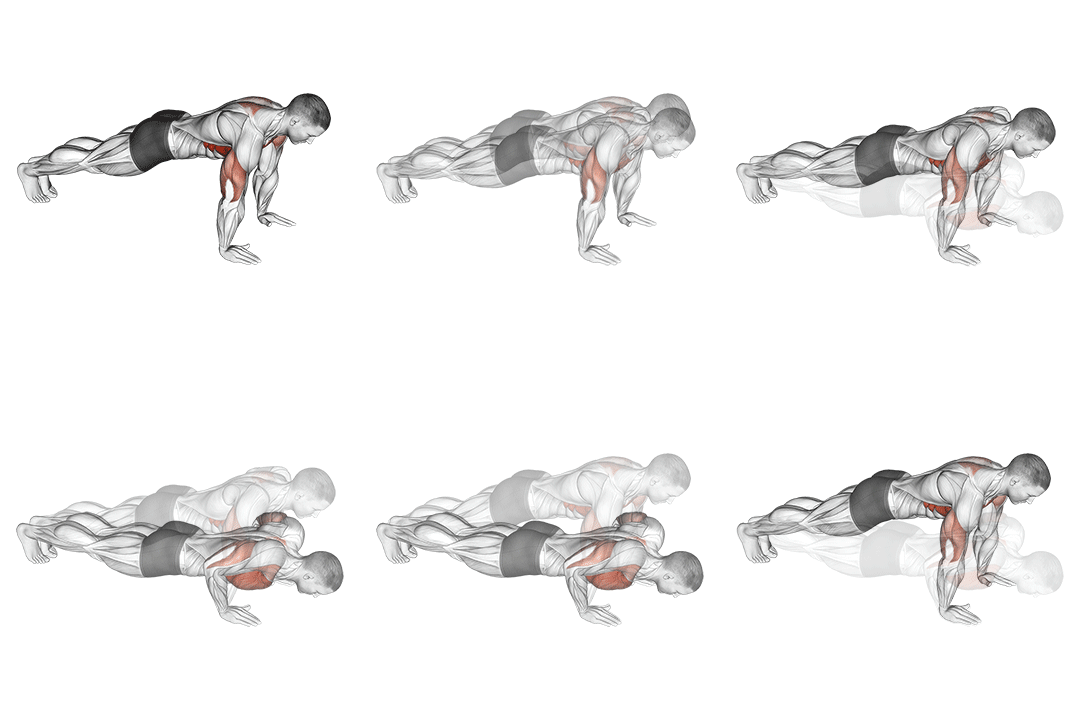
How to perform this exercise
- Start in a push-up position with your hands slightly wider than shoulder-width apart and your body in a straight line.
- Lower your chest towards the ground by bending your elbows, keeping your body straight.
- Push through your palms to extend your arms and return to the starting position.
- From the push-up position, pull your chest towards the ground by bending your elbows, keeping your body straight.
- Push through your palms to extend your arms and return to the starting position.
- Repeat for the desired number of repetitions.
Sets and reps: 3 or 4 sets of 6 to 10 reps.
Why this matches
- Primary muscle: pectorals, the same as the Weighted Straight Bar Dip
- Equipment: bodyweight only, not free weights
- Body position: lying face down, not hanging
- Balance: easier to stay steady on than the Weighted Straight Bar Dip
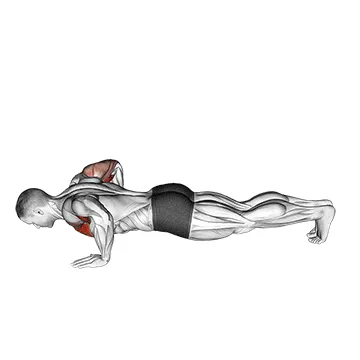
8. Push-up Plus
76% match- Pectorals
- Bodyweight
- Intermediate
- Compound
How to perform this exercise
- Start in a high plank position with your hands slightly wider than shoulder-width apart and your body in a straight line from head to heels.
- Lower your body towards the ground by bending your elbows, keeping them close to your sides.
- Once your chest is just above the ground, push through your hands to extend your arms and lift your upper body up.
- At the top of the movement, protract your shoulder blades by pushing your upper back towards the ceiling.
- Pause for a moment, then reverse the movement by retracting your shoulder blades and lowering your body back down to the starting position.
- Repeat for the desired number of repetitions.
Sets and reps: 3 or 4 sets of 6 to 10 reps.
Why this matches
- Primary muscle: pectorals, the same as the Weighted Straight Bar Dip
- Equipment: bodyweight only, not free weights
- Body position: lying face down, not hanging
9. Modified Hindu Push-up
75% match- Pectorals
- Bodyweight
- Intermediate
- Compound
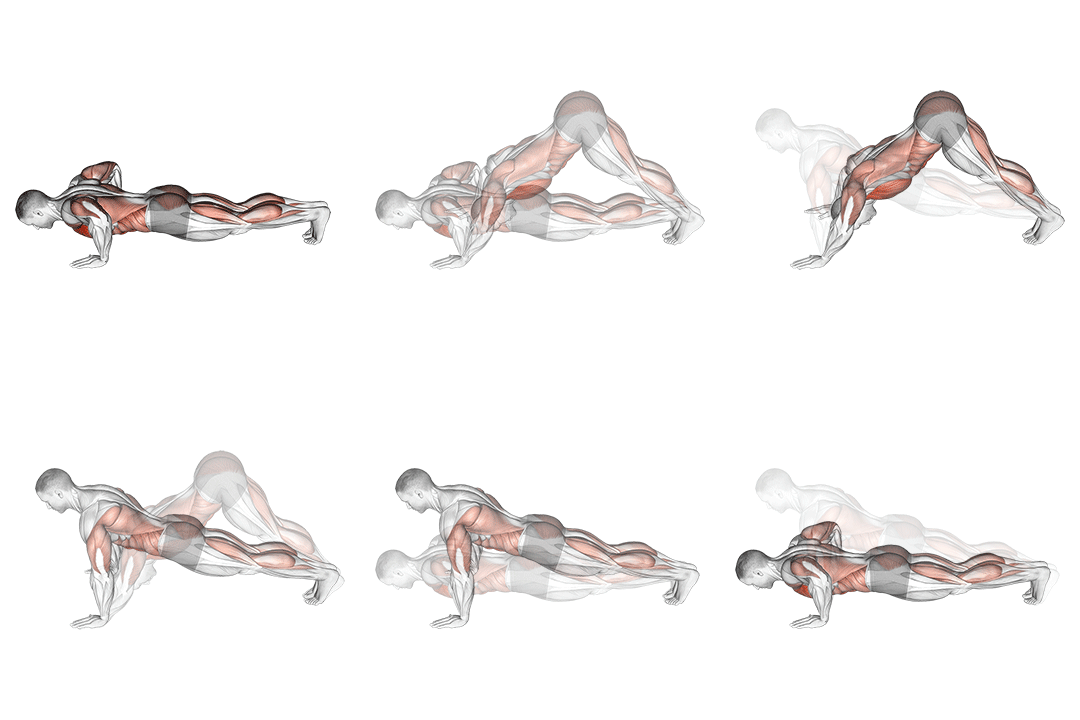
How to perform this exercise
- Start in a push-up position with your hands slightly wider than shoulder-width apart and your feet hip-width apart.
- Lower your body towards the ground, bending your elbows and keeping your core engaged.
- As you lower your body, shift your weight back and lift your hips up towards the ceiling, creating an inverted V shape with your body.
- Continue to lower your body until your chest is just above the ground, then reverse the movement, pushing your hips back down and extending your arms to return to the starting position.
- Repeat for the desired number of repetitions.
Sets and reps: 3 or 4 sets of 6 to 10 reps.
Why this matches
- Primary muscle: pectorals, the same as the Weighted Straight Bar Dip
- Equipment: bodyweight only, not free weights
- Body position: standing, not hanging
- Balance: easier to stay steady on than the Weighted Straight Bar Dip
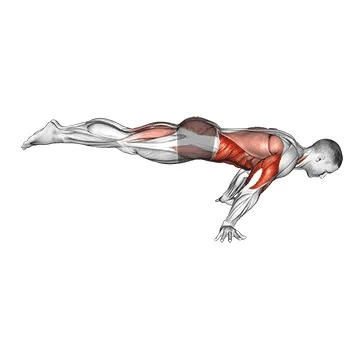
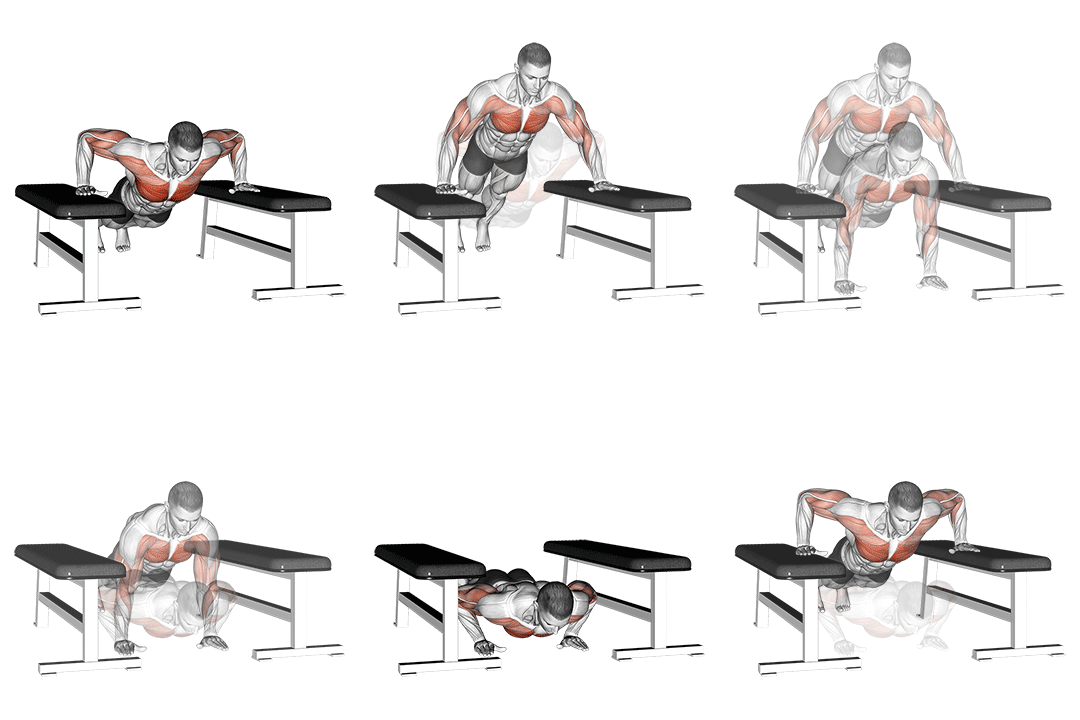
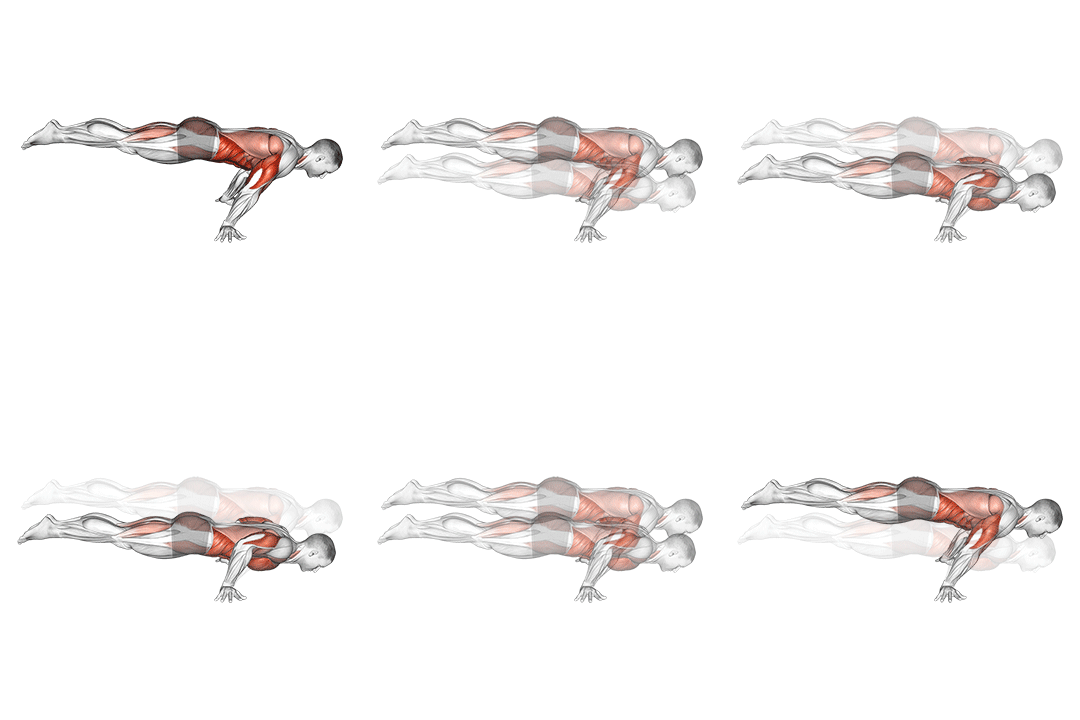
10. Full Planche Push-up
75% match- Pectorals
- Bodyweight
- Advanced
- Compound
How to perform this exercise
- Start in a push-up position with your hands placed slightly wider than shoulder-width apart.
- Engage your core and lower your body down towards the ground, keeping your elbows close to your sides.
- As you lower yourself, lean your body forward and lift your feet off the ground, balancing on your hands.
- Continue to lower your body until your chest is just above the ground.
- Push through your hands and extend your arms to lift your body back up to the starting position.
- Maintain a straight line from your head to your heels throughout the movement.
- Repeat for the desired number of repetitions.
Sets and reps: 3 or 4 sets of 6 to 10 reps.
Why this matches
- Primary muscle: pectorals, the same as the Weighted Straight Bar Dip
- Equipment: bodyweight only, not free weights
- Body position: lying face down, not hanging
- Balance: harder to stay steady on than the Weighted Straight Bar Dip
Why You Might Need a Weighted Straight Bar Dip Alternative
You may substitute weighted straight bar dips for several practical reasons: shoulder pain from deep extension, no access to a straight bar setup, or a programming preference for different load patterns. Dips place the shoulder into large extension and horizontal adduction, so athletes with impingement or AC joint pain often need an alternative. Technical cues, like a slightly forward torso and 45° elbow tuck, shift load to the pecs; alternatives let you preserve that pectoral bias while reducing shear at the glenohumeral joint. Choosing a substitute can also target the clavicular versus sternal head by changing torso angle and range of motion.
How to Choose the Right Weighted Straight Bar Dip Substitute
Select a substitute based on equipment, shoulder health, and the specific pectoral region you want to emphasize. If you have shoulder issues, pick exercises that limit end-range extension (eg. incline presses) and cue scapular retraction and depression to reduce anterior stress. For maximal sternal head activation use dips or decline bench variations with a controlled 2–3 second eccentric; for upper-pec bias choose incline presses and maintain a 15–30° torso angle. Also consider load progression: use weighted vests or plates for dips, or microload your presses to sustain progressive overload.
Weighted Straight Bar Dip FAQ
What muscles does Weighted Straight Bar Dip work?
Weighted straight bar dips primarily load the sternal head of the pectoralis major, plus the anterior deltoid and triceps brachii. Biomechanically they combine vertical pushing with deep shoulder extension, so the serratus anterior and lower traps assist in scapular control during the descent.
Find Alternatives for Any Exercise
Search the exercise database and filter the ranked substitutes by the equipment you own.
Similarity scores compare exercise metadata such as movement pattern, muscles, equipment and body position. They are not a safety rating or a check that you own the equipment. Learn about our methodology