

10 Best Weighted Svend Press Alternatives for Chest Isolation
The Weighted Svend Press is done standing. Ranked closest by our scoring: the Dumbbell Lying Hammer Press, the Standing Cable Chest Press and the Cable Chest Press.
Updated Ranked by our 12-factor similarity model How it works
Original Exercise: Weighted Svend Press
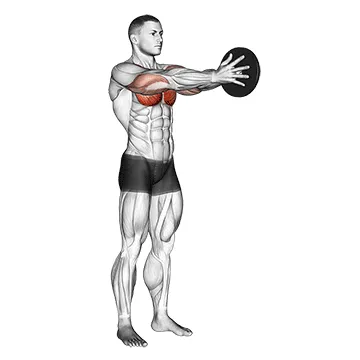
- Primary muscle
- Pectorals
- Equipment
- Weighted
- Difficulty
- Intermediate
- Type
- Isolation
Secondary muscles: Shoulders, Triceps
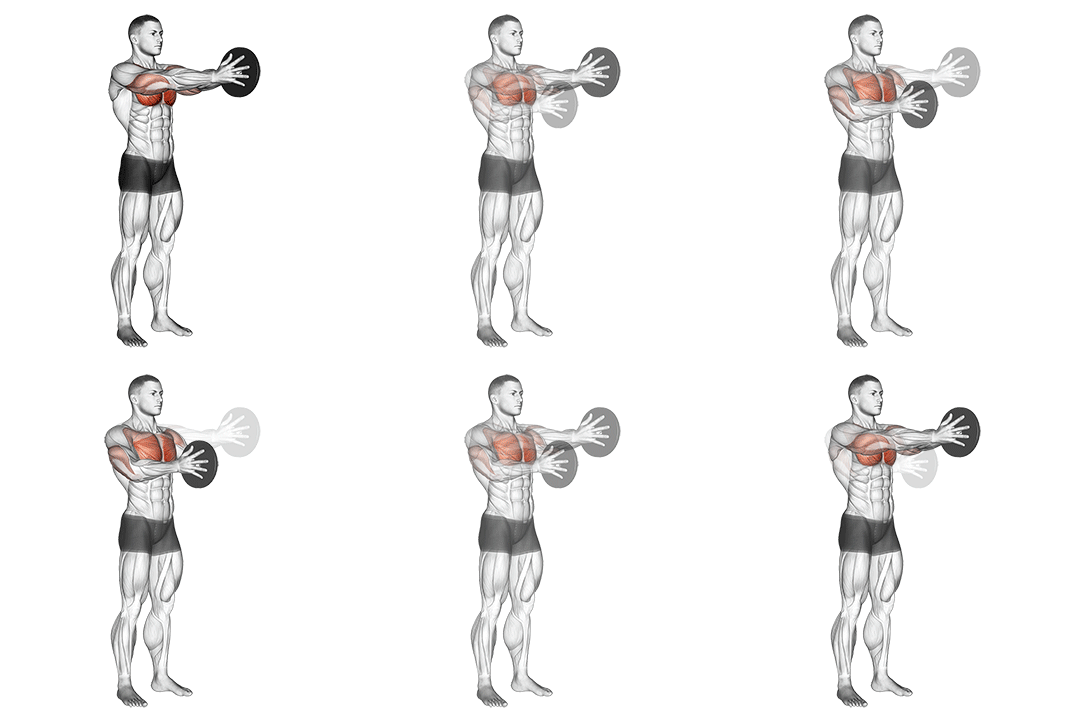
How to perform Weighted Svend Press
- Stand with your feet shoulder-width apart and hold a weight plate in front of your chest with both hands.
- Keep your elbows slightly bent and your palms facing each other.
- Press the weight plate straight out in front of you, fully extending your arms.
- Pause for a moment at the end of the movement, then slowly bring the weight plate back to the starting position.
- Repeat for the desired number of repetitions.
Ranked Weighted Svend Press Alternatives
10 substitutes, ranked by how closely each one matches the Weighted Svend Press on movement pattern, muscles worked, equipment and body position. The higher the score, the less you change. Open "How to perform this exercise" on a card for the steps; every card title links to that exercise's own alternatives page.
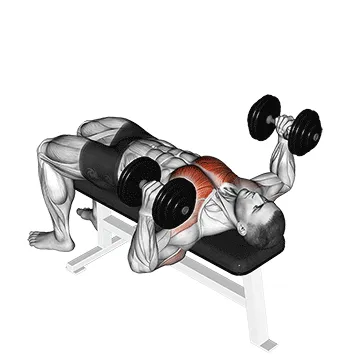
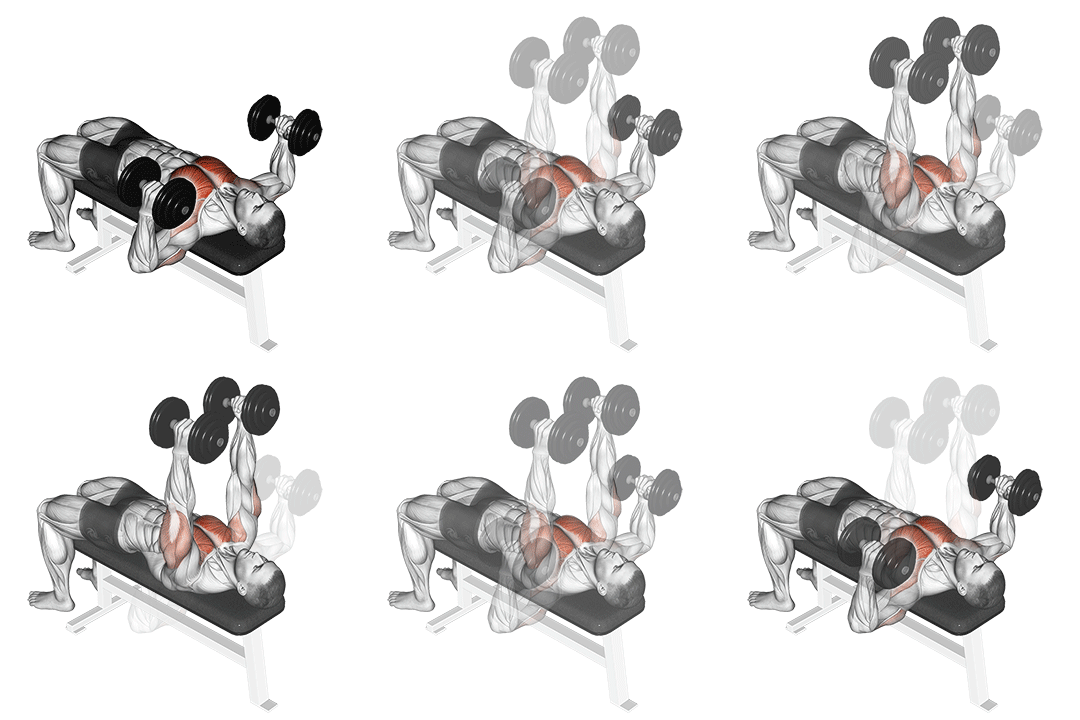
Best match 1. Dumbbell Lying Hammer Press
82% match- Pectorals
- Dumbbell
- Intermediate
- Compound
A straight swap when you want to keep working the pectorals.
How to perform this exercise
- Lie flat on a bench with a dumbbell in each hand, palms facing each other and arms extended straight up.
- Lower the dumbbells to the sides of your chest, keeping your elbows at a 90-degree angle.
- Press the dumbbells back up to the starting position, fully extending your arms.
- Repeat for the desired number of repetitions.
Sets and reps: 3 or 4 sets of 6 to 10 reps.
Why this matches
- Movement: flat horizontal press, the same as the Weighted Svend Press
- Primary muscle: pectorals, the same as the Weighted Svend Press
- Equipment: free weights, the same as the Weighted Svend Press
- Body position: lying on your back, not standing
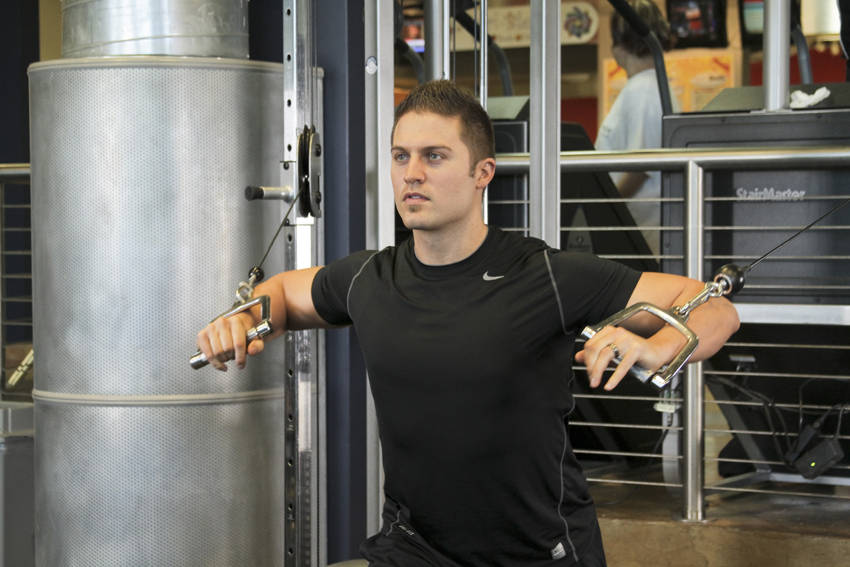
2. Standing Cable Chest Press
80% match- Pectorals
- Cable
- Intermediate
- Compound
How to perform this exercise
- Position dual pulleys to chest height and select an appropriate weight. Stand a foot or two in front of the cables, holding one in each hand. You can stagger your stance for better stability.
- Position the upper arm at a 90 degree angle with the shoulder blades together. This will be your starting position.
- Keeping the rest of the body stationary, extend through the elbows to press the handles forward, drawing them together in front of you.
- Pause at the top of the motion, and return to the starting position.
Sets and reps: 3 or 4 sets of 6 to 10 reps.
Why this matches
- Movement: flat horizontal press, the same as the Weighted Svend Press
- Primary muscle: pectorals, the same as the Weighted Svend Press
- Equipment: a cable, not free weights
- Body position: standing, the same as the Weighted Svend Press
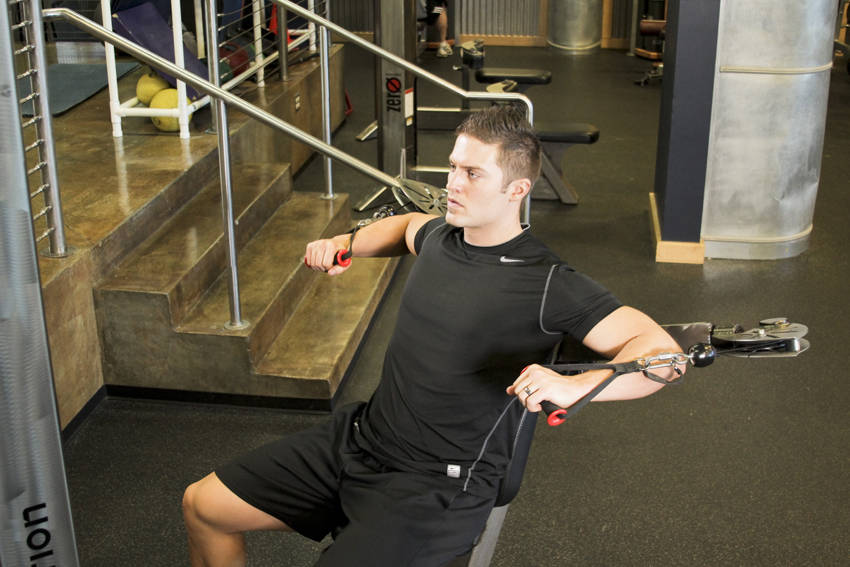
3. Cable Chest Press
80% match- Pectorals
- Cable
- Intermediate
- Compound
How to perform this exercise
- Adjust the weight to an appropriate amount and be seated, grasping the handles. Your upper arms should be about 45 degrees to the body, with your head and chest up. The elbows should be bent to about 90 degrees. This will be your starting position.
- Begin by extending through the elbow, pressing the handles together straight in front of you. Keep your shoulder blades retracted as you execute the movement.
- After pausing at full extension, return to th starting position, keeping tension on the cables.
- You can also execute this movement with your back off the pad, at an incline or decline, or alternate hands.
Sets and reps: 3 or 4 sets of 6 to 10 reps.
Why this matches
- Movement: flat horizontal press, the same as the Weighted Svend Press
- Primary muscle: pectorals, the same as the Weighted Svend Press
- Equipment: a cable, not free weights
- Body position: standing, the same as the Weighted Svend Press
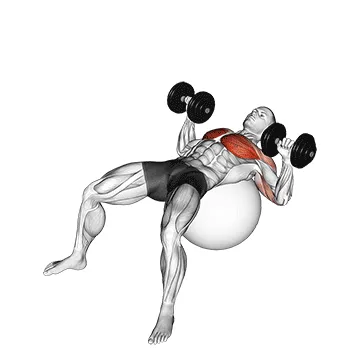
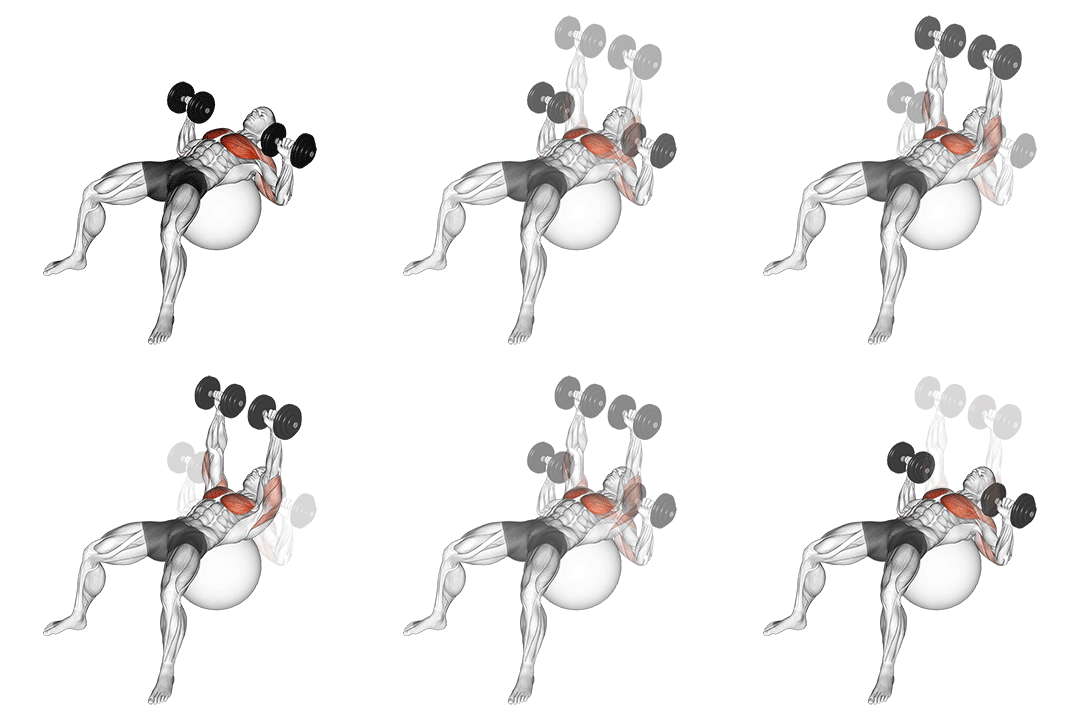
4. Dumbbell Press On Exercise Ball
80% match- Pectorals
- Dumbbell
- Intermediate
- Compound
Pick this when you want to work the pectorals with more balance to manage.
How to perform this exercise
- Sit on an exercise ball with your feet flat on the ground and dumbbells in each hand, resting on your thighs.
- Slowly walk your feet forward, rolling the exercise ball until your lower back is supported on the ball and your knees are at a 90-degree angle.
- Raise the dumbbells to shoulder height, palms facing forward.
- Press the dumbbells upward until your arms are fully extended.
- Pause for a moment at the top, then slowly lower the dumbbells back to the starting position.
- Repeat for the desired number of repetitions.
Sets and reps: 3 or 4 sets of 6 to 10 reps.
Why this matches
- Movement: flat horizontal press, the same as the Weighted Svend Press
- Primary muscle: pectorals, the same as the Weighted Svend Press
- Equipment: free weights, the same as the Weighted Svend Press
- Body position: lying on your back, not standing
- Balance: harder to stay steady on than the Weighted Svend Press
- Pectorals
- Dumbbell
- Intermediate
- Compound
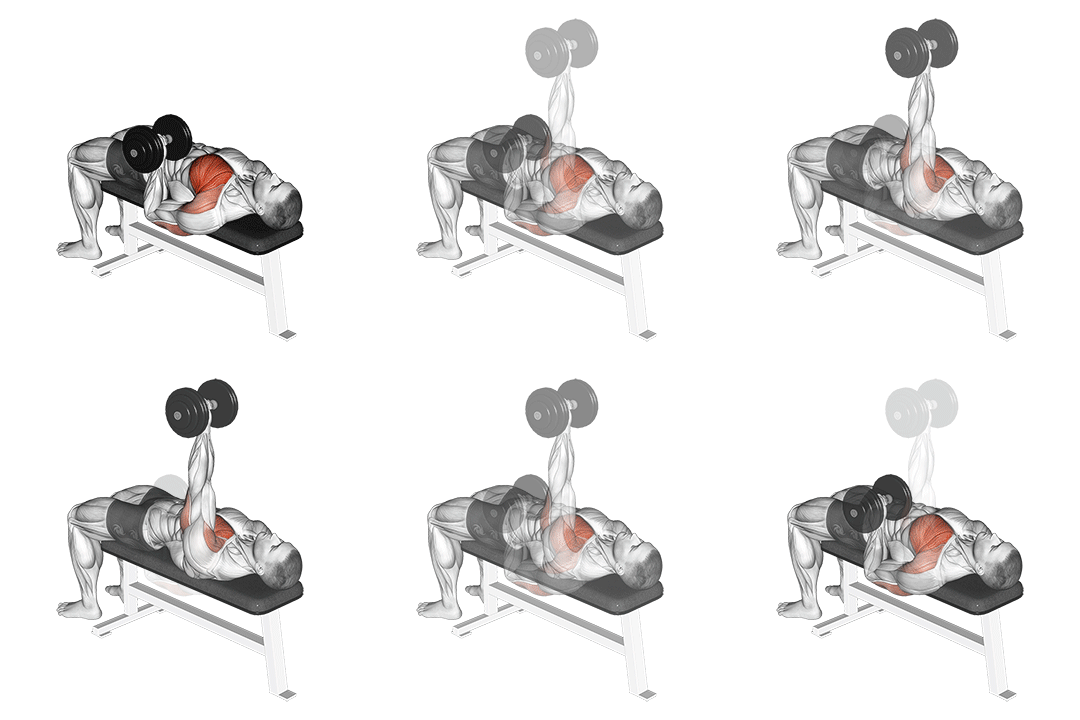
Pick this when you want to work the pectorals one side at a time.
How to perform this exercise
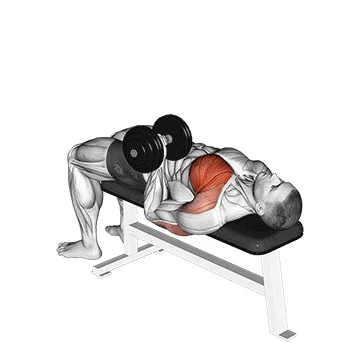
- Sit on a flat bench with a dumbbell in one hand, palm facing towards your body.
- Place your feet flat on the ground and keep your back straight.
- Raise the dumbbell to shoulder height, keeping your elbow close to your body.
- Press the dumbbell upwards until your arm is fully extended.
- Pause for a moment at the top, then slowly lower the dumbbell back to the starting position.
- Repeat for the desired number of repetitions, then switch to the other arm.
Sets and reps: 3 or 4 sets of 6 to 10 reps on each side.
Why this matches
- Movement: flat horizontal press, the same as the Weighted Svend Press
- Primary muscle: pectorals, the same as the Weighted Svend Press
- Equipment: free weights, the same as the Weighted Svend Press
- Body position: seated, not standing
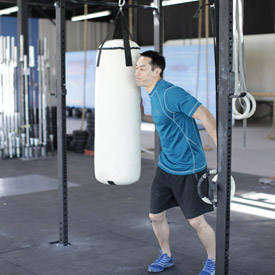
6. Heavy Bag Thrust
76% match- Pectorals
- Other
- Intermediate
- Compound
It still works the pectorals, through a different movement.
How to perform this exercise
- Utilize a heavy bag for this exercise. Assume an upright stance next to the bag, with your feet staggered, fairly wide apart. Place your hand on the bag at about chest height. This will be your starting position.
- Begin by twisting at the waist, pushing the bag forward as hard as possible. Perform this move quickly, pushing the bag away from your body.
- Receive the bag as it swings back by reversing these steps.
Sets and reps: 3 or 4 sets of 6 to 10 reps.
Why this matches
- Primary muscle: pectorals, the same as the Weighted Svend Press
- Body position: standing, the same as the Weighted Svend Press
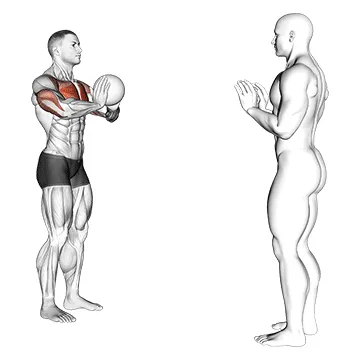
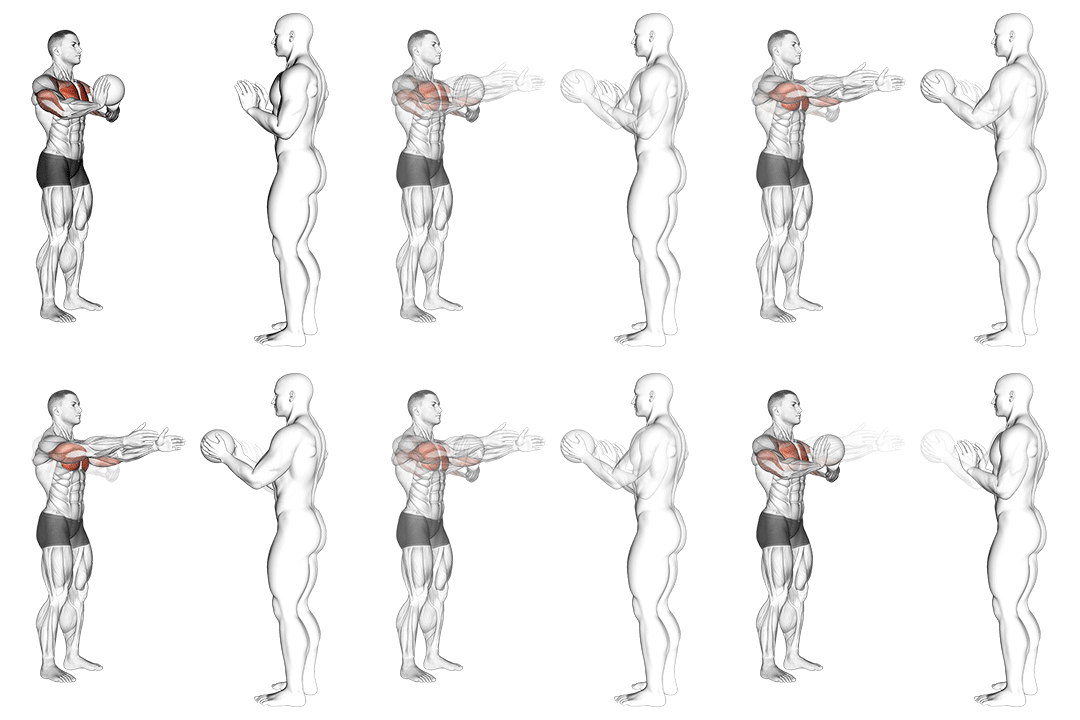
7. Medicine Ball Chest Pass
75% match- Pectorals
- Medicine-ball
- Intermediate
- Compound
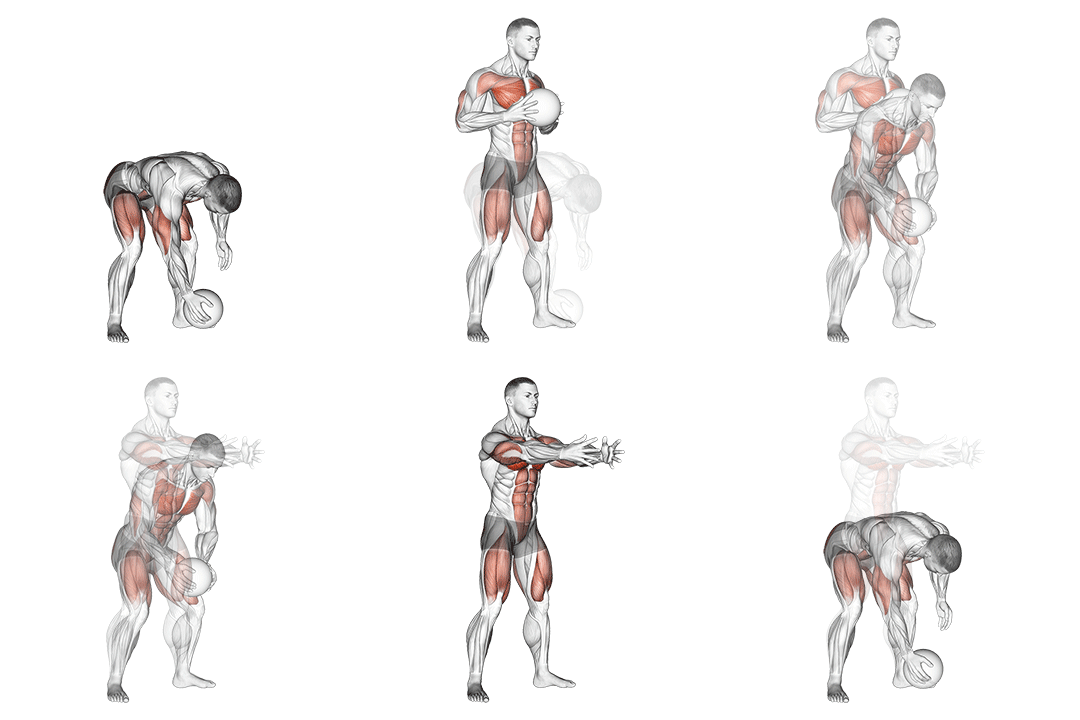
How to perform this exercise
- Stand with your feet shoulder-width apart, holding the medicine ball at chest level.
- Extend your arms forward, pushing the medicine ball away from your chest with force.
- As you release the ball, follow through with your arms and torso, transferring your weight from your back foot to your front foot.
- Catch the ball as it rebounds off the wall or partner, and immediately repeat the movement.
- Continue for the desired number of repetitions.
Sets and reps: 3 or 4 sets of 6 to 10 reps.
Why this matches
- Primary muscle: pectorals, the same as the Weighted Svend Press
- Equipment: free weights, the same as the Weighted Svend Press
- Body position: standing, the same as the Weighted Svend Press
- Pectorals
- Medicine-ball
- Intermediate
- Compound
How to perform this exercise
- Stand with your feet shoulder-width apart, holding a medicine ball at chest level.
- Extend your arms forward, pushing the medicine ball away from your chest.
- Pause for a moment, then slowly bring the medicine ball back to your chest.
- Repeat for the desired number of repetitions.
Sets and reps: 3 or 4 sets of 6 to 10 reps.
Why this matches
- Primary muscle: pectorals, the same as the Weighted Svend Press
- Equipment: free weights, the same as the Weighted Svend Press
- Body position: standing, the same as the Weighted Svend Press
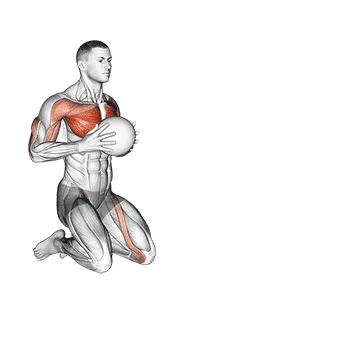
- Pectorals
- Medicine-ball
- Intermediate
- Compound
How to perform this exercise
- Stand with your feet shoulder-width apart, holding the medicine ball at chest level.
- Extend your arms forward, pushing the medicine ball away from your chest.
- Pause for a moment, then slowly bring the medicine ball back to your chest.
- Repeat for the desired number of repetitions.
Sets and reps: 3 or 4 sets of 6 to 10 reps.
Why this matches
- Primary muscle: pectorals, the same as the Weighted Svend Press
- Equipment: free weights, the same as the Weighted Svend Press
- Body position: standing, the same as the Weighted Svend Press
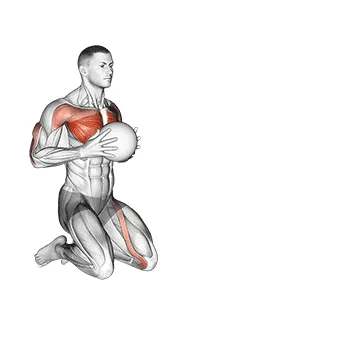
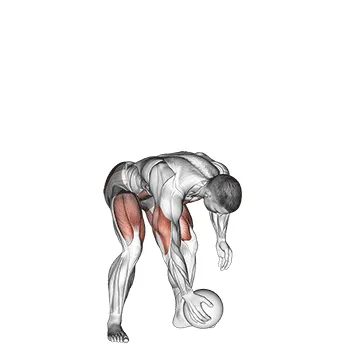
- Pectorals
- Medicine-ball
- Intermediate
- Compound
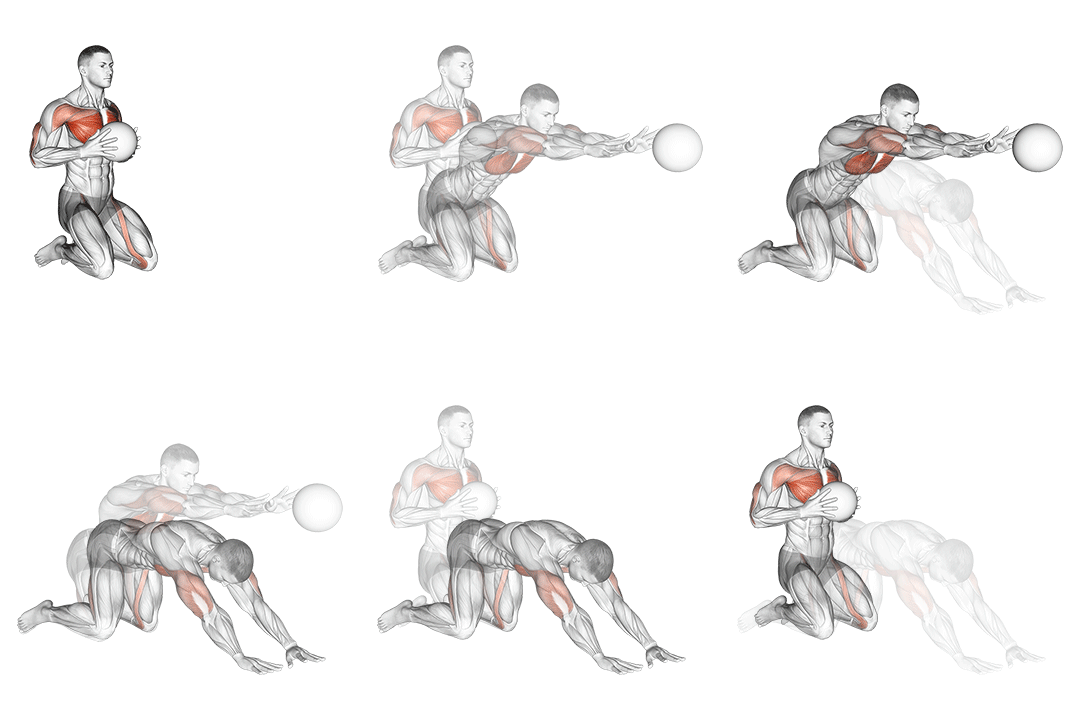
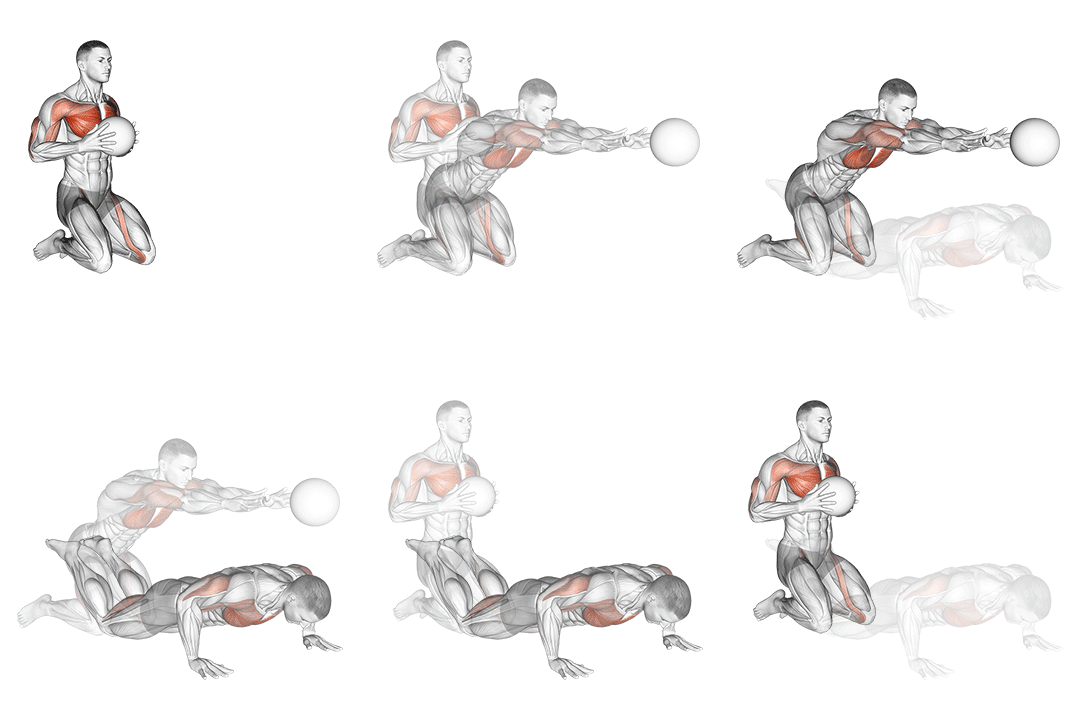
How to perform this exercise
- Start in a 3 point stance with one hand on the medicine ball and the other hand on the ground.
- Extend your legs and position your body in a straight line.
- Lower your chest towards the ground while keeping your back straight.
- Push the medicine ball away from your body, extending your arm fully.
- Return to the starting position and repeat for the desired number of repetitions.
Sets and reps: 3 or 4 sets of 6 to 10 reps.
Why this matches
- Primary muscle: pectorals, the same as the Weighted Svend Press
- Equipment: free weights, the same as the Weighted Svend Press
- Body position: standing, the same as the Weighted Svend Press
Why You Might Need a Weighted Svend Press Alternative
You may substitute the Weighted Svend Press because you lack a plate or stable grip, have shoulder or AC joint irritation, or want easier progressive overload. The Svend emphasizes isometric midline compression and sustained horizontal adduction that loads the sternal pecs; good substitutes replicate those biomechanics. For example, cable flyes keep tension through the range if you set pulleys to shoulder height, cue: lead with the elbow and maintain a soft bend to keep stress on the pectorals rather than the deltoids. If overhead mobility or weight distribution causes pain, choose unilateral or machine variations to control scapular position and reduce shear.
Weighted Svend Press FAQ
Can I build muscle without doing Weighted Svend Press?
Yes, you can build chest muscle by matching the Svend’s key mechanics: horizontal adduction and sustained tension. Use cable flyes, dumbbell squeeze presses, or pec-deck variations and focus on slow eccentrics and a strong midline squeeze to stimulate similar hypertrophy.
Find Alternatives for Any Exercise
Search the exercise database and filter the ranked substitutes by the equipment you own.
Similarity scores compare exercise metadata such as movement pattern, muscles, equipment and body position. They are not a safety rating or a check that you own the equipment. Learn about our methodology