

10 Alternatives to Weighted Triceps Dip On High Parallel Bars
The Weighted Triceps Dip On High Parallel Bars is done hanging. Ranked closest by our scoring: the Dip Machine, the Reverse Dip and Weighted Three Bench Dips.
Updated Ranked by our 12-factor similarity model How it works
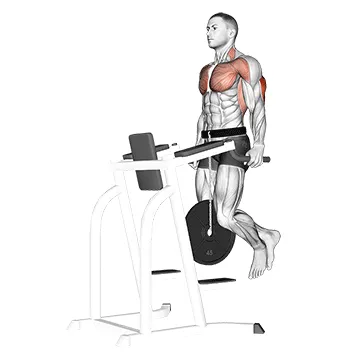
Original Exercise: Weighted Triceps Dip On High Parallel Bars
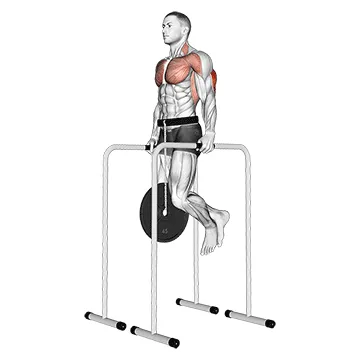
- Primary muscle
- Triceps
- Equipment
- Weighted
- Difficulty
- Advanced
- Type
- Compound
Secondary muscles: Chest, Shoulders
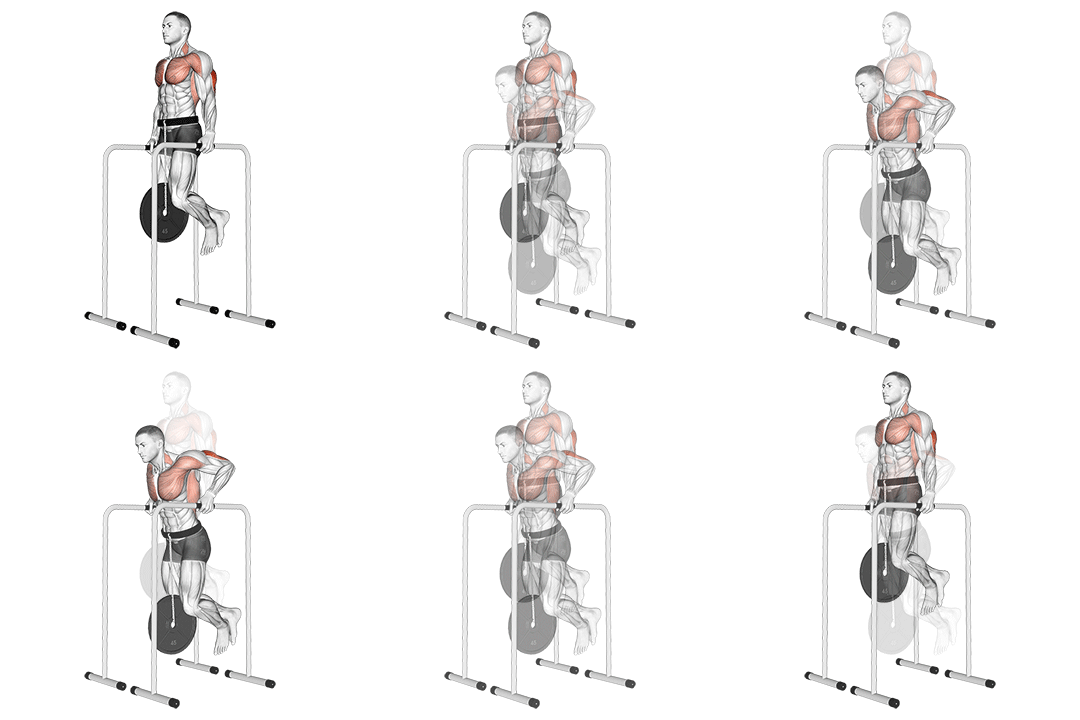
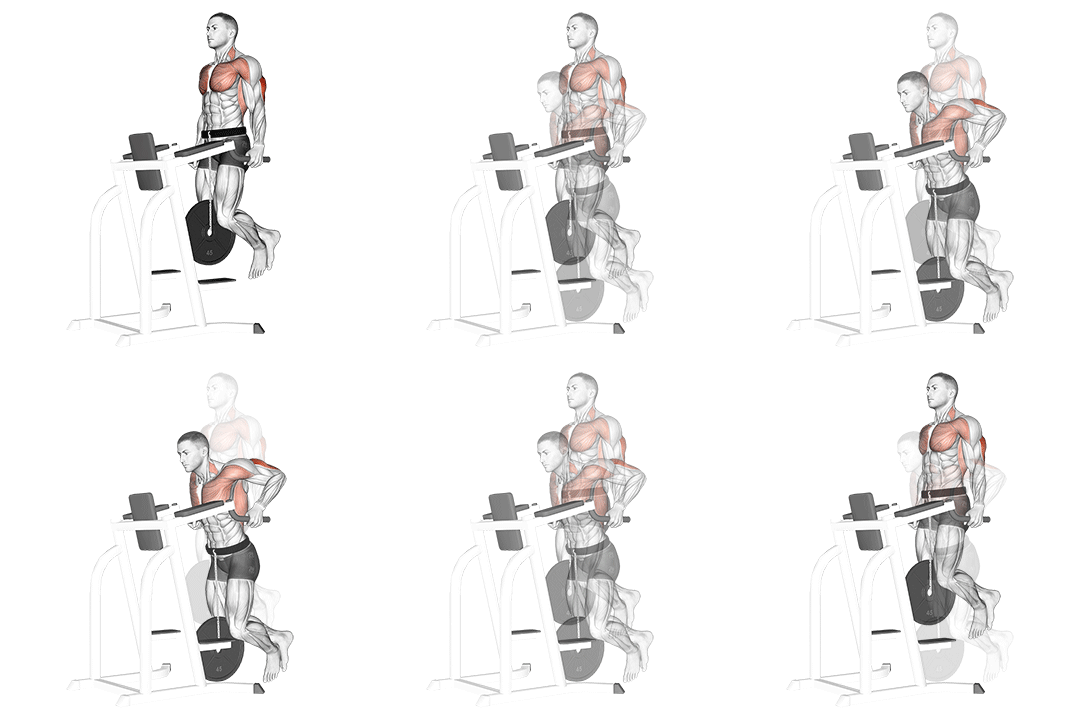
How to perform Weighted Triceps Dip On High Parallel Bars
- Position yourself between two parallel bars with your hands gripping the bars and your arms fully extended.
- Bend your elbows and lower your body until your upper arms are parallel to the ground.
- Pause for a moment, then push through your palms to straighten your arms and return to the starting position.
- Repeat for the desired number of repetitions.
Ranked Weighted Triceps Dip On High Parallel Bars Alternatives
10 substitutes, ranked by how closely each one matches the Weighted Triceps Dip On High Parallel Bars on movement pattern, muscles worked, equipment and body position. The higher the score, the less you change. Open "How to perform this exercise" on a card for the steps; every card title links to that exercise's own alternatives page.
Best match 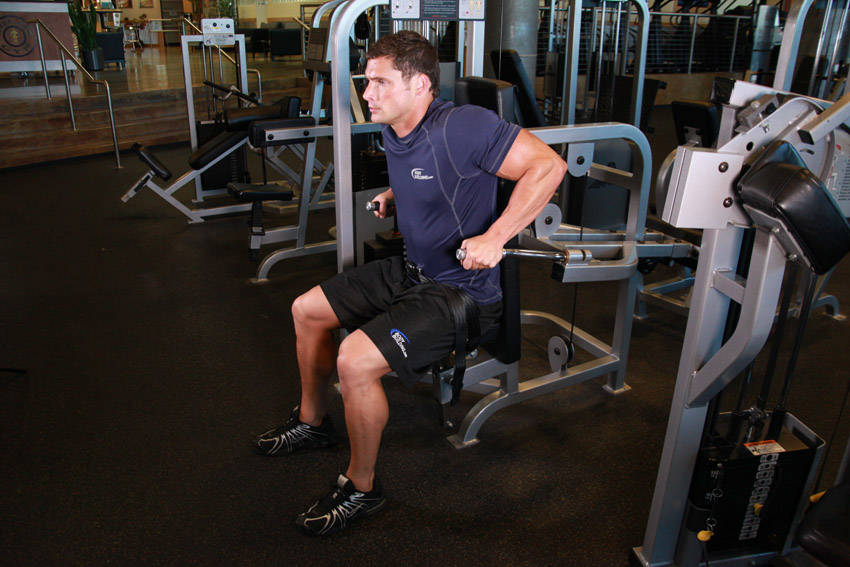
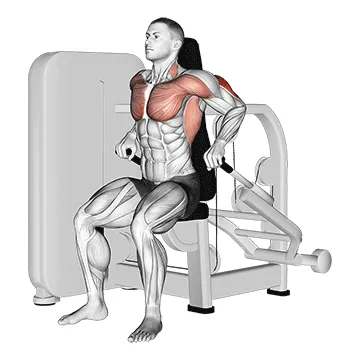
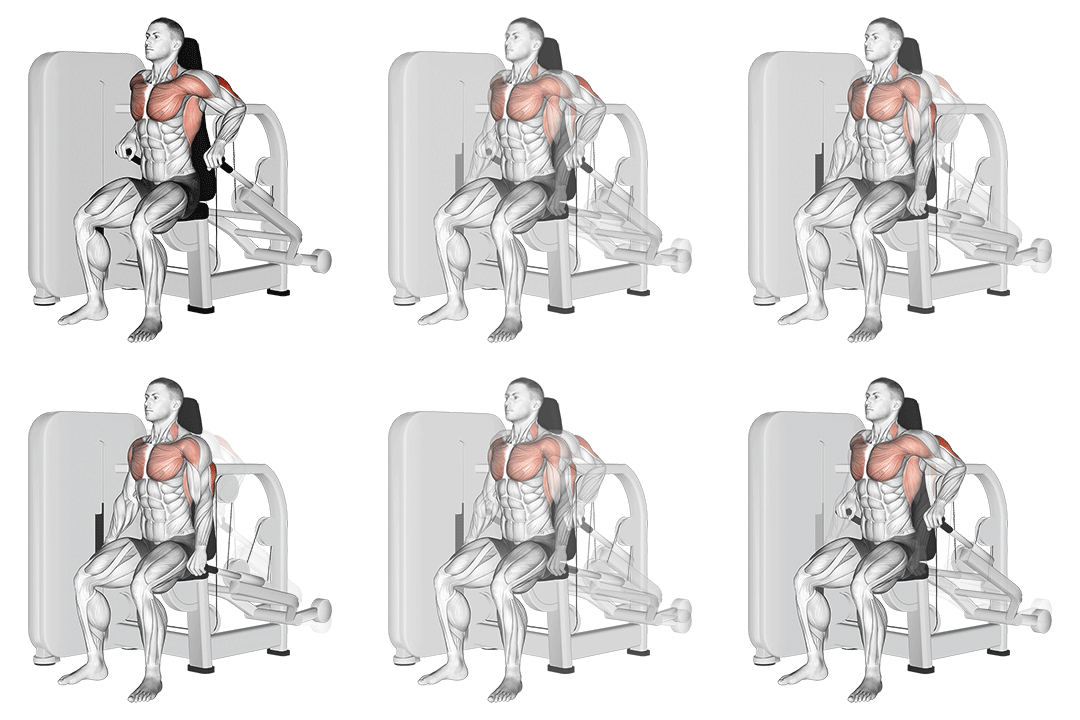
1. Dip Machine
86% match- Triceps
- Machine
- Intermediate
- Compound
Pick this when you want an easier version that still works the triceps.
How to perform this exercise
- Sit securely in a dip machine, select the weight and firmly grasp the handles.
- Now keep your elbows in at your sides in order to place emphasis on the triceps. The elbows should be bent at a 90 degree angle.
- As you contract the triceps, extend your arms downwards as you exhale. Tip: At the bottom of the movement, focus on keeping a little bend in your arms to keep tension on the triceps muscle.
- Now slowly let your arms come back up to the starting position as you inhale.
- Repeat for the recommended amount of repetitions.
Sets and reps: 3 or 4 sets of 6 to 10 reps.
Why this matches
- Primary muscle: triceps, the same as the Weighted Triceps Dip On High Parallel Bars
- Equipment: a machine, not free weights
- Body position: hanging, the same as the Weighted Triceps Dip On High Parallel Bars
- Balance: easier to stay steady on than the Weighted Triceps Dip On High Parallel Bars
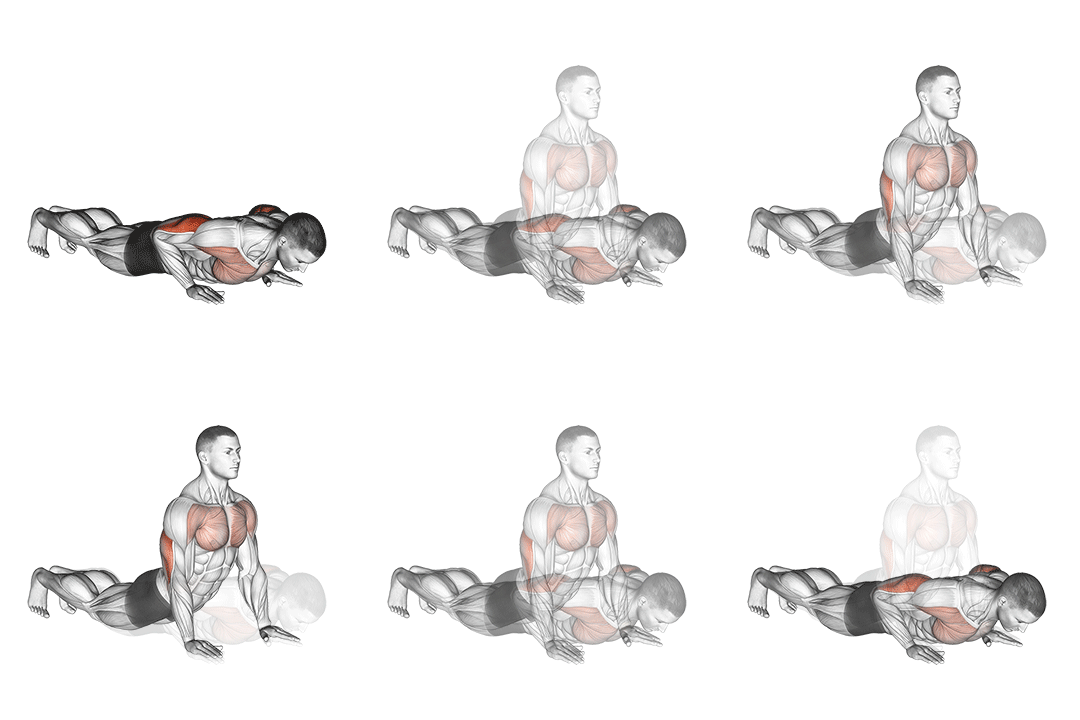
2. Reverse Dip
81% match- Triceps
- Bodyweight
- Intermediate
- Compound
How to perform this exercise
- Position yourself between two parallel bars with your arms fully extended and your body straight.
- Lower your body by bending your elbows until your upper arms are parallel to the ground.
- Pause for a moment, then push yourself back up to the starting position by straightening your arms.
- Repeat for the desired number of repetitions.
Sets and reps: 3 or 4 sets of 6 to 10 reps.
Why this matches
- Primary muscle: triceps, the same as the Weighted Triceps Dip On High Parallel Bars
- Equipment: bodyweight only, not free weights
- Body position: standing, not hanging
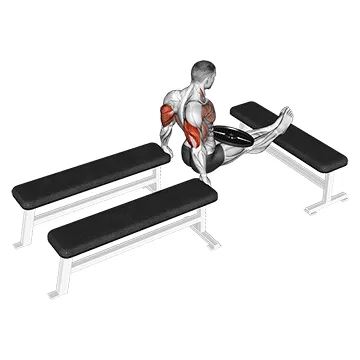
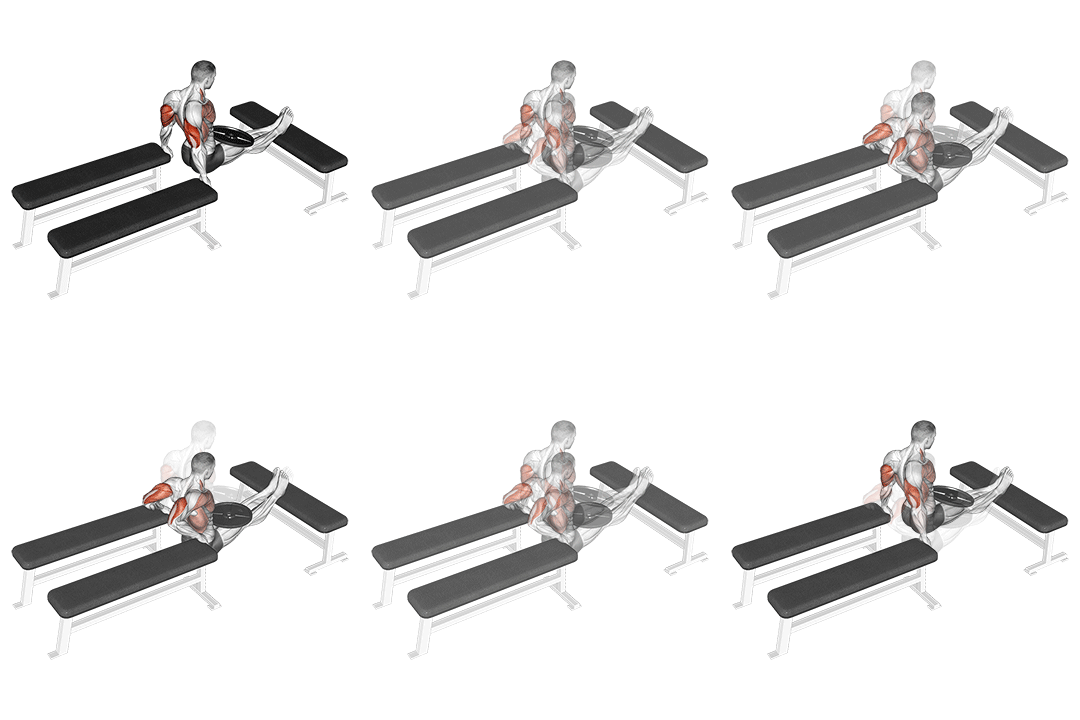
3. Weighted Three Bench Dips
81% match- Triceps
- Weighted
- Intermediate
- Compound
How to perform this exercise
- Sit on the edge of a bench with your hands gripping the edge, fingers pointing forward.
- Walk your feet forward, sliding your butt off the bench and supporting your weight with your arms.
- Lower your body by bending your elbows, keeping your back close to the bench.
- Pause for a moment at the bottom, then push yourself back up to the starting position.
- Repeat for the desired number of repetitions.
Sets and reps: 3 to 5 sets of 5 to 8 reps.
Why this matches
- Primary muscle: triceps, the same as the Weighted Triceps Dip On High Parallel Bars
- Equipment: free weights, the same as the Weighted Triceps Dip On High Parallel Bars
- Body position: standing, not hanging
4. Weighted Tricep Dips
81% match- Triceps
- Weighted
- Intermediate
- Compound
How to perform this exercise
- Sit on the edge of a bench or chair with your hands gripping the edge next to your hips.
- Slide your butt off the front of the bench with your legs extended in front of you.
- Keep your back close to the bench and your elbows slightly bent.
- Lower your body by bending your elbows until your upper arms are parallel to the floor.
- Push yourself back up to the starting position by straightening your arms.
- Repeat for the desired number of repetitions.
Sets and reps: 3 to 5 sets of 5 to 8 reps.
Why this matches
- Primary muscle: triceps, the same as the Weighted Triceps Dip On High Parallel Bars
- Equipment: free weights, the same as the Weighted Triceps Dip On High Parallel Bars
- Body position: standing, not hanging
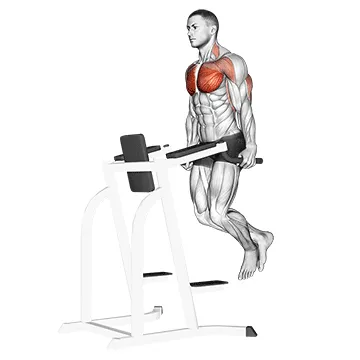
5. Dips - Triceps Version
80% match- Triceps
- Bodyweight
- Intermediate
- Compound
How to perform this exercise
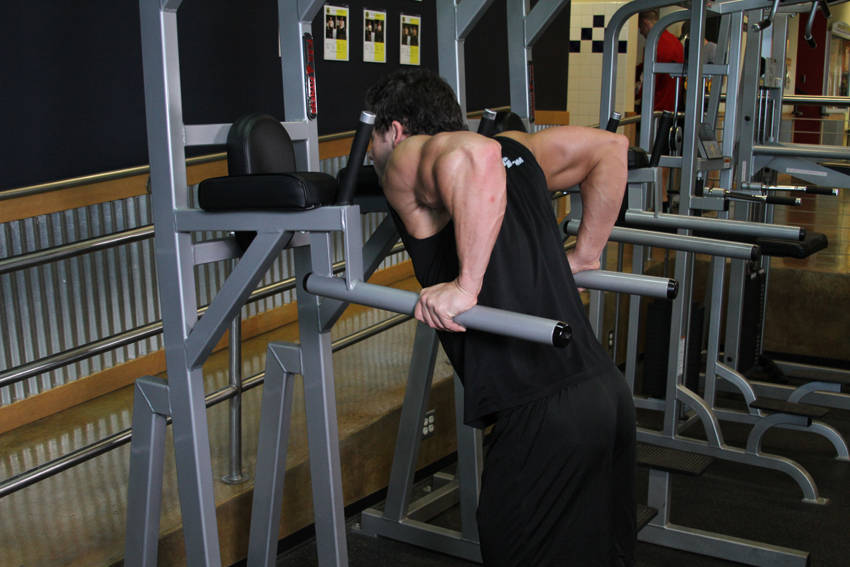
- To get into the starting position, hold your body at arm's length with your arms nearly locked above the bars.
- Now, inhale and slowly lower yourself downward. Your torso should remain upright and your elbows should stay close to your body. This helps to better focus on tricep involvement. Lower yourself until there is a 90 degree angle formed between the upper arm and forearm.
- Then, exhale and push your torso back up using your triceps to bring your body back to the starting position.
- Repeat the movement for the prescribed amount of repetitions.
Sets and reps: 3 or 4 sets of 6 to 10 reps.
Why this matches
- Primary muscle: triceps, the same as the Weighted Triceps Dip On High Parallel Bars
- Equipment: bodyweight only, not free weights
- Body position: hanging, the same as the Weighted Triceps Dip On High Parallel Bars
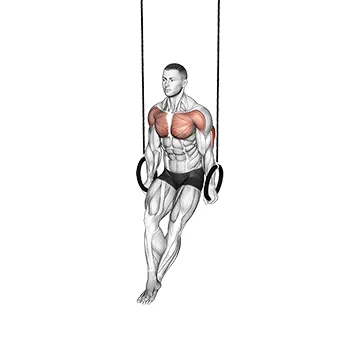
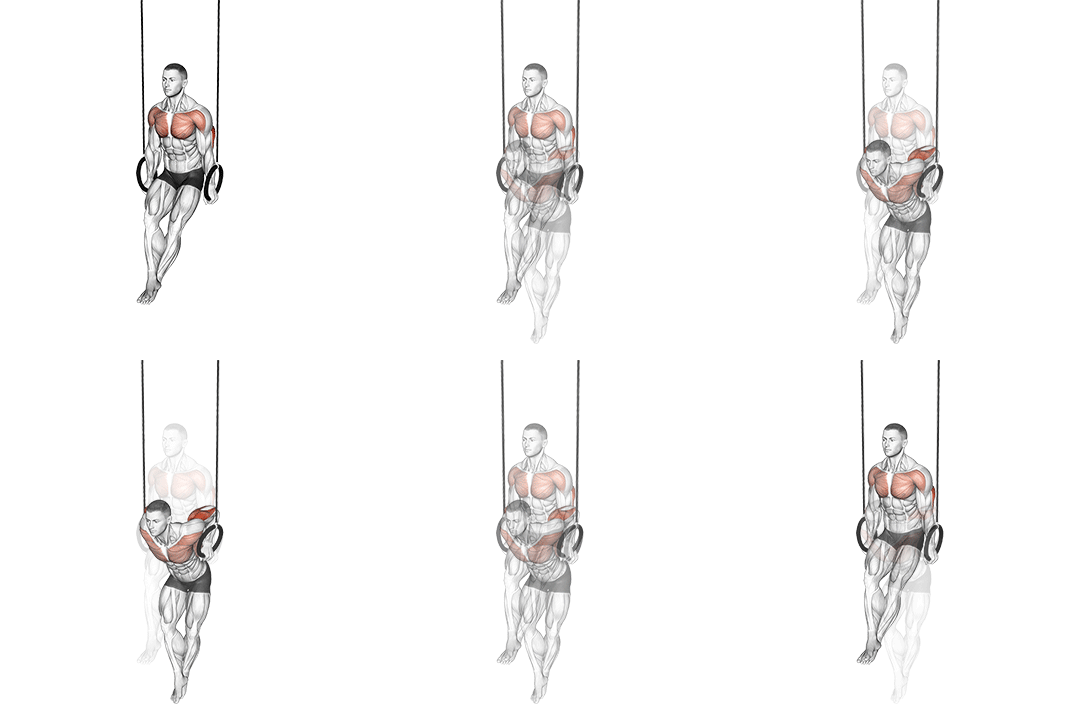
6. Ring Dips
79% match- Triceps
- Bodyweight
- Advanced
- Compound
Pick this when you want to work the triceps with more balance to manage.
How to perform this exercise
- Start by hanging from the rings with your arms fully extended and your body straight.
- Lower your body by bending your elbows until your shoulders are below your elbows.
- Push yourself back up to the starting position by straightening your arms.
- Repeat for the desired number of repetitions.
Sets and reps: 3 to 5 sets of 5 to 8 reps.
Why this matches
- Primary muscle: triceps, the same as the Weighted Triceps Dip On High Parallel Bars
- Equipment: a suspension trainer, not free weights
- Body position: standing, not hanging
- Balance: harder to stay steady on than the Weighted Triceps Dip On High Parallel Bars
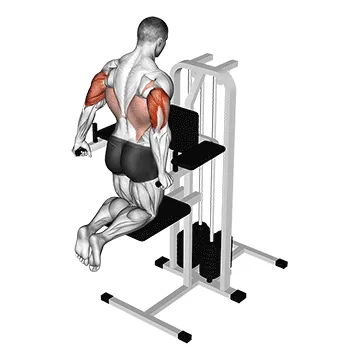
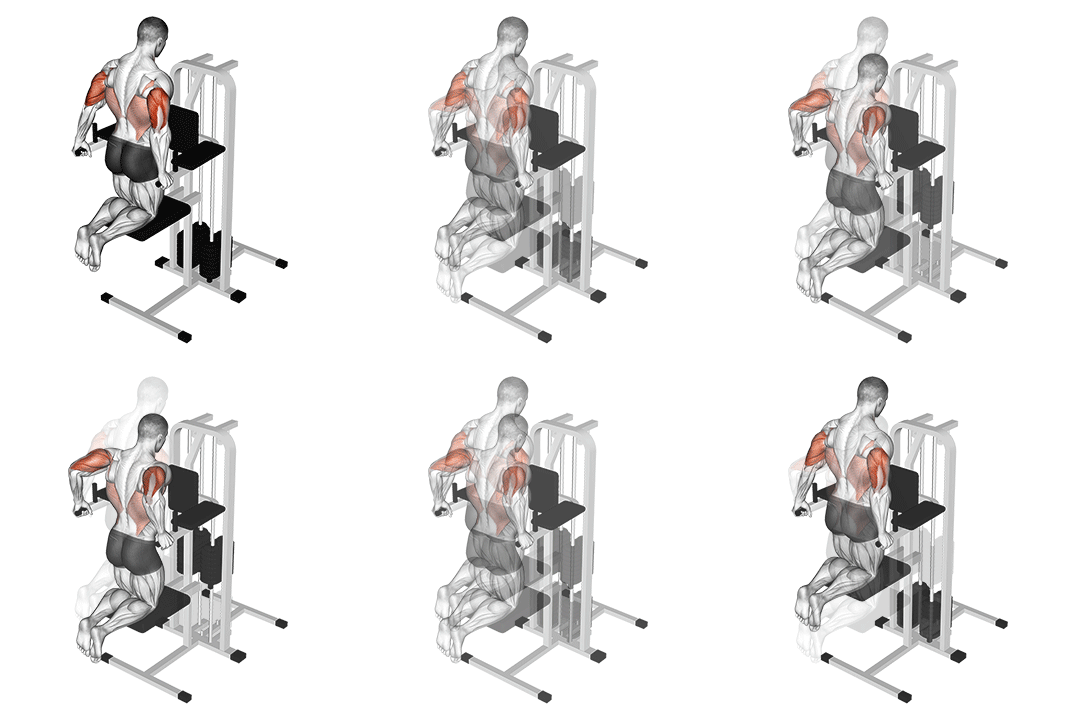
7. Assisted Triceps Dip (Kneeling)
76% match- Triceps
- Lever
- Beginner
- Compound
How to perform this exercise
- Adjust the machine to your desired weight and height.
- Kneel down on the pad facing the machine, with your hands gripping the handles.
- Lower your body by bending your elbows, keeping your back straight and close to the machine.
- Pause for a moment at the bottom, then push yourself back up to the starting position.
- Repeat for the desired number of repetitions.
Sets and reps: 3 or 4 sets of 6 to 10 reps.
Why this matches
- Primary muscle: triceps, the same as the Weighted Triceps Dip On High Parallel Bars
- Equipment: a machine, not free weights
- Body position: kneeling, not hanging
- Balance: easier to stay steady on than the Weighted Triceps Dip On High Parallel Bars
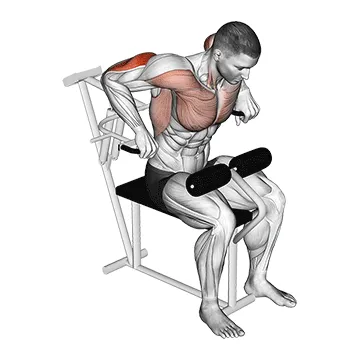
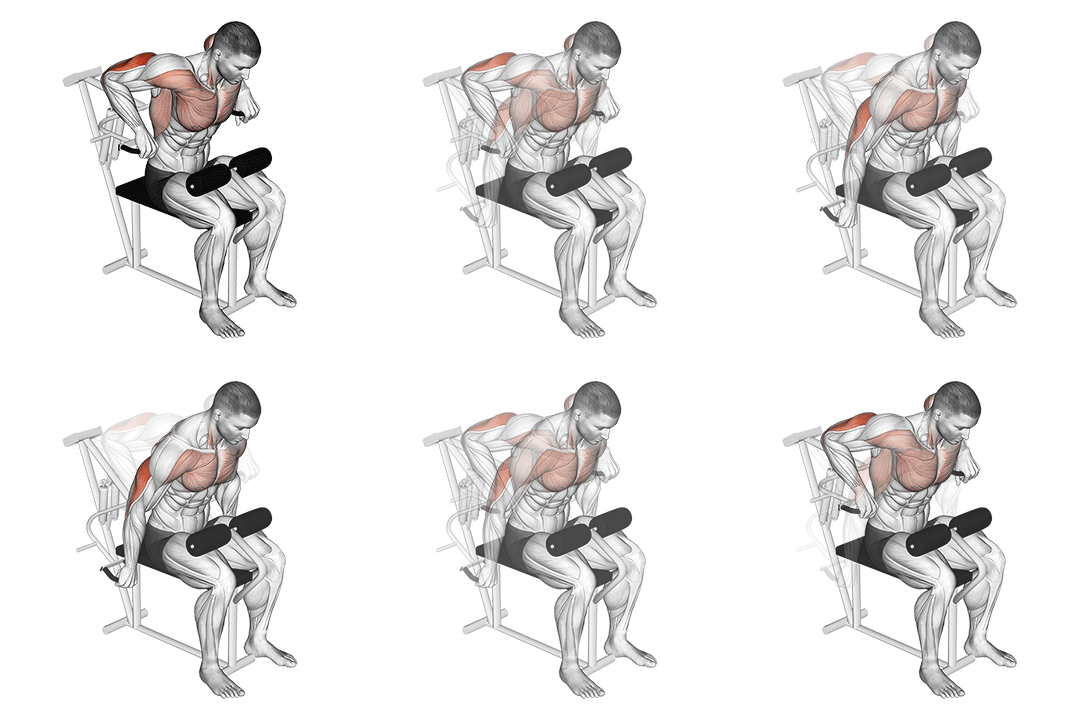
8. Lever Seated Dip
76% match- Triceps
- Lever
- Beginner
- Compound
How to perform this exercise
- Adjust the seat height so that your feet are flat on the ground and your knees are at a 90-degree angle.
- Grasp the handles of the leverage machine with your palms facing down and your arms fully extended.
- Slowly lower your body by bending your elbows until your upper arms are parallel to the ground.
- Pause for a moment, then push yourself back up to the starting position by straightening your arms.
- Repeat for the desired number of repetitions.
Sets and reps: 3 or 4 sets of 6 to 10 reps.
Why this matches
- Primary muscle: triceps, the same as the Weighted Triceps Dip On High Parallel Bars
- Equipment: a machine, not free weights
- Body position: seated, not hanging
- Balance: easier to stay steady on than the Weighted Triceps Dip On High Parallel Bars
9. Lever Overhand Triceps Dip
74% match- Triceps
- Lever
- Intermediate
- Compound
How to perform this exercise
- Adjust the machine to the appropriate height and secure your body in position.
- Grasp the handles with an overhand grip and position your body so that your arms are fully extended.
- Lower your body by bending your elbows, keeping your upper arms close to your sides.
- Continue lowering until your upper arms are parallel to the floor.
- Pause for a moment, then push yourself back up to the starting position by extending your elbows.
- Repeat for the desired number of repetitions.
Sets and reps: 3 or 4 sets of 6 to 10 reps.
Why this matches
- Primary muscle: triceps, the same as the Weighted Triceps Dip On High Parallel Bars
- Equipment: a machine, not free weights
- Body position: standing, not hanging
- Balance: easier to stay steady on than the Weighted Triceps Dip On High Parallel Bars
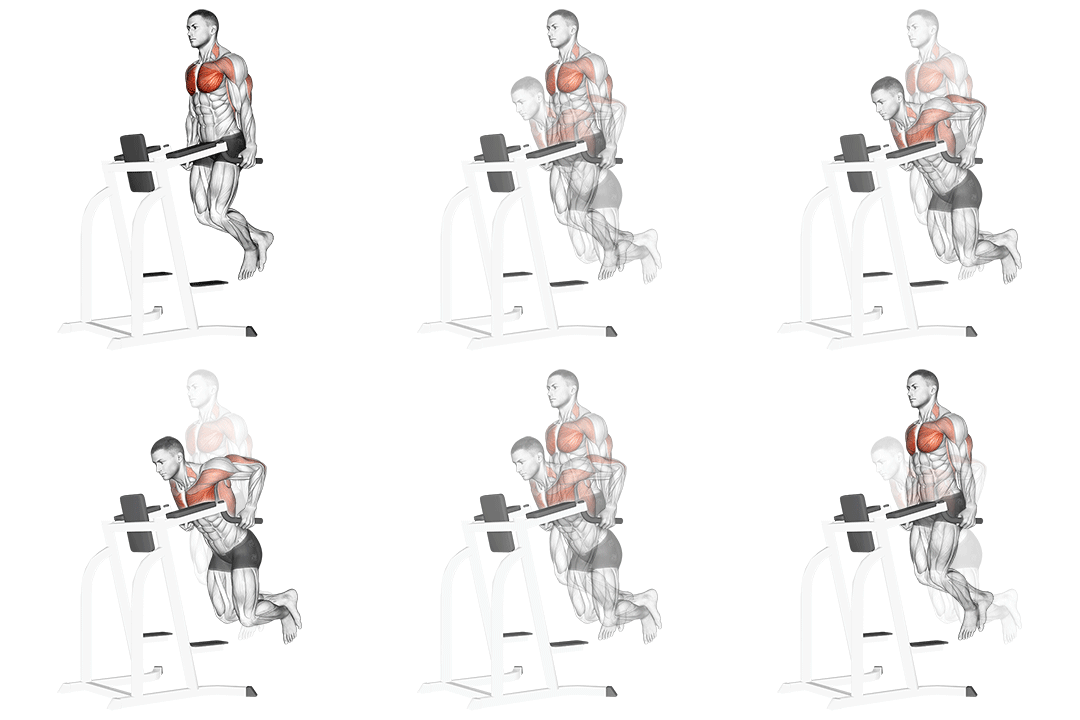
10. Chest Dip
74% match- Pectorals
- Bodyweight
- Advanced
- Compound
How to perform this exercise
- Position yourself on parallel bars with your arms fully extended and your body straight.
- Lower your body by bending your elbows until your shoulders are below your elbows.
- Push yourself back up to the starting position by straightening your arms.
- Repeat for the desired number of repetitions.
Sets and reps: 3 or 4 sets of 6 to 10 reps.
Why this matches
- Primary muscle: pectorals, not triceps
- Equipment: bodyweight only, not free weights
- Body position: hanging, the same as the Weighted Triceps Dip On High Parallel Bars
Weighted Triceps Dip On High Parallel Bars FAQ
What muscles does Weighted Triceps Dip On High Parallel Bars work?
It primarily targets the triceps brachii (long, lateral, and medial heads) through weighted elbow extension. Secondary muscles include the anterior deltoid and pectoralis major for shoulder stabilization and the scapular stabilizers for isometric support.
Find Alternatives for Any Exercise
Search the exercise database and filter the ranked substitutes by the equipment you own.
Similarity scores compare exercise metadata such as movement pattern, muscles, equipment and body position. They are not a safety rating or a check that you own the equipment. Learn about our methodology