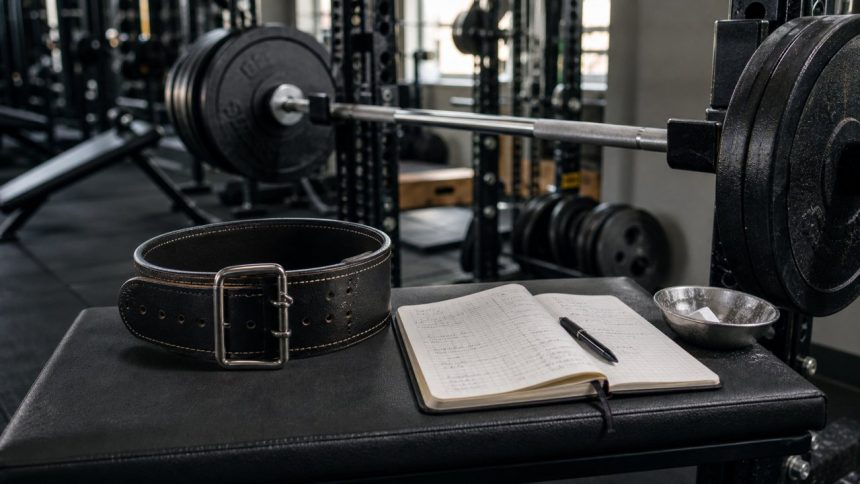
Weight lifting belts create strong opinions because lifters use them for very different reasons. One lifter uses a belt to brace harder for a near-max squat. Another straps one on for every warm-up because their back feels safer. A third avoids belts completely because they heard belts make the core weak. The useful answer sits between those extremes.
A belt is a performance and bracing tool. It can help experienced lifters create more trunk pressure and stay rigid under heavy squats, deadlifts, overhead presses, and strongman-style carries. It does not guarantee safety, fix poor technique, or remove the need to train your trunk. Used well, it supports heavy lifting. Used poorly, it becomes a false sense of security.
Weight lifting belts are neither good nor bad by default. They are useful for heavy compound lifts when you already know how to brace, need extra trunk stiffness, and are lifting loads where performance or position benefits matter. Skip the belt for light work, skill practice, most machines, and any set where it encourages you to ignore pain or technique breakdown.
What does a lifting belt actually do?
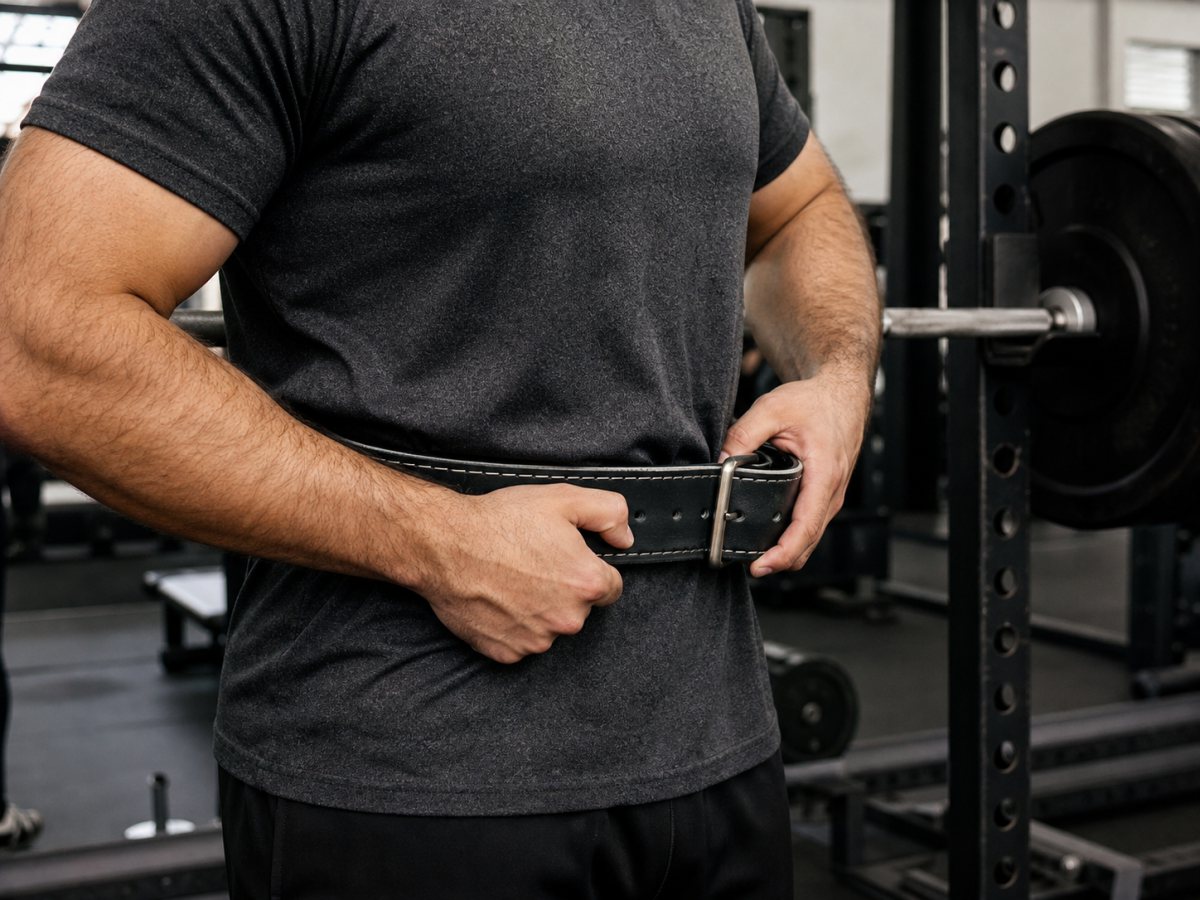
A lifting belt wraps around the trunk so you can brace against it. The belt does not hold your spine together like external armor. Instead, it gives the abdominal wall a firm surface to push into, which can increase trunk stiffness and intra-abdominal pressure during heavy effort.
Classic Medicine and Science in Sports and Exercise studies by Lander and colleagues examined weight belts during the squat and multiple-repetition squat work. Their findings helped frame belts as tools that can influence lifting mechanics and pressure, not magical injury prevention devices.
Are lifting belts good for squats?
Belts can be very useful for heavy squats because the squat requires trunk rigidity while the hips and knees move through a large range. A belt may help you keep position as the load gets heavy, especially in low-rep strength work. The benefit is largest when the lifter already has a consistent brace and bar path.
If your squat falls apart because stance, depth, bar position, or mobility are wrong, a belt will not solve the root problem. Start with technique. Our squat biomechanics guide explains how torso angle, bar path, stance, and depth affect stress.
Are lifting belts good for deadlifts?
A belt can also help deadlifts, but the setup is less forgiving. The belt must not push you out of position at the bottom. Some lifters prefer a slightly different belt height for deadlifts than squats because the hip hinge compresses the torso differently.
Test belt position with submaximal deadlifts before max attempts. If the belt digs into the ribs or hips, blocks the start position, or makes you round harder, adjust height, tightness, or belt type. Our deadlift biomechanics guide gives the hinge context behind that decision.
Do belts prevent back injuries?
No belt can promise injury prevention. A belt may help some lifters maintain stiffness under heavy load, but injuries are influenced by programming, fatigue, technique, anatomy, recovery, and load management. Treating a belt as a guarantee is exactly how lifters take risks they would otherwise avoid.
This distinction matters for readers with back pain. A belt can make a heavy set feel more controlled, but it should not be used to train through symptoms that are sharp, radiating, escalating, or changing strength or sensation. Pain changes the decision tree.
Will a belt make your core weak?
A belt does not automatically make your core weak. Heavy belted squats and deadlifts still demand trunk effort. The problem is overdependence. If you use a belt for every warm-up, every accessory set, and every light lift, you may stop practicing raw bracing under lower-risk conditions.
The best approach is both. Train heavy work with a belt when it helps, and keep enough beltless warm-ups, accessory work, carries, planks, side planks, and anti-rotation work to build trunk capacity without the belt.
When should beginners use a belt?
Most beginners should learn breathing, bracing, hip hinge mechanics, squat setup, and load control before relying on a belt. Early training is about building repeatable technique. A belt can hide uncertainty because the lifter feels more supported even when the movement is not yet stable.
That does not mean beginners are banned from belts forever. Once a beginner can brace, control range, and lift loads that are genuinely challenging, a belt can be introduced gradually. The test is simple: does the belt improve position, or does it just increase confidence faster than skill?
How tight should a lifting belt be?
A belt should be tight enough to brace into, but not so tight that you cannot inhale, expand the trunk, or get into position. The common coaching cue is to leave enough room for a strong breath and expansion. If you cinch it to the point that breathing is shallow and panicked, you have made the brace worse.
Different exercises may need slightly different tightness. Squats often tolerate a snug setting. Deadlifts sometimes need a notch looser so the start position is not blocked. Presses and carries may need their own setup. Test, record, and repeat what works.
Where should the belt sit?
The belt should sit where it gives your trunk the best surface to press against without jamming the ribs or hips. For many lifters, that is around the natural waist with small adjustments by lift. A narrow torso, long torso, deep deadlift setup, or thick belt can change the best position.
Do not copy another lifter blindly. Put the belt on, take your setup, brace hard, and see whether the belt improves or blocks position. If it changes your movement for the worse, move it or use a different belt.
Which exercises deserve a belt?
The best belt candidates are heavy squats, deadlifts, overhead presses, front squats, strongman carries, and heavy rows where trunk stiffness limits performance. The worst candidates are light machine work, curls, lateral raises, easy warm-ups, and movements where the belt adds no real bracing advantage.
| Exercise | Belt usefulness | Reason |
|---|---|---|
| Heavy squat | High | Trunk stiffness under axial load |
| Heavy deadlift | High if position improves | Bracing during hinge strain |
| Overhead press | Moderate to high | Prevents trunk collapse under heavy load |
| Machine accessories | Low | Less bracing demand |
What type of belt should you buy?
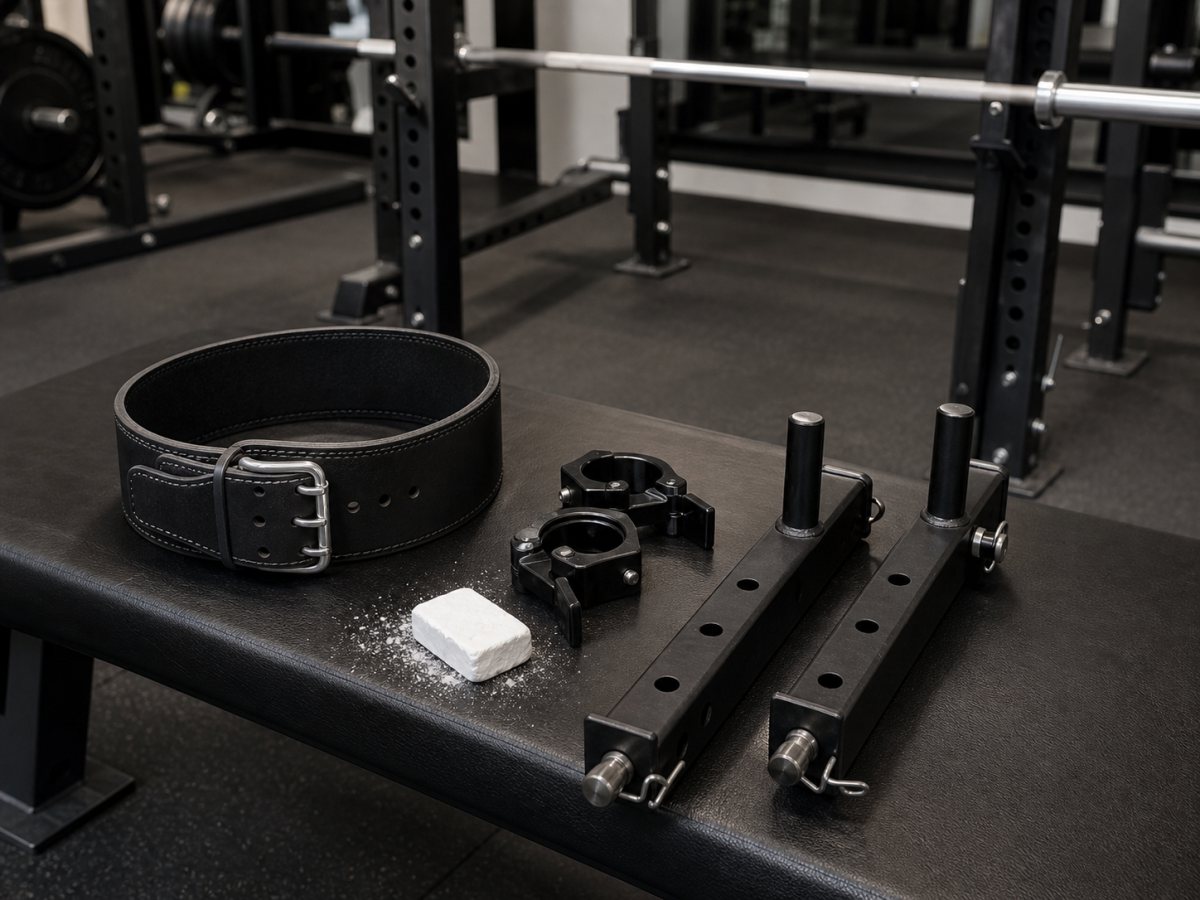
Most strength lifters use leather or stiff synthetic belts. A 10 millimeter belt works for many lifters; a 13 millimeter belt can be too stiff for smaller lifters or beginners. Powerlifting belts are often the same width around the body, while tapered belts may feel more comfortable for general training.
Lever belts are fast and secure but less convenient when switching tightness between lifts. Prong belts are slower but easy to adjust. Velcro belts can be useful for Olympic lifting, CrossFit-style work, or people who want flexibility, though they may not feel as stable for maximal powerlifting.
How to learn belted bracing
Put the belt on, inhale into the belly, sides, and lower back, then brace as if preparing to take a punch. The cue is not to suck the stomach in. You want circumferential expansion into the belt. Then keep the rib cage and pelvis stacked while you lift.
Practice with submaximal triples or fives before heavy singles. If the belt makes the lift feel stronger but also less controlled, slow down. A good belt setup should make your positions more repeatable, not more reckless.
| Common mistake | What happens | Fix |
|---|---|---|
| Too tight | Shallow breath and poor setup | Loosen one notch and brace harder |
| Too loose | No surface to brace against | Tighten until expansion meets resistance |
| Too high | Rib pressure | Lower slightly and retest |
| Too low | Hip pinch in hinge | Raise slightly for deadlifts |
When should you skip the belt?
Skip the belt when you are learning a new movement, doing light technique work, training accessories that do not need it, or using the belt to talk yourself into a bad decision. Also skip it if the belt changes your pain, breathing, or setup in a negative way.
Belts are useful because they amplify a good brace. That also means they can amplify bad judgment. If the only reason you can attempt a load is that the belt makes you less afraid, the load is probably not ready.
FitnessVolt bottom line
Weight lifting belts are good when they help an already competent lifter brace harder for heavy compound lifts. They are bad when they become a crutch for poor technique, a cure-all for pain, or a status symbol worn for every set. Learn to brace without one, then use one strategically when the load justifies it.
The practical rule is simple: belt your heaviest squats, deadlifts, presses, and carries if performance and position improve. Keep enough beltless work to stay honest.
Should you train raw or belted?
You should do both if strength is the goal. Raw work teaches you to create tension without external feedback. Belted work lets you practice the exact setup you will use for heavier attempts. The split depends on the lifter, but many strength athletes keep warm-ups and lighter back-off work beltless, then add the belt for heavier sets.
Bodybuilders and general fitness lifters can be even more selective. If the goal is quad, glute, or back hypertrophy rather than a one-rep max, the belt only earns its place when it improves target-muscle loading or keeps heavy work more repeatable. It should not turn every exercise into a max-effort event.
How belts fit into programming
A belt should not change your whole program. It should support the heaviest work inside a program that already manages volume, intensity, frequency, and recovery. If you add a belt and immediately jump load aggressively, you have changed two variables at once and made feedback harder to read.
Introduce belted work gradually. Compare bar speed, position, soreness, and next-day recovery against beltless sessions. If the belt helps heavy sets feel cleaner without increasing pain or sloppy confidence, keep it for that role. If it mainly encourages heavier loading before your technique is ready, pull it back.
Simple rule for your next heavy session
Use the belt only after your warm-ups prove that the movement is clean. If the empty bar, ramp sets, and first working set feel organized, add the belt for the heavier work and compare how your brace, bar path, and confidence change. If the belt is the only thing making the session feel possible, reduce the load and rebuild the pattern first.
Sources
- Lander, J. E., Simonton, R. L., and Giacobbe, J. K. (1990). The effectiveness of weight-belts during the squat exercise. Medicine and Science in Sports and Exercise.
- Lander, J. E., Hundley, J. R., and Simonton, R. L. (1992). The effectiveness of weight-belts during multiple repetitions of the squat exercise. Medicine and Science in Sports and Exercise.
- American College of Sports Medicine. (2009). Progression models in resistance training for healthy adults. Medicine and Science in Sports and Exercise.
- NIOSH. (1994). Applications manual for the revised NIOSH lifting equation. Accessed June 5, 2026.