

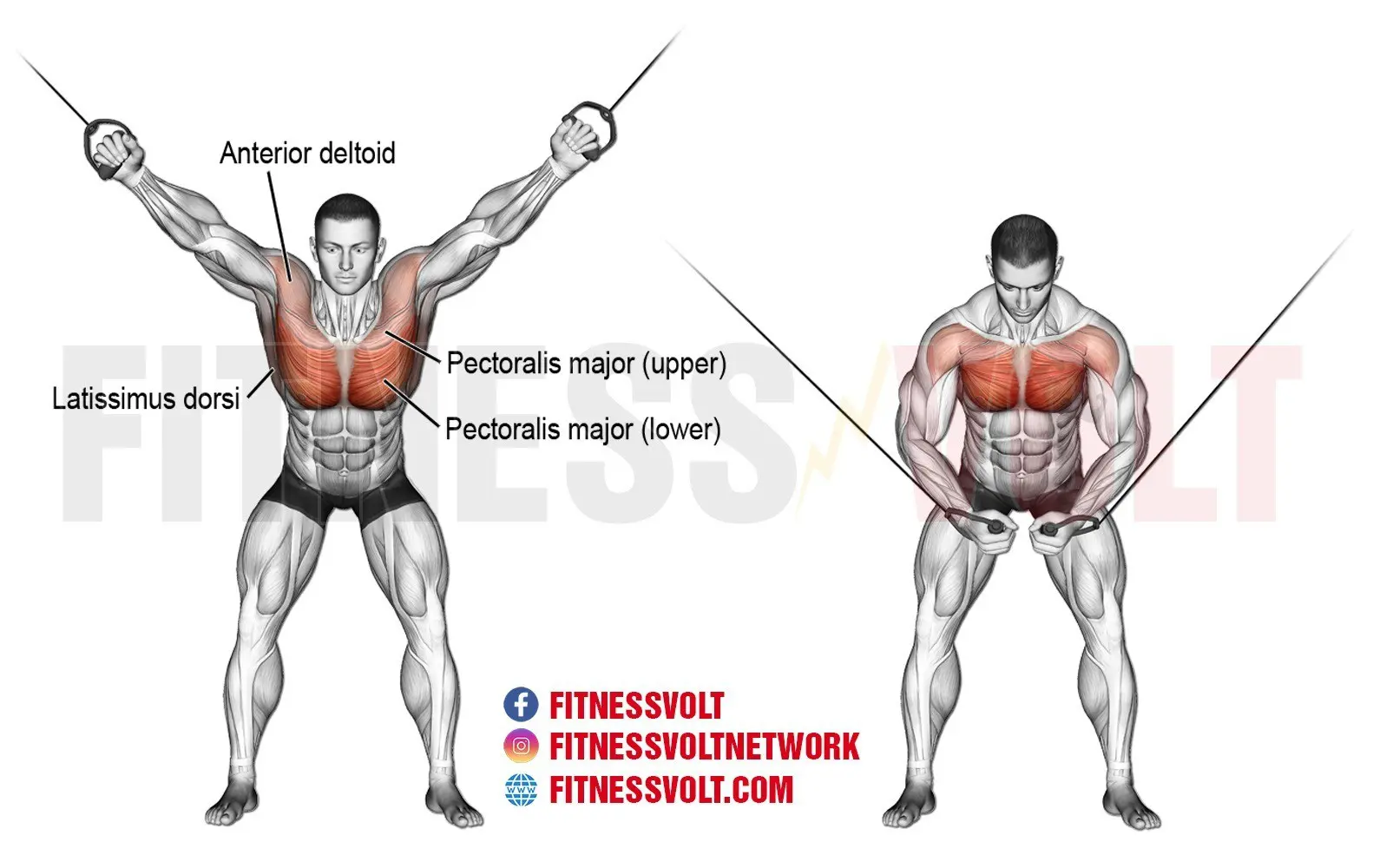
The high cable cross-over, or standing cable crossover, is a very effective isolation exercise. It targets the mid and lower chest due to the high angle on the pulley machine. This exercise allows for a very good contraction and stretch in the chest muscles; which is necessary for muscle growth and development.
You can do the high cable cross over either as a warm-up before heavy compound lifts or as a finisher, and many people even alternate. Incorporate the high cable cross over into your routine for well-rounded chest development.
In this Exercise
- Target Muscle Group: Sternal (Lower) Pectoralis Major
- Type: Strength
- Mechanics: Isolation
- Equipment: Cables
- Difficulty: Intermediate
Exercise Instructions
- Attach a single grip to both sides of a cable pulley machine at the highest notch.
- Grab one handle, then walk over to the other side and grab the other handle.
- Stand in the middle of the cable machine with your arms stretched out and handles in each hand.
- Move one foot forward to balance your body.
- Slightly bend your elbows and exhale while you pull your hands together, contracting your chest muscles.
- Slowly reverse the motion until you feel a slight stretch in your chest muscles.
- Repeat for the desired number of reps.
Variations & Tips
- The high cable cross-over targets the lower and mid-chest.
- Make sure you’re elbows are slightly bent through the whole movement.
- This movement is great for isolating just the chest muscles since the triceps not as involved when compared to a pressing movement.
Watch: How to do a high cable cross-over
Interested in measuring your progress? Check out our strength standards for Bench Press, Squat, Deadlift, and more exercises.