Transform Your Core: Master the 3/4 Sit-Up for Stronger Abs

Engage Your Abs for Maximum Strength

Ash, ACE, MSc
By
Ash, ACE, MSc
Ash is a highly respected fitness expert and certified personal trainer through the American Council on Exercise (ACE). With a B.A. in biology from Rutgers and...
6 Min Read
How to do 3/4 Sit-Up

The 3/4 Sit-Up is an effective exercise targeting core and abdominal strength, making it ideal for fitness enthusiasts and personal trainers. This variation of the traditional sit-up emphasizes precision and range of motion to develop the upper and lower abdominal muscles more effectively. By engaging the rectus abdominis, transversus abdominis, and obliques, practitioners can enhance posture, balance, and lower back support, ultimately improving performance and reducing back pain.

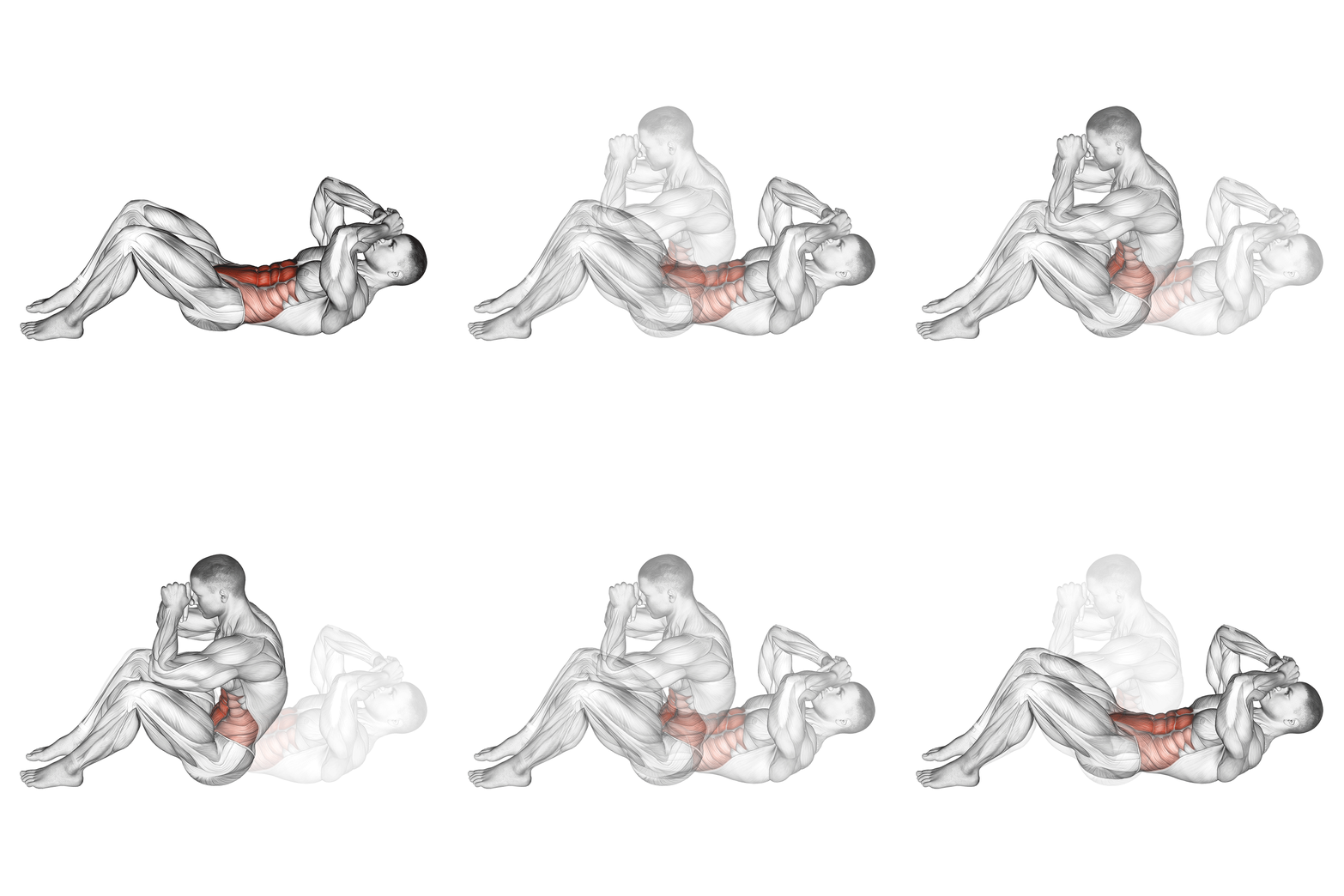
To perform the 3/4 Sit-Up, begin lying on your back with knees bent and feet flat on the floor. Place your hands behind your head and engage your core. Lift your head, neck, and shoulders while curling your torso towards your knees, stopping when your body forms a V shape. Pause, then slowly lower back to the starting position. Aim to include this exercise 2-3 times per week in your routine, ensuring proper form to avoid injury.

This exercise requires no special equipment and can be modified for different fitness levels. Whether you’re starting out or seeking a challenge, mastering the 3/4 Sit-Up will lead to a stronger, more defined midsection.

3/4 Sit-Up Details
Basic Information
Body Part
Waist
Primary Muscles
Secondary Muscles
Equipment
Bodyweight
Exercise Characteristics
Exercise Type
Strength
Movement Pattern
Brace
Force Type
Concentric
Unilateral/Bilateral
Bilateral
Compound/Isolation
Isolation
Bodyweight Exercise
Yes
Training Parameters
Difficulty Level
Intermediate
Target Training Goals
Strength
Suitable Workout Phases
Main workout
Risk Level
Low
Weight Category
Bodyweight
Recommended Rep Ranges
GoalRep Range
Strength8-12
Hypertrophy8-12
Endurance15-20
Power6-8
Muscular endurance15-20
Stability core8-15
Flexibility mobility8-12

How to Do a 3/4 Sit-Up

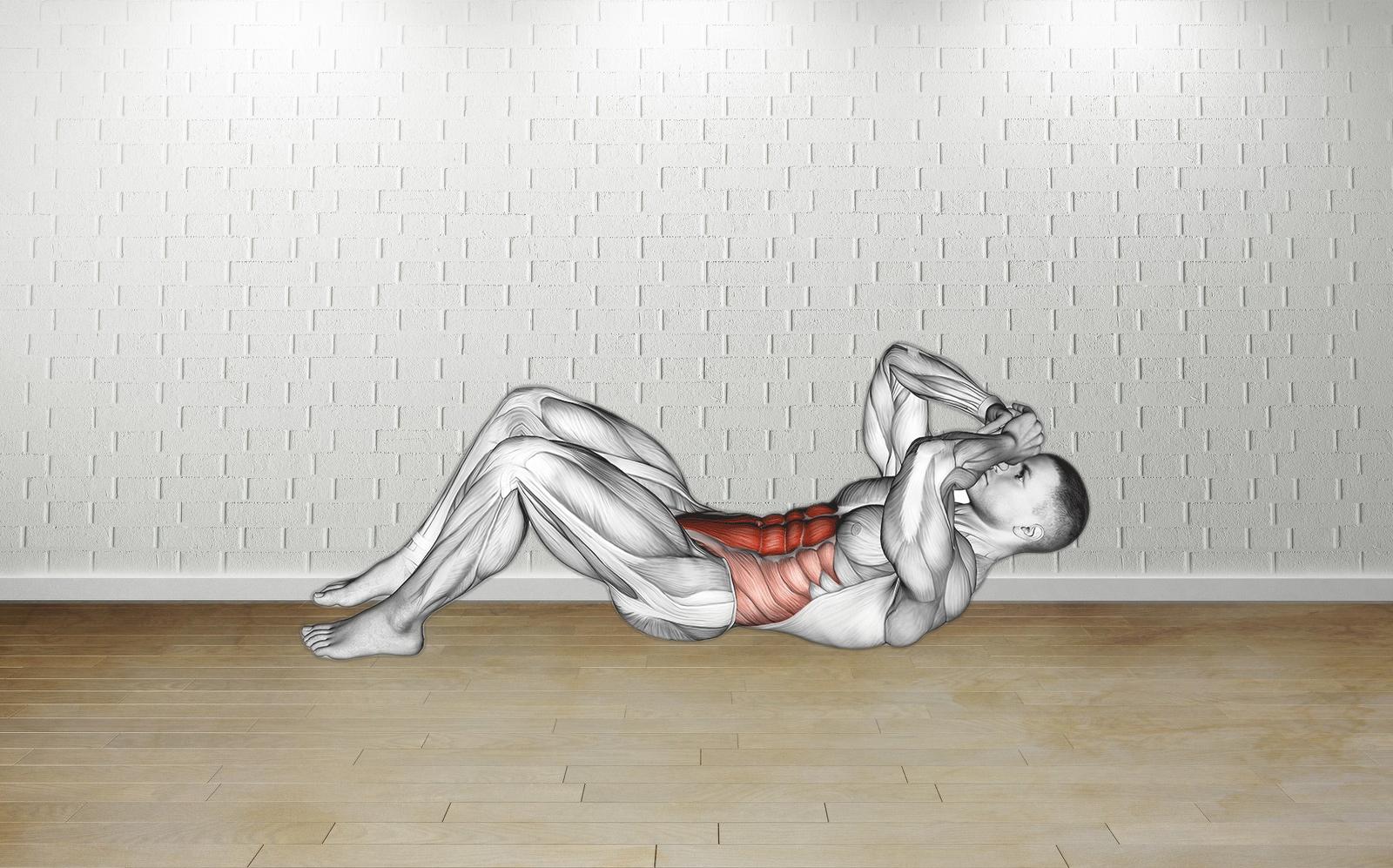
How to do a 3/4 Sit-Up - Step by step Strength exercise demonstration targeting Abs, Hip Flexors, Lower Back

Start by lying on your back on an exercise mat with your knees bent and feet flat on the floor, hip-width apart. Place your hands gently behind your head, keeping your elbows wide.

Get Fitter, Faster

Level Up Your Fitness: Join our šŸ’Ŗ strong community in Fitness Volt Newsletter. Get daily inspiration, expert-backed workouts, nutrition tips, the latest in strength sports, and the support you need to reach your goals. Subscribe for free!

  1. Engage your core by tightening your abdominal muscles.
  2. Lift your head, neck, and shoulders off the ground, curling your torso towards your knees.
  3. Continue the movement until your torso is about three-quarters of the way up, forming a V shape with your body.
  4. Pause briefly at the top of the movement, then slowly lower your torso back to the starting position.
  5. Repeat for the desired number of repetitions.

Inhale as you lower your torso and exhale as you lift it towards your knees.

Common Mistakes

  • Using Momentum: Many individuals swing their torso upwards instead of using core strength. To avoid this, focus on a slow and controlled movement, engaging your core as you lift.
  • Pulling on the Neck: Some people press their hands against their head, straining the neck. Instead, use your hands to support your head gently, keeping your elbows wide and avoiding any pressure on the neck.
  • Arching the Back: An overly arched back can lead to strain and reduce effectiveness. Keep your lower back pressed into the mat throughout the movement to ensure proper alignment and isolation of the abdominal muscles.
  • Not Engaging the Core: Failing to actively engage the abdominal muscles can diminish results. Focus on tightening your abs before initiating the lift to maximize engagement and effectiveness.
  • Neglecting Breathing: Holding your breath can lead to fatigue and reduce performance. Practice proper breathing by exhaling on the lift and inhaling as you lower, maintaining a natural rhythm.

Benefits of the 3/4 Sit-Up

  • Strengthens abdominal muscles by engaging the core effectively through a dynamic movement.
  • Improves overall functional fitness, enhancing performance in various sports and daily activities.
  • Increases muscle endurance in the core area, supporting better posture and alignment.
  • Enhances flexibility in the spine by promoting controlled movement and stretching.
  • Engages the hip flexors, contributing to better movement patterns and reducing the risk of lower back pain.

Exercise Variations

  • Side Plank Hip Adduction
    Level: Intermediate
    Targets: Adductors, Gluteus Medius, Transverse abdominis, Adductor muscles, Erector Spinae
    Equipment: Yoga Mat, Resistance Band, Ankle Weights | Movement: Brace | Type: Strength | Force Type: Isometric | Isolation
  • Machine Leg Raise Crunch
    Level: Intermediate
    Targets: Hip Flexors, Iliopsoas, Obliques, Quadriceps, Rectus Abdominis, Rectus Femoris, Transverse abdominis
    Equipment: Leg Raise Machine, Exercise Mat. | Movement: Brace | Type: Strength | Force Type: Concentric | Isolation
  • Seated Leg Raises
    Level: Beginner
    Targets: Iliopsoas, Quadriceps, Rectus Femoris, Sartorius, Tensor Fasciae Latae, Hip Flexors
    Equipment: Chair Or Bench, Mat | Movement: Brace | Type: Strength | Force Type: Concentric | Isolation
  • Jackknife Sit-Ups
    Level: Intermediate
    Targets: Hip Flexors, Obliques, Rectus Abdominis, Erector Spinae, Quadriceps, Rectus Femoris
    Equipment: Exercise Mat, None | Movement: Brace | Type: Strength | Force Type: Isotonic | Isolation
  • Hip Raise (Bent Knee)
    Level: Beginner
    Targets: Erector Spinae, Gluteus Maximus, Hamstrings, Hip Flexors, Quadriceps, Gluteus Medius, Gluteus Minimus, Rectus Abdominis
    Equipment: Exercise Mat, Optional Weight (Such As A Dumbbell Or Barbell) | Movement: Brace | Type: Strength | Force Type: Concentric | Isolation
  • Cable Shrug
    Level: Intermediate
    Targets: Levator Scapulae, Rhomboids, Serratus Anterior, Trapezius, Deltoids, Upper Trapezius
    Equipment: Cable Machine, Cable Attachment (Such As A Straight Bar Or Rope). | Movement: Brace | Type: Strength | Force Type: Isometric | Isolation
  • Cable Side Shrug
    Level: Intermediate
    Targets: Deltoids, Levator Scapulae, Trapezius, Rhomboids, Serratus Anterior
    Equipment: Cable Machine, Cable Attachment, Weight Plates. | Movement: Brace | Type: Strength | Force Type: Isometric | Isolation
  • Reverse Crunch
    Level: Intermediate
    Targets: Hip Flexors, Obliques, Rectus Abdominis, Transverse abdominis, Iliopsoas, Rectus Femoris
    Equipment: Mat | Movement: Brace | Type: Strength | Force Type: Concentric | Isolation
  • Side Plank Hip Abduction
    Level: Intermediate
    Targets: Erector Spinae, Gluteus Maximus, Gluteus Medius, Obliques, Quadratus lumborum, Tensor Fasciae Latae, Adductors
    Equipment: Exercise Mat, Resistance Band | Movement: Brace | Type: Strength | Force Type: Isometric | Isolation
  • Hanging Straight Leg Raise
    Level: Intermediate
    Targets: Hip Flexors, Iliopsoas, Obliques, Quadratus lumborum, Rectus Abdominis, Latissimus Dorsi, Quadriceps, Rhomboids, Shoulders, Trapezius
    Equipment: Pull-Up Bar, Gymnastic Rings, Or Dip Bars. | Movement: Brace | Type: Strength | Force Type: Concentric | Isolation

Alternative Exercises

  • Low Cable Cross-Over
    Level: Intermediate
    Targets: Pectoralis major, Triceps brachii, Rhomboids, Triceps
    Equipment: Cable Machine, Adjustable Pulleys, Handle Attachments | Movement: Pull | Type: Strength | Force Type: Isotonic | Isolation
  • Cable Straight Arm Pulldown
    Level: Intermediate
    Targets: Latissimus Dorsi, Posterior deltoids, Rhomboids, Teres Major, Triceps brachii, Anterior Deltoid, Core Muscles, Trapezius
    Equipment: Cable Machine, Straight Bar Attachment Or Rope Attachment. | Movement: Pull | Type: Strength | Force Type: Isotonic | Isolation
  • Chin-Ups
    Level: Intermediate
    Targets: Biceps brachii, Brachialis, Forearm muscles, Infraspinatus, Latissimus Dorsi, Pectoralis major, Rhomboids, Teres Major, Trapezius, Core Muscles
    Equipment: Pull-Up Bar, Resistance Bands, Weight Belt | Movement: Pull | Type: Strength | Force Type: Concentric | Compound
  • Dumbbell Front Raise
    Level: Intermediate
    Targets: Anterior Deltoids, Deltoids, Trapezius, Upper Pectorals, Core Muscles, Deltoid (Anterior), Deltoid (Lateral), Pectoralis Major (Clavicular Head), Serratus Anterior, Supraspinatus
    Equipment: Dumbbells | Movement: Push | Type: Strength | Force Type: Concentric | Isolation
  • Donkey Calf Raise
    Level: Intermediate
    Targets: Gastrocnemius, Soleus, Flexor digitorum longus, Flexor hallucis longus, Tibialis posterior
    Equipment: Calf Raise Machine, Weight Plates, Step Or Platform, Resistance Bands | Movement: Squat | Type: Strength | Force Type: Concentric | Isolation
  • Decline Crunch
    Level: Intermediate
    Targets: Hip Flexors, Obliques, Rectus Abdominis, Transverse abdominis
    Equipment: Decline Bench, Weights | Movement: Hinge | Type: Strength | Force Type: Eccentric | Isolation
  • Decline Push-Up
    Level: Intermediate
    Targets: Core Muscles, Deltoids, Pectoralis major, Serratus Anterior, Triceps brachii, Core, Pectoralis Minor, Shoulders, Triceps
    Equipment: Decline Bench, Exercise Mat | Movement: Push | Type: Strength | Force Type: Eccentric | Compound
  • Crunch Exercise
    Level: Intermediate
    Targets: Hip Flexors, Obliques, Rectus Abdominis, Rectus Femoris, Serratus Anterior, Transverse abdominis
    Equipment: Mat | Movement: Hinge | Type: Strength | Force Type: Concentric | Isolation
  • Cross-Body Crunch
    Level: Intermediate
    Targets: Hip Flexors, Obliques, Rectus Abdominis, Transverse abdominis, Quadratus lumborum
    Equipment: Exercise Mat | Movement: Rotation | Type: Strength | Force Type: Concentric | Isolation
  • Cable Wrist Curl
    Level: Intermediate
    Targets: Flexor carpi radialis, Flexor carpi ulnaris, Flexor digitorum profundus, Flexor digitorum superficialis, Palmaris longus, Brachioradialis, Pronator Teres
    Equipment: Cable Machine, Cable Attachment (Wrist Strap Or Handle), Weight Plates. | Movement: Pull | Type: Strength | Force Type: Concentric | Isolation

Safety Precautions for the 3/4 Sit-Up

Before beginning the 3/4 sit-up exercise, it’s essential to ensure you are performing it on a flat, stable surface to avoid injuries. Using a quality exercise mat can provide adequate cushioning for your back and protect against discomfort during the movement. Additionally, wearing supportive footwear can enhance your stability and grip, creating a safer environment for your workout.

Maintaining proper form is crucial while executing the 3/4 sit-up to prevent strain on the neck and lower back. Always engage your core muscles throughout the movement to maintain control and alleviate pressure on your spine. Avoid pulling on your neck with your hands, as this can lead to injury. Instead, gently place your hands behind your head to support your neck while focusing on curling your torso using your abdominal muscles.

Lastly, listen to your body and avoid pushing beyond your limits. If you experience any pain or discomfort, stop the exercise immediately. It may be beneficial to modify the movement or consult a fitness professional to ensure you’re using the correct technique, especially if you’re new to core exercises. Progressing gradually and allowing adequate recovery time will help prevent injuries and promote long-term strength gains.

Stay on top of the latest fitness news and updates by adding Fitness Volt to your Google News feed: Follow us on Google News You can also follow us on Twitter, Facebook, Instagram, and YouTube for even more content.

If you have any questions or need further clarification about this article, please leave a comment below, and Ash will get back to you as soon as possible.

Stay Updated with FitnessVolt Get the latest fitness news, workouts & nutrition tips delivered to your feed
Follow on Google News
Share This Article
Ash is a highly respected fitness expert and certified personal trainer through the American Council on Exercise (ACE). With a B.A. in biology from Rutgers and an M.S. in Exercise Science (Kinesiology) from CBU, she brings a wealth of knowledge and expertise to her work. Ash is dedicated to helping people achieve their fitness and health goals through personalized training and nutrition plans. With a passion for fitness and a deep understanding of the science behind healthy living, she is able to create effective and sustainable programs that deliver real results. Whether you're looking to lose weight, build muscle, or just feel better in your own skin, Ash is the expert you can trust to guide you on your journey to a healthier and happier life.
Leave a Comment