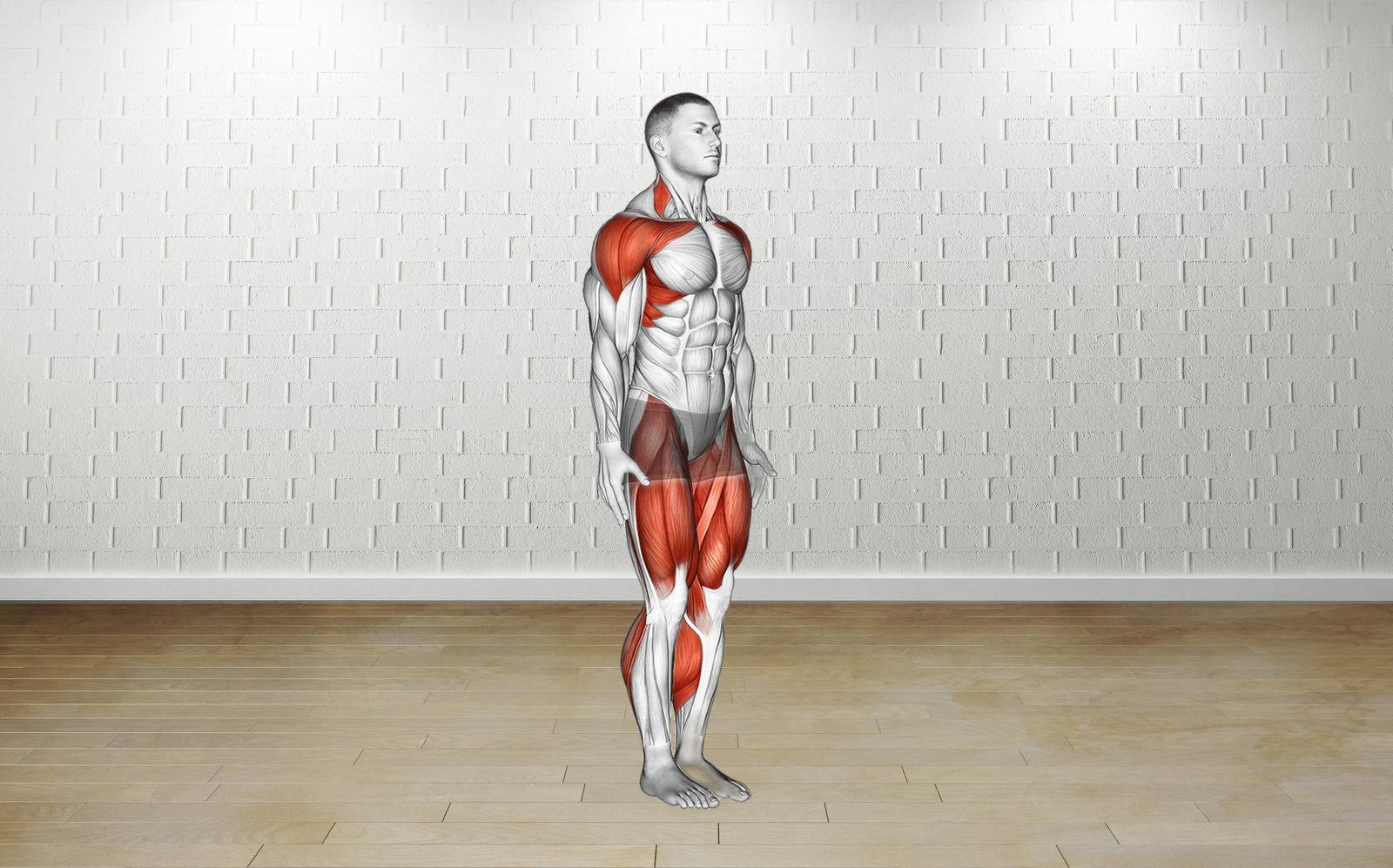
Astride Jumps Exercise Guide: Supercharge Your Cardiovascular Health

Elevate Your Heart Rate and Enhance Explosive Power

Ash, ACE, MSc
By
Ash, ACE, MSc
Ash is a highly respected fitness expert and certified personal trainer through the American Council on Exercise (ACE). With a B.A. in biology from Rutgers and...
|
7 Min Read
How to do Astride Jumps (Male)

Enhancing your cardiovascular health is crucial for overall fitness, and incorporating Astride Jumps into your routine can make a significant difference. This dynamic exercise not only elevates your heart rate but also improves endurance and builds lower body strength. By adding Astride Jumps to your workouts, you’re taking a proactive step toward a healthier heart and increased fitness levels.

Astride Jumps engage your quadriceps, hamstrings, calves, and glutes while activating your core and upper body through overhead movements. This full-body workout boosts muscular strength and cardiovascular efficiency simultaneously. For optimal results, perform Astride Jumps in short bursts as part of a high-intensity interval training (HIIT) regimen. Start with two to three sets lasting 30 seconds to a minute, and include this exercise 2 to 3 times a week, allowing proper recovery to prevent injuries.

Focus on landing softly to protect your joints, keeping your knees slightly bent to absorb impact. Wearing supportive footwear enhances performance and comfort. Adjust the jump height or speed to match your fitness level, making this versatile exercise accessible to everyone. With consistent practice, Astride Jumps can significantly contribute to your cardiovascular health and overall well-being.

Astride Jumps Details
Basic Information
Body Part
Cardio
Primary Muscles
Secondary Muscles
Equipment
Bodyweight
Exercise Characteristics
Exercise Type
Plyometric
Movement Pattern
Jump
Force Type
Plyometric
Unilateral/Bilateral
Unilateral
Compound/Isolation
Compound
Bodyweight Exercise
Yes
Training Parameters
Difficulty Level
Intermediate
Target Training Goals
Power
Suitable Workout Phases
Main workout
Risk Level
Moderate
Weight Category
Bodyweight
Recommended Rep Ranges
GoalRep Range
Strength3-5
Hypertrophy5-10
Endurance12-20
Power1-5
Muscular endurance8-12
Stability core8-12
Flexibility mobility8-12

How to Perform Astride Jumps Correctly
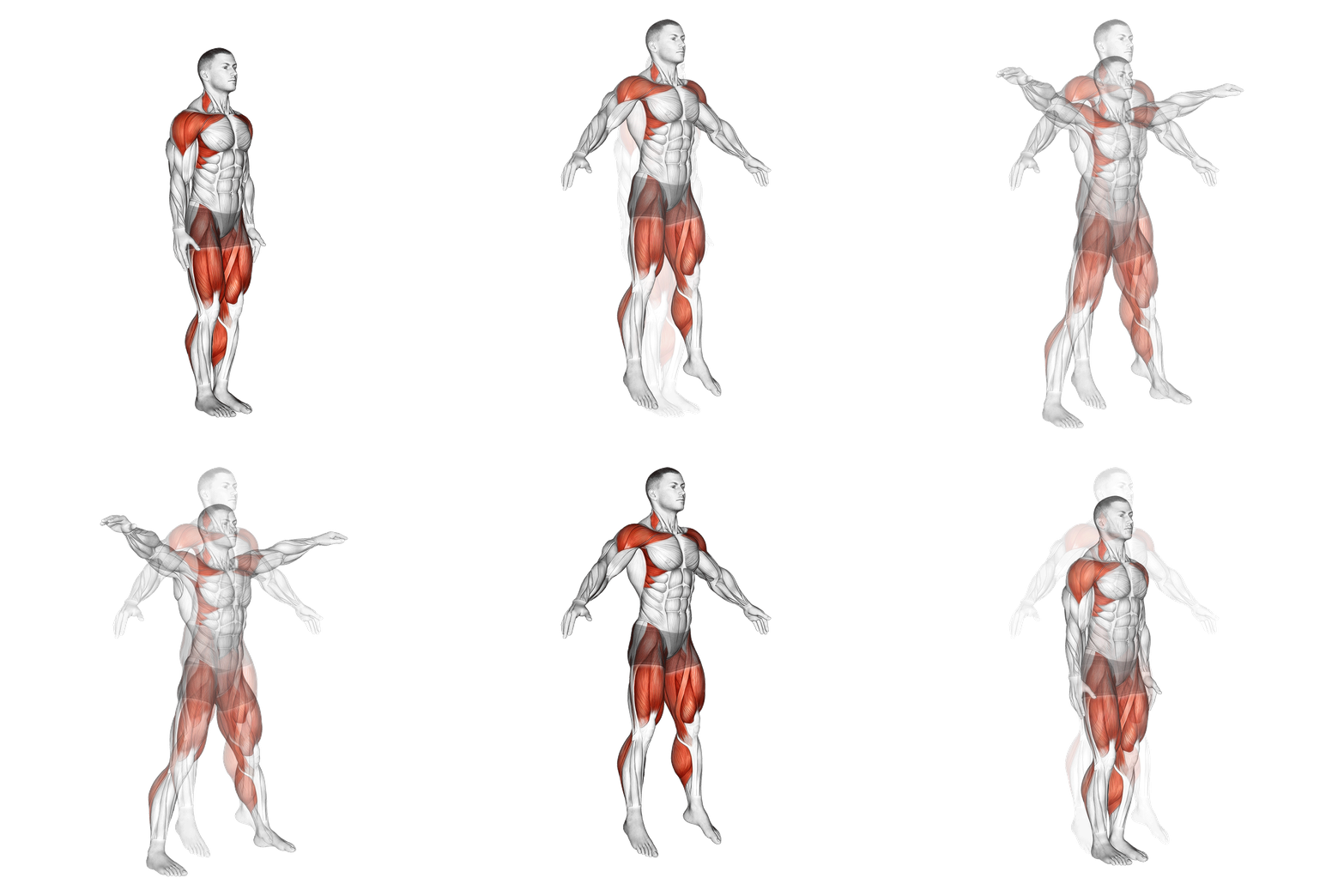
How to do a Astride Jumps - Step by step Plyometric exercise demonstration targeting Cardiovascular System, Calves, Hamstrings, Quadriceps

Begin in a standing position with your feet together and arms at your sides. Engage your core and keep your knees slightly bent.

Get Fitter, Faster

Level Up Your Fitness: Join our 💪 strong community in Fitness Volt Newsletter. Get daily inspiration, expert-backed workouts, nutrition tips, the latest in strength sports, and the support you need to reach your goals. Subscribe for free!

  1. Jump upward and spread your legs apart while simultaneously raising your arms overhead.
  2. Land softly with your feet wider than shoulder-width apart, bending your knees to absorb the impact.
  3. Immediately jump back to the starting position, bringing your feet together and lowering your arms.
  4. Repeat the movement continuously, maintaining a steady rhythm and controlled breathing.

Inhale as you jump and exhale as you land to maintain proper breathing throughout the exercise.

Common Mistakes to Avoid

  • Hard Landing: Failing to land softly can strain your joints. Always bend your knees upon landing to absorb impact.
  • Neglecting Core Engagement: Not engaging your core can lead to poor form and potential back strain. Keep your core tight to stabilize your body.
  • Insufficient Jump Width: Not spreading your legs wide enough reduces the exercise’s effectiveness. Aim for feet wider than shoulder-width apart.
  • Rushed Movements: Performing jumps too quickly can compromise form. Focus on controlled, deliberate movements for maximum benefit.
  • Improper Breathing: Ignoring breathing patterns can decrease performance. Inhale during the jump and exhale upon landing.

Benefits of Astride Jumps

  • Enhances cardiovascular health by increasing heart rate and improving circulation.
  • Strengthens lower body muscles, including quadriceps, hamstrings, glutes, and calves.
  • Boosts agility and coordination through dynamic movements and explosive jumps.
  • Improves core stability and balance by engaging abdominal muscles.
  • Burns calories effectively, aiding in weight management and fat loss.

Safety Tips and Precautions

Before starting Astride Jumps, ensure you have a safe workout environment. Choose a flat, non-slip surface free from obstructions to minimize injury risk. If training indoors, consider using an exercise mat for added traction. Outdoors, make sure the ground is even and clear of hazards.

Wear proper footwear that provides adequate support and cushioning to handle the impact of jumps. This helps protect your feet and joints while enhancing performance. Always engage your core and keep your knees aligned with your toes during jumps to prevent strain.

Listen to your body. If you experience pain or discomfort, stop the exercise immediately. Gradually build up your endurance and strength over time. Incorporating warm-up and cool-down routines can also help prevent injuries and improve overall performance.

Variations and Modifications

To keep your workouts engaging and cater to different fitness levels, consider these variations:

  • Modified Astride Jumps: Step out to the side instead of jumping for a low-impact option.
  • Weighted Astride Jumps: Hold light dumbbells to increase resistance and intensity.
  • Single-Leg Astride Jumps: Perform the movement on one leg to challenge balance and stability.

Other Variations

Exercise Variations

  • Jump Squat
    Level: Intermediate
    Targets: Calves, Core, Glutes, Hamstrings, Quadriceps, Hip Flexors, Lower Back
    Equipment: None | Movement: Jump | Type: Plyometric | Force Type: Plyometric | Compound
  • Cross Jacks
    Level: Intermediate
    Targets: Calves, Core, Deltoids, Glutes, Hamstrings, Quadriceps, Biceps, Core Muscles, Rhomboids, Trapezius, Triceps
    Equipment: None | Movement: Jump | Type: Plyometric | Force Type: Plyometric | Compound
  • Box Jump
    Level: Intermediate
    Targets: Calves, Core, Glutes, Hamstrings, Hip Flexors, Quadriceps, Core Muscles
    Equipment: Plyometric Box | Movement: Jump | Type: Plyometric | Force Type: Plyometric | Compound
  • Burpees
    Level: Intermediate
    Targets: Calves, Chest, Core, Glutes, Hamstrings, Quadriceps, Shoulders, Triceps, Core Muscles, Deltoids, Hip Flexors, Lower Back, Pectorals
    Equipment: None | Movement: Jump | Type: Plyometric | Force Type: Plyometric | Compound
  • Frog Hops
    Level: Intermediate
    Targets: Calves, Core, Glutes, Hamstrings, Hip Flexors, Quadriceps, Core Muscles
    Equipment: None | Movement: Jump | Type: Plyometric | Force Type: Plyometric | Compound
  • Knee Tucks
    Level: Intermediate
    Targets: Hip Flexors, Obliques, Quadriceps, Rectus Abdominis, Rectus Femoris, Sartorius, Transverse abdominis
    Equipment: Exercise Mat, None | Movement: Jump | Type: Plyometric | Force Type: Concentric | Isolation
  • Lateral Bounds
    Level: Intermediate
    Targets: Adductors, Calves, Core, Glutes, Hamstrings, Hip Flexors, Quadriceps, Core Muscles, Hip Adductors
    Equipment: None | Movement: Jump | Type: Plyometric | Force Type: Plyometric | Compound
  • Plyo Jack
    Level: Intermediate
    Targets: Calves, Core, Deltoids, Glutes, Hamstrings, Pectorals, Quadriceps, Hip Flexors, Shoulders
    Equipment: None | Movement: Jump | Type: Plyometric | Force Type: Plyometric | Compound
  • Low Jacks
    Level: Beginner
    Targets: Calves, Core, Glutes, Hamstrings, Hip Flexors, Quadriceps, Lower Back, Obliques
    Equipment: None | Movement: Jump | Type: Cardio | Force Type: Plyometric | Compound
  • High Knee Raise
    Level: Intermediate
    Targets: Gluteus Minimus, Hip Flexors, Iliopsoas, Quadriceps, Rectus Abdominis, Sartorius, Tensor Fasciae Latae, Abdominal Muscles, Calves, Obliques
    Equipment: None | Movement: Jump | Type: Cardio | Force Type: Concentric | Isolation

Alternatives to Astride Jumps

If you’re looking to mix up your routine or have limitations that prevent you from performing Astride Jumps, try these alternatives:

Get Fitter, Faster

Level Up Your Fitness: Join our 💪 strong community in Fitness Volt Newsletter. Get daily inspiration, expert-backed workouts, nutrition tips, the latest in strength sports, and the support you need to reach your goals. Subscribe for free!

  • Jumping Jacks: A classic cardio exercise that also raises heart rate and engages multiple muscle groups.
  • Side Lunges: Strengthen lower body muscles with less impact on the joints.
  • High Knees: Increase cardiovascular endurance while improving hip flexor strength.

Other Alternatives

Alternative Exercises

  • Crunch
    Level: Intermediate
    Targets: Obliques, Rectus Abdominis, Transverse abdominis, Erector Spinae, Hip Flexors, Rectus Femoris
    Equipment: None | Movement: Brace | Type: Plyometric | Force Type: Isometric | Compound
  • Low Cable Cross-Over
    Level: Intermediate
    Targets: Pectoralis major, Triceps brachii, Rhomboids, Triceps
    Equipment: Cable Machine, Adjustable Pulleys, Handle Attachments | Movement: Pull | Type: Strength | Force Type: Isotonic | Isolation
  • Dead Hangs
    Level: Intermediate
    Targets: Biceps brachii, Forearm Flexors, Latissimus Dorsi, Rhomboids, Shoulder Stabilizers, Teres Major, Trapezius, Core Muscles, Forearm muscles, Pectoralis major
    Equipment: Pull-Up Bar, Resistance Bands | Movement: Pull | Type: Strength | Force Type: Isometric | Isolation
  • Knuckle Push-Ups
    Level: Intermediate
    Targets: Core Muscles, Deltoids, Pectoralis major, Serratus Anterior, Triceps brachii, Pectorals, Triceps
    Equipment: None | Movement: Push | Type: Strength | Force Type: Isotonic | Compound
  • Single Leg Romanian Deadlift
    Level: Intermediate
    Targets: Calves, Core Muscles, Erector Spinae, Gluteus Maximus, Hamstrings, Quadratus lumborum, Adductors, Glutes
    Equipment: Dumbbells, Kettlebell, Barbell, Resistance Bands, Weight Plates, Yoga Mat | Movement: Hinge | Type: Strength | Force Type: Concentric | Compound
  • Asian Squat
    Level: Beginner
    Targets: Calves, Glutes, Hamstrings, Hip Adductors, Lower Back, Quadriceps, Adductors, Erector Spinae, Gastrocnemius, Gluteus Maximus, Hip Flexors, Quadratus lumborum, Rectus Abdominis, Soleus
    Equipment: None | Movement: Squat | Type: Mobility | Force Type: Isometric | Compound
  • Frog Squat
    Level: Intermediate
    Targets: Adductors, Calves, Core, Glutes, Hamstrings, Quadriceps, Erector Spinae, Gluteus Medius, Hip Flexors
    Equipment: None | Movement: Squat | Type: Strength | Force Type: Concentric | Compound
  • Dumbbell Rear Lateral Raise
    Level: Intermediate
    Targets: Deltoids, Rhomboids, Supraspinatus, Trapezius, Deltoid (Posterior), Infraspinatus, Teres Minor
    Equipment: Dumbbells, Workout Bench | Movement: Pull | Type: Strength | Force Type: Concentric | Isolation
  • Finger Curls
    Level: Beginner
    Targets: Flexor carpi radialis, Flexor carpi ulnaris, Flexor digitorum profundus, Flexor digitorum superficialis, Flexor Pollicis Longus, Palmaris longus
    Equipment: Dumbbells Or A Barbell, Weight Plates, Bench Or Chair | Movement: Pull | Type: Strength | Force Type: Isotonic | Isolation
  • Barbell Kickbacks
    Level: Intermediate
    Targets: Anconeus, Deltoids, Triceps brachii, Latissimus Dorsi, Teres Major
    Equipment: Barbell, Weight Plates, Bench | Movement: Push | Type: Strength | Force Type: Concentric | Isolation

Incorporate Astride Jumps into Your Workout Routine

Adding Astride Jumps to your fitness regimen can elevate your cardiovascular health and boost lower body strength. Whether you’re a beginner or an experienced athlete, this exercise offers scalable intensity levels to match your needs. Remember to focus on proper form, listen to your body, and enjoy the process of enhancing your fitness journey.

Frequently Asked Questions

How often should I include Astride Jumps in my workout routine?

Aim to perform Astride Jumps 2 to 3 times per week, allowing for rest days in between to enable muscle recovery and prevent overuse injuries.

Can beginners perform Astride Jumps?

Yes, beginners can perform Astride Jumps by starting with lower intensity and smaller jumps. Focus on mastering the form before increasing speed or height.

What muscles do Astride Jumps target?

Astride Jumps primarily target the quadriceps, hamstrings, glutes, and calves, while also engaging the core and upper body muscles during the overhead arm movements.

Are Astride Jumps suitable for weight loss?

Yes, Astride Jumps are a high-intensity exercise that burns calories effectively, contributing to weight loss when combined with a balanced diet and regular exercise.

Final Thoughts

Incorporating Astride Jumps into your workout routine is a powerful way to enhance cardiovascular health, build lower body strength, and improve overall fitness. By focusing on proper technique and gradually increasing intensity, you can reap the full benefits of this dynamic exercise. Remember to stay consistent, listen to your body, and enjoy the journey toward better health.

Interested in measuring your progress? Check out our strength standards for Side Lunge, Jumping Jack, Lunge.

Stay on top of the latest fitness news and updates by adding Fitness Volt to your Google News feed: Follow us on Google News You can also follow us on Twitter, Facebook, Instagram, and YouTube for even more content.

If you have any questions or need further clarification about this article, please leave a comment below, and Ash will get back to you as soon as possible.

Stay Updated with FitnessVolt Get the latest fitness news, workouts & nutrition tips delivered to your feed

Tip: If you're signed in to Google, tap Follow.

Share This Article
Ash is a highly respected fitness expert and certified personal trainer through the American Council on Exercise (ACE). With a B.A. in biology from Rutgers and an M.S. in Exercise Science (Kinesiology) from CBU, she brings a wealth of knowledge and expertise to her work. Ash is dedicated to helping people achieve their fitness and health goals through personalized training and nutrition plans. With a passion for fitness and a deep understanding of the science behind healthy living, she is able to create effective and sustainable programs that deliver real results. Whether you're looking to lose weight, build muscle, or just feel better in your own skin, Ash is the expert you can trust to guide you on your journey to a healthier and happier life.
Leave a Comment