Back squats and front squats both build strong legs, but bar position changes torso angle, joint demands, loading, and how each lift fits your program.
This legacy FitnessVolt article has been rebuilt as a current evergreen guide. The goal is not to make the topic sound complicated. The goal is to give lifters a usable framework: what matters, what does not, and how to apply the science without losing the plot in the gym.
What is the main difference?
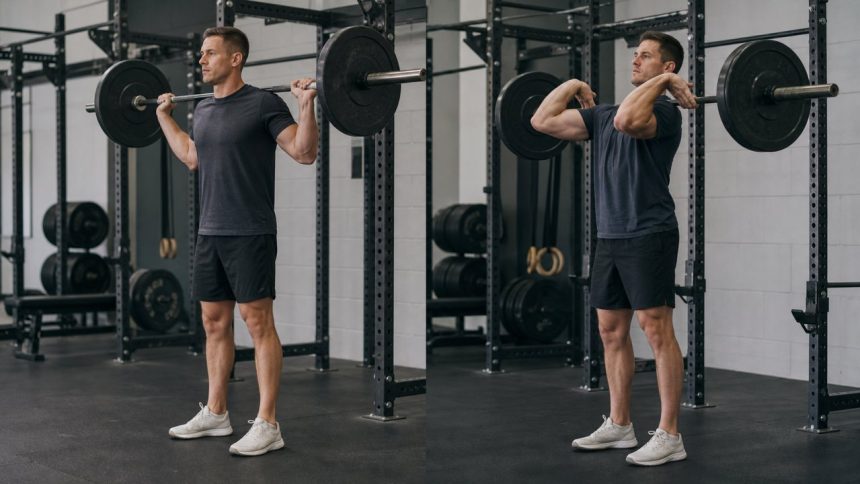
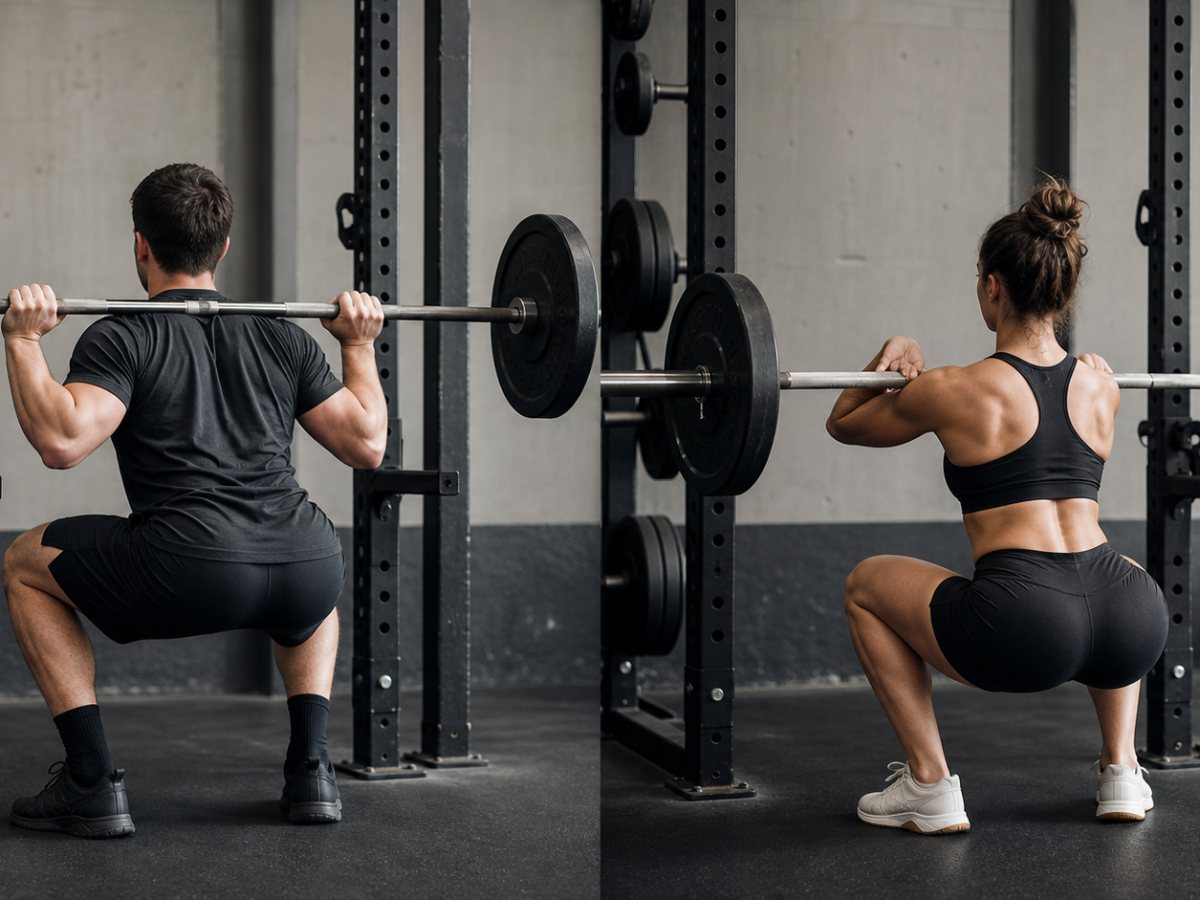
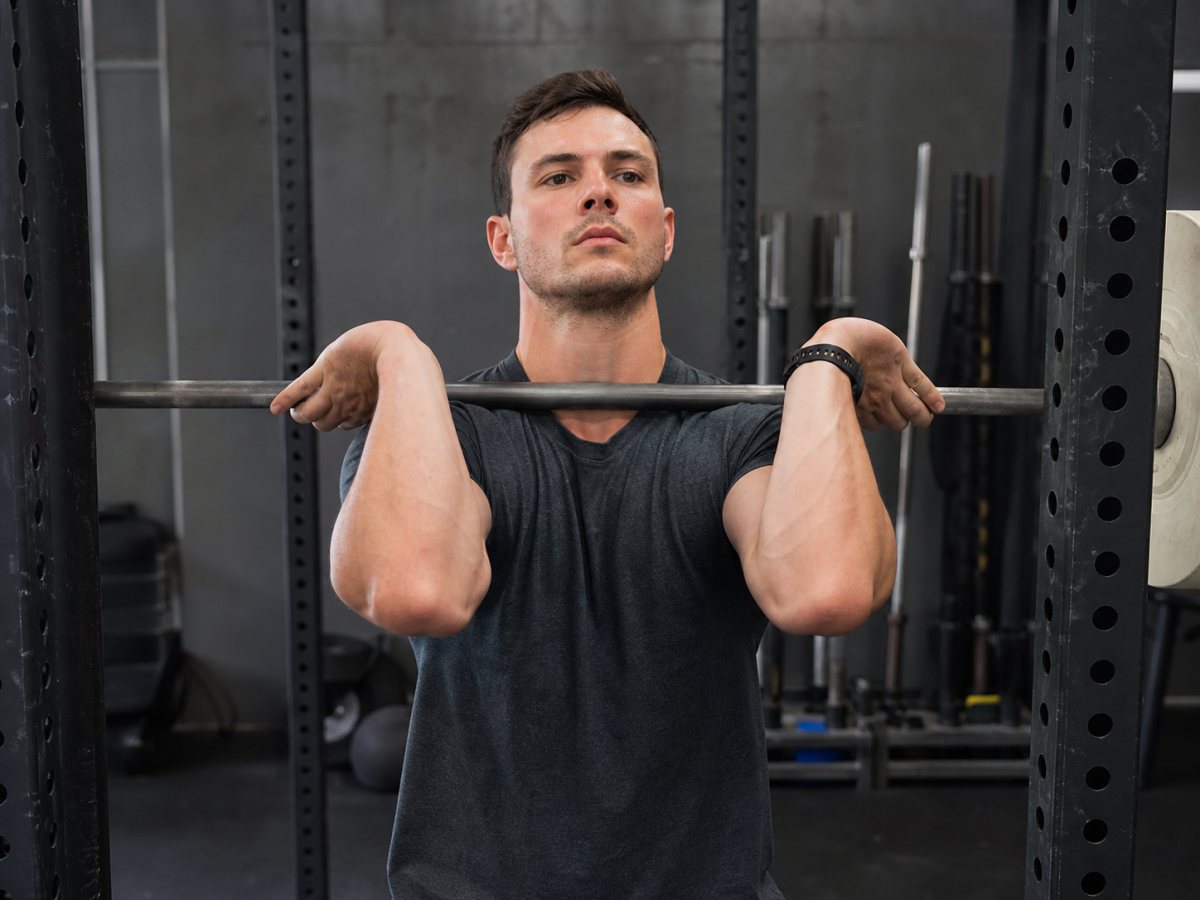
The main difference between a back squat and front squat is bar position. In a back squat, the bar rests across the upper back. In a front squat, the bar rests across the front delts and clavicles with the elbows high. That one change affects torso angle, loading, mobility, and muscle emphasis.
The movements still share the same basic squat pattern. The ankles, knees, hips, trunk, and upper back all work. But the front-loaded bar pulls the lifter forward sooner, which usually forces a more upright torso and limits how much weight most lifters can use.
Which muscles do back squats train?
Back squats train the quads, glutes, adductors, hamstrings, calves, trunk, and spinal erectors. Because the bar is on the back, many lifters can use more load than they can front squat. That makes the back squat a powerful strength and mass builder when technique and recovery are managed.
A low-bar back squat often shifts more demand toward the hips and posterior chain. A high-bar back squat often looks more upright and quad-heavy. Neither is automatically superior. The best choice depends on your sport, anatomy, mobility, and goal.
Which muscles do front squats train?
Front squats train the quads, glutes, upper back, trunk, and adductors with a stronger demand on upright posture. Most lifters cannot front squat as much as they back squat, but the lighter absolute load does not make it easy. The brace and upper back often become the limiting factors.
Front squats are useful for Olympic lifting carryover, quad-focused training, and lifters who feel better with a more upright squat. They can also expose weak bracing quickly because the bar will roll or pull the torso down if positions are loose.
Which is better for quad growth?
Front squats are often excellent for quad-focused work because the upright torso and knee travel keep the quads involved. Back squats can also build big quads, especially high-bar versions with adequate depth. The best quad builder is the squat you can load, control, and recover from consistently.
If front rack mobility limits the front squat before your quads are challenged, use high-bar squats, safety-bar squats, hack squats, or leg presses. The goal is not loyalty to one lift. The goal is a useful stimulus.
| Feature | Back Squat | Front Squat |
|---|---|---|
| Bar position | Upper back | Front delts and clavicles |
| Typical load | Heavier | Lighter |
| Torso angle | More variable | Usually more upright |
| Common limiter | Hips, trunk, back position | Front rack and upper back |
| Best use | Strength and total lower-body loading | Quad focus and upright bracing |
Which is better for strength?
Back squats are usually better for maximal lower-body strength because most lifters can use more load and powerlifting tests the back squat, not the front squat. Front squats still build strength, but they are more often used as an assistance lift or sport-specific variation.
A strength block might use back squats as the main lift and front squats as lighter secondary work. A weightlifter might reverse that emphasis because front squat strength supports cleans. Context decides.
Which is easier on the lower back?
Front squats may feel easier on the lower back for some lifters because the torso stays more upright and the absolute load is usually lower. But they are not automatically back-safe. A poor front squat can still collapse forward and stress the spine. A well-executed back squat can be perfectly tolerable.
If back comfort is the issue, compare technique, load, depth, fatigue, and variation before blaming the exercise. Our guides to squat biomechanics and squat safety cover those filters in more detail.
What mobility does each lift need?
Back squats need enough shoulder comfort to hold the bar, enough ankle and hip mobility to hit the intended depth, and enough trunk control to keep the bar over midfoot. Front squats add a front-rack requirement: wrists, lats, triceps, shoulders, and upper back must tolerate the position.
If the front rack hurts, try straps, a cross-arm rack, mobility work, or a safety-bar squat. If the back squat shoulder position hurts, try a different grip width, high-bar position, safety-bar squat, or goblet work while you address the limitation.
| Goal | Better First Choice | Why |
|---|---|---|
| Powerlifting strength | Back squat | It is the tested competition lift |
| Olympic lifting carryover | Front squat | It supports the clean receiving position |
| Quad-focused hypertrophy | Either | Use the one you can load with control |
| Back-sensitive variation | Test front or safety-bar squat | Lower load and upright torso may help |
How should you program both?
Use the back squat when you want heavy loading, broad lower-body strength, and the most direct carryover to powerlifting. Use the front squat when you want an upright squat, quad emphasis, clean carryover, or a lighter secondary squat that still demands serious effort.
A simple week might use heavy back squats on day one and moderate front squats on day two. Another lifter might front squat first, then use back squats for volume. The best split is the one that improves performance without turning every squat day into a recovery problem.
FitnessVolt rule of thumb
Choose the squat that matches the job. Back squats are usually the better main lift for total loading. Front squats are usually the better teacher for upright bracing and quad-focused control. Most serious lifters can benefit from both, but not always in the same phase.
If you can only pick one, pick the version you can perform through useful range, progress over months, and recover from. Then use the other as an accessory when it solves a real problem.
Can beginners use both squat variations?
Beginners can use both, but they usually should not try to master both under heavy load at the same time. Start with the version that is easiest to control, then use the other as light skill practice. Many new lifters learn the goblet squat first, move to a high-bar back squat, and later add front squats when the rack position and brace are ready.
A useful beginner rule is to keep the main squat simple and the second squat educational. If back squats are the main lift, front squats can be light sets of three to six reps focused on posture. If front squats are the main lift for a weightlifting goal, back squats can add heavier leg volume later in the week. The second lift should support the first, not compete with it.
What should you do if both feel awkward?
If both front and back squats feel awkward, solve the simplest constraint first. Check shoe choice, stance width, bracing, depth target, and load. Then test easier variations such as goblet squats, box squats, safety-bar squats, or split squats. A temporary regression is not failure. It is how lifters build the positions that make barbell squats productive later.
Sources
- Gullett, J. C., et al. (2009). A biomechanical comparison of back and front squats in healthy trained individuals. Journal of Strength and Conditioning Research.
- Schoenfeld, B. J. (2010). Squatting kinematics and kinetics and their application to exercise performance. Journal of Strength and Conditioning Research.
- Escamilla, R. F. (2001). Knee biomechanics of the dynamic squat exercise. Medicine and Science in Sports and Exercise.
- Cotter, J. A., et al. (2013). Knee joint kinetics in relation to commonly prescribed squat loads and depths. Journal of Strength and Conditioning Research.