Barbell Skier Exercise: Sculpt Stronger, More Defined Delts

Maximize Shoulder Strength and Stability with Each Explosive Lift

Tom Miller, CSCS
By
Tom Miller, CSCS
Tom Miller, CSCS, is a Sr. Editor & Content Strategist with 10 years of experience in Powerlifting and Personal Training. As a Certified Strength and Conditioning...
6 Min Read
How to do Barbell Skier

The Barbell Skier exercise effectively enhances shoulder power by specifically targeting your deltoid muscles, vital for shoulder stability and mobility. Adding this exercise to your routine promotes broader shoulders and improves upper body strength, facilitating everyday activities and boosting performance in various sports.

This dynamic movement focuses on the anterior and lateral deltoids while also engaging the core, back, and legs, making it a full-body challenge that increases strength and coordination. For optimal results and to prevent injury, incorporate the Barbell Skier into your workouts two to three times a week. Begin with lighter weights to master your form before progressing to heavier resistance.

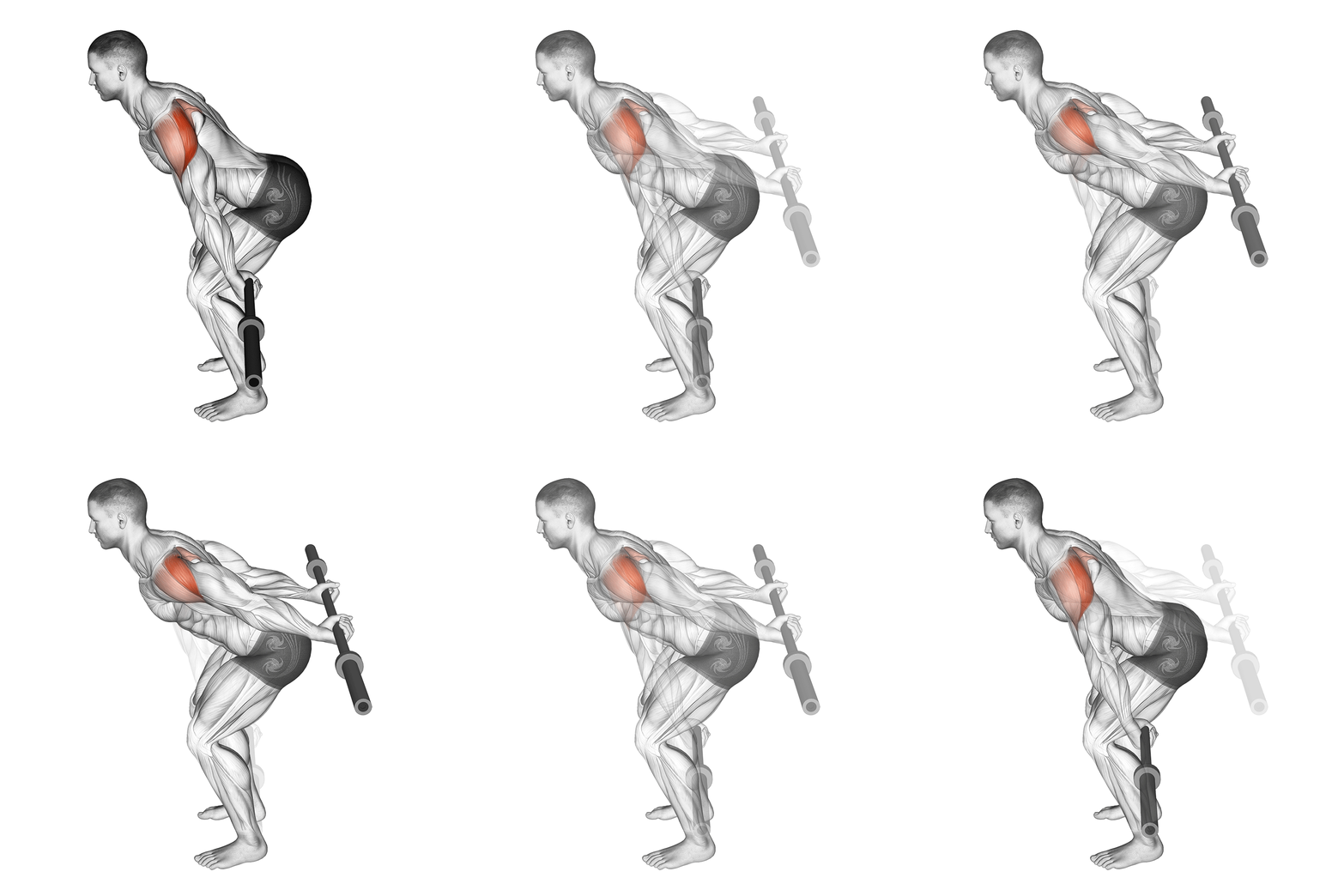
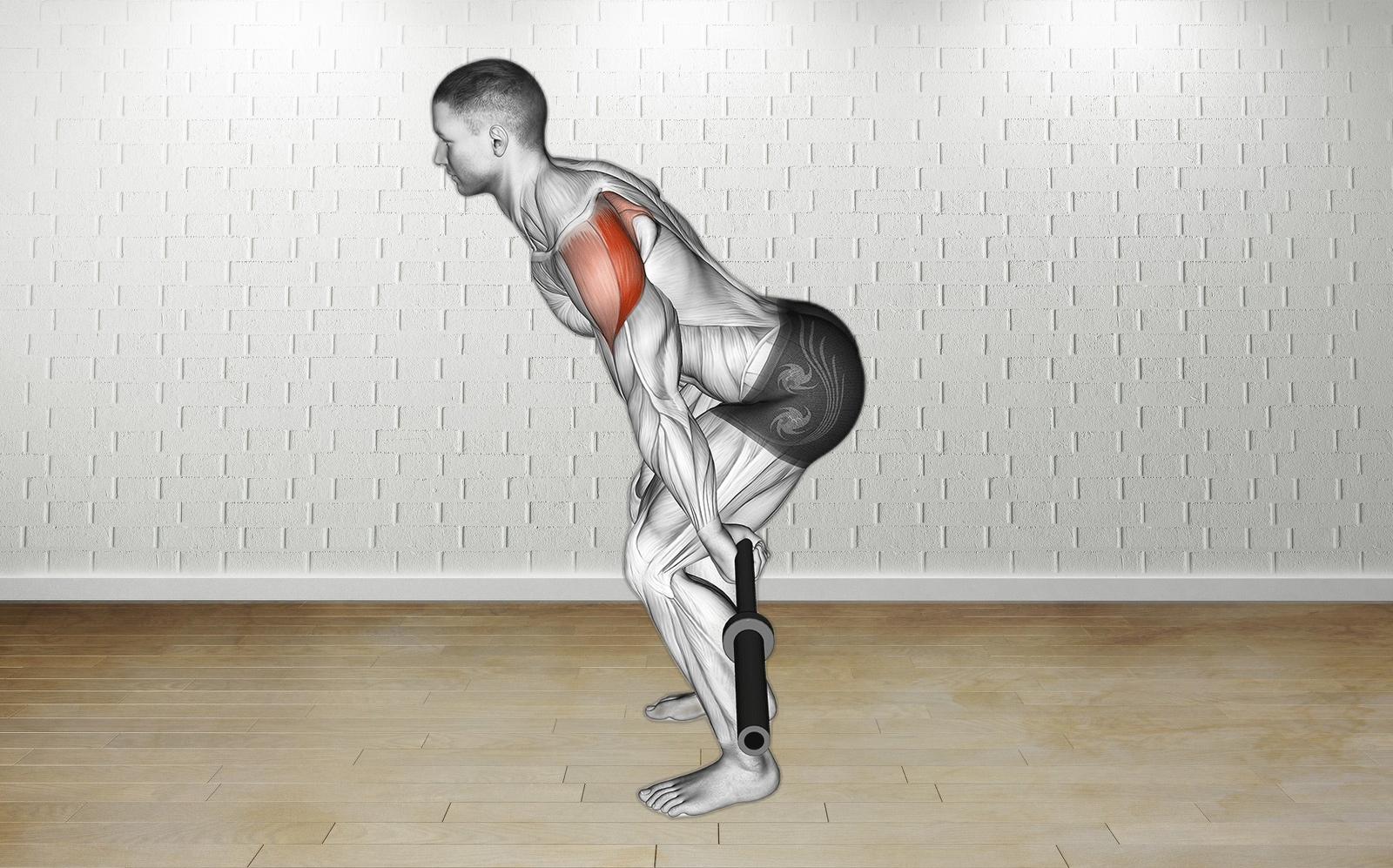
To perform the exercise, stand with feet shoulder-width apart, grasping a barbell at hip level. Hinge at the hips to lower the barbell toward your knees while keeping your back flat. Explosively lift the barbell to shoulder height, flaring your elbows outward, and then return to the starting position with control. Focus on maintaining proper form to effectively engage your muscles and avoid strain. With just a barbell needed, the Barbell Skier is an impactful addition to any strength training program, enhancing shoulder strength and overall athletic performance.

Barbell Skier Details
Basic Information
Body Part
Shoulders
Primary Muscles
Secondary Muscles
Equipment
Barbell
Exercise Characteristics
Exercise Type
Power
Movement Pattern
Hinge
Force Type
Concentric
Unilateral/Bilateral
Unilateral
Compound/Isolation
Compound
Bodyweight Exercise
Yes
Training Parameters
Difficulty Level
Intermediate
Target Training Goals
Functional Fitness
Suitable Workout Phases
Main workout
Risk Level
Moderate
Weight Category
Bodyweight
Recommended Rep Ranges
GoalRep Range
Strength5-8
Hypertrophy8-12
Endurance12-15
Power1-5
Muscular endurance12-20
Stability core8-12
Flexibility mobilityVaries

How to Do a Barbell Skier

How to do a Barbell Skier - Step by step Power exercise demonstration targeting Delts, Core, Triceps

Begin by standing upright with your feet shoulder-width apart, holding a barbell with an overhand grip at hip level, arms slightly bent. Keep your core engaged and shoulders back.

Get Fitter, Faster

Level Up Your Fitness: Join our 💪 strong community in Fitness Volt Newsletter. Get daily inspiration, expert-backed workouts, nutrition tips, the latest in strength sports, and the support you need to reach your goals. Subscribe for free!

  1. With a slight bend in your knees, hinge at the hips to lower the barbell towards your knees while maintaining a flat back.
  2. As you return to standing, explosively lift the barbell up to shoulder height, allowing your elbows to flare out to the sides.
  3. Lower the barbell back to the starting position in a controlled manner, engaging your delts throughout the movement.
  4. Repeat for the desired number of repetitions, ensuring a smooth and steady tempo.

Inhale as you lower the barbell and exhale during the upward movement to maintain proper breathing rhythm.

Common Mistakes

  • Improper Back Position: A common mistake is rounding the back during the hinge. This can lead to strain and injury. To avoid this, focus on maintaining a neutral spine throughout the exercise by engaging your core and keeping your chest up.
  • Using Excessive Weight: Many lifters start with a weight that is too heavy, compromising form and effectiveness. Start with a manageable weight to focus on mastering the movement before increasing the load.
  • Neglecting Elbow Position: Allowing the elbows to drop in rather than flaring out during the lift can diminish shoulder engagement. Concentrate on keeping your elbows wide as you raise the barbell to enhance the activation of the deltoids.
  • Fast Tempo: Performing the exercise too quickly can lead to loss of control and poor form. Maintain a slow and controlled tempo during both the ascent and descent phases to maximize muscle engagement and minimize injury risk.
  • Poor Breathing Technique: Holding your breath can lead to increased intra-abdominal pressure and dizziness. Remember to synchronize your breathing with the movement; inhale while lowering, and exhale while lifting.

Benefits

  • Enhances shoulder strength by targeting the deltoids, promoting muscular development and definition.
  • Improves overall upper body coordination, as the explosive movement engages multiple muscle groups simultaneously.
  • Increases core stability due to the need for engagement throughout the lifting phase, benefiting overall posture.
  • Promotes flexibility and mobility in the shoulder joints, contributing to a well-rounded fitness routine.
  • Can boost cardiovascular endurance when performed with higher repetitions, integrating strength training with aerobic benefits.

Exercise Variations

  • Kettlebell Swings
    Level: Intermediate
    Targets: Core, Forearms, Gluteus Maximus, Hamstrings, Lower Back, Quadriceps, Shoulders, Trapezius, Glutes
    Equipment: Kettlebell | Movement: Hinge | Type: Power | Force Type: Concentric | Compound
  • Kettlebell Hang Clean
    Level: Intermediate
    Targets: Biceps, Calves, Core, Deltoids, Forearms, Glutes, Hamstrings, Quadriceps, Trapezius, Biceps brachii, Erector Spinae, Forearm muscles, Rhomboids
    Equipment: Kettlebell | Movement: Hinge | Type: Power | Force Type: Concentric | Compound
  • Split Jerk
    Level: Advanced
    Targets: Calves, Core, Glutes, Hamstrings, Quadriceps, Shoulders, Trapezius, Triceps, Upper Back, Abdominals, Deltoids, Erector Spinae, Gluteus Maximus, Pectoralis major, Rhomboids, Triceps brachii
    Equipment: Barbell, Bumper Plates, Weightlifting Platform, Lifting Shoes, Chalk, Wrist Wraps, Belt | Movement: Push | Type: Power | Force Type: Concentric | Compound
  • One-leg Hyperextension
    Level: Intermediate
    Targets: Gluteus Maximus, Multifidus
    Equipment: Bench, Ankle Weights Or Resistance Bands | Movement: Hinge | Type: Strength | Force Type: Concentric | Isolation
  • 15 Best Glute Exercises For Size and Strength
    Level: Intermediate
    Targets: Adductors, Erector Spinae, Gluteus Maximus, Gluteus Medius, Gluteus Minimus, Hamstrings, Quadriceps, Abductors, Calves, Core, Hip Flexors, Tensor Fasciae Latae
    Equipment: Dumbbells, Barbell, Resistance Bands, Kettlebell, Stability Ball, Step Platform, Cable Machine, Leg Press Machine, Smith Machine, Ankle Weights, Foam Roller, Exercise Mat, Exercise Bench, Glute Bridge Pad, Medicine | Movement: Hinge | Type: Strength | Force Type: Concentric | Compound
  • Trap Bar Deadlift
    Level: Intermediate
    Targets: Core Muscles, Erector Spinae, Gluteus Maximus, Hamstrings, Quadriceps, Rhomboids, Trapezius, Adductors, Core, Forearms, Glutes
    Equipment: Trap Bar, Weight Plates, Gym Floor Or Lifting Platform, Lifting Shoes, Chalk, Weightlifting Belt. | Movement: Hinge | Type: Strength | Force Type: Concentric | Compound
  • Hip Thrust
    Level: Intermediate
    Targets: Erector Spinae, Gluteus Maximus, Gluteus Medius, Hamstrings, Quadriceps, Adductors, Gluteus Minimus
    Equipment: Barbell, Weight Plates, Bench, Mat | Movement: Hinge | Type: Strength | Force Type: Concentric | Compound
  • Lying Single Straight-Leg Hip Extension
    Level: Beginner
    Targets: Core Muscles, Erector Spinae, Gluteus Maximus, Hamstrings, Adductors, Gluteus Medius
    Equipment: Exercise Mat, Resistance Band | Movement: Hinge | Type: Strength | Force Type: Concentric | Isolation
  • Barbell One-Leg Hip Thrust
    Level: Intermediate
    Targets: Core Muscles, Gluteus Maximus, Gluteus Medius, Hamstrings, Quadriceps, Adductors, Calves, Core, Glutes
    Equipment: Barbell, Weight Plates, Bench Or Elevated Surface, Mat | Movement: Hinge | Type: Strength | Force Type: Concentric | Compound
  • Flat Bench Hyperextension
    Level: Intermediate
    Targets: Erector Spinae, Gluteus Maximus, Hamstrings, Latissimus Dorsi, Multifidus, Rhomboids, Trapezius
    Equipment: Flat Bench, Weight Plates, Mat. | Movement: Hinge | Type: Strength | Force Type: Eccentric | Isolation

Alternative Exercises

  • Split Jerk
    Level: Advanced
    Targets: Calves, Core, Glutes, Hamstrings, Quadriceps, Shoulders, Trapezius, Triceps, Upper Back, Abdominals, Deltoids, Erector Spinae, Gluteus Maximus, Pectoralis major, Rhomboids, Triceps brachii
    Equipment: Barbell, Bumper Plates, Weightlifting Platform, Lifting Shoes, Chalk, Wrist Wraps, Belt | Movement: Push | Type: Power | Force Type: Concentric | Compound
  • Pike Push-Ups
    Level: Intermediate
    Targets: Core Muscles, Deltoids, Pectorals, Serratus Anterior, Triceps, Upper Trapezius, Rhomboids
    Equipment: None | Movement: Push | Type: Strength | Force Type: Concentric | Compound
  • Cable Y Raise
    Level: Intermediate
    Targets: Deltoids, Rhomboids, Serratus Anterior, Supraspinatus, Trapezius, Infraspinatus, Teres Minor
    Equipment: Cable Machine, Cable Handles | Movement: Pull | Type: Strength | Force Type: Concentric | Isolation
  • Bent-Over Dumbbell Lateral Raise
    Level: Intermediate
    Targets: Deltoids, Infraspinatus, Rhomboids, Supraspinatus, Trapezius, Deltoid (Posterior), Teres Minor
    Equipment: Dumbbells, Weight Bench Or Sturdy Surface | Movement: Pull | Type: Strength | Force Type: Concentric | Isolation
  • Kettlebell Bent Press
    Level: Intermediate
    Targets: Deltoids, Erector Spinae, Latissimus Dorsi, Obliques, Quadratus lumborum, Trapezius, Triceps, Gluteus Maximus, Serratus Anterior
    Equipment: Kettlebell | Movement: Rotation | Type: Strength | Force Type: Concentric | Compound
  • Seated Neutral-Grip Dumbbell Overhead Press
    Level: Intermediate
    Targets: Deltoids, Serratus Anterior, Trapezius, Triceps brachii, Upper Pectorals, Deltoid (Posterior), Pectoralis major, Rhomboids
    Equipment: Dumbbells, Bench Or Chair With Back Support. | Movement: Push | Type: Strength | Force Type: Concentric | Compound
  • Plate Front Raise
    Level: Intermediate
    Targets: Core Muscles, Deltoids, Serratus Anterior, Supraspinatus, Trapezius, Anterior Deltoid, Lateral Deltoid, Upper Pectorals
    Equipment: Dumbbells, Weight Plates, Resistance Bands, Cable Machine, Barbell. | Movement: Push | Type: Strength | Force Type: Concentric | Isolation
  • Cable One-Arm Lateral Raise
    Level: Intermediate
    Targets: Deltoid, Serratus Anterior, Supraspinatus, Trapezius, Deltoid (Posterior), Rhomboids
    Equipment: Cable Machine, Single Handle Attachment. | Movement: Unknown | Type: Strength | Force Type: Concentric | Isolation
  • Bent Over Rear Delt Fly
    Level: Intermediate
    Targets: Infraspinatus, Middle Trapezius, Posterior Deltoid, Rhomboids, Teres Minor, Latissimus Dorsi, Supraspinatus, Trapezius
    Equipment: Dumbbells, Bench, Resistance Bands | Movement: Pull | Type: Strength | Force Type: Eccentric | Isolation
  • Dumbbell Rear Delt Row
    Level: Intermediate
    Targets: Biceps brachii, Deltoids, Latissimus Dorsi, Rhomboids, Trapezius, Erector Spinae, Infraspinatus, Teres Minor
    Equipment: Dumbbells, Bench | Movement: Pull | Type: Strength | Force Type: Concentric | Isolation

Safety Precautions

Before beginning the Barbell Skier exercise, it is crucial to ensure that your body is adequately warmed up to prevent injuries. Incorporate dynamic stretches focusing on your shoulders, hips, and legs to increase blood flow and enhance flexibility. A proper warm-up helps enhance performance and prepares your body for the demands of the movement.

When executing the Barbell Skier, proper form is essential to avoid strain on your back and shoulders. Keep your core engaged and back flat throughout the exercise. Avoid rounding your back as you lower the barbell, as this can lead to serious injuries over time. Instead, focus on hinging at the hips while maintaining a neutral spine to ensure that the load is distributed evenly across your body.

Lastly, consider the weight of the barbell you are using. It’s important to start with a manageable weight that allows you to maintain proper form. Gradually increase the weight only as you become more comfortable with the movement. Utilizing weights that are too heavy may compromise your technique and increase the risk of injury.

Stay on top of the latest fitness news and updates by adding Fitness Volt to your Google News feed: Follow us on Google News You can also follow us on Twitter, Facebook, Instagram, and YouTube for even more content.

If you have any questions or need further clarification about this article, please leave a comment below, and Tom will get back to you as soon as possible.

Stay Updated with FitnessVolt Get the latest fitness news, workouts & nutrition tips delivered to your feed
Follow on Google News
Share This Article
Tom Miller, CSCS, is a Sr. Editor & Content Strategist with 10 years of experience in Powerlifting and Personal Training. As a Certified Strength and Conditioning Specialist, he is dedicated to delivering informative, engaging, and reliable health and fitness content. His work has been featured on websites including the-sun.com, Well+Good, Bleacher Report, Muscle and Fitness, UpJourney, Business Insider, NewsBreak and more.
Leave a Comment