
Build Strong Forearms with Barbell Reverse Wrist Curls

Enhance Grip Strength and Forearm Definition

Tom Miller, CSCS
By
Tom Miller, CSCS
Tom Miller, CSCS, is a Sr. Editor & Content Strategist with 10 years of experience in Powerlifting and Personal Training. As a Certified Strength and Conditioning...
5 Min Read
How to do Barbell Reverse Wrist Curl

The Barbell Reverse Wrist Curl is a highly effective exercise for developing forearm strength and enhancing grip power. By targeting the extensor muscles along the back of your forearms, this movement contributes to balanced arm development and supports overall upper body strength. Incorporating this exercise into your routine can improve performance in daily activities and other lifts that require a strong grip.

Include the Barbell Reverse Wrist Curl in your workout two to three times a week, allowing at least 48 hours between sessions for muscle recovery. Focus on proper form by avoiding momentum and starting with a manageable weight to prevent injury. Beginners or those with wrist concerns should use a lighter barbell or even body weight until comfortable progressing. Maintain controlled motions and pause at the top of each lift to maximize muscle contraction. Consistency with this exercise will lead to significant improvements in forearm strength and grip, enhancing your fitness journey.

Barbell Reverse Wrist Curl Details
Basic Information
Body Part
Lower Arms
Primary Muscles
Secondary Muscles
Equipment
Barbell
Exercise Characteristics
Exercise Type
Strength
Movement Pattern
Pull
Force Type
Eccentric
Unilateral/Bilateral
Unilateral
Compound/Isolation
Isolation
Bodyweight Exercise
Yes
Training Parameters
Difficulty Level
Intermediate
Target Training Goals
Hypertrophy
Suitable Workout Phases
Main workout
Risk Level
Low
Weight Category
Bodyweight
Recommended Rep Ranges
GoalRep Range
Strength6-8
Hypertrophy8-12
Endurance12-15
Power1-6
Muscular endurance12-15
Stability core8-12
Flexibility mobility8-12

How to Do a Barbell Reverse Wrist Curl
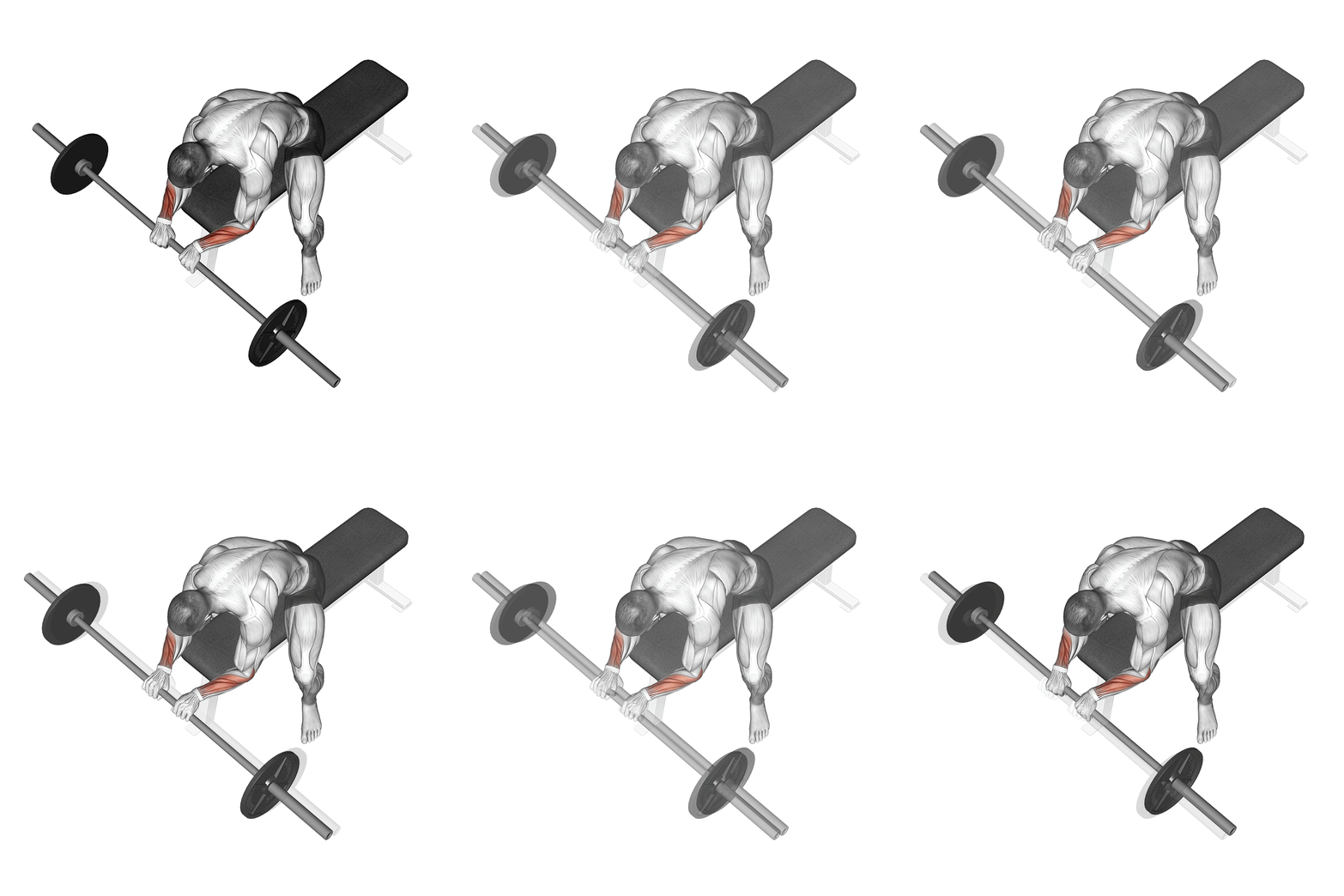
How to do a Barbell Reverse Wrist Curl - Step by step Strength exercise demonstration targeting Forearms, Biceps, Brachialis

To perform the Barbell Reverse Wrist Curl:

  1. Stand upright with feet shoulder-width apart, holding a barbell with an overhand grip (palms facing down) resting against your thighs.
  2. Keep your elbows close to your body and lift the barbell by extending your wrists upward.
  3. Raise the barbell until your wrists are fully flexed, maintaining tension in your forearms.
  4. Pause briefly at the top to enhance muscle contraction.
  5. Slowly lower the barbell back to the starting position, fully extending your wrists.

Inhale as you prepare and exhale as you lift the barbell to maintain proper breathing throughout the exercise.

Get Fitter, Faster

Level Up Your Fitness: Join our 💪 strong community in Fitness Volt Newsletter. Get daily inspiration, expert-backed workouts, nutrition tips, the latest in strength sports, and the support you need to reach your goals. Subscribe for free!

Common Mistakes to Avoid

  • Using Excessive Weight: Many individuals load too much weight onto the barbell, which can compromise their form. To avoid this, start with a manageable weight that allows for controlled movements and a full range of motion.
  • Flaring Elbows: Allowing elbows to drift away from the body reduces the effectiveness of the exercise. Keep elbows tucked close throughout the movement to maintain tension on the forearms.
  • Incomplete Range of Motion: Not fully extending the wrists or not lifting the barbell high enough diminishes the exercise’s benefits. Ensure you lift until your forearms are vertical and fully extend your wrists at the bottom for optimal muscle engagement.
  • Neglecting Breathing: Holding your breath during the movement can hinder performance and increase tension. Follow the breathing pattern of inhaling while lifting and exhaling while lowering the barbell.
  • Performing Fast Reps: Quick, jerky movements can lead to injury and less effective workouts. Focus on slow, controlled repetitions to maximize muscle contraction and minimize the risk of strain.

Benefits

  • Enhanced Forearm Strength: This exercise specifically targets the extensor muscles of the forearm, helping to increase overall grip strength.
  • Improved Wrist Stability: Regularly practicing reverse wrist curls contributes to better wrist stability, which is essential for various daily activities and sports.
  • Injury Prevention: Strengthening the forearms can reduce the risk of repetitive strain injuries, especially for those involved in activities that require a strong grip.
  • Balanced Muscle Development: Incorporating this exercise into your routine promotes balanced muscle development between the forearm flexors and extensors.
  • Better Performance in Other Lifts: Increased forearm strength can lead to enhanced performance in other weightlifting exercises, such as deadlifts and pull-ups, due to improved grip strength.

Exercise Variations

  • Battle Ropes Exercise
    Level: Intermediate
    Targets: Back, Biceps, Core, Forearms, Legs, Shoulders, Triceps
    Equipment: Battle Ropes | Movement: Pull | Type: Cardio | Force Type: Isotonic | Compound
  • Kettlebell Alternating Hang Clean
    Level: Intermediate
    Targets: Biceps, Calves, Forearms, Glutes, Hamstrings, Lower Back, Quadriceps, Shoulders, Upper Back, Abdominals, Biceps brachii, Deltoids, Erector Spinae, Forearm muscles, Gluteus Maximus, Trapezius
    Equipment: Kettlebell | Movement: Pull | Type: Power | Force Type: Concentric | Compound
  • The Jefferson Deadlift
    Level: Intermediate
    Targets: Core, Forearms, Glutes, Hamstrings, Lower Back, Quadriceps, Upper Back, Adductors, Traps
    Equipment: Barbell, Weight Plates, Lifting Platform Or Floor Mat, Weightlifting Shoes, Chalk. | Movement: Hinge | Type: Strength | Force Type: Isotonic | Compound
  • Barbell Sumo Deadlift
    Level: Intermediate
    Targets: Adductors, Erector Spinae, Forearms, Glutes, Hamstrings, Quadriceps, Trapezius, Core, Traps
    Equipment: Barbell, Weight Plates, Weightlifting Belt, Lifting Platform Or Flat Surface. | Movement: Hinge | Type: Strength | Force Type: Concentric | Compound
  • Kettlebell Swings
    Level: Intermediate
    Targets: Core, Forearms, Gluteus Maximus, Hamstrings, Lower Back, Quadriceps, Shoulders, Trapezius, Glutes
    Equipment: Kettlebell | Movement: Hinge | Type: Power | Force Type: Concentric | Compound
  • Kettlebell Hang Clean
    Level: Intermediate
    Targets: Biceps, Calves, Core, Deltoids, Forearms, Glutes, Hamstrings, Quadriceps, Trapezius, Biceps brachii, Erector Spinae, Forearm muscles, Rhomboids
    Equipment: Kettlebell | Movement: Hinge | Type: Power | Force Type: Concentric | Compound
  • Low Cable Cross-Over
    Level: Intermediate
    Targets: Pectoralis major, Triceps brachii, Rhomboids, Triceps
    Equipment: Cable Machine, Adjustable Pulleys, Handle Attachments | Movement: Pull | Type: Strength | Force Type: Isotonic | Isolation
  • Underhand Yates Row
    Level: Intermediate
    Targets: Latissimus Dorsi, Posterior deltoids, Teres Major, Forearm muscles, Rear deltoids
    Equipment: Barbell, Weight Plates, Weightlifting Belt, Lifting Straps, Gym Mat | Movement: Pull | Type: Strength | Force Type: Concentric | Compound
  • Reverse-Grip Lat Pull-Down
    Level: Intermediate
    Targets: Infraspinatus, Latissimus Dorsi, Pectoralis major
    Equipment: Lat Pull-Down Machine, V-Bar Attachment Or EZ Curl Bar, Weight Plates | Movement: Pull | Type: Strength | Force Type: Concentric | Compound
  • Behind-the-Back Smith Machine Wrist Curl
    Level: Intermediate
    Targets: Flexor carpi radialis, Flexor carpi ulnaris, Flexor digitorum profundus, Flexor digitorum superficialis, Palmaris longus, Brachioradialis, Extensor carpi radialis brevis, Extensor carpi radialis longus, Extensor carpi ulnaris, Forearm Flexors
    Equipment: Smith Machine, Weight Plates, Weightlifting Bench | Movement: Pull | Type: Strength | Force Type: Concentric | Isolation

Alternative Exercises

  • The Jefferson Deadlift
    Level: Intermediate
    Targets: Core, Forearms, Glutes, Hamstrings, Lower Back, Quadriceps, Upper Back, Adductors, Traps
    Equipment: Barbell, Weight Plates, Lifting Platform Or Floor Mat, Weightlifting Shoes, Chalk. | Movement: Hinge | Type: Strength | Force Type: Isotonic | Compound
  • Barbell Sumo Deadlift
    Level: Intermediate
    Targets: Adductors, Erector Spinae, Forearms, Glutes, Hamstrings, Quadriceps, Trapezius, Core, Traps
    Equipment: Barbell, Weight Plates, Weightlifting Belt, Lifting Platform Or Flat Surface. | Movement: Hinge | Type: Strength | Force Type: Concentric | Compound
  • Kettlebell Swings
    Level: Intermediate
    Targets: Core, Forearms, Gluteus Maximus, Hamstrings, Lower Back, Quadriceps, Shoulders, Trapezius, Glutes
    Equipment: Kettlebell | Movement: Hinge | Type: Power | Force Type: Concentric | Compound
  • Kettlebell Hang Clean
    Level: Intermediate
    Targets: Biceps, Calves, Core, Deltoids, Forearms, Glutes, Hamstrings, Quadriceps, Trapezius, Biceps brachii, Erector Spinae, Forearm muscles, Rhomboids
    Equipment: Kettlebell | Movement: Hinge | Type: Power | Force Type: Concentric | Compound
  • Standing Dumbbell One-Leg Calf Raise
    Level: Intermediate
    Targets: Tibialis posterior, Flexor digitorum longus, Flexor hallucis longus, Peroneus brevis, Peroneus longus, Tibialis anterior
    Equipment: Dumbbells, Exercise Mat | Movement: Push | Type: Strength | Force Type: Concentric | Isolation
  • Tricep Dip
    Level: Intermediate
    Targets: Anterior Deltoid, Triceps brachii, Erector Spinae, Latissimus Dorsi
    Equipment: Bench, Dip Bars, Sturdy Chair, Parallel Bars | Movement: Push | Type: Strength | Force Type: Concentric | Compound
  • One-leg Hyperextension
    Level: Intermediate
    Targets: Gluteus Maximus, Multifidus
    Equipment: Bench, Ankle Weights Or Resistance Bands | Movement: Hinge | Type: Strength | Force Type: Concentric | Isolation
  • Lying Alternating Knee Raise
    Level: Intermediate
    Targets: Iliopsoas, Adductors
    Equipment: Yoga Mat, None | Movement: Lunge | Type: Strength | Force Type: Concentric | Isolation
  • Side Plank Hip Adduction
    Level: Intermediate
    Targets: Adductors, Gluteus Medius, Transverse abdominis, Adductor muscles, Erector Spinae
    Equipment: Yoga Mat, Resistance Band, Ankle Weights | Movement: Brace | Type: Strength | Force Type: Isometric | Isolation
  • Barbell Stiff Leg Deadlift
    Level: Intermediate
    Targets: Adductors, Gluteus Maximus, Quadratus lumborum, Core, Forearms, Rhomboids, Trapezius
    Equipment: Barbell, Weight Plates, Lifting Platform Or Mat, Weightlifting Belt, Chalk | Movement: Hinge | Type: Strength | Force Type: Eccentric | Compound

Safety Precautions

Prioritize safety by using a weight you can control comfortably. Overloading can lead to improper form and increase injury risk. Start with lighter weights to master the technique before progressing.

Ensure wrists remain in a neutral position to prevent discomfort or injury. If you experience pain, stop immediately and reassess your form or consult a professional.

Always warm up properly with dynamic stretching and light wrist exercises to prepare your muscles and joints. Listen to your body and adjust as needed to maintain a safe and effective workout.

Interested in measuring your progress? Check out our strength standards for Upright Row, Dumbbell Reverse Curl, Dumbbell Tricep Extension, and more exercises.


If you have any questions or need further clarification about this article, please leave a comment below, and Tom will get back to you as soon as possible.

Share This Article
Tom Miller, CSCS, is a Sr. Editor & Content Strategist with 10 years of experience in Powerlifting and Personal Training. As a Certified Strength and Conditioning Specialist, he is dedicated to delivering informative, engaging, and reliable health and fitness content. His work has been featured on websites including the-sun.com, Well+Good, Bleacher Report, Muscle and Fitness, UpJourney, Business Insider, NewsBreak and more.
Leave a Comment