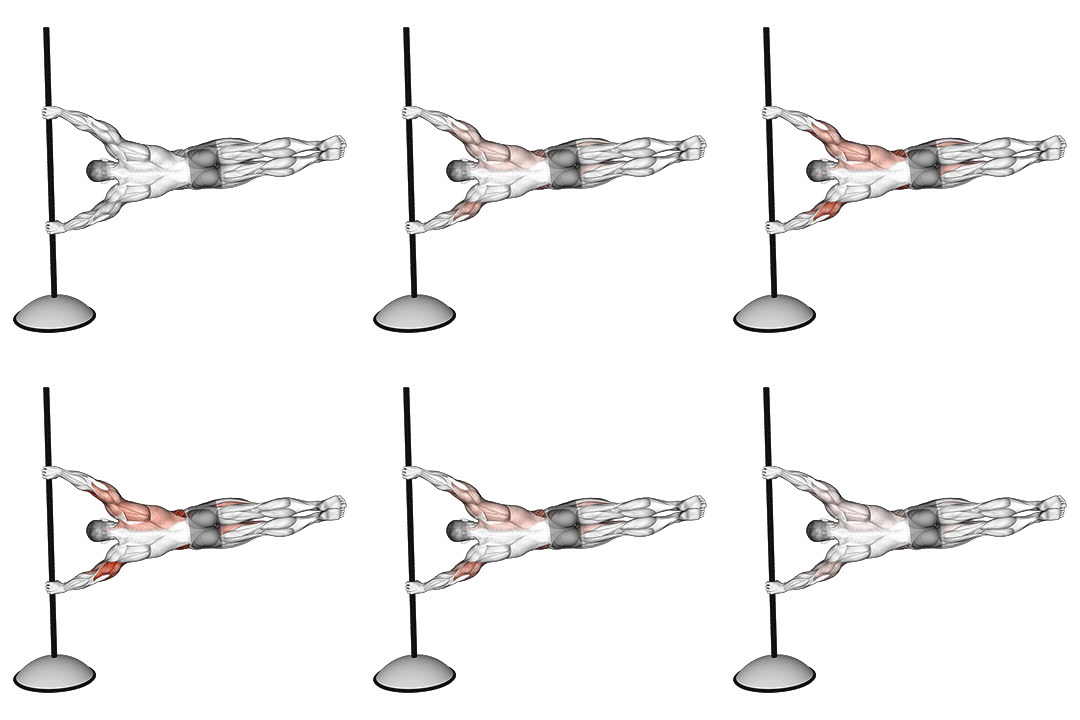
A human flag is a sideways hold on a vertical pole with the body level with the ground. The bottom arm pushes and the top arm pulls, both straight. It takes pulling strength, pressing strength and a strong side of the core, and most people learn it through a vertical flag first. This page shows you which step of the progression you are on, how to get into the flag and what it works.
The human flag progression, step by step
Pass each step before you spend time on the next. The pass mark is the number to hit with strict form.
-
1

Pulling and pressing base
Pass: 8 strict pull-ups and 10 pike push-ups
The flag needs both: the top arm pulls like a pull-up and the bottom arm presses overhead.
-
2
Vertical flag
Pass: 20 s vertical flag on each side
Lock both arms. Push the bottom hand into the pole and pull with the top hand.
-
3
Tucked flag negatives
Pass: 3 tucked flag negatives of 3 s each, each side
Start vertical with the knees tucked and lower as one piece. End the rep when the hips sag.
-
4
One-knee tucked flag
Pass: 5 s one-knee tucked flag, each side
Tuck one knee to shorten the lever. Point the toes of the straight leg and squeeze the glutes.
-
5
Straddle flag
Pass: 5 s straddle flag, each side
A wider straddle is easier. Bring the legs closer as you get stronger.
-
6
Full human flag
Pass: 5 s full flag, legs together, each side
Push hard with the bottom arm so the hips stay level with the shoulders.


How to do a human flag
- Stand side-on to a fixed vertical pole. Grip it with the top hand at about head height or higher, palm facing away, and the bottom hand at about hip height, wider than your shoulders.
- Lock both arms. The top arm will pull and the bottom arm will push.
- Jump or kick your legs up so your body hangs vertical beside the pole, hips above your shoulders. This is the vertical flag.
- Push hard through the bottom hand, pull with the top hand, and lower your legs sideways until your body is level with the ground.
- Hold with the body straight, the glutes squeezed and the hips level with the shoulders.
- Bring the legs back up or step down with control.
Learn it in the order of the ladder: lower slowly from vertical toward level before you try to hold the flag. Train both sides, because most people have one side that is clearly weaker.
Common human flag mistakes
Bent bottom arm
A bent bottom arm makes the hold far harder. Lock it and push the pole away.
Hips sagging
The legs drop below the shoulders and the hold stops being level. Shorten the lever with a tuck until you can hold the line.
Training one side only
The gap between sides is large for most people. Train both, and give the weaker side the extra work.
Kicking up into the flag
A swing up hides weak spots. Get vertical first, then lower slowly into the flag.
Train the human flag safely
- Use a pole or frame that is fixed in place. Check that it cannot turn or move before every session.
- Warm up the shoulders, elbows and wrists before holds.
- Stop for shoulder or elbow pain and drop a step.
- Add hold time slowly. Holds short of your best time are enough.
Muscles worked in the human flag
The human flag works the side of the body hardest: the lats and shoulders hold the arms in place while the obliques keep the body level.
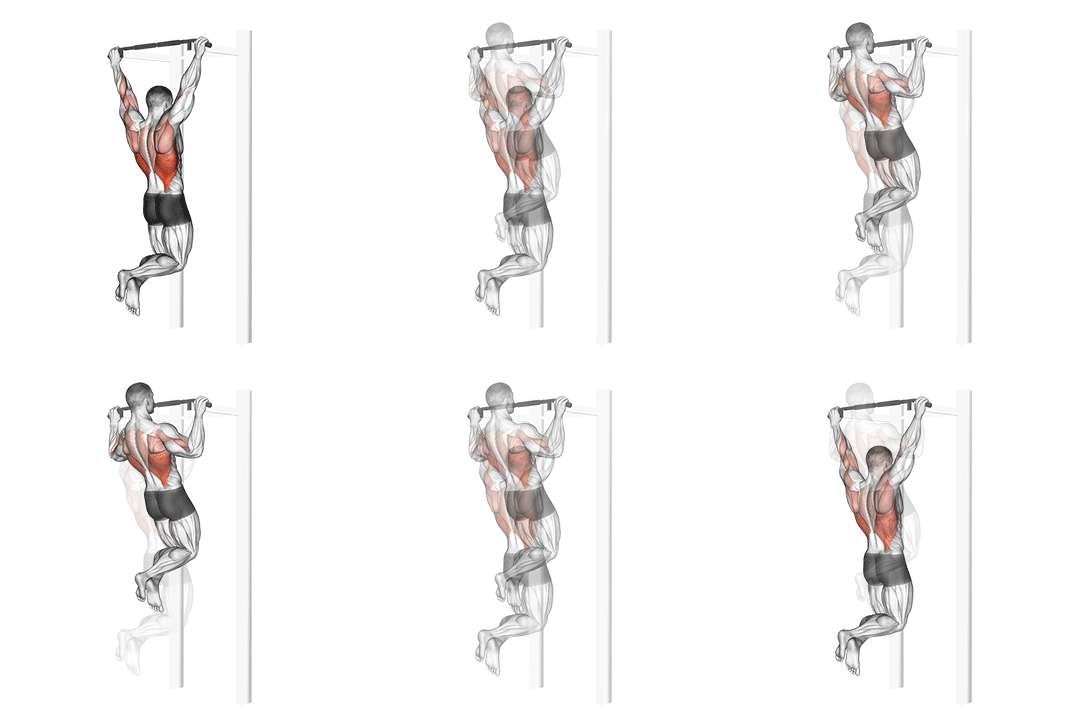
- Lats and upper back (top arm): pull the body toward the top hand.
- Shoulders and triceps (bottom arm): press the body away from the bottom hand with a locked elbow.
- Obliques and the deep side of the core: stop the hips from dropping toward the ground.
- Glutes: keep the legs in line with the body.
- Forearms: hold both grips on the pole.
How long does it take to learn the human flag?
No reliable source gives a timeline. Retest every 3 weeks and judge progress by the step you are on.
Where the human flag pass marks come from
- Steven Low (author of Overcoming Gravity), How to program for advanced isometric movements after a plateau
- Steven Low (author of Overcoming Gravity), Prilepin tables for bodyweight strength isometric and eccentric exercises
- Wikipedia, Human flag
- r/bodyweightfitness wiki, Pull-up Progression
- CrossFit, HSPU and You: Master the Movement
- USA Gymnastics, Shoulder Maintenance 101
Pass marks are FitnessVolt coaching standard v1, based on these sources. They show readiness to practise the next step, not a guarantee.