Calories Burned Fishing Calculator
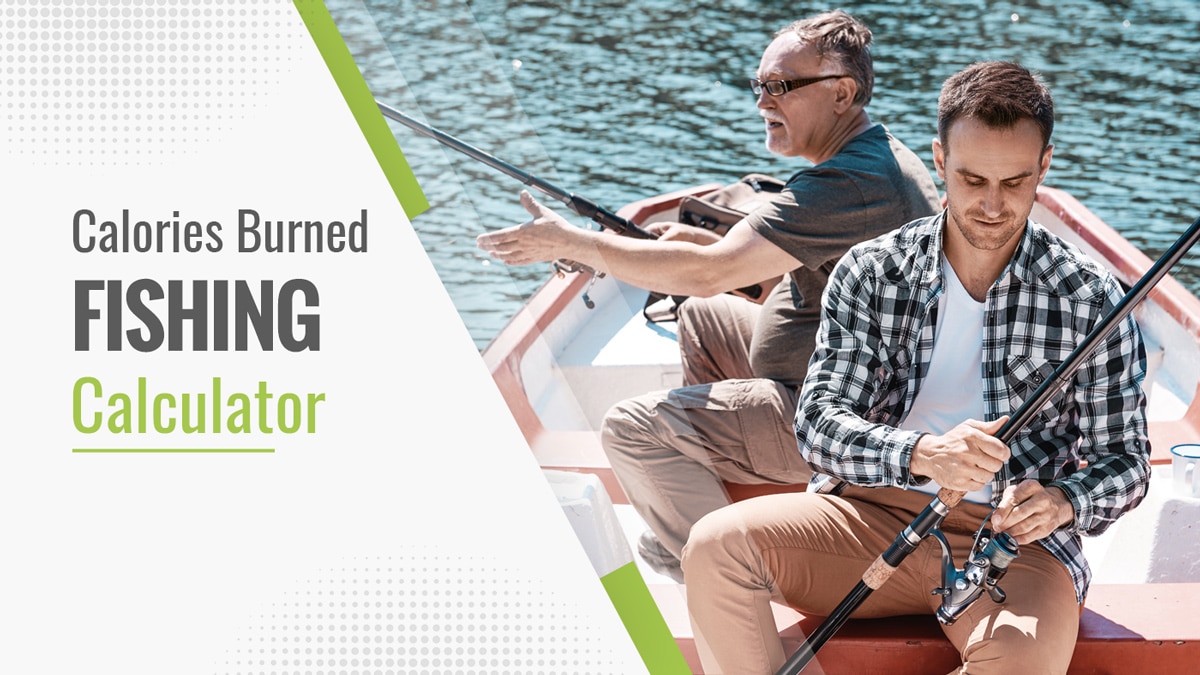
An individual will burn approximately 150 to 550 calories per hour fishing. A person who fish in a stream with waders burn more calories than those who fish from a boat.

Calories Burned with Outdoor Activities (weight: 175 lbs)
| Exercise | MET | 15m | 30m | 45m | 60m |
|---|---|---|---|---|---|
| Cycling or Biking | 9.0 | 193 | 386 | 579 | 772 |
| Hiking | 4.8 | 103 | 206 | 309 | 411 |
| Fishing | 3.5 | 75 | 150 | 225 | 300 |
| Horseback Riding | 5.5 | 118 | 236 | 354 | 472 |
| Kayaking | 5.0 | 107 | 214 | 321 | 429 |
| Skating | 9.0 | 193 | 386 | 579 | 772 |
| Skateboarding | 5.0 | 107 | 214 | 321 | 429 |
| Golf | 4.8 | 103 | 206 | 309 | 411 |
| Jogging | 9.8 | 210 | 420 | 630 | 840 |
| Rock Climbing | 8.0 | 171 | 343 | 514 | 686 |
Fishing is an activity that humans have been doing for thousands of years in order to eat and survive. However, modern-day fishing has become very competitive across the world, and popular fishing competitions are routinely held on ESPN and other sports networks.
You may think that fishing on a boat and sitting there all day waiting for a bite provides little exercise and doesn’t burn many calories, but with all the different fishing activities that are out there, there are plenty of instances where you can burn plenty of calories and get a good workout whether you’re on the water, ice fishing, or crabbing.
Fishing is a diverse discipline with many different techniques available. People from across the world have developed different techniques that work in different regions and different environments. There are techniques used for shallow-water fishing, deep-sea fishing, ice fishing, freshwater fishing, and much more.
How the Calculator Works
Our calculator uses MET values to give you an accurate estimate of how many calories you can expect to burn while fishing and doing other activities. The higher the MET value, the more calories you will burn.
What is a MET Value?
MET stands for metabolic equivalent of task, and MET values allow us to give you an estimated expenditure of energy for many different activities, such as various fishing activities.
A MET value is a ratio between the working metabolic rate and the resting metabolic rate [1], which is the rate of energy that is used relative to the duration of time spent doing activities like fishing.
So a MET value of 1 is the equivalent of the amount of energy you expend while at rest, and a MET value of 4 means you are expending 4 times as much energy compared to being at rest.
Almost all activities that you can think of have MET values assigned to them. Some activities with MET values are common, and some are not so common. For example, there are MET values assigned to activities like hunting, mowing the lawn, and even painting!
Most activities come with varying levels of intensity and have different MET values assigned to them. For instance, fishing from a boat or canoe while sitting has a MET value of 2, while commercial fishing can have a MET value of up to 7.
Formula
The formula that our fishing calculator uses to determine the number of calories burned per minute is (MET x bodyweight in Kg x 3.5) ÷ 200.
Examples
A person weighing 175 pounds will burn approximately 168 calories per hour from fishing while sitting on a boat or canoe. This activity has a MET of 2, which means that it burns 2 times as many calories as you do at rest.
This is what the formula for calculating the calories burned while fishing will look like for a 175-pound individual at a MET value of 2.
- Calories burned (per minute) = (body weight in kg x MET x 5) ÷ 200
- Calories burned (per minute) = ( 79.4 x 2 x 5 ) ÷ 200
- Calories burned (per minute) = 8 calories x 60
- Calories burned (per hour) = 168 calories per hour
The same person weighing 175 pounds will burn approximately 582 calories per hour from commercial fishing with vigorous effort. This activity has the highest MET value of all fishing activities with MET values. This activity has a MET of 7, which means that it burns 7 times as many calories as you do at rest.
Here is what the formula for calculating the calories burned while commercial fishing will look like for a 175-pound individual at a MET value of 7:
- Calories burned (per minute) = (body weight in kg x MET x 5) ÷ 200
- Calories burned (per minute) = ( 79.4 x 7 x 5 ) ÷ 200
- Calories burned (per minute) = 7 calories x 60
- Calories burned (per hour) = 582 calories per hour








What Muscles Does Fishing Work?
Fishing is an activity that can be very intense at times. If you have a fish on your line, you want to do everything you can to reel the fish in. If this happens to be a large fish, it may take a lot of energy to catch the fish and require a great deal of strength. Even some very strong fishermen need the help of their crew to reel in large fish.
Believe it or not, fishing also works your lower body as well. You need your feet to be firmly planted on the ground and sometimes use your legs as leverage to generate the power needed to reel the fish in. The most used muscles involved in fishing include:
Once you catch a fish, many people decide to hold the fish up to take a quick photo of the catch. Believe it or not, this can be hard to do depending on how big the fish is.
Benefits of Fishing
Although you can go to the grocery store and pick up fresh fish in minutes, many fishermen still use fishing as a source of food for themselves and their families. Fishing for this purpose allows you to save money and ensures that the fish you eat is fresh and you know where it comes from.
As you know by now, fishing is also a great source of exercise that helps you burn plenty of calories whether you’re in a fishing competition or just out on the boat on a bright sunny day. Depending on your height, weight, and time spent fishing, you can expect to burn over 500 calories if you fish with high intensity.
Since fishing is such a great exercise, you will find that your cardiovascular system will improve and your endurance will be better. Fishing frequently will improve your ability to do other cardio activities like running, jogging, and cycling.
Fishing is also very relaxing at times. Some fishermen go out on their boat, cast their line, and let it sit there for several hours as they relax. While fishing and relaxing, your stress levels will be reduced and you’ll find that you have a better sense of well-being.
Equipment
Fishing requires plenty of equipment if you expect to catch fish consistently. Since there are plenty of techniques of fishing that all require different types of equipment, we will focus on the main pieces of equipment that are required to fish:
- Fishing rod
- Fishing reel
- Bait
- Lure
Other forms of fishing require spears, harpoons, nets, and traps in the case of commercial fishing.
Frequently Asked Questions:
Does fishing build muscle?
Fishing is a great exercise and can help you build strength in a number of different ways. Keep in mind that any time you are on a boat, your muscles are continually working against the waves to stabilize your body. From casting out the line and reeling in a fish, you are using your upper and lower body while fishing which can build muscle.
Does it take a lot of strength to be good at fishing?
Fishing requires practice, patience, skill, and strength. Although fishermen can use a fishing rod and reel, which does take some of the weight off, there are times fishermen are fighting against a 200-pound fish. In these cases, having a lot of strength allows you to become better at fishing since you can reel in large fish.
What exercises are the best for getting better at fishing?
When reeling in a large fish, you’re constantly working your upper body muscles to remain in control of your line and bring that fish on board. This means that working muscles such as your biceps, triceps, chest, and forearms will allow you to become better at fishing.
Is fishing a healthy hobby?
Fishing is a very healthy hobby. It has been shown to improve both physical and mental well-being. From lowering cortisol levels to increasing physical strength, fishing comes with a host of benefits. There’s a reason that fishing is one of the most popular recreational activities in the world and is a very healthy activity.
The Bottom Line
Whether you enjoy a relaxing day on the water with your family and friends or you’re fishing for your next meal, fishing is an activity that can provide many different benefits. Fishing has been practiced by humans for thousands of years, but modern fishing methods make it much easier to catch fish more efficiently.
Use our fishing calculator to get an idea of how many calories you can expect to burn while fishing, and be sure to check out all the other calculators that we have to offer at Fitness Volt!
References:
- Jetté, M., Sidney, K., & Blümchen, G. (1990). Metabolic equivalents (METS) in exercise testing, exercise prescription, and evaluation of functional capacity. Clinical cardiology, 13(8), 555–565. https://doi.org/10.1002/clc.4960130809