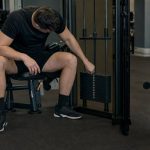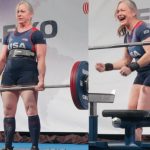

No. A brief rise in testosterone, growth hormone, IGF-1, or cortisol after lifting does not appear to be the switch that determines whether you build muscle. Controlled human experiments found that deliberately creating a larger post-workout hormone surge did not add hypertrophy or strength. Train hard enough to give the target muscle a reason to adapt, then make that work repeatable. That matters more than trying to leave the gym with an impressive blood draw.
The idea did not come from nowhere. A high-volume session with short rests can change several blood hormones for a short window. Those changes often appear in sessions that feel productive. The mistake starts when a blood response becomes the program goal.
We checked controlled resistance-training experiments, longer training studies, and studies that only found correlations. That distinction matters because a hard session can create both a bigger blood response and a useful training stimulus without the blood response causing the adaptation.
What the best human studies actually tested
Researchers have tested the question in a useful way: keep the local work for one muscle the same, then expose participants to either a higher or lower systemic hormone response after that work. In West and colleagues’ 2010 trial, young men trained their elbow flexors while one condition also used a lower-body protocol designed to elevate circulating testosterone, growth hormone, and IGF-1. After 15 weeks, the larger systemic exposure did not produce extra elbow-flexor size or strength [1].
An earlier crossover study from the same group found that the higher-hormone condition did not increase the postexercise myofibrillar-protein-synthesis response or the measured intracellular anabolic signaling [2]. Mitchell and colleagues then followed young men through 16 weeks of resistance training. The people who grew most did not separate themselves through the measured systemic postexercise testosterone, growth hormone, IGF-1, or IL-6 changes. Muscular measures told more of the story [3].
That is the programming answer. You do not need to design a workout around an acute hormone peak to make it productive for hypertrophy.
| After a hard session | What a blood result may reflect | What it cannot establish |
|---|---|---|
| Testosterone, growth hormone, IGF-1, and cortisol can differ between protocols and sampling times. | A whole-body response to the session, plus the timing and conditions of the blood sample [4]. | That the target muscle received a required anabolic window. |
| A larger systemic hormone exposure | An intentional difference in the postexercise environment. | Extra hypertrophy or strength when local arm training stays the same [1]. |
| A small or absent blood change | One measured concentration at one time point. | That training failed to stimulate muscle adaptation [5]. |
Why correlation did not settle the question
Some studies do find a relationship between an athlete’s exercise-induced hormone profile and later gains. West and colleagues reported associations in a large training cohort, while Lixandrao and colleagues reported an association between testosterone exposure and muscle growth in trained men [6][7]. Those results are useful clues. They do not prove that the transient rise caused the growth.
A demanding session can create both outcomes: a larger short-term blood response and a stronger local training signal. Training history, exercise selection, total work, food intake, sleep, time of day, and the timing of blood sampling can influence the result. The controlled experiments carry more weight for a programming decision because they tested whether extra systemic exposure itself added growth. It did not [1][2].
Transient blood responses and chronic endocrine status are different questions
| Question | Useful evidence | What to do with it |
|---|---|---|
| Did this workout change blood hormones for minutes or hours? | Acute exercise sampling can describe that session’s response [4]. | Do not use it as a hypertrophy score. |
| Can a sustained change in androgen exposure affect lean mass and strength? | A randomized testosterone dose-response trial shows that it can [8]. | Do not treat this medical trial as a workout-hack argument. |
| Can progressive lifting build muscle without a chronic rise in resting testosterone, GH, or IGF-1? | Longer resistance-training studies observed exactly that [5][9]. | Judge the plan by repeatable progress and recovery. |
The old two-part FitnessVolt series had one durable idea: a person’s longer-term hormonal context is not the same thing as a session’s transient response. The current evidence supports keeping that distinction. It does not support the old leap from that point to growth-hormone recovery claims, insulin-avoidance advice during a cut, or a contest to make one workout produce the biggest hormonal spike.
Testosterone: important hormone, wrong post-workout target
Testosterone matters for muscle tissue across the long term. In a randomized dose-response trial, sustained testosterone administration changed lean mass and strength in healthy men [8]. That finding does not validate hormone-chasing workouts. It shows why chronic hormonal exposure and a brief exercise-related fluctuation belong in different categories.
Blood concentration is also not a pure readout of how much hormone a body released. Acute exercise can alter plasma volume, which can change measured concentrations even when the amount in circulation has not changed in the same way [10]. That is one reason a post-workout number does not give a lifter a clean score for the session.
A lifter can gain muscle with a program that does not create a large acute testosterone response, and a large response does not compensate for poor exercise selection or insufficient progressive work. If sleep is the weak link, this guide to sleep and testosterone is a more useful next read than adding sets to chase a spike. Sleep affects more than one lab value. It decides whether you can train well again.
Growth hormone and IGF-1: what the blood draw misses
Growth hormone gets the biggest headlines because it can rise sharply after high-volume training with short rests. That response is real. It still does not make a post-workout GH spike a hypertrophy prescription. In the controlled higher-hormone protocol, substantially larger circulating growth-hormone exposure did not add muscle growth or strength [1].
Longer training studies show the same separation between a session response and baseline status. Hakkinen and colleagues reported acute responses during hypertrophy-oriented training without a training-induced change in resting GH, IGF-1, or testosterone [5]. Craig and colleagues observed a substantial acute GH response in older men, while 16 weeks of progressive resistance training did not change their baseline anabolic-hormone concentrations [9].
IGF-1 is often folded into the same story, but a blood measurement does not act as a live report from the muscle you trained. Muscle tissue regulates signaling in response to contraction and loading. A circulating IGF-1 result cannot tell you whether the target muscle received enough tension or whether you accumulated enough repeatable work. That distinction helps explain why a whole-body protocol can look different in blood while the trained muscle shows no extra growth [3].
Cortisol: an acute rise is not a muscle-loss verdict
Cortisol can rise with demanding exercise. In a human experiment that lowered cortisol during prolonged exercise, normal cortisol contributed to changes in lipid availability, while whole-body substrate use still required a broader metabolic reading [11]. That does not turn an acute cortisol rise after lifting into a muscle-loss verdict.
The useful distinction is acute versus persistent. One hard session followed by normal recovery is not a reason to self-treat cortisol. Repeated under-fueling, declining performance, poor recovery, and loss of normal menstrual function deserve attention because low energy availability can affect health beyond the gym [12]. The pattern needs a broader assessment, not a supplement marketed as a cortisol blocker.
What deserves your attention instead
Build the program around inputs you can measure and repeat. In trained men, low-load and high-load lifting produced similar hypertrophy when the study required sets to failure, showing that several loading approaches can work when effort and total training are sufficient [13]. The study does not mean failure is mandatory for every set. It means a particular hormone-friendly loading style does not own hypertrophy.
Use a rep range that you can load, control, and progress. The practical question is whether the target muscle gets challenging work that you can recover from, not whether the workout looks metabolically brutal. FitnessVolt’s rep-range guide for muscle growth can help you choose a workable range without turning the choice into a hormone test.
A better decision framework after a workout
- Did the target muscle do challenging work? Use exercise execution, proximity to failure, and completed hard sets, not how hormonally crushed you feel.
- Can you progress it? Track repetitions, load, range of motion, and technique across weeks.
- Can you recover from it? Keep food, sleep, and training frequency sufficient to repeat productive work.
- Does the plan fit your life? A modest session you can repeat usually beats a circuit built only to chase a blood response.

Food matters, but the evidence should stay specific. In Areta and colleagues’ 12-hour recovery study after resistance exercise, participants consumed the same 80 grams of whey protein in different patterns. Four 20-gram servings spaced three hours apart produced a higher myofibrillar-protein-synthesis response than eight 10-gram servings every 90 minutes or two 40-gram servings six hours apart [14]. That finding supports a sensible protein-distribution strategy during recovery. It does not show that nutrient timing can rescue a poor training plan or that it matters more than training design.
Energy availability also belongs in the recovery conversation. If your intake is drifting away from the needs of a demanding block, check whether your energy intake matches your training block with a TDEE estimate, then compare the estimate with your logged trend and performance. The calculator is a starting point, not a hormone test.
Signals to take to a clinician
Do not order a hormone panel because one leg day left you tired. Bring a persistent pattern to a qualified clinician. Examples include ongoing low libido or erectile dysfunction, which can have several causes and need proper evaluation [15]; loss of menstrual periods; or recurrent bone stress injuries in the setting of restricted intake and high training demand [12]. These are referral signals, not a checklist for self-diagnosis.
Do not use testosterone, growth hormone, thyroid medication, or cortisol-lowering supplements as a training experiment. Dietary basics matter, but dietary fat is not a testosterone cheat code either. Read our guide to dietary fats and testosterone for the tradeoffs before changing your diet around a single hormone claim.
The bottom line
Post-workout hormone changes are part of the body’s response to hard exercise. They are not a scoreboard for muscle growth. The best controlled evidence says you do not need a large temporary surge in testosterone, growth hormone, or IGF-1 to build muscle, and an acute cortisol rise does not erase a good session.
Put your attention on progressive resistance training, sufficient hard work for the target muscle, enough food and protein, sleep, and a plan you can run for months. Those are the levers that keep working after the hormone graph comes back down.
Sources
- West DWD, et al. Elevations in ostensibly anabolic hormones with resistance exercise enhance neither training-induced muscle hypertrophy nor strength of the elbow flexors. Journal of Applied Physiology. 2010;108(1):60-67. doi:10.1152/japplphysiol.00901.2009.
- West DWD, et al. Resistance exercise-induced increases in putative anabolic hormones do not enhance muscle protein synthesis or intracellular signalling in young men. Journal of Applied Physiology. 2009;107(6):1650-1659. doi:10.1152/japplphysiol.00048.2009.
- Mitchell CJ, et al. Muscular and systemic correlates of resistance training-induced muscle hypertrophy. PLOS ONE. 2013;8(10):e78680. doi:10.1371/journal.pone.0078680.
- Kraemer WJ, Ratamess NA. Hormonal responses and adaptations to resistance exercise and training. Sports Medicine. 2005;35(4):339-361. doi:10.2165/00007256-200535040-00004.
- Hakkinen K, et al. Acute and chronic hormonal responses to resistance training designed to promote muscle hypertrophy. Journal of Applied Physiology. 1998;85(4):1417-1427. doi:10.1152/jappl.1998.85.4.1417.
- West DWD, et al. Associations of exercise-induced hormone profiles and gains in strength and hypertrophy in a large cohort after weight training. European Journal of Applied Physiology. 2012;112:2693-2702. doi:10.1007/s00421-011-2246-z.
- Lixandrao ME, et al. Exercise-induced hormone elevations are related to muscle growth. Journal of Strength and Conditioning Research. 2017;31(1):45-53. doi:10.1519/JSC.0000000000001493.
- Bhasin S, et al. Testosterone dose-response relationships in healthy young men. Journal of Clinical Endocrinology and Metabolism. 2001;86(3):1415-1423. doi:10.1210/jcem.86.3.7282.
- Craig BW, Brown R, Everhart J. Testosterone, growth hormone and IGF-I responses to acute and chronic resistive exercise in men aged 55-70 years. Journal of Gerontology A. 1995;50(4):B214-B220. PMID:8550252.
- Dill DB, Costill DL. Calculation of percentage changes in volumes of blood, plasma, and red cells in dehydration. Journal of Applied Physiology. 1974;37(2):247-248. doi:10.1152/jappl.1974.37.2.247.
- Del Corral P, et al. Metabolic effects of low cortisol during exercise in humans. Journal of Applied Physiology. 1998;84(3):939-946. doi:10.1152/jappl.1998.84.3.939.
- Mountjoy M, et al. 2023 International Olympic Committee consensus statement on Relative Energy Deficiency in Sport. British Journal of Sports Medicine. 2023;57:1073-1097. doi:10.1136/bjsports-2023-106994.
- Morton RW, et al. Neither load nor systemic hormones determine resistance training-mediated hypertrophy or strength gains in resistance-trained young men. Journal of Applied Physiology. 2016;121(1):129-138. doi:10.1152/japplphysiol.00137.2016.
- Areta JL, et al. Timing and distribution of protein ingestion during prolonged recovery from resistance exercise alters myofibrillar protein synthesis. Journal of Physiology. 2013;591(9):2319-2331. doi:10.1113/jphysiol.2012.244897.
- National Institute of Diabetes and Digestive and Kidney Diseases. Hypogonadism. Accessed July 24, 2026.