

Band Alternating V-up vs Band Assisted Wheel Rollerout: Complete Comparison Guide
Band Alternating V-up vs Band Assisted Wheel Rollerout — you’re choosing between two band-based isolation moves that both target the abs but load the torso differently. I’ll walk you through how each one stresses the rectus abdominis, how much the hip flexors or lower back get involved, what equipment you need, and clear progression and safety tips. By the end you’ll know which exercise to pick for muscle growth, raw strength, or a safe home routine, plus exact rep ranges and technique cues to make each rep count.
Exercise Comparison
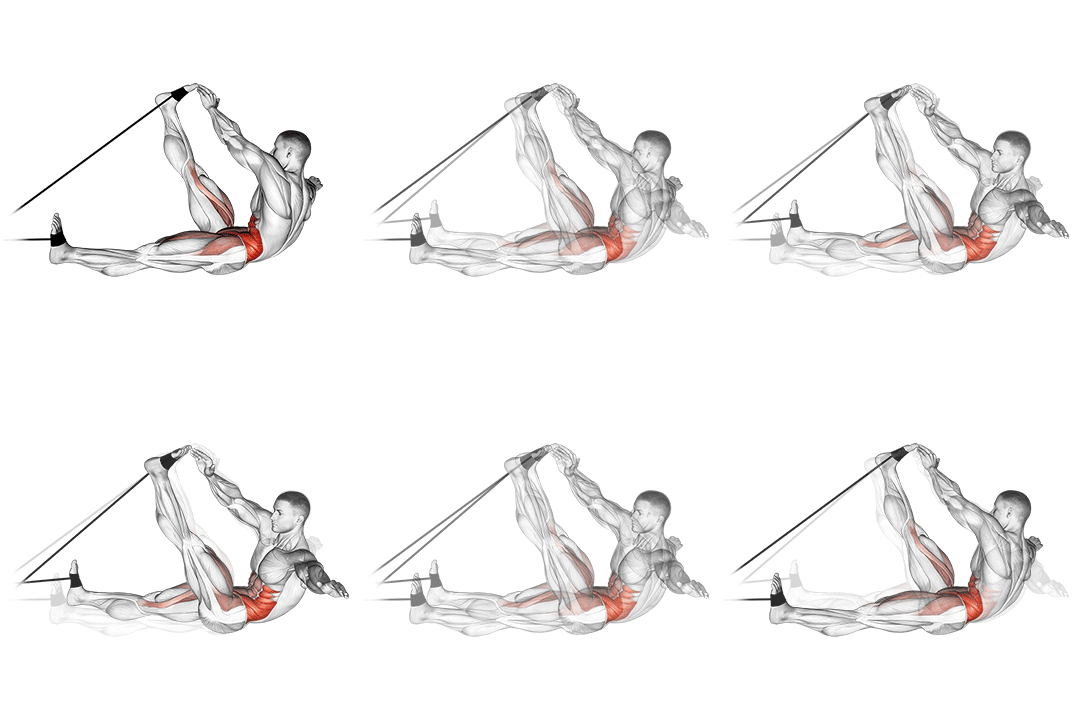
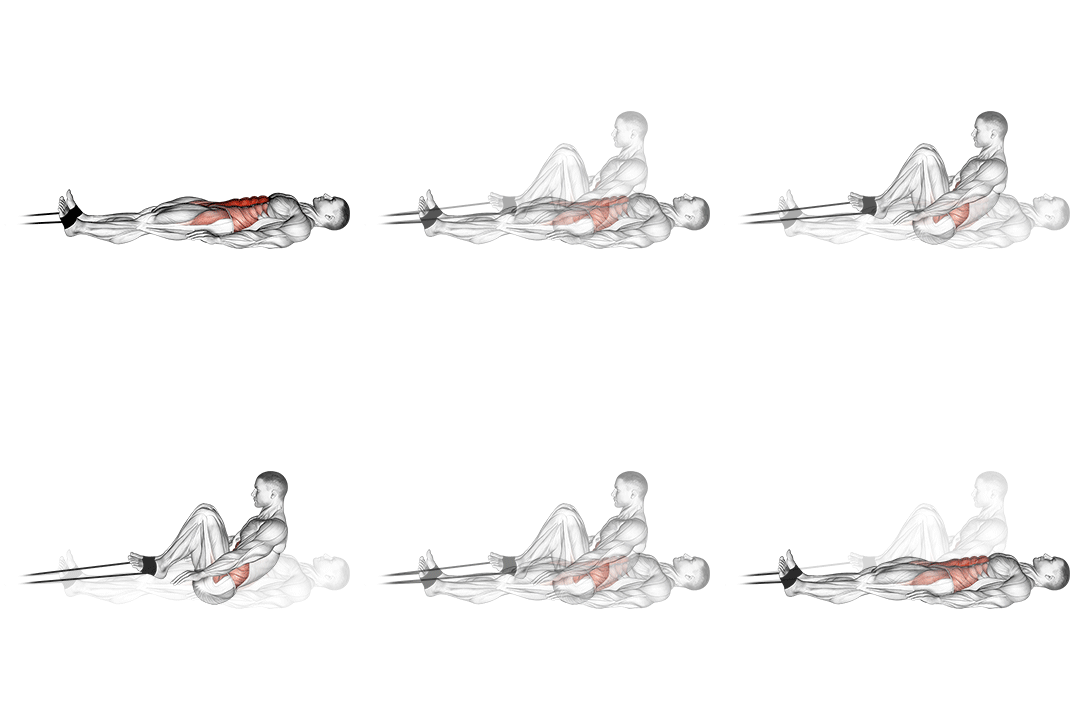
Band Alternating V-up
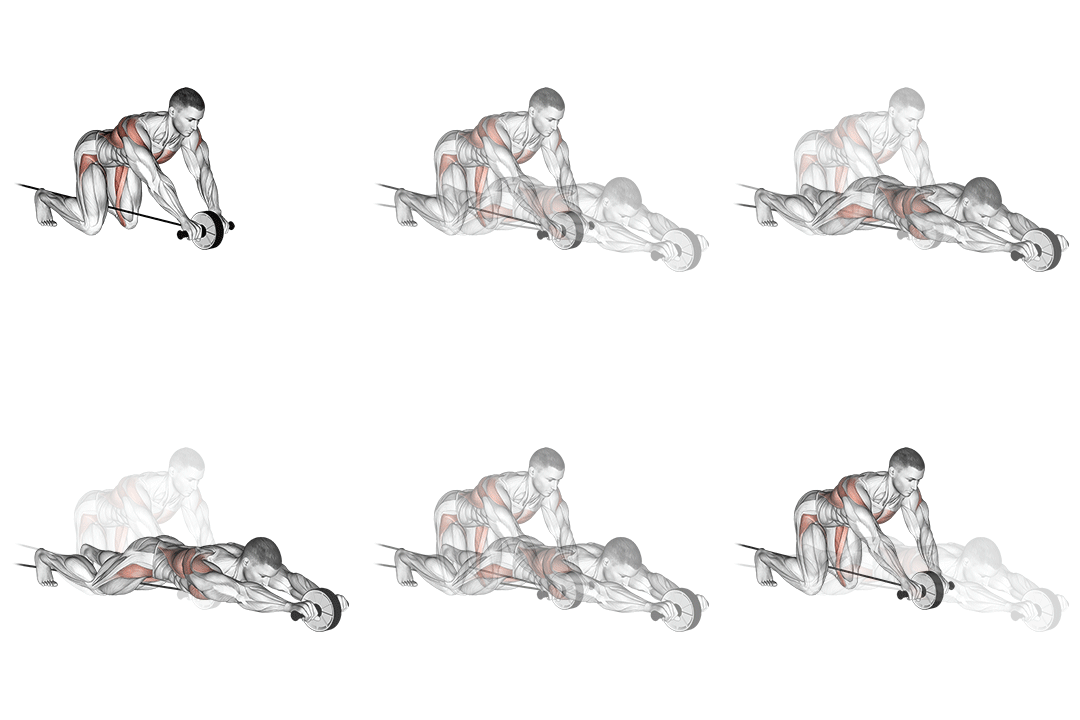
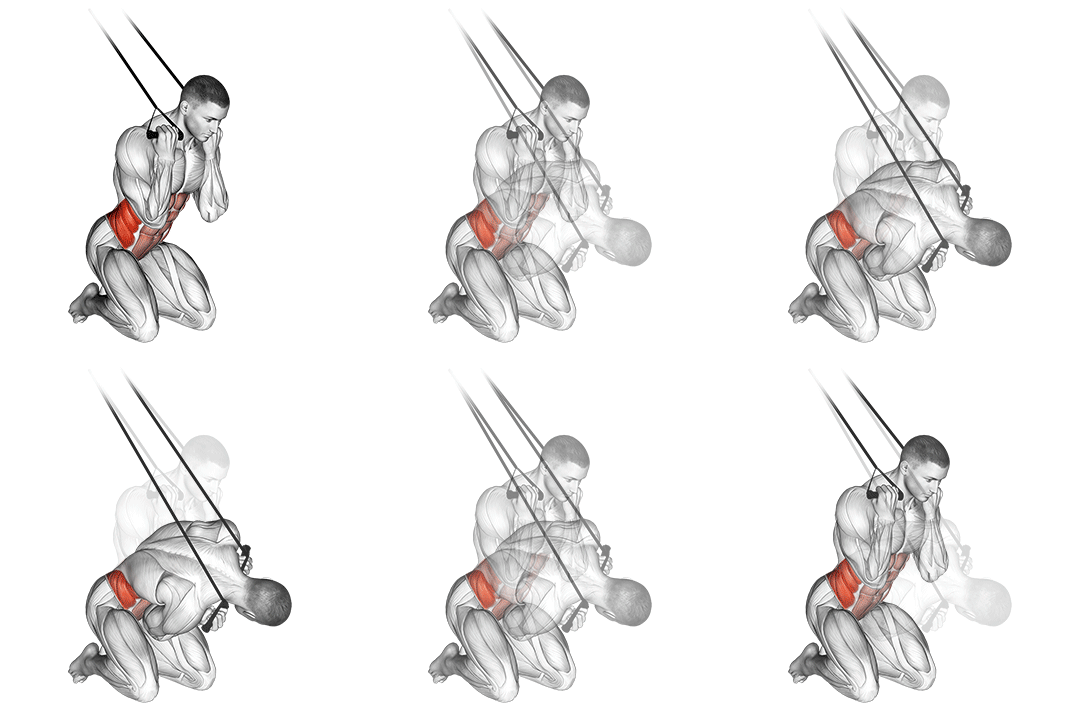
Band Assisted Wheel Rollerout
Head-to-Head Comparison
| Attribute | Band Alternating V-up | Band Assisted Wheel Rollerout |
|---|---|---|
| Target Muscle |
Abs
|
Abs
|
| Body Part |
Waist
|
Waist
|
| Equipment |
Band
|
Band
|
| Difficulty |
Advanced
|
Intermediate
|
| Movement Type |
Isolation
|
Isolation
|
| Secondary Muscles |
1
|
1
|
Secondary Muscles Activated
Band Alternating V-up
Band Assisted Wheel Rollerout
Visual Comparison
Overview
Band Alternating V-up vs Band Assisted Wheel Rollerout — you’re choosing between two band-based isolation moves that both target the abs but load the torso differently. I’ll walk you through how each one stresses the rectus abdominis, how much the hip flexors or lower back get involved, what equipment you need, and clear progression and safety tips. By the end you’ll know which exercise to pick for muscle growth, raw strength, or a safe home routine, plus exact rep ranges and technique cues to make each rep count.
Key Differences
- Difficulty levels differ: Band Alternating V-up is advanced, while Band Assisted Wheel Rollerout is intermediate.
- Both exercises target the Abs using Band. The main differences are in their movement patterns and muscle activation angles.
Pros & Cons
Band Alternating V-up
+ Pros
- High peak rectus abdominis and hip flexor recruitment for strong midline contraction
- Requires only a band and floor space—very accessible
- Great for dynamic, high-rep metabolic sets (8–20 reps per side)
- Easy to add unilateral emphasis to correct side imbalances
− Cons
- Advanced coordination required — steep learning curve
- Shorter time-under-tension for sustained anti-extension strength
- Higher hip flexor strain risk and potential for anterior pelvic tilt if unmanaged
Band Assisted Wheel Rollerout
+ Pros
- Sustained anti-extension load builds core strength and spinal stability
- Easier to scale via band assistance increments (reduces load by ~20–60%)
- Direct transfer to resisting extension under load — useful for deadlift/press stability
- Clear, measurable progression by increasing roll-out distance
− Cons
- Requires an ab wheel and a reliable anchor for the band
- Higher lumbar stress if you overreach without bracing
- Technique breakdown leads to quick loss of effectiveness and higher injury risk
When Each Exercise Wins
Its concentric hip and trunk flexion produces strong peak tension on the rectus abdominis and hip flexors, making it effective for hypertrophy when performed for 8–15 controlled reps with a 2–3 second eccentric. The brief, high-intensity contractions favor metabolic and mechanical stimuli for muscle growth.
The rollerout builds sustained anti-extension strength and bracing capacity across longer time-under-tension, which transfers better to resisting trunk extension under load. Progressing range and reducing band assistance increases absolute torque demands, improving core strength.
Band assistance lets you start with short rollouts and gradually increase range, controlling load in 10–20% increments. That makes it simpler to teach proper bracing and spinal positioning than teaching coordinated V-up mechanics.
It only needs a band and floor space, so you can program effective sets (3–4 sets of 10–20 reps per side) without buying an ab wheel or anchors. You can also vary band tension to match your current capacity.
Frequently Asked Questions
Can I do both Band Alternating V-up and Band Assisted Wheel Rollerout in the same workout?
Yes. Use the rollerout early in the session to train anti-extension strength (3 sets of 6–10 reps) and follow with Band Alternating V-ups for volume (3–4 sets of 8–15 reps per side). That sequence limits fatigue-driven technique breakdown during heavy rollouts.
Which exercise is better for beginners?
Band Assisted Wheel Rollerout is generally better for beginners because the band provides predictable assistance and you can restrict rollout range to maintain a neutral spine. Start with short rollouts and focus on bracing before increasing distance.
How do the muscle activation patterns differ?
V-ups create phasic concentric hip and trunk flexion with peak rectus and hip flexor activation during the mid-range (roughly 30–45°), while rollerouts impose a sustained isometric/anti-extension demand on the rectus and obliques across the extended range, with greater erector spinae co-contraction near full roll-out.
Can Band Assisted Wheel Rollerout replace Band Alternating V-up?
Not entirely. Rollerouts are better for building core stiffness and anti-extension strength, but they offer less hip flexor stimulus and briefer hypertrophic pulses compared with V-ups. If your priority is abdominal shaping and hip flexor development, keep V-ups; for spinal stability and strength, prioritize rollerouts.
Expert Verdict
Choose Band Alternating V-ups when your goal is targeted abdominal hypertrophy and you want a compact, equipment-light move that also challenges the hip flexors; program 3–4 sets of 8–15 reps per side, focus on a 1–2 second concentric and 2–3 second eccentric, and avoid anterior pelvic tilt. Pick Band Assisted Wheel Rollerouts when you need to build anti-extension strength and spinal bracing — start with 3 sets of 6–10 controlled rollouts, keep a neutral pelvis, and reduce band assistance gradually by ~10–20% as you improve. If you can, rotate both movements through your program: V-ups for volume and shaping, rollerouts for core stiffness and strength.
Also Compare
More comparisons with Band Alternating V-up
More comparisons with Band Assisted Wheel Rollerout
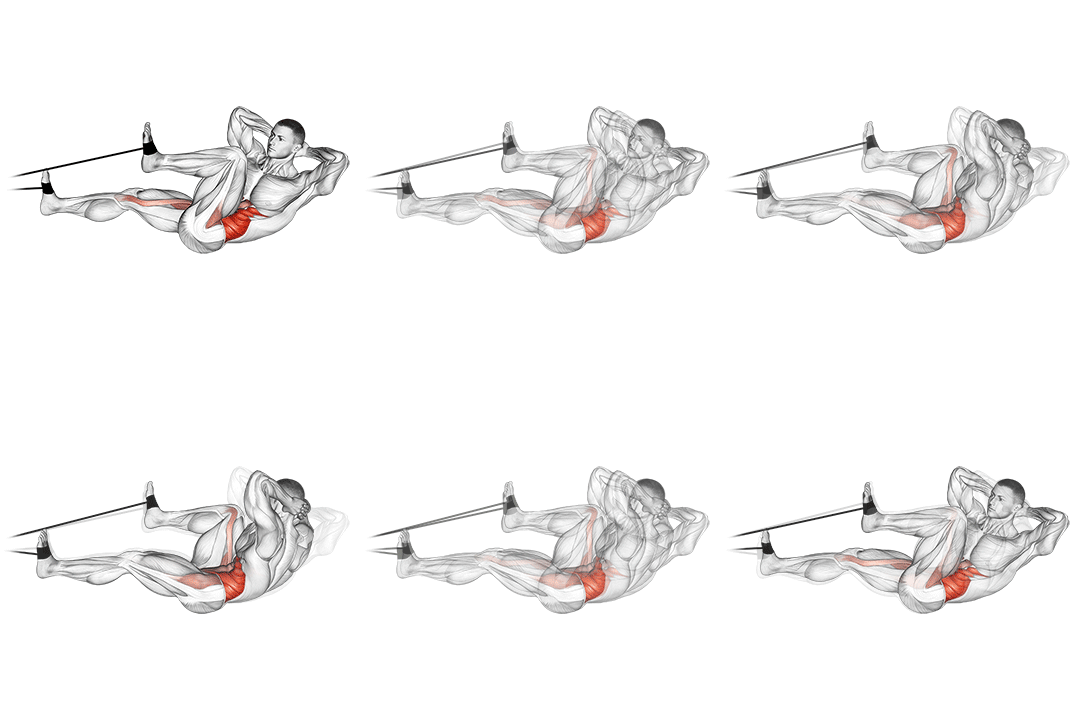
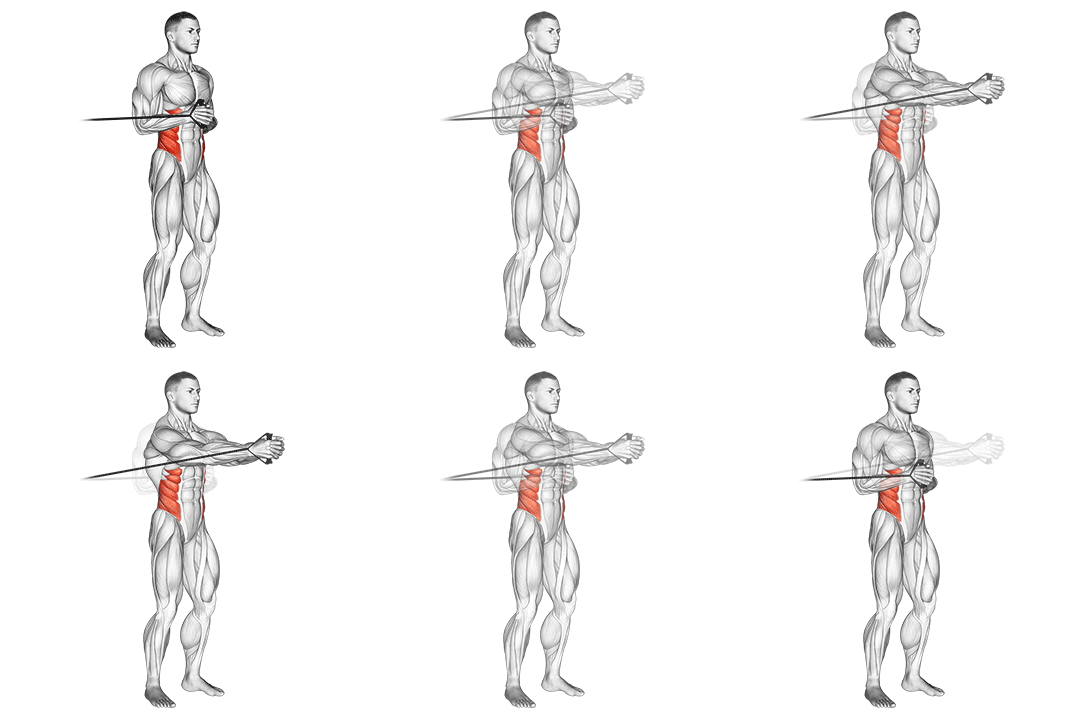
Compare More Exercises
Use our free comparison tool to analyze any two exercises head-to-head.
Compare Exercises