

Band Alternating V-up vs Band Jack Knife Sit-up: Complete Comparison Guide
Band Alternating V-up vs Band Jack Knife Sit-up — both are advanced banded core moves that hammer the rectus abdominis and load the hip flexors. If you want targeted core development, better anti-rotation control, or a straightforward packed-home option, this comparison walks you through muscle activation, equipment needs, difficulty, and progression. You’ll get clear technique cues, rep ranges (8–20), and biomechanics-based reasons to pick one over the other depending on whether your priority is muscle growth, strength, or functional core stability.
Exercise Comparison
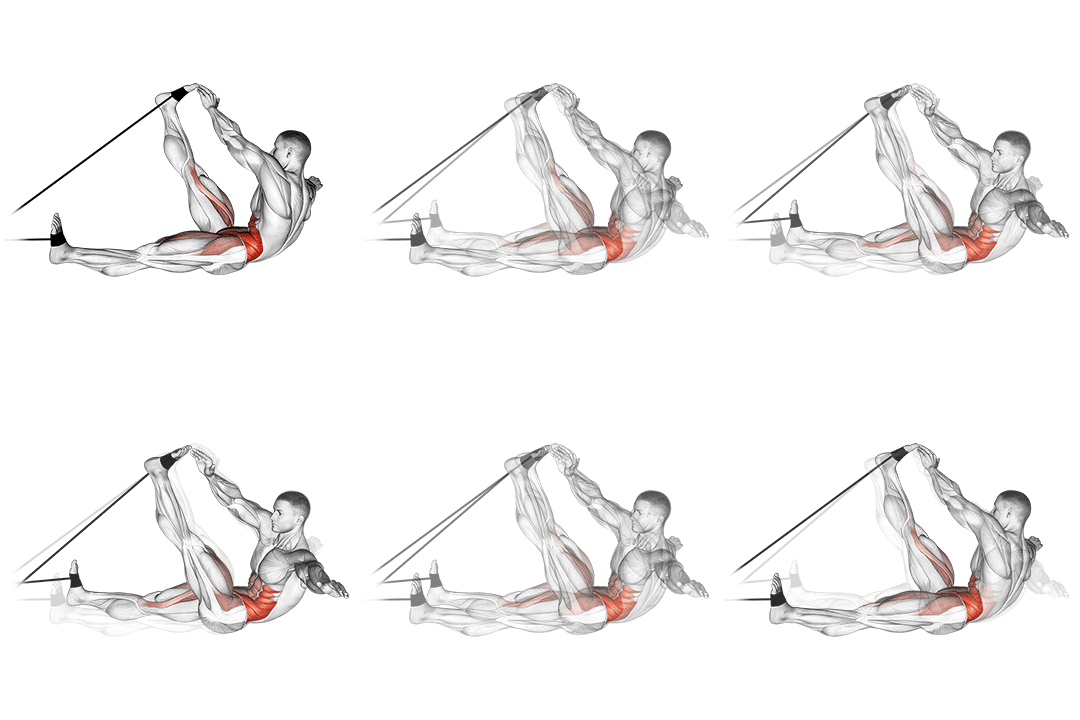
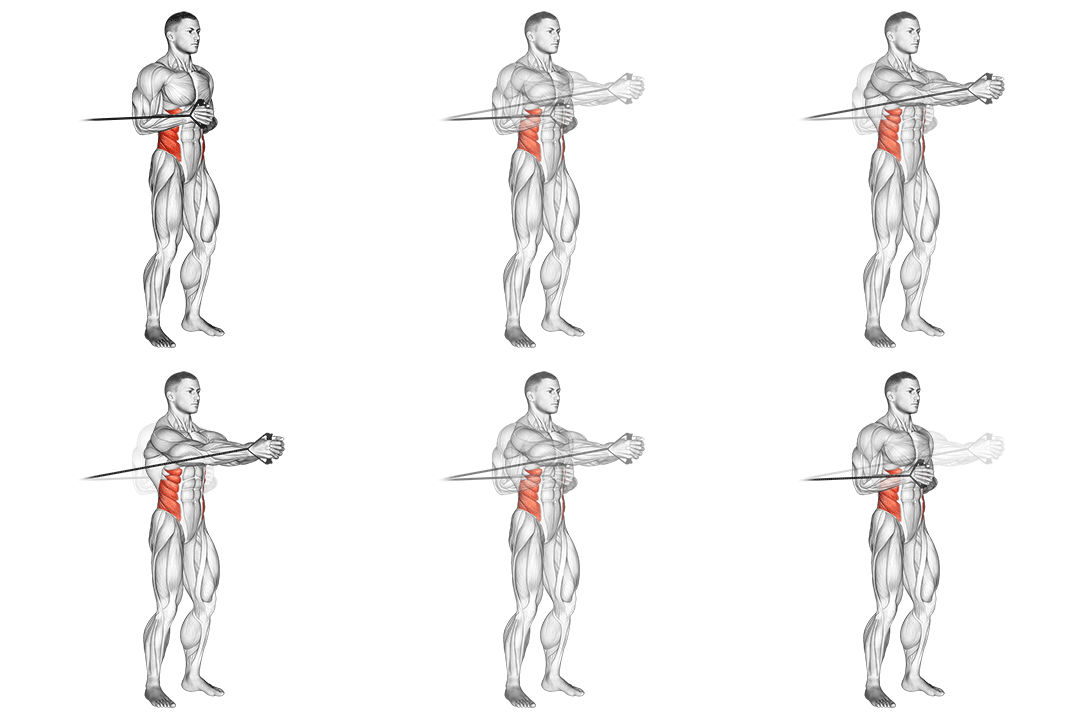
Band Alternating V-up
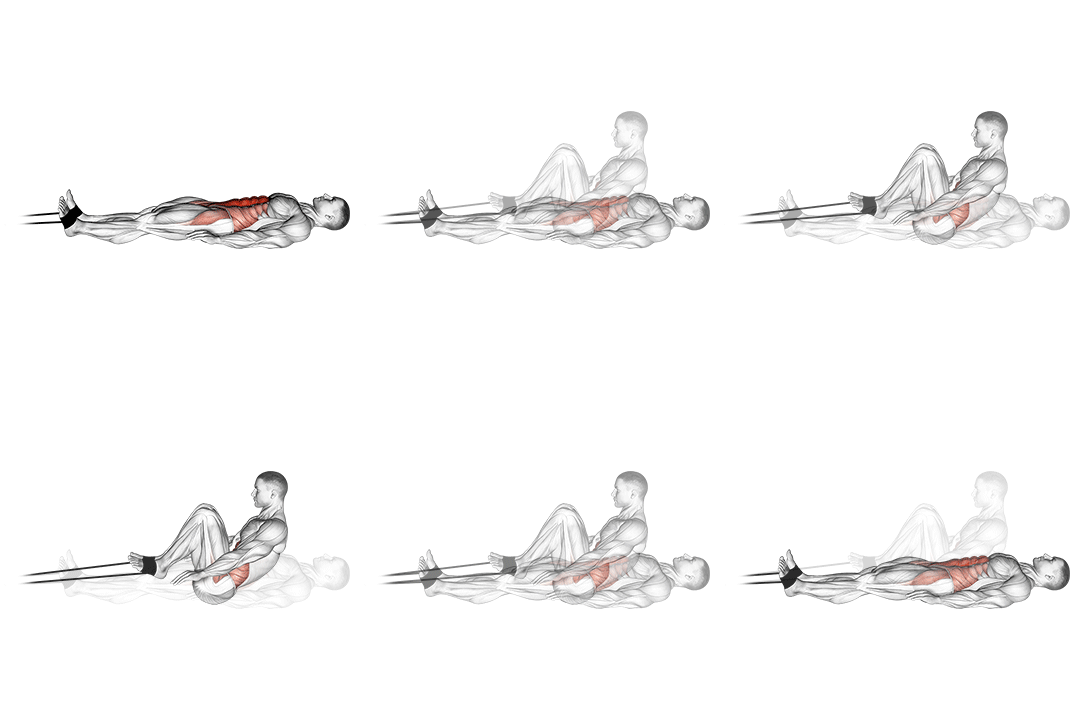
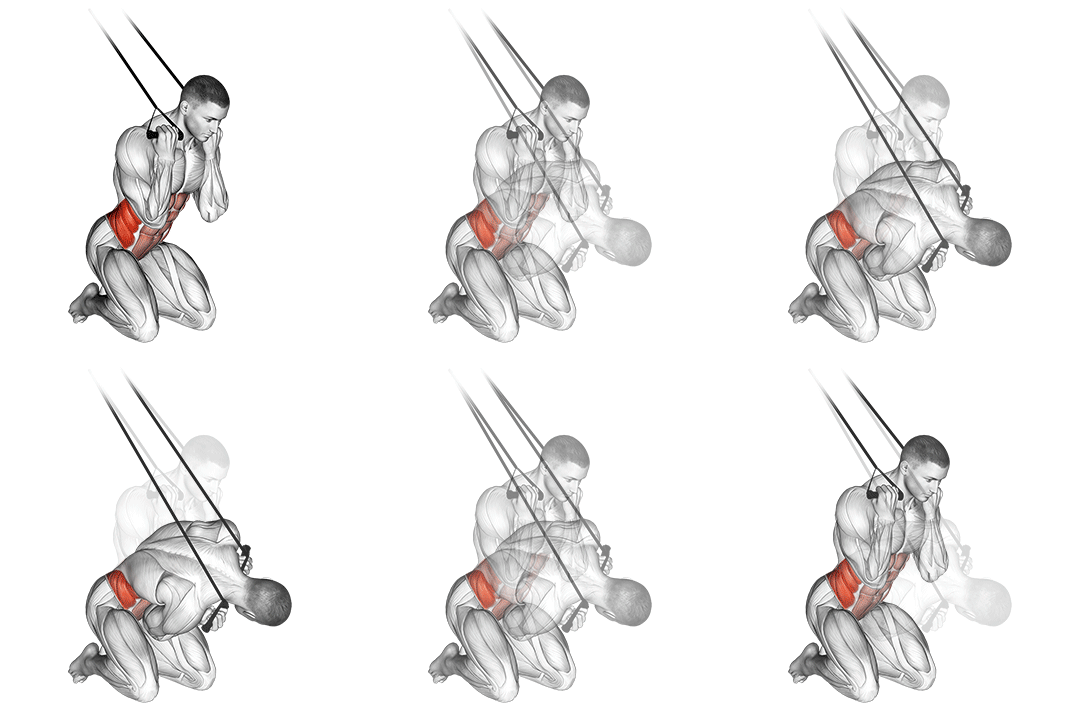
Band Jack Knife Sit-up
Head-to-Head Comparison
| Attribute | Band Alternating V-up | Band Jack Knife Sit-up |
|---|---|---|
| Target Muscle |
Abs
|
Abs
|
| Body Part |
Waist
|
Waist
|
| Equipment |
Band
|
Band
|
| Difficulty |
Advanced
|
Advanced
|
| Movement Type |
Isolation
|
Isolation
|
| Secondary Muscles |
1
|
1
|
Secondary Muscles Activated
Band Alternating V-up
Band Jack Knife Sit-up
Visual Comparison
Overview
Band Alternating V-up vs Band Jack Knife Sit-up — both are advanced banded core moves that hammer the rectus abdominis and load the hip flexors. If you want targeted core development, better anti-rotation control, or a straightforward packed-home option, this comparison walks you through muscle activation, equipment needs, difficulty, and progression. You’ll get clear technique cues, rep ranges (8–20), and biomechanics-based reasons to pick one over the other depending on whether your priority is muscle growth, strength, or functional core stability.
Key Differences
- Both exercises target the Abs using Band. The main differences are in their movement patterns and muscle activation angles.
Pros & Cons
Band Alternating V-up
+ Pros
- High anti-rotation and unilateral core control improves transverse abdominis and oblique recruitment
- Requires minimal anchor setup—easy to perform with a single loop band
- Challenges coordination and proprioception, aiding sport-specific core stability
- Progresses to loaded or unstable variations (slow eccentrics, holds, added band tension)
− Cons
- Steeper technical learning curve—coordination demands can reduce effective reps
- Higher torsional stress on the spine if form slips into rotation or lumbar extension
- Less straightforward to progressively overload with very heavy resistance bands
Band Jack Knife Sit-up
+ Pros
- Produces strong bilateral rectus abdominis and hip flexor recruitment for time under tension
- Easier to scale load with band thickness and controlled eccentrics
- More predictable movement path, faster to learn proper form
- Better for higher-intensity sets (8–15 reps) with consistent resistance throughout
− Cons
- Repetitive spinal flexion can increase lumbar disc stress if technique is poor
- Requires heavier or more secure band anchoring to reach high tensions
- Less anti-rotation stimulus—limited carryover to unilateral stability tasks
When Each Exercise Wins
The jack knife enables larger, synchronous rectus activation and easier progressive overload with heavier bands and controlled 3–5 second eccentrics. Use 3–4 sets of 8–15 reps to maximize time under tension and muscle growth.
Symmetrical loading allows you to apply greater absolute resistance and focus on heavy, controlled reps. Heavier-band 4–6 rep sets with slow eccentrics increase force production capacity in trunk flexion.
The bilateral pattern is simpler to learn and maintain spinal alignment. Start with light band tension, 2–3 sets of 10–15 reps, and emphasize posterior pelvic tilt to protect the lumbar spine.
It needs less secure anchoring and can be done with a single loop band under a foot, making setup minimal. It also adds unilateral challenge that increases training variety in small spaces.
Frequently Asked Questions
Can I do both Band Alternating V-up and Band Jack Knife Sit-up in the same workout?
Yes—pairing them can work well: use jack knives for 3 sets of heavier bilateral work (6–12 reps) and alternating V-ups for 2–3 sets of unilateral control (8–12 reps) to target both strength and anti-rotation. Keep total core volume manageable to avoid lumbar fatigue.
Which exercise is better for beginners?
Band Jack Knife Sit-up is better for beginners because the bilateral, symmetric movement is easier to cue and control. Start with light band tension, focus on pelvic tilt and slow eccentrics, and progress once you can maintain neutral spine through 10–15 clean reps.
How do the muscle activation patterns differ?
Alternating V-ups produce alternating unilateral peaks—one rectus and oblique side concentrically activates while the opposite side stabilizes eccentrically—raising oblique engagement. Jack Knife Sit-ups produce a single, larger synchronous peak in both rectus abdominis and hip flexors as torso and legs converge.
Can Band Jack Knife Sit-up replace Band Alternating V-up?
Yes for pure rectus-focused training and strength work—the jack knife can replace alternating V-ups when your goal is symmetric hypertrophy or heavier loading. However, keep alternating V-ups in your program if you need unilateral control and anti-rotation transfer to sport or asymmetric lifts.
Expert Verdict
Choose Band Jack Knife Sit-up when your priority is maximal rectus abdominis development or building trunk flexion strength—its bilateral, predictable path lets you safely increase band tension and use slow eccentrics for 8–15 reps. Pick Band Alternating V-up when you want unilateral core control, anti-rotation strength, and a lightweight, low-setup option for home training. Both are advanced: focus on posterior pelvic tilt, control the eccentric phase (2–4 seconds), and avoid excessive lumbar rounding. If you’re conserving spine health, favor lower reps with higher band tension and prioritize form over volume.
Also Compare
More comparisons with Band Alternating V-up
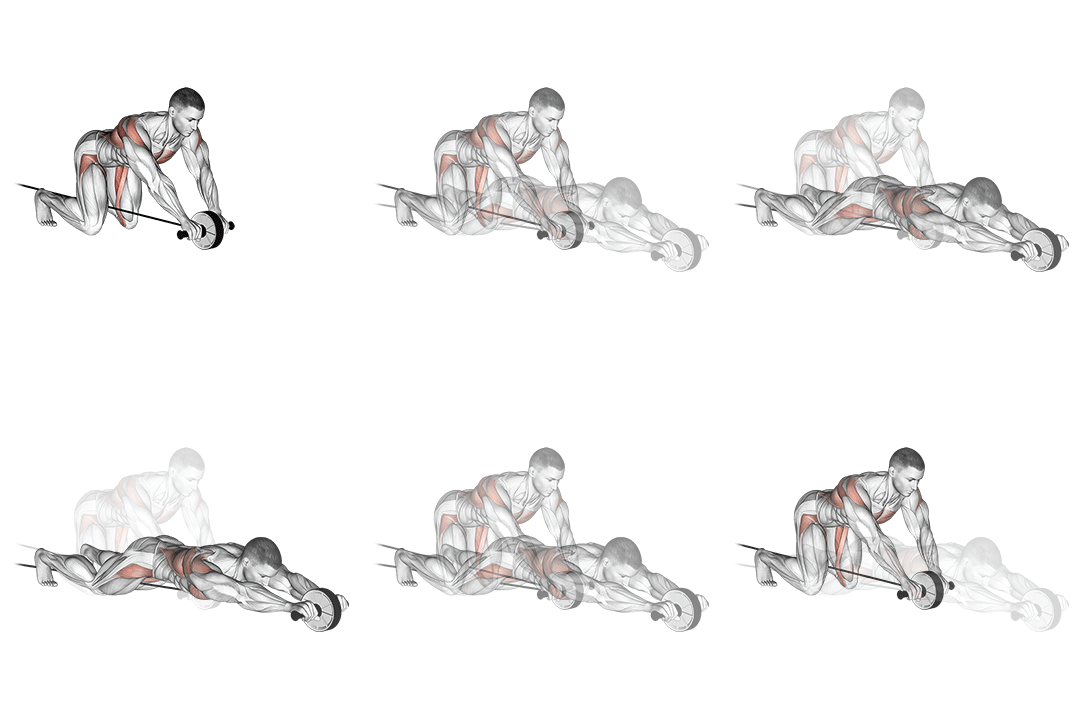
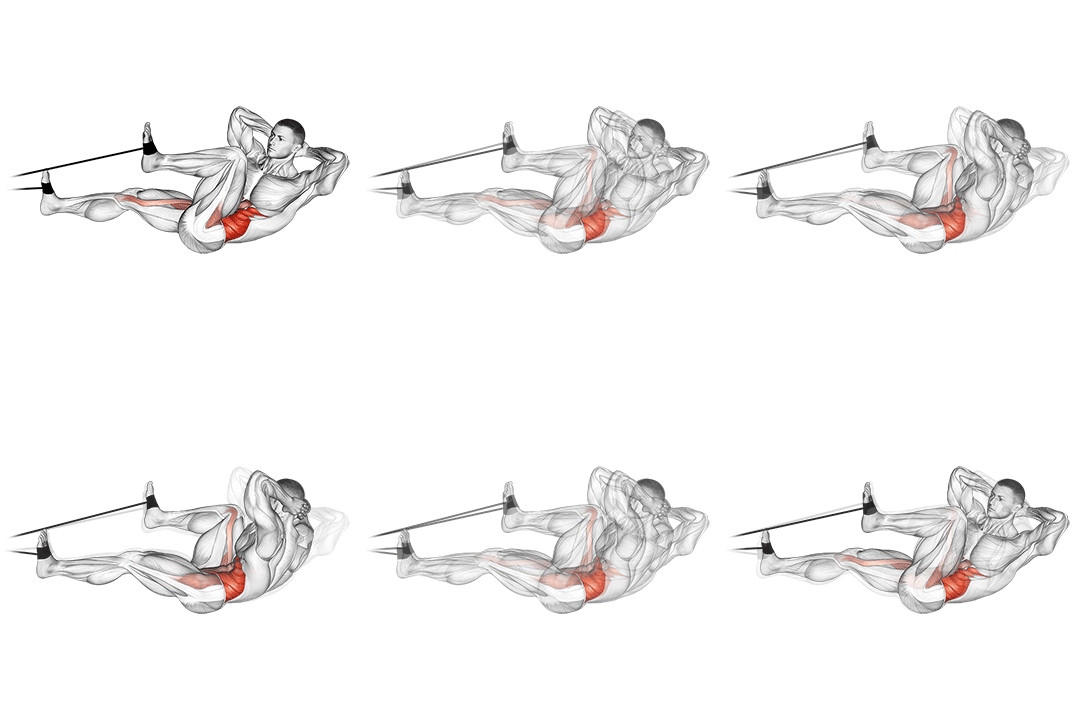
More comparisons with Band Jack Knife Sit-up
Compare More Exercises
Use our free comparison tool to analyze any two exercises head-to-head.
Compare Exercises