

Band Bench Press vs Band One Arm Twisting Chest Press: Complete Comparison Guide
Band Bench Press vs Band One Arm Twisting Chest Press: you’re deciding between a stable bilateral press and a rotational unilateral option. I’ll walk you through how each targets the pectorals, how the force vectors and band tension change through the range, plus clear technique cues, rep ranges (6–12 for hypertrophy, 3–6 for strength), and when to pick one over the other. Read on to learn which move gives you more chest tension, which recruits core and serratus, and how to program both into a structured routine.
Exercise Comparison
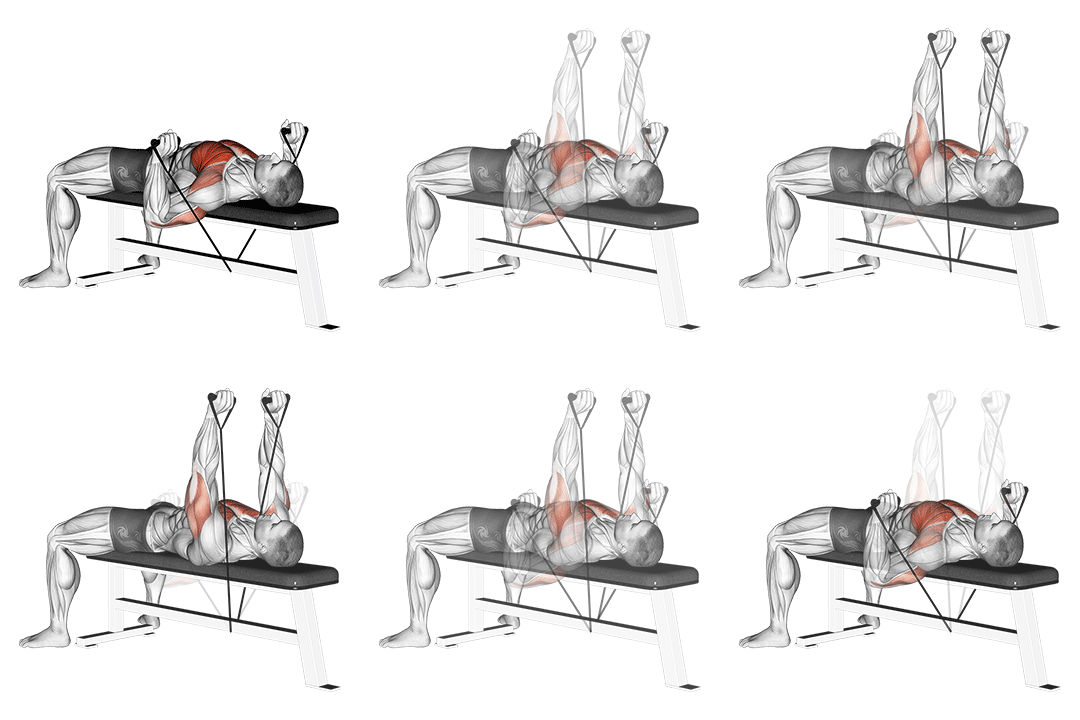
Band Bench Press
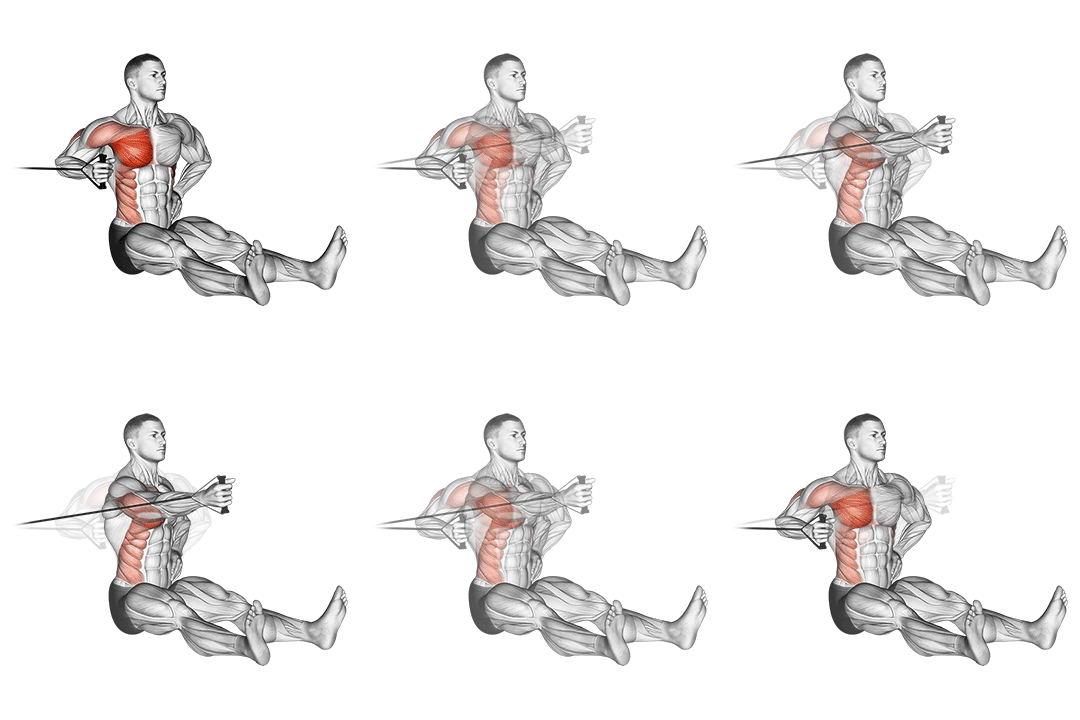
Band One Arm Twisting Chest Press
Head-to-Head Comparison
| Attribute | Band Bench Press | Band One Arm Twisting Chest Press |
|---|---|---|
| Target Muscle |
Pectorals
|
Pectorals
|
| Body Part |
Chest
|
Chest
|
| Equipment |
Band
|
Band
|
| Difficulty |
Intermediate
|
Intermediate
|
| Movement Type |
Compound
|
Compound
|
| Secondary Muscles |
2
|
2
|
Secondary Muscles Activated
Band Bench Press
Band One Arm Twisting Chest Press
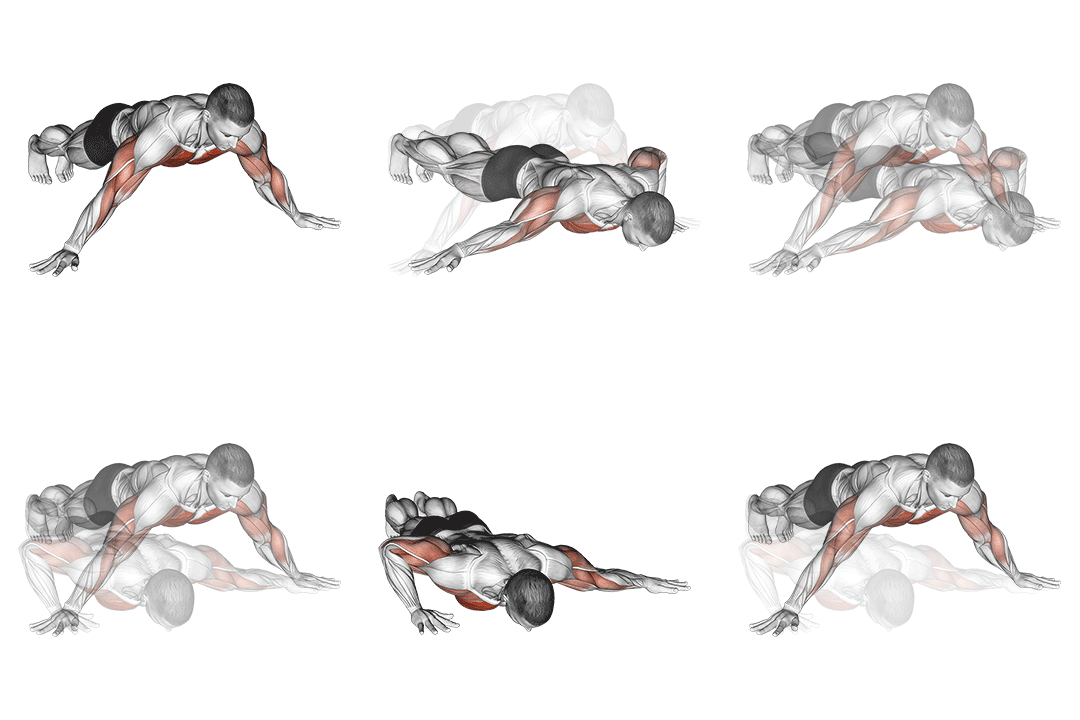
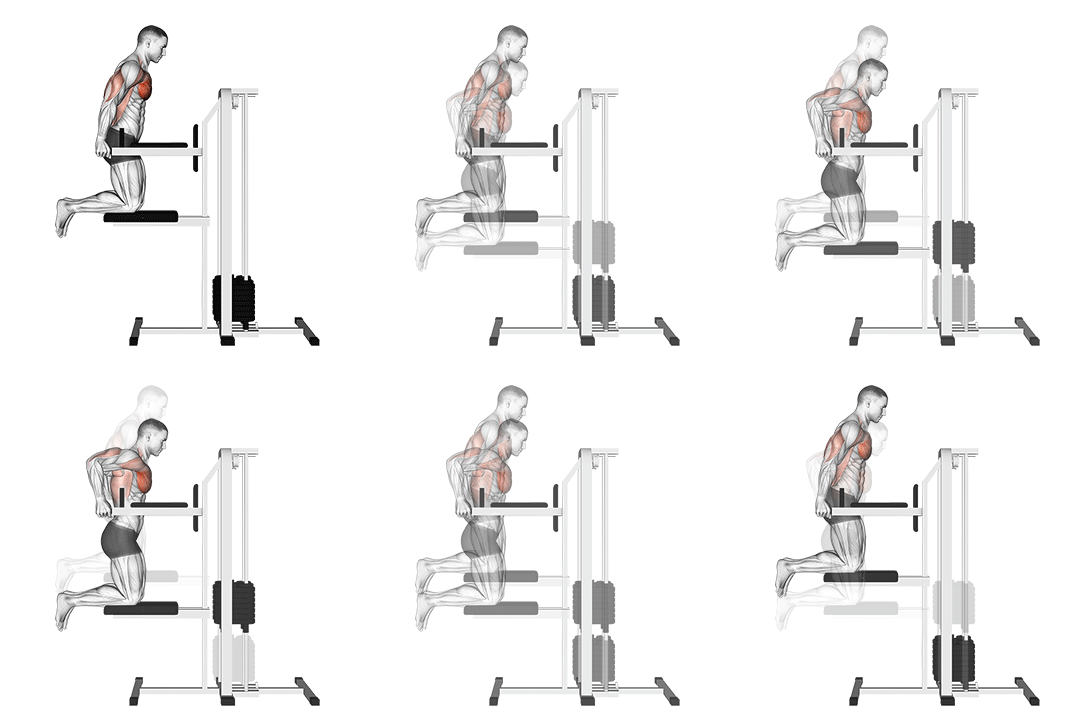
Visual Comparison
Overview
Band Bench Press vs Band One Arm Twisting Chest Press: you’re deciding between a stable bilateral press and a rotational unilateral option. I’ll walk you through how each targets the pectorals, how the force vectors and band tension change through the range, plus clear technique cues, rep ranges (6–12 for hypertrophy, 3–6 for strength), and when to pick one over the other. Read on to learn which move gives you more chest tension, which recruits core and serratus, and how to program both into a structured routine.
Key Differences
- Both exercises target the Pectorals using Band. The main differences are in their movement patterns and muscle activation angles.
Pros & Cons
Band Bench Press
+ Pros
- Stable bilateral pressing allows heavier, controlled loading
- Easier to teach and cue—good for consistent technique
- Simple progressive overload with heavier or multiple bands
- Strong triceps and anterior deltoid carryover for lockout strength
− Cons
- Requires a bench or firm surface
- Less core and serratus activation compared with unilateral options
- Band path can shift if bands aren’t anchored evenly
Band One Arm Twisting Chest Press
+ Pros
- Requires minimal equipment—no bench needed
- Builds unilateral strength and fixes left-right imbalances
- Adds core and serratus anterior activation through rotation
- Improves shoulder stability under rotational load
− Cons
- Harder to overload symmetrically for maximal strength
- Higher coordination and stability demand—steeper learning curve
- More rotational stress on the shoulder if technique fails
When Each Exercise Wins
The bilateral Band Bench Press lets you load both pectorals evenly and increase band resistance more predictably, making it easier to target 6–12 reps with high time under tension and progressive overload for muscle growth.
Strength development benefits from stable, repeatable loading. The bench variation allows heavier total force production and clearer progression in 3–6 rep ranges, with consistent force vectors for hitting lockout strength.
Beginners learn pressing mechanics faster on a bench where stability reduces compensations. You can teach scapular retraction, elbow angle (about 30–45 degrees from the torso), and proper band line without complex rotational demands.
Without a bench, the one-arm twisting press only needs a door anchor and a single band. It delivers a full-chest stimulus plus core work, making it ideal when space and equipment are limited.
Frequently Asked Questions
Can I do both Band Bench Press and Band One Arm Twisting Chest Press in the same workout?
Yes. Use the Band Bench Press as your primary pressing movement (3–5 sets) and the One Arm Twisting Press as an accessory (2–4 sets) to target unilateral control, serratus activation, and finish the chest with a different force vector.
Which exercise is better for beginners?
Beginners should start with the Band Bench Press because the bench stabilizes the body and reduces rotational demands, allowing you to learn safe elbow angles (about 30–45 degrees) and keep the scapula packed.
How do the muscle activation patterns differ?
The bench press produces a largely horizontal adduction pattern with rising band tension toward lockout, concentrating on pectoral and triceps force in a linear vector. The twisting press adds internal rotation and torque, increasing serratus and oblique activation while shifting pectoral fiber shortening across the range.
Can Band One Arm Twisting Chest Press replace Band Bench Press?
Not entirely. The twisting press can supplement or substitute when you lack a bench or want unilateral work, but it doesn’t provide the same symmetric overload and simplicity for maximal strength—keep the bench press for primary loading when possible.
Expert Verdict
Use the Band Bench Press when you want dependable bilateral loading, straightforward progressive overload, and focused pectoral and triceps development—target 3–5 sets of 6–12 reps for hypertrophy or 3–5 reps for strength with heavier bands. Choose the Band One Arm Twisting Chest Press when you need portability, unilateral work to fix imbalances, or to train serratus and oblique engagement under rotation; aim for 3–4 sets of 8–15 reps and control the twist through a 20–45 degree rotation. Both belong in a balanced program: prioritize the bench press for raw chest volume and strength, and add the twisting press as an accessory for stability and core integration.
Also Compare
More comparisons with Band Bench Press
More comparisons with Band One Arm Twisting Chest Press

Compare More Exercises
Use our free comparison tool to analyze any two exercises head-to-head.
Compare Exercises