

Band Bicycle Crunch vs Band Kneeling Twisting Crunch: Complete Comparison Guide
Band Bicycle Crunch vs Band Kneeling Twisting Crunch — two banded isolation moves that both target your abs but load them differently. You’ll get a clear side-by-side look at muscle emphasis, setup and equipment, difficulty and injury risk, plus practical cues so you can pick the one that matches your goals. I’ll cover biomechanics (force vectors, length-tension), exact technique cues for safer reps, rep ranges for hypertrophy and strength, and programming advice so you can use one or both efficiently in your workouts.
Exercise Comparison
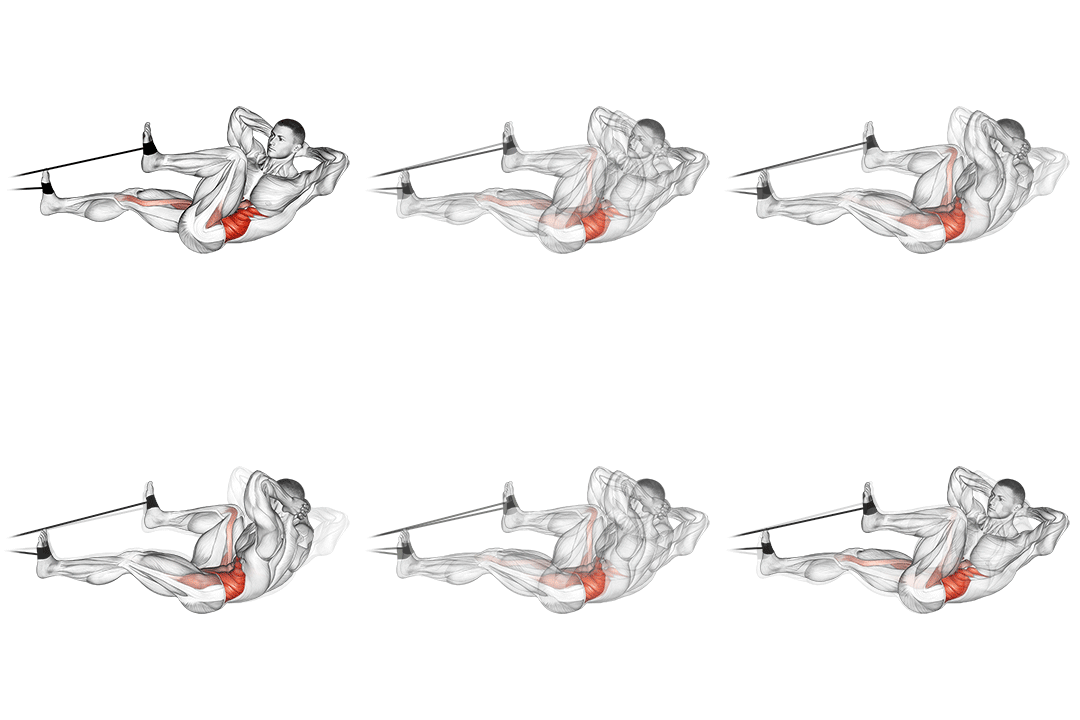
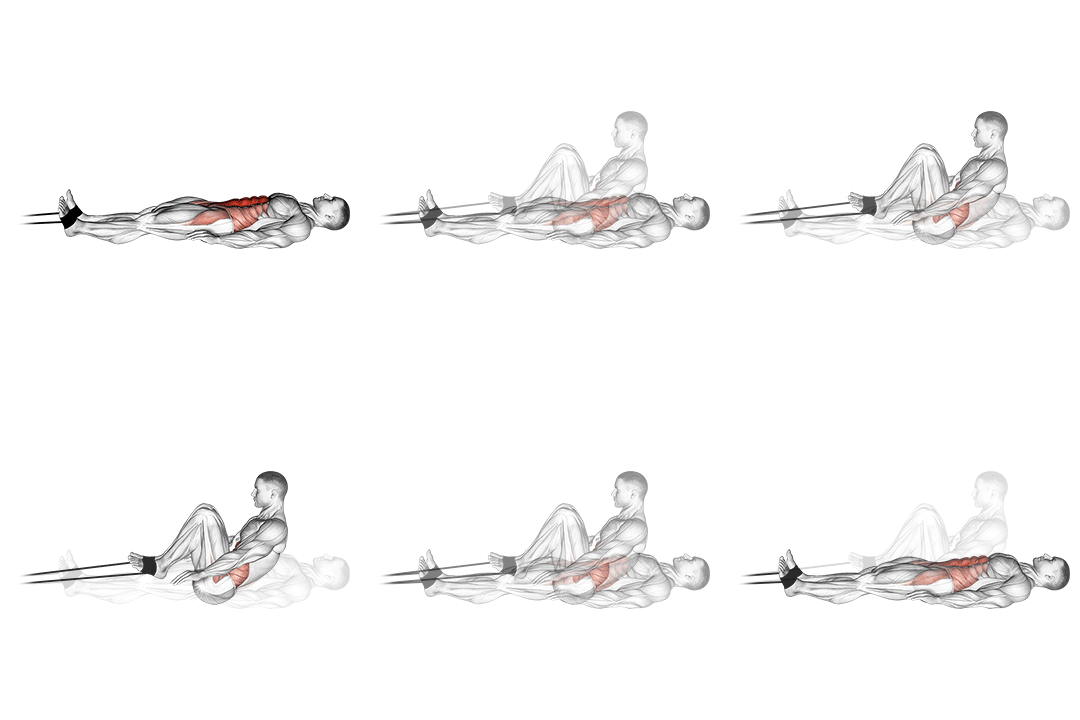
Band Bicycle Crunch
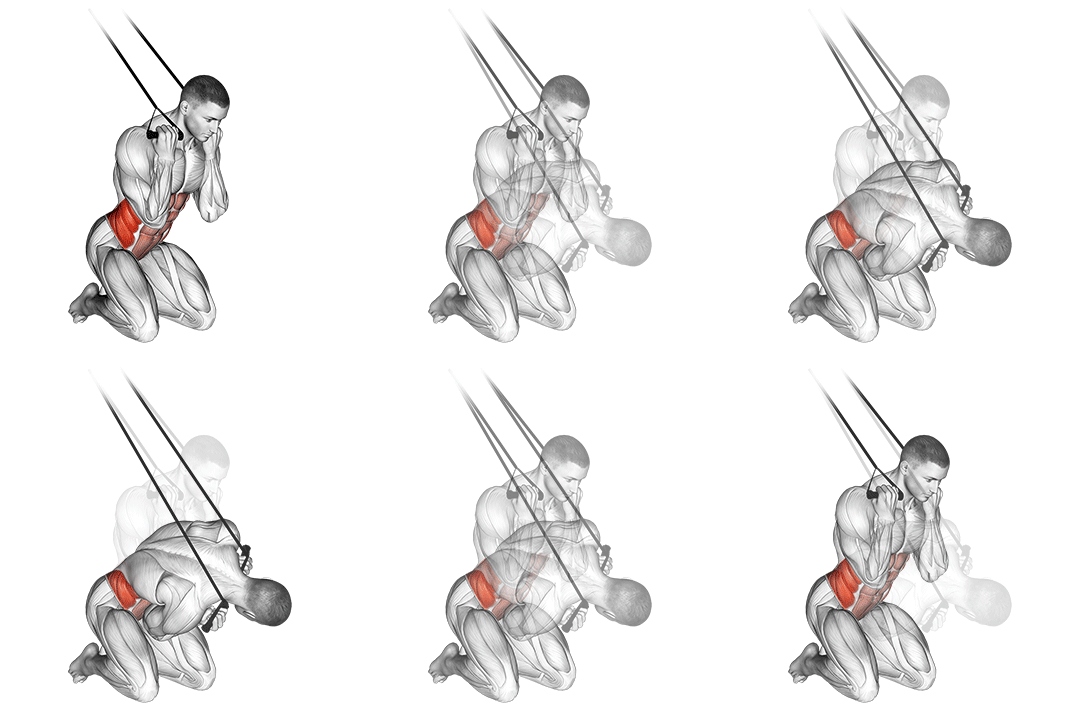
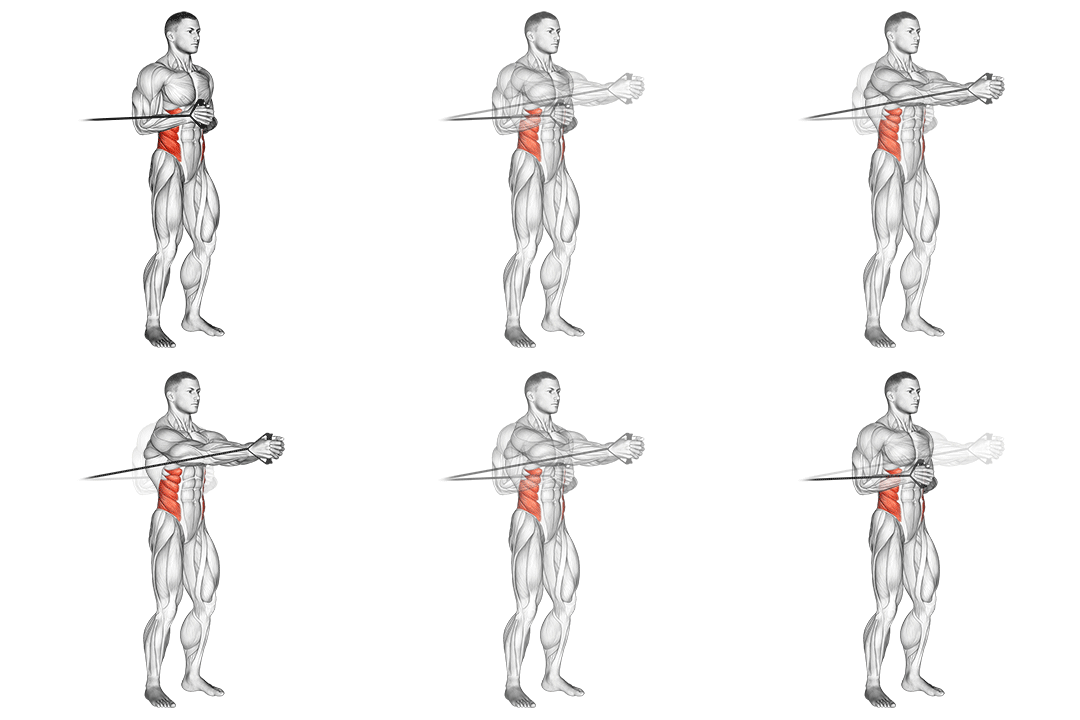
Band Kneeling Twisting Crunch
Head-to-Head Comparison
| Attribute | Band Bicycle Crunch | Band Kneeling Twisting Crunch |
|---|---|---|
| Target Muscle |
Abs
|
Abs
|
| Body Part |
Waist
|
Waist
|
| Equipment |
Band
|
Band
|
| Difficulty |
Intermediate
|
Intermediate
|
| Movement Type |
Isolation
|
Isolation
|
| Secondary Muscles |
2
|
1
|
Secondary Muscles Activated
Band Bicycle Crunch
Band Kneeling Twisting Crunch
Visual Comparison
Overview
Band Bicycle Crunch vs Band Kneeling Twisting Crunch — two banded isolation moves that both target your abs but load them differently. You’ll get a clear side-by-side look at muscle emphasis, setup and equipment, difficulty and injury risk, plus practical cues so you can pick the one that matches your goals. I’ll cover biomechanics (force vectors, length-tension), exact technique cues for safer reps, rep ranges for hypertrophy and strength, and programming advice so you can use one or both efficiently in your workouts.
Key Differences
- Both exercises target the Abs using Band. The main differences are in their movement patterns and muscle activation angles.
Pros & Cons
Band Bicycle Crunch
+ Pros
- Dynamic rectus activation plus hip-flexor engagement for total anterior chain work
- No fixed anchor required if using a loop band around feet
- Multiple progression options: tempo, single-leg, higher reps (12–20+)
- Good for metabolic core circuits and unilateral coordination
− Cons
- Higher demand on hip flexors, which may fatigue before abs
- Greater coordination required — steeper learning curve
- Risk of repetitive lumbar flexion if hips drop or pelvis isn’t braced
Band Kneeling Twisting Crunch
+ Pros
- Stronger oblique emphasis via sustained rotational torque
- Stable setup with anchored band gives a predictable force vector
- Easier to coach and scale load quickly by changing band tension
- Lower demand on hip flexors, so abs and obliques can be targeted more directly
− Cons
- Requires a secure anchor or door attachment
- Rotation can stress lumbar segments if not braced properly
- Less dynamic hip involvement — fewer options for unilateral leg work
When Each Exercise Wins
The alternating leg drive and continuous concentric-eccentric cycles increase time under tension for the rectus abdominis and hip flexors. Use 8–20 rep ranges, 3–4 second eccentrics, or controlled pauses to maximize hypertrophy.
An anchored band lets you apply higher peak tension and train oblique strength against a consistent rotational force vector. Heavy-band sets of 6–12 controlled reps build torque capacity and anti-rotation strength.
The kneeling position reduces coordination demands and provides a stable base to learn core bracing, making it easier to cue neutral pelvis and controlled rotation before adding complexity.
A loop band plus floor space is often all you need—no door anchor required—so you can perform effective ab-focused sessions anywhere with minimal gear.
Frequently Asked Questions
Can I do both Band Bicycle Crunch and Band Kneeling Twisting Crunch in the same workout?
Yes. Pair them by doing 2–3 sets of one for 8–15 reps and the other for 10–20 reps. Sequence them so the exercise you want to emphasize receives fresh effort (e.g., kneeling twists first for oblique strength, then bicycles for hypertrophy/metabolic work).
Which exercise is better for beginners?
Band Kneeling Twisting Crunch is better for beginners because the stable kneeling base reduces coordination demands and makes it easier to learn bracing and rotation control before progressing to dynamic leg-driven crunches.
How do the muscle activation patterns differ?
Bicycle crunches produce alternating hip flexion and concentric rectus work, so hip flexors and rectus see cyclic length changes. Kneeling twisting crunches generate sustained oblique tension from transverse-plane rotation and an isometric component in the rectus, increasing oblique recruitment.
Can Band Kneeling Twisting Crunch replace Band Bicycle Crunch?
It can replace it if your goal is oblique strength or limited equipment allows only an anchor. However, for rectus hypertrophy and unilateral leg coordination you’ll lose the hip-flexor-driven stimulus that the bicycle provides, so rotating both into your program is usually best.
Expert Verdict
Use Band Bicycle Crunch when your priority is rectus-focused hypertrophy, unilateral coordination, and metabolic core work. It gives you more tempo and leg-driven progression options but requires strict pelvic control to protect the lumbar spine. Choose 8–20 reps with 2–4 second eccentrics and single-leg variations as you progress. Use Band Kneeling Twisting Crunch when you need targeted oblique strength, higher peak tension, and an easier learning curve. Anchor the band at chest height, rotate 30–45°, and brace the ribcage to avoid lumbar shear. Both exercises complement each other: pair them in a program to cover rectus shortening and transverse-plane torque.
Also Compare
More comparisons with Band Bicycle Crunch
More comparisons with Band Kneeling Twisting Crunch
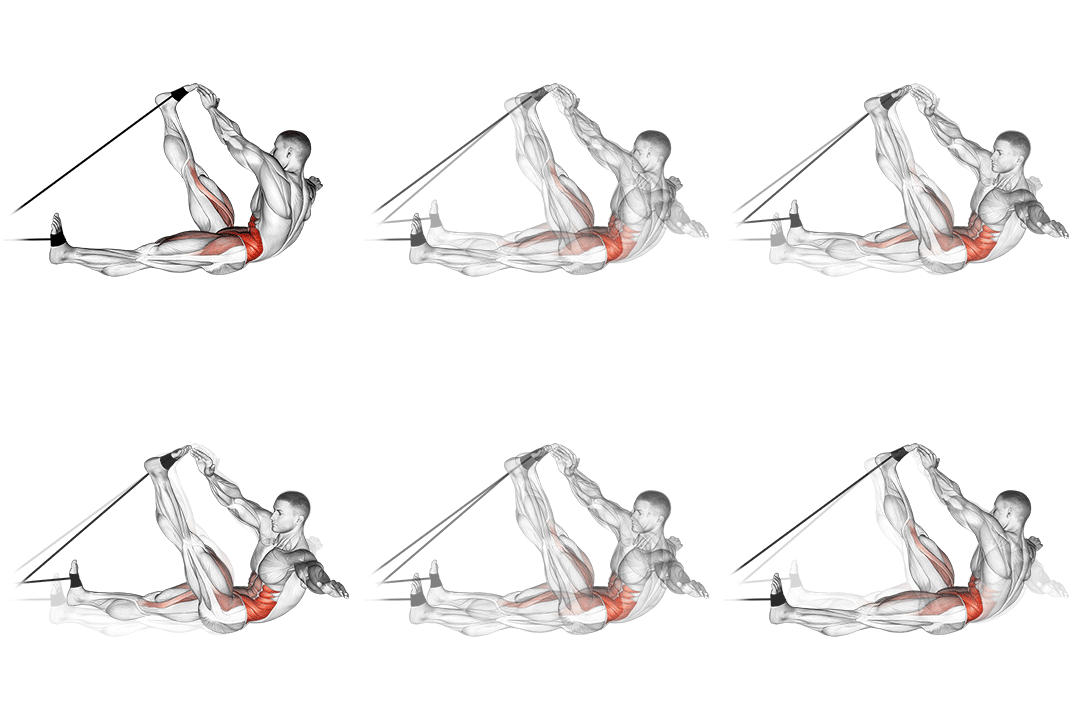
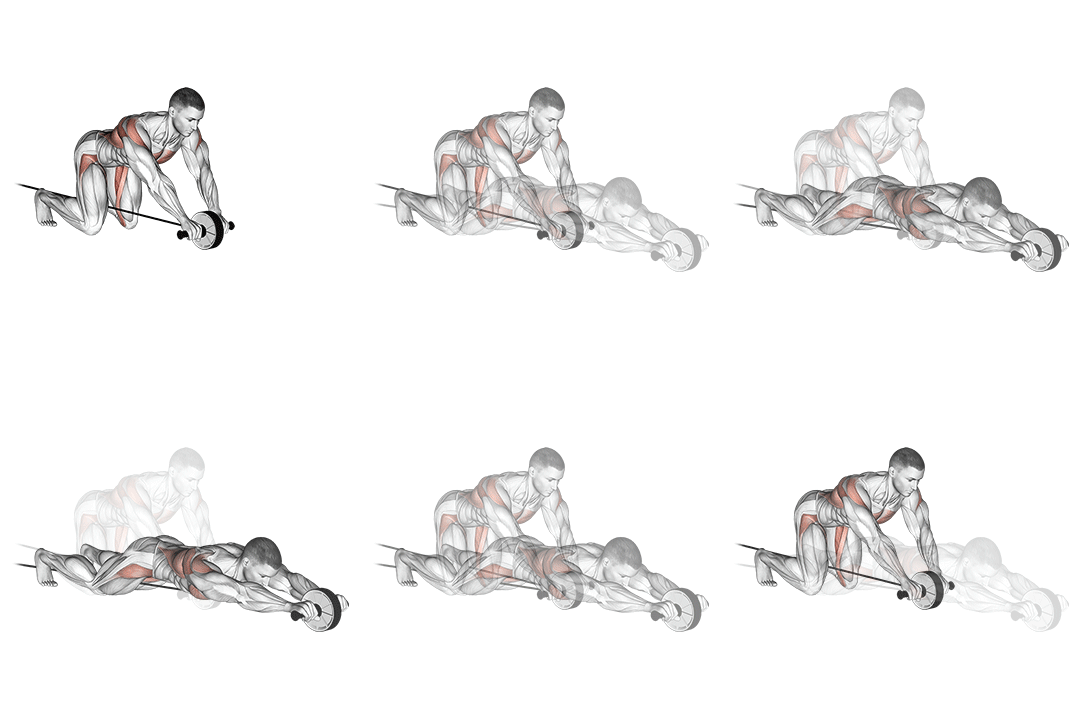
Compare More Exercises
Use our free comparison tool to analyze any two exercises head-to-head.
Compare Exercises