

Band Horizontal Pallof Press vs Band Jack Knife Sit-up: Complete Comparison Guide
Band Horizontal Pallof Press vs Band Jack Knife Sit-up — two banded ab moves that look similar on paper but load your core very differently. You’ll get clear guidance on primary and secondary muscle activation, equipment and setup, technique cues, rep ranges (8–15 vs 6–12), injury risk, and which exercise to use depending on whether you want anti-rotation strength or high‑tension spinal flexion for muscle growth. Read on to learn exact setup cues, biomechanical reasoning, and practical progressions so you can pick the right move for your workouts.
Exercise Comparison
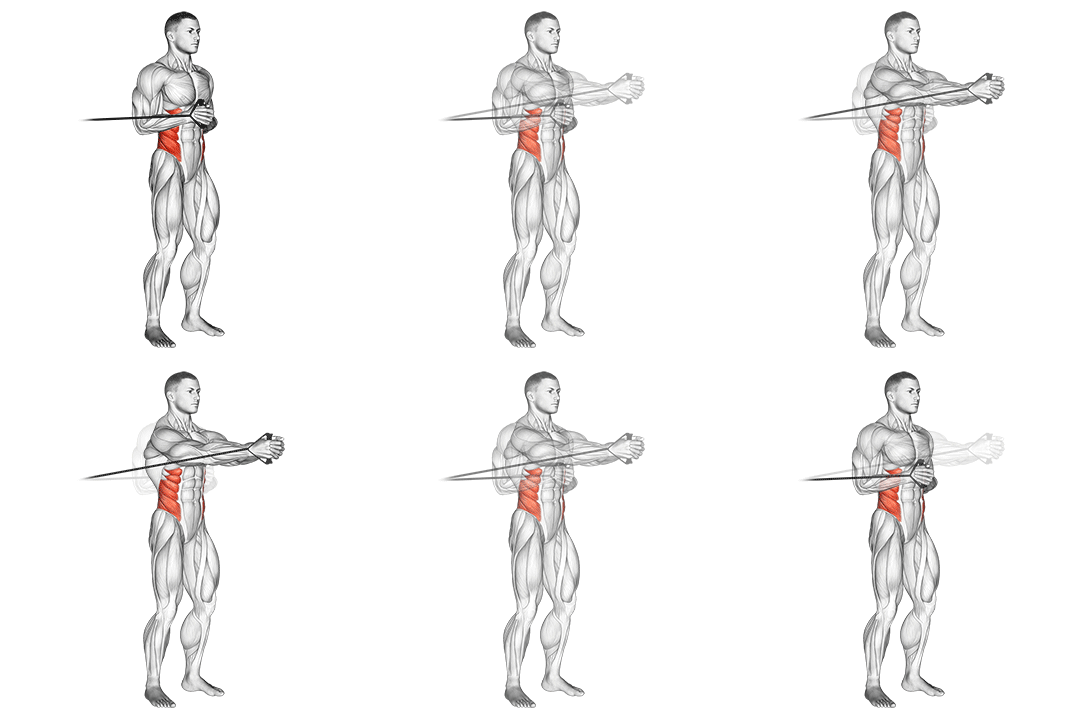
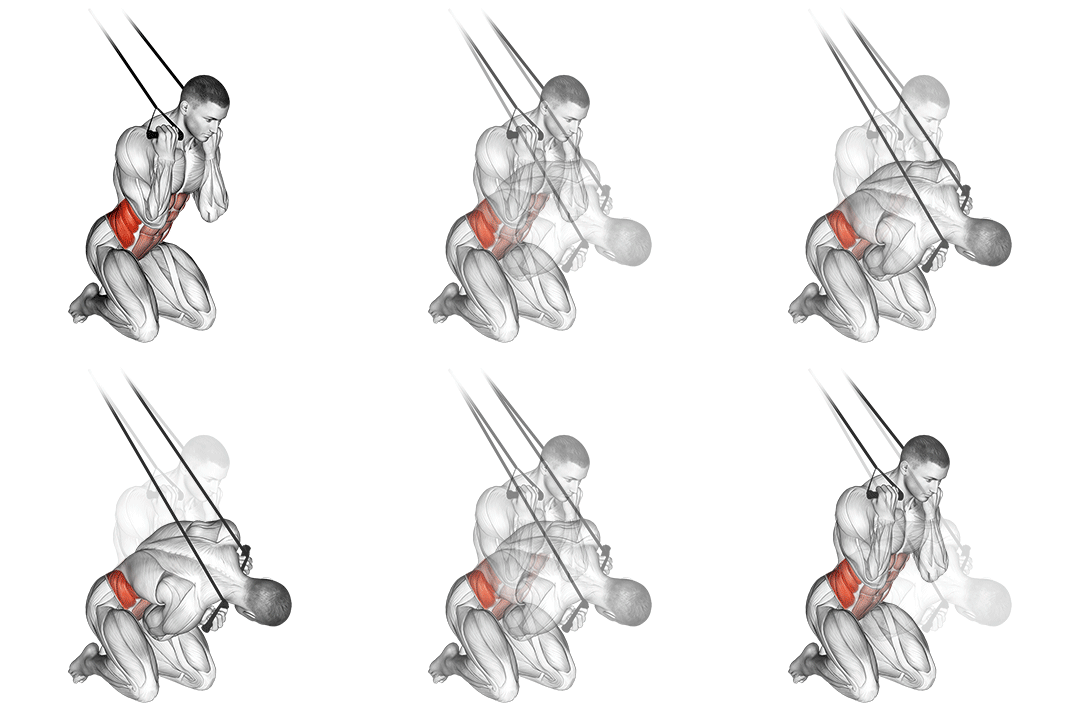
Band Horizontal Pallof Press
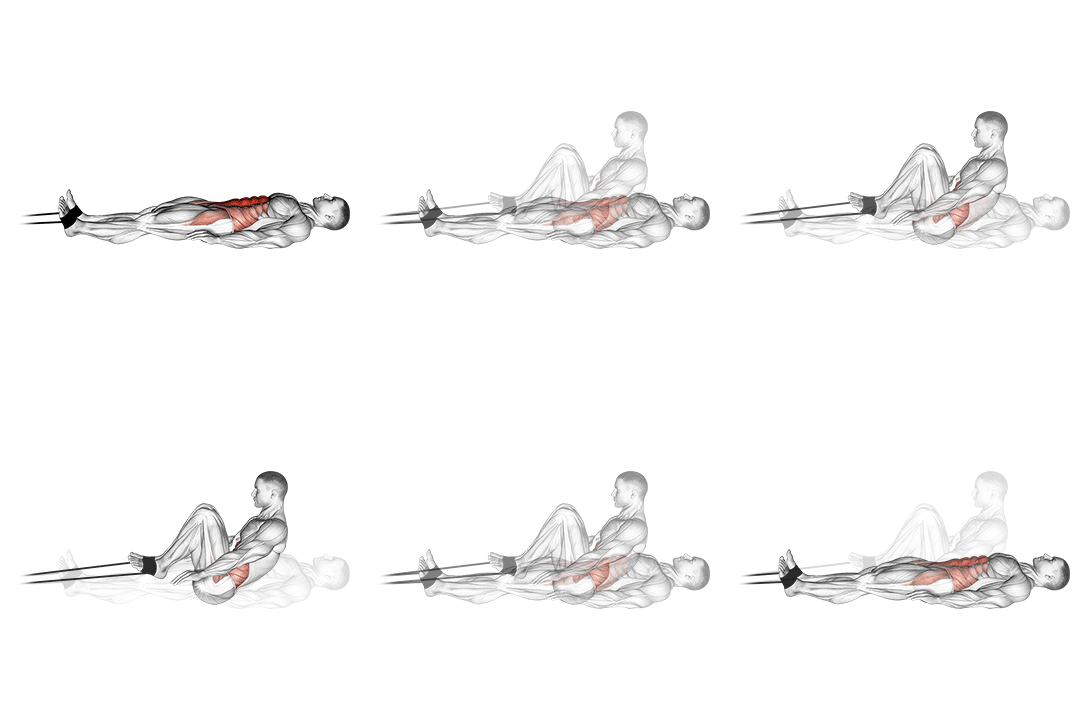
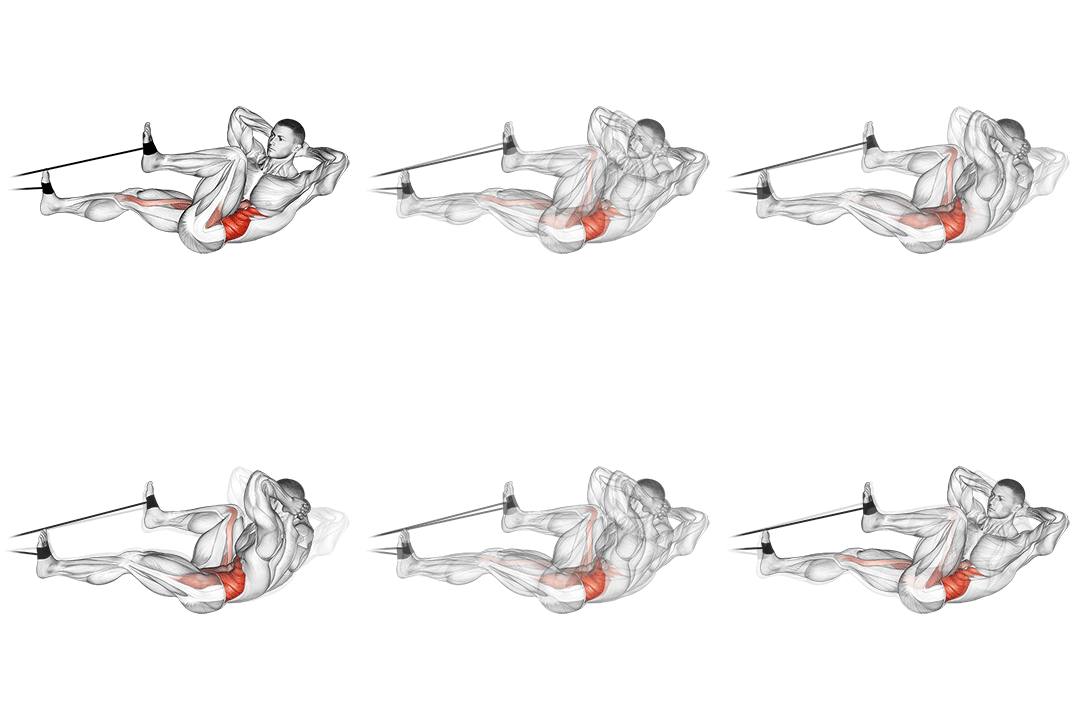
Band Jack Knife Sit-up
Head-to-Head Comparison
| Attribute | Band Horizontal Pallof Press | Band Jack Knife Sit-up |
|---|---|---|
| Target Muscle |
Abs
|
Abs
|
| Body Part |
Waist
|
Waist
|
| Equipment |
Band
|
Band
|
| Difficulty |
Intermediate
|
Advanced
|
| Movement Type |
Isolation
|
Isolation
|
| Secondary Muscles |
2
|
1
|
Secondary Muscles Activated
Band Horizontal Pallof Press
Band Jack Knife Sit-up
Visual Comparison
Overview
Band Horizontal Pallof Press vs Band Jack Knife Sit-up — two banded ab moves that look similar on paper but load your core very differently. You’ll get clear guidance on primary and secondary muscle activation, equipment and setup, technique cues, rep ranges (8–15 vs 6–12), injury risk, and which exercise to use depending on whether you want anti-rotation strength or high‑tension spinal flexion for muscle growth. Read on to learn exact setup cues, biomechanical reasoning, and practical progressions so you can pick the right move for your workouts.
Key Differences
- Difficulty levels differ: Band Horizontal Pallof Press is intermediate, while Band Jack Knife Sit-up is advanced.
- Both exercises target the Abs using Band. The main differences are in their movement patterns and muscle activation angles.
Pros & Cons
Band Horizontal Pallof Press
+ Pros
- Strong anti-rotation training that improves core stiffness and transfer to lifts
- Low setup complexity and lower lumbar shear forces
- Easy to scale tension and unilateral variations (single-leg stance)
- Useful for rehabbing or preventing rotational instability
− Cons
- Less direct spinal flexion work for rectus abdominis hypertrophy
- Requires a stable external anchor at appropriate height
- Can underload the abs if you use too light a band or poor bracing
Band Jack Knife Sit-up
+ Pros
- High rectus abdominis and hip‑flexor loading for muscle growth
- Large range of motion increases time under tension
- Simple band-only setup if you have an overhead anchor
- Effective single-movement compression of torso and legs for core shaping
− Cons
- Greater lumbar and hip-flexor strain risk with poor technique
- Harder to learn and control the eccentric phase
- Requires precise band placement and a secure overhead anchor
When Each Exercise Wins
Jack Knife produces greater concentric-eccentric loading of the rectus abdominis across a large ROM, increasing time under tension. Use 6–12 reps with 2–3s eccentrics to drive muscle growth.
Pallof Press builds anti-rotation strength and core stiffness that transfer to heavy lifts; you can load it progressively and train isometric holds (10–30s) to increase force output.
Simpler setup and a lower risk profile let you learn bracing and anti-rotation mechanics quickly. Start with 8–15 reps and short 1–3s holds before adding single-leg variations.
Requires only a waist‑height anchor and standing space; you get useful core stimulus with minimal risk. Jack Knife needs a secure overhead anchor and more control, which can be harder at home.
Frequently Asked Questions
Can I do both Band Horizontal Pallof Press and Band Jack Knife Sit-up in the same workout?
Yes. Pairing them provides complementary stimuli: start with Pallof presses for anti-rotation stability (2–4 sets of 8–12 with 1–3s holds), then do Jack Knives for concentric abdominal overload (3–4 sets of 6–12). Schedule Pallofs earlier to prime stability and reduce fatigue during jack knife loading.
Which exercise is better for beginners?
Band Horizontal Pallof Press is better for beginners because it teaches bracing and anti-rotation control with lower lumbar stress. Begin with light bands and focus on hips square, chest up, and a full press with minimal torso rotation.
How do the muscle activation patterns differ?
Pallof Press emphasizes steady isometric activation to resist rotation, with obliques and transverse abdominis firing to maintain neutral spine. Jack Knife uses dynamic concentric-eccentric contractions, peaking near end-range spinal flexion and engaging hip flexors strongly during closure.
Can Band Jack Knife Sit-up replace Band Horizontal Pallof Press?
Not fully. Jack Knife targets spinal flexion and hypertrophy while Pallof trains anti-rotation stiffness and transfer to compound lifts. Replace only if your goal is exclusively abdominal hypertrophy; otherwise include both for balanced core development.
Expert Verdict
Use the Band Horizontal Pallof Press when your goal is core stiffness, anti-rotation strength, and low‑risk progression. It’s ideal for improving force transfer in carries, presses, and squats and for beginners or rehab clients. Choose the Band Jack Knife Sit-up when your goal is direct rectus abdominis hypertrophy and you can control spinal flexion and hip flexor involvement; program sets of 6–12 reps with controlled 2–3s eccentrics and moderate band tension. Both can coexist: Pallof for stability and transfer, Jack Knife for concentrated abdominal growth — pick based on whether you need anti-rotation torque or high ROM spinal flexion.
Also Compare
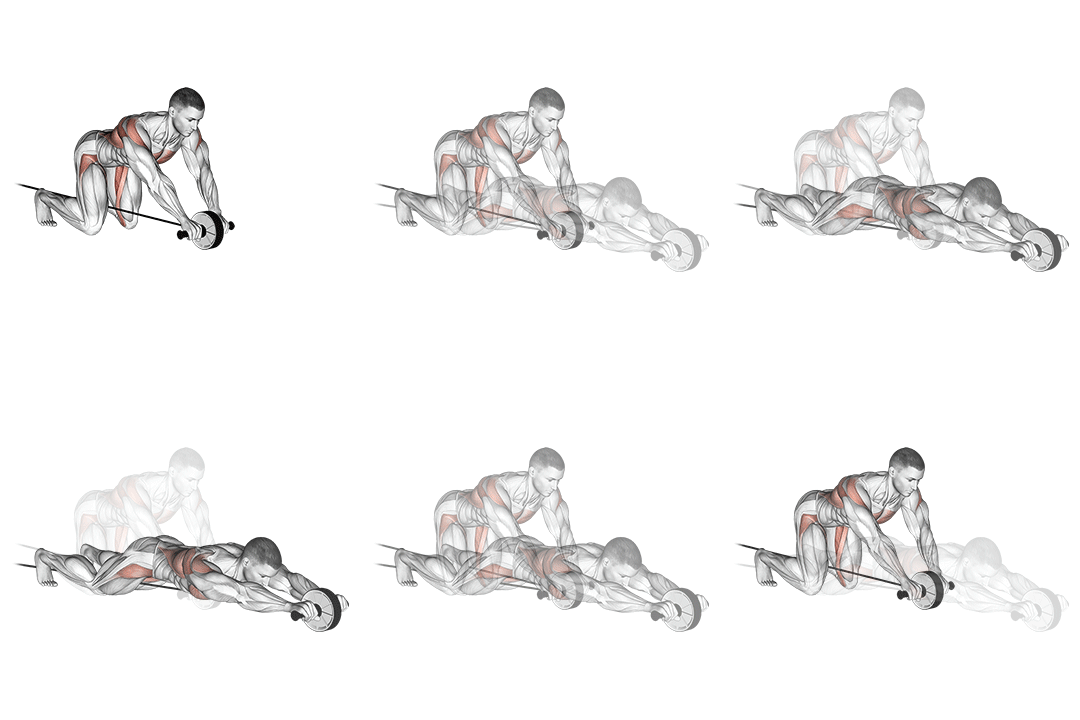
More comparisons with Band Horizontal Pallof Press
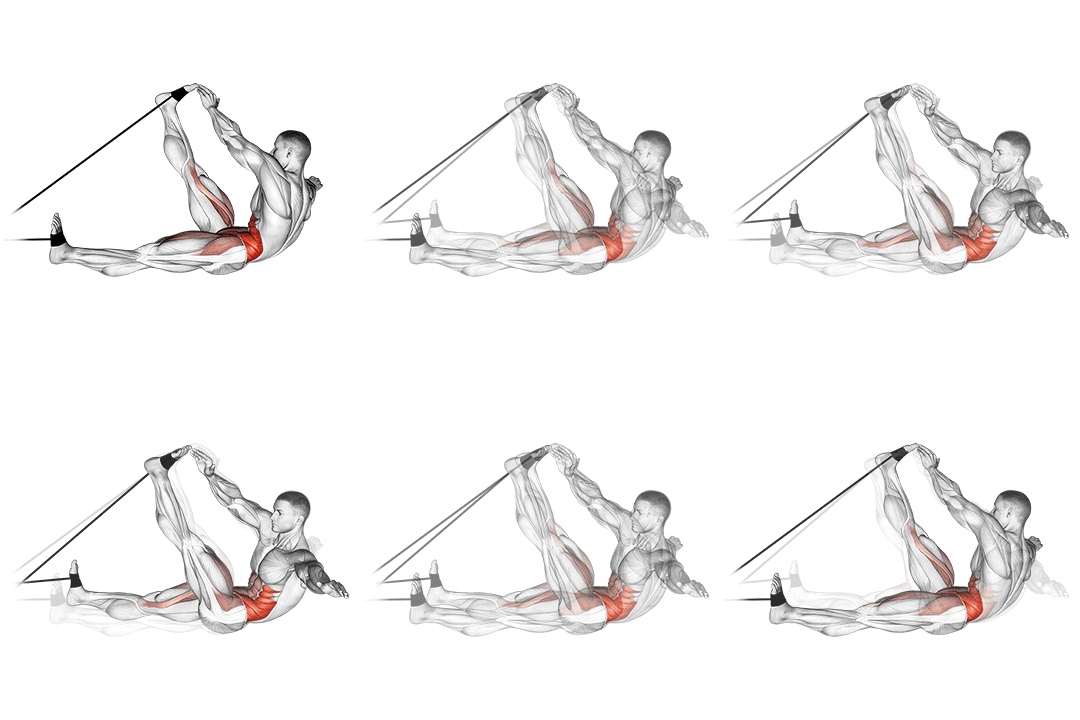
More comparisons with Band Jack Knife Sit-up
Compare More Exercises
Use our free comparison tool to analyze any two exercises head-to-head.
Compare Exercises