

Band Horizontal Pallof Press vs Band Kneeling Twisting Crunch: Complete Comparison Guide
Band Horizontal Pallof Press vs Band Kneeling Twisting Crunch — two banded isolation moves that both target your abs and obliques but do so through different force vectors and movement patterns. If you want clear guidance on which exercise to pick for anti-rotation strength, rotational torque, muscle growth, or home use, you’re in the right place. I’ll compare primary and secondary muscle activation, equipment needs, learning curve, injury risk, progressions, and give specific cues so you can choose the best move for your goals.
Exercise Comparison
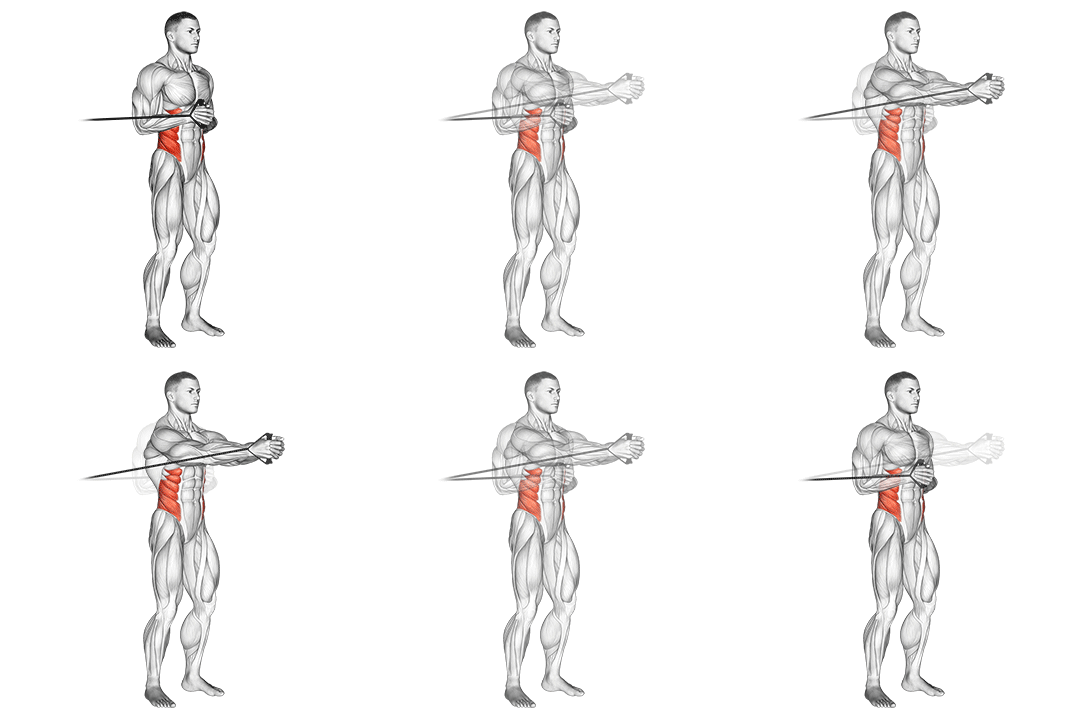
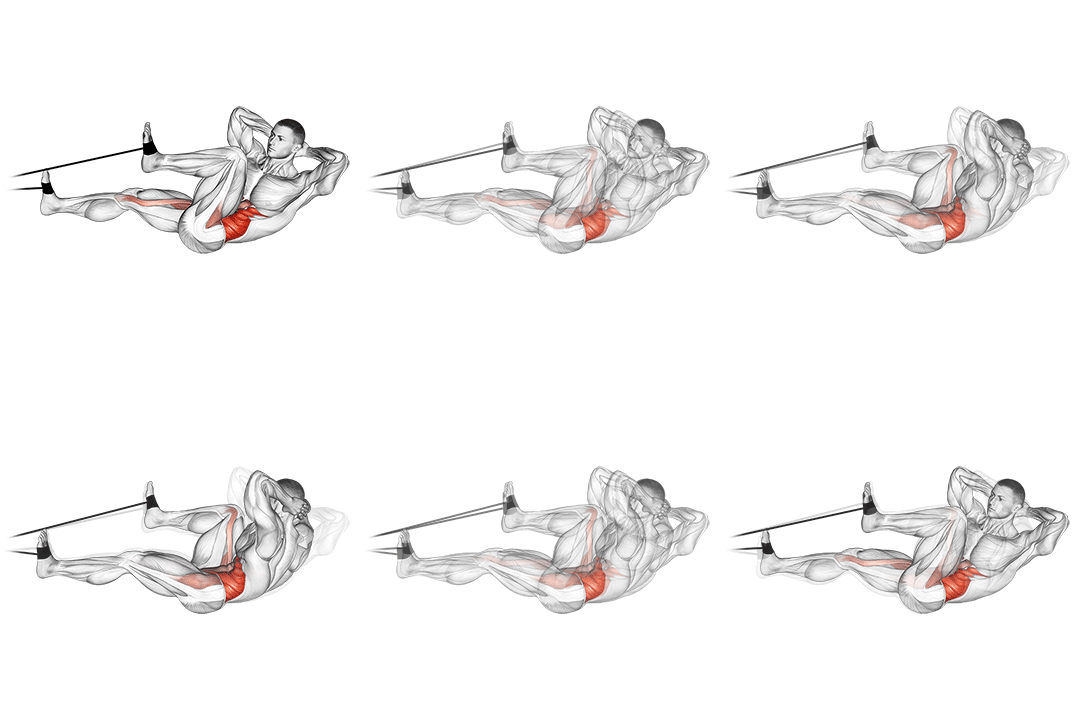
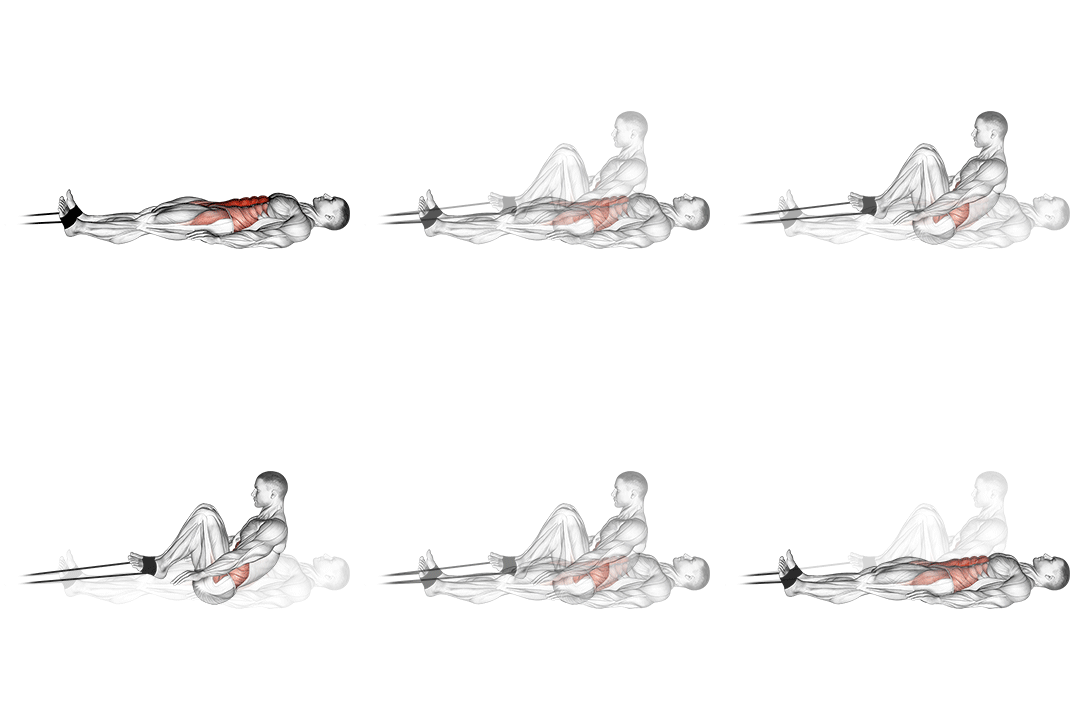
Band Horizontal Pallof Press
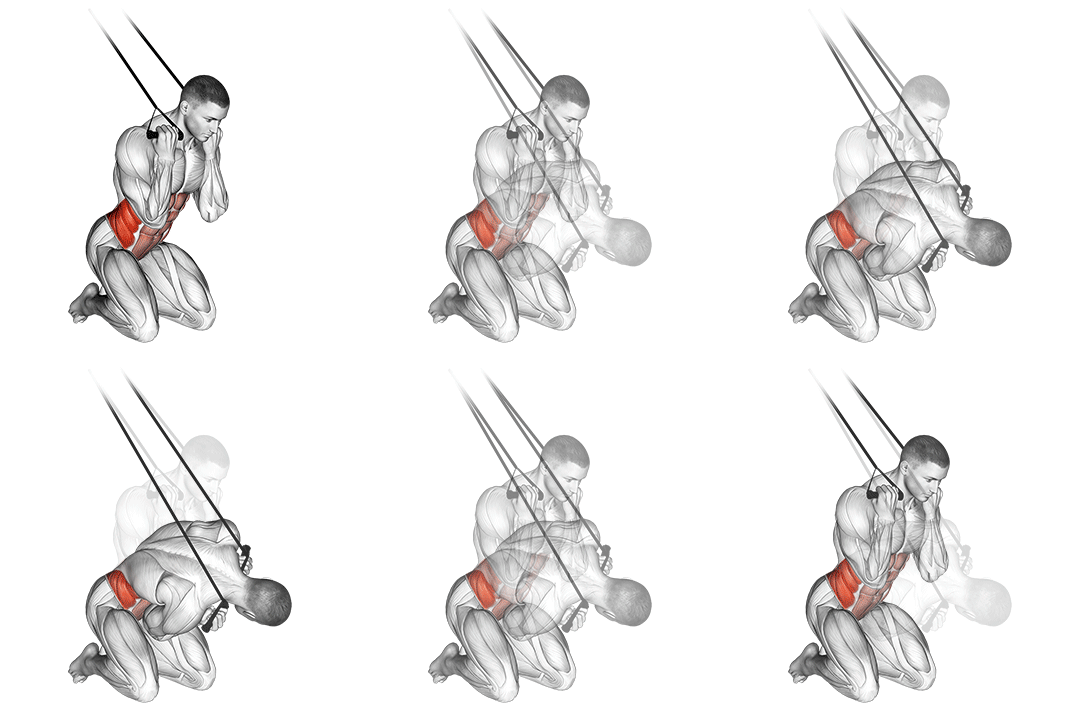
Band Kneeling Twisting Crunch
Head-to-Head Comparison
| Attribute | Band Horizontal Pallof Press | Band Kneeling Twisting Crunch |
|---|---|---|
| Target Muscle |
Abs
|
Abs
|
| Body Part |
Waist
|
Waist
|
| Equipment |
Band
|
Band
|
| Difficulty |
Intermediate
|
Intermediate
|
| Movement Type |
Isolation
|
Isolation
|
| Secondary Muscles |
2
|
1
|
Secondary Muscles Activated
Band Horizontal Pallof Press
Band Kneeling Twisting Crunch
Visual Comparison
Overview
Band Horizontal Pallof Press vs Band Kneeling Twisting Crunch — two banded isolation moves that both target your abs and obliques but do so through different force vectors and movement patterns. If you want clear guidance on which exercise to pick for anti-rotation strength, rotational torque, muscle growth, or home use, you’re in the right place. I’ll compare primary and secondary muscle activation, equipment needs, learning curve, injury risk, progressions, and give specific cues so you can choose the best move for your goals.
Key Differences
- Both exercises target the Abs using Band. The main differences are in their movement patterns and muscle activation angles.
Pros & Cons
Band Horizontal Pallof Press
+ Pros
- Develops anti-rotation strength and core stiffness under lateral band pull
- Scales easily with band tension and hold time for measurable progress
- Engages glutes and hip stabilizers to create whole-body bracing
- Low repetition impact—good for high-tension endurance sets (5–30s)
− Cons
- Less spinal flexion and shortening—limited direct rectus shortening for hypertrophy
- Requires a stable horizontal anchor at chest height
- Can feel isometric and less ‘burny’ if you prefer dynamic movements
Band Kneeling Twisting Crunch
+ Pros
- Provides a stronger concentric shortening stimulus to rectus and obliques
- Greater ROM through combined flexion and rotation—useful for muscle growth
- Simple setup for kneeling variations with minimal anchor height precision
- Feels more dynamic and metabolic for higher-rep sets (8–20 reps)
− Cons
- Higher lumbar and neck strain risk if technique breaks down
- Less glute/hip stabilization demand compared with Pallof press
- Harder to quantify and progress tension precisely without changing band length
When Each Exercise Wins
The kneeling twisting crunch gives greater concentric shortening of rectus and obliques through combined flexion and rotation, producing higher peak muscle tension per rep. Use 8–15 reps and moderate to heavy band tension to maximize time under tension for hypertrophy.
Pallof presses train anti-rotation torque and core stiffness under sustained load—key for transferring force in heavy lifts. Progress with heavier bands and longer holds (10–30s) to increase functional core strength.
Pallof presses have a simpler motor pattern focused on bracing and resisting rotation, so beginners learn neutral spine and tension habits faster. Start with light bands and 3–4 sets of 8–12s holds.
Pallof presses require minimal space and a chest-level anchor common in home settings; they also scale cleanly and are forgiving on setup. You can perform them standing or half-kneeling without special furniture.
Frequently Asked Questions
Can I do both Band Horizontal Pallof Press and Band Kneeling Twisting Crunch in the same workout?
Yes. Pair them strategically: start with Pallof presses (3–4 sets of 8–12s holds) to train core stiffness, then do 2–3 sets of 8–15 kneeling twisting crunches for concentric hypertrophy. That sequence trains both anti-rotation endurance and rotational shortening without overlapping excessive fatigue.
Which exercise is better for beginners?
Band Horizontal Pallof Press is generally better for beginners because it teaches bracing, neutral spine, and controlled tension with a simple motor pattern. Begin with light bands and short holds to build stability before adding rotational crunches.
How do the muscle activation patterns differ?
The Pallof press produces sustained isometric activation of obliques and transverse abdominis to resist lateral band pull (anti-rotation). The kneeling twisting crunch creates phasic concentric-eccentric cycles with peak oblique and rectus activation during the rotation and flexion phase.
Can Band Kneeling Twisting Crunch replace Band Horizontal Pallof Press?
Not entirely. The kneeling twisting crunch replaces dynamic rotational work and hypertrophy stimulus but doesn’t train sustained anti-rotation stiffness as effectively. If your priority is core stability and force transfer, keep the Pallof; if you want more direct ab development, prioritize the crunch.
Expert Verdict
Use the Band Horizontal Pallof Press when your goal is anti-rotation strength, spinal stability, and transfer to heavy compound lifts—it’s your go-to for core stiffness and injury prevention. Choose the Band Kneeling Twisting Crunch when you want direct rectus and oblique hypertrophy and a more dynamic, rotational crunch stimulus; program it for 8–15 reps with controlled tempo. For balanced programming, prioritize Pallof presses early in a session for stability work and add kneeling twisting crunches as a focused accessory for size and rotational power. Adjust band tension and ROM to control load and protect the lower back.
Also Compare
More comparisons with Band Horizontal Pallof Press
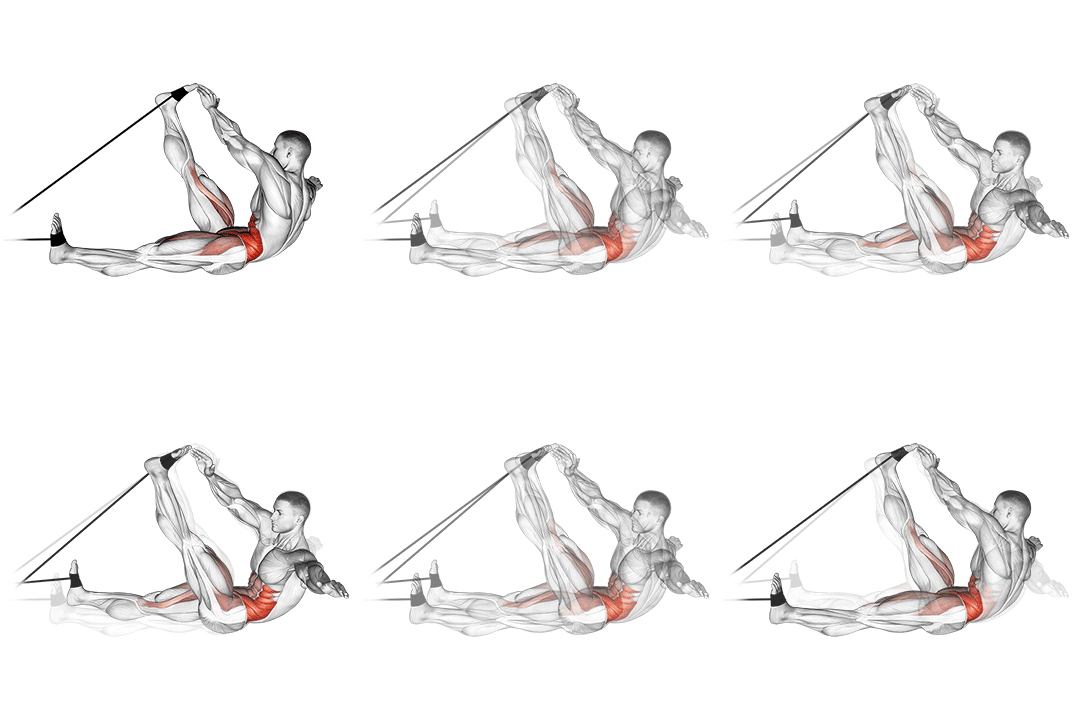
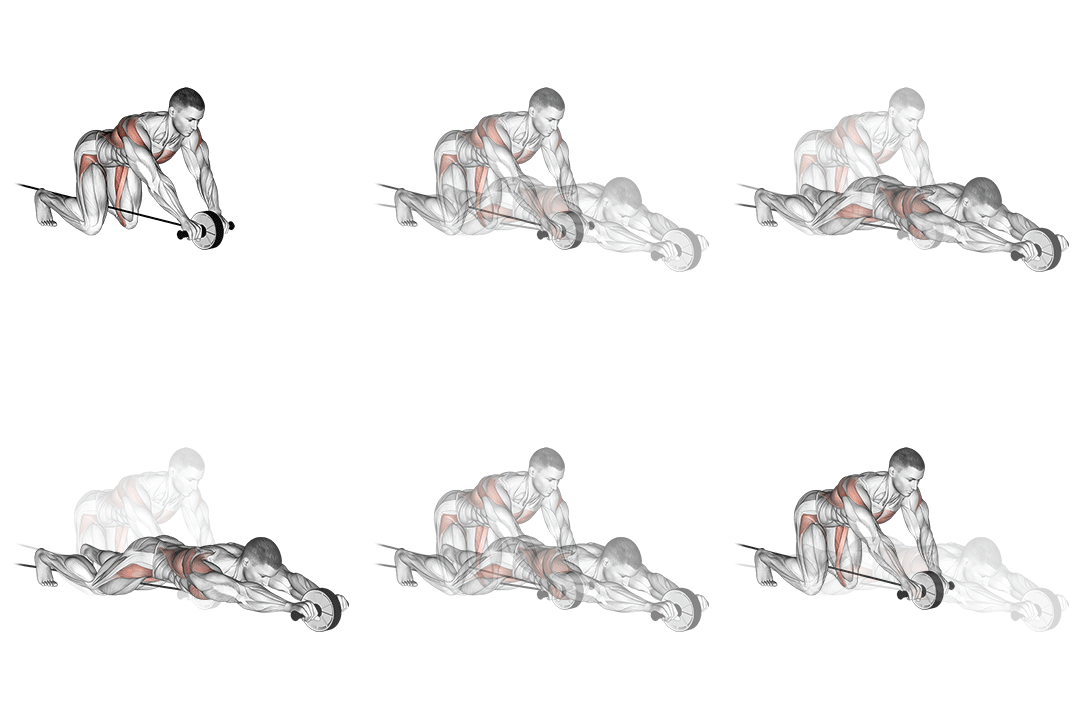
More comparisons with Band Kneeling Twisting Crunch
Compare More Exercises
Use our free comparison tool to analyze any two exercises head-to-head.
Compare Exercises