

Lever Chest Press vs Lever Incline Chest Press: Complete Comparison Guide
Lever Chest Press vs Lever Incline Chest Press — if you want a clear roadmap for chest training, you're in the right place. I'll walk you through muscle targets, joint angles, technique cues, and when to pick the flat lever press or the inclined version based on your goals. You'll learn how the incline shifts emphasis onto the upper pecs and shoulders, which exercise is easier to learn, safe rep ranges for strength and hypertrophy (4–6 and 6–12 reps), and practical programming tips you can use next workout.
Exercise Comparison
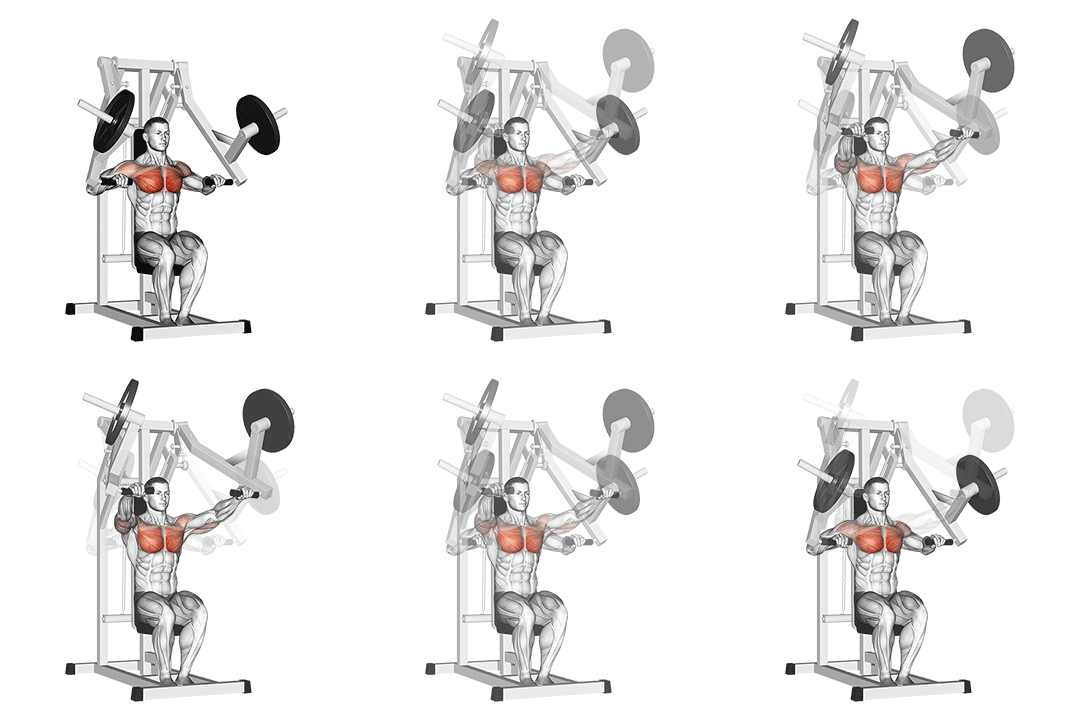
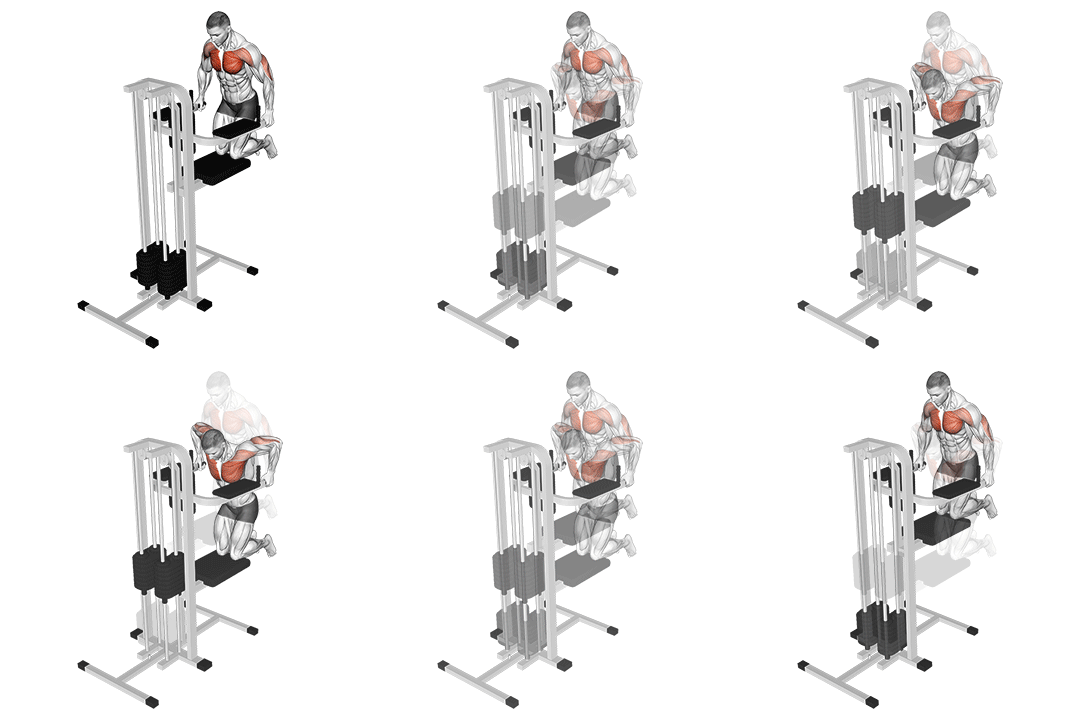
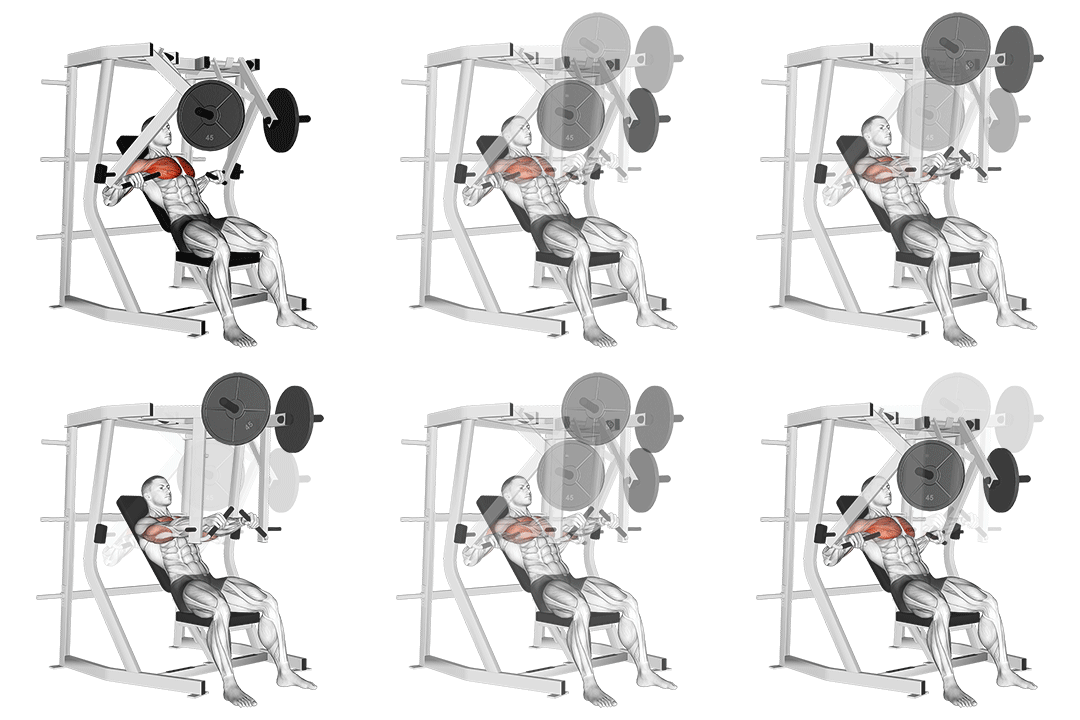
Lever Chest Press
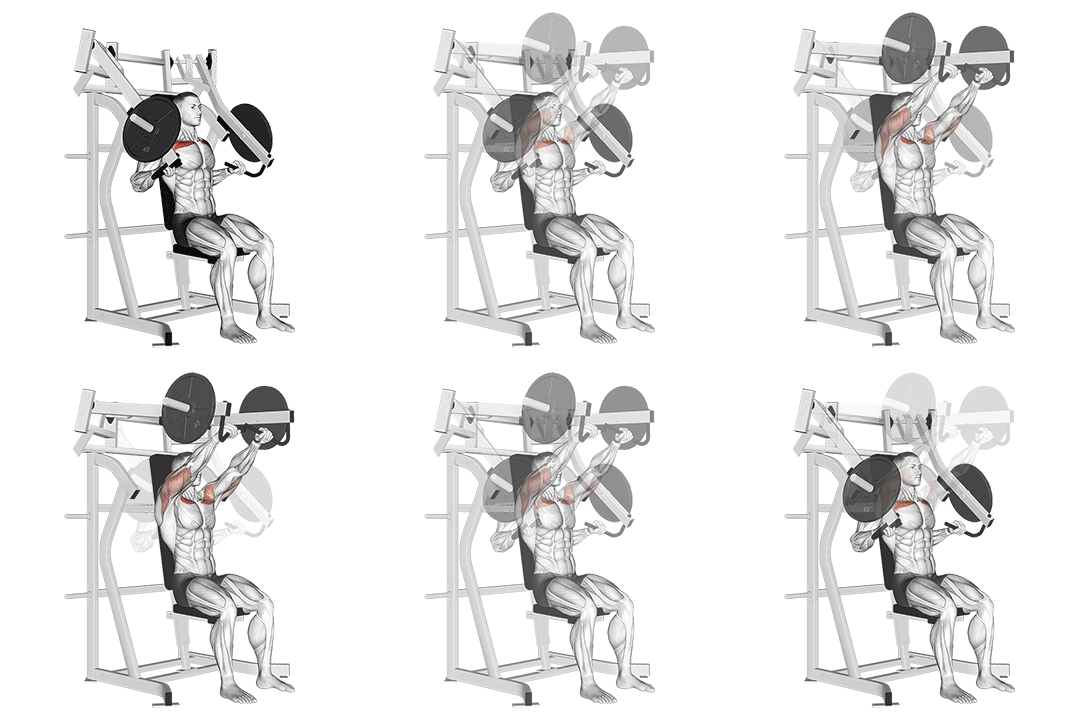
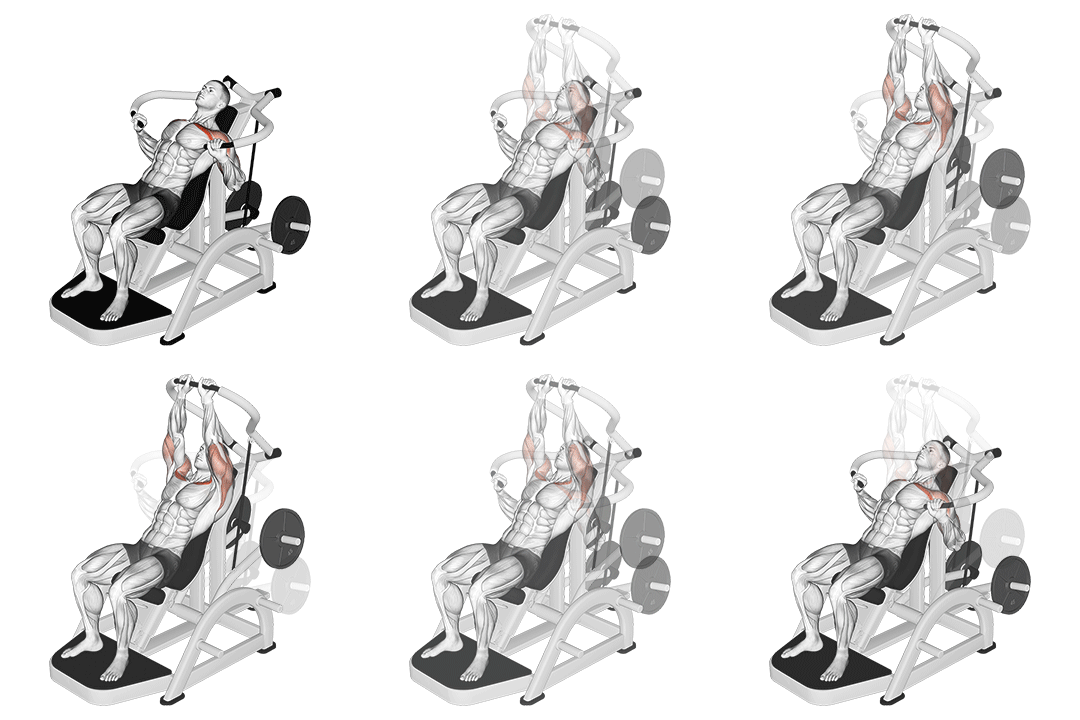
Lever Incline Chest Press
Head-to-Head Comparison
| Attribute | Lever Chest Press | Lever Incline Chest Press |
|---|---|---|
| Target Muscle |
Pectorals
|
Pectorals
|
| Body Part |
Chest
|
Chest
|
| Equipment |
Lever
|
Lever
|
| Difficulty |
Beginner
|
Intermediate
|
| Movement Type |
Compound
|
Compound
|
| Secondary Muscles |
2
|
2
|
Secondary Muscles Activated
Lever Chest Press
Lever Incline Chest Press
Visual Comparison
Overview
Lever Chest Press vs Lever Incline Chest Press — if you want a clear roadmap for chest training, you're in the right place. I'll walk you through muscle targets, joint angles, technique cues, and when to pick the flat lever press or the inclined version based on your goals. You'll learn how the incline shifts emphasis onto the upper pecs and shoulders, which exercise is easier to learn, safe rep ranges for strength and hypertrophy (4–6 and 6–12 reps), and practical programming tips you can use next workout.
Key Differences
- Difficulty levels differ: Lever Chest Press is beginner, while Lever Incline Chest Press is intermediate.
- Both exercises target the Pectorals using Lever. The main differences are in their movement patterns and muscle activation angles.
Pros & Cons
Lever Chest Press
+ Pros
- Simple setup and easy to learn for beginners
- Strong mid‑chest loading with a stable pressing path
- Lower shoulder shear compared with steep inclines
- Good for heavy sets and linear strength progression (3–6 reps)
− Cons
- Less emphasis on upper chest/clavicular fibers
- Fixed path may not suit individual limb lengths without machine adjustment
- Limited carryover to incline or overhead pressing mechanics
Lever Incline Chest Press
+ Pros
- Greater emphasis on upper chest and anterior deltoid
- Useful for balanced chest development and clavicular head hypertrophy
- Adjustable angles let you target different fiber regions (30–45°)
- Translates to improved performance on incline dumbbell and barbell presses
− Cons
- Requires more setup and intermediate technique
- Higher shoulder involvement increases strain risk if too steep
- Often allows less absolute load than flat lever pressing
When Each Exercise Wins
The incline press preferentially loads the clavicular head and anterior deltoid, creating a novel stimulus that complements flat pressing. Pairing 6–12 rep sets of incline work with flat pressing covers the full pectoral length‑tension curve for better overall muscle growth.
The flat lever press allows higher absolute loads and a more reproducible bar path, helping you apply progressive overload (3–6 reps). The reduced stabilizer demand means you can focus on force production and neural adaptations.
Beginners benefit from the fixed path and simpler setup of the flat lever press, which reduces coordination demands and lowers injury risk while teaching pressing mechanics and scapular control.
If you have to choose one machine-style option for limited space, a flat lever press is more likely available in compact gym setups and requires fewer angle adjustments. Incline machines add complexity and take more room.
Frequently Asked Questions
Can I do both Lever Chest Press and Lever Incline Chest Press in the same workout?
Yes. Structure flat lever pressing first for heavy compound work (3–6 reps) when you have the most neural drive, then follow with incline sets for 8–12 reps to target the upper chest. That sequence uses strength first and metabolic/volume stimulus second without excessive overlap.
Which exercise is better for beginners?
The Lever Chest Press is better for beginners because the fixed lever path reduces stabilizer and coordination demands. It teaches pressing mechanics, allows safer heavy loading, and requires fewer adjustments than the incline variant.
How do the muscle activation patterns differ?
The flat lever press emphasizes horizontal adduction and mid‑sternal pectoral fibers, while the incline increases shoulder flexion and shifts force vectors upward, boosting clavicular head and anterior deltoid activation. Changes in angle alter the pectoral length‑tension relationship and torque demands across the shoulder.
Can Lever Incline Chest Press replace Lever Chest Press?
Not entirely—incline work can substitute to emphasize upper chest, but it typically limits absolute load and increases shoulder demand. For maximal strength and full pectoral development, keep both in your program rather than using incline as a one‑to‑one replacement.
Expert Verdict
Use the Lever Chest Press as your foundational heavy press: it’s beginner‑friendly, lets you move larger loads, and builds mid‑sternal pectoral strength and lockout power. Incorporate sets in the 3–6 rep range for strength and 6–12 for hypertrophy, focusing on scapular retraction and a chest‑level handle line. Add the Lever Incline Chest Press when you want targeted upper‑chest development—set the pad to 30–45° and use 6–12 reps to exploit the clavicular head’s length‑tension window. For balanced chest development, program both: start with flat heavy work and finish with incline volume to round out muscle growth and shoulder mechanics.
Also Compare
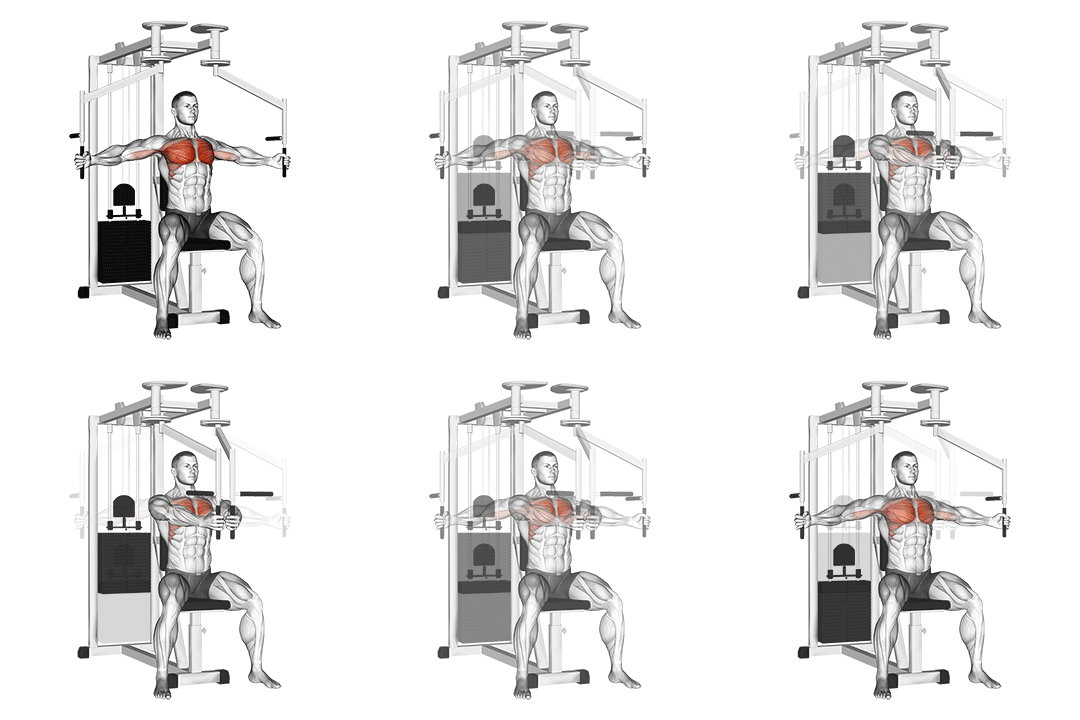
More comparisons with Lever Chest Press
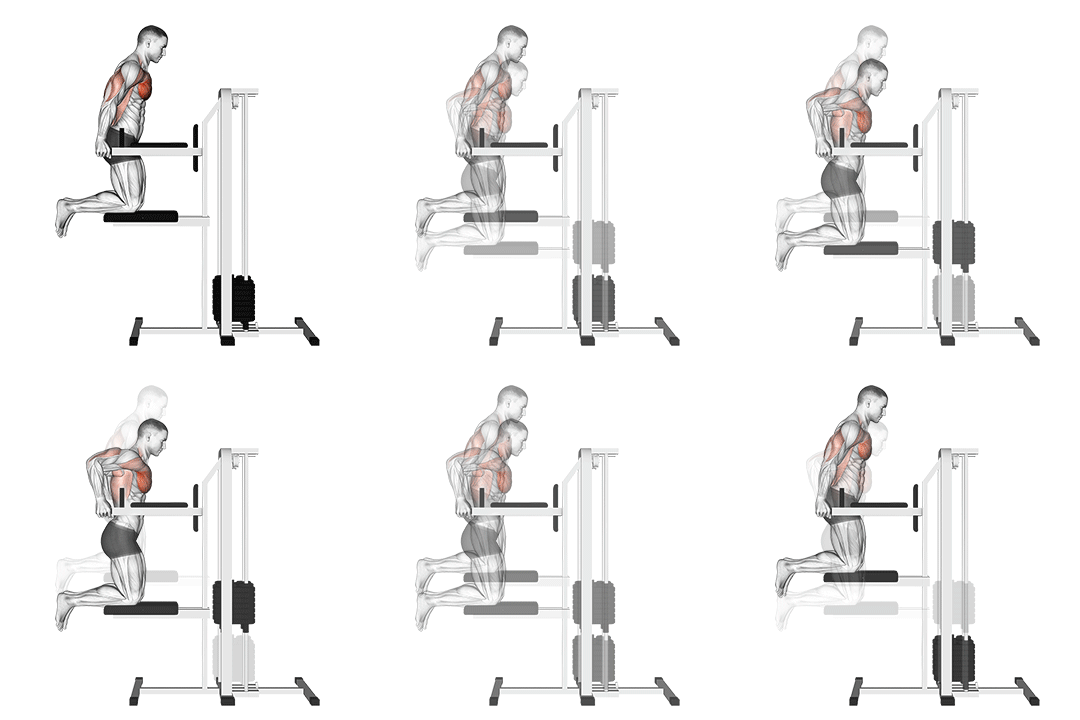
More comparisons with Lever Incline Chest Press
Compare More Exercises
Use our free comparison tool to analyze any two exercises head-to-head.
Compare Exercises