

Lever Chest Press vs Lever Incline Chest Press V. 2: Complete Comparison Guide
Lever Chest Press vs Lever Incline Chest Press V. 2 — if you want a stronger, fuller chest you need to pick the right lever variation. In this guide you’ll learn how each machine changes force vectors, which part of the pectorals lights up more, the technique cues you should use, and clear rep ranges for strength and hypertrophy. I’ll compare muscle activation, equipment needs, learning curve, and injury risk so you can choose the right press for your goals and weak points.
Exercise Comparison
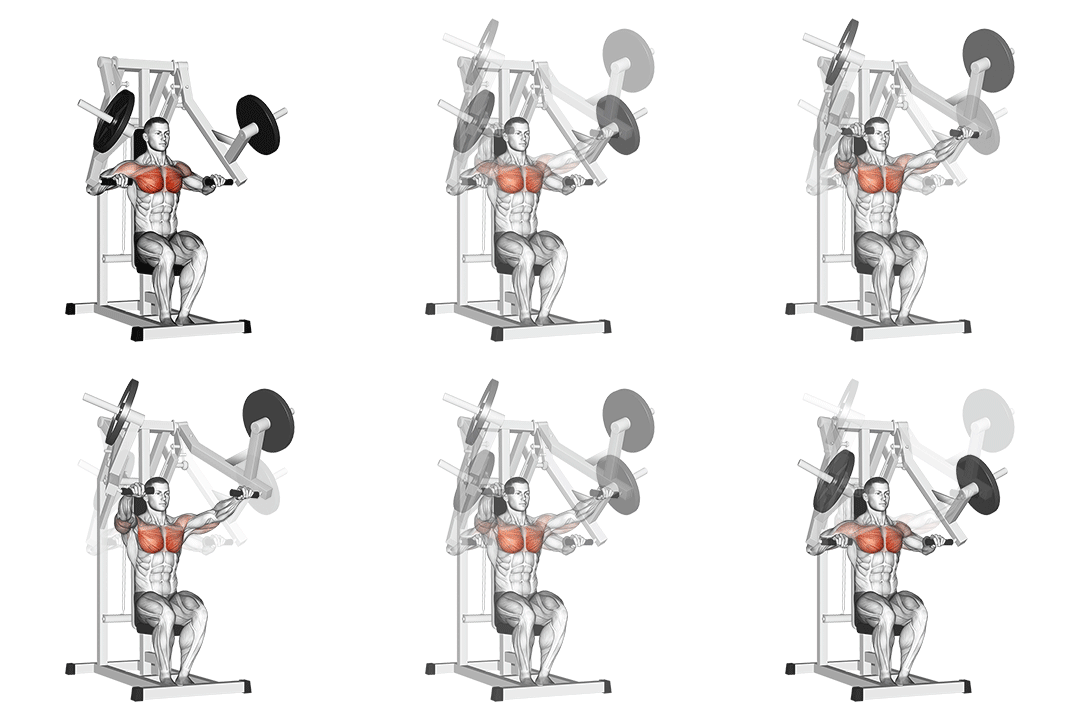
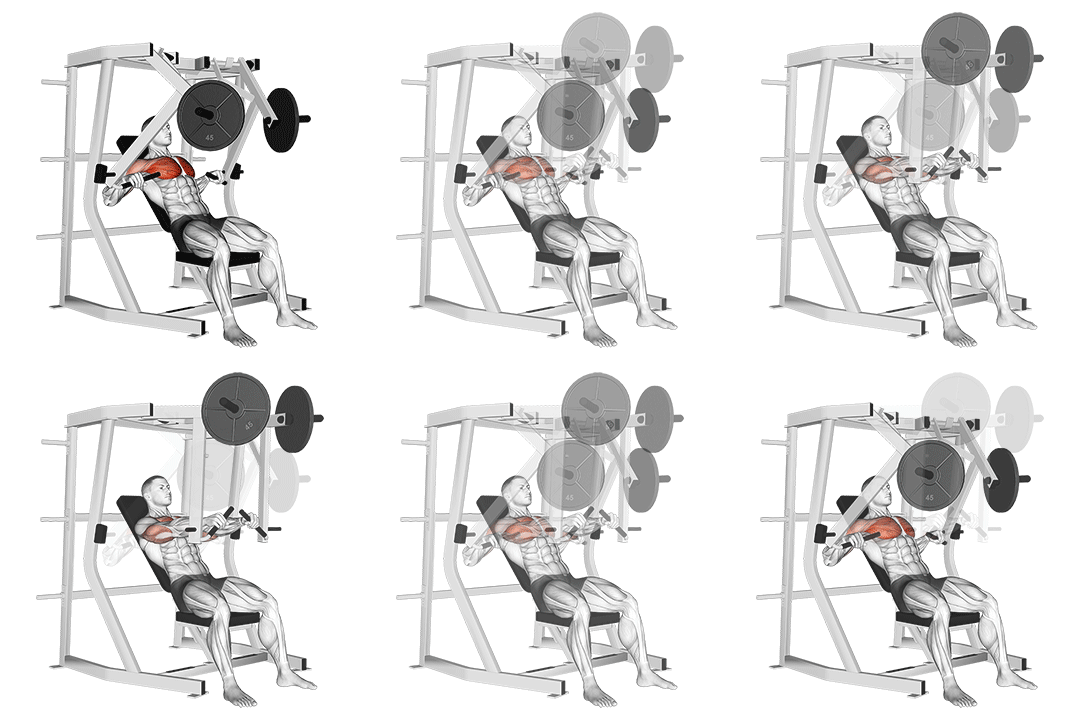
Lever Chest Press
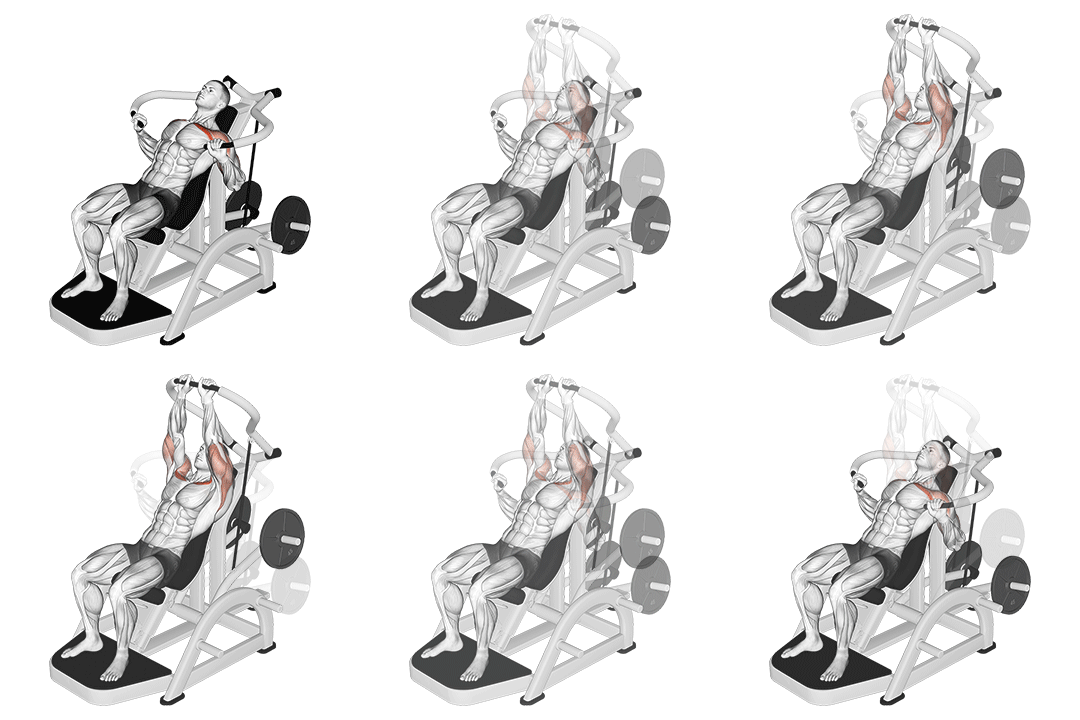
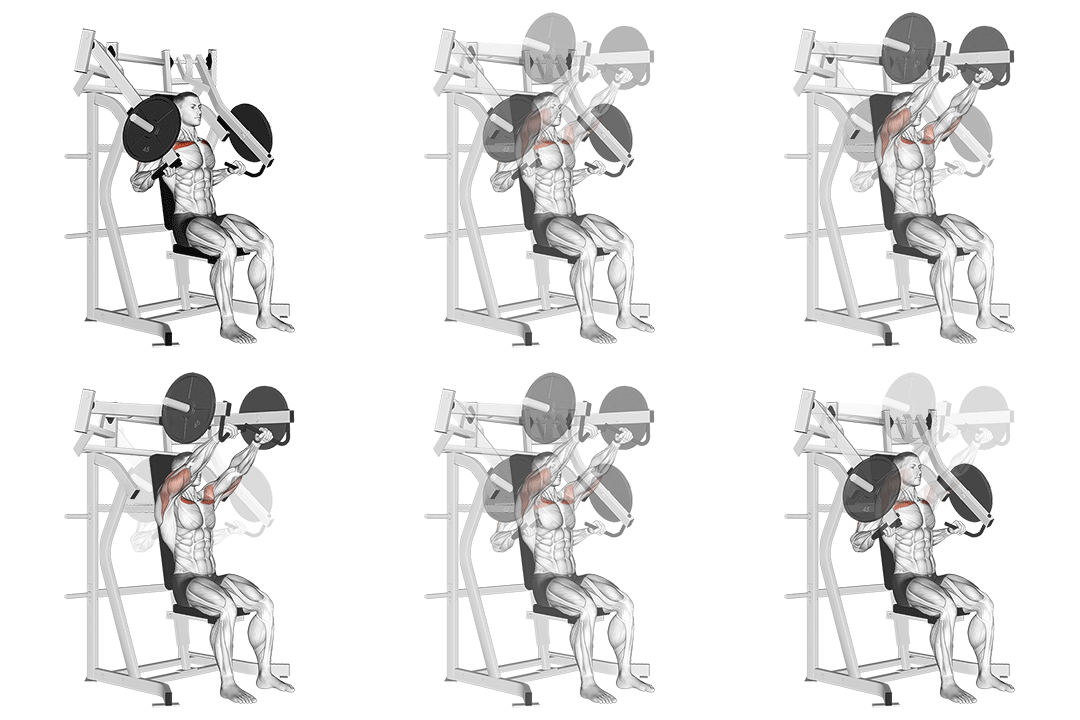
Lever Incline Chest Press V. 2
Head-to-Head Comparison
| Attribute | Lever Chest Press | Lever Incline Chest Press V. 2 |
|---|---|---|
| Target Muscle |
Pectorals
|
Pectorals
|
| Body Part |
Chest
|
Chest
|
| Equipment |
Lever
|
Lever
|
| Difficulty |
Beginner
|
Intermediate
|
| Movement Type |
Compound
|
Compound
|
| Secondary Muscles |
2
|
2
|
Secondary Muscles Activated
Lever Chest Press
Lever Incline Chest Press V. 2
Visual Comparison
Overview
Lever Chest Press vs Lever Incline Chest Press V. 2 — if you want a stronger, fuller chest you need to pick the right lever variation. In this guide you’ll learn how each machine changes force vectors, which part of the pectorals lights up more, the technique cues you should use, and clear rep ranges for strength and hypertrophy. I’ll compare muscle activation, equipment needs, learning curve, and injury risk so you can choose the right press for your goals and weak points.
Key Differences
- Difficulty levels differ: Lever Chest Press is beginner, while Lever Incline Chest Press V. 2 is intermediate.
- Both exercises target the Pectorals using Lever. The main differences are in their movement patterns and muscle activation angles.
Pros & Cons
Lever Chest Press
+ Pros
- Simple setup and body alignment for beginners
- Allows heavier absolute loads due to a more favorable force vector
- Strong mid-pectoralis activation for mass (good for overall chest thickness)
- Fixed path reduces stabilization requirements and technique variability
− Cons
- Less emphasis on upper chest (clavicular head)
- Limited shoulder flexion ROM compared with incline
- Can under-develop upper pecs if used exclusively
Lever Incline Chest Press V. 2
+ Pros
- Biases the clavicular head for upper-chest development
- Alters force vector to improve chest shape and balance
- Useful for correcting a low or droopy chest shelf by raising the insertion line
- Allows angle manipulation (30–45°) to fine-tune activation
− Cons
- Higher shoulder demand and greater need for scapular control
- Generally allows lower absolute loads than flat press
- Steeper learning curve; setup errors change muscle targeting
When Each Exercise Wins
For broad pectoral mass the flat lever press lets you use heavier loads and maintain favorable length-tension through the mid-range. Pair it with incline variations for upper-pec detail, but flat pressing drives overall cross-sectional growth efficiently in the 6–12 rep range.
The horizontal force vector and more stable setup let you progressively overload with heavier weight and lower reps (3–5), improving maximal pressing strength and triceps lockout.
Beginners benefit from the fixed path, easier setup, and lower shoulder demand of the flat lever press, which lets you learn pressing mechanics and build baseline strength safely.
Most home gyms that include a single lever station will have a flat press path rather than an incline attachment. If you have to pick one machine for limited space, the flat lever chest press covers the most bases.
Frequently Asked Questions
Can I do both Lever Chest Press and Lever Incline Chest Press V. 2 in the same workout?
Yes — pairing them works well. Start with the heavier flat Lever Chest Press for 3–5 sets of 4–8 reps, then follow with 2–3 sets of 8–12 reps on the Lever Incline Chest Press V. 2 to target the upper pecs and increase time under tension.
Which exercise is better for beginners?
Beginners should start with the Lever Chest Press because the fixed path simplifies technique and reduces shoulder demand. Once you have stable pressing mechanics and scapular control, add the incline V. 2 to target the upper chest.
How do the muscle activation patterns differ?
Flat lever pressing produces peak activation in the mid-pectoral fibers at mid-range due to a more horizontal force vector and favorable length-tension. The incline (30–45°) shifts peak activation upward, recruiting more clavicular fibers earlier in the ROM and increasing anterior deltoid torque.
Can Lever Incline Chest Press V. 2 replace Lever Chest Press?
Not entirely — the incline version is great for upper-pec focus but typically limits absolute load and increases shoulder demand. If your goal is maximal strength or overall mass, keep the flat Lever Chest Press as a staple and use incline as a complementary variation.
Expert Verdict
Use the Lever Chest Press as your foundation if you want raw pressing strength and broad pectoral mass — it’s beginner friendly, allows heavier loads, and produces strong mid-pec activation. Add Lever Incline Chest Press V. 2 when you need to prioritize the clavicular head, improve upper-chest shape, or correct a weak top-end range; set the bench angle to 30°–45° and target 8–12 reps to maximize upper-pec stimulus. For balanced development, rotate both: prioritize flat pressing for 6–8 weeks, then cycle 4–6 weeks of incline emphasis to manage adaptation and shoulder health.
Also Compare
More comparisons with Lever Chest Press
More comparisons with Lever Incline Chest Press V. 2
Compare More Exercises
Use our free comparison tool to analyze any two exercises head-to-head.
Compare Exercises