

Depending on who you talk to, either cardio or strength training is best for losing weight and getting lean. Where cardio burns calories and fat while you are working out, lifting weights builds muscle, which increases your resting metabolic rate.
The truth is that, while both approaches have merit, research tells us that combining cardio with weights is actually the most effective way to get and stay lean (1).
While this information reveals the best way to achieve your body recomposition dreams, it’s also bad news. That’s because, in addition to finding time for strength training, you also need to include cardio in your already busy week.
Needless to say, many people will find this difficult.
I’m a veteran personal trainer with more than 35 years of experience, and I work with a lot of busy professionals, many of whom have just 3-4 hours a week free to dedicate to exercise. And yet, despite such restrictions, I’ve successfully helped almost all of them get into the best shape of their lives.
In this article, I share a time-efficient but high-effect program that builds muscle and burns fat with just three gym workouts a week. Combined with daily walking, this plan will transform your body in just 30 days!
Creating an Energy Deficit—The Key to Burning Body Fat

Let’s establish a fact from the outset—body fat is just stored energy. At some point in the past, you have consistently eaten more food than your body needs or failed to burn off the food you have eaten. This created an energy surplus, which your body converted to and stored as fat.
This is why most people gain weight gradually, often over many months or even years. Consuming just 100 kilocalories extra a day for a year will produce an annual ten-pound weight gain.
A lot of people get frustrated with fat loss because they underestimate just how much the small daily choices add up. It’s rarely the big meals that do the damage, but the extras that sneak in under the radar—a latte here, a handful of chips there, a second glass of wine at night. Those little indulgences can easily add 200–300 kilocalories a day, which is enough to stall fat loss or even tip the scales upward.
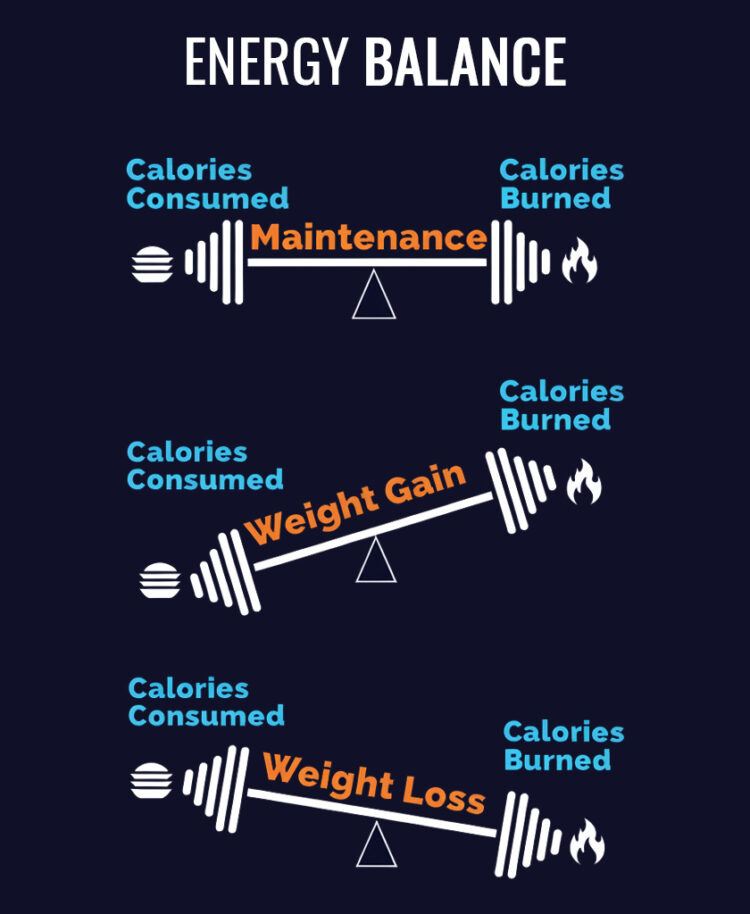
Energy Deficit – The Key to Losing Weight and Burning Fat
The good news is that this works in reverse, too. Small adjustments, like swapping soda for water, cutting your usual portion size by 10 percent, or taking the stairs instead of the elevator, may not feel like much in the moment, but they soon add up.
Combined with a structured training plan, these simple habits shift the balance in your favor and make fat loss steady, sustainable, and far easier than most people think.
Burning fat and losing weight requires you to burn more kilocalories than you eat (2). This is called an energy deficit and is achieved by a) eating a little less and b) exercising a little more. Assuming you create a 500-kilocalorie deficit per day, you should lose around one pound of fat per week.
While a bigger deficit will result in more rapid weight loss, very low kilocalorie diets or extreme workouts are usually unsustainable, so slow and steady is the best way to go.
And that’s where the following program comes in. It won’t force you to “live in the gym,” so you should have no problem sticking to it for the next 30, 60, or 90 days. That consistency will pay off and is the real secret to successfully losing weight, getting lean, and staying that way.
Combine this program with a sensible, sustainable diet, and you WILL make progress!
Related: The Diet and Fat Loss Mistakes You Need to Stop Making NOW!
Minimalist Push-Pull Program for Sustainable Fat Loss

Most popular fat and weight loss programs involve hitting the gym 5-6 times a week. While such approaches can be effective, many people do not have the time for such a time-consuming training schedule.
In my experience, you don’t actually need to work out every day to get lean. In fact, I’ve had great success with just three workouts per week.
Thrice-weekly training means more rest days than training days and allows you to be far more flexible with when you choose to work out.
For this plan, I have divided your body broadly into two parts — “pushing” muscles and “pulling” muscles. However, this is something of a misnomer because muscles only pull and cannot push, so really, we’re talking about pushing and pulling exercises.
Anyway, here’s your training plan. Note how you’ll be alternating pushing and pulling workouts three days a week:
| Monday | Tuesday | Wednesday | Thursday | Friday | Saturday | Sunday | |
| Week 1 | Push | Rest | Pull | Rest | Push | Rest | Rest |
| Week 2 | Pull | Rest | Push | Rest | Pull | Rest | Rest |
| Week 3 | Push | Rest | Pull | Rest | Push | Rest | Rest |
| Week 4 | Pull | Rest | Push | Rest | Pull | Rest | Rest |
Feel free to train on different days according to your schedule, but to avoid overlaps and overtraining, do not change the order of the workouts and try to have at least one day between gym sessions for rest and recovery.
You’ll also be walking every day, but that’s covered later in this article.
Push Workout

Your push workout predominantly targets the muscles on the front of your body. You’ll mostly be doing just one exercise per body part, but don’t worry—that’s enough to build muscle and stimulate your metabolism.
But, before you lay so much as a finger on any weights, you must prepare your body and mind for the workout you are about to perform. Start each session with 5-10 minutes of easy cardio followed by dynamic mobility and flexibility exercises for your major joints and muscles.
Related: How to Warm Up for Strength Training
Warmed up and ready to go? Then let’s do it!
| Exercise | Sets | Reps | Recovery | |
| 1 | Goblet Squat | 2-4 | 6-15 | 1-2 minutes |
| 2 | Incline Bench Press | 2-4 | 6-15 | 1-2 minutes |
| 3 | Dumbbell Lunge | 2-4 | 6-15 | 1-2 minutes |
| 4 | Arnold Press | 2-4 | 6-15 | 1-2 minutes |
| 5 | Standing Calf Raise | 2-4 | 6-15 | 1-2 minutes |
| 6 | Triceps Pushdown | 2-4 | 6-15 | 1-2 minutes |
| 7 | Cable Crunch | 2-4 | 6-15 | 1-2 minutes |
Pull Workout

Where the push workout was all about training your quads, chest, shoulders, triceps, and calves, the pull workout targets your hamstrings, back, and biceps. Training pushing and pulling muscles equally is important for developing a balanced physique and ensuring you look good from the front AND behind.
As before, make sure you spend 5-10 minutes warming up to ward off injuries and ensure your muscles and joints are ready for what you’re about to do.
All set? Then let’s do this!
| Exercise | Sets | Reps | Recovery | |
| 1 | Romanian Deadlift | 2-4 | 6-15 | 1-2 minutes |
| 2 | Lat Pulldown | 2-4 | 6-15 | 1-2 minutes |
| 3 | Hip Thrust | 2-4 | 6-15 | 1-2 minutes |
| 4 | Single-Arm Row | 2-4 | 6-15 | 1-2 minutes |
| 5 | Leg Curl | 2-4 | 6-15 | 1-2 minutes |
| 6 | Incline Biceps Curl | 2-4 | 6-15 | 1-2 minutes |
| 7 | Reverse Crunch | 2-4 | 6-15 | 1-2 minutes |
Progressive Overload for Continued Progress
As I often tell my personal training clients, you are only as fit and strong as your last workout. Your body adapts very quickly to training, and if you want to continue making progress, you must gradually make exercise more demanding.
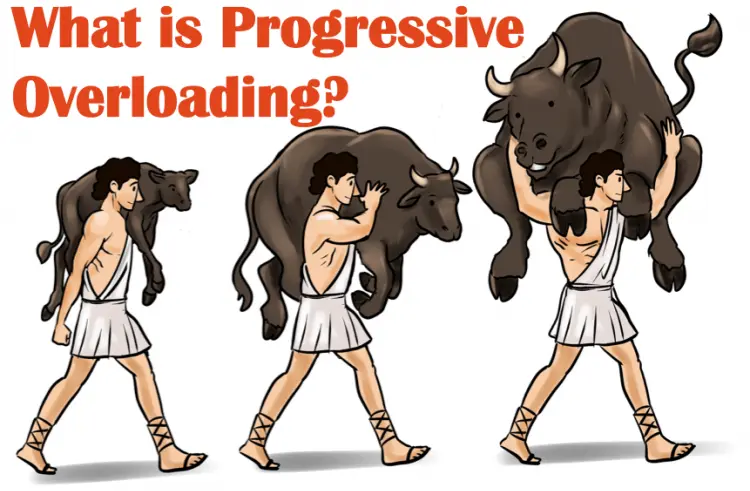
This is called progressive overload and is one of the foundational principles of effective strength training.
Progressive overload involves increasing the difficulty of your workouts over time. This means your workouts should never get any easier, but rather, you gradually do more work as you get stronger and fitter.
You can achieve this in one of several ways:
- Increase your training weights
- Do more reps per set
- Do more sets per workout
- Shorten the rests between sets
It’s important to stress that your progress should be slow, and that big jumps in weight or training volume are unsustainable.
The best progress strategies for this workout plan are to increase reps AND weight—the so-called double progression method. Here’s an example to show you how it works:
- Week 1 – 10/10/10 reps @ 50 lbs.
- Week 2 – 12/10/10 reps @ 50 lbs.
- Week 3 – 12/12/10 reps @ 50 lbs.
- Week 4 – 12/12/12 reps @ 50 lbs. (all sets maxed → increase weight)
- Week 5 – 10/9/8 reps @ 55 lbs.
- Week 6 – 11/10/9 reps @ 55 lbs.
- Week 7 – 12/11/10 reps @ 55 lbs.
- Week 8 – 12/12/11 reps @ 55 lbs.
- Week 9 – 12/12/12 reps @ 55 lbs. (all sets maxed → increase weight)
- Week 10 – 10/9/8 reps @ 60 lbs., etc.
Progress is seldom perfectly linear, so don’t worry if, some weeks, you only manage one extra rep or even none at all. So long as there is an upward trend in training intensity, you will move forward.
Daily Walking—Your Ultimate Fat Burning Strategy
Let’s get real: cardio is time-consuming and can be boring. Plus, if you are busy, the last thing you probably want to do is go to the gym just to use an exercise bike or treadmill.
The good news is that conventional cardio is not essential for fat loss and, provided your diet is dialed in, walking will get you where you want to be—pun intended.
Walking is low-impact and low-intensity, but that means you can do it daily and in sufficient amounts to burn plenty of kilocalories. In my experience, walking is also good for your stress levels, improves sleep duration and quality, and improves creativity. It’s also one of the most effective ways to improve your health.
So, instead of mindless cardio, for this workout plan, I want you to commit to walking every day. This will mostly involve accumulating steps on a daily basis, but there are also a couple of interval walking workouts that will enhance your results.
Here’s your weekly walking schedule aligned to your strength training routine. Please note that the walking distances refer to the number of steps you should take per day. Apart from the JIWT workouts, you can spread the steps throughout your day or do them all at once. Both approaches can be equally effective. Bottom line—do your steps!
| Monday | Tuesday | Wednesday | Thursday | Friday | Saturday | Sunday | |
| Strength | Push | Rest | Pull | Rest | Push | Rest | Rest |
| Walking | 7-8k | 10-12k | 7-8k | JIWT* | 7-8k | JIWT* | 7-8k |
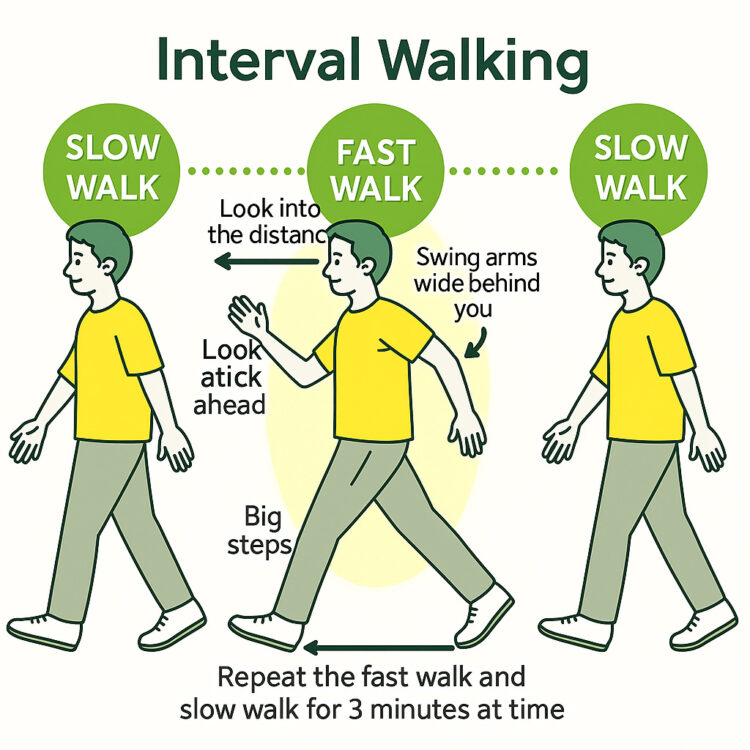
*JIWT is short for Japanese Interval Walking Training. Walk briskly–just below your maximum pace–for three minutes. Slow down for three minutes and then speed up again. Repeat for 45-60 minutes for a low-impact but high-intensity fat-burning workout.
Closing Thoughts
The Push–Pull–Walk plan proves that you don’t need endless cardio sessions or daily trips to the gym to get in shape. With just three focused strength workouts and a daily walking commitment, you’ll create the energy deficit needed to shed fat while building the lean muscle that will keep your metabolism firing.
The program is simple, time-efficient, and realistic—which is why it works.
Now it’s your turn: stop waiting for the “perfect time” to start and commit to the next 30 days. Show up, put in the work, and trust the process. Every rep, every step, and every workout is an investment in a leaner, stronger, healthier you.
So, lace up, hit the gym, and walk with purpose—your transformation begins today.
References:
1 – Ho SS, Dhaliwal SS, Hills AP, Pal S. The effect of 12 weeks of aerobic, resistance, or combination exercise training on cardiovascular risk factors in the overweight and obese in a randomized trial. BMC Public Health. 2012 Aug 28;12:704. doi: 10.1186/1471-2458-12-704. PMID: 23006411; PMCID: PMC3487794.
2 – Kim JY. Optimal Diet Strategies for Weight Loss and Weight Loss Maintenance. J Obes Metab Syndr. 2021 Mar 30;30(1):20-31. doi: 10.7570/jomes20065. PMID: 33107442; PMCID: PMC8017325.