
Despite having a decades-long background in powerlifting and bodybuilding, the bench press is not at the top of my upper-body exercise list. My long-armed ectomorphic body type means that I’ve always struggled with the bench press and, despite a lot of perseverance and perspiration, I’ve never really mastered this popular exercise.
So, instead of celebrating National Bench Press Day each Monday with all the other gym bros, my go-to chest exercise is the humble push-up. And for the record, according to studies, push-ups can be just as effective as the bench press for building strength and muscle mass (1).
By my estimation, I’ve done close to half a million push-ups over the last 30 years and, at the risk of being big-headed, I’m pretty good at them. But this doesn’t mean I do hundreds of reps per workout.
In fact, I rarely do more than 20 reps per set.
That’s because high-rep sets are inefficient and not always the best way to build muscle size or strength.
Instead of pumping out rep after mindless rep, I use progressions to make push-ups more challenging and, therefore, more stimulating and a lot less boring.
In this article, I share the methods I use that stop me from doing more than 20 push-ups in a row and explain how you can use them to maximize your workout results.
The Need for Progression
We have a saying in the fitness industry—if you always do what you have always done, you’ll always get what you always got. In other words, doing the same workout over and over will not produce the results you want.
Instead, you gradually need to make your training harder so that your body is forced to adapt and grow. This is called progressive overload and is the driving force behind all successful hypertrophy (muscle building) programs.
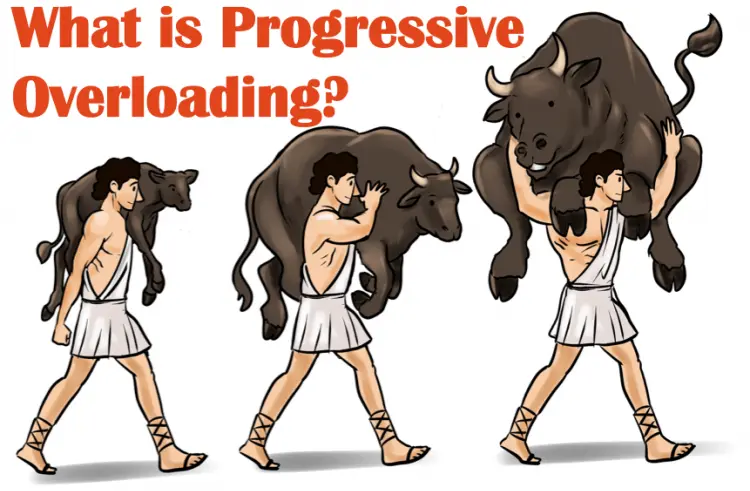
In the gym, this means modifying the training variables so that, gradually, your workouts get harder as you get stronger and vice versa.
Ways to do this include:
- Increase the weight
- Increase the reps
- Do more sets
- Rest less between sets
- Increase workout frequency
- Do more exercises per body part
- Use more demanding exercises
Unfortunately, when it comes to push-ups and other bodyweight exercises like pull-ups, air squats, and inverted rows, most lifters get hung up on one thing—doing more reps.
Before long, this means they’re trapped in a cycle of doing high-volume sets, cranking out reps by the dozen. This is not the best way to train for numerous reasons, not least it’s time-consuming, boring, and can cause overuse injuries.
While you could strap on a weight vest and add to it to make your workouts progressively more demanding, this is not always the best option. For starters, weighted vests are expensive, bulky, and not very comfortable.
Personally, one of the reasons I like push-ups so much is that I can do them anywhere and anytime—I don’t want to be reliant on a weighted vest for my workouts.
So, instead of using a weighted vest to make my push-up workouts more challenging, I modify the exercise instead. This ensures I stay below my 20-push-up cut-off point and saves me from endless wasted reps.
In the next section, I share, in order, the progressions I have worked through and will be using in the future to maintain my push-up progress.
The Push-Up Progressions You Need to Know
Bored of doing push-ups by the dozen? I hear you! Instead of pumping out 30, 40, or 50 reps per set, use the following progression strategies to keep your rep count down while driving your gains onward and upward.
1. Fix Your Form for Fewer Push-Ups
Poor form makes it easier to pump out lots of push-ups. Not lowering your chest all the way down to the floor, not locking out, bending your knees, or dropping your hips? All of these things make mush-ups less challenging, so you can do more of them.
So, first things first, it’s time to get serious about your push-up form.
Instead of mindlessly pumping out reps until your arms give up, do every push-up like you are trying to win an award for “best push-up technique.” Make sure you:
- Keep your body perfectly straight
- Descend under control
- Get your chest to within 1-2 inches of the floor
- Fully extend your arms at the top of each rep
- Keep your legs, glutes, and core tightly braced
- Use a controlled tempo
You’ll be surprised at how much harder push-ups are when you do them properly!
2. Use a Slower Tempo and Emphasize the Eccentric
Watch a lot of people doing push-ups and you’d be forgiven for thinking they were in a life-or-death push-up race! It’s easy to do a lot of push-ups when you pump them out quickly. However, slower tempos make push-ups—and almost every other exercise—much more demanding.
Slow, controlled tempos prevent unwanted momentum, so your muscles have to do more work. Plus, they increase your time under tension per rep, so that each one is more effective.
Emphasizing the eccentric or lowering phase of push-ups is another way to use speed to make your reps more demanding and effective. Studies show that controlled eccentrics are better for hypertrophy than faster tempos (2).
So, instead of trying to do your push-ups as fast as possible, do them more slowly and deliberately. Lower yourself down more slowly than you push back up and keep your muscles under constant tension. A four-second descent and two-second ascent works well—usually written as a 4:2 tempo.
3. Add Pauses for More Potent Push-Ups
Mid-rep pauses, like a slower tempo, increase your time under tension to make each rep harder and more effective. According to studies, the best place to pause for hypertrophy is when the muscle is stretched (3). For push-ups, this is the bottom of each rep.
So, descend with control and then hover with your chest an inch or two above the floor before pushing yourself back up to the starting position. Resist the temptation to pause at the top of each rep, as all this does is provide an opportunity for a sneaky rest. Instead, go straight into your next rep.
4. Increase Your Range of Motion
Your push-up range of motion is limited by the floor and the length of your arms. You can only descend until your chest touches the floor. But, placing your hands on blocks or using push-up handles means you can lower your chest a few inches below where the floor would normally be, increasing the range of motion and difficulty of your workout.
These are called deficit push-ups.
The trick to deficit push-ups is not descending so far that you risk damaging your shoulders. Just a few extra inches are all you need to increase push-up difficulty.
Make deficit push-ups even more effective by a) controlling your descent and b) pausing at the bottom of each rep. Doing this will significantly lower your rep count.
5. Put More Weight On Your Hands
During push-ups, roughly 60-75% of your weight is on your hands and 25-40% is on your feet. Needless to say, this is not a lot of weight if you are relatively strong, light, or both. This helps explain why some people can pump out so many push-ups.
Shifting more weight onto your arms will obviously make push-ups more demanding. But, before you raise your feet on a bench and make the switch to decline push-ups, try keeping your feet on the ground and simply shift your weight forward.
You can do this by pointing your toes or moving your hands slightly back toward your feet. Either way, you’ll feel more weight on your arms, and your push-ups will instantly be harder. You can take this a step further by working toward a modified or full planch push-up, where all your weight is on your arms.
Of course, you can also raise your feet, but, in place of a bench, a simple forward weight shift will often suffice.
Another way to put more stress on your hands is to shift more of your weight onto one side, e.g., archer push-ups.
6. Reduce Your Base of Support
Most people do push-ups with their feet and hands about shoulder-width apart. This is also how most trainers teach push-ups. However, this is a very strong hand and foot placement, which makes push-ups relatively easy to perform.
Flip the script by moving your hands and/or feet closer to the midline of your body, making push-ups much more demanding.
Related: Diamond Push-Ups
A narrower base of support makes it harder to balance, so you’ll have to use your muscles to maintain your stability as well as lowering and lifting your body. Once you’ve worked up to and mastered doing push-ups with your hands and feet together, you can progress to doing them with one foot off the floor or, if you are up for a challenge, using just one arm.
Needless to say, one-arm push-ups are incredibly hard, and not everyone will be able to do them. However, working toward them is an excellent way to maintain your progress.
7. Be More Explosive
While your push-up descent should always be slow and controlled, the concentric phase or ascent will be more effective if you do it quickly. Fast concentrics result in stronger muscle contractions (2). That doesn’t mean you have to go “full plyo” so your hands leave the floor between reps. However, you should still endeavor to come up as fast as you can.

Related: Plyometric Push-Ups: Ignite Your Chest and Core Strength!
This means our perfect push-up rep could look something like this:
- 4-second descent
- 2-second mid-rep pause
- Explosive ascent—as fast as possible
- 1-second pause/reset
- Repeat
Needless to say, you won’t be able to do as many reps as usual this way.
Putting These Progressions into Practice
The key to getting the most from these strategies is to treat them as a form of progressive overload without focusing on increasing your reps.
So, set yourself a push-up rep limit of 10-20 reps per set and then use the method that keeps you close to your target rep count. Your performance will improve in time and, when you are able to do all your reps in good form, move up a level to make your push-ups a little harder. Again, stay with that variation for as long as it takes for your body to adapt to it.
For example:
- Weeks 1–2: Focus on perfect form (tight core, full range of motion, controlled tempo).
- Weeks 3–4: Slow down the tempo (e.g., 4-second descent, 2-second ascent).
- Weeks 5–6: Add a mid-rep pause at the bottom of each push-up.
- Weeks 7–8: Increase range of motion with push-up handles or blocks.
- Weeks 9–10: Shift more weight forward or try archer push-ups.
- Weeks 11–12: Introduce explosive push-ups (fast ascent, controlled descent).
After 12 weeks, cycle back to the start with harder variations or combine methods to keep progressing.
Closing Thoughts
You don’t need endless sets of push-ups to build strength and size—smarter progressions will get you further, faster, and without the boredom or burnout. By capping your reps and focusing on quality, control, and progression, you’ll keep improving while making your workouts far more rewarding.
Ready to upgrade your training? Pick one progression from this list and try it in your next workout—you’ll feel the difference from rep one.
References:
- Kikuchi N, Nakazato K. Low-load bench press and push-up induce similar muscle hypertrophy and strength gain. J Exerc Sci Fit. 2017 Jun;15(1):37-42. doi: 10.1016/j.jesf.2017.06.003. Epub 2017 Jun 29. PMID: 29541130; PMCID: PMC5812864.
- Schoenfeld BJ, Ogborn DI, Vigotsky AD, Franchi MV, Krieger JW. Hypertrophic Effects of Concentric vs. Eccentric Muscle Actions: A Systematic Review and Meta-analysis. J Strength Cond Res. 2017 Sep;31(9):2599-2608. doi: 10.1519/JSC.0000000000001983. PMID: 28486337.
- Kassiano W, Costa B, Kunevaliki G, Soares D, Zacarias G, Manske I, Takaki Y, Ruggiero MF, Stavinski N, Francsuel J, Tricoli I, Carneiro MAS, Cyrino ES. Greater Gastrocnemius Muscle Hypertrophy After Partial Range of Motion Training Performed at Long Muscle Lengths. J Strength Cond Res. 2023 Sep 1;37(9):1746-1753. doi: 10.1519/JSC.0000000000004460. Epub 2023 Apr 3. PMID: 37015016.
 You can also follow us on Twitter, Facebook, Instagram, and
YouTube for even more content.
You can also follow us on Twitter, Facebook, Instagram, and
YouTube for even more content.Tip: If you're signed in to Google, tap Follow.