

10 Best Band Single Leg Split Squat Alternatives for Home and Gym
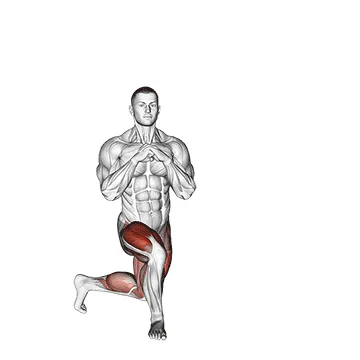
The Band Single Leg Split Squat is done standing with a band. Ranked closest by our scoring: the Suspended Split Squat, Split Squats and the Squat To Overhead Reach With Twist.
Updated Ranked by our 12-factor similarity model How it works
Original Exercise: Band Single Leg Split Squat
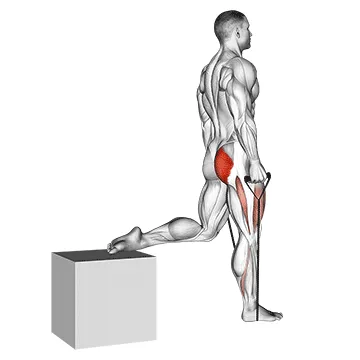
- Primary muscle
- Quads
- Equipment
- Band
- Difficulty
- Intermediate
- Type
- Compound
Secondary muscles: Glutes, Hamstrings
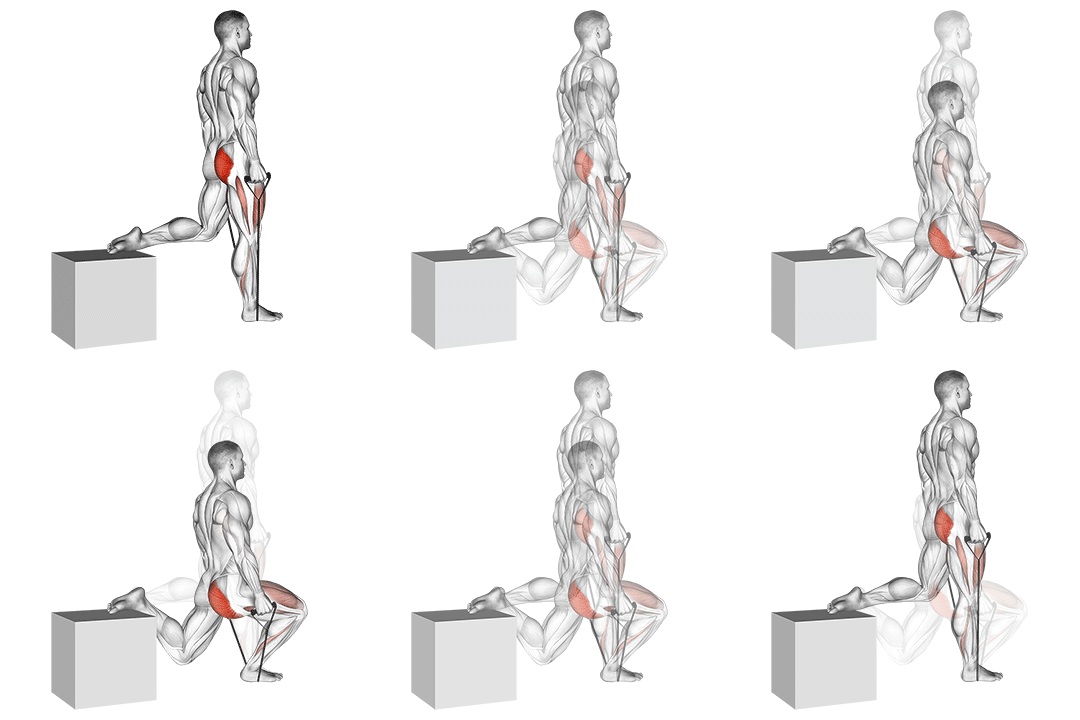
How to perform Band Single Leg Split Squat
- Stand with your feet hip-width apart and place a resistance band around your ankles.
- Take a big step forward with your right foot and a smaller step back with your left foot.
- Bend your knees and lower your body until your right thigh is parallel to the ground, keeping your left knee slightly above the ground.
- Push through your right heel to return to the starting position.
- Repeat on the other side.
Ranked Band Single Leg Split Squat Alternatives
10 substitutes, ranked by how closely each one matches the Band Single Leg Split Squat on movement pattern, muscles worked, equipment and body position. The higher the score, the less you change. Open "How to perform this exercise" on a card for the steps; every card title links to that exercise's own alternatives page.
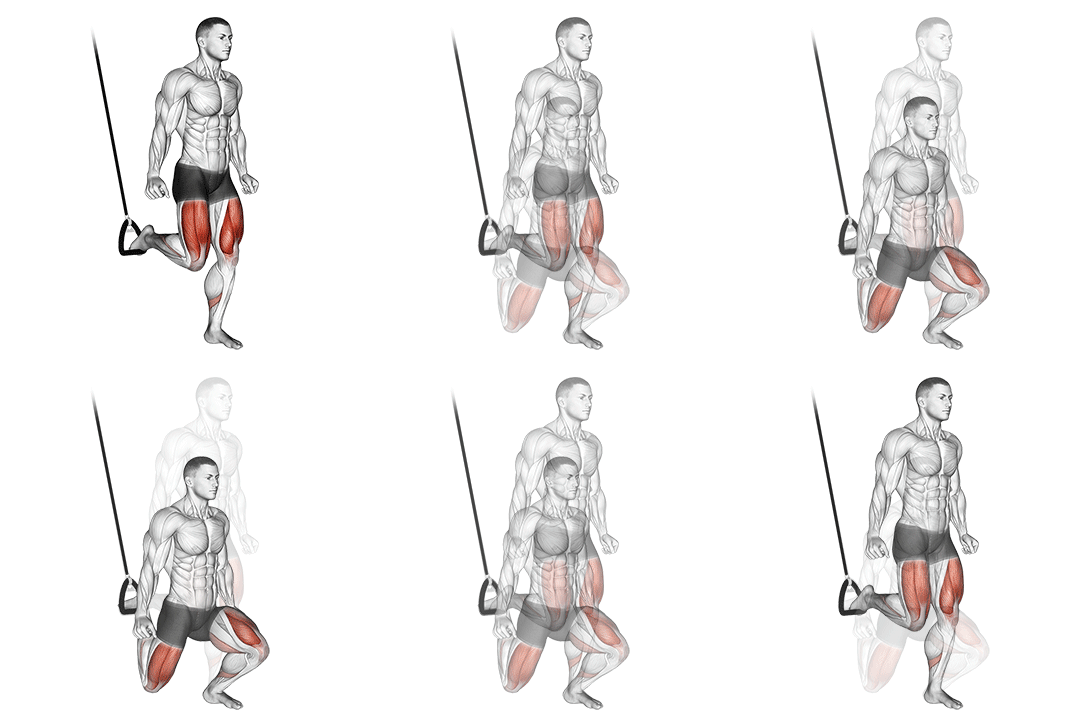
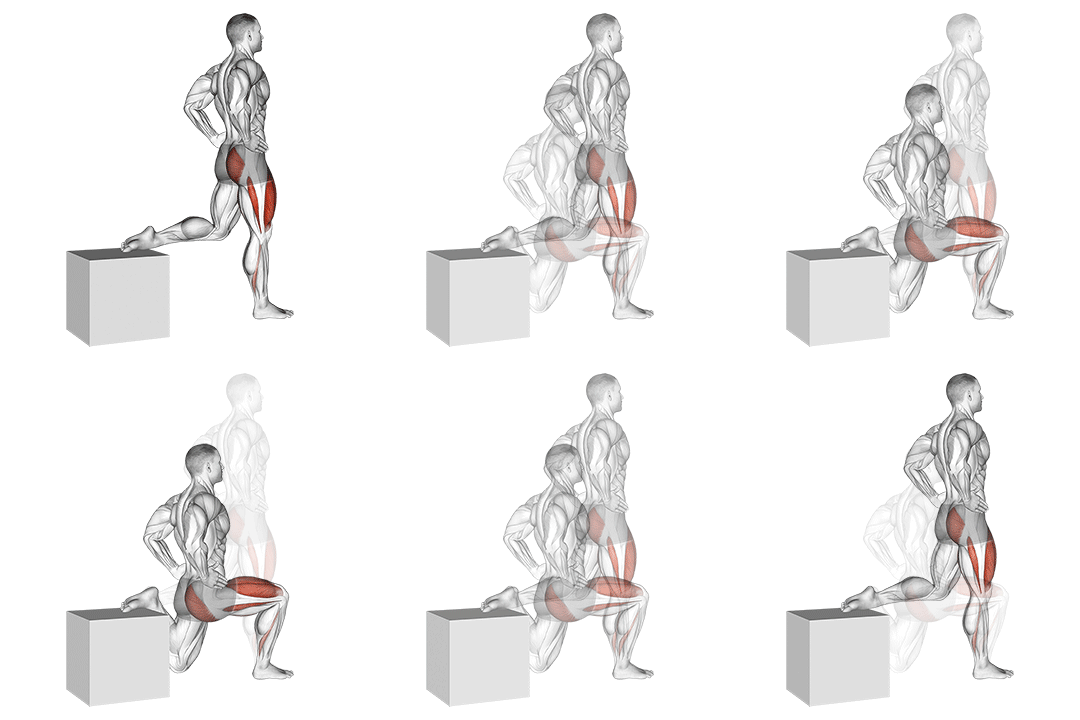
Best match 1. Suspended Split Squat
90% match- Quads
- Bodyweight
- Intermediate
- Compound
Use this when you have nothing to train with, because it works the quads with bodyweight alone.
How to perform this exercise
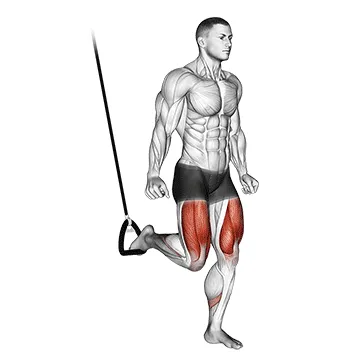
- Stand facing away from a suspension trainer with your feet shoulder-width apart.
- Extend one leg forward and place the top of your foot in the foot cradle of the suspension trainer.
- Bend your standing leg and lower your body down into a lunge position, keeping your chest up and your knee in line with your toes.
- Push through your heel to return to the starting position.
- Repeat for the desired number of repetitions, then switch legs.
Sets and reps: 3 or 4 sets of 6 to 10 reps on each side.
Why this matches
- Movement: split squat, the same as the Band Single Leg Split Squat
- Primary muscle: quads, the same as the Band Single Leg Split Squat
- Equipment: a suspension trainer, not a band
- Body position: standing, the same as the Band Single Leg Split Squat
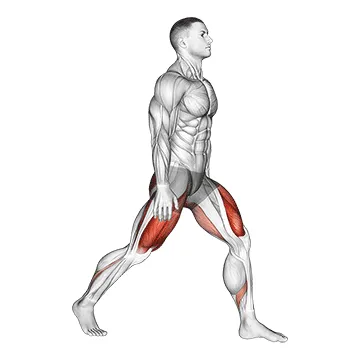
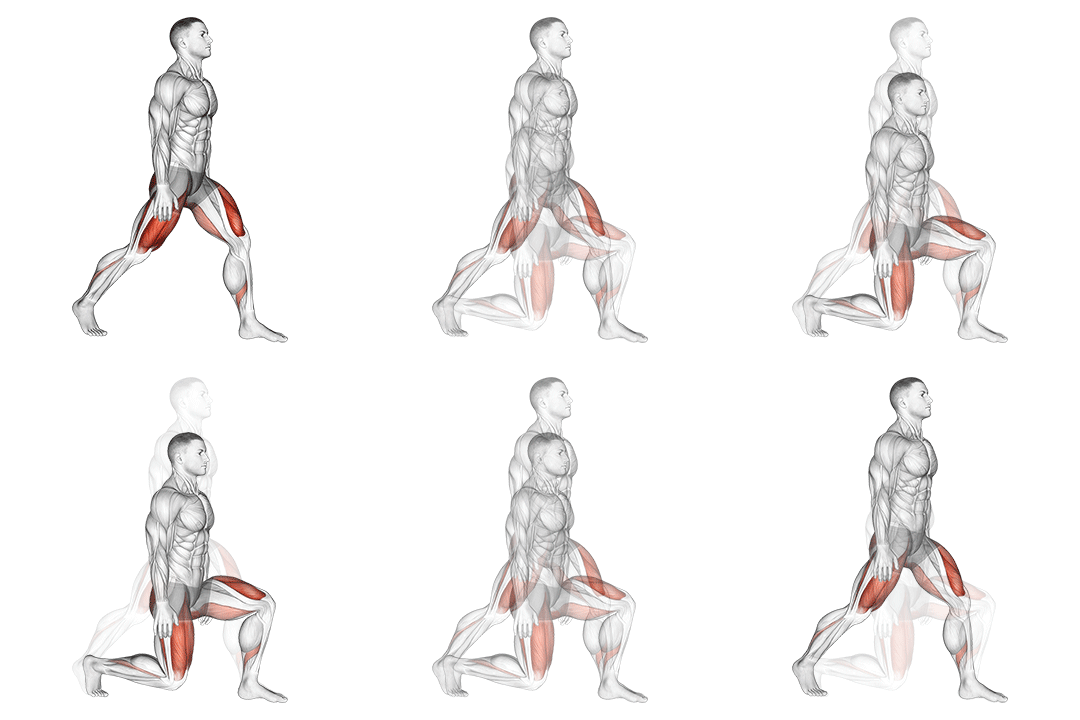
2. Split Squats
88% match- Quads
- Bodyweight
- Intermediate
- Compound
How to perform this exercise
- Stand with your feet shoulder-width apart.
- Take a step forward with one foot and place it about two feet in front of the other foot.
- Lower your body by bending your knees and hips, keeping your back straight.
- Continue lowering until your front thigh is parallel to the ground, and your back knee is hovering just above the ground.
- Pause for a moment, then push through your front heel to return to the starting position.
- Repeat for the desired number of repetitions, then switch legs and repeat.
Sets and reps: 3 or 4 sets of 6 to 10 reps on each side.
Why this matches
- Movement: split squat, the same as the Band Single Leg Split Squat
- Primary muscle: quads, the same as the Band Single Leg Split Squat
- Equipment: bodyweight only, not a band
- Body position: standing, the same as the Band Single Leg Split Squat
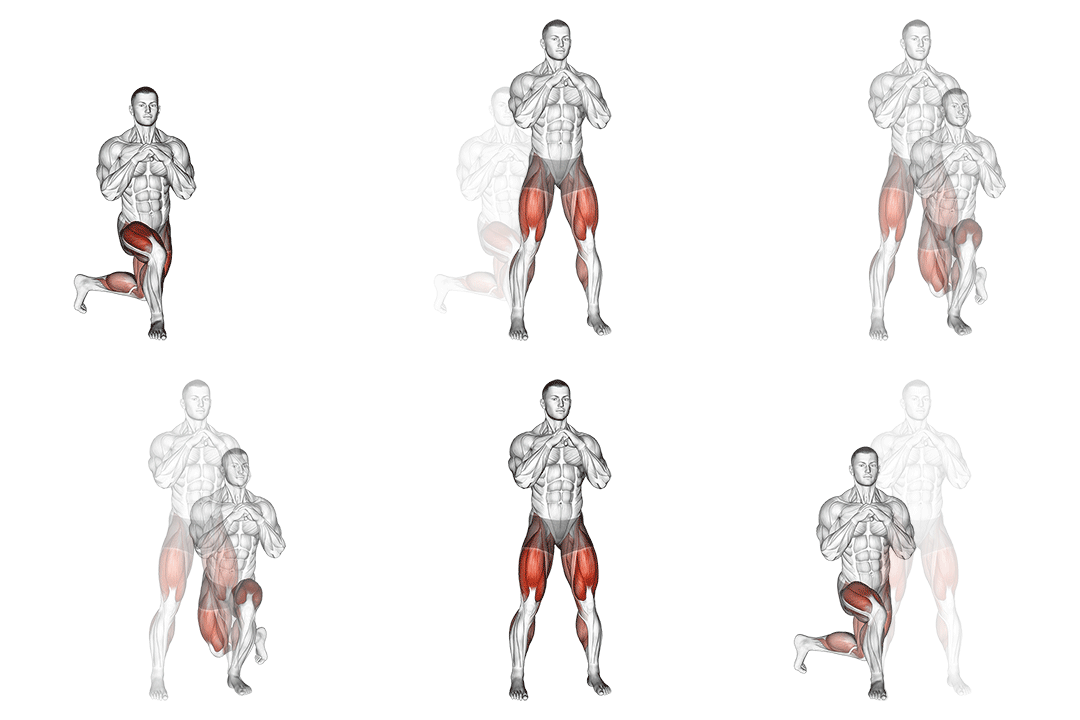
3. Curtsey Squat
73% match- Glutes
- Bodyweight
- Beginner
- Compound
A looser match: it works the glutes rather than the quads.
How to perform this exercise
- Stand with your feet shoulder-width apart.
- Take a step diagonally behind and across your body with your right foot, crossing it behind your left leg.
- Bend both knees as if you were curtsying, lowering your body towards the ground.
- Keep your torso upright and your weight on your front foot.
- Push through your front foot to return to the starting position.
- Repeat on the other side, stepping diagonally behind and across your body with your left foot.
Sets and reps: 3 sets of 8 to 12 reps on each side, and add reps before you add load.
Why this matches
- Primary muscle: glutes, not quads
- Equipment: bodyweight only, not a band
- Body position: standing, the same as the Band Single Leg Split Squat
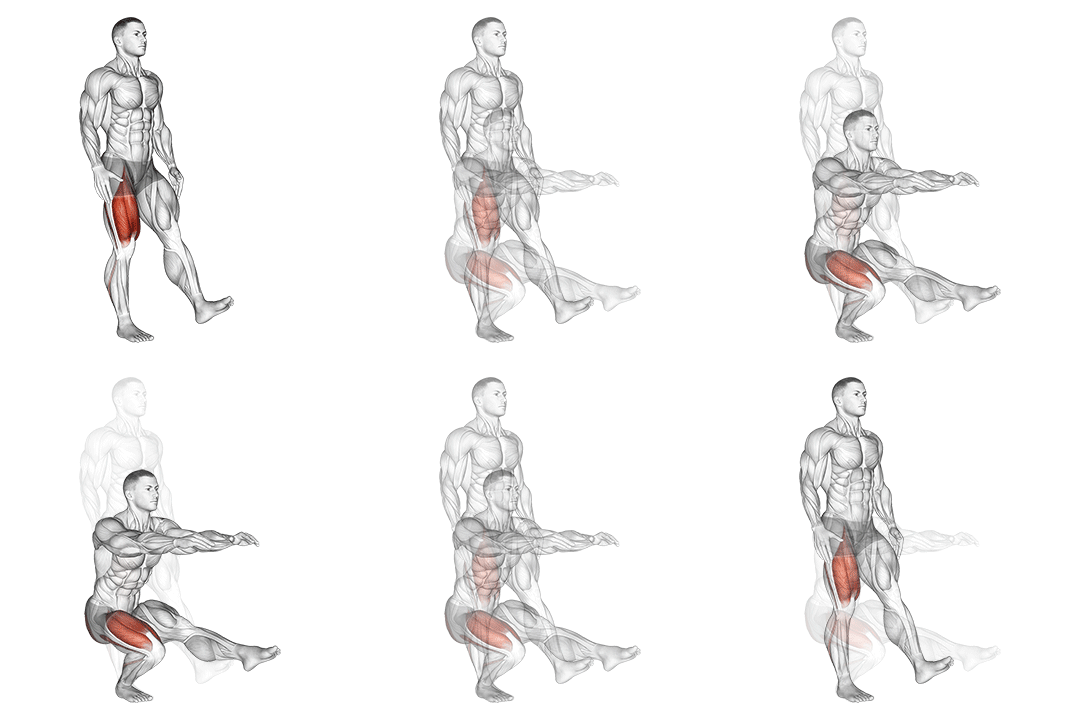
4. Single Leg Squat (Pistol) Male
73% match- Glutes
- Bodyweight
- Advanced
- Compound
How to perform this exercise
- Stand with your feet shoulder-width apart and arms extended in front of you.
- Lift your right foot off the ground and extend it forward.
- Slowly lower your body down by bending your left knee and pushing your hips back.
- Keep your chest up and your back straight as you lower yourself down.
- Lower until your left thigh is parallel to the ground, or as low as you can comfortably go.
- Pause for a moment at the bottom, then push through your left heel to return to the starting position.
- Repeat for the desired number of repetitions, then switch legs.
Sets and reps: 3 or 4 sets of 6 to 10 reps on each side.
Why this matches
- Primary muscle: glutes, not quads
- Equipment: bodyweight only, not a band
- Body position: standing, the same as the Band Single Leg Split Squat
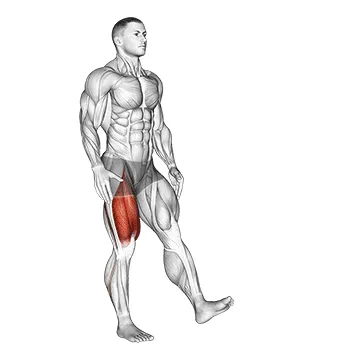
5. One Leg Squat
73% match- Glutes
- Bodyweight
- Advanced
- Compound
How to perform this exercise
- Stand with your feet shoulder-width apart.
- Extend one leg forward, keeping it off the ground.
- Bend your standing leg and lower your body down as if sitting back into a chair.
- Keep your chest up and your back straight.
- Push through your heel to return to the starting position.
- Repeat with the other leg.
Sets and reps: 3 or 4 sets of 6 to 10 reps on each side.
Why this matches
- Primary muscle: glutes, not quads
- Equipment: bodyweight only, not a band
- Body position: standing, the same as the Band Single Leg Split Squat
- Balance: harder to stay steady on than the Band Single Leg Split Squat
- Quads
- Bodyweight
- Intermediate
- Compound
How to perform this exercise
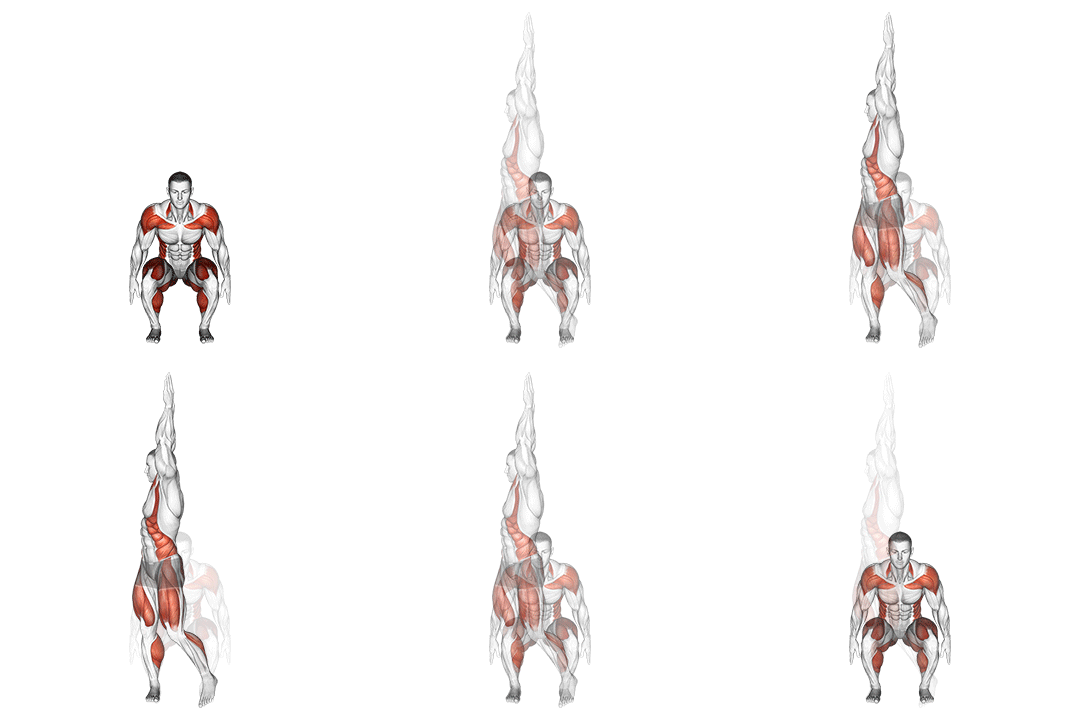
- Stand with your feet shoulder-width apart and toes slightly turned out.
- Lower your body into a squat position by bending your knees and pushing your hips back.
- As you come up from the squat, raise your arms overhead and twist your torso to one side.
- Return to the starting position and repeat the squat, this time twisting your torso to the opposite side.
- Continue alternating sides with each squat repetition.
Sets and reps: 3 or 4 sets of 6 to 10 reps.
Why this matches
- Primary muscle: quads, the same as the Band Single Leg Split Squat
- Equipment: bodyweight only, not a band
- Body position: standing, the same as the Band Single Leg Split Squat
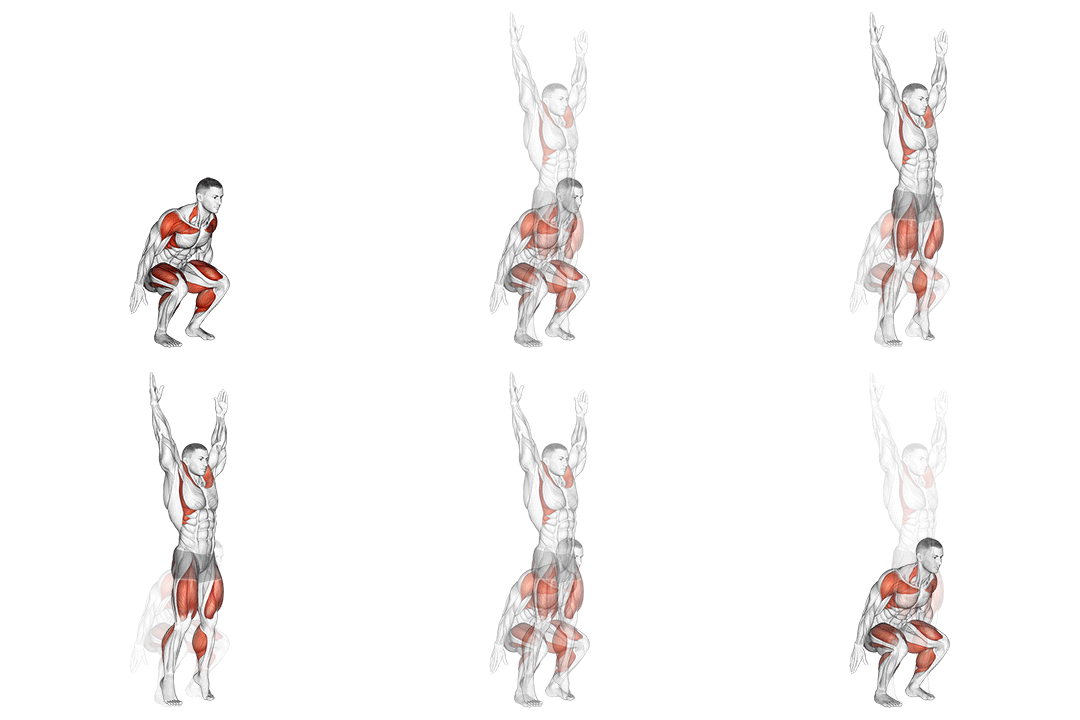
7. Squat To Overhead Reach
70% match- Quads
- Bodyweight
- Beginner
- Compound
How to perform this exercise
- Stand with your feet shoulder-width apart and toes slightly turned out.
- Lower your body down into a squat position by bending your knees and pushing your hips back.
- As you come up from the squat, extend your arms overhead, reaching towards the ceiling.
- Return to the starting position by lowering your arms and bending your knees to squat down again.
- Repeat for the desired number of repetitions.
Sets and reps: 3 sets of 8 to 12 reps, and add reps before you add load.
Why this matches
- Primary muscle: quads, the same as the Band Single Leg Split Squat
- Equipment: bodyweight only, not a band
- Body position: standing, the same as the Band Single Leg Split Squat
- Balance: easier to stay steady on than the Band Single Leg Split Squat
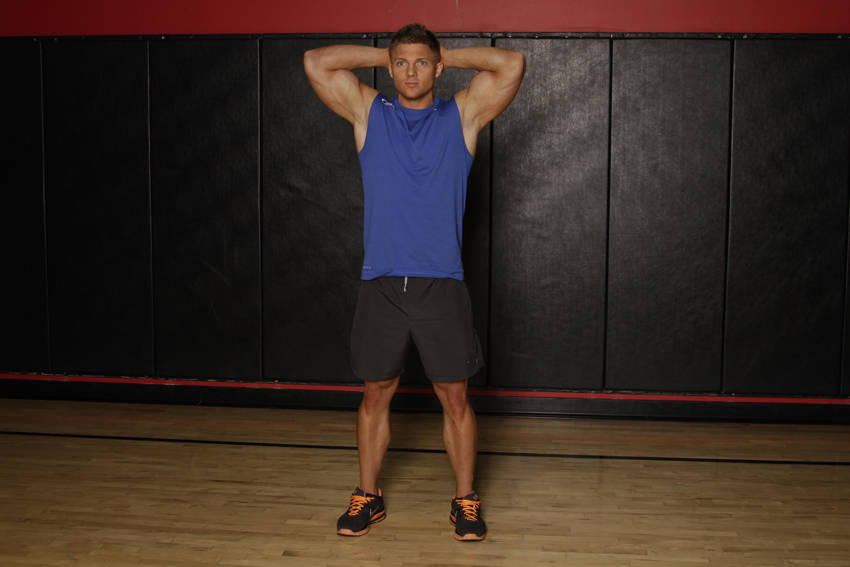
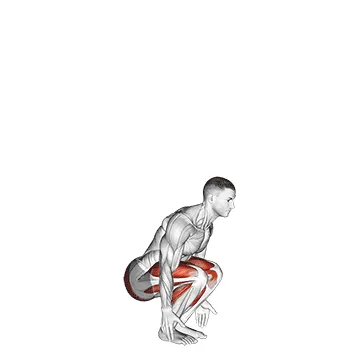
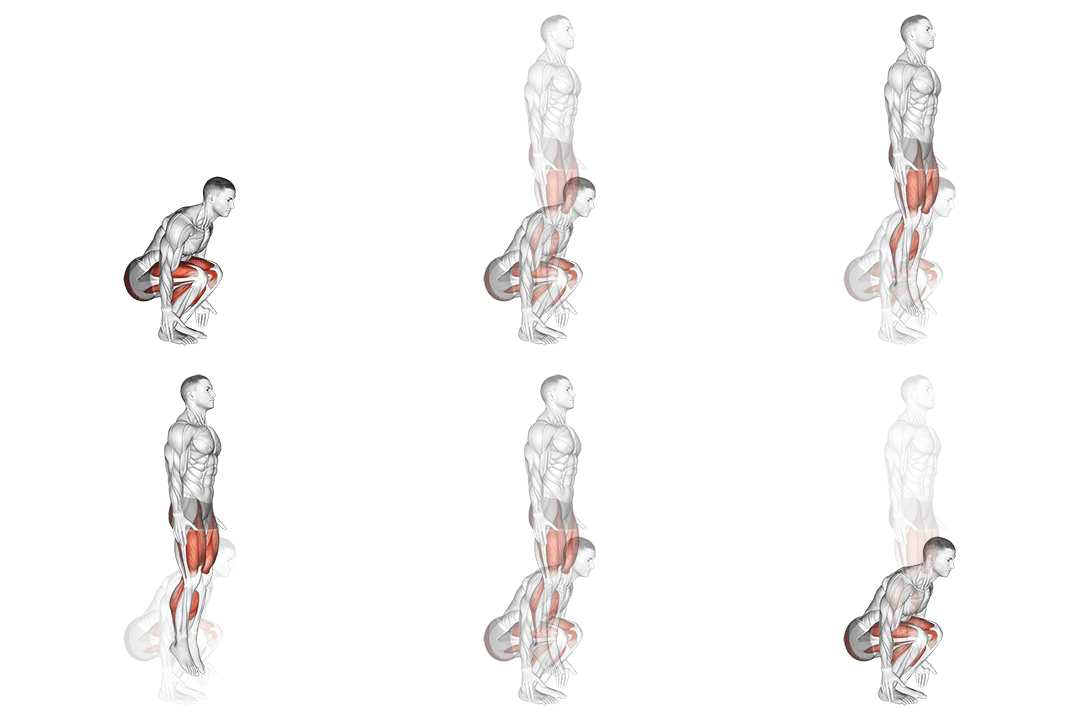
8. Bodyweight Squat
67% match- Quads
- Bodyweight
- Beginner
- Compound
How to perform this exercise
- Stand with your feet shoulder width apart. You can place your hands behind your head. This will be your starting position.
- Begin the movement by flexing your knees and hips, sitting back with your hips.
- Continue down to full depth if you are able,and quickly reverse the motion until you return to the starting position. As you squat, keep your head and chest up and push your knees out.
Sets and reps: 3 sets of 8 to 12 reps, and add reps before you add load.
Why this matches
- Primary muscle: quads, the same as the Band Single Leg Split Squat
- Equipment: bodyweight only, not a band
- Body position: standing, the same as the Band Single Leg Split Squat
- Balance: easier to stay steady on than the Band Single Leg Split Squat
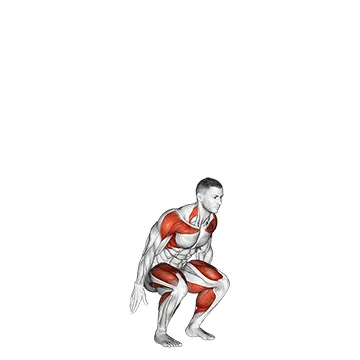
9. Semi Squat Jump
66% match- Quads
- Bodyweight
- Intermediate
- Compound
How to perform this exercise
- Stand with your feet shoulder-width apart.
- Bend your knees and lower your body into a squat position.
- Jump explosively, extending your hips and knees while swinging your arms for momentum.
- Land softly on the balls of your feet and immediately go into the next repetition.
- Repeat for the desired number of repetitions.
Sets and reps: 3 or 4 sets of 6 to 10 reps.
Why this matches
- Primary muscle: quads, the same as the Band Single Leg Split Squat
- Equipment: bodyweight only, not a band
- Body position: standing, the same as the Band Single Leg Split Squat
- Balance: easier to stay steady on than the Band Single Leg Split Squat
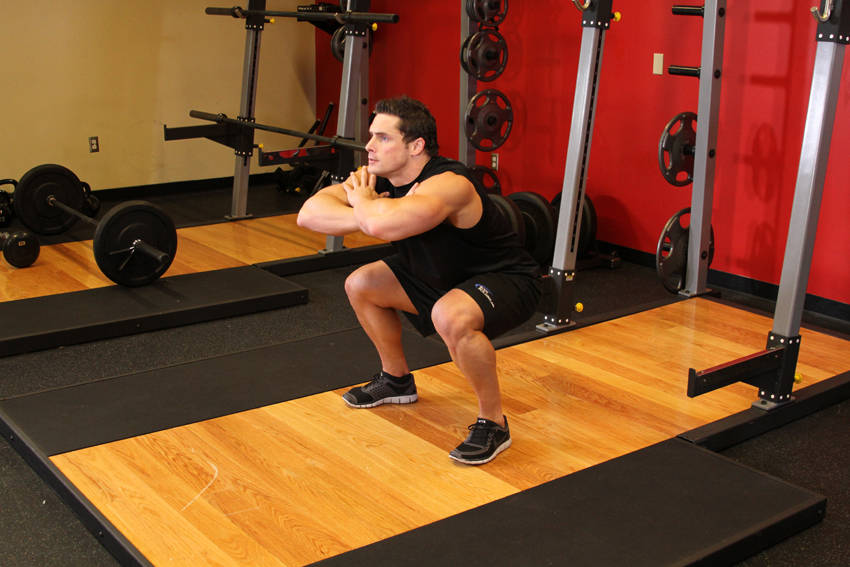
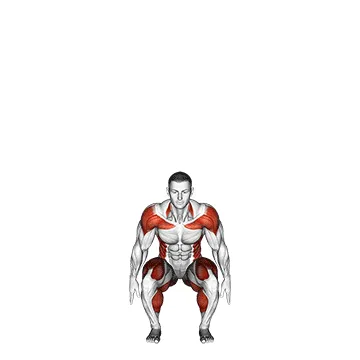
10. Freehand Jump Squat
63% match- Quads
- Bodyweight
- Intermediate
- Compound
How to perform this exercise
- Cross your arms over your chest.
- With your head up and your back straight, position your feet at shoulder width.
- Keeping your back straight and chest up, squat down as you inhale until your upper thighs are parallel, or lower, to the floor.
- Now pressing mainly with the ball of your feet, jump straight up in the air as high as possible, using the thighs like springs. Exhale during this portion of the movement.
- When you touch the floor again, immediately squat down and jump again.
- Repeat for the recommended amount of repetitions.
Sets and reps: 3 or 4 sets of 6 to 10 reps.
Why this matches
- Primary muscle: quads, the same as the Band Single Leg Split Squat
- Equipment: bodyweight only, not a band
- Body position: standing, the same as the Band Single Leg Split Squat
- Balance: easier to stay steady on than the Band Single Leg Split Squat
Why You Might Need a Band Single Leg Split Squat Alternative
You might substitute the Band Single Leg Split Squat for several reasons: limited equipment, acute knee or hip irritation, balance deficits, or a need for different loading patterns. Bands alter force curves and sometimes reduce peak quad torque; a barbell or dumbbell split stance increases compressive and tensile load on the knee differently. For example, a step-up reduces horizontal shear and lowers eccentric demand, helping rehabbing quads, while a Bulgarian split squat increases range of motion and quad recruitment when you allow more forward knee travel. Cue: control the descent for 2–3 seconds to manage eccentric tension and protect joints.
How to Choose the Right Band Single Leg Split Squat Substitute
Select a substitute based on equipment, pain response, and training goal. If you lack bands but want maximal quad loading, pick a front-foot elevated split squat or loaded step-up and progress load with dumbbells; cue: keep weight over the mid-foot to maintain knee-extension torque. If balance or knee pain limits you, choose step-ups or low-depth split squats to reduce shear and shorten range of motion. For hypertrophy prioritize time under tension and controlled eccentrics; for strength prioritize heavier loads and full ROM. Also consider hip stability: add pauses to force glute and VMO engagement.
Band Single Leg Split Squat FAQ
What muscles does Band Single Leg Split Squat work?
The exercise primarily targets the quadriceps by producing knee-extension torque on the front leg, while the glutes and hamstrings assist hip extension. Core and hip-stabilizer muscles engage to maintain balance and control; cue: brace your core and keep the pelvis level to optimize muscle recruitment.
What is the best bodyweight alternative to Band Single Leg Split Squat?
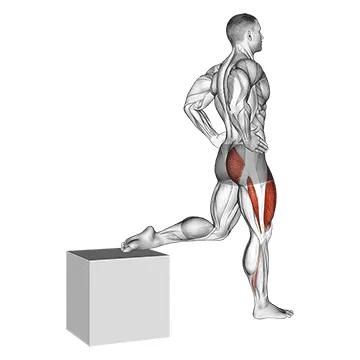
A Bulgarian split squat (rear-foot elevated split squat) is an excellent bodyweight substitute because it preserves unilateral load and allows deep knee flexion to target quads. Cue: keep your torso upright, descend slowly, and drive through the front heel to emphasize quad activation.
Can I build muscle without doing Band Single Leg Split Squat?
Yes, you can build quad mass with other unilateral and bilateral movements by applying progressive overload, increasing volume, or slowing eccentrics. Use weighted step-ups, front-foot elevated split squats, or tempo-controlled lunges and cue: increase time under tension and add external load when technique remains strict.
Find Alternatives for Any Exercise
Search the exercise database and filter the ranked substitutes by the equipment you own.
Similarity scores compare exercise metadata such as movement pattern, muscles, equipment and body position. They are not a safety rating or a check that you own the equipment. Learn about our methodology