

10 Best Cable Incline Fly Alternatives for Your Chest
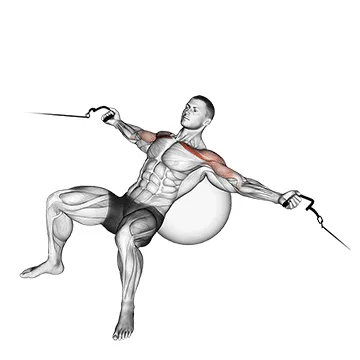
The Cable Incline Fly is done lying on your back with a cable machine. Ranked closest by our scoring: the Cable Standing Fly. Nine harder versions, among them the Cable Incline Fly (On Stability Ball) and the Cable Lying Fly, are listed below as progressions rather than swaps.
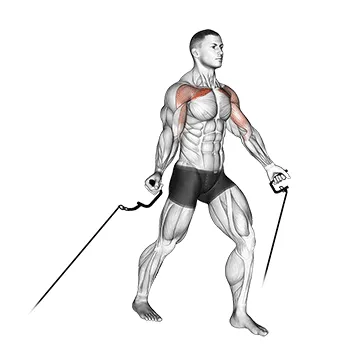
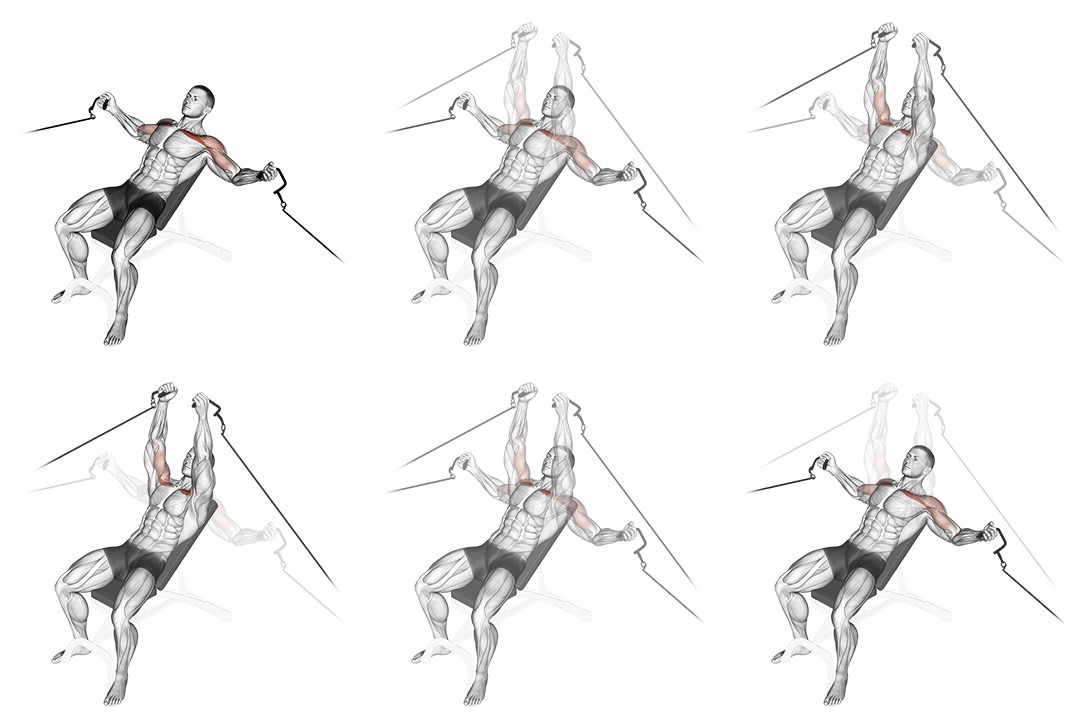
The Cable Incline Fly has you seated against an incline pad, pulling the handles from straight out in front to fully open at your sides and back. The closest match is the Cable Standing Fly, which asks for the same handles and the same wide-arm motion, just on your feet instead of an incline bench. If you would rather keep the arms opening on an angle, the Cable Decline Fly sets the machine to a decline position and has you standing for the same open-and-close arc.
Updated Ranked by our 12-factor similarity model How it works
Original Exercise: Cable Incline Fly
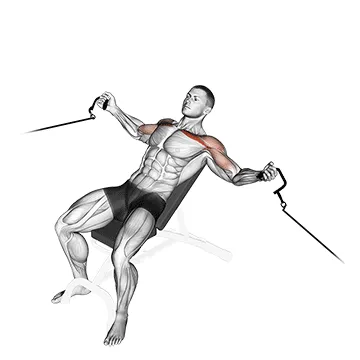
- Primary muscle
- Pectorals
- Equipment
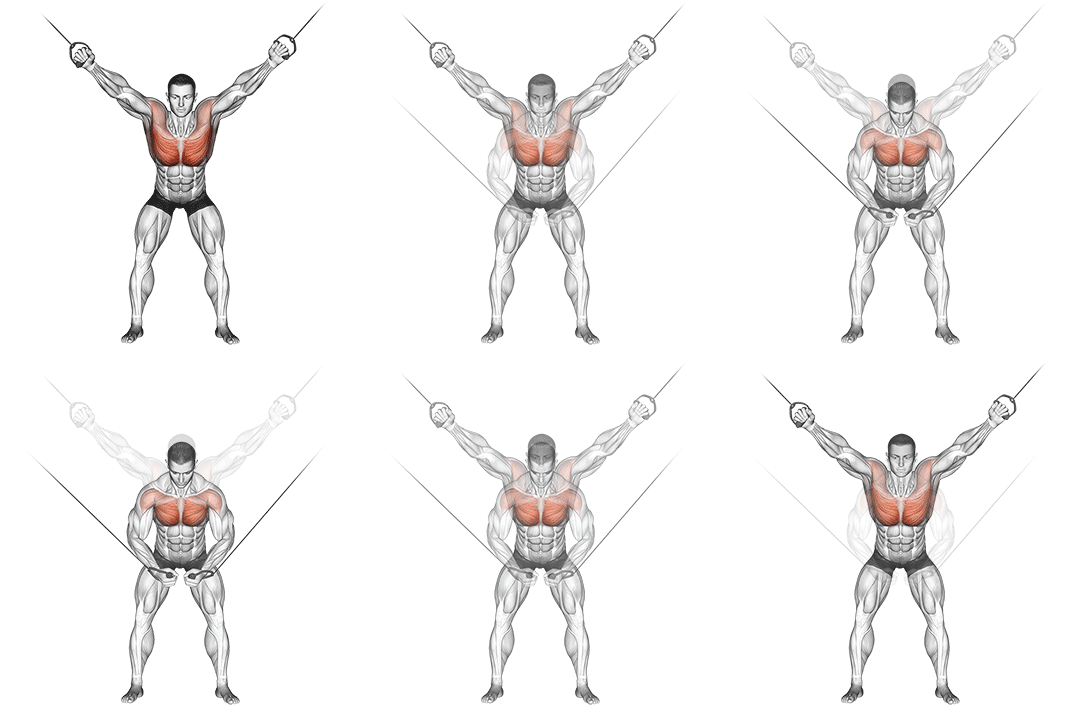
- Cable
- Difficulty
- Intermediate
- Type
- Isolation
Secondary muscles: Deltoids, Triceps
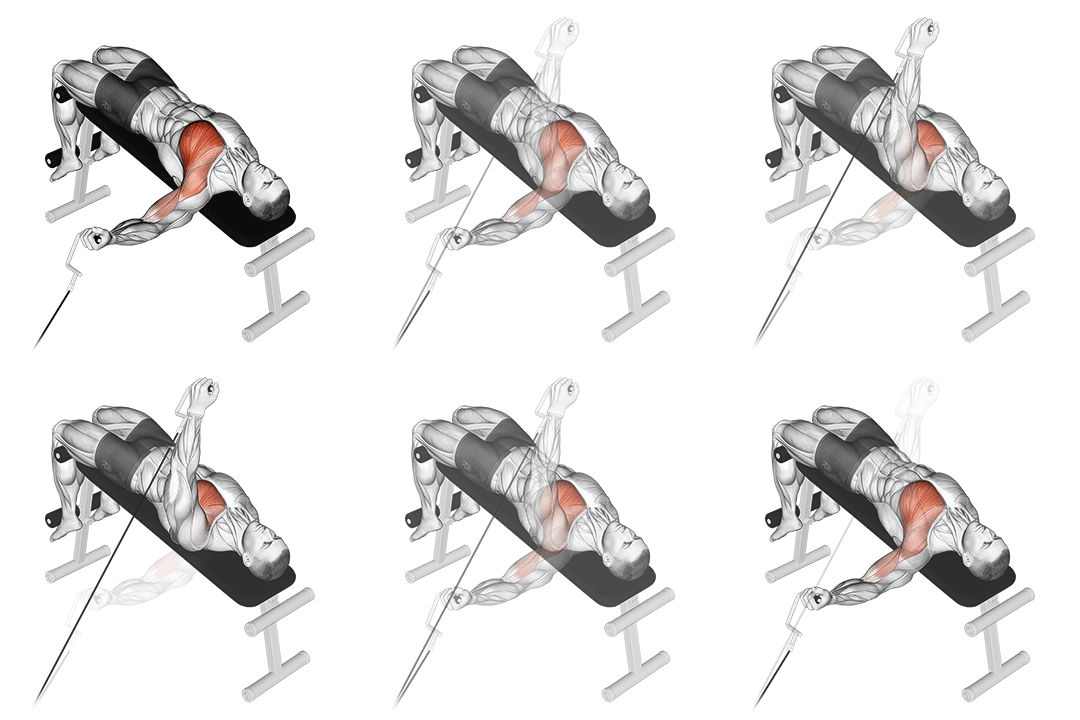
How to perform Cable Incline Fly
- Adjust the cable machine to a low position and attach the handles.
- Sit on an incline bench with your back against the pad and feet flat on the floor.
- Grasp the handles with an overhand grip and extend your arms straight out in front of you.
- Keeping a slight bend in your elbows, open your arms out to the sides in a controlled motion.
- Pause for a moment at the fully extended position, then slowly return to the starting position.
- Repeat for the desired number of repetitions.
Ranked Cable Incline Fly Alternatives
10 substitutes, ranked by how closely each one matches the Cable Incline Fly on movement pattern, muscles worked, equipment and body position. The higher the score, the less you change. Open "How to perform this exercise" on a card for the steps; every card title links to that exercise's own alternatives page. Harder versions are tagged as progressions and kept out of the top spot even when they score higher.
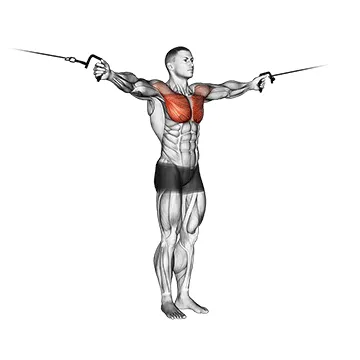
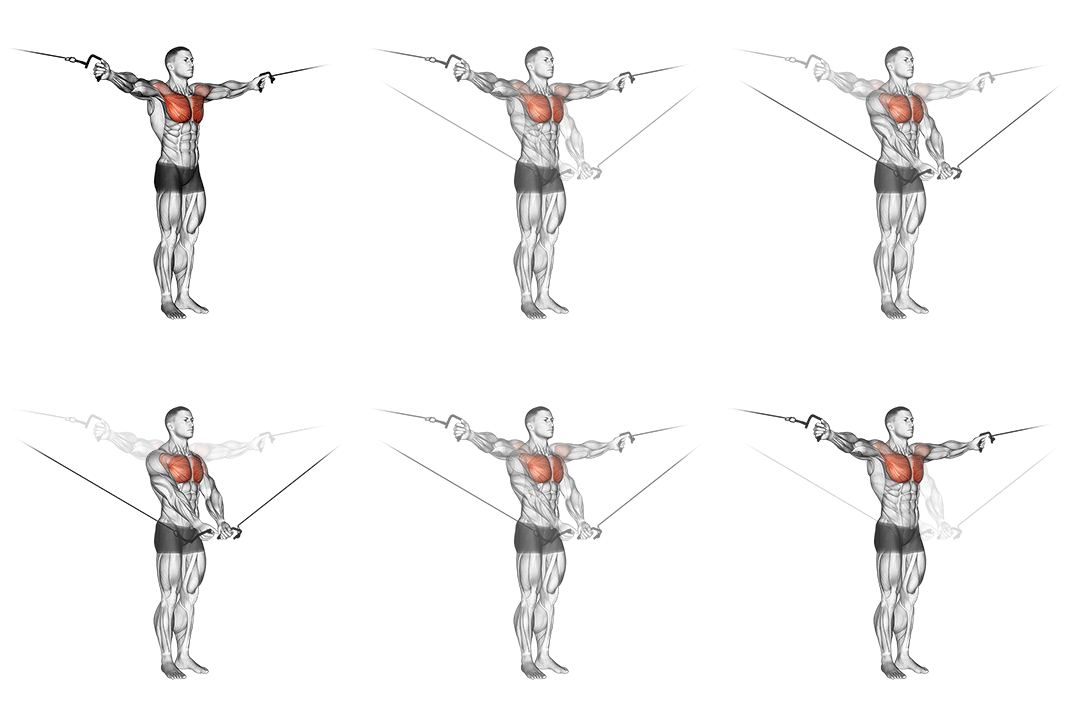
Best match 1. Cable Standing Fly
91% match- Pectorals
- Cable
- Beginner
- Isolation
The same equipment, done standing instead.
How to perform this exercise
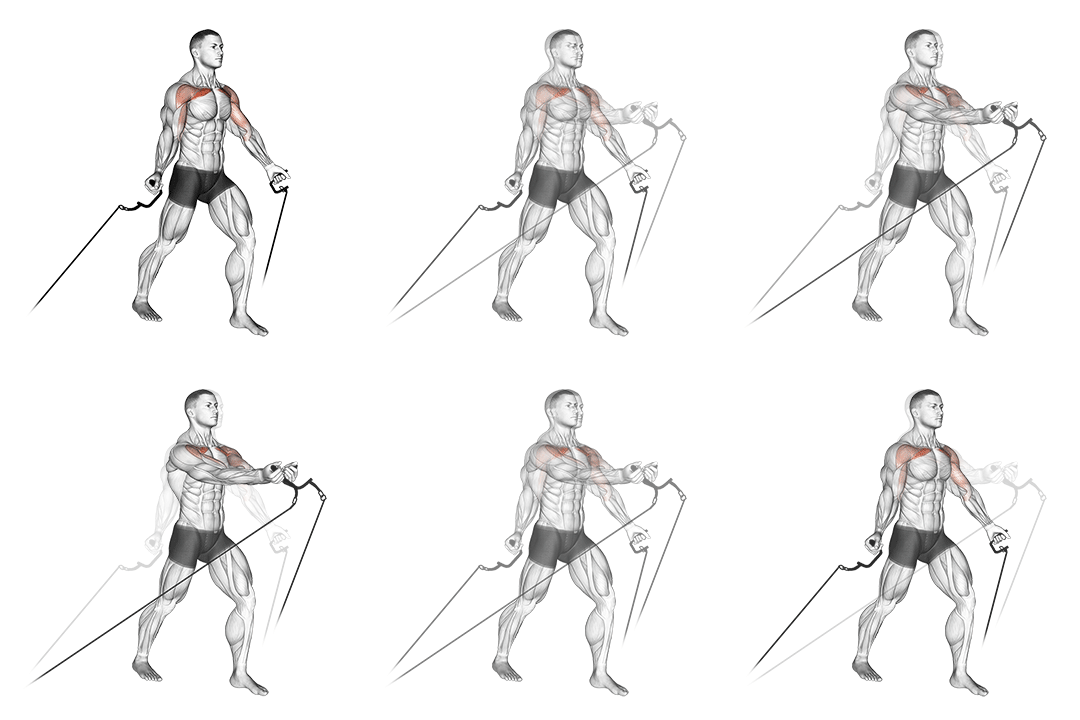
- Attach the handles to the cables at chest height.
- Stand with your feet shoulder-width apart, facing away from the cable machine.
- Grasp the handles with an overhand grip, palms facing forward.
- Step forward slightly to create tension in the cables.
- Keep your core engaged and your back straight throughout the exercise.
- With a slight bend in your elbows, slowly bring your arms forward and together in front of your chest.
- Squeeze your chest muscles at the peak of the movement.
- Slowly reverse the movement, returning your arms to the starting position.
- Repeat for the desired number of repetitions.
Sets and reps: 3 sets of 10 to 15 reps.
Why this matches
- Movement: chest fly, the same as the Cable Incline Fly
- Primary muscle: pectorals, the same as the Cable Incline Fly
- Equipment: a cable, the same as the Cable Incline Fly
- Body position: standing, not lying on your back
Progression
- Pectorals
- Cable
- Intermediate
- Isolation
Pick this when you want a harder version that still works the pectorals.
How to perform this exercise
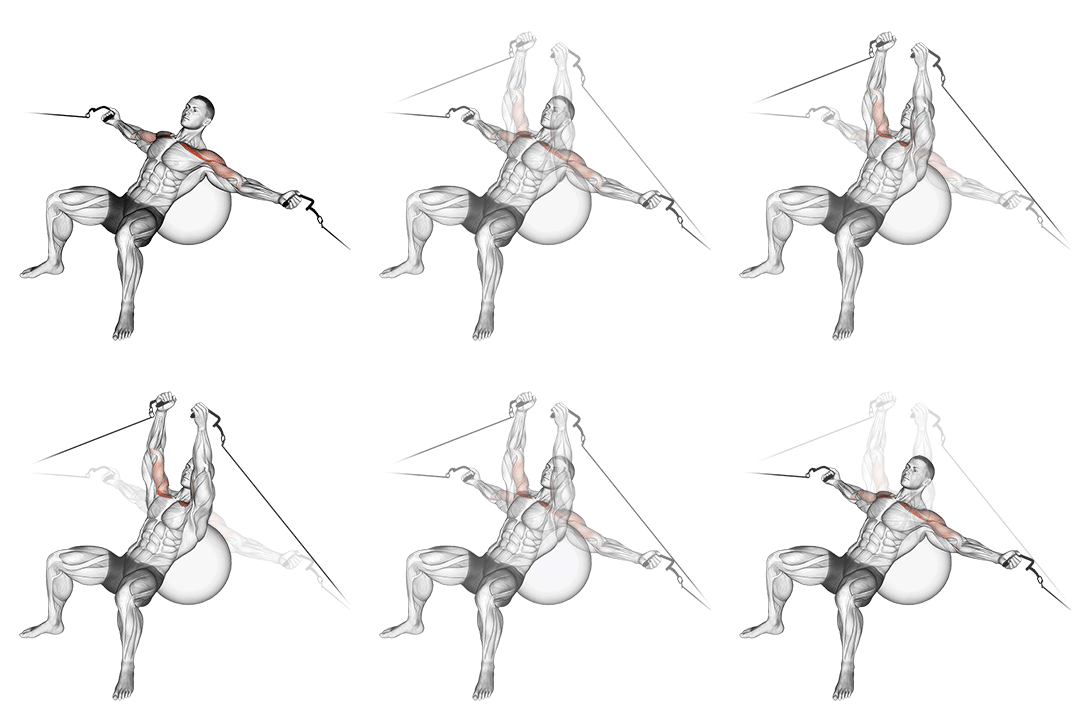
- Set up a stability ball at an incline angle.
- Attach the cable handles to the high pulleys of a cable machine.
- Sit on the stability ball facing away from the machine, with your feet firmly planted on the ground.
- Grasp the cable handles with an overhand grip, palms facing forward.
- Lean forward slightly, keeping your back straight and core engaged.
- With a controlled motion, bring your arms out to the sides, keeping a slight bend in your elbows.
- Continue the motion until your arms are parallel to the ground.
- Pause for a moment, then slowly return to the starting position.
- Repeat for the desired number of repetitions.
Sets and reps: 3 sets of 10 to 15 reps.
Why this matches
- Movement: chest fly, the same as the Cable Incline Fly
- Primary muscle: pectorals, the same as the Cable Incline Fly
- Equipment: a cable, the same as the Cable Incline Fly
- Body position: lying on your back, the same as the Cable Incline Fly
- Balance: harder to stay steady on than the Cable Incline Fly
Progression
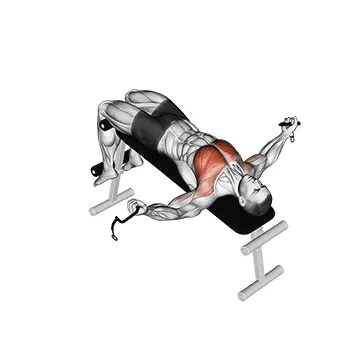
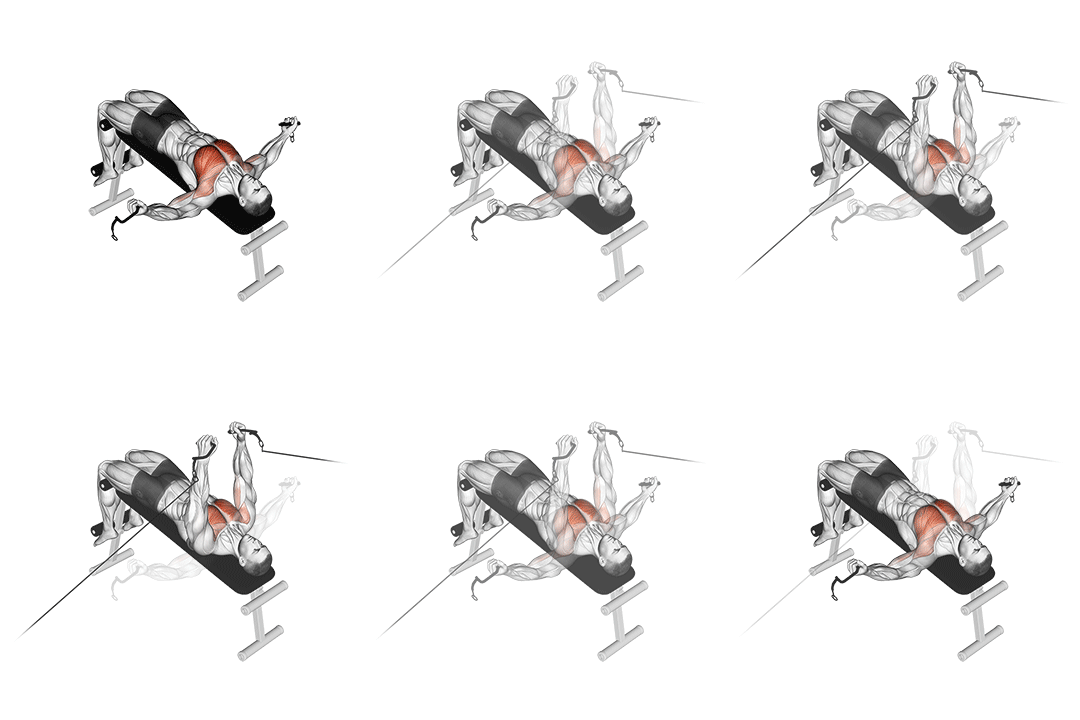
3. Cable Lying Fly
94% match- Pectorals
- Cable
- Intermediate
- Isolation
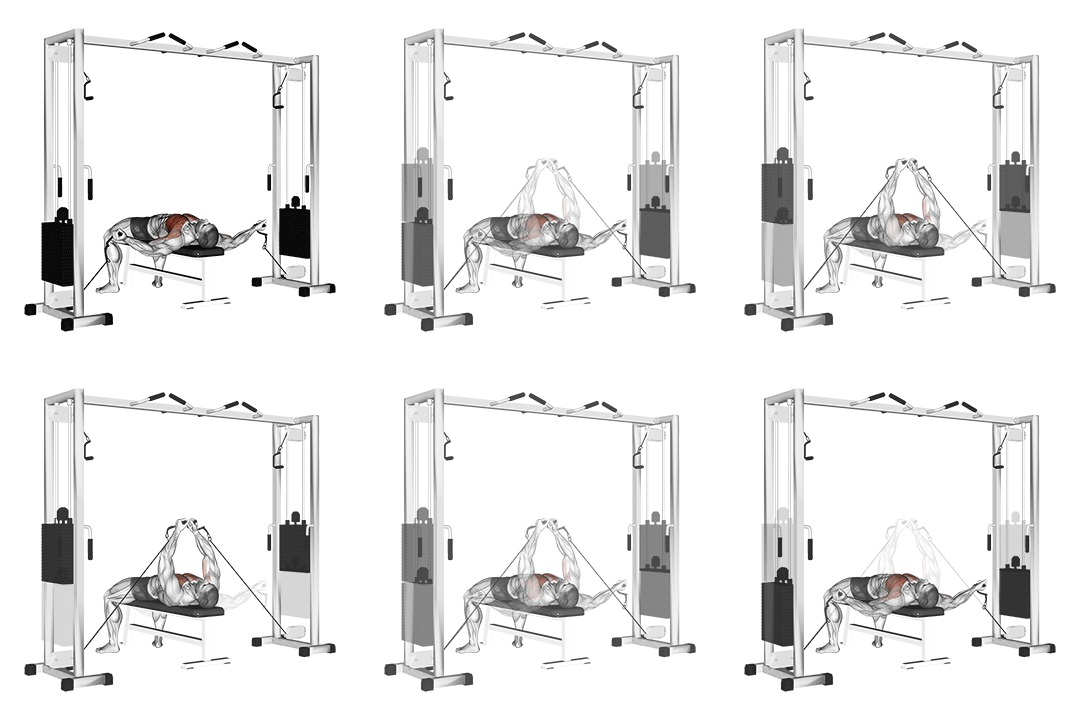
How to perform this exercise
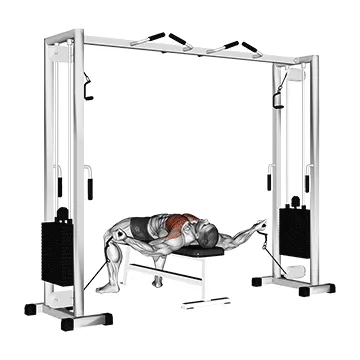
- Attach the handles to the cables and lie flat on a bench with your feet flat on the ground.
- Hold the handles with your palms facing each other and your arms extended straight above your chest.
- Keeping a slight bend in your elbows, lower your arms out to the sides in a wide arc until you feel a stretch in your chest.
- Pause for a moment, then squeeze your chest muscles to bring your arms back to the starting position.
- Repeat for the desired number of repetitions.
Sets and reps: 3 sets of 10 to 15 reps.
Why this matches
- Movement: chest fly, the same as the Cable Incline Fly
- Primary muscle: pectorals, the same as the Cable Incline Fly
- Equipment: a cable, the same as the Cable Incline Fly
- Body position: lying on your back, the same as the Cable Incline Fly
Progression
4. Cable Low Fly
91% match- Pectorals
- Cable
- Intermediate
- Isolation
How to perform this exercise
- Attach the handles to the low pulleys of a cable machine and select an appropriate weight.
- Stand in the middle of the machine with your feet shoulder-width apart and a slight bend in your knees.
- Grasp the handles with an overhand grip and extend your arms out to the sides, keeping a slight bend in your elbows.
- Maintaining control, slowly bring your arms forward in a sweeping motion, crossing them in front of your body.
- Pause for a moment at the peak of the movement, feeling the stretch in your chest muscles.
- Reverse the motion and slowly return your arms to the starting position, keeping tension on your chest muscles throughout.
- Repeat for the desired number of repetitions.
Sets and reps: 3 sets of 10 to 15 reps.
Why this matches
- Movement: chest fly, the same as the Cable Incline Fly
- Primary muscle: pectorals, the same as the Cable Incline Fly
- Equipment: a cable, the same as the Cable Incline Fly
- Body position: standing, not lying on your back
Progression
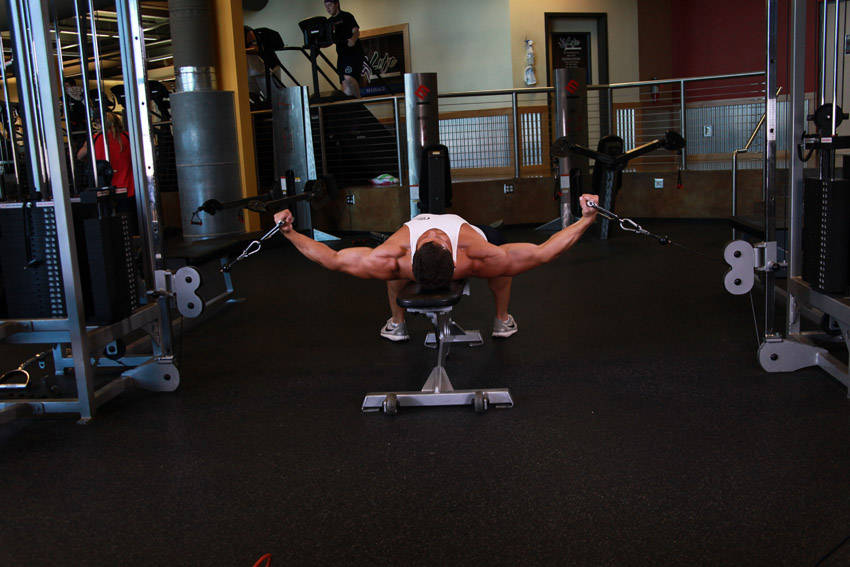
5. Flat Bench Cable Flyes
90% match- Pectorals
- Cable
- Intermediate
- Isolation
How to perform this exercise
- Position a flat bench between two low pulleys so that when you are laying on it, your chest will be lined up with the cable pulleys.
- Lay flat on the bench and keep your feet on the ground.
- Have someone hand you the handles on each hand. You will grab each single handle attachment with a palms up grip.
- Extend your arms by your side with a slight bend on your elbows. Tip: You will keep this bend constant through the whole movement. Your arms should be parallel to the floor. This is your starting position.
- Now start lifting the arms in a semi-circle motion directly in front of you by pulling the cables together until both hands meet at the top of the movement. Squeeze your chest as you perform this motion and breathe out during this movement. Also, hold the contraction for a second at the top. Tip: When performed correctly, at the top position of this movement, your arms should be perpendicular to your torso and the floor touching above your chest.
- Slowly come back to the starting position.
- Repeat for the recommended amount of repetitions.
Sets and reps: 3 sets of 10 to 15 reps.
Why this matches
- Movement: chest fly, the same as the Cable Incline Fly
- Primary muscle: pectorals, the same as the Cable Incline Fly
- Equipment: a cable, the same as the Cable Incline Fly
- Body position: lying on your back, the same as the Cable Incline Fly
Progression
6. Cable One Arm Decline Chest Fly
87% match- Pectorals
- Cable
- Intermediate
- Isolation
Pick this when you want a harder single-arm version that still works the pectorals.
How to perform this exercise
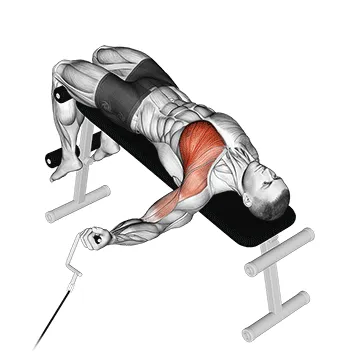
- Attach a D-handle to a low pulley cable machine and set the bench to a decline angle.
- Lie down on the bench with your head towards the machine and grab the handle with your right hand.
- Extend your arm straight up above your chest, keeping a slight bend in your elbow.
- With a controlled motion, lower your arm out to the side until your hand is in line with your shoulder.
- Pause for a moment, then reverse the motion and bring your arm back to the starting position.
- Repeat for the desired number of repetitions, then switch to your left arm and repeat the exercise.
Sets and reps: 3 sets of 10 to 15 reps on each side.
Why this matches
- Movement: chest fly, the same as the Cable Incline Fly
- Primary muscle: pectorals, the same as the Cable Incline Fly
- Equipment: a cable, the same as the Cable Incline Fly
- Body position: lying on your back, the same as the Cable Incline Fly
Progression
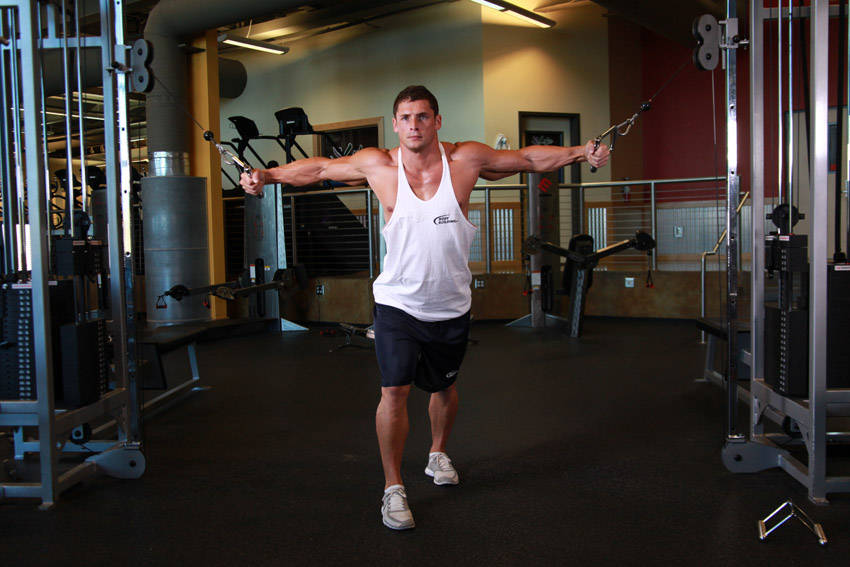
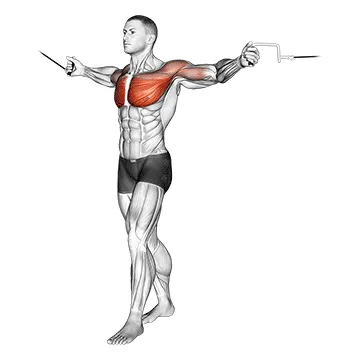
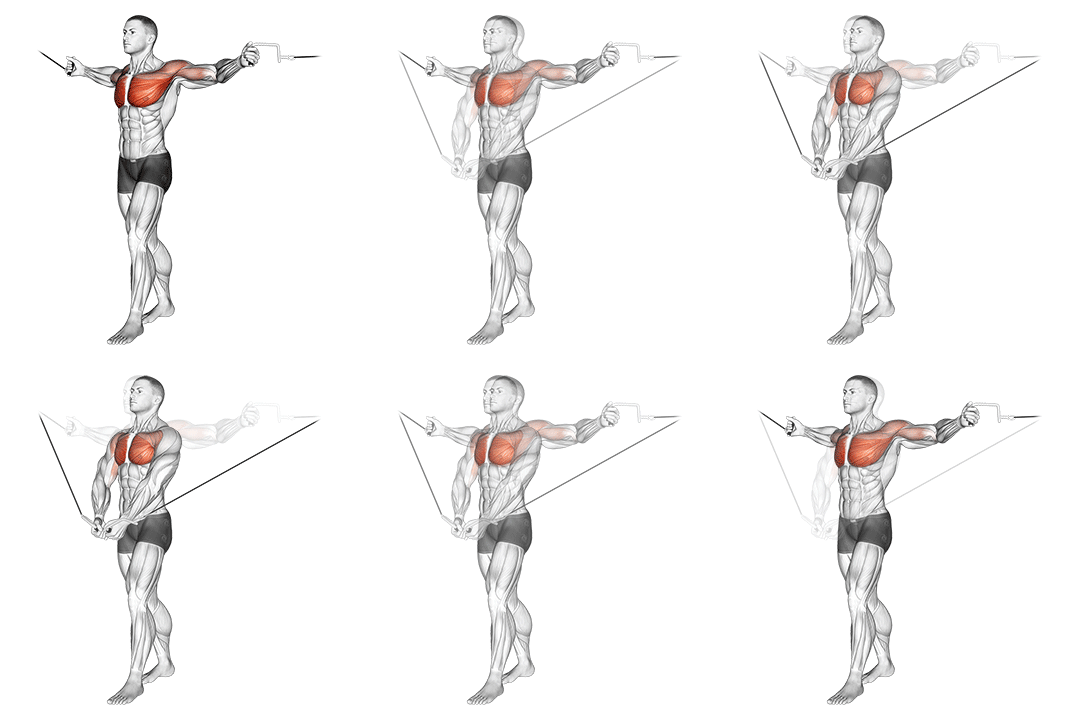
7. Cable Cross-over Variation
87% match- Pectorals
- Cable
- Intermediate
- Isolation
How to perform this exercise
- Adjust the cable pulleys to chest height.
- Stand in the center of the cable machine with one foot in front of the other.
- Grasp the handles with your palms facing down and your arms extended out to the sides.
- Take a step forward, keeping your arms slightly bent.
- With a slight bend in your elbows, bring your hands together in front of your chest.
- Pause for a moment, then slowly return your arms back to the starting position.
- Repeat for the desired number of repetitions.
Sets and reps: 3 sets of 10 to 15 reps.
Why this matches
- Primary muscle: pectorals, the same as the Cable Incline Fly
- Equipment: a cable, the same as the Cable Incline Fly
- Body position: standing, not lying on your back
Progression
8. Cable Crossover
87% match- Pectorals
- Cable
- Intermediate
- Isolation
How to perform this exercise
- To get yourself into the starting position, place the pulleys on a high position (above your head), select the resistance to be used and hold the pulleys in each hand.
- Step forward in front of an imaginary straight line between both pulleys while pulling your arms together in front of you. Your torso should have a small forward bend from the waist. This will be your starting position.
- With a slight bend on your elbows in order to prevent stress at the biceps tendon, extend your arms to the side (straight out at both sides) in a wide arc until you feel a stretch on your chest. Breathe in as you perform this portion of the movement. Tip: Keep in mind that throughout the movement, the arms and torso should remain stationary; the movement should only occur at the shoulder joint.
- Return your arms back to the starting position as you breathe out. Make sure to use the same arc of motion used to lower the weights.
- Hold for a second at the starting position and repeat the movement for the prescribed amount of repetitions.
Sets and reps: 3 sets of 10 to 15 reps.
Why this matches
- Movement: chest fly, the same as the Cable Incline Fly
- Primary muscle: pectorals, the same as the Cable Incline Fly
- Equipment: a cable, the same as the Cable Incline Fly
- Body position: standing, not lying on your back
Progression
9. Cable Decline Fly
87% match- Pectorals
- Cable
- Intermediate
- Isolation
How to perform this exercise
- Adjust the cable machine to a decline position.
- Stand facing away from the machine with your feet shoulder-width apart.
- Hold the handles with your palms facing forward and your arms extended straight out in front of you.
- Keeping a slight bend in your elbows, open your arms out to the sides in a controlled motion.
- Pause for a moment at the fully extended position, then slowly return to the starting position.
- Repeat for the desired number of repetitions.
Sets and reps: 3 sets of 10 to 15 reps.
Why this matches
- Movement: chest fly, the same as the Cable Incline Fly
- Primary muscle: pectorals, the same as the Cable Incline Fly
- Equipment: a cable, the same as the Cable Incline Fly
- Body position: standing, not lying on your back
Progression
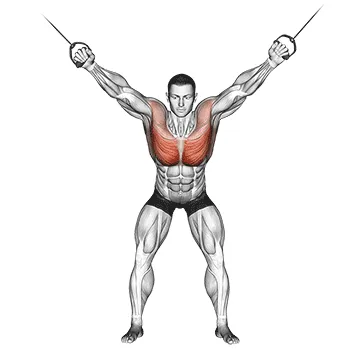
- Pectorals
- Cable
- Intermediate
- Isolation
How to perform this exercise
- Stand in the middle of a cable machine with your feet shoulder-width apart.
- Hold the handles of the cables with your palms facing down and your arms extended straight out to the sides.
- Keeping your arms straight, bring your hands together in front of your body, crossing them over each other.
- Pause for a moment, then slowly return to the starting position, keeping your arms extended.
- Repeat for the desired number of repetitions.
Sets and reps: 3 sets of 10 to 15 reps.
Why this matches
- Movement: chest fly, the same as the Cable Incline Fly
- Primary muscle: pectorals, the same as the Cable Incline Fly
- Equipment: a cable, the same as the Cable Incline Fly
- Body position: standing, not lying on your back
Why You Might Need a Cable Incline Fly Alternative
Every swap still runs off a cable stack, so the equipment is rarely why you need one. The incline bench in front of the tower is the scarce part: one bench, one angle, and a line forms behind it. Every swap keeps that open-and-close arc, with the crossover versions carrying the hands past each other at the front. What changes is your body position and, for the Cable One Arm Decline Chest Fly, whether one arm makes the trip at a time instead of both. Pick the version whose setup is free right now rather than waiting on the exact bench angle.
How to Choose the Right Cable Incline Fly Substitute
Start with the Cable Standing Fly if a bench is the problem: same handles, same arm path, just done on your feet, so the incline bench frees up for someone else. Prefer a bench under you? The Cable Lying Fly has you flat on your back with the handles starting above your chest and lowering out to the sides. The Cable Decline Fly sets the machine to a decline position and has you standing instead. The Cable Incline Fly (On Stability Ball) keeps the incline angle but drops the pad, so your trunk holds you steady through the same arc, a step up from the Cable Incline Fly. For one-sided work, the Cable One Arm Decline Chest Fly sends one arm through at a time. The Cable Standing Fly stays the gentlest entry, with nothing to balance.
Cable Incline Fly FAQ
Which alternative works one arm at a time?
The Cable One Arm Decline Chest Fly. You set the bench to a decline angle and send one arm through the same wide arc while the other stays free, working each side on its own instead of both arms moving together.
How do I make a cable fly swap harder?
Take away the backrest. The Cable Incline Fly (On Stability Ball) keeps the same incline angle and arm path as the Cable Incline Fly, but the ball asks your trunk to hold you steady for the whole set instead of resting against a pad.
Can I do the Cable Incline Fly at home?
Only with a cable stack, handles and an incline bench at home. Without the bench, every swap still needs the stack, and the Cable Standing Fly is the easiest change: same handles, same arm path, standing instead of seated against an incline pad.
Which alternative suits a beginner?
The Cable Standing Fly. You stand on solid ground and move the handles through the same wide arc, with no bench angle or balance demand to manage, which makes it a simpler place to start than the seated or decline versions.
Find Alternatives for Any Exercise
Search the exercise database and filter the ranked substitutes by the equipment you own.
Similarity scores compare exercise metadata such as movement pattern, muscles, equipment and body position. They are not a safety rating or a check that you own the equipment. Learn about our methodology