

10 Best Cable Bench Press Alternatives for Home and Gym Use
The Cable Bench Press is done standing with a cable machine. Ranked closest by our scoring: the Modified Hindu Push-up, the Heavy Bag Thrust and the Band Bench Press.
Updated Ranked by our 12-factor similarity model How it works
Original Exercise: Cable Bench Press
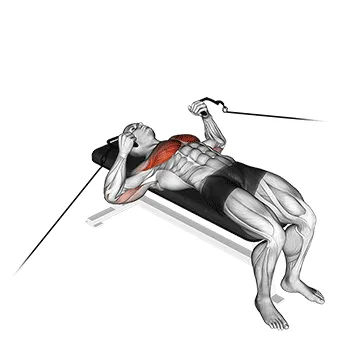
- Primary muscle
- Pectorals
- Equipment
- Cable
- Difficulty
- Intermediate
- Type
- Compound
Secondary muscles: Triceps, Shoulders
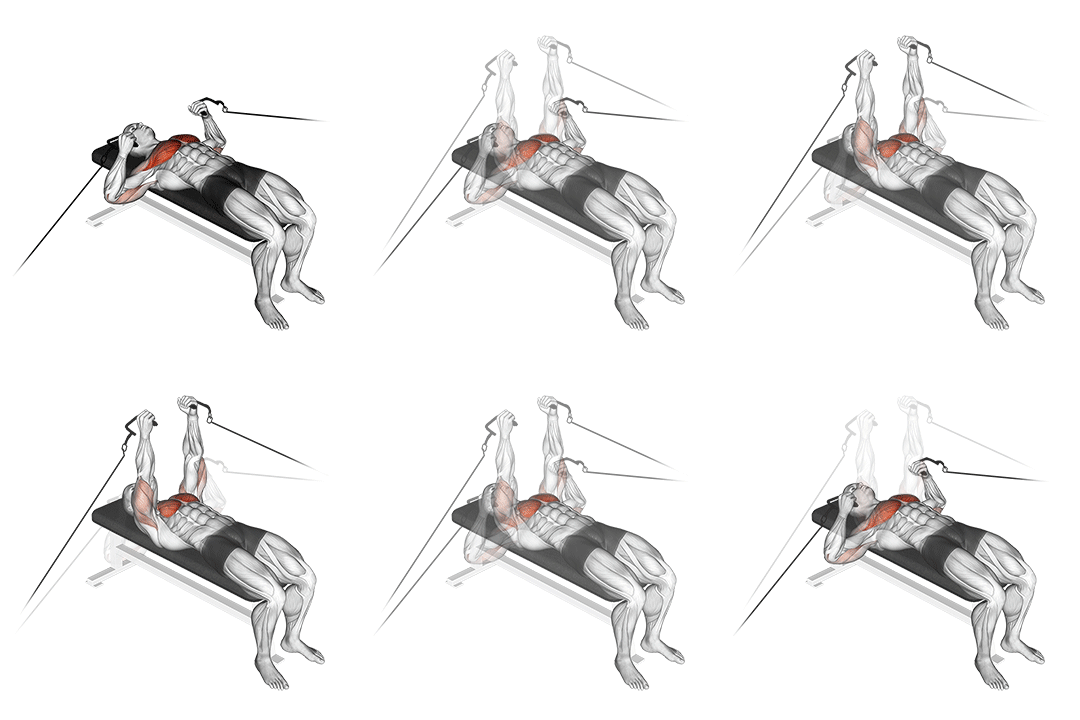
How to perform Cable Bench Press
- Adjust the cable machine to chest height and attach the handles.
- Stand facing away from the machine with your feet shoulder-width apart.
- Grasp the handles with an overhand grip and step forward to create tension in the cables.
- Position your feet firmly on the ground and engage your core.
- Bend your elbows and bring your hands to shoulder level, keeping your elbows at a 90-degree angle.
- Push the handles forward, extending your arms fully in front of you.
- Pause for a moment, then slowly reverse the movement, bringing your hands back to shoulder level.
- Repeat for the desired number of repetitions.
Ranked Cable Bench Press Alternatives
10 substitutes, ranked by how closely each one matches the Cable Bench Press on movement pattern, muscles worked, equipment and body position. The higher the score, the less you change. Open "How to perform this exercise" on a card for the steps; every card title links to that exercise's own alternatives page.
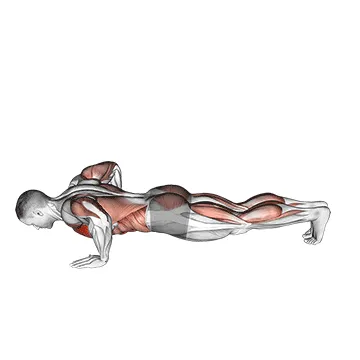
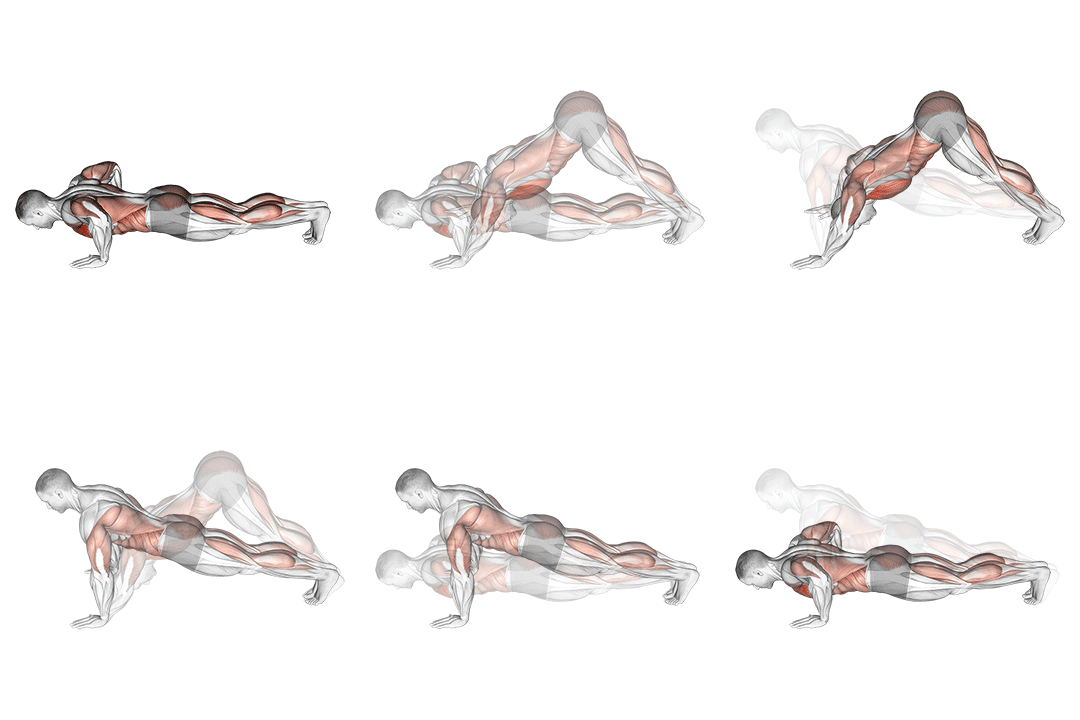
Best match 1. Modified Hindu Push-up
88% match- Pectorals
- Bodyweight
- Intermediate
- Compound
Use this when you have nothing to train with, because it works the pectorals with bodyweight alone.
How to perform this exercise
- Start in a push-up position with your hands slightly wider than shoulder-width apart and your feet hip-width apart.
- Lower your body towards the ground, bending your elbows and keeping your core engaged.
- As you lower your body, shift your weight back and lift your hips up towards the ceiling, creating an inverted V shape with your body.
- Continue to lower your body until your chest is just above the ground, then reverse the movement, pushing your hips back down and extending your arms to return to the starting position.
- Repeat for the desired number of repetitions.
Sets and reps: 3 or 4 sets of 6 to 10 reps.
Why this matches
- Movement: flat horizontal press, the same as the Cable Bench Press
- Primary muscle: pectorals, the same as the Cable Bench Press
- Equipment: bodyweight only, not a cable
- Body position: standing, the same as the Cable Bench Press
- Balance: harder to stay steady on than the Cable Bench Press
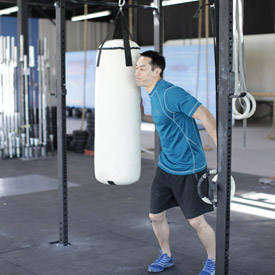
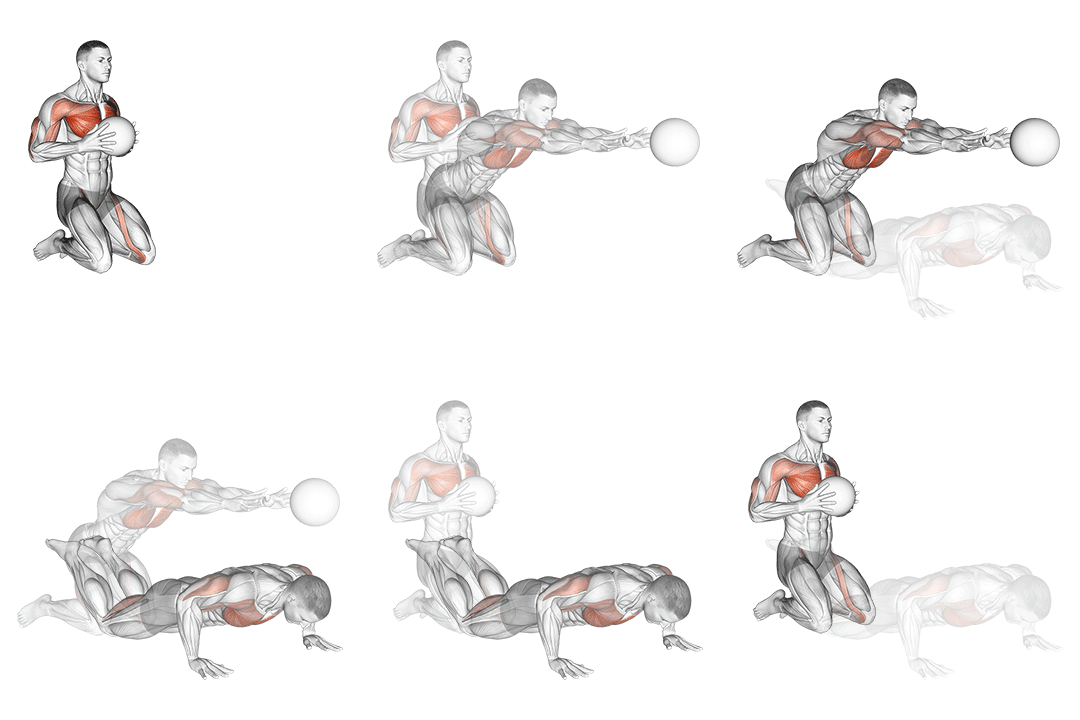
2. Heavy Bag Thrust
85% match- Pectorals
- Other
- Intermediate
- Compound
A straight swap when you want to keep working the pectorals.
How to perform this exercise
- Utilize a heavy bag for this exercise. Assume an upright stance next to the bag, with your feet staggered, fairly wide apart. Place your hand on the bag at about chest height. This will be your starting position.
- Begin by twisting at the waist, pushing the bag forward as hard as possible. Perform this move quickly, pushing the bag away from your body.
- Receive the bag as it swings back by reversing these steps.
Sets and reps: 3 or 4 sets of 6 to 10 reps.
Why this matches
- Primary muscle: pectorals, the same as the Cable Bench Press
- Body position: standing, the same as the Cable Bench Press
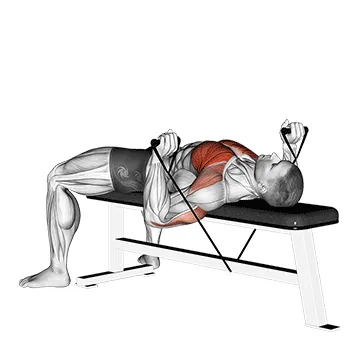
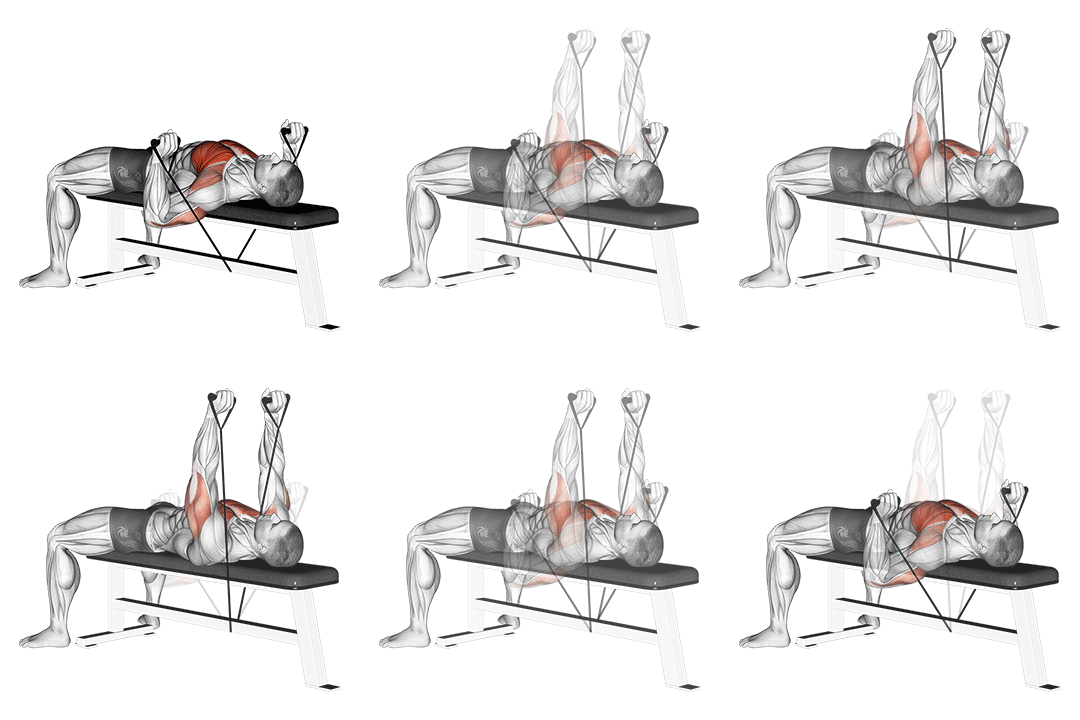
3. Band Bench Press
82% match- Pectorals
- Band
- Intermediate
- Compound
A good swap when you have a band to work with, and it still works the pectorals.
How to perform this exercise
- Lie flat on a bench with your feet flat on the ground and your back pressed against the bench.
- Grasp the band handles with an overhand grip, slightly wider than shoulder-width apart.
- Extend your arms fully, pushing the bands away from your chest.
- Slowly lower the bands back down to your chest, keeping your elbows at a 90-degree angle.
- Repeat for the desired number of repetitions.
Sets and reps: 3 or 4 sets of 6 to 10 reps.
Why this matches
- Movement: flat horizontal press, the same as the Cable Bench Press
- Primary muscle: pectorals, the same as the Cable Bench Press
- Equipment: a band, not a cable
- Body position: lying on your back, not standing
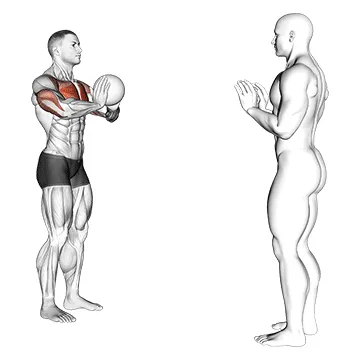
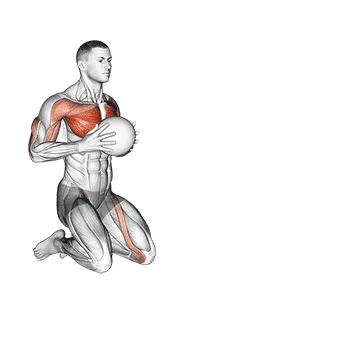
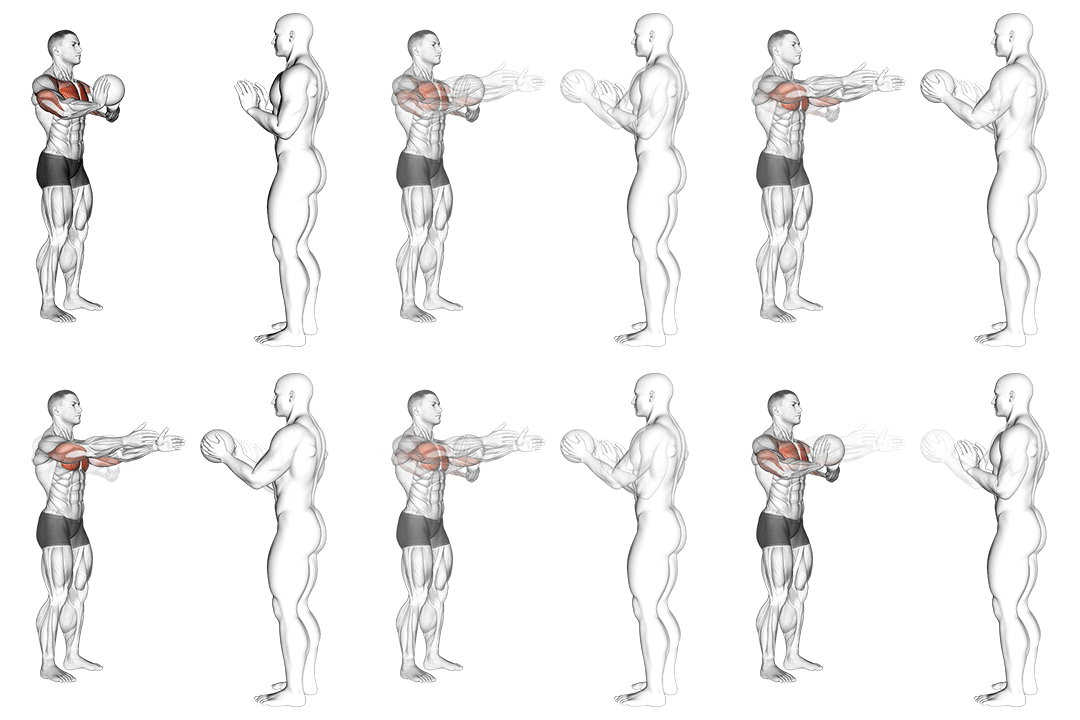
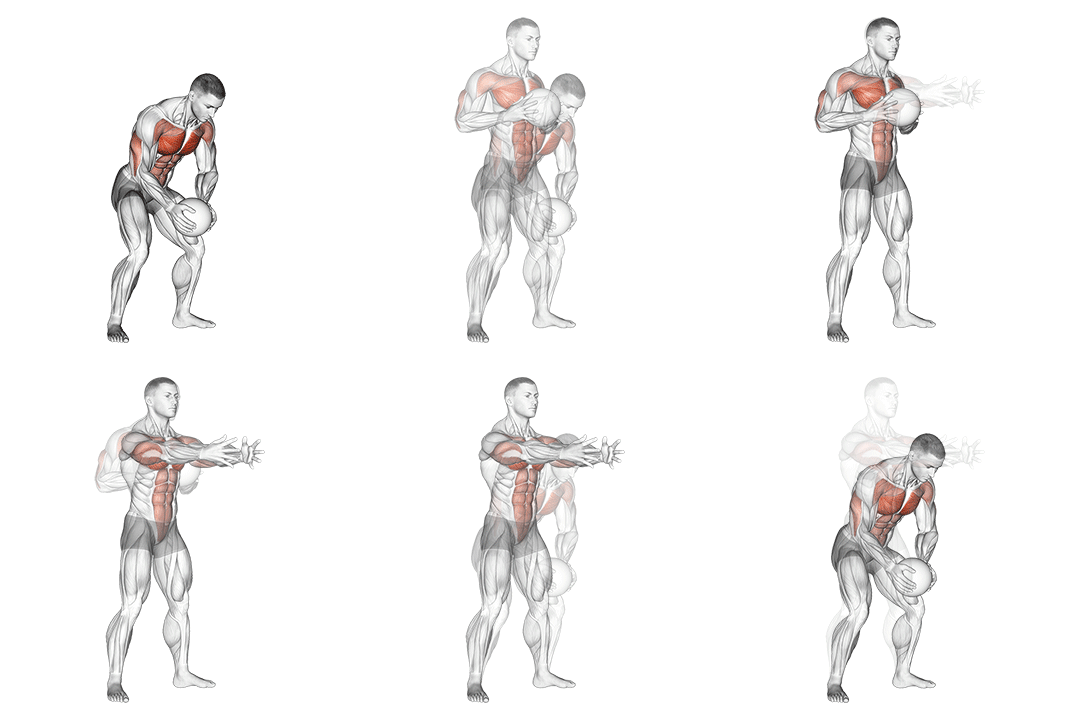
4. Medicine Ball Chest Pass
82% match- Pectorals
- Medicine-ball
- Intermediate
- Compound
A good swap when you have a medicine ball to work with, and it still works the pectorals.
How to perform this exercise
- Stand with your feet shoulder-width apart, holding the medicine ball at chest level.
- Extend your arms forward, pushing the medicine ball away from your chest with force.
- As you release the ball, follow through with your arms and torso, transferring your weight from your back foot to your front foot.
- Catch the ball as it rebounds off the wall or partner, and immediately repeat the movement.
- Continue for the desired number of repetitions.
Sets and reps: 3 or 4 sets of 6 to 10 reps.
Why this matches
- Primary muscle: pectorals, the same as the Cable Bench Press
- Equipment: free weights, not a cable
- Body position: standing, the same as the Cable Bench Press
- Pectorals
- Medicine-ball
- Intermediate
- Compound
How to perform this exercise
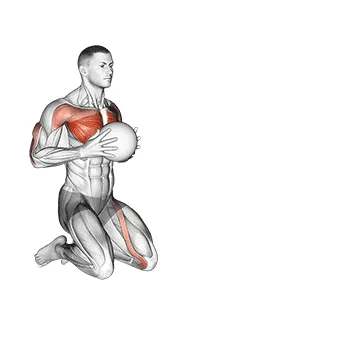
- Stand with your feet shoulder-width apart, holding a medicine ball at chest level.
- Extend your arms forward, pushing the medicine ball away from your chest.
- Pause for a moment, then slowly bring the medicine ball back to your chest.
- Repeat for the desired number of repetitions.
Sets and reps: 3 or 4 sets of 6 to 10 reps.
Why this matches
- Primary muscle: pectorals, the same as the Cable Bench Press
- Equipment: free weights, not a cable
- Body position: standing, the same as the Cable Bench Press
- Pectorals
- Medicine-ball
- Intermediate
- Compound
How to perform this exercise
- Stand with your feet shoulder-width apart, holding the medicine ball at chest level.
- Extend your arms forward, pushing the medicine ball away from your chest.
- Pause for a moment, then slowly bring the medicine ball back to your chest.
- Repeat for the desired number of repetitions.
Sets and reps: 3 or 4 sets of 6 to 10 reps.
Why this matches
- Primary muscle: pectorals, the same as the Cable Bench Press
- Equipment: free weights, not a cable
- Body position: standing, the same as the Cable Bench Press
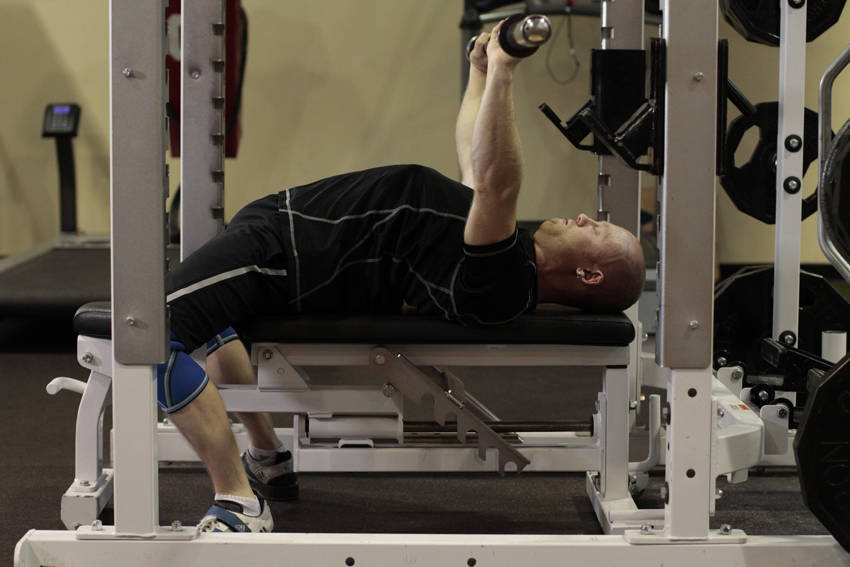
7. Bench Press - Powerlifting
81% match- Pectorals
- Barbell
- Advanced
- Compound
A good swap when you have a barbell to work with, and it still works the pectorals.
How to perform this exercise
- Begin by lying on the bench, getting your head beyond the bar if possible. Tuck your feet underneath you and arch your back. Using the bar to help support your weight, lift your shoulder off the bench and retract them, squeezing the shoulder blades together. Use your feet to drive your traps into the bench. Maintain this tight body position throughout the movement.
- However wide your grip, it should cover the ring on the bar. Pull the bar out of the rack without protracting your shoulders. Focus on squeezing the bar and trying to pull it apart.
- Lower the bar to your lower chest or upper stomach. The bar, wrist, and elbow should stay in line at all times.
- Pause when the barbell touches your torso, and then drive the bar up with as much force as possible. The elbows should be tucked in until lockout.
Sets and reps: 3 to 5 sets of 5 to 8 reps.
Why this matches
- Movement: flat horizontal press, the same as the Cable Bench Press
- Primary muscle: pectorals, the same as the Cable Bench Press
- Equipment: free weights, not a cable
- Body position: lying on your back, not standing
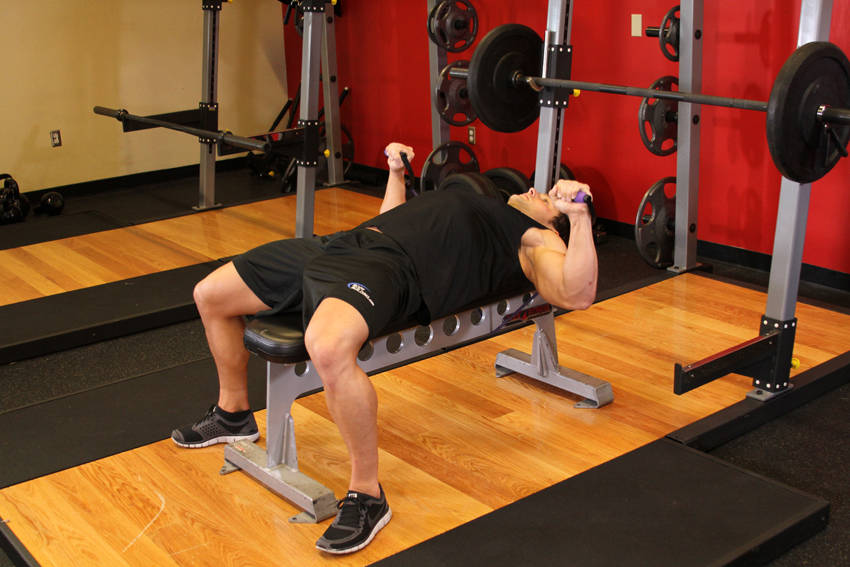
8. Bench Press - With Bands
81% match- Pectorals
- Band
- Intermediate
- Compound
How to perform this exercise
- Using a flat bench secure a band under the leg of the bench that is nearest to your head.
- Once the band is secure, grab it by both handles and lie down on the bench.
- Extend your arms so that you are holding the band handles in front of you at shoulder width.
- Once at shoulder width, rotate your wrists forward so that the palms of your hands are facing away from you. This will be your starting position.
- Bring down the handles slowly until your elbow forms a 90 degree angle. Keep full control at all times.
- As you breathe out, bring the handles up using your pectoral muscles. Lock your arms in the contracted position, squeeze your chest, hold for a second and then start coming down slowly. Tip: It should take at least twice as long to go down than to come up.
- Repeat the movement for the prescribed amount of repetitions of your training program.
Sets and reps: 3 or 4 sets of 6 to 10 reps.
Why this matches
- Movement: flat horizontal press, the same as the Cable Bench Press
- Primary muscle: pectorals, the same as the Cable Bench Press
- Equipment: a band, not a cable
- Body position: lying on your back, not standing
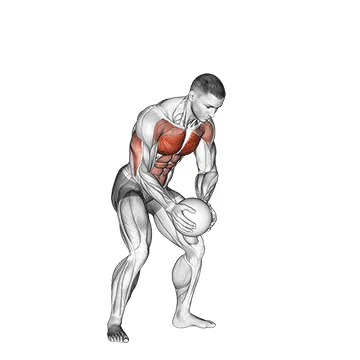
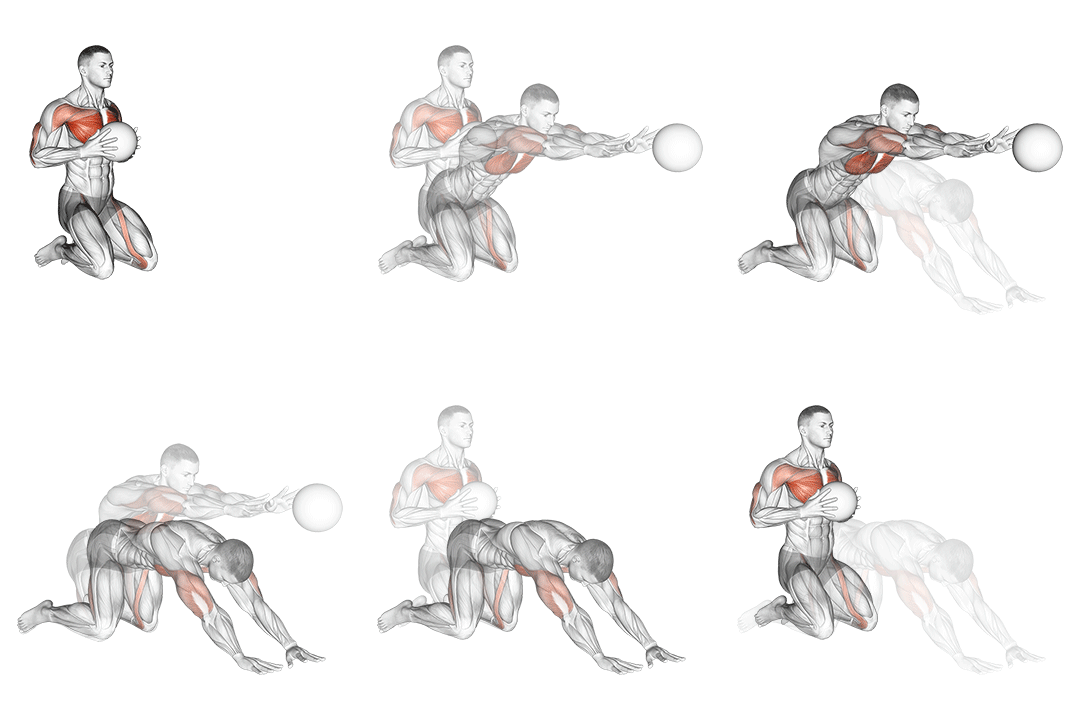
- Pectorals
- Medicine-ball
- Advanced
- Compound
How to perform this exercise
- Stand with your feet shoulder-width apart, holding a medicine ball at chest level.
- Step forward with your right foot and simultaneously push the medicine ball forward, extending your arms fully.
- As you push the ball forward, release it and let it roll forward.
- Quickly run forward and catch the ball before it hits the ground.
- Once you catch the ball, bring it back to your chest and repeat the movement with your left foot forward.
- Continue alternating legs and repeating the exercise for the desired number of repetitions.
Sets and reps: 3 to 5 sets of 5 to 8 reps.
Why this matches
- Primary muscle: pectorals, the same as the Cable Bench Press
- Equipment: free weights, not a cable
- Body position: standing, the same as the Cable Bench Press
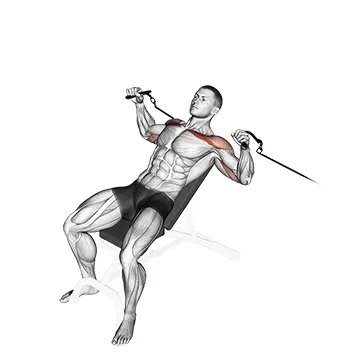
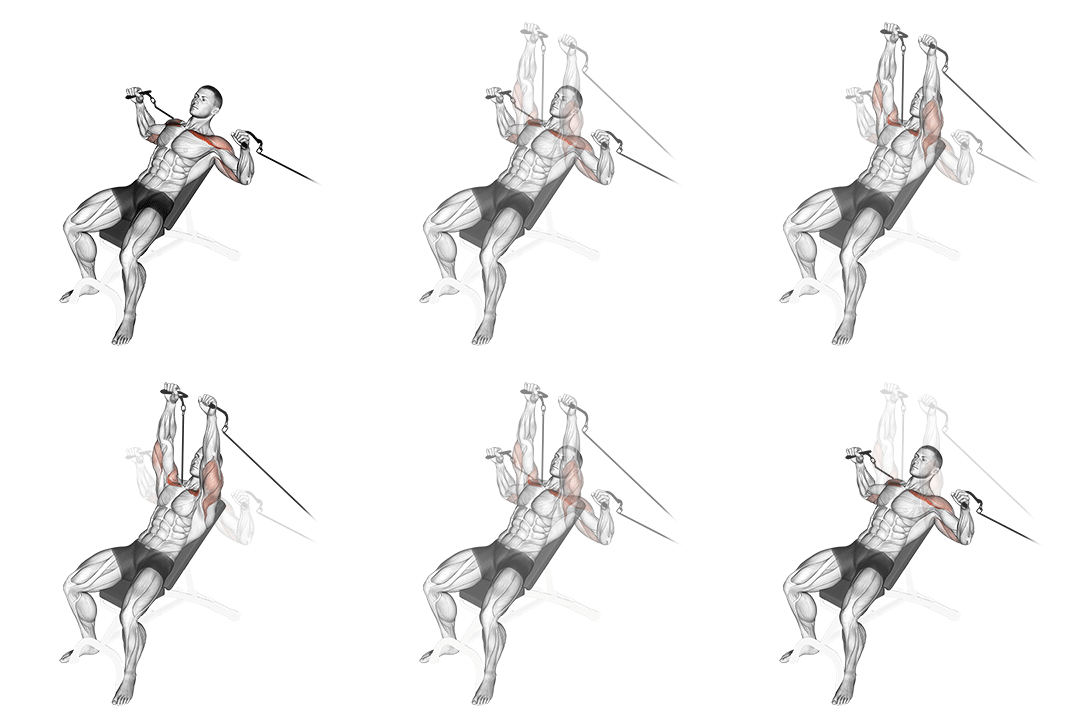
10. Cable Incline Bench Press
81% match- Pectorals
- Cable
- Intermediate
- Compound
How to perform this exercise
- Adjust the bench to a 45-degree incline.
- Attach the cable handles to the high pulleys.
- Sit on the bench facing the cable machine with your feet flat on the ground.
- Grasp the handles with an overhand grip and bring them to shoulder height.
- Push the handles forward and upward until your arms are fully extended.
- Pause for a moment, then slowly lower the handles back to the starting position.
- Repeat for the desired number of repetitions.
Sets and reps: 3 or 4 sets of 6 to 10 reps.
Why this matches
- Primary muscle: pectorals, the same as the Cable Bench Press
- Equipment: a cable, the same as the Cable Bench Press
- Body position: lying on your back, not standing
Cable Bench Press FAQ
What muscles does Cable Bench Press work?
The Cable Bench Press primarily targets the pectoralis major with secondary work from the anterior deltoid and triceps. Continuous horizontal adduction under tension increases sternocostal head activation compared to some free-weight presses.
Find Alternatives for Any Exercise
Search the exercise database and filter the ranked substitutes by the equipment you own.
Similarity scores compare exercise metadata such as movement pattern, muscles, equipment and body position. They are not a safety rating or a check that you own the equipment. Learn about our methodology