

10 Best Cable Seated Chest Press Alternatives for Chest Pressing Power
The Cable Seated Chest Press is done seated with a cable machine. Ranked closest by our scoring: the Cable Chest Press, the Standing Cable Chest Press and the Resistance Band Seated Chest Press.
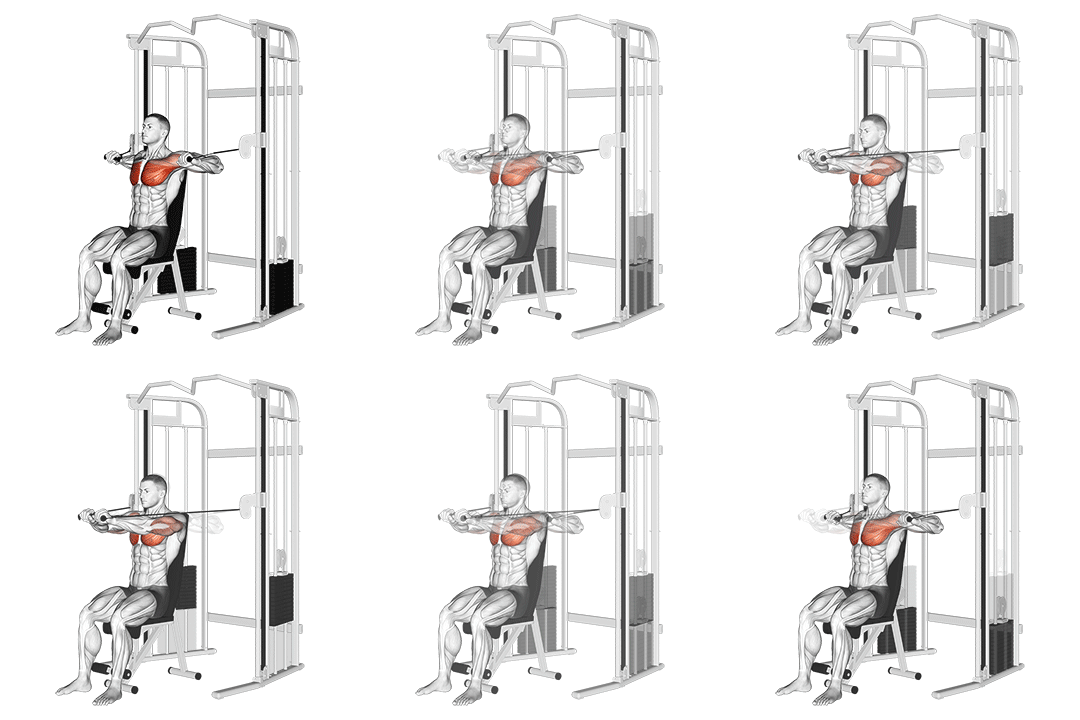
The Cable Seated Chest Press has you sit at the cable stack and push both handles forward from shoulder height until your arms lock out. The Cable Chest Press is the closest swap: you stay seated at the same stack and press the handles straight out in front of you until they meet, and you can take your back off the pad, work at an incline or decline, or press one arm at a time. Without a cable station, the Resistance Band Seated Chest Press keeps you seated with a band instead.
Updated Ranked by our 12-factor similarity model How it works
Original Exercise: Cable Seated Chest Press
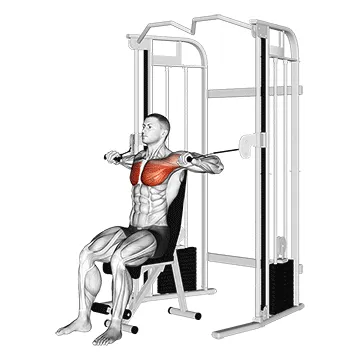
- Primary muscle
- Pectorals
- Equipment
- Cable
- Difficulty
- Intermediate
- Type
- Compound
Secondary muscles: Shoulders, Triceps
How to perform Cable Seated Chest Press
- Adjust the seat height and cable handles to a comfortable position.
- Sit on the bench with your back straight and feet flat on the floor.
- Grasp the cable handles with an overhand grip at shoulder height.
- Push the handles forward and away from your body, extending your arms fully.
- Pause for a moment, then slowly bring the handles back to the starting position.
- Repeat for the desired number of repetitions.
Ranked Cable Seated Chest Press Alternatives
10 substitutes, ranked by how closely each one matches the Cable Seated Chest Press on movement pattern, muscles worked, equipment and body position. The higher the score, the less you change. Open "How to perform this exercise" on a card for the steps; every card title links to that exercise's own alternatives page.
Best match 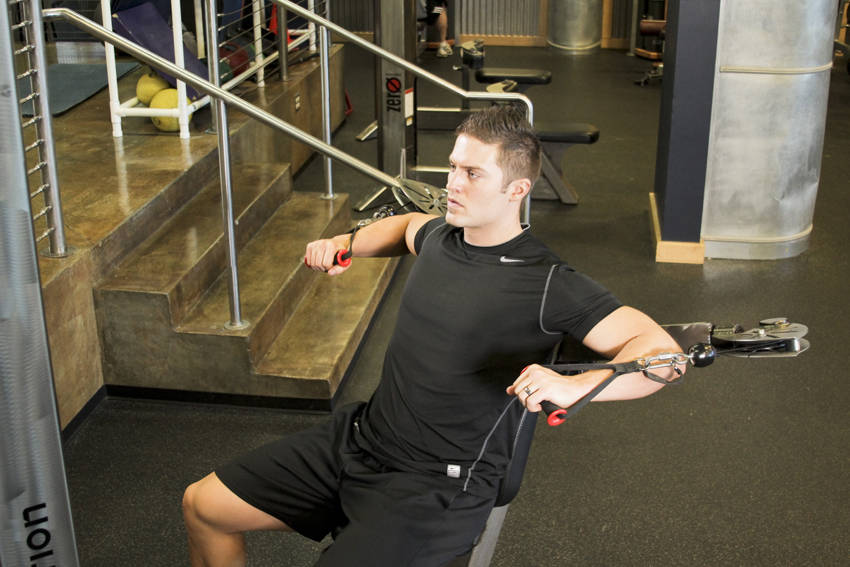
1. Cable Chest Press
91% match- Pectorals
- Cable
- Intermediate
- Compound
The same equipment, done standing instead.
How to perform this exercise
- Adjust the weight to an appropriate amount and be seated, grasping the handles. Your upper arms should be about 45 degrees to the body, with your head and chest up. The elbows should be bent to about 90 degrees. This will be your starting position.
- Begin by extending through the elbow, pressing the handles together straight in front of you. Keep your shoulder blades retracted as you execute the movement.
- After pausing at full extension, return to th starting position, keeping tension on the cables.
- You can also execute this movement with your back off the pad, at an incline or decline, or alternate hands.
Sets and reps: 3 or 4 sets of 6 to 10 reps.
Why this matches
- Movement: flat horizontal press, the same as the Cable Seated Chest Press
- Primary muscle: pectorals, the same as the Cable Seated Chest Press
- Equipment: a cable, the same as the Cable Seated Chest Press
- Body position: standing, not seated
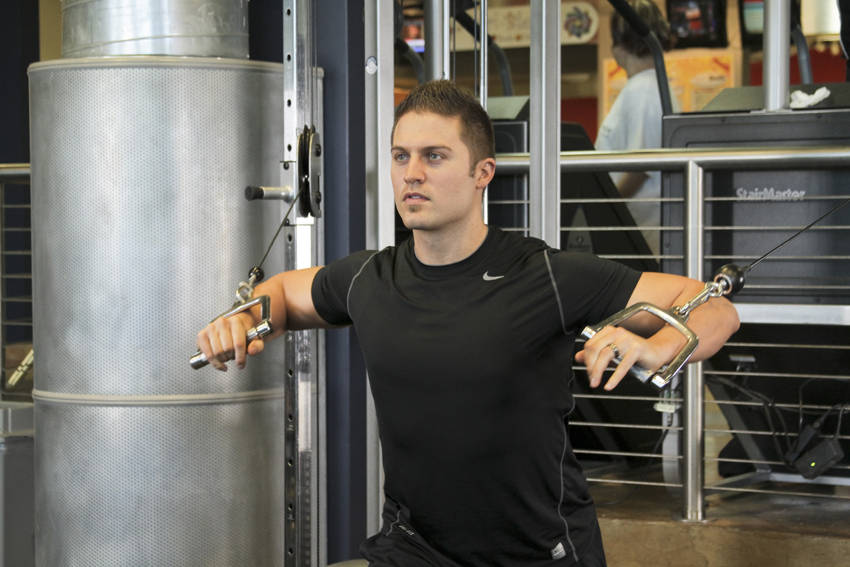
2. Standing Cable Chest Press
91% match- Pectorals
- Cable
- Intermediate
- Compound
How to perform this exercise
- Position dual pulleys to chest height and select an appropriate weight. Stand a foot or two in front of the cables, holding one in each hand. You can stagger your stance for better stability.
- Position the upper arm at a 90 degree angle with the shoulder blades together. This will be your starting position.
- Keeping the rest of the body stationary, extend through the elbows to press the handles forward, drawing them together in front of you.
- Pause at the top of the motion, and return to the starting position.
Sets and reps: 3 or 4 sets of 6 to 10 reps.
Why this matches
- Movement: flat horizontal press, the same as the Cable Seated Chest Press
- Primary muscle: pectorals, the same as the Cable Seated Chest Press
- Equipment: a cable, the same as the Cable Seated Chest Press
- Body position: standing, not seated
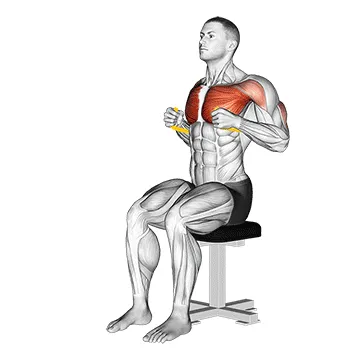
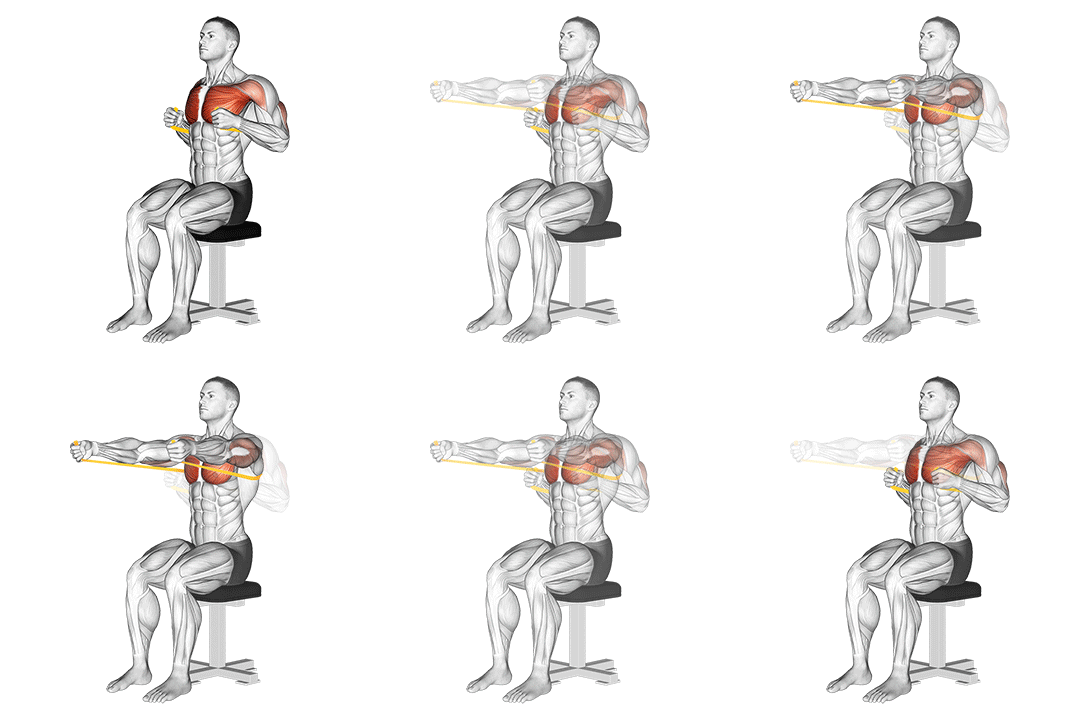
- Pectorals
- Band
- Intermediate
- Compound
A good swap when you have a band to work with, and it still works the pectorals.
How to perform this exercise
- Sit on a chair or bench with your back straight and feet flat on the ground.
- Hold the resistance band handles in each hand, with your palms facing down and elbows bent at a 90-degree angle.
- Extend your arms forward, pushing the resistance band away from your chest.
- Pause for a moment at the end of the movement, then slowly return to the starting position.
- Repeat for the desired number of repetitions.
Sets and reps: 3 or 4 sets of 6 to 10 reps.
Why this matches
- Movement: flat horizontal press, the same as the Cable Seated Chest Press
- Primary muscle: pectorals, the same as the Cable Seated Chest Press
- Equipment: a band, not a cable
- Body position: seated, the same as the Cable Seated Chest Press
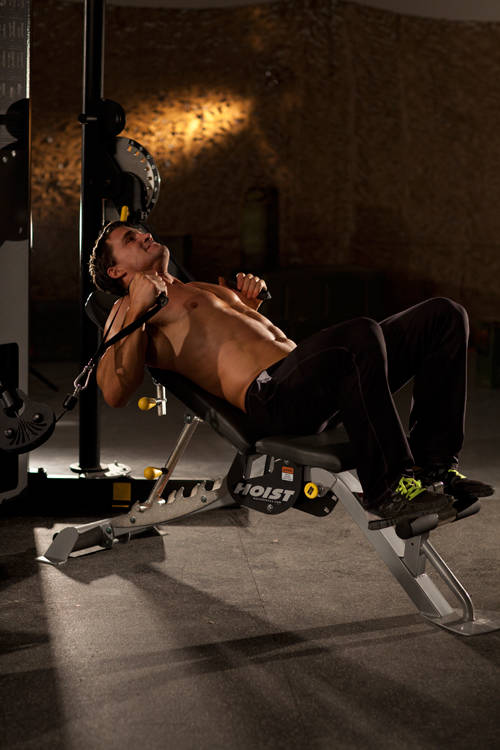
4. Incline Cable Chest Press
85% match- Pectorals
- Cable
- Intermediate
- Compound
It uses the same equipment and still works the pectorals.
How to perform this exercise
- Adjust the weight to an appropriate amount and be seated, grasping the handles. Your upper arms should be about 45 degrees to the body, with your head and chest up. The elbows should be bent to about 90 degrees. This will be your starting position.
- Begin by extending through the elbow, pressing the handles together straight in front of you. Keep your shoulder blades retracted as you execute the movement.
- After pausing at full extension, return to the starting position, keeping tension on the cables.
Sets and reps: 3 or 4 sets of 6 to 10 reps.
Why this matches
- Primary muscle: pectorals, the same as the Cable Seated Chest Press
- Equipment: a cable, the same as the Cable Seated Chest Press
- Body position: seated, the same as the Cable Seated Chest Press
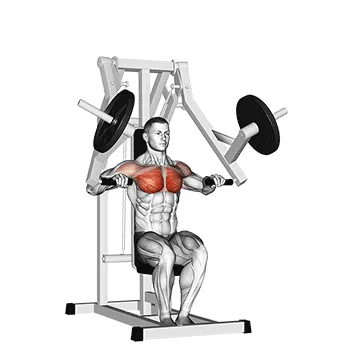
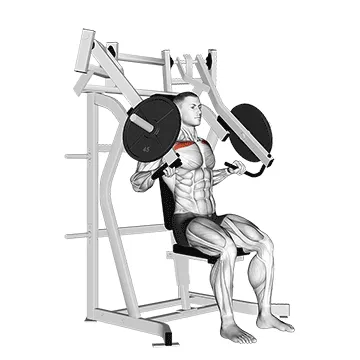
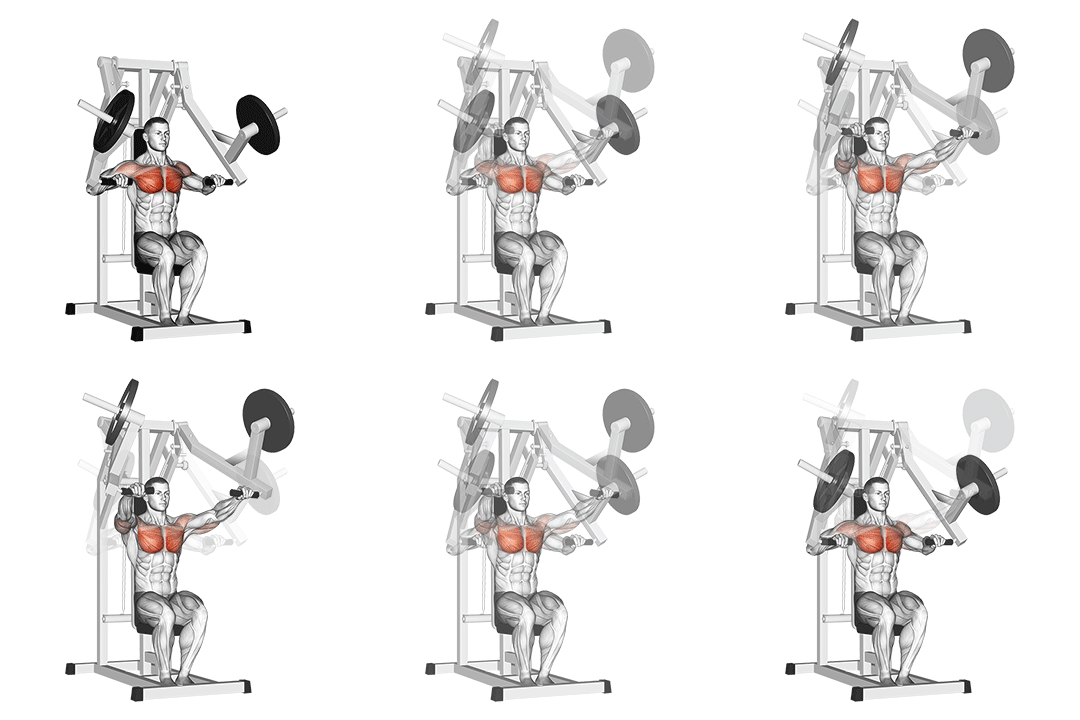
5. Lever Chest Press
85% match- Pectorals
- Lever
- Beginner
- Compound
A good swap when you have a lever machine to work with, and it still works the pectorals.
How to perform this exercise
- Adjust the seat height and position yourself on the machine with your back flat against the pad.
- Grasp the handles with an overhand grip and position your elbows at a 90-degree angle.
- Push the handles forward until your arms are fully extended, exhaling during the movement.
- Pause briefly at the end of the movement, then slowly return to the starting position, inhaling as you do so.
- Repeat for the desired number of repetitions.
Sets and reps: 3 or 4 sets of 6 to 10 reps.
Why this matches
- Movement: flat horizontal press, the same as the Cable Seated Chest Press
- Primary muscle: pectorals, the same as the Cable Seated Chest Press
- Equipment: a machine, not a cable
- Body position: seated, the same as the Cable Seated Chest Press
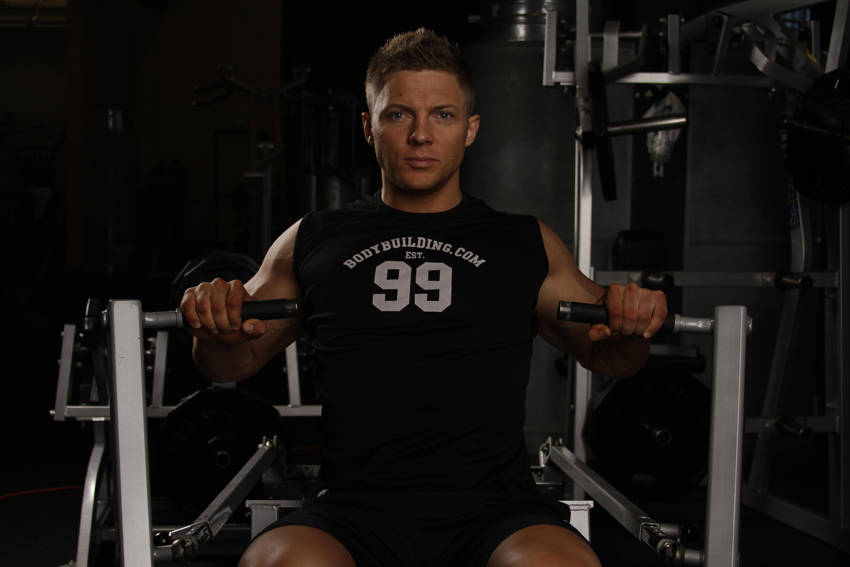
6. Leverage Chest Press
85% match- Pectorals
- Machine
- Beginner
- Compound
A good swap when you have a machine to work with, and it still works the pectorals.
How to perform this exercise
- Load an appropriate weight onto the pins and adjust the seat for your height. The handles should be near the bottom or middle of the pectorals at the beginning of the motion.
- Your chest and head should be up and your shoulder blades retracted. This will be your starting position.
- Press the handles forward by extending through the elbow.
- After a brief pause at the top, return the weight just above the start position, keeping tension on the muscles by not returning the weight to the stops until the set is complete.
Sets and reps: 3 or 4 sets of 6 to 10 reps.
Why this matches
- Movement: flat horizontal press, the same as the Cable Seated Chest Press
- Primary muscle: pectorals, the same as the Cable Seated Chest Press
- Equipment: a machine, not a cable
- Body position: seated, the same as the Cable Seated Chest Press
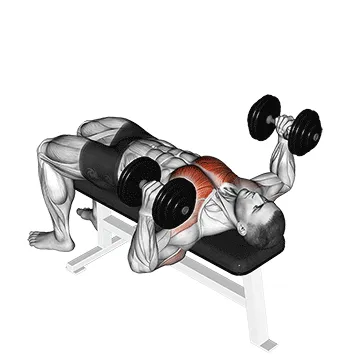
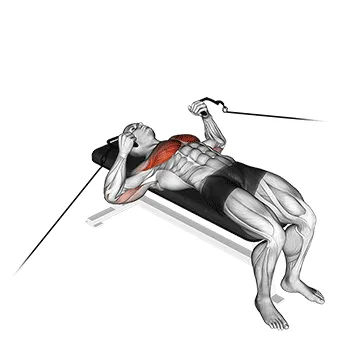
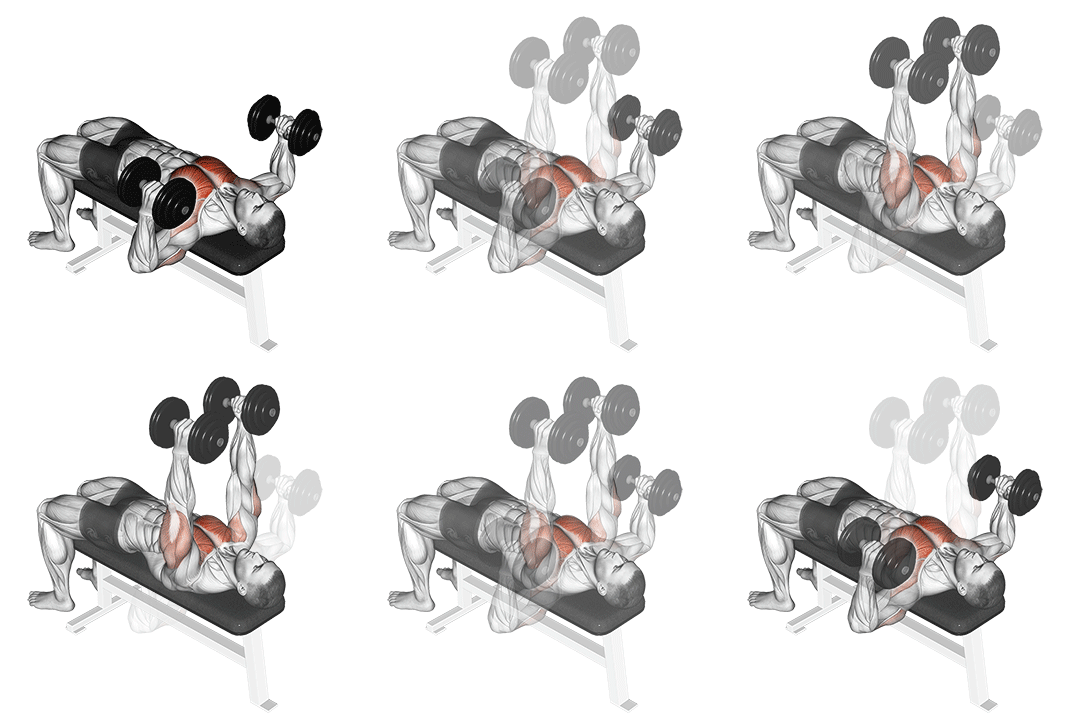
7. Dumbbell Lying Hammer Press
75% match- Pectorals
- Dumbbell
- Intermediate
- Compound
A good swap when you have dumbbells to work with, and it still works the pectorals.
How to perform this exercise
- Lie flat on a bench with a dumbbell in each hand, palms facing each other and arms extended straight up.
- Lower the dumbbells to the sides of your chest, keeping your elbows at a 90-degree angle.
- Press the dumbbells back up to the starting position, fully extending your arms.
- Repeat for the desired number of repetitions.
Sets and reps: 3 or 4 sets of 6 to 10 reps.
Why this matches
- Movement: flat horizontal press, the same as the Cable Seated Chest Press
- Primary muscle: pectorals, the same as the Cable Seated Chest Press
- Equipment: free weights, not a cable
- Body position: lying on your back, not seated
- Balance: harder to stay steady on than the Cable Seated Chest Press
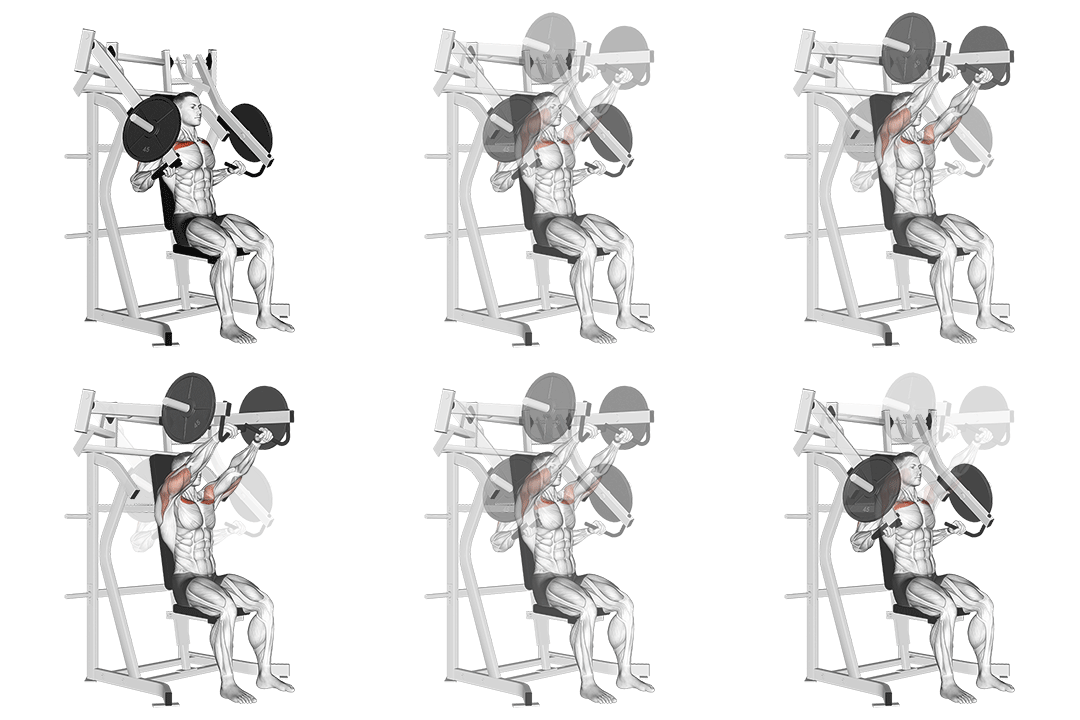
8. Lever Incline Chest Press
75% match- Pectorals
- Lever
- Intermediate
- Compound
How to perform this exercise
- Adjust the seat and backrest of the leverage machine to a comfortable position.
- Sit on the machine with your back against the backrest and your feet flat on the floor.
- Grasp the handles with an overhand grip and position your hands slightly wider than shoulder-width apart.
- Push the handles forward and away from your body until your arms are fully extended.
- Pause for a moment, then slowly bend your elbows and lower the handles back towards your chest.
- Repeat for the desired number of repetitions.
Sets and reps: 3 or 4 sets of 6 to 10 reps.
Why this matches
- Primary muscle: pectorals, the same as the Cable Seated Chest Press
- Equipment: a machine, not a cable
- Body position: seated, the same as the Cable Seated Chest Press
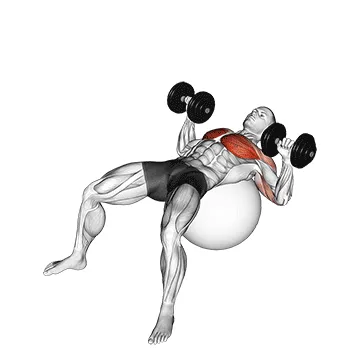
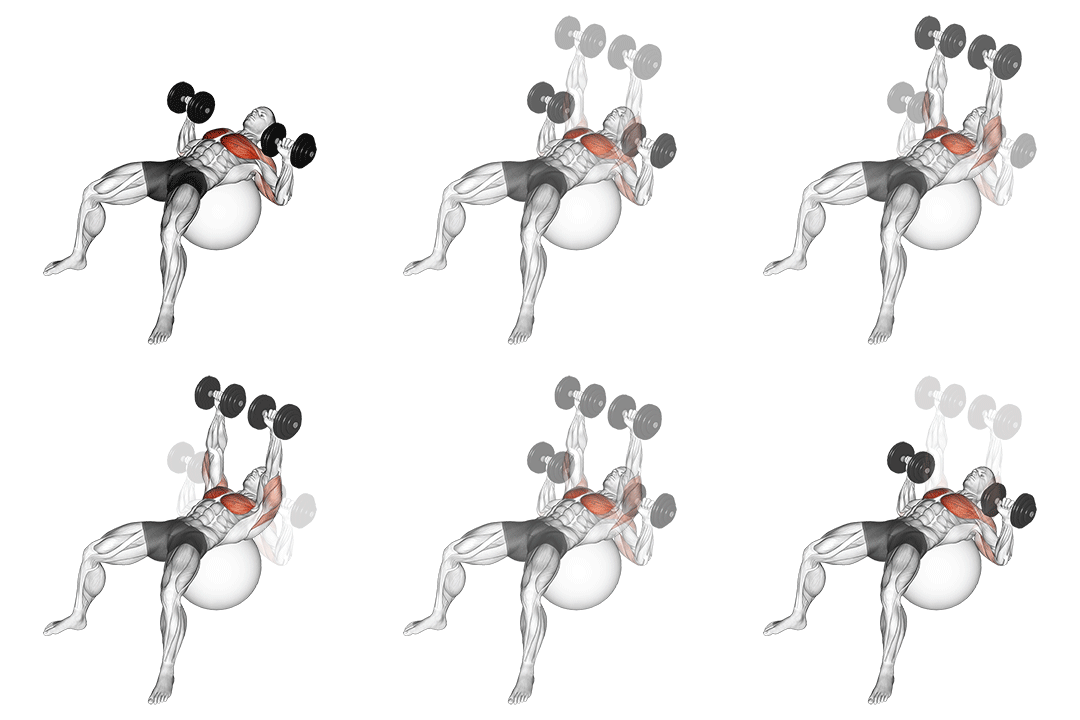
9. Dumbbell Press On Exercise Ball
73% match- Pectorals
- Dumbbell
- Intermediate
- Compound
How to perform this exercise
- Sit on an exercise ball with your feet flat on the ground and dumbbells in each hand, resting on your thighs.
- Slowly walk your feet forward, rolling the exercise ball until your lower back is supported on the ball and your knees are at a 90-degree angle.
- Raise the dumbbells to shoulder height, palms facing forward.
- Press the dumbbells upward until your arms are fully extended.
- Pause for a moment at the top, then slowly lower the dumbbells back to the starting position.
- Repeat for the desired number of repetitions.
Sets and reps: 3 or 4 sets of 6 to 10 reps.
Why this matches
- Movement: flat horizontal press, the same as the Cable Seated Chest Press
- Primary muscle: pectorals, the same as the Cable Seated Chest Press
- Equipment: free weights, not a cable
- Body position: lying on your back, not seated
- Balance: harder to stay steady on than the Cable Seated Chest Press
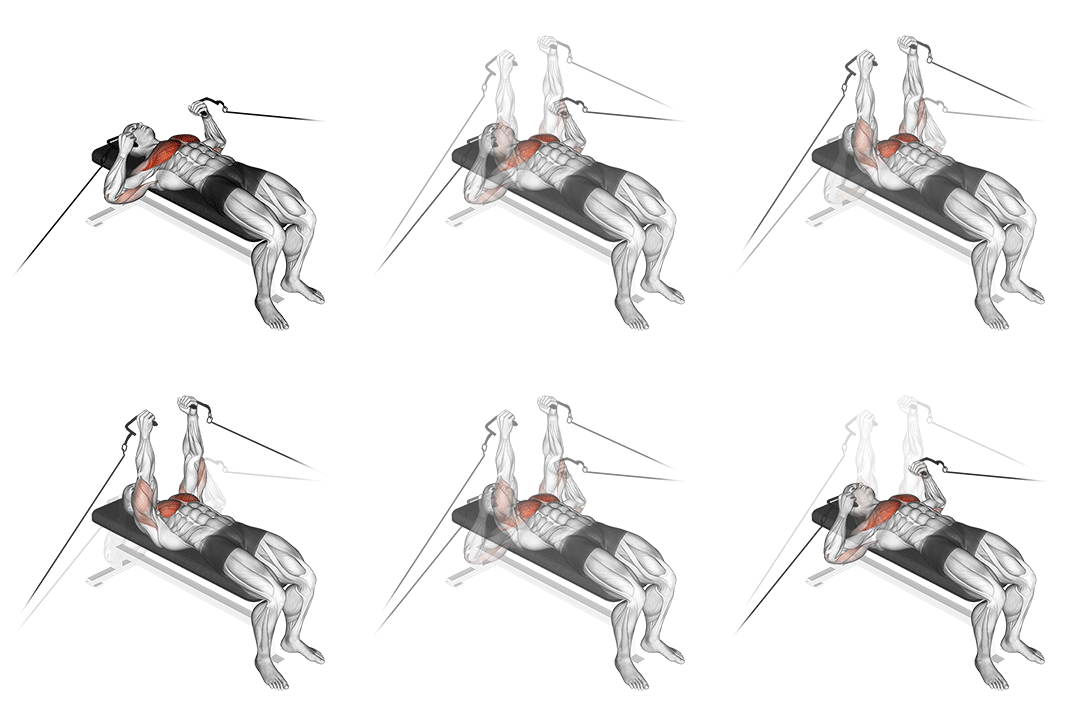
10. Cable Bench Press
72% match- Pectorals
- Cable
- Intermediate
- Compound
How to perform this exercise
- Adjust the cable machine to chest height and attach the handles.
- Stand facing away from the machine with your feet shoulder-width apart.
- Grasp the handles with an overhand grip and step forward to create tension in the cables.
- Position your feet firmly on the ground and engage your core.
- Bend your elbows and bring your hands to shoulder level, keeping your elbows at a 90-degree angle.
- Push the handles forward, extending your arms fully in front of you.
- Pause for a moment, then slowly reverse the movement, bringing your hands back to shoulder level.
- Repeat for the desired number of repetitions.
Sets and reps: 3 or 4 sets of 6 to 10 reps.
Why this matches
- Primary muscle: pectorals, the same as the Cable Seated Chest Press
- Equipment: a cable, the same as the Cable Seated Chest Press
- Body position: standing, not seated
Why You Might Need a Cable Seated Chest Press Alternative
A busy or missing cable station is the main reason to look past the Cable Seated Chest Press. Most of these still press forward from around chest height, but the details change: the Cable Chest Press brings the handles together at lockout and lets you work off the pad, at an incline or decline, or one arm at a time, the Standing Cable Chest Press asks you to hold your own balance, the Lever Chest Press and the Leverage Chest Press run the handles along a machine arm, and the Resistance Band Seated Chest Press keeps the seat while a band supplies the pull. Reach for dumbbells instead and the Dumbbell Lying Hammer Press and the Dumbbell Press On Exercise Ball trade the forward press for a straight press upward, each arm moving on its own path.
How to Choose the Right Cable Seated Chest Press Substitute
If a cable tower is free, the Cable Chest Press keeps you seated at the same stack pressing the handles straight out until they meet, so almost nothing about your setup changes. Prefer standing instead? The Standing Cable Chest Press keeps the same press but hands the balance to your feet and hips, with a staggered stance if you want more stability. When every cable station is busy, the Lever Chest Press and the Leverage Chest Press let a machine arm guide the handles for anyone still learning to control it. With a resistance band at home, the Resistance Band Seated Chest Press keeps your seat and the same forward push. With only dumbbells in reach, the Dumbbell Lying Hammer Press and the Dumbbell Press On Exercise Ball trade that push for a straight press upward, one arm moving independently.
Cable Seated Chest Press FAQ
Can I do the Cable Seated Chest Press at home?
Yes. The Resistance Band Seated Chest Press keeps you seated and swaps the cable stack for a resistance band, so the same forward push still works with just one band and something to loop it around. The Dumbbell Lying Hammer Press and the Dumbbell Press On Exercise Ball also work at home if you own a pair of dumbbells plus a bench or an exercise ball, though both have you on your back pressing straight up rather than forward.
Which alternative suits someone new to pressing under load?
The Lever Chest Press and the Leverage Chest Press run the handles along a machine arm, so you press forward from the pad without also having to steady the weight yourself. That set path makes either one a sensible place to start before you move to the standing cable or dumbbell versions, where you have to steady the weight yourself.
What does the Standing Cable Chest Press change compared to the seated version?
The Standing Cable Chest Press keeps the same forward press from around chest height, but you stand a foot or two in front of the pulleys instead of sitting on a bench. Your legs and hips now hold you steady, and staggering your stance gives extra balance. The pressing motion itself, drawing the handles together in front of you, barely changes.
Do any of these alternatives skip cables and machines completely?
Yes. The Resistance Band Seated Chest Press replaces the cable with a band, which pulls back harder the further you extend your arms rather than staying constant like a stack. The Dumbbell Lying Hammer Press and the Dumbbell Press On Exercise Ball use a pair of dumbbells instead, letting each arm press straight up and return on its own path.
Find Alternatives for Any Exercise
Search the exercise database and filter the ranked substitutes by the equipment you own.
Similarity scores compare exercise metadata such as movement pattern, muscles, equipment and body position. They are not a safety rating or a check that you own the equipment. Learn about our methodology