

10 Best Double Kettlebell Snatch Alternatives for Shoulder Training
The Double Kettlebell Snatch is done standing with a kettlebell. Ranked closest by our scoring: the Handstand Push-up, Handstand Push-ups and the Left Hook. Boxing.
Updated Ranked by our 12-factor similarity model How it works
Original Exercise: Double Kettlebell Snatch
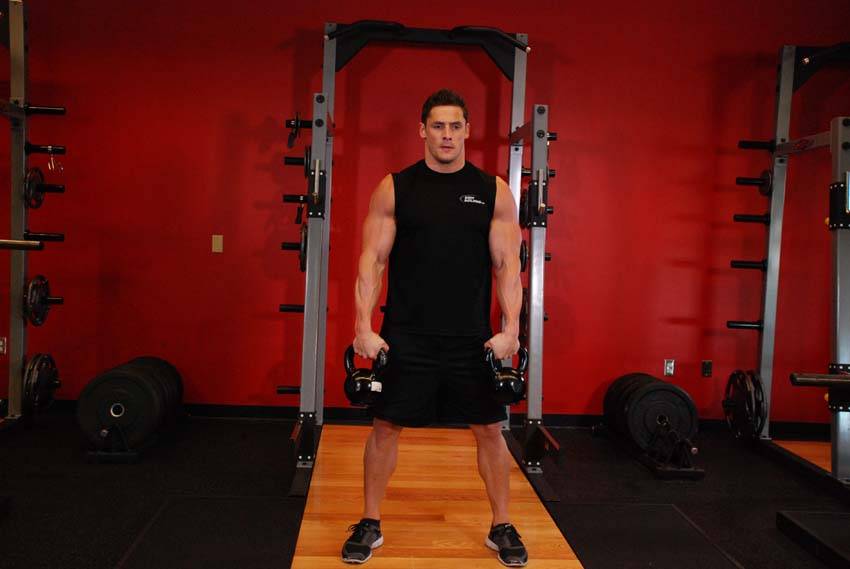
- Primary muscle
- Delts
- Equipment
- Kettlebell
- Difficulty
- Advanced
- Type
- Compound
Secondary muscles: Glutes, Hamstrings, Quadriceps
How to perform Double Kettlebell Snatch
- Place two kettlebells behind your feet. Bend your knees and sit back to pick up the kettlebells.
- Swing the kettlebells between your legs forcefully and reverse the direction.
- Drive through with your hips and lock the ketttlebells overhead in one uninterrupted motion.
Ranked Double Kettlebell Snatch Alternatives
10 substitutes, ranked by how closely each one matches the Double Kettlebell Snatch on movement pattern, muscles worked, equipment and body position. The higher the score, the less you change. Open "How to perform this exercise" on a card for the steps; every card title links to that exercise's own alternatives page.
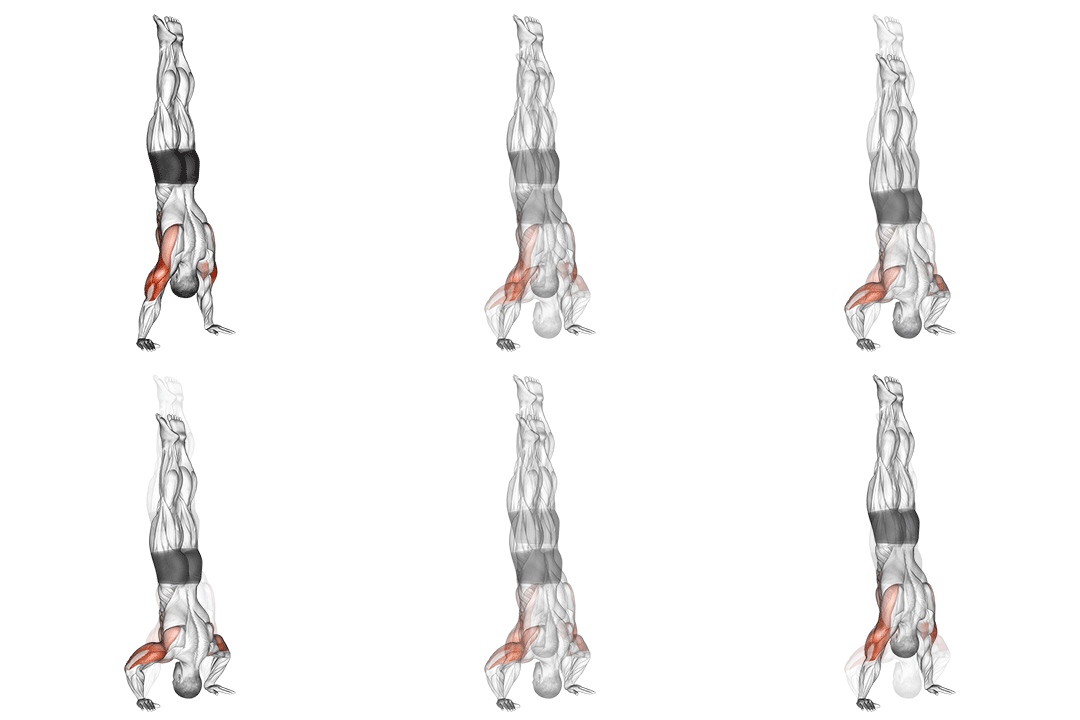
Best match 1. Handstand Push-up
71% match- Delts
- Bodyweight
- Advanced
- Compound
Use this when you have nothing to train with, because it works the delts with bodyweight alone.
How to perform this exercise
- Find a wall and face away from it, standing a few feet away.
- Place your hands on the ground shoulder-width apart and kick your feet up against the wall, coming into a handstand position.
- Bend your elbows and lower your head towards the ground, keeping your body in a straight line.
- Push through your hands and extend your arms to return to the starting position.
- Repeat for the desired number of repetitions.
Sets and reps: 3 or 4 sets of 6 to 10 reps.
Why this matches
- Primary muscle: delts, the same as the Double Kettlebell Snatch
- Equipment: bodyweight only, not free weights
- Body position: inverted, not standing
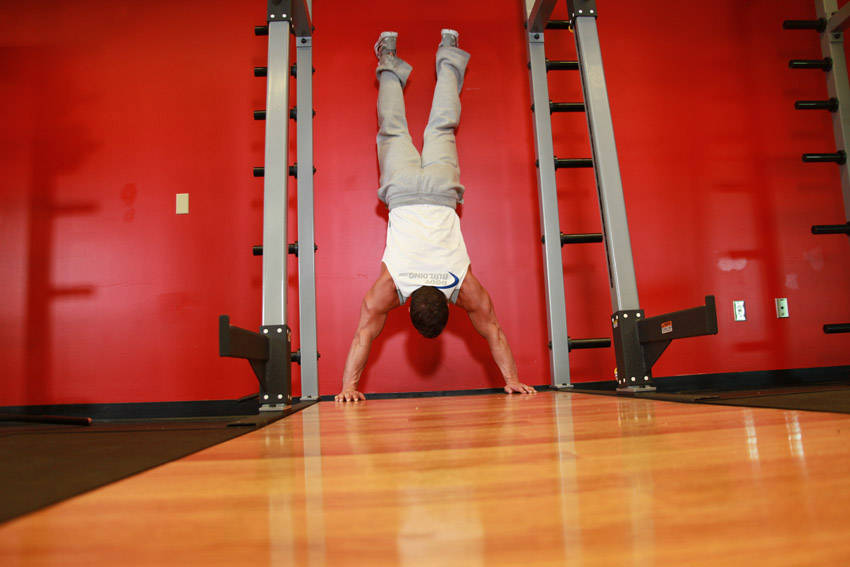
2. Handstand Push-ups
66% match- Delts
- Bodyweight
- Advanced
- Compound
How to perform this exercise
- With your back to the wall bend at the waist and place both hands on the floor at shoulder width.
- Kick yourself up against the wall with your arms straight. Your body should be upside down with the arms and legs fully extended. Keep your whole body as straight as possible. Tip: If doing this for the first time, have a spotter help you. Also, make sure that you keep facing the wall with your head, rather than looking down.
- Slowly lower yourself to the ground as you inhale until your head almost touches the floor. Tip: It is of utmost importance that you come down slow in order to avoid head injury.
- Push yourself back up slowly as you exhale until your elbows are nearly locked.
- Repeat for the recommended amount of repetitions.
Sets and reps: 3 or 4 sets of 6 to 10 reps.
Why this matches
- Primary muscle: delts, the same as the Double Kettlebell Snatch
- Equipment: bodyweight only, not free weights
- Body position: inverted, not standing
- Balance: harder to stay steady on than the Double Kettlebell Snatch
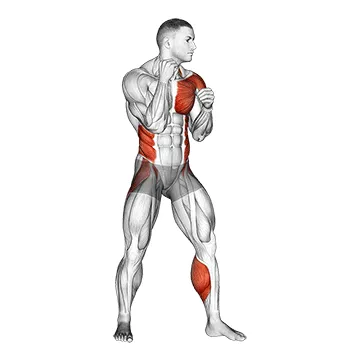
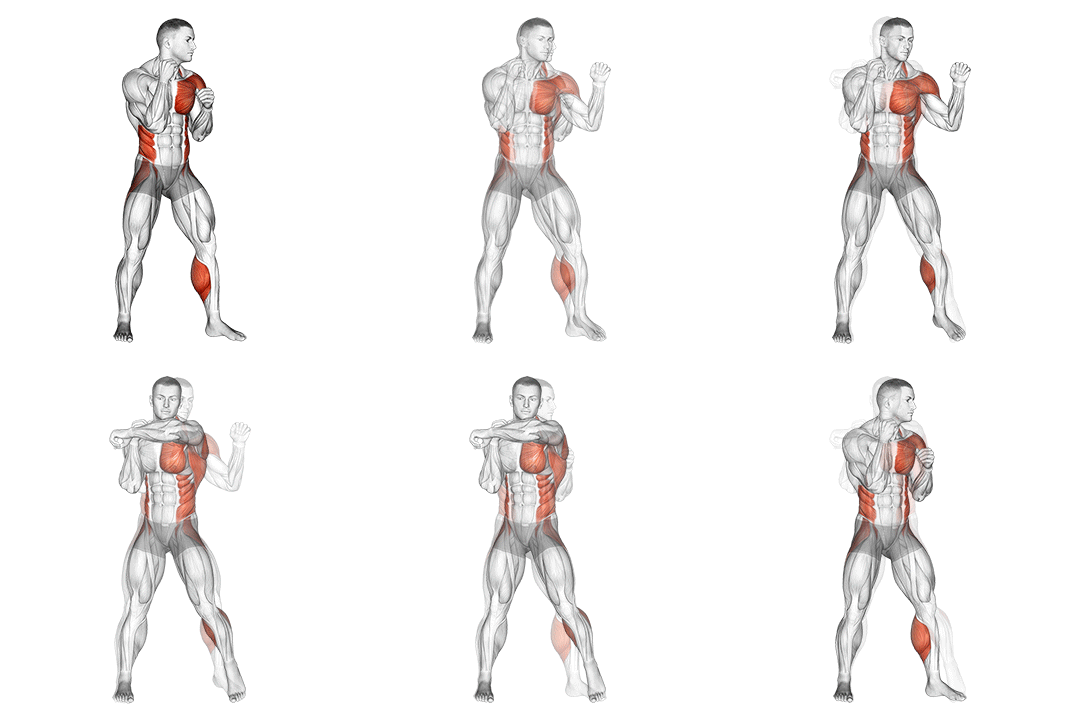
3. Left Hook. Boxing
58% match- Delts
- Bodyweight
- Intermediate
- Compound
Pick this when you want an easier version that works the delts one side at a time.
How to perform this exercise
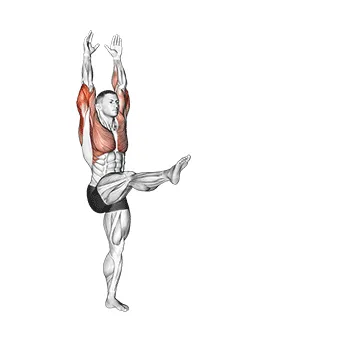
- Stand with your feet shoulder-width apart and your knees slightly bent.
- Keep your left hand up to protect your face and your right hand by your chin.
- Rotate your hips and pivot on your left foot as you extend your left arm forward in a punching motion.
- Twist your torso and engage your core muscles to generate power in the punch.
- Snap your arm back to the starting position and repeat for the desired number of repetitions.
Sets and reps: 3 or 4 sets of 6 to 10 reps on each side.
Why this matches
- Primary muscle: delts, the same as the Double Kettlebell Snatch
- Equipment: bodyweight only, not free weights
- Body position: standing, the same as the Double Kettlebell Snatch
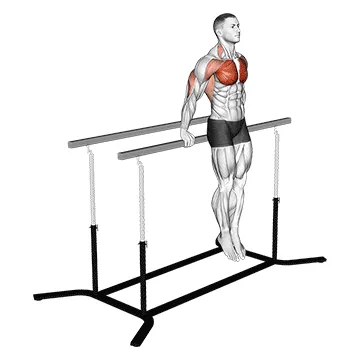
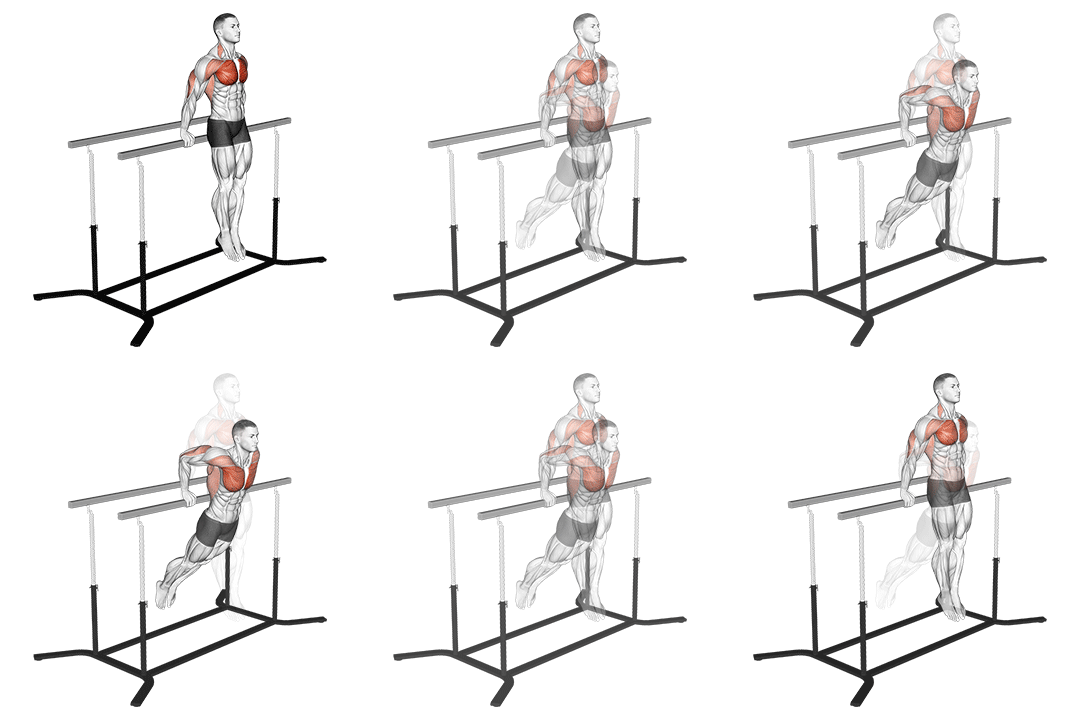
4. Korean Dips
55% match- Pectorals
- Bodyweight
- Advanced
- Compound
A looser match: it works the pectorals rather than the delts.
How to perform this exercise
- Position yourself between two parallel bars with your arms extended and supporting your body weight.
- Lower your body by bending your elbows until your upper arms are parallel to the ground.
- Pause for a moment, then push yourself back up to the starting position by straightening your arms.
- Repeat for the desired number of repetitions.
Sets and reps: 3 or 4 sets of 6 to 10 reps.
Why this matches
- Primary muscle: pectorals, not delts
- Equipment: bodyweight only, not free weights
- Body position: standing, the same as the Double Kettlebell Snatch
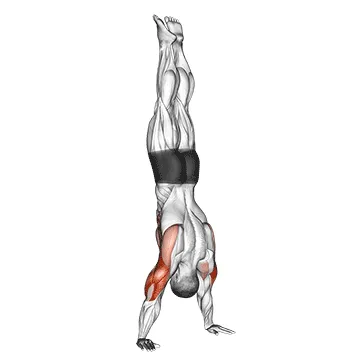
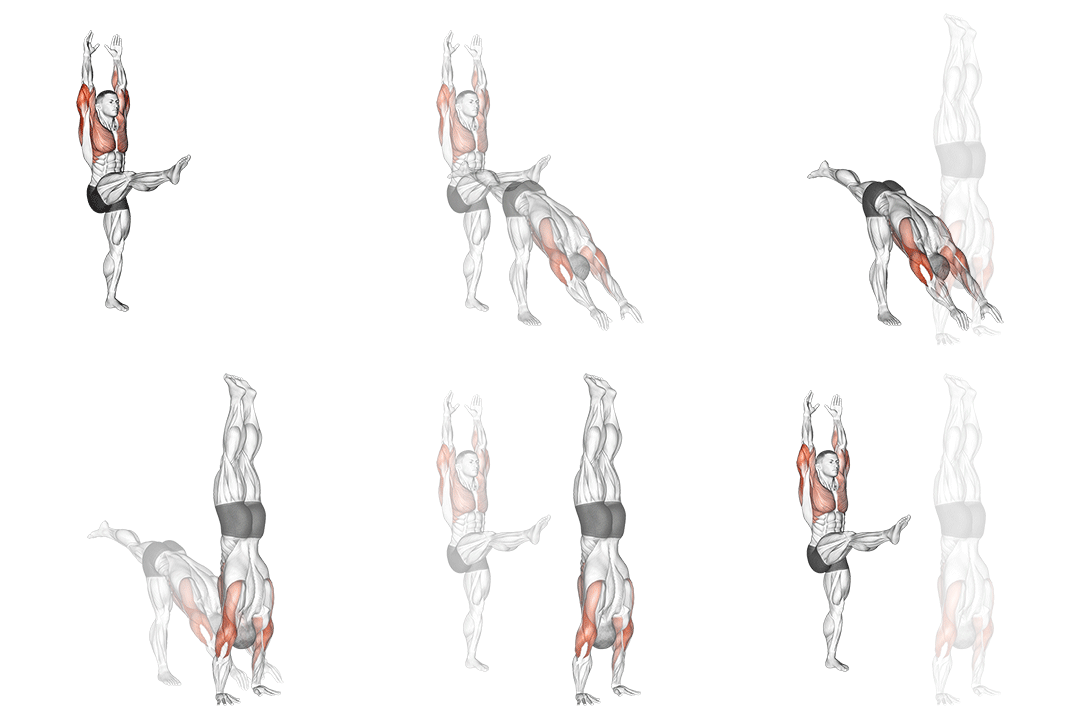
5. Handstand
52% match- Triceps
- Bodyweight
- Intermediate
- Compound
A looser match: it works the triceps rather than the delts.
How to perform this exercise
- Find an open space with enough room to perform a handstand.
- Place your hands on the ground shoulder-width apart, fingers pointing forward.
- Kick your legs up towards the wall, using your core and shoulders to maintain balance.
- Once in a handstand position, engage your triceps to support your body weight.
- Hold the handstand for as long as you can maintain balance.
- To come down, slowly lower your legs back to the ground.
- Repeat for the desired number of repetitions.
Sets and reps: Hold for 20 to 30 seconds, 3 sets.
Why this matches
- Primary muscle: triceps, not delts
- Equipment: bodyweight only, not free weights
- Body position: inverted, not standing
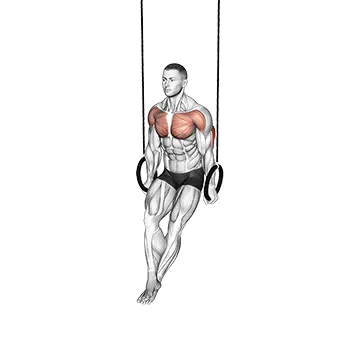
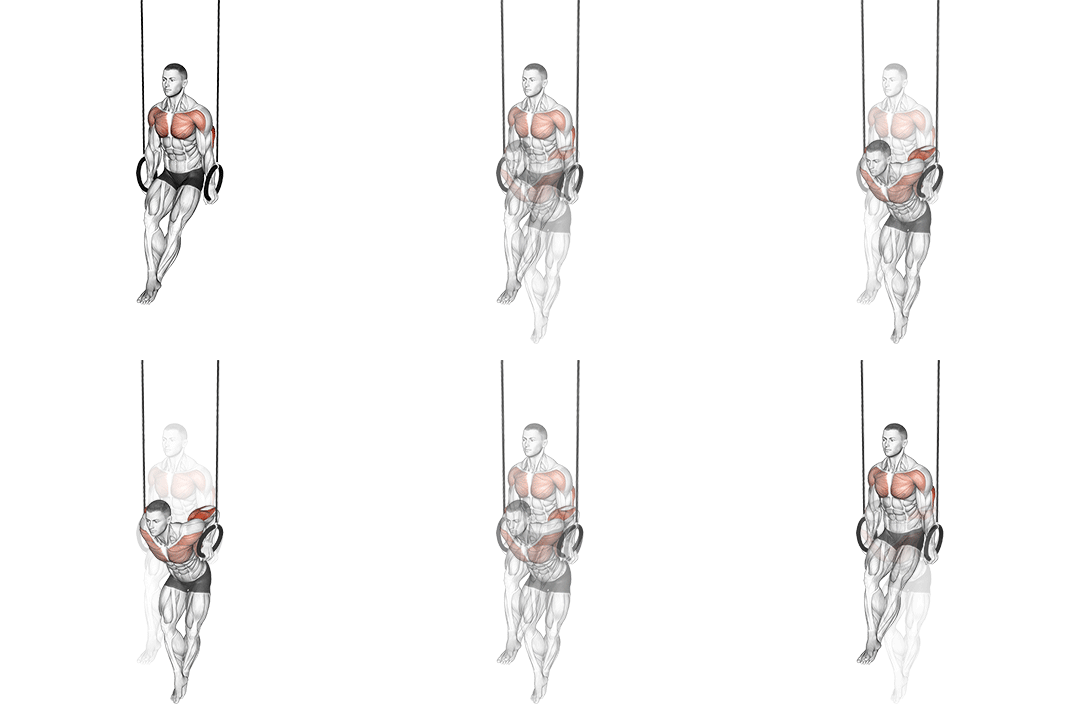
6. Ring Dips
49% match- Triceps
- Bodyweight
- Advanced
- Compound
How to perform this exercise
- Start by hanging from the rings with your arms fully extended and your body straight.
- Lower your body by bending your elbows until your shoulders are below your elbows.
- Push yourself back up to the starting position by straightening your arms.
- Repeat for the desired number of repetitions.
Sets and reps: 3 to 5 sets of 5 to 8 reps.
Why this matches
- Primary muscle: triceps, not delts
- Equipment: a suspension trainer, not free weights
- Body position: standing, the same as the Double Kettlebell Snatch
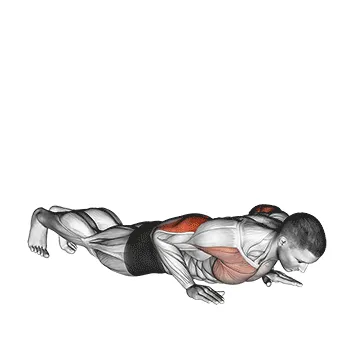
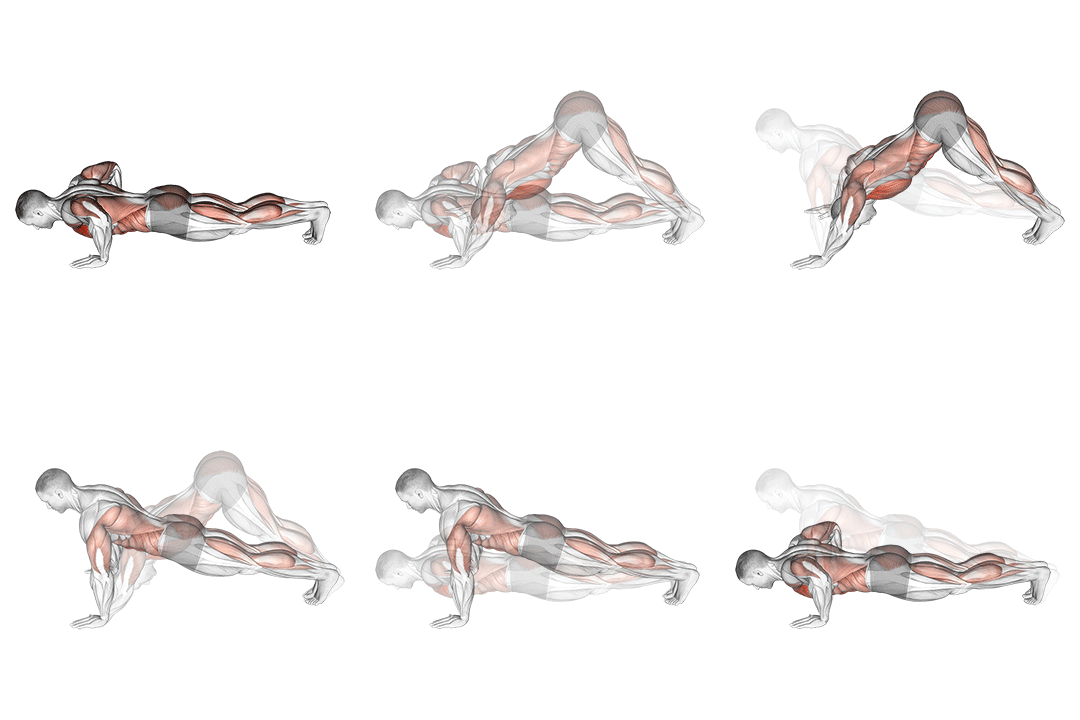
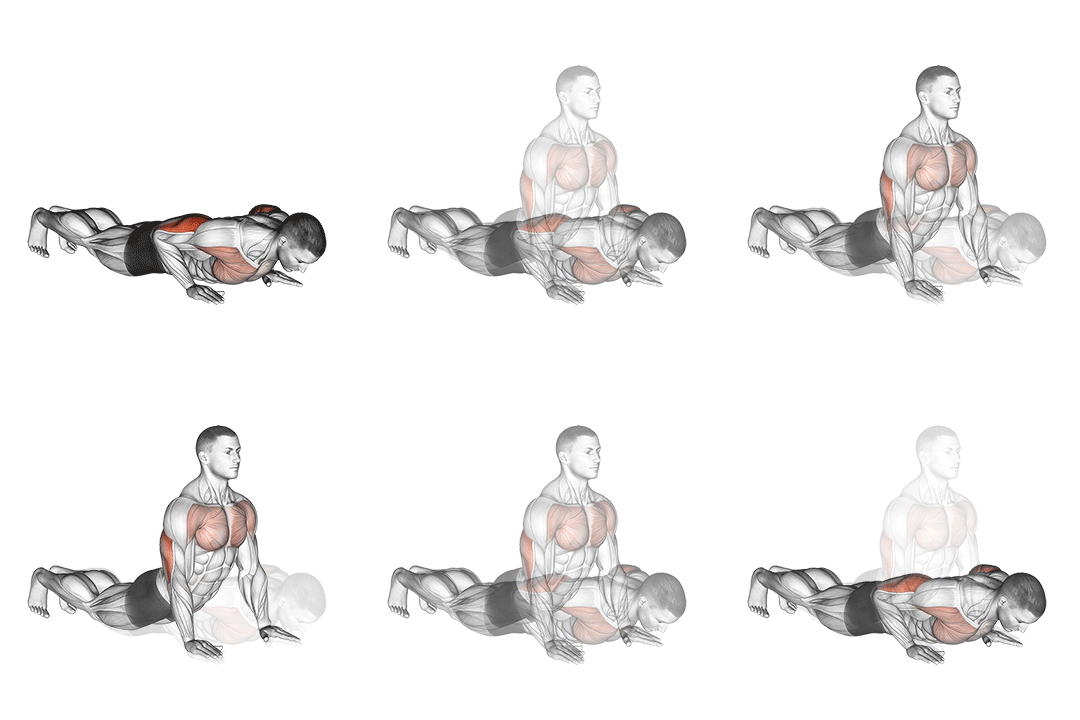
7. Modified Hindu Push-up
48% match- Pectorals
- Bodyweight
- Intermediate
- Compound
How to perform this exercise
- Start in a push-up position with your hands slightly wider than shoulder-width apart and your feet hip-width apart.
- Lower your body towards the ground, bending your elbows and keeping your core engaged.
- As you lower your body, shift your weight back and lift your hips up towards the ceiling, creating an inverted V shape with your body.
- Continue to lower your body until your chest is just above the ground, then reverse the movement, pushing your hips back down and extending your arms to return to the starting position.
- Repeat for the desired number of repetitions.
Sets and reps: 3 or 4 sets of 6 to 10 reps.
Why this matches
- Primary muscle: pectorals, not delts
- Equipment: bodyweight only, not free weights
- Body position: standing, the same as the Double Kettlebell Snatch
- Balance: easier to stay steady on than the Double Kettlebell Snatch
8. Reverse Dip
47% match- Triceps
- Bodyweight
- Intermediate
- Compound
How to perform this exercise
- Position yourself between two parallel bars with your arms fully extended and your body straight.
- Lower your body by bending your elbows until your upper arms are parallel to the ground.
- Pause for a moment, then push yourself back up to the starting position by straightening your arms.
- Repeat for the desired number of repetitions.
Sets and reps: 3 or 4 sets of 6 to 10 reps.
Why this matches
- Primary muscle: triceps, not delts
- Equipment: bodyweight only, not free weights
- Body position: standing, the same as the Double Kettlebell Snatch
- Balance: easier to stay steady on than the Double Kettlebell Snatch
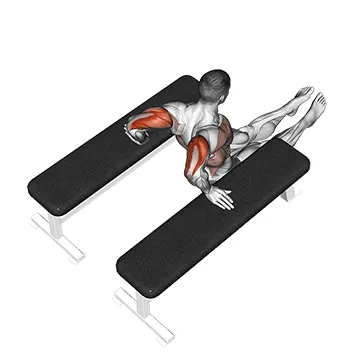
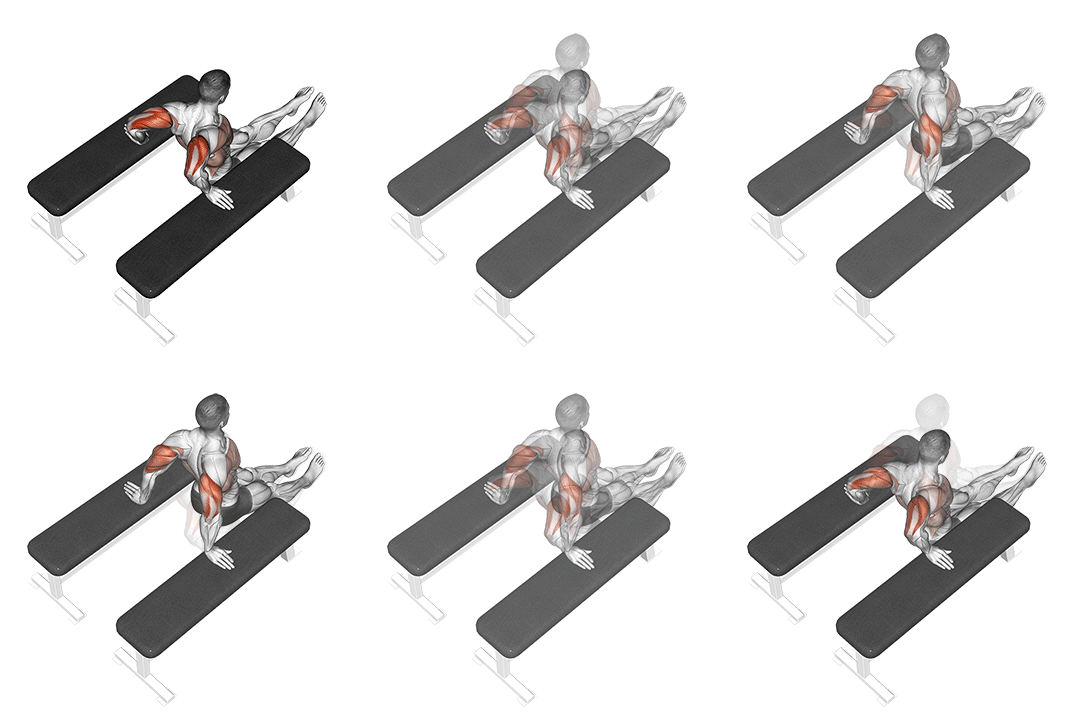
9. Triceps Dip (Between Benches)
46% match- Triceps
- Bodyweight
- Intermediate
- Compound
How to perform this exercise
- Sit on a bench with your hands gripping the edge of the bench, fingers pointing forward.
- Slide your butt off the bench, supporting your weight with your hands.
- Bend your elbows and lower your body towards the ground, keeping your back close to the bench.
- Pause for a moment at the bottom, then push yourself back up to the starting position.
- Repeat for the desired number of repetitions.
Sets and reps: 3 or 4 sets of 6 to 10 reps.
Why this matches
- Primary muscle: triceps, not delts
- Equipment: bodyweight only, not free weights
- Body position: standing, the same as the Double Kettlebell Snatch
- Balance: easier to stay steady on than the Double Kettlebell Snatch
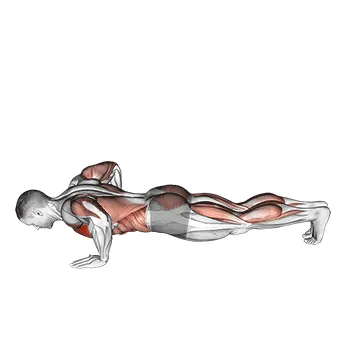
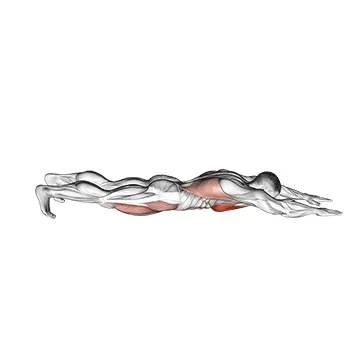
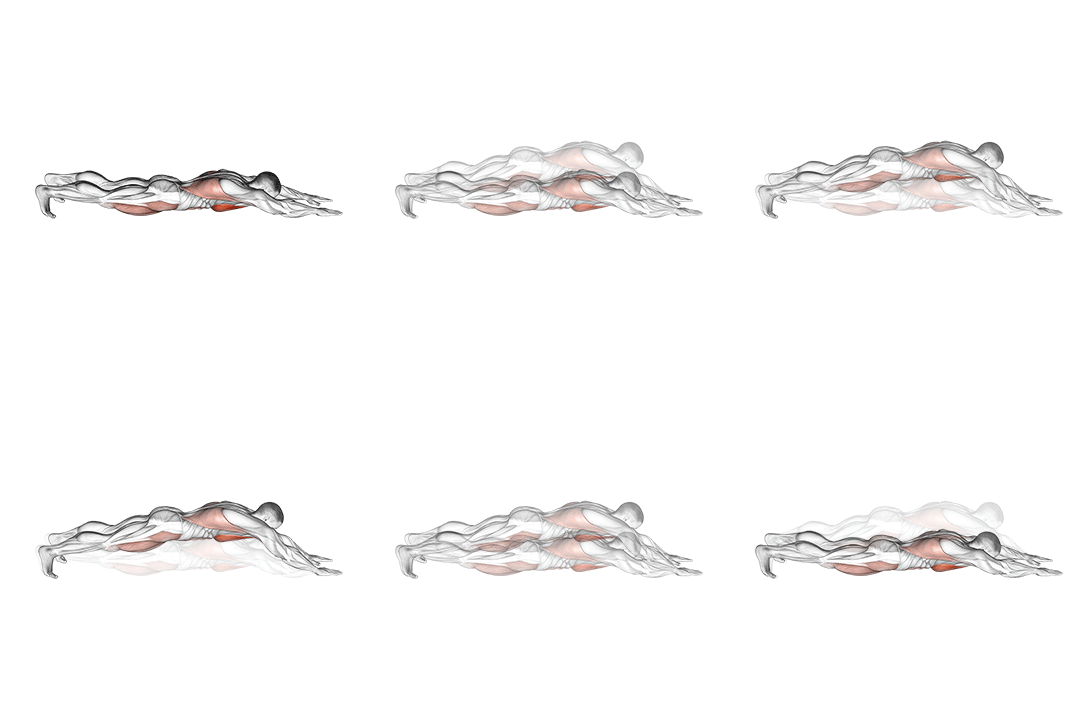
10. Superman Push-up
46% match- Pectorals
- Bodyweight
- Advanced
- Compound
How to perform this exercise
- Start in a high plank position with your hands slightly wider than shoulder-width apart and your feet together.
- Engage your core and lower your body towards the ground, keeping your elbows close to your sides.
- As you lower your body, simultaneously lift your right arm and left leg off the ground, extending them straight out.
- Pause for a moment at the top, then lower your arm and leg back down while pushing yourself back up to the starting position.
- Repeat the movement, this time lifting your left arm and right leg.
- Continue alternating sides for the desired number of repetitions.
Sets and reps: 3 or 4 sets of 6 to 10 reps.
Why this matches
- Primary muscle: pectorals, not delts
- Equipment: bodyweight only, not free weights
- Body position: lying face down, not standing
Why You Might Need a Double Kettlebell Snatch Alternative
You may substitute the Double Kettlebell Snatch for several reasons: shoulder pain, limited equipment, coordination demands, or programming needs. Injured athletes often favor single-arm or controlled pressing variations to reduce shear at the glenohumeral joint; cue: keep the scapula stable and avoid excessive internal rotation. Beginners benefit from simpler hip-hinge and press drills to teach force transfer from the posterior chain into an overhead lockout. Coaches choose alternatives to target deltoid amplitude or to emphasize eccentric control and tempo without the ballistic component of the snatch.
Double Kettlebell Snatch FAQ
What muscles does Double Kettlebell Snatch work?
The Double Kettlebell Snatch targets the deltoids (primarily the anterior and lateral heads), upper traps, lats, glutes, hamstrings, and core. Biomechanically it relies on hip extension to generate upward momentum, then the shoulder and scapular stabilizers complete the overhead lockout; cue: finish with the elbow extended and the scapula upwardly rotated.
Can I build muscle without doing Double Kettlebell Snatch?
Yes, you can build shoulder muscle with progressive overload using presses, pulls, and loaded carries instead of ballistic snatches. Use tempo-controlled dumbbell or barbell overhead presses and increase load or reps over time; cue: slow the eccentric and add a 1–2 second pause at the midpoint to raise time under tension.
Find Alternatives for Any Exercise
Search the exercise database and filter the ranked substitutes by the equipment you own.
Similarity scores compare exercise metadata such as movement pattern, muscles, equipment and body position. They are not a safety rating or a check that you own the equipment. Learn about our methodology