

10 Best Drop Push Alternatives for Chest Hypertrophy
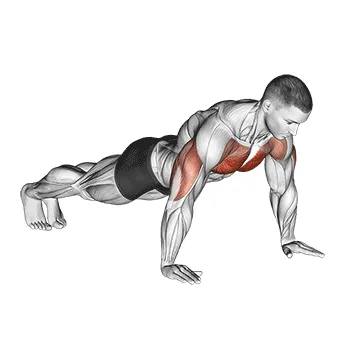
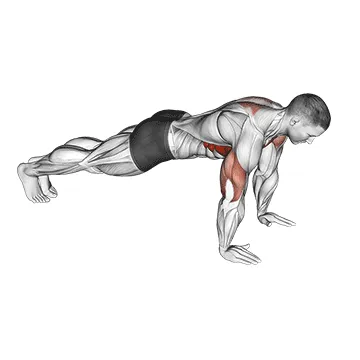
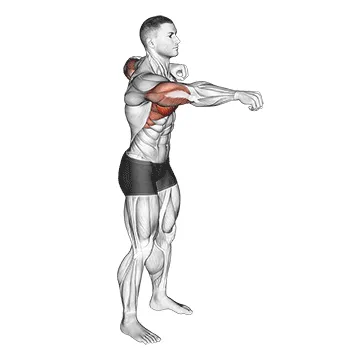
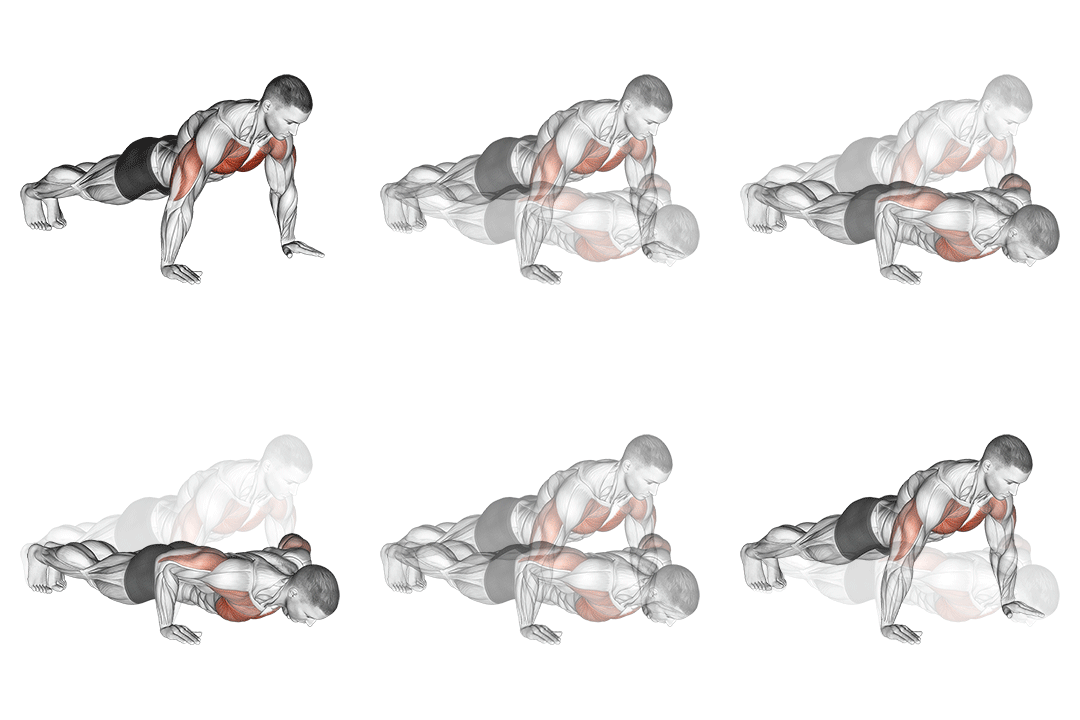
The Drop Push is done lying face down. Ranked closest by our scoring: the Push-up On Lower Arms, the Push-up and the Push-up Plus.
Updated Ranked by our 12-factor similarity model How it works
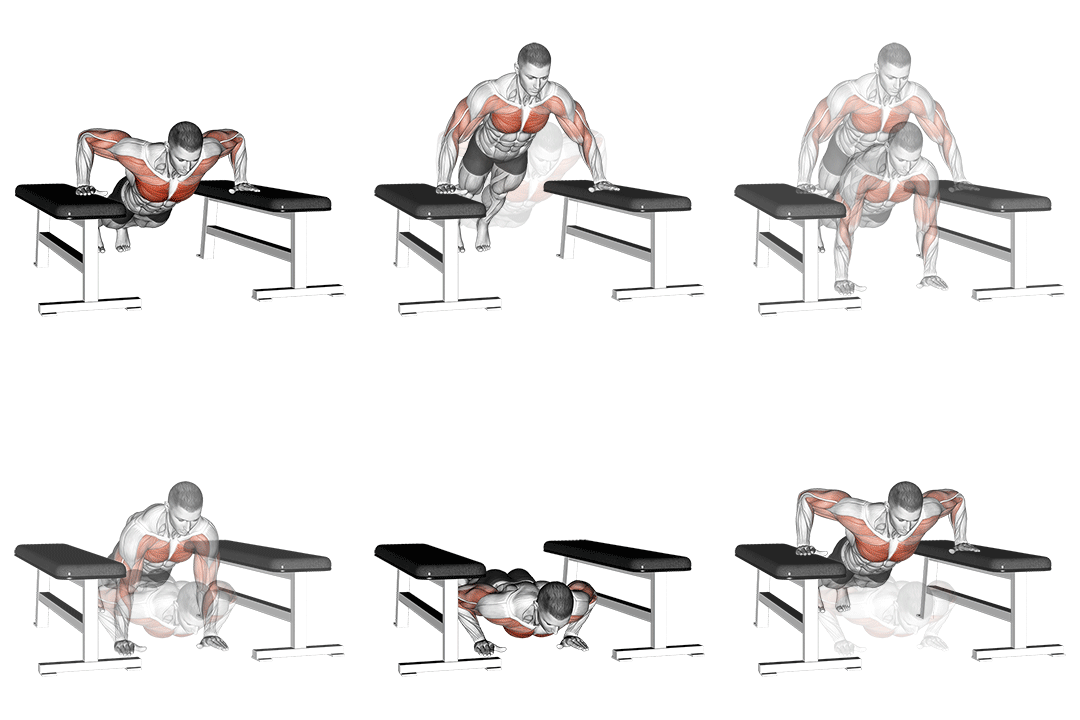
Original Exercise: Drop Push
- Primary muscle
- Pectorals
- Equipment
- Other
- Difficulty
- Intermediate
- Type
- Compound
Secondary muscles: Shoulders, Triceps
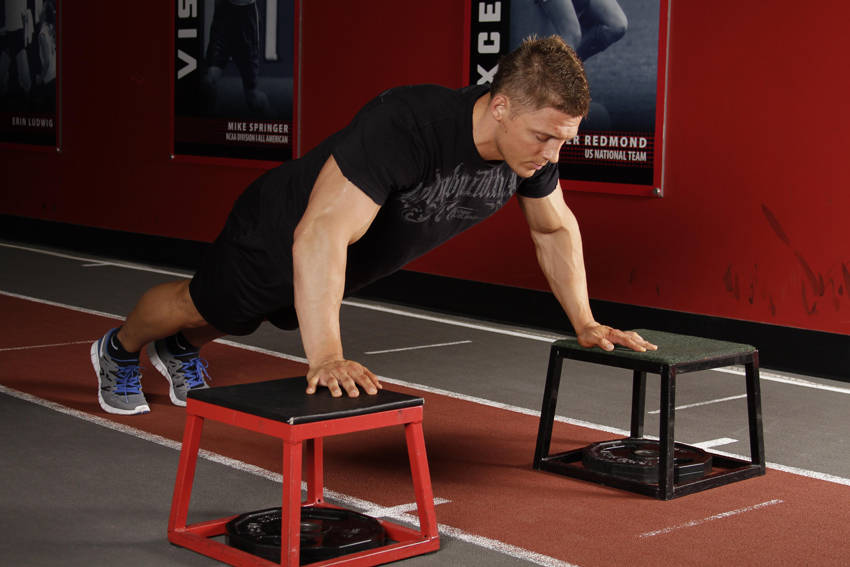
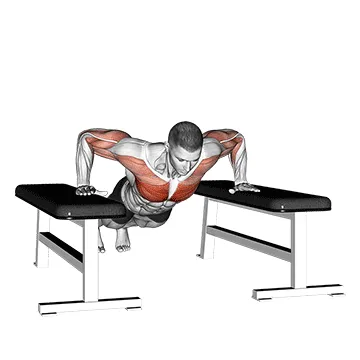
How to perform Drop Push
- Position low boxes or other platforms 2-3 feet apart.
- Move to a pushup position between them, supporting yourself by placing your hands on the boxes.
- With good posture, drop from the platforms by pressing up and moving your hands to shoulder width, cushioning your landing by absorbing the impact through the arm.
Ranked Drop Push Alternatives
10 substitutes, ranked by how closely each one matches the Drop Push on movement pattern, muscles worked, equipment and body position. The higher the score, the less you change. Open "How to perform this exercise" on a card for the steps; every card title links to that exercise's own alternatives page.
Best match 1. Push-up On Lower Arms
99% match- Pectorals
- Bodyweight
- Beginner
- Compound
Pick this when you want an easier version that still works the pectorals.
How to perform this exercise
- Start in a plank position with your forearms on the ground and elbows directly below your shoulders.
- Engage your core and keep your body in a straight line from head to toe.
- Lower your chest towards the ground by bending your elbows, keeping them close to your body.
- Pause for a moment at the bottom, then push yourself back up to the starting position.
- Repeat for the desired number of repetitions.
Sets and reps: 3 sets of 8 to 12 reps, and add reps before you add load.
Why this matches
- Primary muscle: pectorals, the same as the Drop Push
- Equipment: bodyweight only, the same as the Drop Push
- Body position: lying face down, the same as the Drop Push
2. Push-up
99% match- Pectorals
- Bodyweight
- Intermediate
- Compound
A straight swap when you want to keep working the pectorals.
How to perform this exercise
- Start in a high plank position with your hands slightly wider than shoulder-width apart and your feet together.
- Engage your core and lower your body towards the ground by bending your elbows, keeping your body in a straight line.
- Pause for a moment when your chest is just above the ground, then push yourself back up to the starting position by straightening your arms.
- Repeat for the desired number of repetitions.
Sets and reps: 3 or 4 sets of 6 to 10 reps.
Why this matches
- Primary muscle: pectorals, the same as the Drop Push
- Equipment: bodyweight only, the same as the Drop Push
- Body position: lying face down, the same as the Drop Push
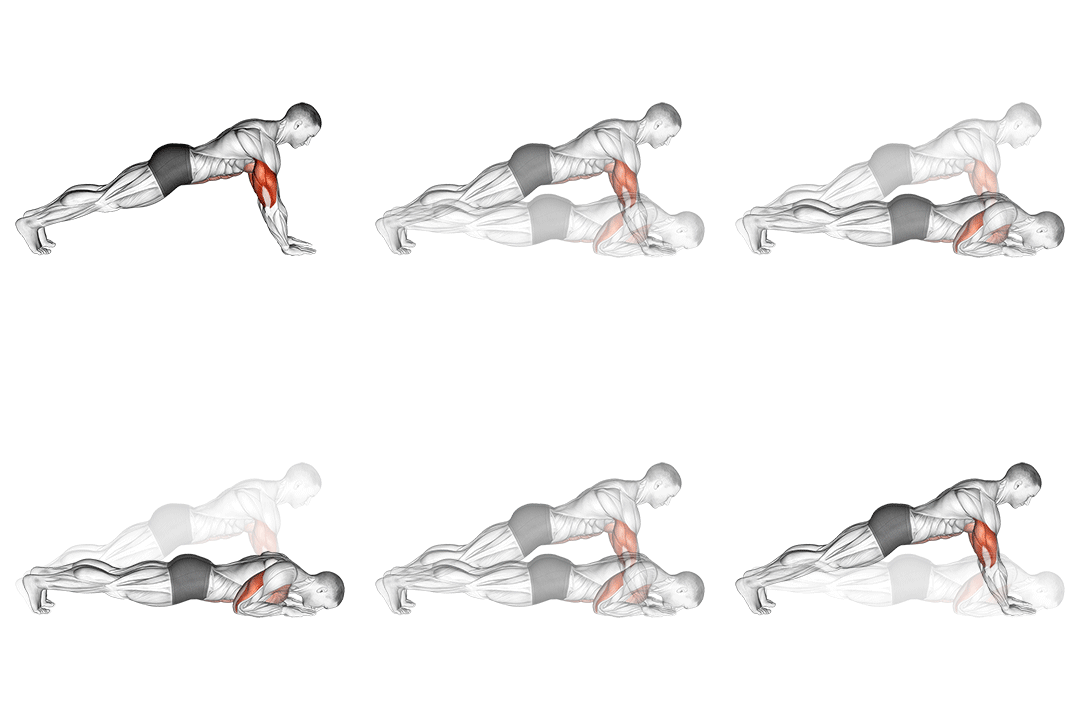
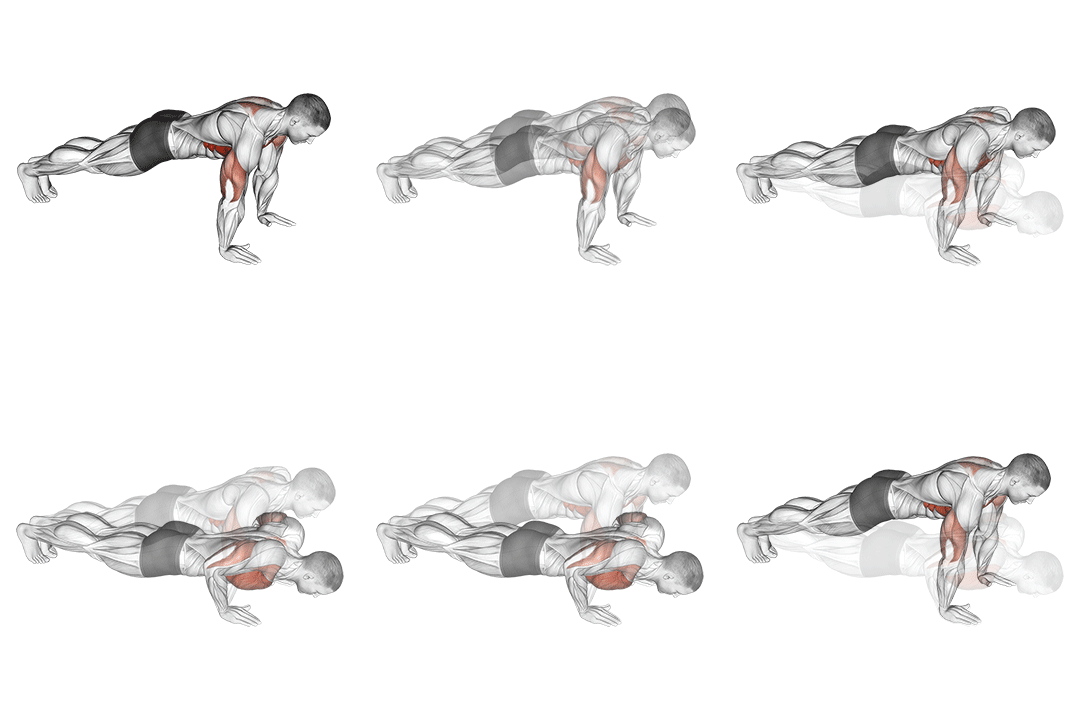
3. Push-up Plus
99% match- Pectorals
- Bodyweight
- Intermediate
- Compound
How to perform this exercise
- Start in a high plank position with your hands slightly wider than shoulder-width apart and your body in a straight line from head to heels.
- Lower your body towards the ground by bending your elbows, keeping them close to your sides.
- Once your chest is just above the ground, push through your hands to extend your arms and lift your upper body up.
- At the top of the movement, protract your shoulder blades by pushing your upper back towards the ceiling.
- Pause for a moment, then reverse the movement by retracting your shoulder blades and lowering your body back down to the starting position.
- Repeat for the desired number of repetitions.
Sets and reps: 3 or 4 sets of 6 to 10 reps.
Why this matches
- Primary muscle: pectorals, the same as the Drop Push
- Equipment: bodyweight only, the same as the Drop Push
- Body position: lying face down, the same as the Drop Push
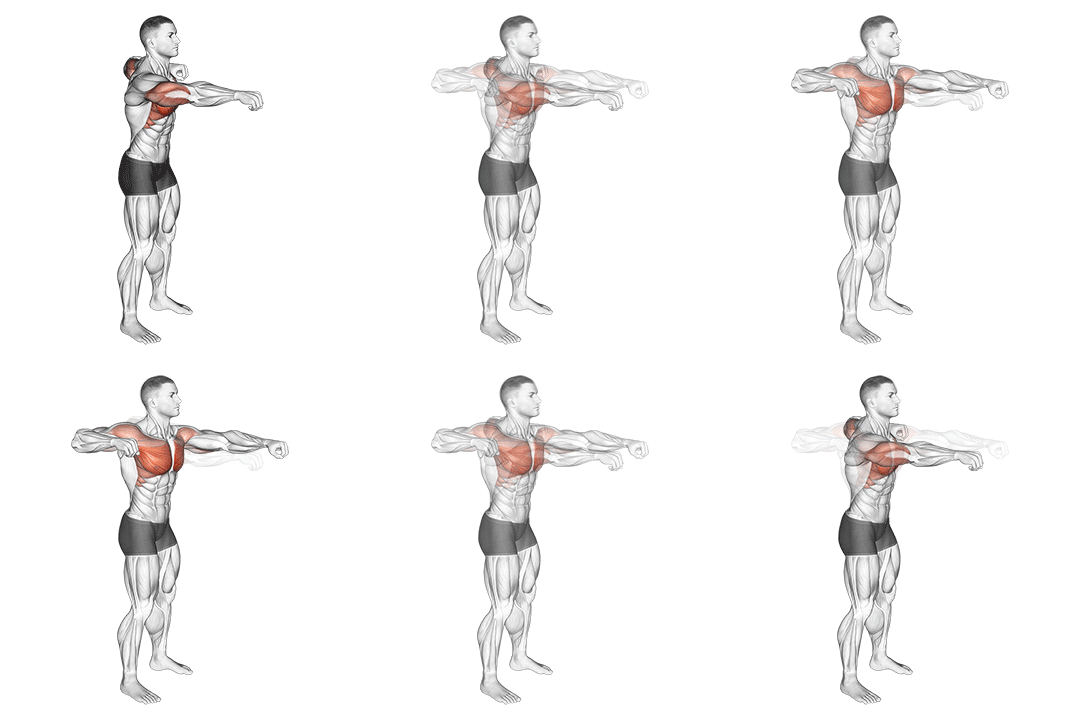
4. Push And Pull Bodyweight
99% match- Pectorals
- Bodyweight
- Intermediate
- Compound
How to perform this exercise
- Start in a push-up position with your hands slightly wider than shoulder-width apart and your body in a straight line.
- Lower your chest towards the ground by bending your elbows, keeping your body straight.
- Push through your palms to extend your arms and return to the starting position.
- From the push-up position, pull your chest towards the ground by bending your elbows, keeping your body straight.
- Push through your palms to extend your arms and return to the starting position.
- Repeat for the desired number of repetitions.
Sets and reps: 3 or 4 sets of 6 to 10 reps.
Why this matches
- Primary muscle: pectorals, the same as the Drop Push
- Equipment: bodyweight only, the same as the Drop Push
- Body position: lying face down, the same as the Drop Push
5. Pushups
99% match- Pectorals
- Bodyweight
- Beginner
- Compound
How to perform this exercise
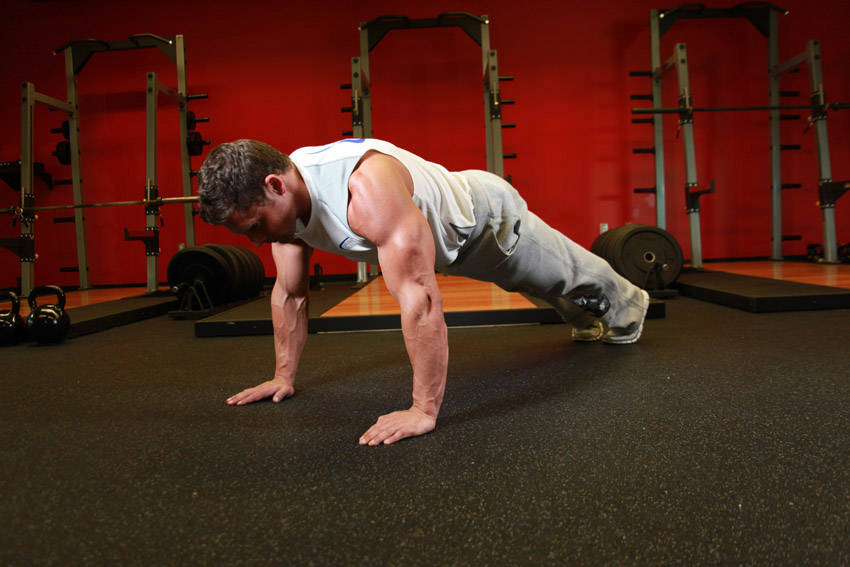
- Lie on the floor face down and place your hands about 36 inches apart while holding your torso up at arms length.
- Next, lower yourself downward until your chest almost touches the floor as you inhale.
- Now breathe out and press your upper body back up to the starting position while squeezing your chest.
- After a brief pause at the top contracted position, you can begin to lower yourself downward again for as many repetitions as needed.
Sets and reps: 3 sets of 8 to 12 reps, and add reps before you add load.
Why this matches
- Primary muscle: pectorals, the same as the Drop Push
- Equipment: bodyweight only, the same as the Drop Push
- Body position: lying face down, the same as the Drop Push
6. Drop Push Up
98% match- Pectorals
- Bodyweight
- Intermediate
- Compound
How to perform this exercise
- Start in a high plank position with your hands slightly wider than shoulder-width apart.
- Lower your chest towards the ground, keeping your elbows close to your body.
- Once your chest is just above the ground, quickly drop your knees to the ground.
- Push yourself back up to the starting position by extending your arms.
- Repeat for the desired number of repetitions.
Sets and reps: 3 or 4 sets of 6 to 10 reps.
Why this matches
- Primary muscle: pectorals, the same as the Drop Push
- Equipment: bodyweight only, the same as the Drop Push
- Body position: lying face down, the same as the Drop Push
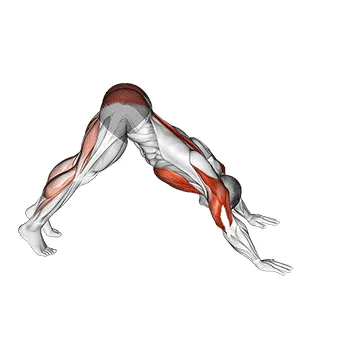
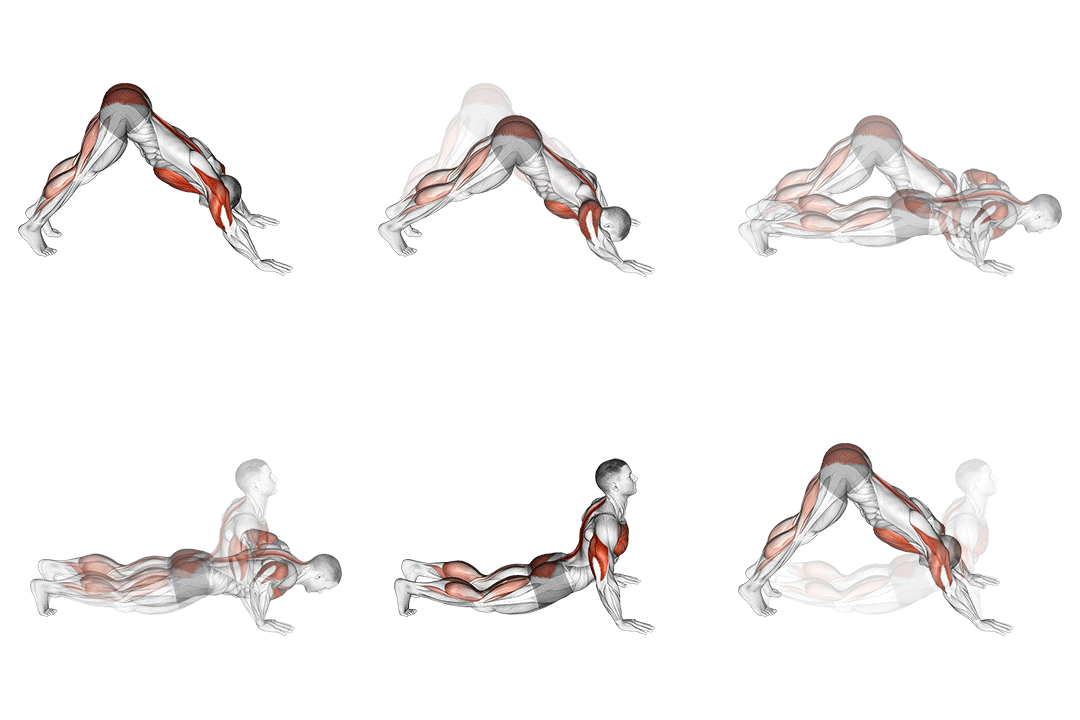
7. Pike-to-cobra Push-up
98% match- Pectorals
- Bodyweight
- Intermediate
- Compound
How to perform this exercise
- Start in a push-up position with your hands slightly wider than shoulder-width apart and your feet together.
- Engage your core and lift your hips up towards the ceiling, forming an inverted V shape with your body.
- Lower your upper body towards the ground by bending your elbows, keeping them close to your body.
- As you lower down, shift your weight forward and transition into a cobra pose by straightening your arms and lifting your chest up.
- Reverse the movement by bending your elbows and lowering your chest back down towards the ground.
- Push through your hands to return to the inverted V position.
- Continue the movement by lowering your hips back down towards the ground, returning to the starting push-up position.
- Repeat for the desired number of repetitions.
Sets and reps: 3 or 4 sets of 6 to 10 reps.
Why this matches
- Primary muscle: pectorals, the same as the Drop Push
- Equipment: bodyweight only, the same as the Drop Push
- Body position: lying face down, the same as the Drop Push
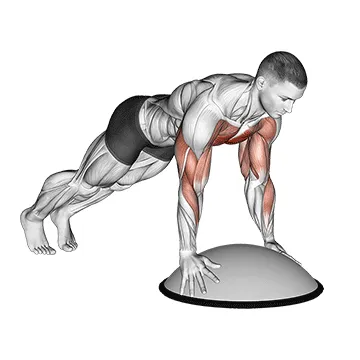
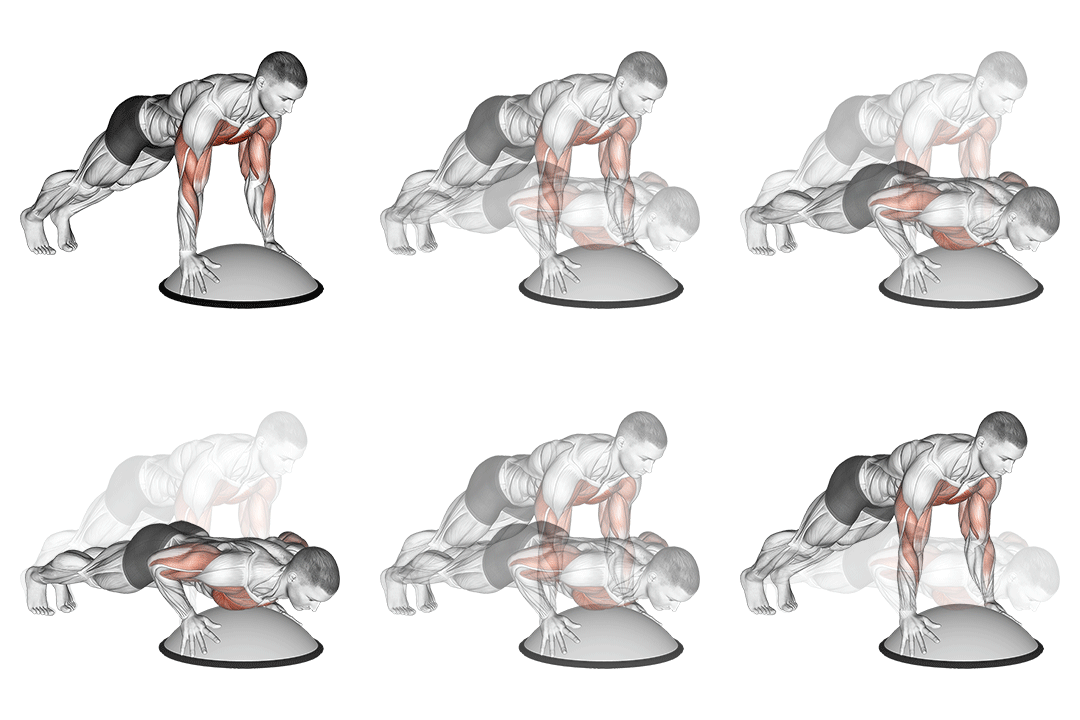
8. Push Up On Bosu Ball
97% match- Pectorals
- Stability-ball
- Intermediate
- Compound
How to perform this exercise
- Place the bosu ball on the ground with the flat side facing up.
- Position yourself in a push-up position with your hands on the outer edges of the bosu ball.
- Engage your core and lower your body down towards the bosu ball by bending your elbows.
- Push yourself back up to the starting position by extending your arms.
- Repeat for the desired number of repetitions.
Sets and reps: 3 or 4 sets of 6 to 10 reps.
Why this matches
- Primary muscle: pectorals, the same as the Drop Push
- Equipment: bodyweight only, the same as the Drop Push
- Body position: lying face down, the same as the Drop Push
- Balance: harder to stay steady on than the Drop Push
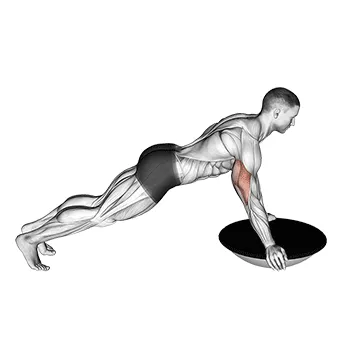
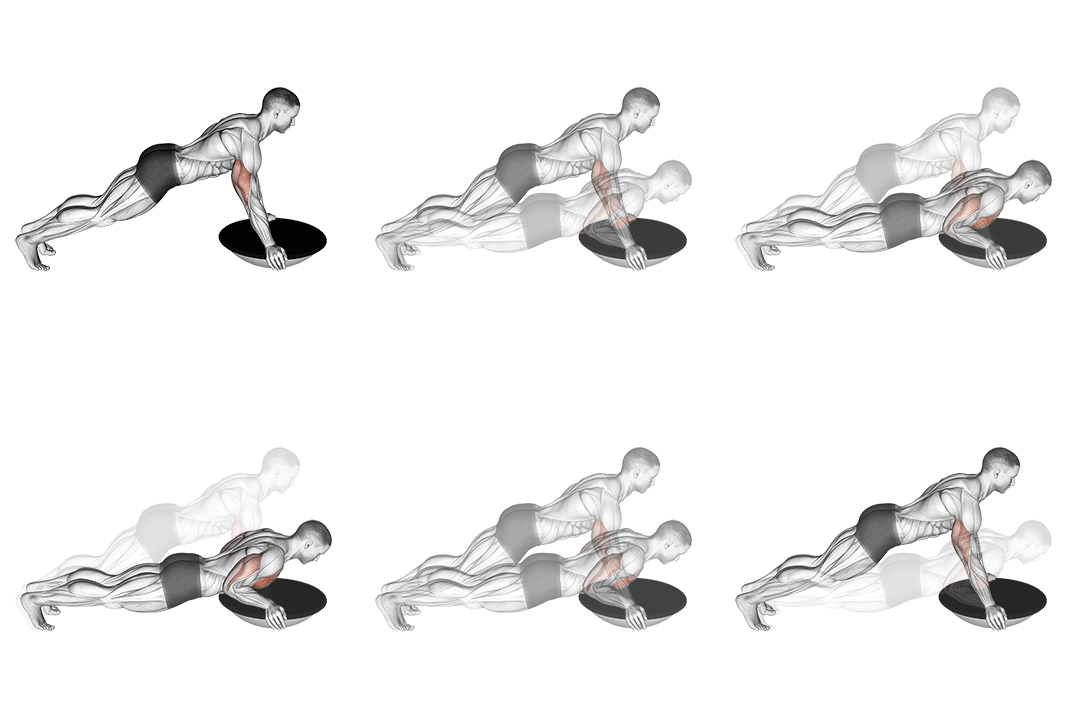
9. Push-up (Bosu Ball)
97% match- Pectorals
- Stability-ball
- Intermediate
- Compound
How to perform this exercise
- Place the bosu ball on the ground with the flat side facing up.
- Position yourself in a push-up position with your hands on the outer edges of the bosu ball.
- Engage your core and lower your body down towards the bosu ball by bending your elbows.
- Push yourself back up to the starting position by extending your arms.
- Repeat for the desired number of repetitions.
Sets and reps: 3 or 4 sets of 6 to 10 reps.
Why this matches
- Primary muscle: pectorals, the same as the Drop Push
- Equipment: bodyweight only, the same as the Drop Push
- Body position: lying face down, the same as the Drop Push
- Balance: harder to stay steady on than the Drop Push
- Pectorals
- Stability-ball
- Intermediate
- Compound
How to perform this exercise
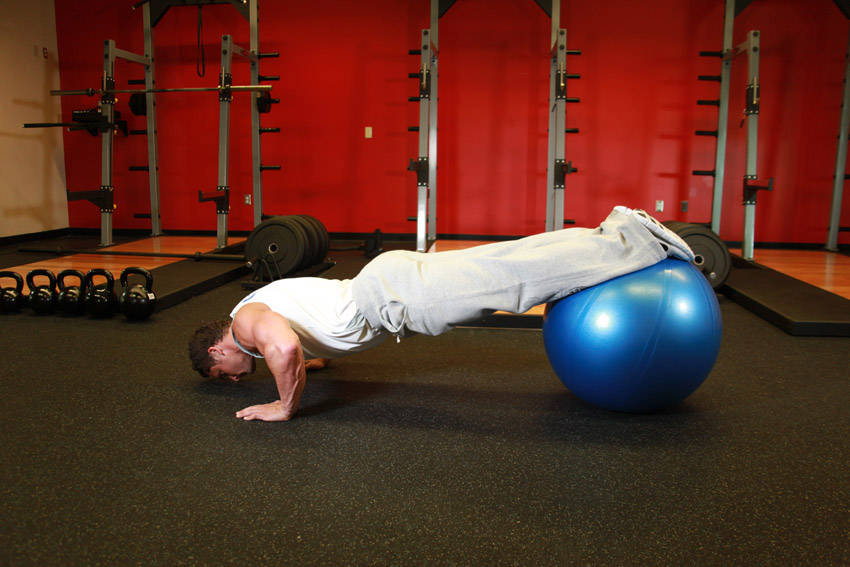
- Lie on the floor face down and place your hands about 36 inches apart from each other holding your torso up at arms length.
- Place your toes on top of an exercise ball. This will allow your body to be elevated.
- Lower yourself until your chest almost touches the floor as you inhale.
- Using your pectoral muscles, press your upper body back up to the starting position and squeeze your chest. Breathe out as you perform this step.
- After a second pause at the contracted position, repeat the movement for the prescribed amount of repetitions.
Sets and reps: 3 or 4 sets of 6 to 10 reps.
Why this matches
- Primary muscle: pectorals, the same as the Drop Push
- Equipment: bodyweight only, the same as the Drop Push
- Body position: lying face down, the same as the Drop Push
Drop Push FAQ
What muscles does Drop Push work?
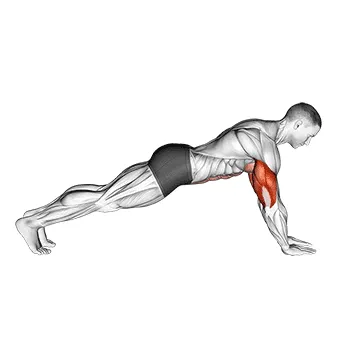
Drop Push primarily targets the pectoralis major, both sternal (mid/lower chest) and clavicular (upper chest) fibers, through horizontal adduction and shoulder flexion. It also recruits the anterior deltoid for shoulder flexion and the triceps brachii for elbow extension, with the serratus anterior stabilizing the scapula.
Can I build muscle without doing Drop Push?
Yes. You can create equivalent pectoral stress with dumbbell presses, cable presses, machine chest presses, and loaded push-up progressions as long as you apply progressive overload. Focus on maintaining chest activation via scapular retraction, controlled eccentrics, and gradual increases in load, volume, or range of motion.
Find Alternatives for Any Exercise
Search the exercise database and filter the ranked substitutes by the equipment you own.
Similarity scores compare exercise metadata such as movement pattern, muscles, equipment and body position. They are not a safety rating or a check that you own the equipment. Learn about our methodology