

10 Best Forward Drag With Press Alternatives for Limited Equipment
The Forward Drag With Press is done standing. Ranked closest by our scoring: the Chain Press, the Neck Press and the Lever Standing Chest Press.
Updated Ranked by our 12-factor similarity model How it works
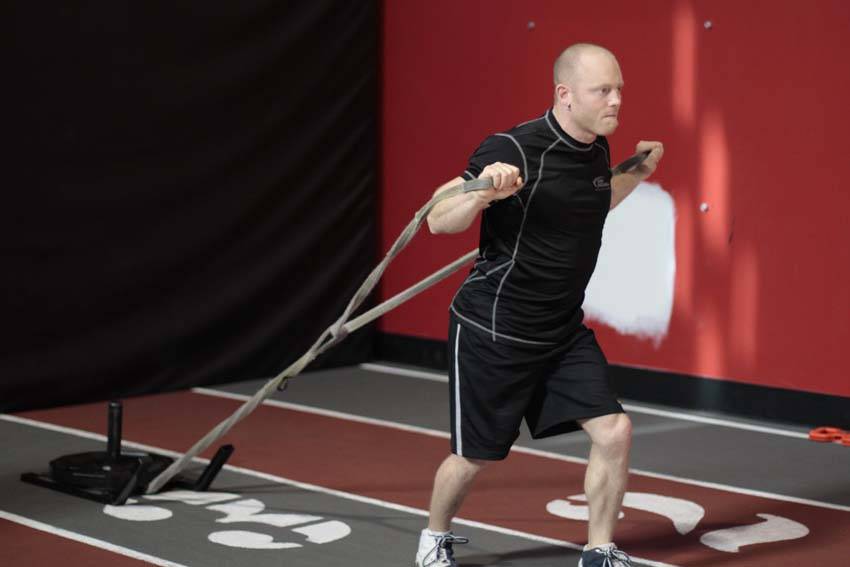
Original Exercise: Forward Drag With Press
- Primary muscle
- Pectorals
- Equipment
- Other
- Difficulty
- Intermediate
- Type
- Compound
Secondary muscles: Calves, Glutes, Hamstrings, Quadriceps, Shoulders, Triceps
How to perform Forward Drag With Press
- Attach a dual handled chain or rope attachment to the sled. You should be facing away from the sled, holding a handle in each hand.
- Begin the movement by moving forward for one step. Leaning forward, extend through the legs and hips to move, pausing with each step to extend through the elbows, pressing your hands forward. Step forward until you return to the start position prepared to press.
Ranked Forward Drag With Press Alternatives
10 substitutes, ranked by how closely each one matches the Forward Drag With Press on movement pattern, muscles worked, equipment and body position. The higher the score, the less you change. Open "How to perform this exercise" on a card for the steps; every card title links to that exercise's own alternatives page.
Best match 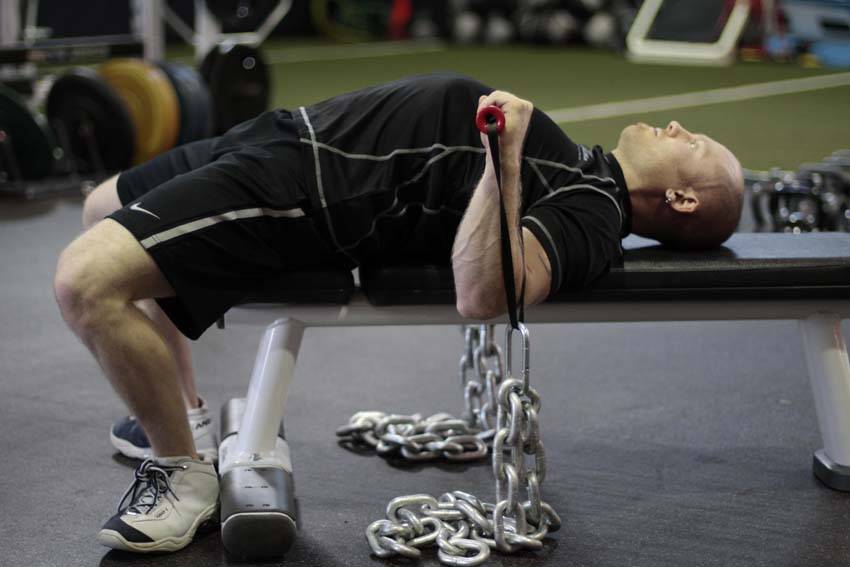
1. Chain Press
93% match- Pectorals
- Other
- Advanced
- Compound
Pick this when you want a harder version that works the pectorals one side at a time.
How to perform this exercise
- Begin by connecting the chains to the cable handle attachments. Position yourself on the flat bench in the same position as for a dumbbell press. Your wrists should be pronated and arms perpendicular to the floor. This will be your starting position.
- Lower the chains by flexing the elbows, unloading some of the chain onto the floor.
- Continue until your elbow forms a 90 degree angle, and then reverse the motion by extending through the elbow to lockout.
Sets and reps: 3 to 5 sets of 5 to 8 reps on each side.
Why this matches
- Primary muscle: pectorals, the same as the Forward Drag With Press
- Body position: standing, the same as the Forward Drag With Press
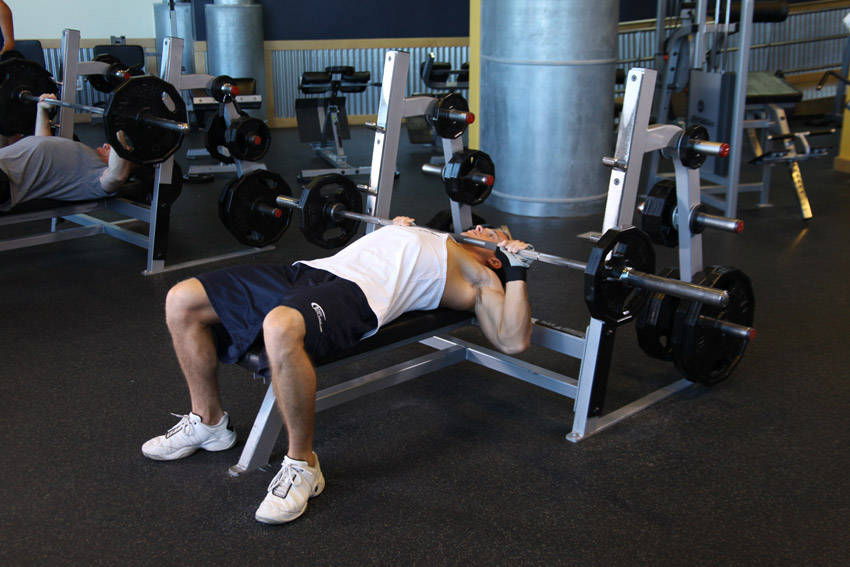
2. Neck Press
85% match- Pectorals
- Barbell
- Intermediate
- Compound
It still works the pectorals, through a different movement.
How to perform this exercise
- Lie back on a flat bench. Using a medium-width grip (a grip that creates a 90-degree angle in the middle of the movement between the forearms and the upper arms), lift the bar from the rack and hold it straight over your neck with your arms locked. This will be your starting position.
- As you breathe in, come down slowly until you feel the bar on your neck.
- After a second pause, bring the bar back to the starting position as you breathe out and push the bar using your chest muscles. Lock your arms and squeeze your chest in the contracted position, hold for a second and then start coming down slowly again. Tip: It should take at least twice as long to go down than to come up).
- Repeat the movement for the prescribed amount of repetitions.
- When you are done, place the bar back in the rack.
Sets and reps: 3 or 4 sets of 6 to 10 reps.
Why this matches
- Primary muscle: pectorals, the same as the Forward Drag With Press
- Equipment: free weights, the same as the Forward Drag With Press
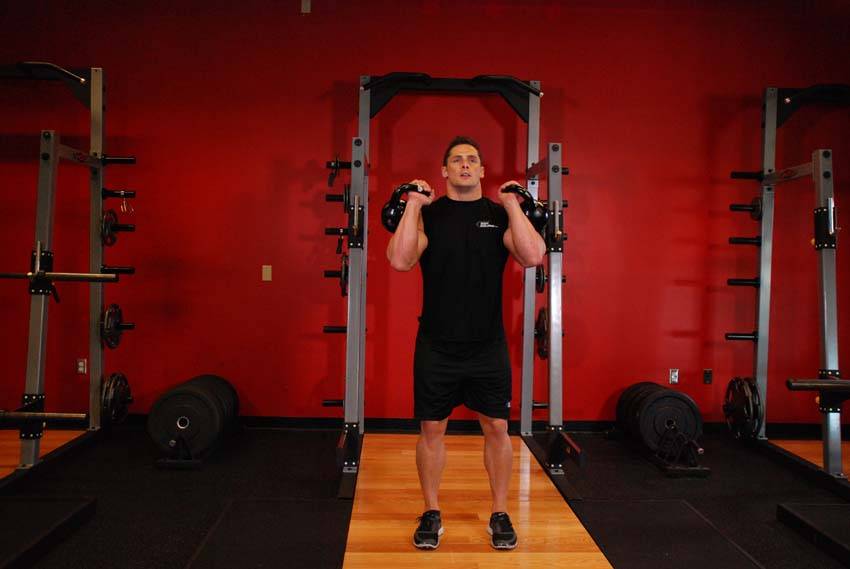
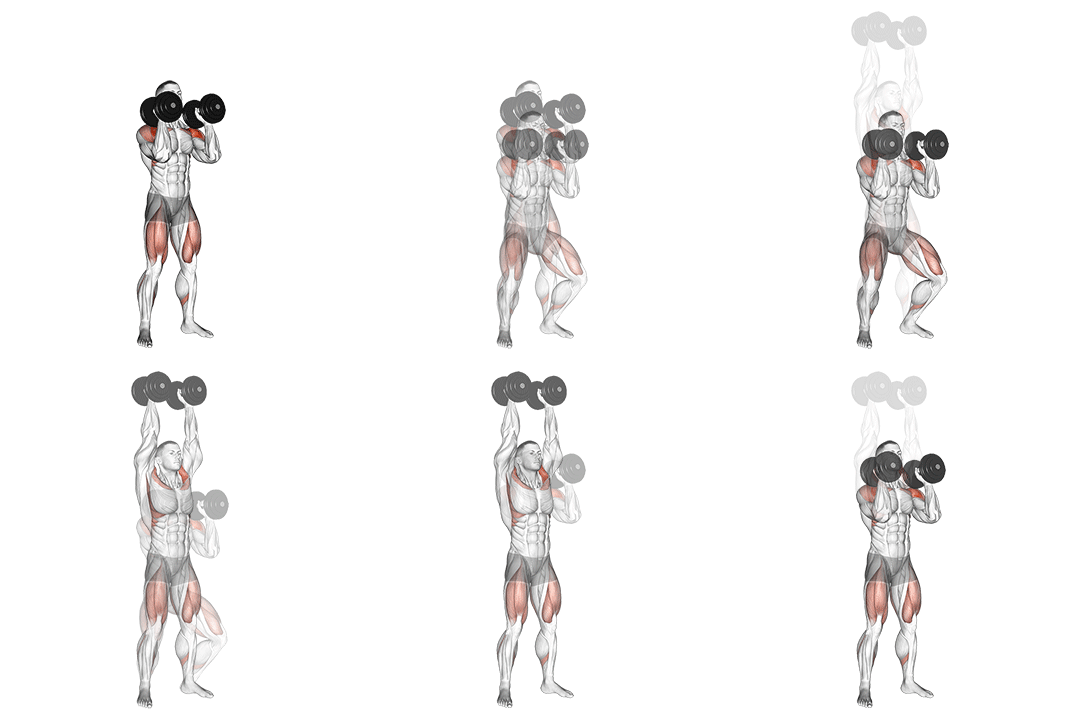
3. Double Kettlebell Push Press
84% match- Delts
- Kettlebell
- Intermediate
- Compound
A looser match: it works the delts rather than the pectorals.
How to perform this exercise
- Clean two kettlebells to your shoulders.
- Squat down a few inches and reverse the motion rapidly. Use the momentum from the legs to drive the kettlebells overhead.
- Once the kettlebells are locked out, lower the kettlebells to your shoulders and repeat.
Sets and reps: 3 or 4 sets of 6 to 10 reps.
Why this matches
- Primary muscle: delts, not pectorals
- Equipment: free weights, the same as the Forward Drag With Press
- Body position: standing, the same as the Forward Drag With Press
4. Dumbbell Push Press
84% match- Delts
- Dumbbell
- Intermediate
- Compound
How to perform this exercise
- Stand with your feet shoulder-width apart, holding a dumbbell in each hand at shoulder level.
- Bend your knees slightly and dip your body down, then explosively extend your legs and press the dumbbells overhead.
- Lock out your arms at the top of the movement, then lower the dumbbells back to shoulder level.
- Repeat for the desired number of repetitions.
Sets and reps: 3 or 4 sets of 6 to 10 reps.
Why this matches
- Primary muscle: delts, not pectorals
- Equipment: free weights, the same as the Forward Drag With Press
- Body position: standing, the same as the Forward Drag With Press
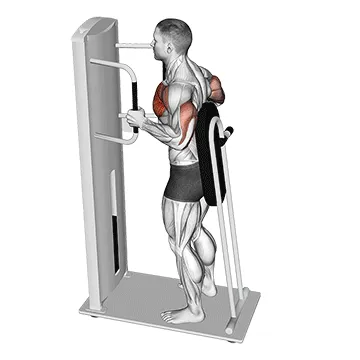
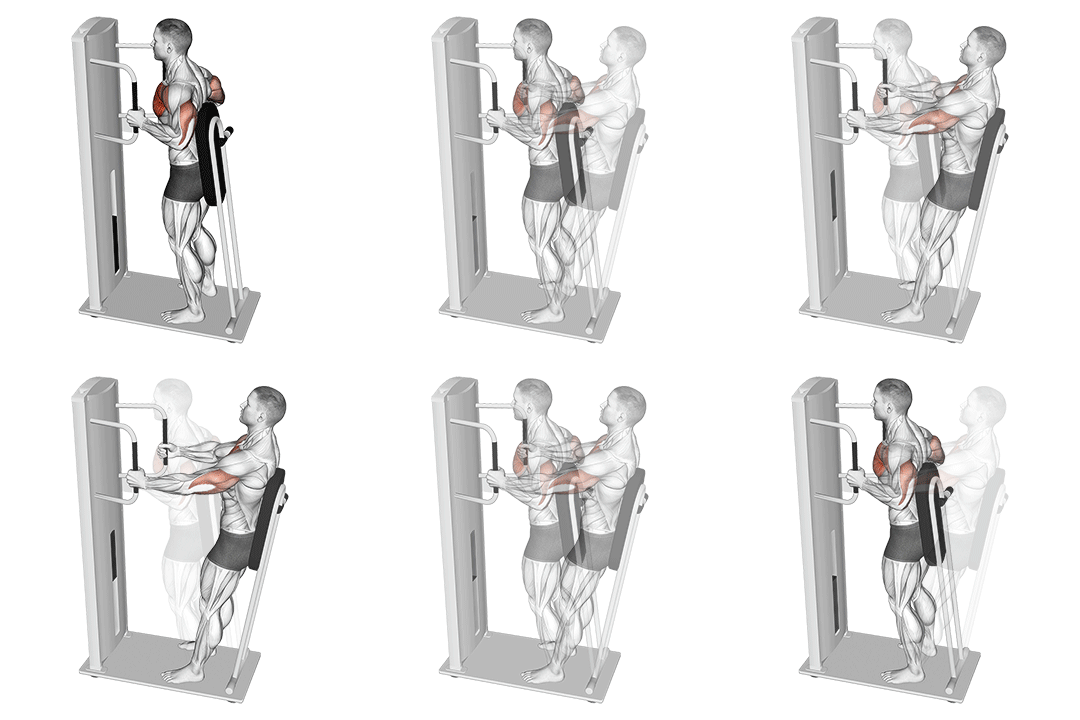
5. Lever Standing Chest Press
82% match- Pectorals
- Lever
- Intermediate
- Compound
Pick this when you want to work the pectorals with less balance to manage.
How to perform this exercise
- Adjust the seat height and position yourself on the machine with your feet flat on the ground.
- Grasp the handles with an overhand grip and position your hands at chest level.
- Push the handles forward until your arms are fully extended, keeping your elbows slightly bent.
- Pause for a moment, then slowly bring the handles back towards your chest, maintaining control throughout the movement.
- Repeat for the desired number of repetitions.
Sets and reps: 3 or 4 sets of 6 to 10 reps.
Why this matches
- Primary muscle: pectorals, the same as the Forward Drag With Press
- Equipment: a machine, not free weights
- Body position: standing, the same as the Forward Drag With Press
- Balance: easier to stay steady on than the Forward Drag With Press
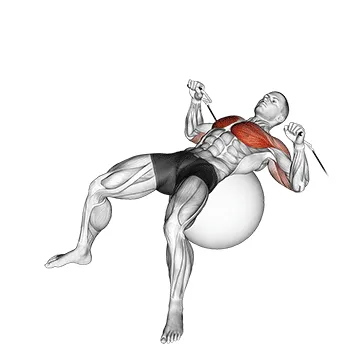
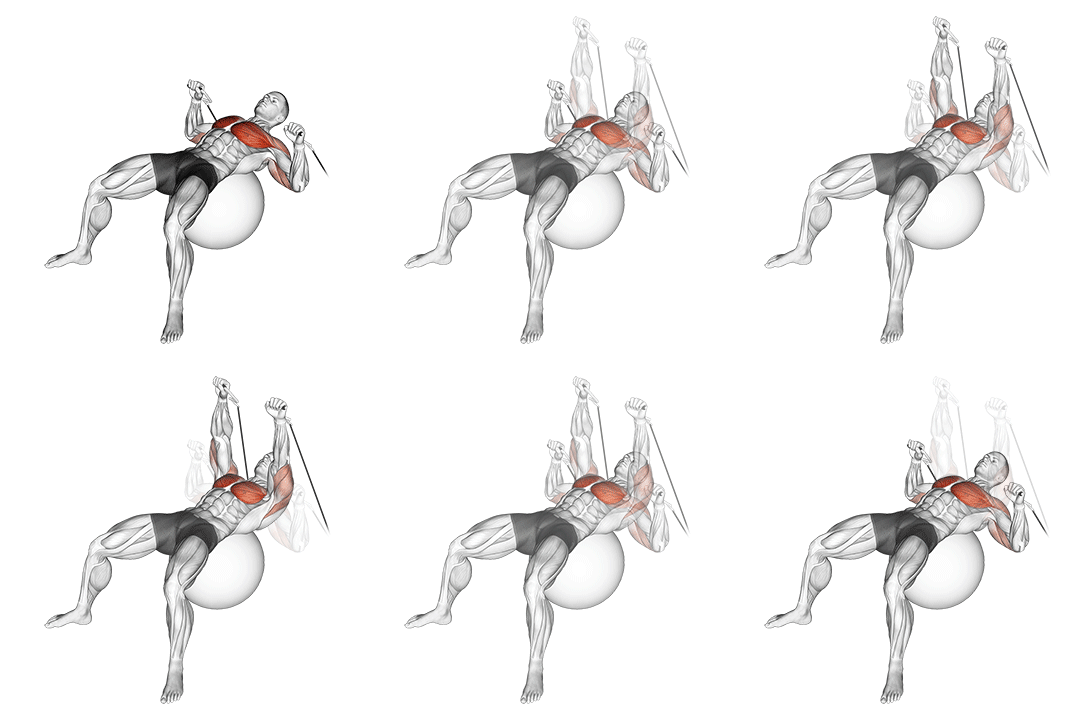
6. Cable Press On Exercise Ball
81% match- Pectorals
- Stability-ball
- Intermediate
- Compound
A straight swap when you want to keep working the pectorals.
How to perform this exercise
- Sit on an exercise ball with your feet flat on the ground and your knees at a 90-degree angle.
- Hold the cable handles at chest height with your palms facing down and your elbows bent.
- Engage your core and press the cable handles forward until your arms are fully extended.
- Pause for a moment, then slowly release the tension and bring the cable handles back to the starting position.
- Repeat for the desired number of repetitions.
Sets and reps: 3 or 4 sets of 6 to 10 reps.
Why this matches
- Primary muscle: pectorals, the same as the Forward Drag With Press
- Equipment: bodyweight only, not free weights
- Body position: lying on your back, not standing
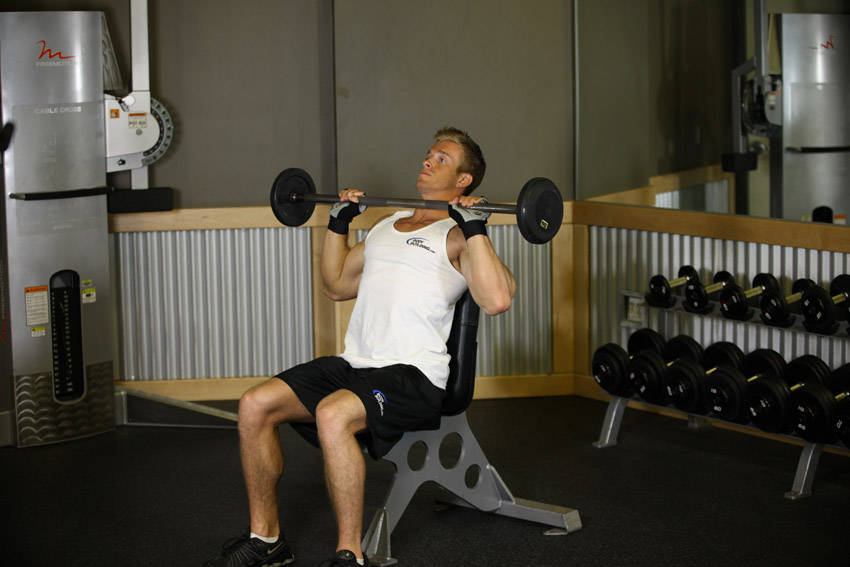
7. Bradford/rocky Presses
80% match- Delts
- Barbell
- Advanced
- Compound
How to perform this exercise
- Sit on a Military Press Bench with a bar at shoulder level with a pronated grip (palms facing forward). Tip: Your grip should be wider than shoulder width and it should create a 90-degree angle between the forearm and the upper arm as the barbell goes down. This is your starting position.
- Once you pick up the barbell with the correct grip, lift the bar up over your head by locking your arms.
- Now lower the bar down to the back of the head slowly as you inhale.
- Lift the bar back up to the starting position as you exhale.
- Lower the bar down to the starting position slowly as you inhale. This is one repetition.
- Alternate in this manner until you complete the recommended amount of repetitions.
Sets and reps: 3 to 5 sets of 5 to 8 reps.
Why this matches
- Primary muscle: delts, not pectorals
- Equipment: free weights, the same as the Forward Drag With Press
- Body position: standing, the same as the Forward Drag With Press
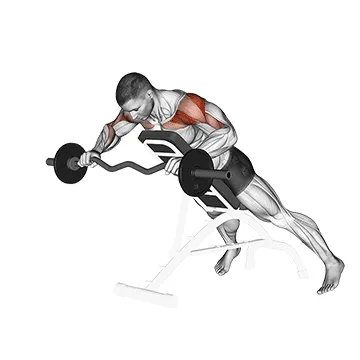
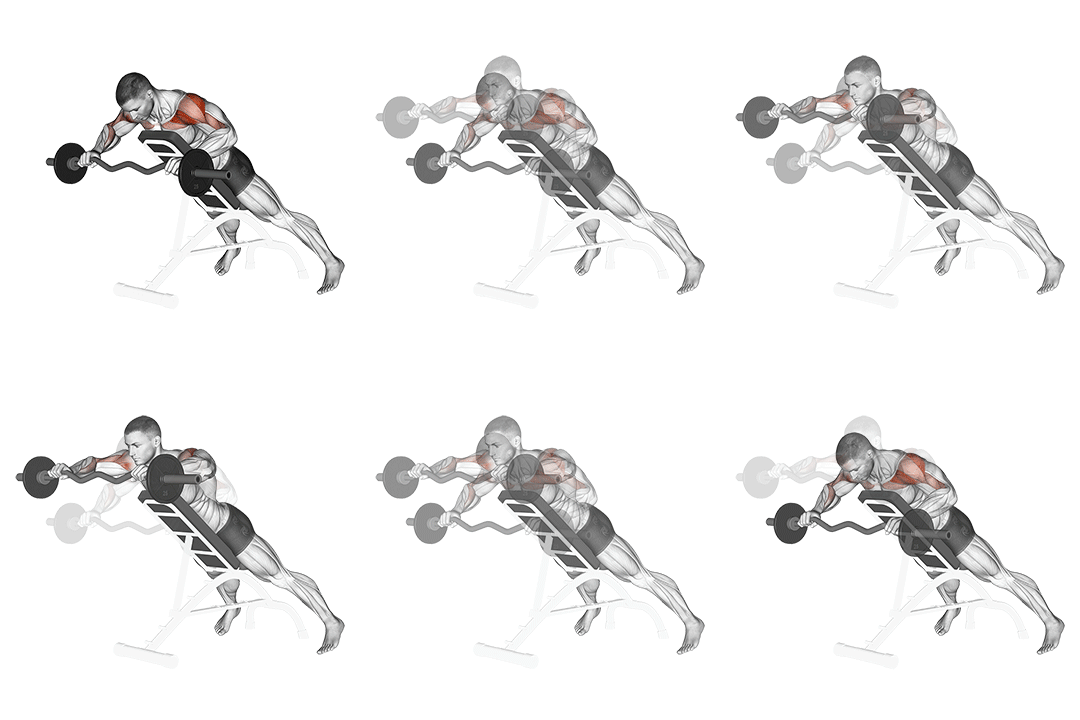
8. EZ Barbell Anti Gravity Press
80% match- Delts
- Ez-barbell
- Advanced
- Compound
How to perform this exercise
- Start by standing with your feet shoulder-width apart and holding the ez barbell with an overhand grip.
- Raise the barbell to shoulder height, keeping your elbows slightly bent and your palms facing forward.
- Press the barbell overhead, extending your arms fully.
- Lower the barbell back to shoulder height and repeat for the desired number of repetitions.
Sets and reps: 3 to 5 sets of 5 to 8 reps.
Why this matches
- Primary muscle: delts, not pectorals
- Equipment: free weights, the same as the Forward Drag With Press
- Body position: standing, the same as the Forward Drag With Press
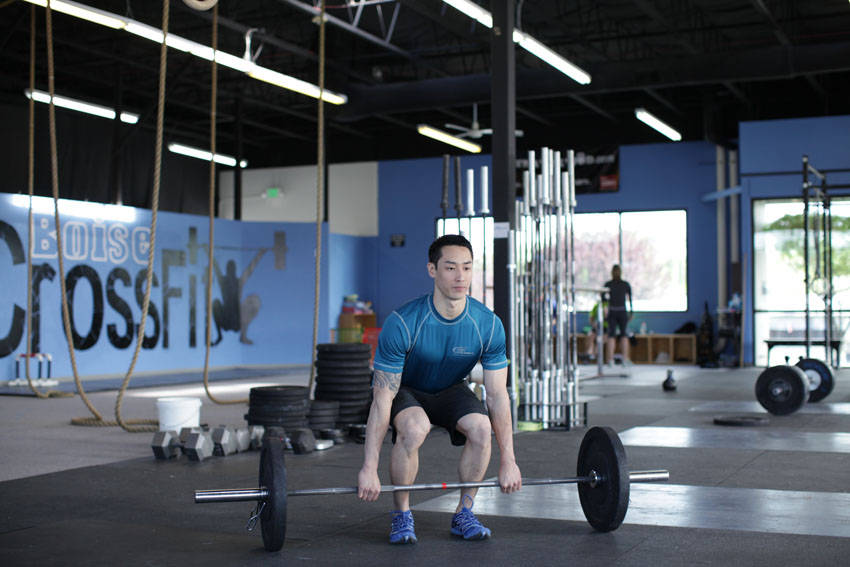
9. Clean And Press
80% match- Delts
- Barbell
- Advanced
- Compound
How to perform this exercise
- Assume a shoulder-width stance, with knees inside the arms. Now while keeping the back flat, bend at the knees and hips so that you can grab the bar with the arms fully extended and a pronated grip that is slightly wider than shoulder width. Point the elbows out to sides. The bar should be close to the shins. Position the shoulders over or slightly ahead of the bar. Establish a flat back posture. This will be your starting position.
- Begin to pull the bar by extending the knees. Move your hips forward and raise the shoulders at the same rate while keeping the angle of the back constant; continue to lift the bar straight up while keeping it close to your body.
- As the bar passes the knee, extend at the ankles, knees, and hips forcefully, similar to a jumping motion. As you do so, continue to guide the bar with your hands, shrugging your shoulders and using the momentum from your movement to pull the bar as high as possible. The bar should travel close to your body, and you should keep your elbows out.
- At maximum elevation, your feet should clear the floor and you should start to pull yourself under the bar. The mechanics of this could change slightly, depending on the weight used. You should descend into a squatting position as you pull yourself under the bar.
- As the bar hits terminal height, rotate your elbows around and under the bar. Rack the bar across the front of the shoulders while keeping the torso erect and flexing the hips and knees to absorb the weight of the bar.
- Stand to full height, holding the bar in the clean position.
- Without moving your feet, press the bar overhead as you exhale. Lower the bar under control .
Sets and reps: 3 to 5 sets of 5 to 8 reps.
Why this matches
- Primary muscle: delts, not pectorals
- Equipment: free weights, the same as the Forward Drag With Press
- Body position: standing, the same as the Forward Drag With Press
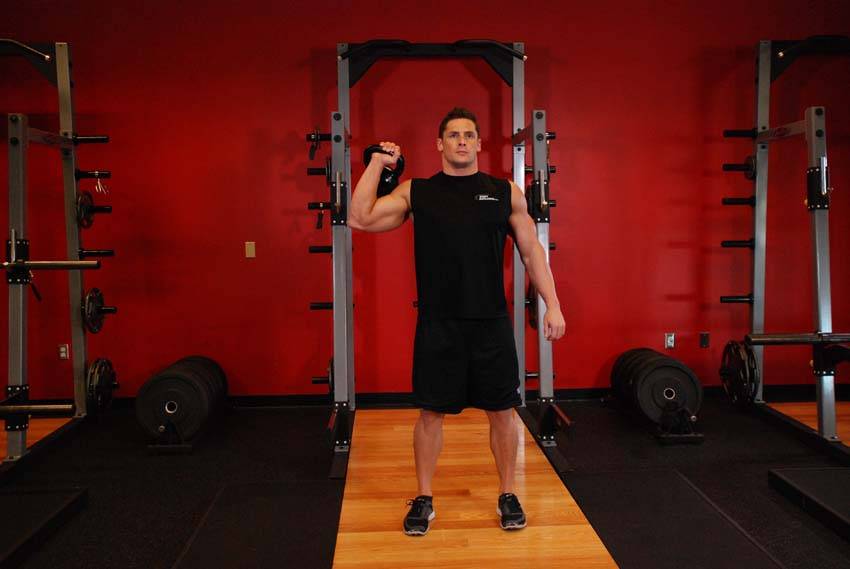
10. One-arm Kettlebell Para Press
77% match- Delts
- Kettlebell
- Intermediate
- Compound
How to perform this exercise
- Clean a kettlebell to your shoulder. Clean the kettlebell to your shoulder by extending through the legs and hips as you pull the kettlebell towards your shoulder. Rotate your wrist as you do so, so that the palm faces forward. This will be your starting position.
- Hold the kettlebell with the elbow out to the side, and press it up and out until it is locked out overhead.
- Lower the kettlebell back to your shoulder under control and repeat. Make sure to contract your lat, butt, and stomach forcefully for added stability and strength.
Sets and reps: 3 or 4 sets of 6 to 10 reps on each side.
Why this matches
- Primary muscle: delts, not pectorals
- Equipment: free weights, the same as the Forward Drag With Press
- Body position: standing, the same as the Forward Drag With Press
Why You Might Need a Forward Drag With Press Alternative
You may need substitutes because of shoulder pain, limited equipment, or a desire for unilateral work. The Forward Drag With Press stresses horizontal adduction and requires scapular control; if you lack a landmine or feel anterior shoulder impingement, swap to a safer vector. For rehab, reduce range of motion and keep the scapula retracted; for hypertrophy, pause at midline and squeeze the pecs for one second to increase time under tension. Substitutes let you preserve pectoralis major activation while altering load, stability demand, or pressing angle to protect joints and achieve your training goal.
Forward Drag With Press FAQ
What muscles does Forward Drag With Press work?
The exercise primarily targets the pectoralis major (sternal and clavicular heads) through horizontal adduction. It also recruits the anterior deltoid and triceps for extension, plus serratus anterior and scapular stabilizers to control the drag; cue a sternum-to-chin path and squeeze the pecs at midline.
Find Alternatives for Any Exercise
Search the exercise database and filter the ranked substitutes by the equipment you own.
Similarity scores compare exercise metadata such as movement pattern, muscles, equipment and body position. They are not a safety rating or a check that you own the equipment. Learn about our methodology