

10 Best Dumbbell Bench Squat Alternatives for Glute Strength
The Dumbbell Bench Squat is done standing with dumbbells. Ranked closest by our scoring: the Barbell Narrow Stance Squat, the Barbell Full Squat and the Barbell Hack Squat. Two harder versions, the Dumbbell Squat and the Dumbbell Plyo Squat, are listed below as progressions rather than swaps.
Updated Ranked by our 12-factor similarity model How it works
Original Exercise: Dumbbell Bench Squat
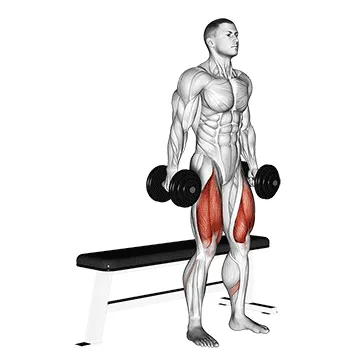
- Primary muscle
- Glutes
- Equipment
- Dumbbell
- Difficulty
- Beginner
- Type
- Compound
Secondary muscles: Quadriceps, Hamstrings, Calves
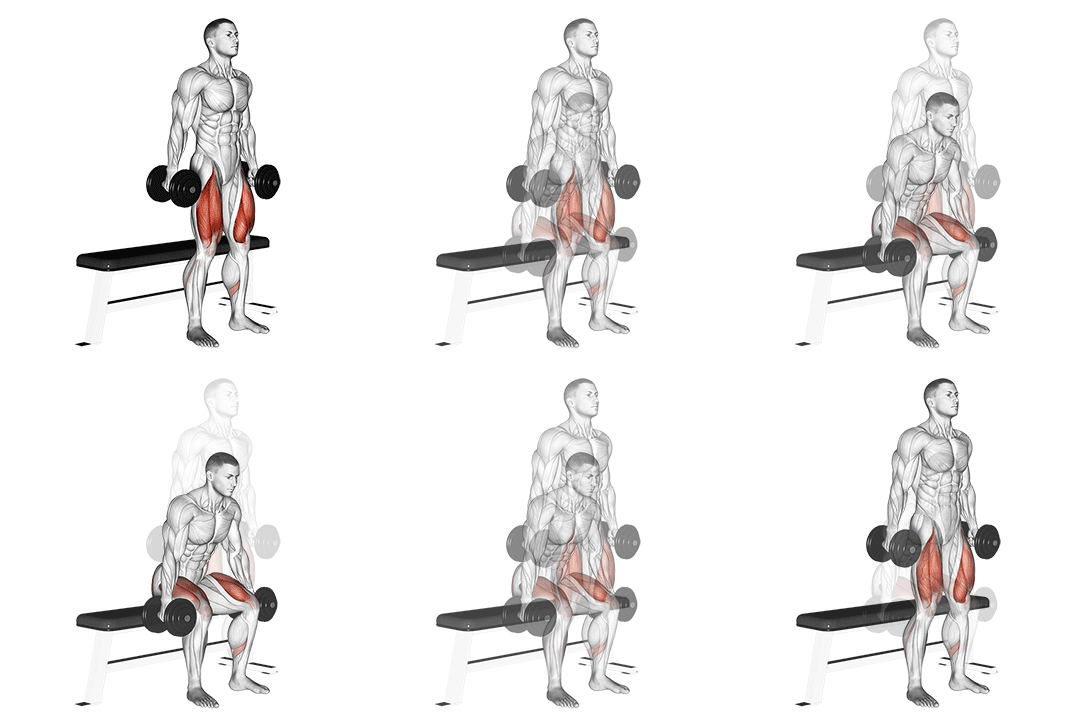
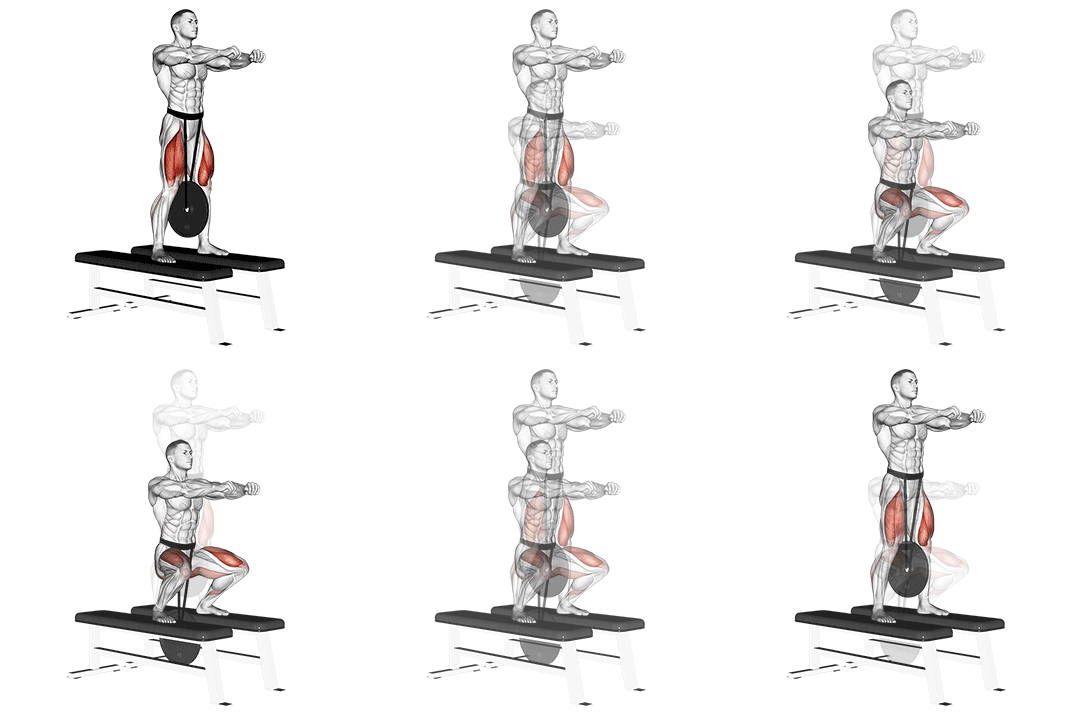
How to perform Dumbbell Bench Squat
- Place a dumbbell on the ground in front of a bench.
- Stand facing away from the bench with your feet shoulder-width apart.
- Bend at the knees and hips to lower yourself down towards the bench, keeping your chest up and back straight.
- Once your glutes touch the bench, push through your heels to stand back up to the starting position.
- Repeat for the desired number of repetitions.
Ranked Dumbbell Bench Squat Alternatives
10 substitutes, ranked by how closely each one matches the Dumbbell Bench Squat on movement pattern, muscles worked, equipment and body position. The higher the score, the less you change. Open "How to perform this exercise" on a card for the steps; every card title links to that exercise's own alternatives page. Harder versions are tagged as progressions and kept out of the top spot even when they score higher.
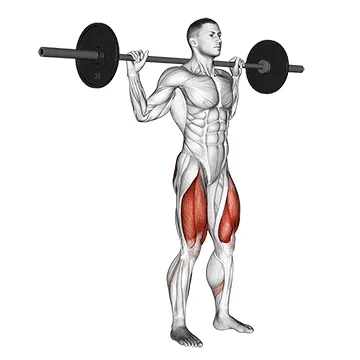
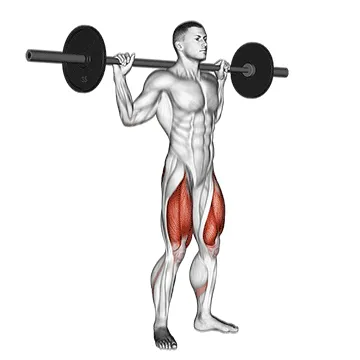
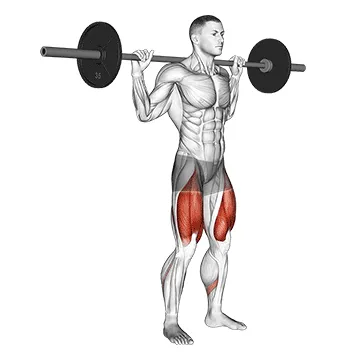
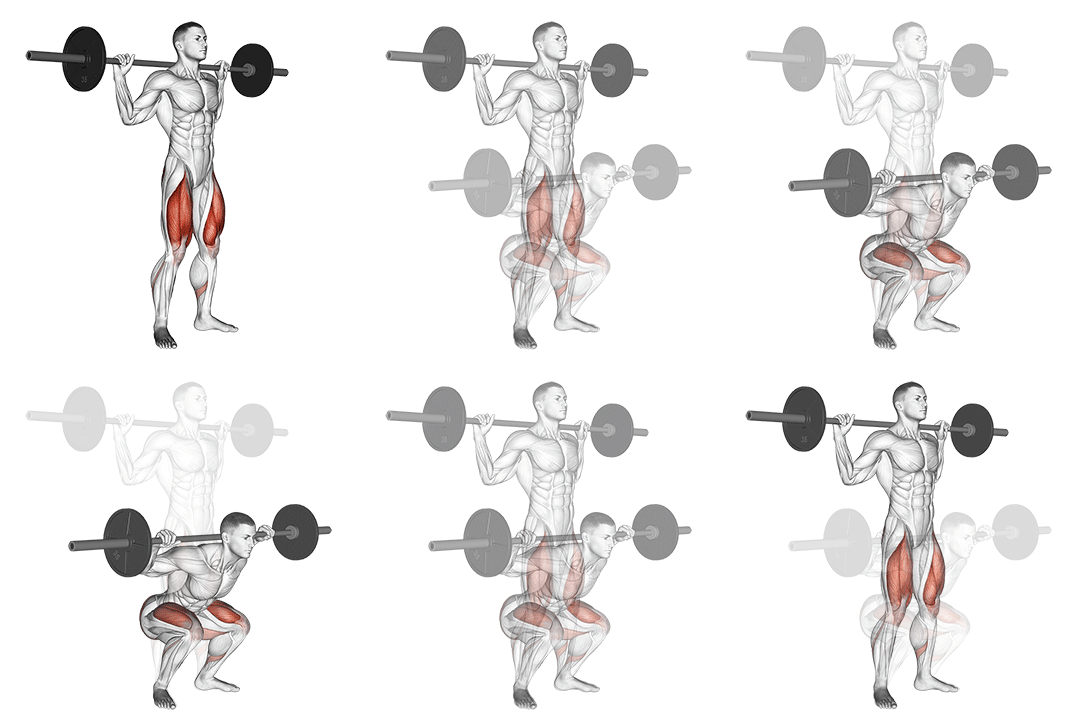
Best match 1. Barbell Narrow Stance Squat
95% match- Glutes
- Barbell
- Intermediate
- Compound
A good swap when you have a barbell to work with, and it still works the glutes.
How to perform this exercise
- Stand with your feet shoulder-width apart and toes pointing slightly outward.
- Hold the barbell across your upper back, resting it on your traps or rear delts.
- Engage your core and keep your chest up as you slowly lower your body by bending your knees and pushing your hips back.
- Continue lowering until your thighs are parallel to the ground or slightly below.
- Pause for a moment, then push through your heels to return to the starting position.
- Repeat for the desired number of repetitions.
Sets and reps: 3 or 4 sets of 6 to 10 reps.
Why this matches
- Movement: two-legged squat, the same as the Dumbbell Bench Squat
- Primary muscle: glutes, the same as the Dumbbell Bench Squat
- Equipment: free weights, the same as the Dumbbell Bench Squat
- Body position: standing, the same as the Dumbbell Bench Squat
Progression
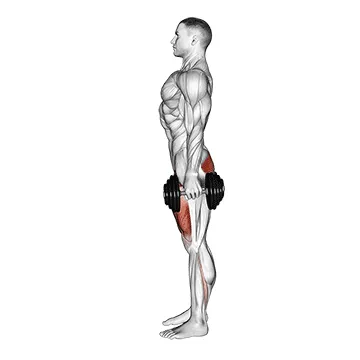
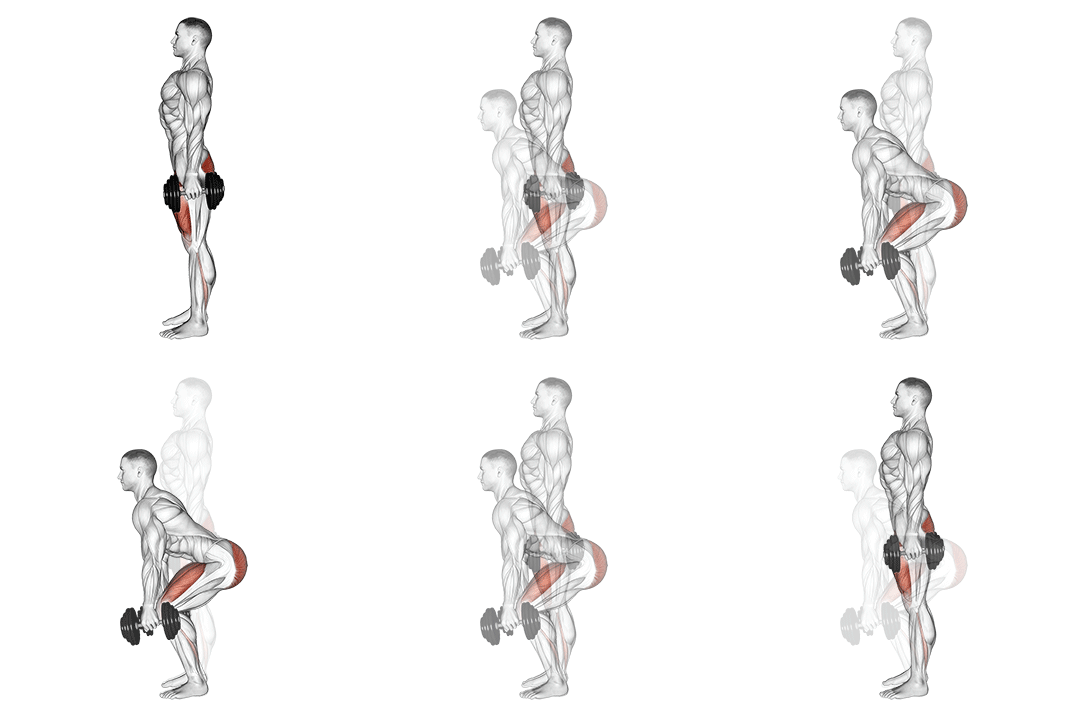
2. Dumbbell Squat
99% match- Glutes
- Dumbbell
- Intermediate
- Compound
Pick this when you want a harder version that still works the glutes.
How to perform this exercise
- Stand with your feet shoulder-width apart, holding a dumbbell in each hand at your sides.
- Keeping your chest up and core engaged, lower your body down by bending at the knees and hips, as if sitting back into a chair.
- Continue lowering until your thighs are parallel to the ground, or as low as you can comfortably go.
- Pause for a moment at the bottom, then push through your heels to return to the starting position.
- Repeat for the desired number of repetitions.
Sets and reps: 3 or 4 sets of 6 to 10 reps.
Why this matches
- Movement: two-legged squat, the same as the Dumbbell Bench Squat
- Primary muscle: glutes, the same as the Dumbbell Bench Squat
- Equipment: free weights, the same as the Dumbbell Bench Squat
- Body position: standing, the same as the Dumbbell Bench Squat
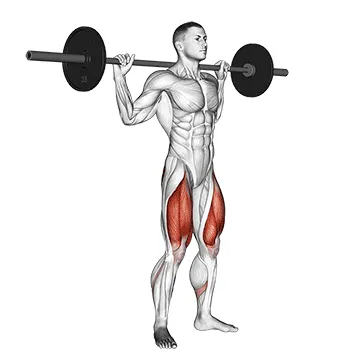
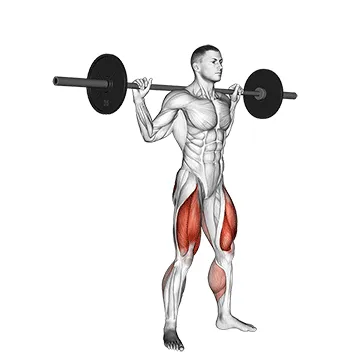
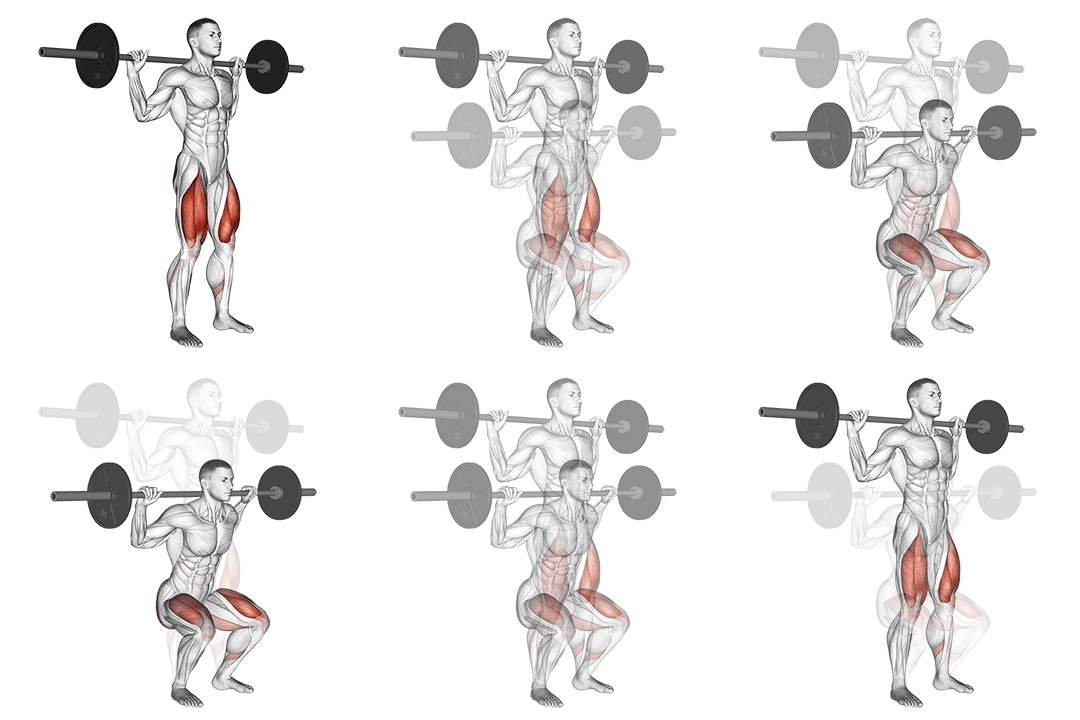
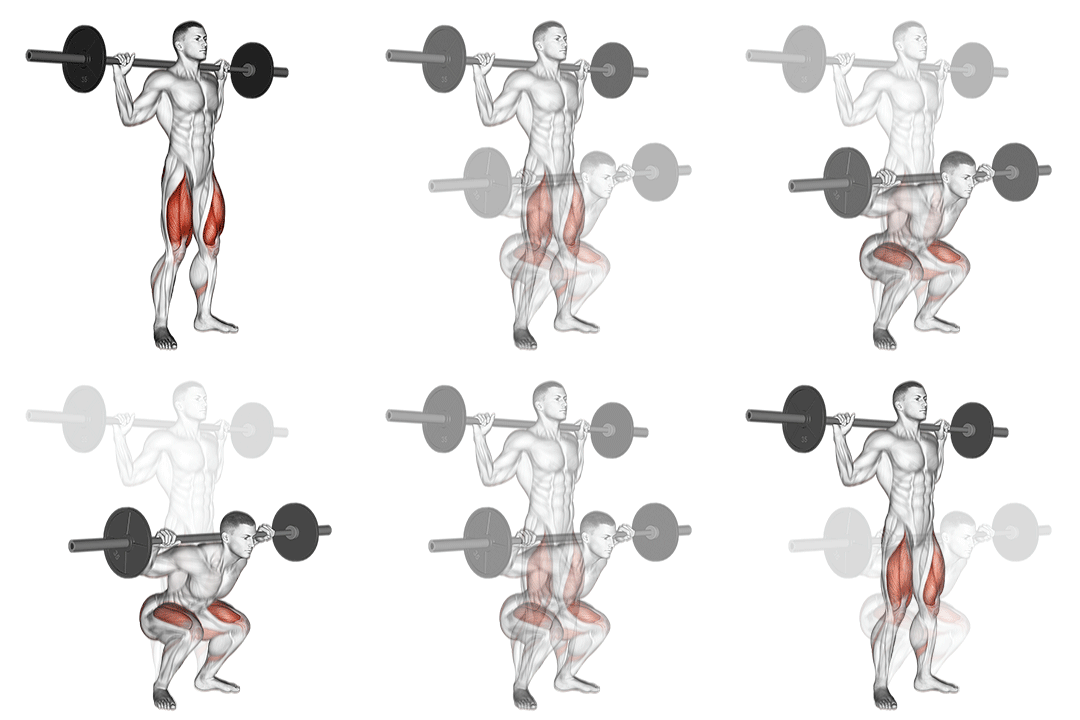
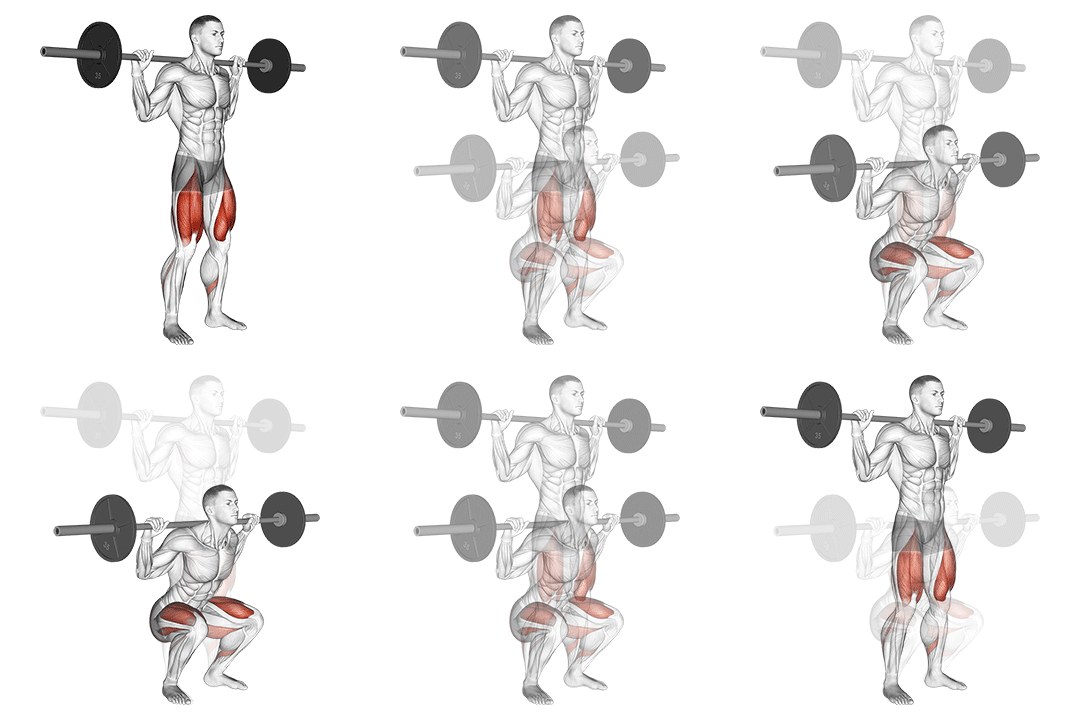
3. Barbell Full Squat
95% match- Glutes
- Barbell
- Intermediate
- Compound
How to perform this exercise
- Stand with your feet shoulder-width apart, toes slightly turned out.
- Hold the barbell across your upper back, resting it on your traps or rear delts.
- Engage your core and keep your chest up as you begin to lower your body down.
- Bend at the knees and hips, pushing your hips back and down as if sitting into a chair.
- Lower yourself until your thighs are parallel to the ground or slightly below.
- Keep your knees in line with your toes and your weight in your heels.
- Drive through your heels to stand back up, extending your hips and knees.
- Repeat for the desired number of repetitions.
Sets and reps: 3 to 5 sets of 5 to 8 reps.
Why this matches
- Movement: two-legged squat, the same as the Dumbbell Bench Squat
- Primary muscle: glutes, the same as the Dumbbell Bench Squat
- Equipment: free weights, the same as the Dumbbell Bench Squat
- Body position: standing, the same as the Dumbbell Bench Squat
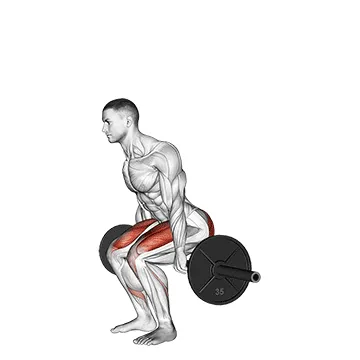
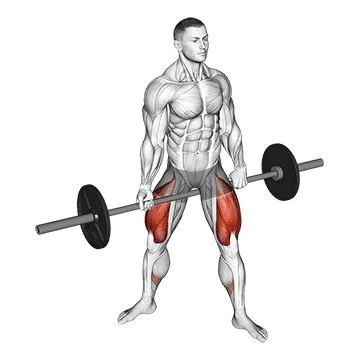
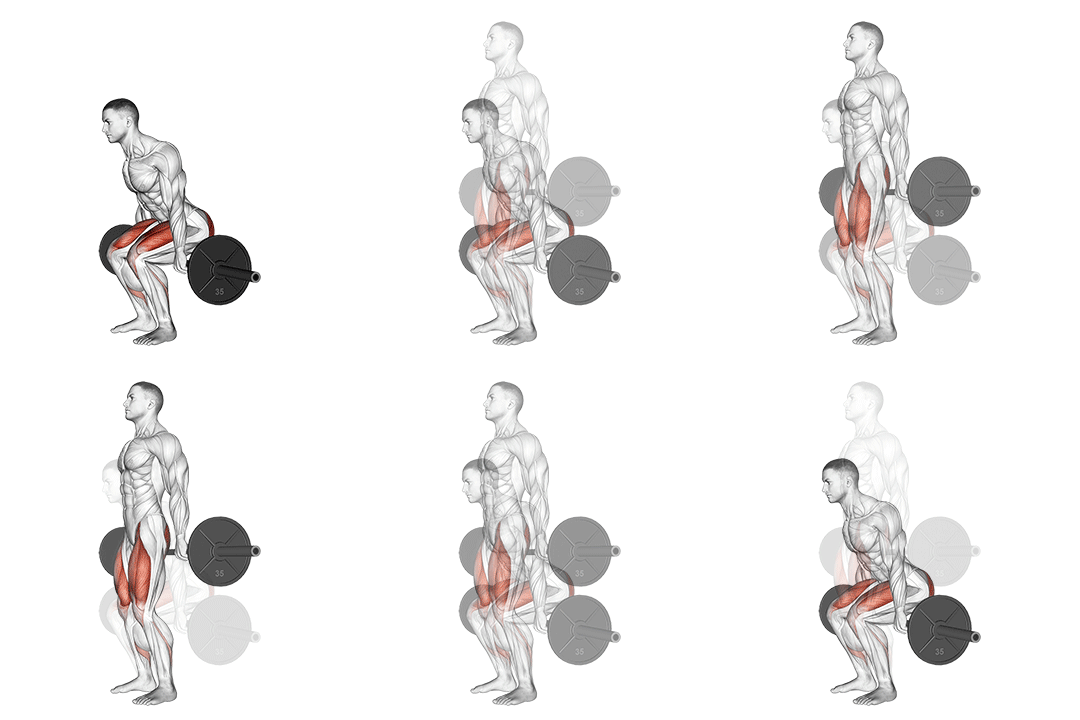
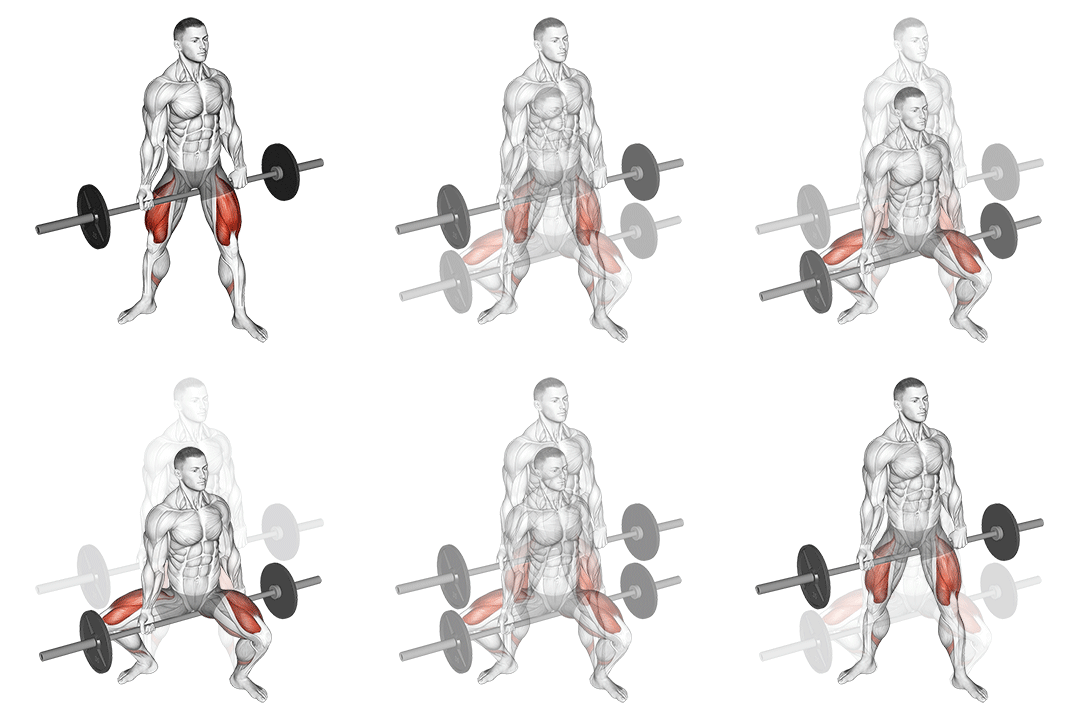
4. Barbell Hack Squat
95% match- Glutes
- Barbell
- Intermediate
- Compound
How to perform this exercise
- Start by standing with your feet shoulder-width apart and your toes slightly turned out.
- Hold the barbell behind your legs, resting it on your upper thighs.
- Lower your body by bending at the knees and hips, keeping your back straight and your chest up.
- Continue lowering until your thighs are parallel to the ground, or as low as you can comfortably go.
- Pause for a moment, then push through your heels to return to the starting position.
- Repeat for the desired number of repetitions.
Sets and reps: 3 to 5 sets of 5 to 8 reps.
Why this matches
- Movement: two-legged squat, the same as the Dumbbell Bench Squat
- Primary muscle: glutes, the same as the Dumbbell Bench Squat
- Equipment: free weights, the same as the Dumbbell Bench Squat
- Body position: standing, the same as the Dumbbell Bench Squat
Progression
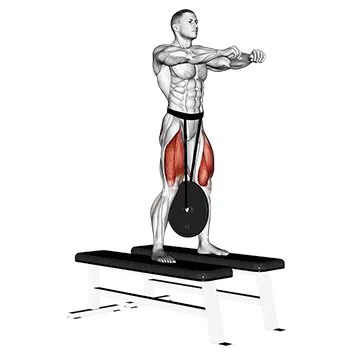
5. Dumbbell Plyo Squat
93% match- Glutes
- Dumbbell
- Advanced
- Compound
How to perform this exercise
- Stand with your feet shoulder-width apart, holding a dumbbell in each hand at your sides.
- Lower your body into a squat position by bending your knees and pushing your hips back.
- As you reach the bottom of the squat, explode upward, jumping off the ground.
- While in the air, quickly switch the position of your feet, landing with your opposite foot forward.
- Immediately lower your body back into a squat position and repeat the jump, switching your feet again.
- Continue alternating the position of your feet with each jump for the desired number of repetitions.
Sets and reps: 3 to 5 sets of 5 to 8 reps.
Why this matches
- Movement: two-legged squat, the same as the Dumbbell Bench Squat
- Primary muscle: glutes, the same as the Dumbbell Bench Squat
- Equipment: free weights, the same as the Dumbbell Bench Squat
- Body position: standing, the same as the Dumbbell Bench Squat
- Balance: harder to stay steady on than the Dumbbell Bench Squat
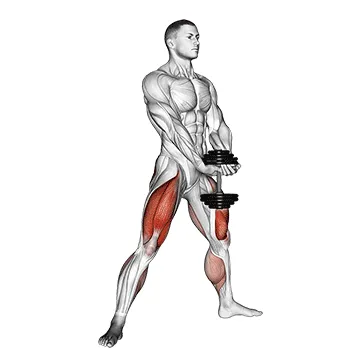
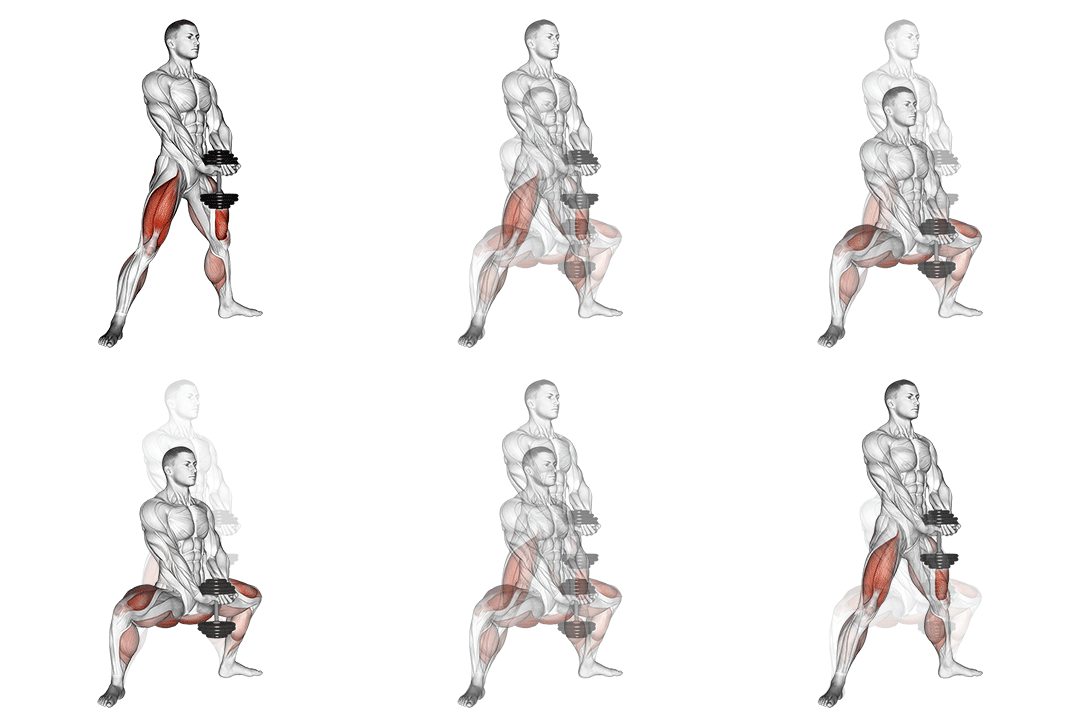
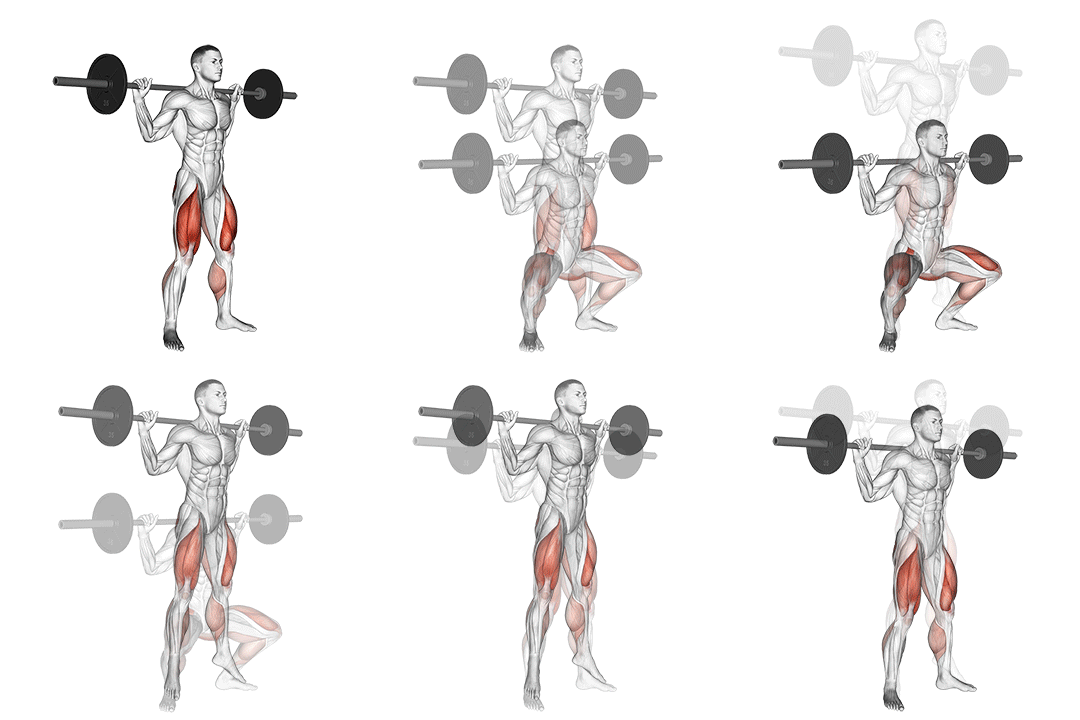
6. Barbell Jefferson Squat
93% match- Glutes
- Barbell
- Advanced
- Compound
How to perform this exercise
- Stand with your feet shoulder-width apart and toes slightly turned out.
- Hold the barbell with an overhand grip, resting it on the front of your body, just below your waist.
- Step your left foot forward and your right foot back, keeping your feet shoulder-width apart.
- Bend your knees and lower your body down into a squat position, keeping your back straight and chest up.
- Push through your heels to stand back up to the starting position.
- Repeat the movement, alternating your forward and back foot with each repetition.
Sets and reps: 3 to 5 sets of 5 to 8 reps.
Why this matches
- Movement: two-legged squat, the same as the Dumbbell Bench Squat
- Primary muscle: glutes, the same as the Dumbbell Bench Squat
- Equipment: free weights, the same as the Dumbbell Bench Squat
- Body position: standing, the same as the Dumbbell Bench Squat
- Balance: harder to stay steady on than the Dumbbell Bench Squat
7. Barbell Speed Squat
91% match- Glutes
- Barbell
- Intermediate
- Compound
How to perform this exercise
- Stand with your feet shoulder-width apart, toes slightly turned out.
- Hold the barbell across your upper back, resting it on your traps or rear delts.
- Engage your core and keep your chest up as you lower your hips back and down, as if sitting into a chair.
- Lower until your thighs are parallel to the ground, or as low as you can comfortably go.
- Drive through your heels to stand back up, squeezing your glutes at the top.
- Repeat for the desired number of repetitions.
Sets and reps: 3 to 5 sets of 5 to 8 reps.
Why this matches
- Movement: two-legged squat, the same as the Dumbbell Bench Squat
- Primary muscle: glutes, the same as the Dumbbell Bench Squat
- Equipment: free weights, the same as the Dumbbell Bench Squat
- Body position: standing, the same as the Dumbbell Bench Squat
8. Weighted Squat
90% match- Glutes
- Weighted
- Intermediate
- Compound
How to perform this exercise
- Stand with your feet shoulder-width apart, toes pointing slightly outward.
- Hold a weight in front of your chest or on your shoulders.
- Engage your core and keep your chest up as you lower your hips down and back, as if sitting into a chair.
- Lower until your thighs are parallel to the ground, or as low as you can comfortably go.
- Push through your heels to stand back up, squeezing your glutes at the top.
- Repeat for the desired number of repetitions.
Sets and reps: 3 or 4 sets of 6 to 10 reps.
Why this matches
- Movement: two-legged squat, the same as the Dumbbell Bench Squat
- Primary muscle: glutes, the same as the Dumbbell Bench Squat
- Equipment: free weights, the same as the Dumbbell Bench Squat
- Body position: standing, the same as the Dumbbell Bench Squat
9. Barbell High Bar Squat
90% match- Glutes
- Barbell
- Intermediate
- Compound
How to perform this exercise
- Stand with your feet shoulder-width apart, toes slightly turned out.
- Place the barbell on your upper back, resting it on your traps.
- Engage your core and keep your chest up as you begin to squat down, pushing your hips back and bending your knees.
- Lower yourself until your thighs are parallel to the ground, or as low as you can comfortably go.
- Drive through your heels to stand back up, extending your hips and knees.
- Repeat for the desired number of repetitions.
Sets and reps: 3 or 4 sets of 6 to 10 reps.
Why this matches
- Movement: two-legged squat, the same as the Dumbbell Bench Squat
- Primary muscle: glutes, the same as the Dumbbell Bench Squat
- Equipment: free weights, the same as the Dumbbell Bench Squat
- Body position: standing, the same as the Dumbbell Bench Squat
10. Barbell Jump Squat
89% match- Glutes
- Barbell
- Advanced
- Compound
How to perform this exercise
- Start by standing with your feet shoulder-width apart, holding a barbell across your upper back.
- Lower your body into a squat position by bending your knees and pushing your hips back.
- Once you reach the bottom of the squat, explode upwards by jumping off the ground.
- As you jump, extend your hips, knees, and ankles, pushing through your toes.
- Land softly back into the squat position and immediately repeat the movement for the desired number of repetitions.
Sets and reps: 3 to 5 sets of 5 to 8 reps.
Why this matches
- Movement: two-legged squat, the same as the Dumbbell Bench Squat
- Primary muscle: glutes, the same as the Dumbbell Bench Squat
- Equipment: free weights, the same as the Dumbbell Bench Squat
- Body position: standing, the same as the Dumbbell Bench Squat
- Balance: harder to stay steady on than the Dumbbell Bench Squat
Why You Might Need a Dumbbell Bench Squat Alternative
You might substitute the Dumbbell Bench Squat for several practical reasons: no bench available, knee or lower-back pain with the sit-and-stand pattern, limited load progression with dumbbells, or a need to correct unilateral imbalances. Some alternatives shift the load from knee-dominant to hip-dominant mechanics to increase glute activation (for example, hip thrusts or RDLs). Other swaps improve single-leg stability and motor control (Bulgarian split squat or step-ups). Technique cue: if pain is present, sit back onto your heels with a tall chest and soft knee; that decreases shear at the patellofemoral joint while preserving glute drive.
Dumbbell Bench Squat FAQ
What muscles does Dumbbell Bench Squat work?
The Dumbbell Bench Squat is a compound lift that targets the glutes, quadriceps, and hamstrings, with secondary work from adductors and core stabilizers. Cue: drive through the heels and extend the hips to stand, which emphasizes glute activation through hip extension.
What is the best bodyweight alternative to Dumbbell Bench Squat?
A Bulgarian split squat is an excellent bodyweight alternative because it loads the glutes unilaterally and challenges hip extension and knee control. Cue: keep your torso tall, push through the front heel, and allow the back knee to drop vertically to maximize glute engagement.
Find Alternatives for Any Exercise
Search the exercise database and filter the ranked substitutes by the equipment you own.
Similarity scores compare exercise metadata such as movement pattern, muscles, equipment and body position. They are not a safety rating or a check that you own the equipment. Learn about our methodology