
10 Best Dumbbell Upright Row Alternatives
The Dumbbell Upright Row is done standing with dumbbells. Ranked closest by our scoring: Handstand Push-ups and the Left Hook. Boxing.
Updated Ranked by our 12-factor similarity model How it works
Original Exercise: Dumbbell Upright Row
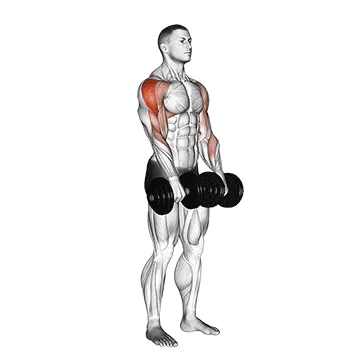
- Primary muscle
- Delts
- Equipment
- Dumbbell
- Difficulty
- Intermediate
- Type
- Compound
Secondary muscles: Traps, Biceps
How to perform Dumbbell Upright Row
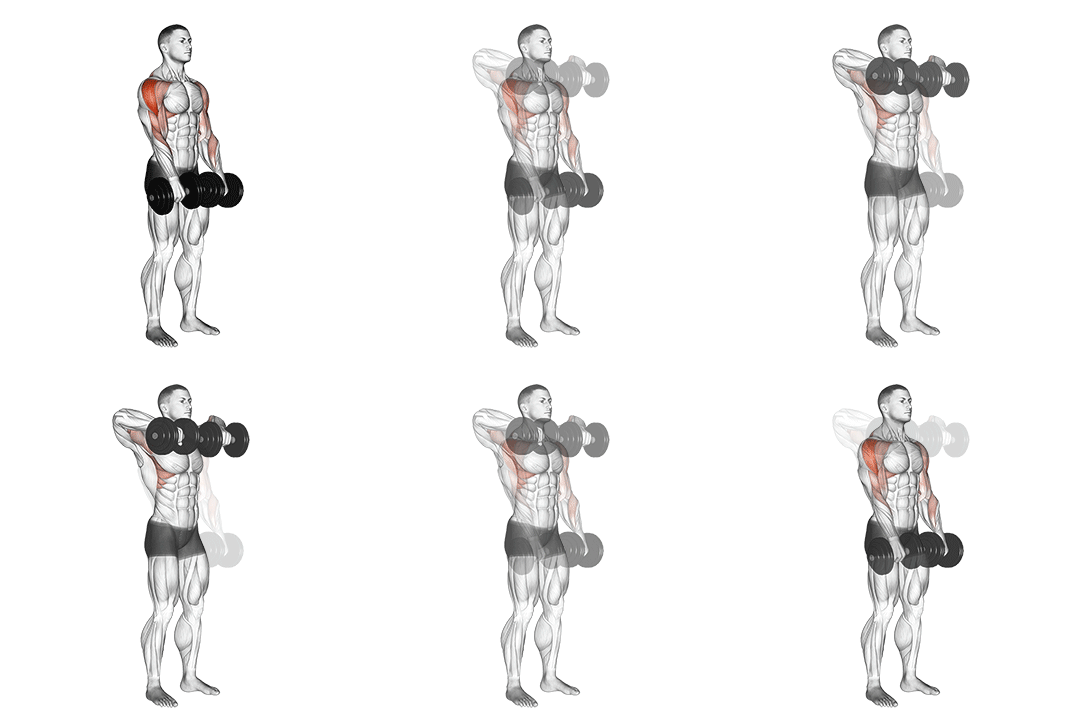
- Stand with your feet shoulder-width apart, holding a dumbbell in each hand with an overhand grip.
- Let the dumbbells hang in front of your thighs, with your arms fully extended.
- Keeping your back straight and your core engaged, exhale and lift the dumbbells straight up towards your chin, leading with your elbows.
- Pause for a moment at the top, then inhale and slowly lower the dumbbells back down to the starting position.
- Repeat for the desired number of repetitions.
Ranked Dumbbell Upright Row Alternatives
10 substitutes, ranked by how closely each one matches the Dumbbell Upright Row on movement pattern, muscles worked, equipment and body position. The higher the score, the less you change. Open "How to perform this exercise" on a card for the steps; every card title links to that exercise's own alternatives page.
Best match 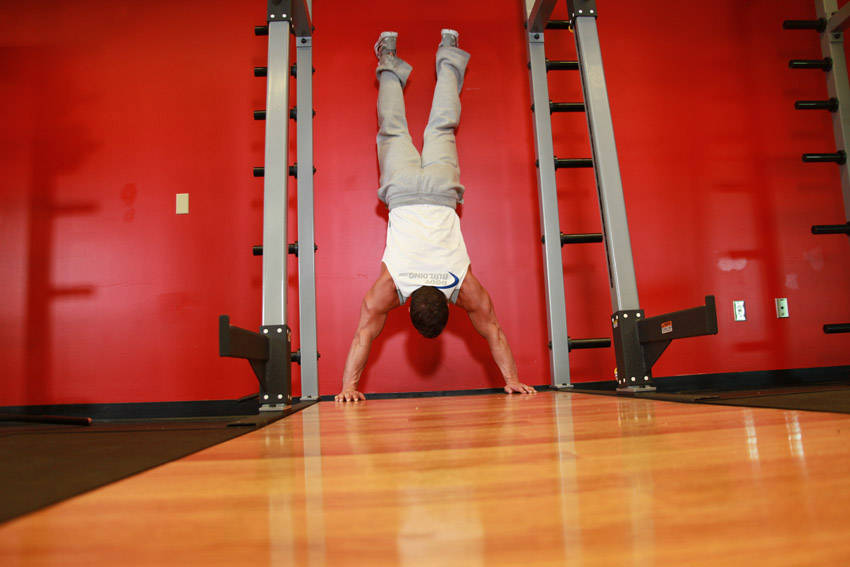
1. Handstand Push-ups
56% match- Delts
- Bodyweight
- Advanced
- Compound
Use this when you have nothing to train with, because it works the delts with bodyweight alone.
How to perform this exercise
- With your back to the wall bend at the waist and place both hands on the floor at shoulder width.
- Kick yourself up against the wall with your arms straight. Your body should be upside down with the arms and legs fully extended. Keep your whole body as straight as possible. Tip: If doing this for the first time, have a spotter help you. Also, make sure that you keep facing the wall with your head, rather than looking down.
- Slowly lower yourself to the ground as you inhale until your head almost touches the floor. Tip: It is of utmost importance that you come down slow in order to avoid head injury.
- Push yourself back up slowly as you exhale until your elbows are nearly locked.
- Repeat for the recommended amount of repetitions.
Sets and reps: 3 or 4 sets of 6 to 10 reps.
Why this matches
- Primary muscle: delts, the same as the Dumbbell Upright Row
- Equipment: bodyweight only, not free weights
- Body position: inverted, not standing
- Balance: harder to stay steady on than the Dumbbell Upright Row
2. Modified Hindu Push-up
54% match- Pectorals
- Bodyweight
- Intermediate
- Compound
A looser match: it works the pectorals rather than the delts.
How to perform this exercise
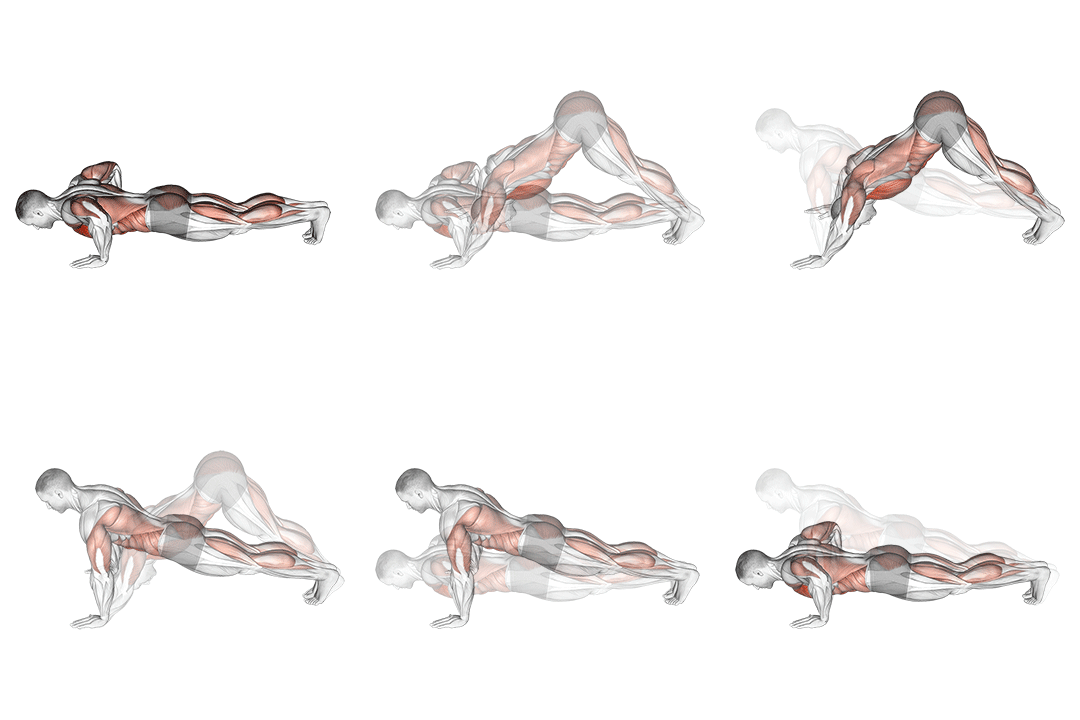
- Start in a push-up position with your hands slightly wider than shoulder-width apart and your feet hip-width apart.
- Lower your body towards the ground, bending your elbows and keeping your core engaged.
- As you lower your body, shift your weight back and lift your hips up towards the ceiling, creating an inverted V shape with your body.
- Continue to lower your body until your chest is just above the ground, then reverse the movement, pushing your hips back down and extending your arms to return to the starting position.
- Repeat for the desired number of repetitions.
Sets and reps: 3 or 4 sets of 6 to 10 reps.
Why this matches
- Primary muscle: pectorals, not delts
- Equipment: bodyweight only, not free weights
- Body position: standing, the same as the Dumbbell Upright Row
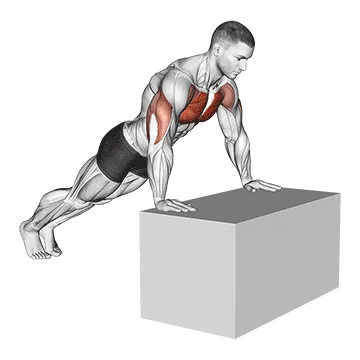
3. Incline Push-up (On Box)
53% match- Pectorals
- Bodyweight
- Beginner
- Compound
How to perform this exercise
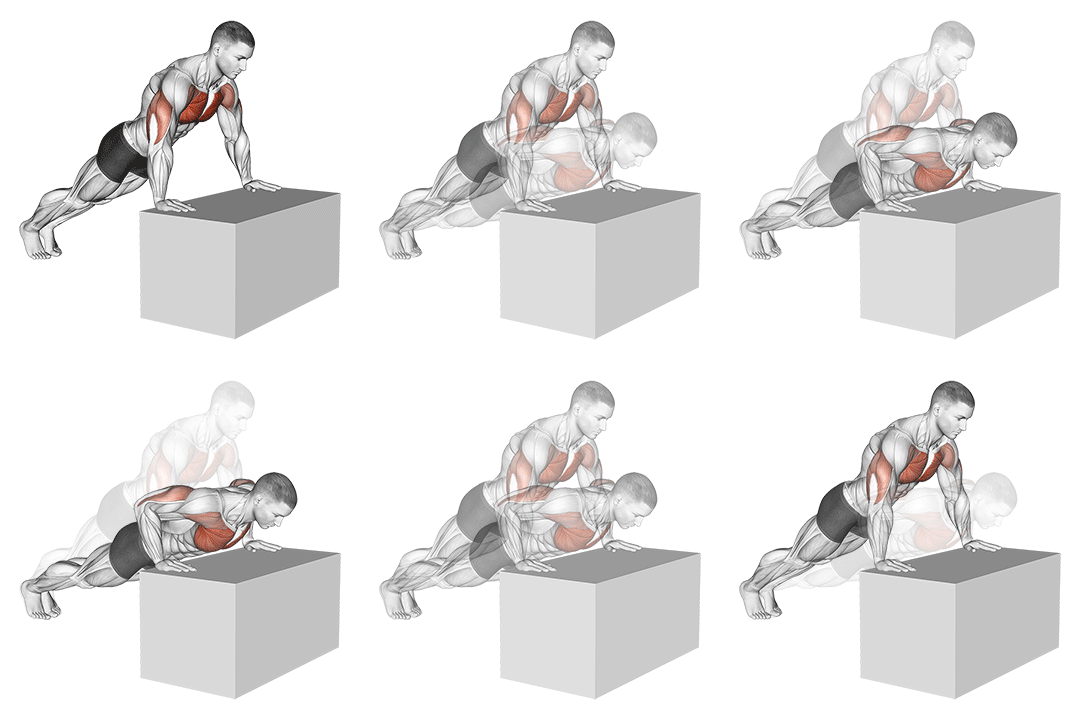
- Place your hands on the edge of a box or elevated surface, slightly wider than shoulder-width apart.
- Extend your legs behind you, resting on the balls of your feet, creating a straight line from your head to your heels.
- Lower your chest towards the box by bending your elbows, keeping your body in a straight line.
- Pause for a moment at the bottom, then push yourself back up to the starting position by straightening your arms.
- Repeat for the desired number of repetitions.
Sets and reps: 3 sets of 8 to 12 reps, and add reps before you add load.
Why this matches
- Primary muscle: pectorals, not delts
- Equipment: bodyweight only, not free weights
- Body position: standing, the same as the Dumbbell Upright Row
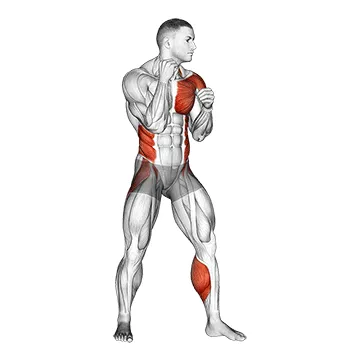
4. Left Hook. Boxing
52% match- Delts
- Bodyweight
- Intermediate
- Compound
Pick this when you want to work the delts one side at a time.
How to perform this exercise
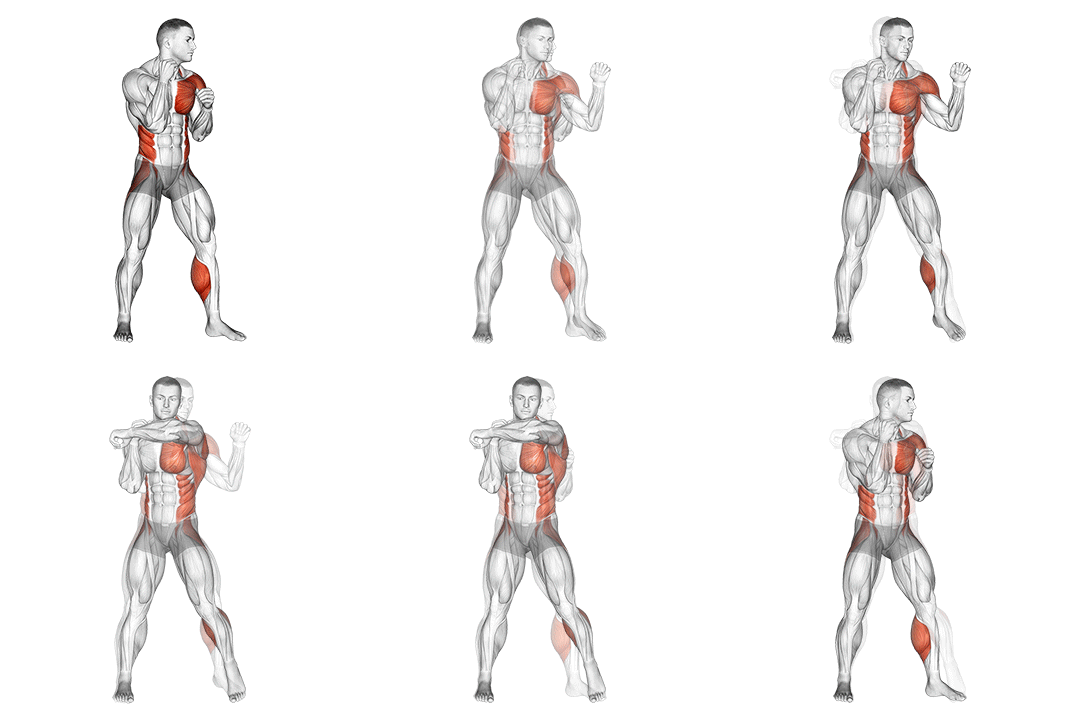
- Stand with your feet shoulder-width apart and your knees slightly bent.
- Keep your left hand up to protect your face and your right hand by your chin.
- Rotate your hips and pivot on your left foot as you extend your left arm forward in a punching motion.
- Twist your torso and engage your core muscles to generate power in the punch.
- Snap your arm back to the starting position and repeat for the desired number of repetitions.
Sets and reps: 3 or 4 sets of 6 to 10 reps on each side.
Why this matches
- Primary muscle: delts, the same as the Dumbbell Upright Row
- Equipment: bodyweight only, not free weights
- Body position: standing, the same as the Dumbbell Upright Row
- Balance: harder to stay steady on than the Dumbbell Upright Row
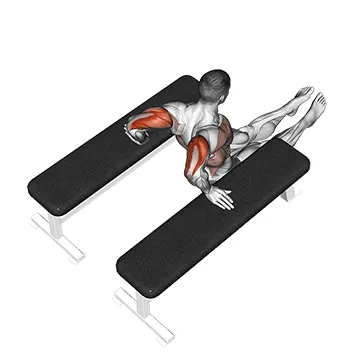
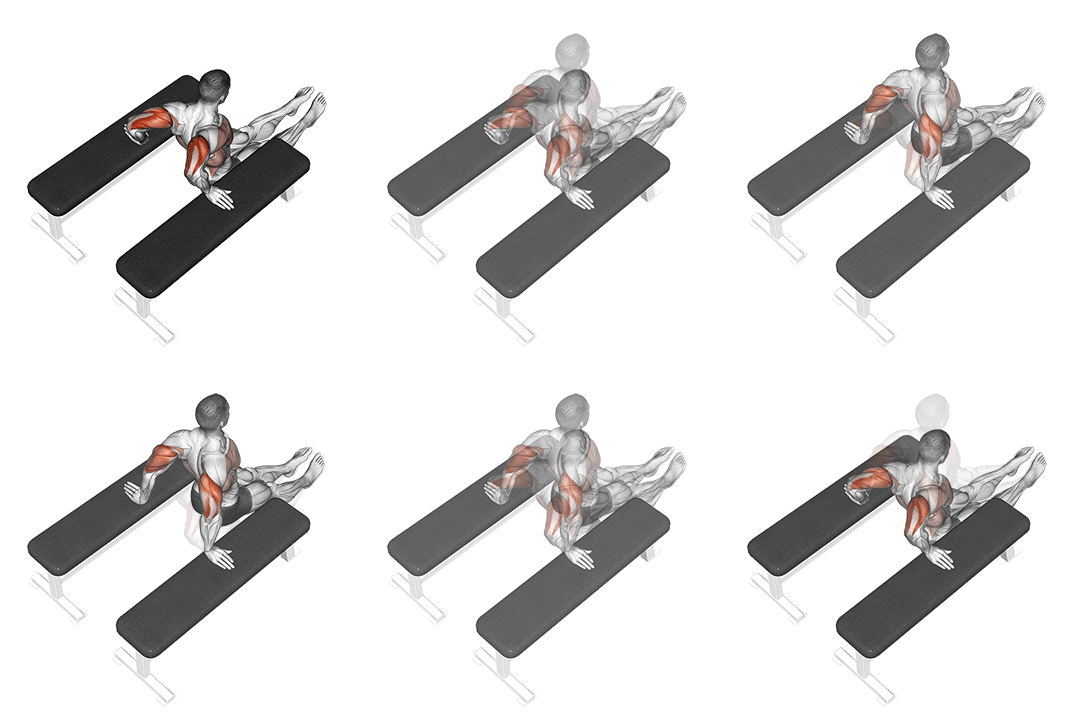
5. Triceps Dip (Between Benches)
50% match- Triceps
- Bodyweight
- Intermediate
- Compound
A looser match: it works the triceps rather than the delts.
How to perform this exercise
- Sit on a bench with your hands gripping the edge of the bench, fingers pointing forward.
- Slide your butt off the bench, supporting your weight with your hands.
- Bend your elbows and lower your body towards the ground, keeping your back close to the bench.
- Pause for a moment at the bottom, then push yourself back up to the starting position.
- Repeat for the desired number of repetitions.
Sets and reps: 3 or 4 sets of 6 to 10 reps.
Why this matches
- Primary muscle: triceps, not delts
- Equipment: bodyweight only, not free weights
- Body position: standing, the same as the Dumbbell Upright Row
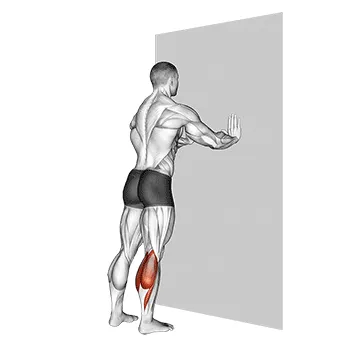
- Calves
- Bodyweight
- Beginner
- Isolation
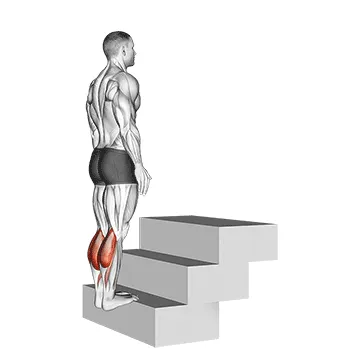
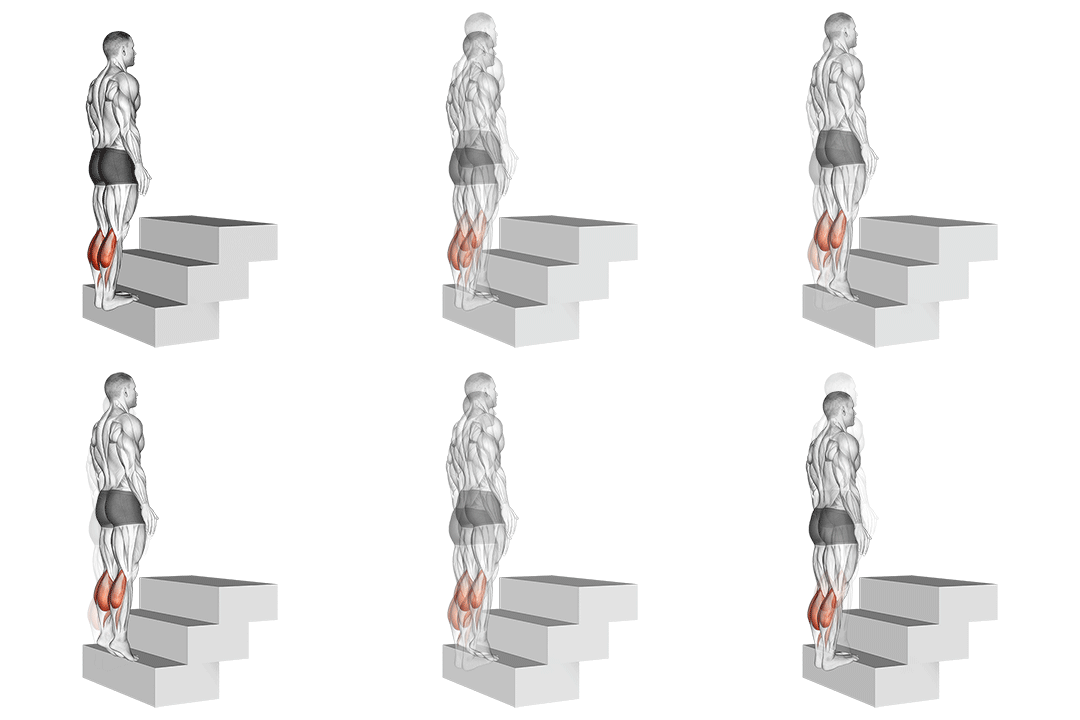
A looser match: it works the calves rather than the delts.
How to perform this exercise
- Stand on the edge of a step or a sturdy platform with your heels hanging off and your toes on the step.
- Hold onto a railing or wall for balance if needed.
- Slowly raise your heels as high as possible, lifting your body weight onto the balls of your feet.
- Pause for a moment at the top, then slowly lower your heels back down to the starting position.
- Repeat for the desired number of repetitions.
Sets and reps: 3 sets of 8 to 12 reps, and add reps before you add load.
Why this matches
- Primary muscle: calves, not delts
- Equipment: bodyweight only, not free weights
- Body position: standing, the same as the Dumbbell Upright Row
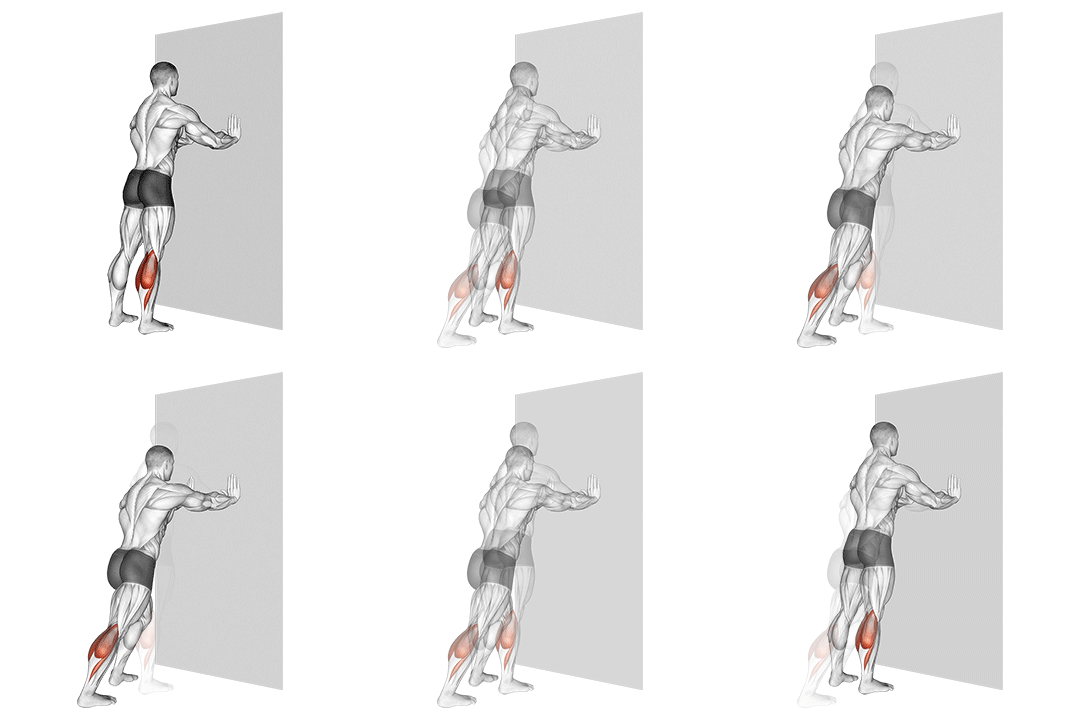
7. Standing Calves
50% match- Calves
- Bodyweight
- Beginner
- Isolation
How to perform this exercise
- Stand with your feet shoulder-width apart, toes pointing forward.
- Raise your heels off the ground as high as possible, standing on your toes.
- Hold the position for a moment, then slowly lower your heels back down to the starting position.
- Repeat for the desired number of repetitions.
Sets and reps: 3 sets of 8 to 12 reps, and add reps before you add load.
Why this matches
- Primary muscle: calves, not delts
- Equipment: bodyweight only, not free weights
- Body position: standing, the same as the Dumbbell Upright Row
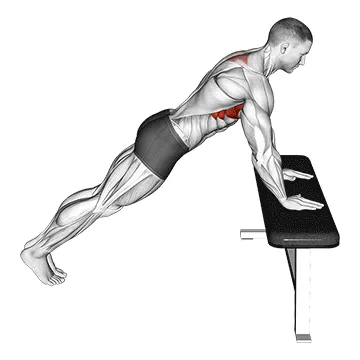
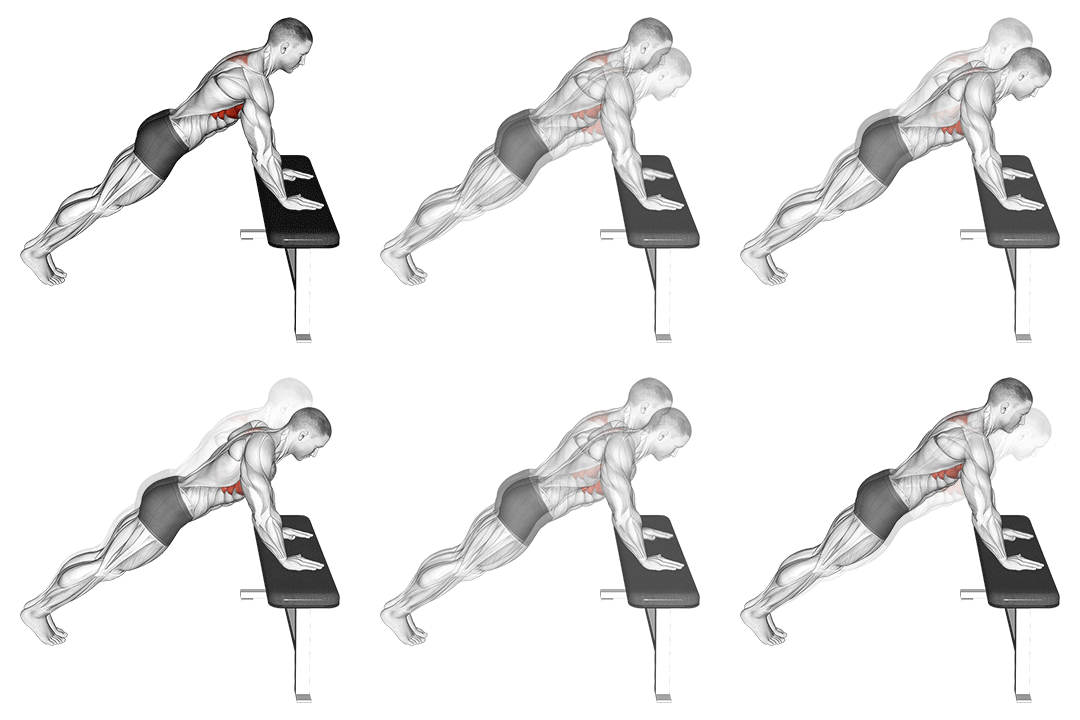
8. Incline Scapula Push Up
49% match- Serratus
- Bodyweight
- Beginner
- Isolation
How to perform this exercise
- Set up an incline bench at a 45-degree angle.
- Place your hands on the bench slightly wider than shoulder-width apart.
- Position your feet on the ground, hip-width apart.
- Lower your chest towards the bench, keeping your elbows tucked in.
- As you lower, retract your shoulder blades, squeezing your scapulae together.
- Push through your palms to extend your arms and return to the starting position.
- Repeat for the desired number of repetitions.
Sets and reps: 3 sets of 8 to 12 reps, and add reps before you add load.
Why this matches
- Primary muscle: serratus, not delts
- Equipment: bodyweight only, not free weights
- Body position: standing, the same as the Dumbbell Upright Row
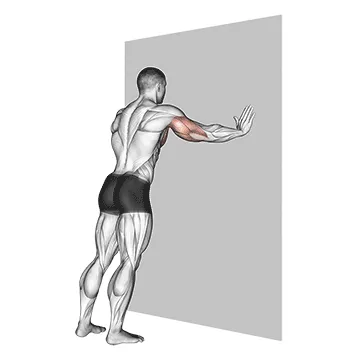
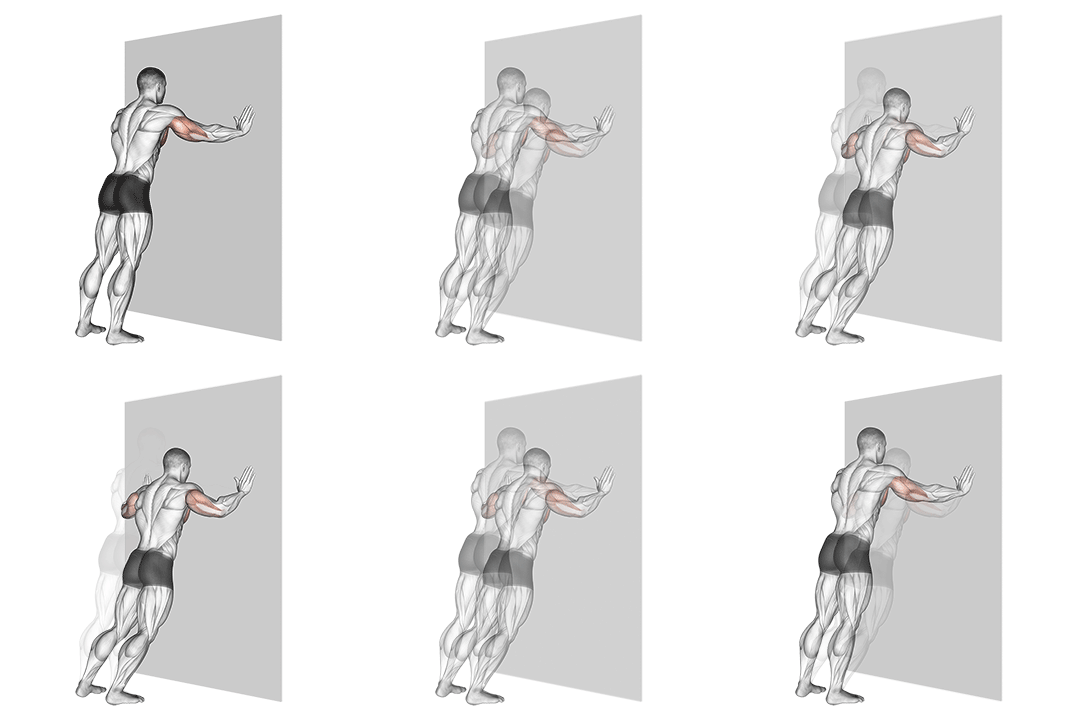
9. Push-up (Wall)
48% match- Pectorals
- Bodyweight
- Beginner
- Compound
How to perform this exercise
- Stand facing a wall, about arm's length away.
- Place your hands on the wall at shoulder height, slightly wider than shoulder-width apart.
- Step back with your feet, keeping them hip-width apart.
- Engage your core and keep your body in a straight line from head to heels.
- Bend your elbows and lower your chest towards the wall, keeping your body straight.
- Pause for a moment, then push yourself back to the starting position.
- Repeat for the desired number of repetitions.
Sets and reps: 3 sets of 8 to 12 reps, and add reps before you add load.
Why this matches
- Primary muscle: pectorals, not delts
- Equipment: bodyweight only, not free weights
- Body position: standing, the same as the Dumbbell Upright Row
- Balance: easier to stay steady on than the Dumbbell Upright Row
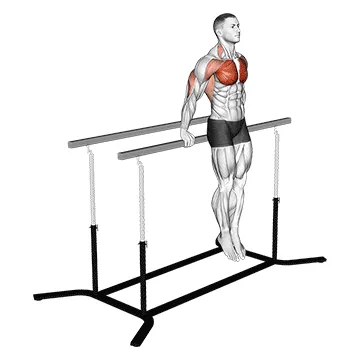
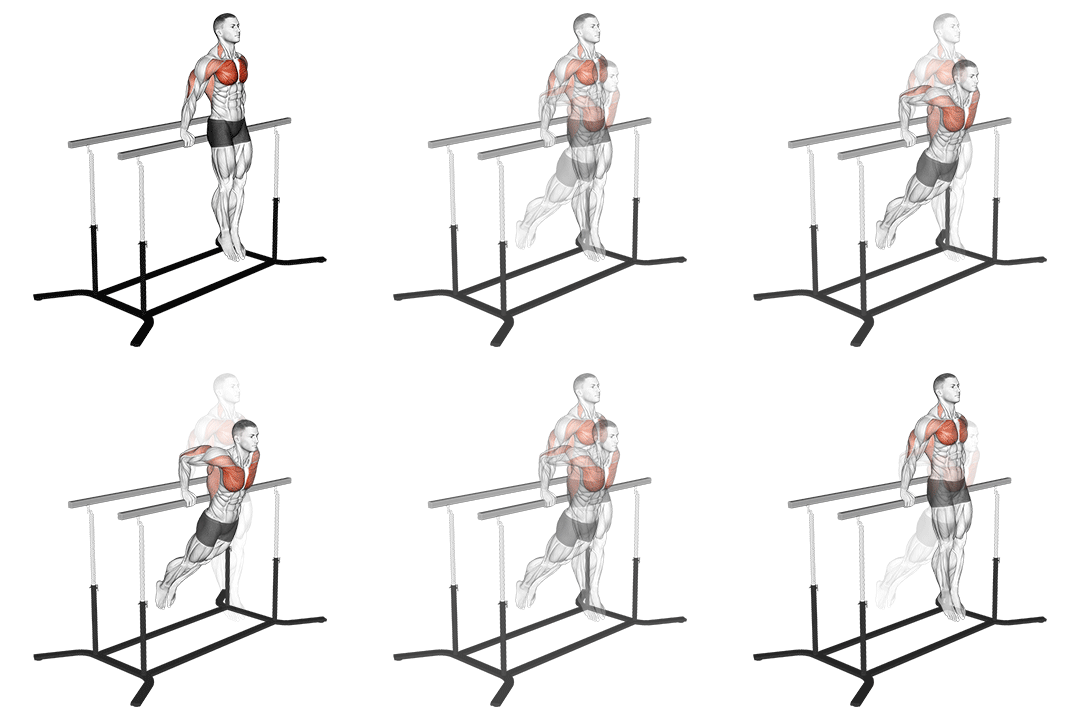
10. Korean Dips
47% match- Pectorals
- Bodyweight
- Advanced
- Compound
How to perform this exercise
- Position yourself between two parallel bars with your arms extended and supporting your body weight.
- Lower your body by bending your elbows until your upper arms are parallel to the ground.
- Pause for a moment, then push yourself back up to the starting position by straightening your arms.
- Repeat for the desired number of repetitions.
Sets and reps: 3 or 4 sets of 6 to 10 reps.
Why this matches
- Primary muscle: pectorals, not delts
- Equipment: bodyweight only, not free weights
- Body position: standing, the same as the Dumbbell Upright Row
- Balance: harder to stay steady on than the Dumbbell Upright Row
Dumbbell Upright Row FAQ
What muscles does Dumbbell Upright Row work?
The dumbbell upright row primarily targets the lateral deltoid and upper trapezius while also recruiting the anterior deltoid and biceps as stabilizers. Biomechanically it combines shoulder abduction with scapular elevation; a narrow grip shifts more load to the traps while a wider path emphasizes the delts.
Find Alternatives for Any Exercise
Search the exercise database and filter the ranked substitutes by the equipment you own.
Similarity scores compare exercise metadata such as movement pattern, muscles, equipment and body position. They are not a safety rating or a check that you own the equipment. Learn about our methodology