

10 Best Floor Glute-ham Raise Alternatives for Home or Gym
The Floor Glute-ham Raise is done kneeling with a machine. Ranked closest by our scoring: the Self Assisted Inverse Leg Curl, the Self Assisted Inverse Leg Curl (On Floor) and the Natural Glute Ham Raise.
Updated Ranked by our 12-factor similarity model How it works
Original Exercise: Floor Glute-ham Raise
- Primary muscle
- Hamstrings
- Equipment
- Machine
- Difficulty
- Advanced
- Type
- Compound
Secondary muscles: Calves, Glutes
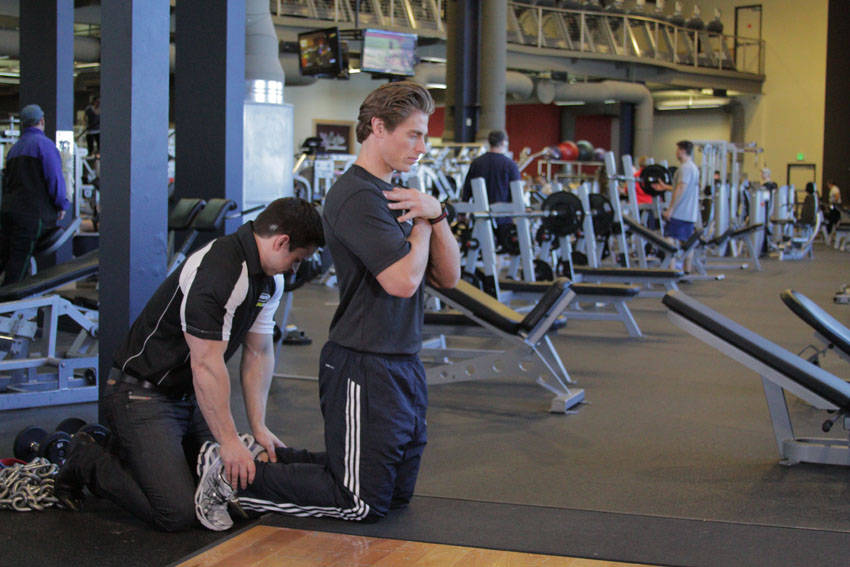
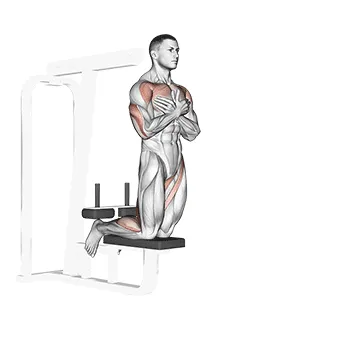
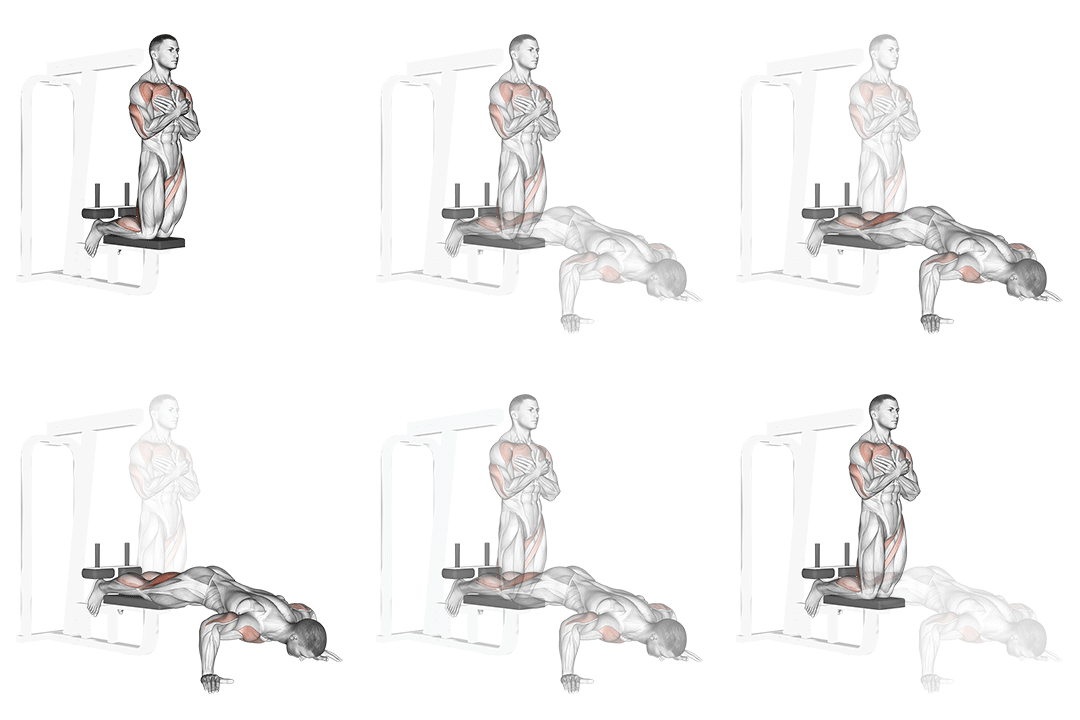
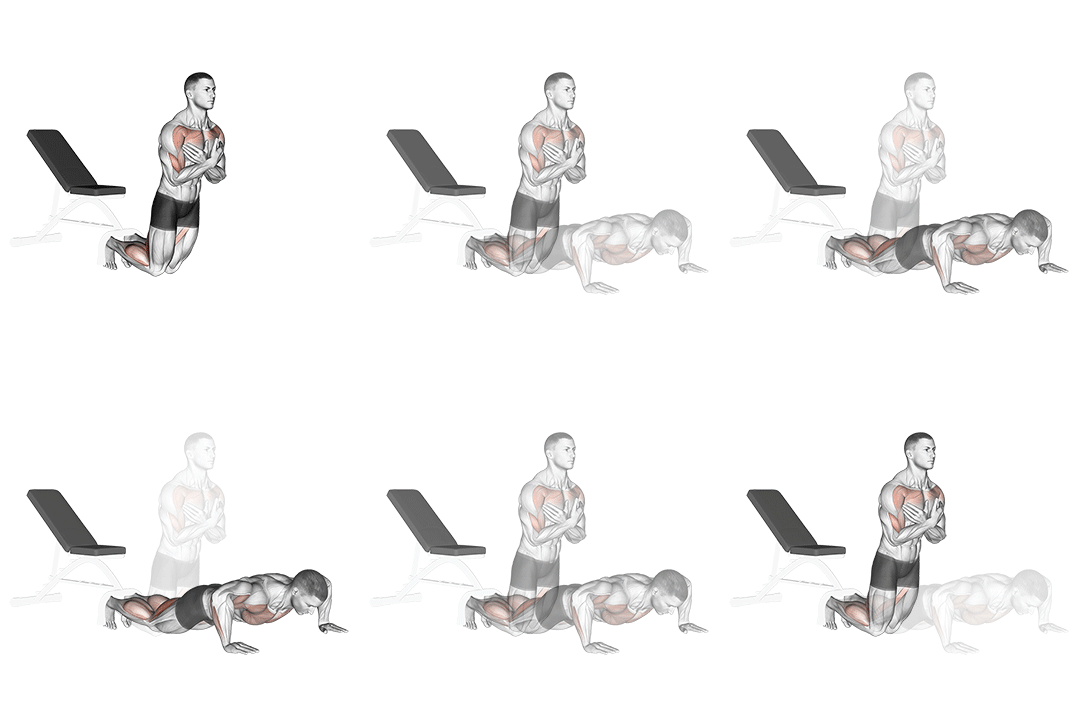
How to perform Floor Glute-ham Raise
- You can use a partner for this exercise or brace your feet under something stable.
- Begin on your knees with your upper legs and torso upright. If using a partner, they will firmly hold your feet to keep you in position. This will be your starting position.
- Lower yourself by extending at the knee, taking care to NOT flex the hips as you go forward.
- Place your hands in front of you as you reach the floor. This movement is very difficult and you may be unable to do it unaided. Use your arms to lightly push off the floor to aid your return to the starting position.
Ranked Floor Glute-ham Raise Alternatives
10 substitutes, ranked by how closely each one matches the Floor Glute-ham Raise on movement pattern, muscles worked, equipment and body position. The higher the score, the less you change. Open "How to perform this exercise" on a card for the steps; every card title links to that exercise's own alternatives page.
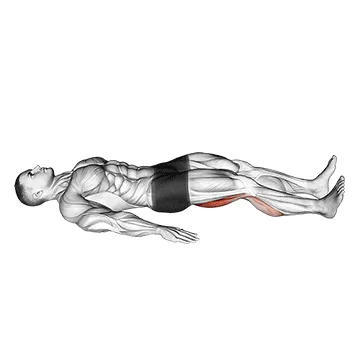
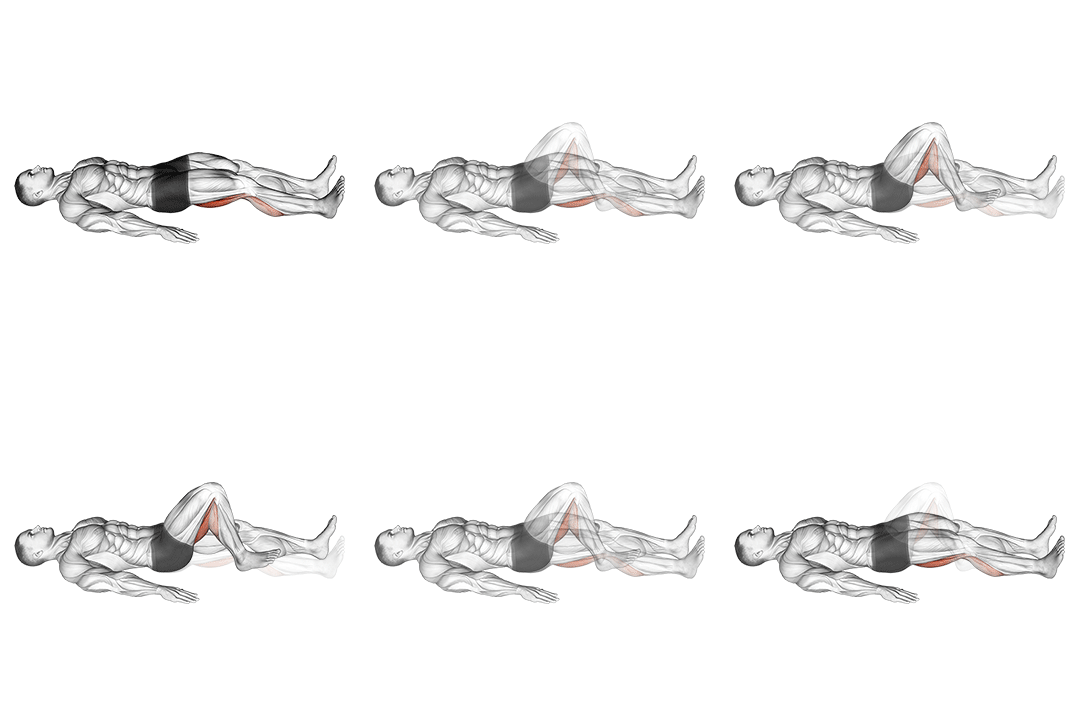
Best match 1. Self Assisted Inverse Leg Curl
80% match- Hamstrings
- Bodyweight
- Intermediate
- Isolation
Use this when you have nothing to train with, because it works the hamstrings with bodyweight alone.
How to perform this exercise
- Lie flat on your back on a mat or bench with your legs extended.
- Place your hands by your sides or under your glutes for support.
- Bend your knees and lift your feet off the ground, bringing your thighs towards your chest.
- Pause for a moment at the top, then slowly lower your legs back to the starting position.
- Repeat for the desired number of repetitions.
Sets and reps: 3 sets of 10 to 15 reps.
Why this matches
- Primary muscle: hamstrings, the same as the Floor Glute-ham Raise
- Equipment: bodyweight only, not a machine
- Body position: kneeling, the same as the Floor Glute-ham Raise
- Hamstrings
- Bodyweight
- Beginner
- Isolation
How to perform this exercise
- Lie flat on your back with your legs extended and your arms by your sides.
- Bend your knees and place your feet flat on the ground, hip-width apart.
- Lift your hips off the ground, engaging your glutes and hamstrings.
- Slowly curl your legs towards your glutes, keeping your hips lifted.
- Pause for a moment at the top, then slowly extend your legs back to the starting position.
- Lower your hips back down to the ground.
- Repeat for the desired number of repetitions.
Sets and reps: 3 sets of 8 to 12 reps, and add reps before you add load.
Why this matches
- Primary muscle: hamstrings, the same as the Floor Glute-ham Raise
- Equipment: bodyweight only, not a machine
- Body position: kneeling, the same as the Floor Glute-ham Raise
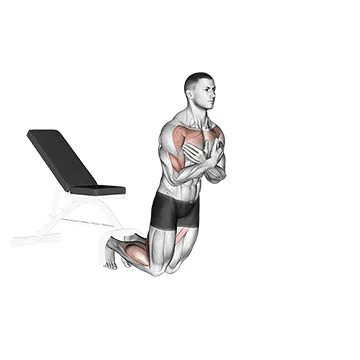
3. Natural Glute Ham Raise
74% match- Hamstrings
- Bodyweight
- Advanced
- Compound
How to perform this exercise
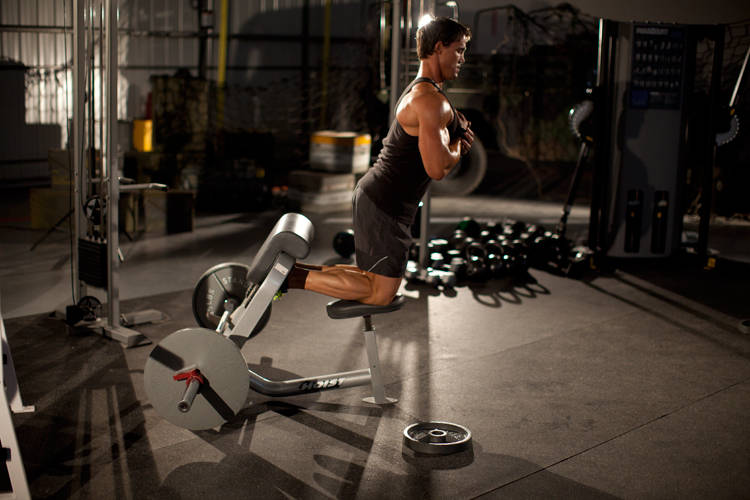
- Using the leg pad of a lat pulldown machine or a preacher bench, position yourself so that your ankles are under the pads, knees on the seat, and you are facing away from the machine. You should be upright and maintaining good posture.
- This will be your starting position. Lower yourself under control until your knees are almost completely straight.
- Remaining in control, raise yourself back up to the starting position.
- If you are unable to complete a rep, use a band, a partner, or push off of a box to aid in completing a repetition.
Sets and reps: 3 or 4 sets of 6 to 10 reps.
Why this matches
- Primary muscle: hamstrings, the same as the Floor Glute-ham Raise
- Equipment: bodyweight only, not a machine
- Body position: kneeling, the same as the Floor Glute-ham Raise
- Balance: harder to stay steady on than the Floor Glute-ham Raise
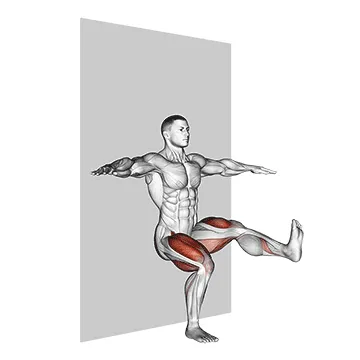
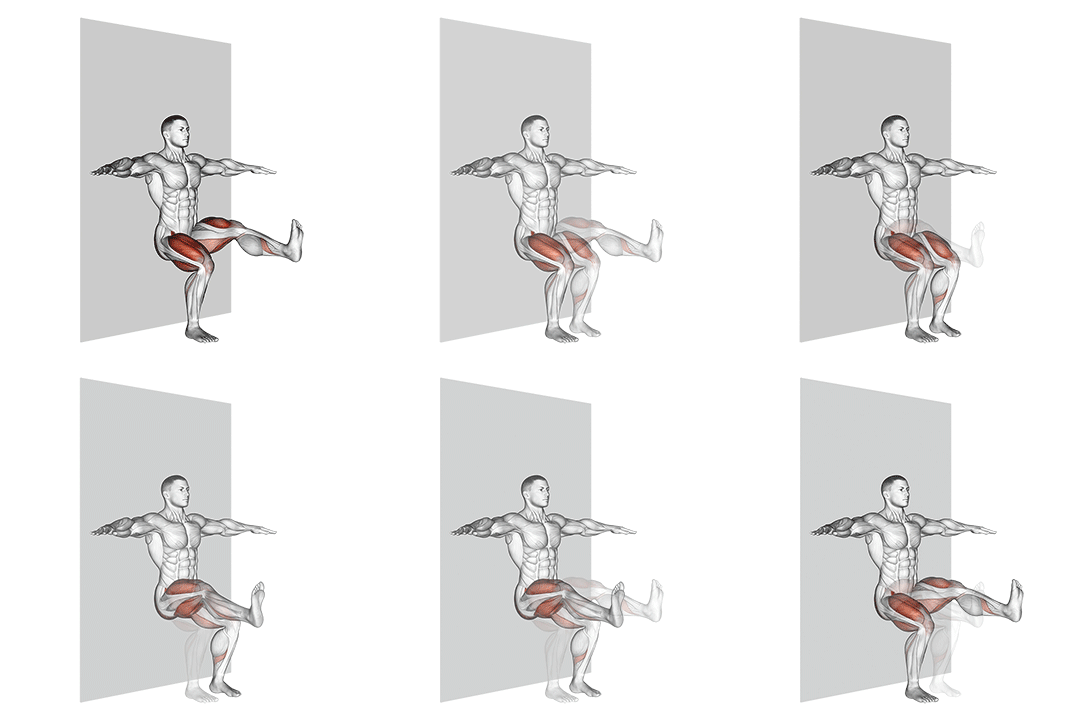
4. Linear Acceleration Wall Drill
69% match- Hamstrings
- Bodyweight
- Intermediate
- Compound
Pick this when you want an easier version that works the hamstrings one side at a time.
How to perform this exercise
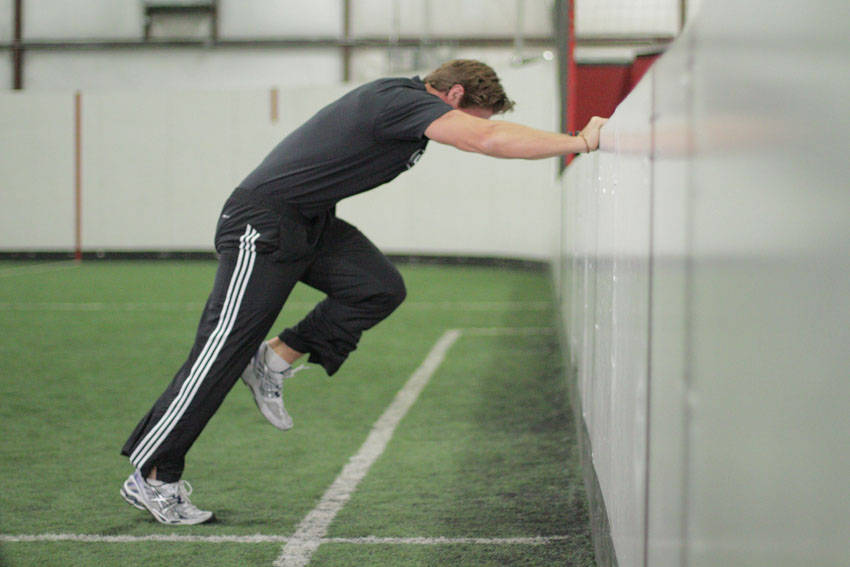
- Lean at around 45 degrees against a wall. Your feet should be together, glutes contracted.
- Begin by lifting your right knee quickly, pausing, and then driving it straight down into the ground.
- Switch legs, raising the opposite knee, and then attacking the ground straight down.
- Repeat once more with your right leg, and as soon as the right foot strikes the ground hammer them out rapidly, alternating left and right as fast as you can.
Sets and reps: 3 or 4 sets of 6 to 10 reps on each side.
Why this matches
- Primary muscle: hamstrings, the same as the Floor Glute-ham Raise
- Equipment: bodyweight only, not a machine
- Body position: standing, not kneeling
5. Kick Out Sit
59% match- Hamstrings
- Bodyweight
- Intermediate
- Compound
How to perform this exercise
- Sit on the edge of a bench or chair with your feet flat on the ground and your knees bent at a 90-degree angle.
- Lean back slightly and place your hands on the edge of the bench or chair for support.
- Engaging your hamstrings, lift your feet off the ground and extend your legs straight out in front of you.
- Pause for a moment at the top, then slowly bend your knees and bring your feet back towards your body.
- Repeat for the desired number of repetitions.
Sets and reps: 3 or 4 sets of 6 to 10 reps on each side.
Why this matches
- Primary muscle: hamstrings, the same as the Floor Glute-ham Raise
- Equipment: bodyweight only, not a machine
- Body position: standing, not kneeling
- Balance: harder to stay steady on than the Floor Glute-ham Raise
6. Moving Claw Series
59% match- Hamstrings
- Bodyweight
- Intermediate
- Compound
How to perform this exercise
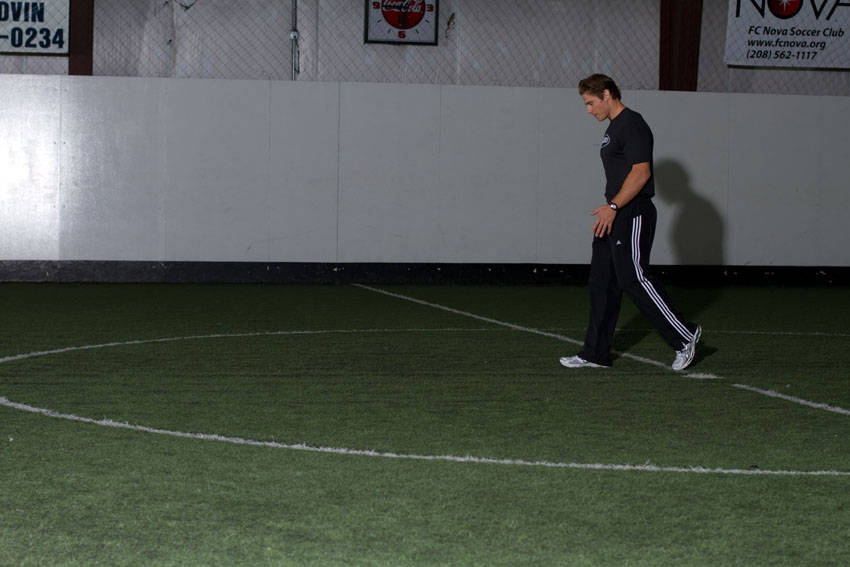
- This move helps prepare your running form to help you excel at sprinting. As you run, be sure to flex the knee, aiming to kick your glutes as the hip extends.
- Reload the quad as the leg moves back forward, attacking the ground on the next step.
- Ensure that as you run, you block with the arms, punching through in a rapid 1-2 motion.
Sets and reps: 3 or 4 sets of 6 to 10 reps on each side.
Why this matches
- Primary muscle: hamstrings, the same as the Floor Glute-ham Raise
- Equipment: bodyweight only, not a machine
- Body position: standing, not kneeling
- Balance: harder to stay steady on than the Floor Glute-ham Raise
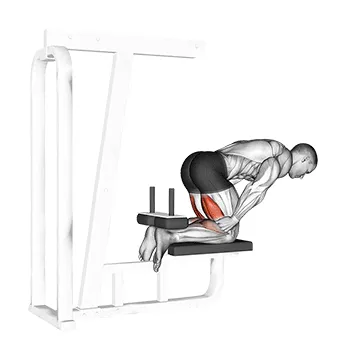
7. Inverse Leg Curl (Bench Support)
55% match- Hamstrings
- Bodyweight
- Intermediate
- Isolation
How to perform this exercise
- Lie face down on a bench with your hips at the edge and your legs extended straight behind you.
- Hold onto the bench for support.
- Keeping your upper body still, bend your knees and curl your legs towards your glutes.
- Pause for a moment at the top, then slowly extend your legs back to the starting position.
- Repeat for the desired number of repetitions.
Sets and reps: 3 sets of 10 to 15 reps.
Why this matches
- Primary muscle: hamstrings, the same as the Floor Glute-ham Raise
- Equipment: bodyweight only, not a machine
- Body position: lying face down, not kneeling
8. Single Leg Platform Slide
53% match- Hamstrings
- Bodyweight
- Intermediate
- Compound
How to perform this exercise
- Start by standing with one foot on a platform or slide board.
- Bend your knee slightly and slide the foot on the platform backward, extending your leg.
- Keep your core engaged and maintain a straight posture throughout the movement.
- Slowly return to the starting position by sliding your foot back to the initial position.
- Repeat the movement for the desired number of repetitions, then switch legs.
Sets and reps: 3 or 4 sets of 6 to 10 reps on each side.
Why this matches
- Primary muscle: hamstrings, the same as the Floor Glute-ham Raise
- Equipment: bodyweight only, not a machine
- Body position: standing, not kneeling
- Balance: harder to stay steady on than the Floor Glute-ham Raise
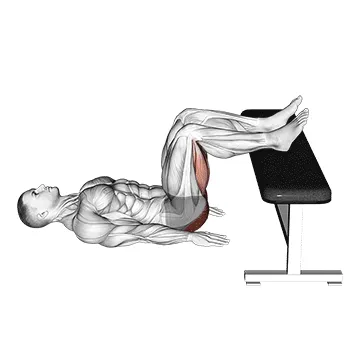
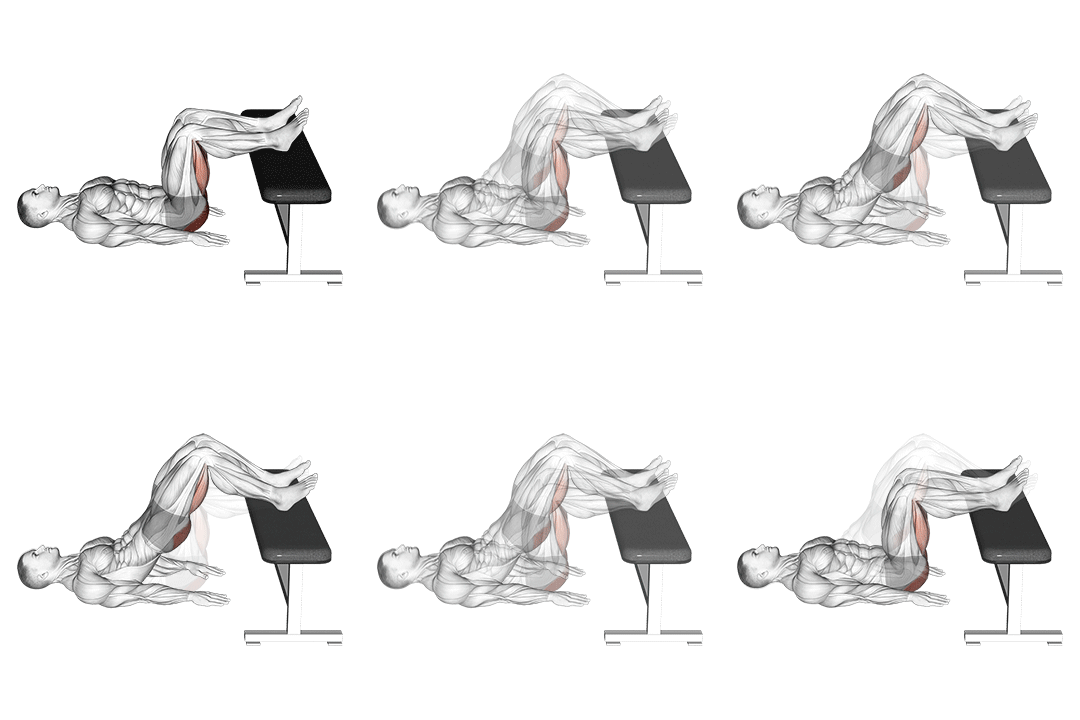
9. Glute Bridge Two Legs On Bench
50% match- Glutes
- Bodyweight
- Intermediate
- Compound
How to perform this exercise
- Sit on the edge of a bench with your back against it and your feet flat on the ground.
- Place your hands on the bench beside your hips for support.
- Engage your glutes and hamstrings, then lift your hips off the bench until your body forms a straight line from your knees to your shoulders.
- Pause for a moment at the top, then slowly lower your hips back down to the starting position.
- Repeat for the desired number of repetitions.
Sets and reps: 3 or 4 sets of 6 to 10 reps.
Why this matches
- Primary muscle: glutes, not hamstrings
- Equipment: bodyweight only, not a machine
- Body position: lying on your back, not kneeling
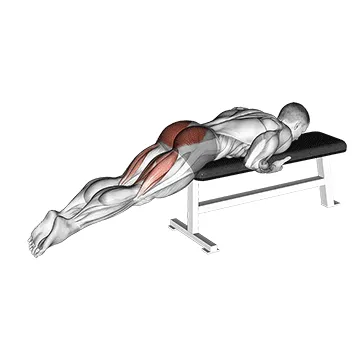
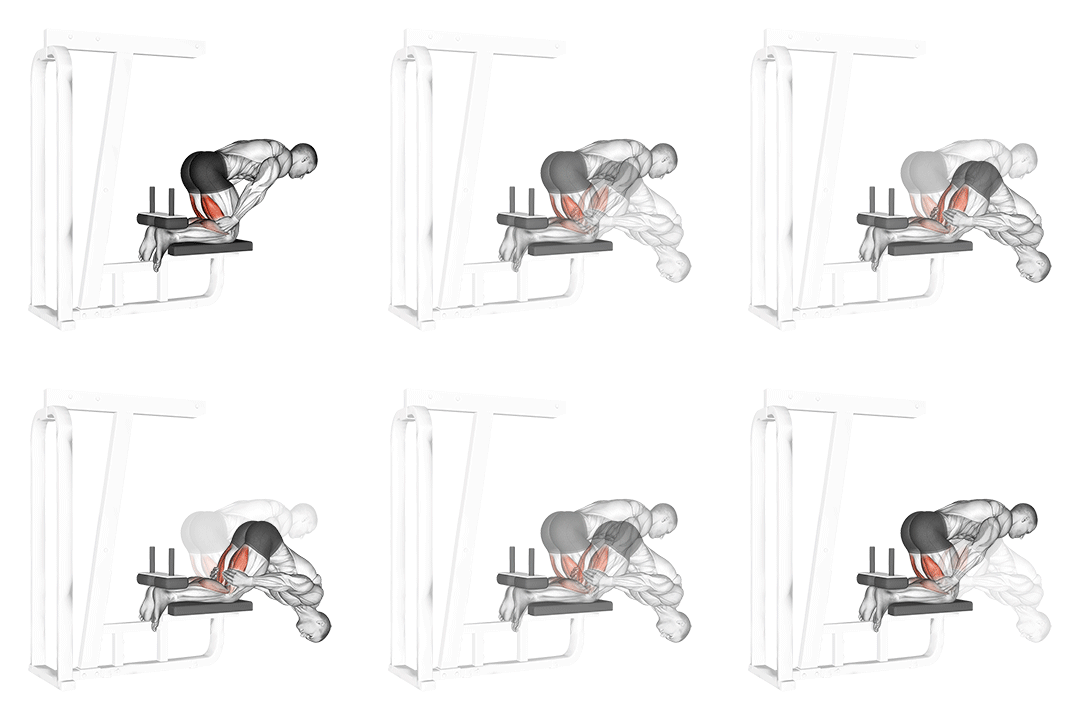
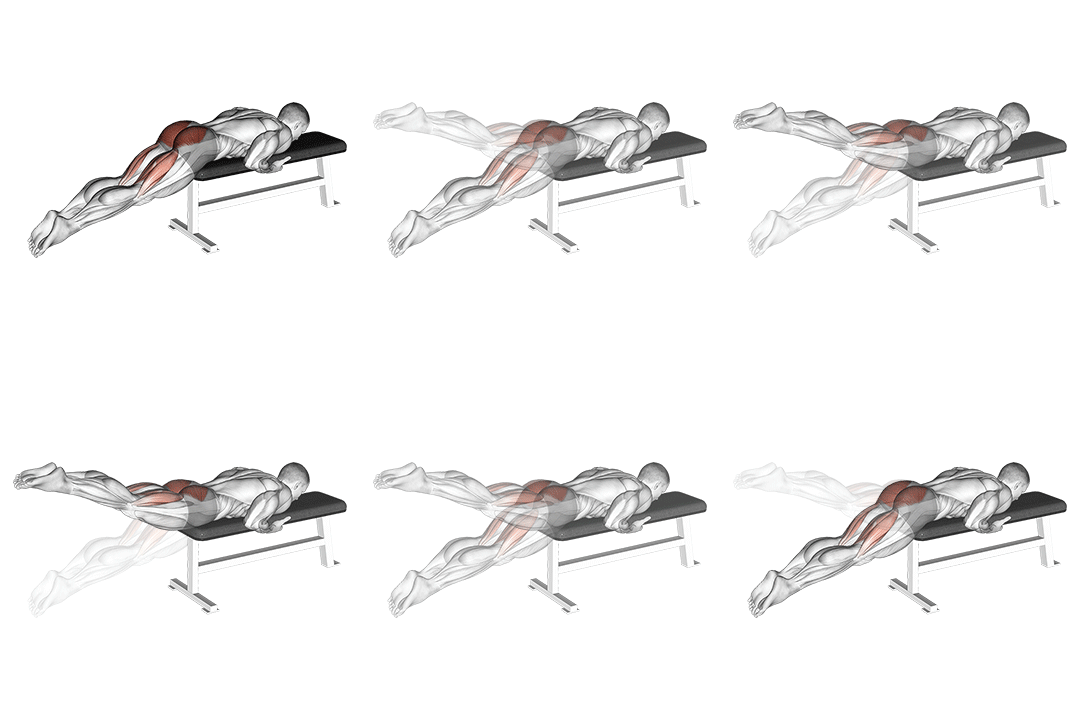
10. Reverse Hyper On Flat Bench
50% match- Glutes
- Bodyweight
- Intermediate
- Compound
How to perform this exercise
- Lie face down on a flat bench with your hips at the edge and your legs hanging off the bench.
- Hold onto the bench for stability.
- Keeping your legs straight, raise them up towards the ceiling as high as you can.
- Squeeze your glutes at the top of the movement.
- Slowly lower your legs back down to the starting position.
- Repeat for the desired number of repetitions.
Sets and reps: 3 or 4 sets of 6 to 10 reps.
Why this matches
- Primary muscle: glutes, not hamstrings
- Equipment: bodyweight only, not a machine
- Body position: lying face down, not kneeling
Why You Might Need a Floor Glute-ham Raise Alternative
You may substitute the Floor Glute-ham Raise for several reasons: no access to a glute-ham machine, rehab restrictions, or a need for different loading patterns. Alternatives let you emphasize eccentric control (Nordic curl), hip-dominant strength (RDL), or isolation (Swiss ball curl). Choose an option that preserves neutral spine and allows progressive overload; for example, perform RDLs with a hip hinge cue, push hips back and keep a soft knee, to preferentially recruit the hamstring long head and glute max.
How to Choose the Right Floor Glute-ham Raise Substitute
Match the substitute to the movement pattern you need. If you want knee-flexion emphasis choose Nordic or slider curls; if you want hip-extension strength pick RDLs or reverse hypers. Consider equipment, required range of motion, and whether you need unilateral work for imbalances. Use objective cues: maintain a neutral spine, hinge at the hips, and control the eccentric 2–4 seconds. Prioritize exercises that allow progressive loading and preserve hamstring length-tension by not letting the lumbar curve.
Floor Glute-ham Raise FAQ
What muscles does Floor Glute-ham Raise work?
The exercise primarily targets the hamstrings (biceps femoris, semitendinosus, semimembranosus) for knee flexion and the gluteus maximus for hip extension, with secondary activation of the spinal erectors and adductors. Cue yourself to drive the hips into extension and control the knee bend to maximize posterior chain activation.
What is the best bodyweight alternative to Floor Glute-ham Raise?
The Nordic hamstring curl is the best bodyweight alternative: anchor the ankles, keep a braced trunk, and lower with a slow eccentric for 3–4 seconds before catching yourself with the hands. That eccentric demand closely replicates the hamstring loading profile of the GHR and drives high hamstring activation.
Can I build muscle without doing Floor Glute-ham Raise?
Yes. You can hypertrophy hamstrings using RDLs, Nordic curls, Swiss ball or slider curls, and reverse hypers by applying progressive overload. Use slow eccentrics, increase loading or volume, and emphasize full hip hinge or controlled knee flexion to stress the hamstrings effectively.
Find Alternatives for Any Exercise
Search the exercise database and filter the ranked substitutes by the equipment you own.
Similarity scores compare exercise metadata such as movement pattern, muscles, equipment and body position. They are not a safety rating or a check that you own the equipment. Learn about our methodology