

10 Best Hug A Ball Alternatives for Lower-Back Training
The Hug A Ball is done lying on your back with a stability ball. Ranked closest by our scoring: the Hug Knees To Chest, the Lower Back-smr and the Cat Stretch.
Updated Ranked by our 12-factor similarity model How it works
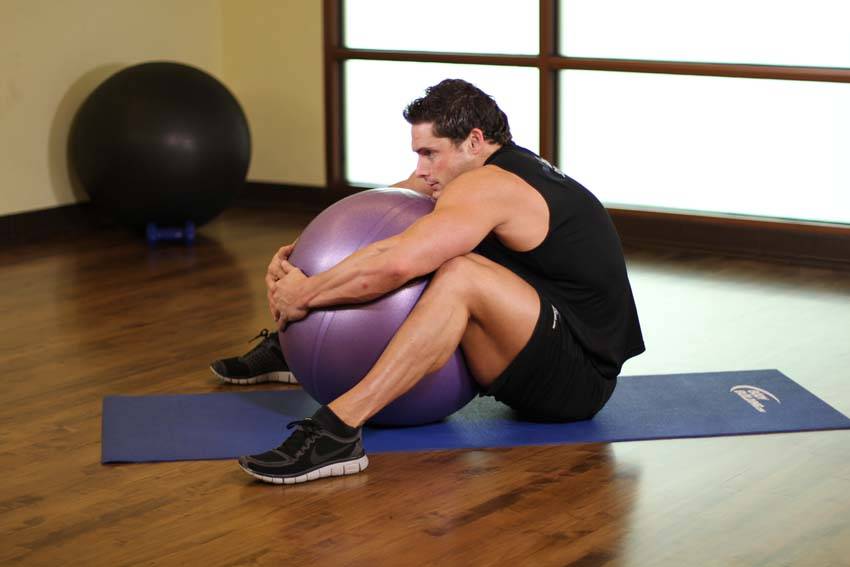
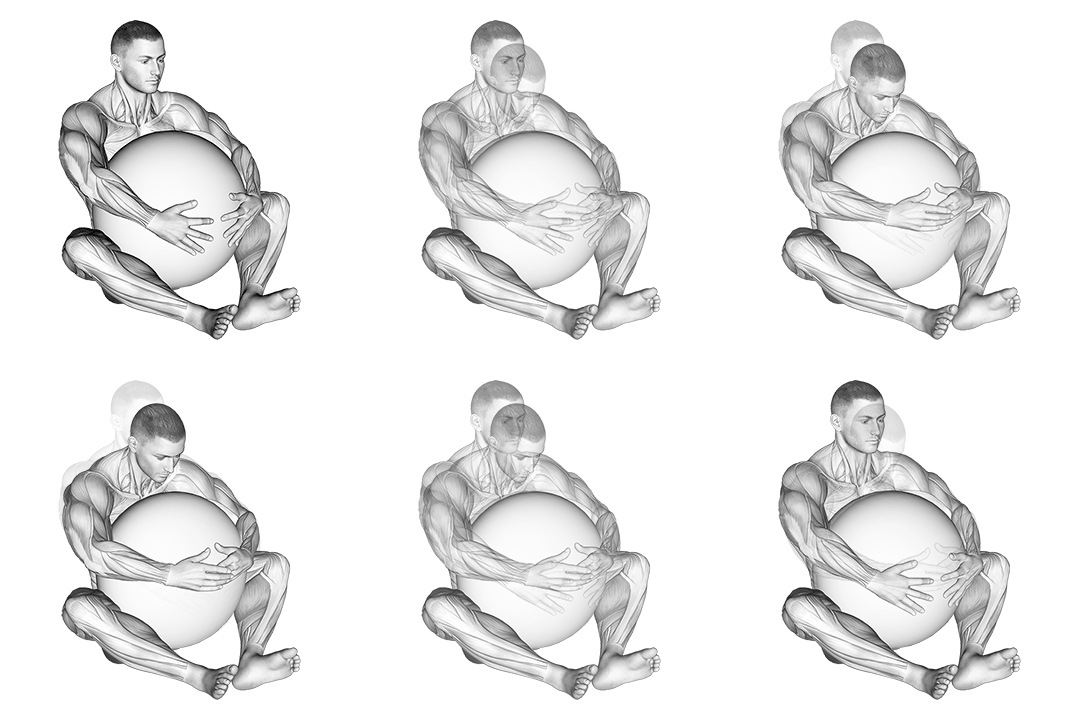
Original Exercise: Hug A Ball
- Primary muscle
- Lower Back
- Equipment
- Stability-ball
- Difficulty
- Beginner
- Type
- Isolation
Secondary muscles: Calves, Glutes
How to perform Hug A Ball
- Seat yourself on the floor.
- Straddle an exercise ball between both legs and lower your hips down toward the floor.
- Hug your arms around the ball to support your body. Adjust your legs so that your feet are flat on the floor and your knees line up over your ankles. Keep a good grip on the ball so it doesn't roll away from you and send you back onto your buttocks.
Ranked Hug A Ball Alternatives
10 substitutes, ranked by how closely each one matches the Hug A Ball on movement pattern, muscles worked, equipment and body position. The higher the score, the less you change. Open "How to perform this exercise" on a card for the steps; every card title links to that exercise's own alternatives page.
Best match 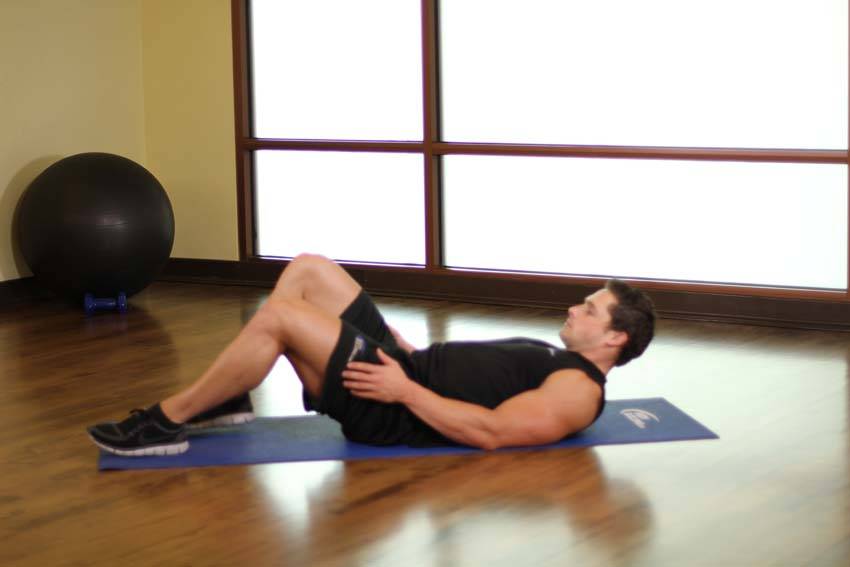
1. Hug Knees To Chest
95% match- Lower Back
- Bodyweight
- Beginner
- Isolation
Use this when you have nothing to train with, because it works the lower back with bodyweight alone.
How to perform this exercise
- Lie down on your back and pull both knees up to your chest.
- Hold your arms under the knees, not over (that would put to much pressure on your knee joints).
- Slowly pull the knees toward your shoulders. This also stretches your buttocks muscles.
Sets and reps: 3 sets of 8 to 12 reps, and add reps before you add load.
Why this matches
- Primary muscle: lower back, the same as the Hug A Ball
- Equipment: bodyweight only, the same as the Hug A Ball
- Body position: lying on your back, the same as the Hug A Ball
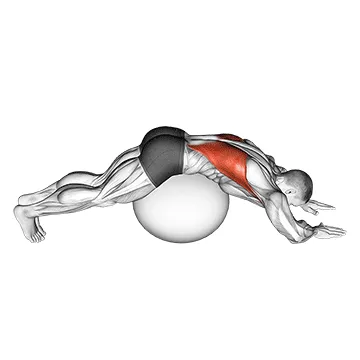
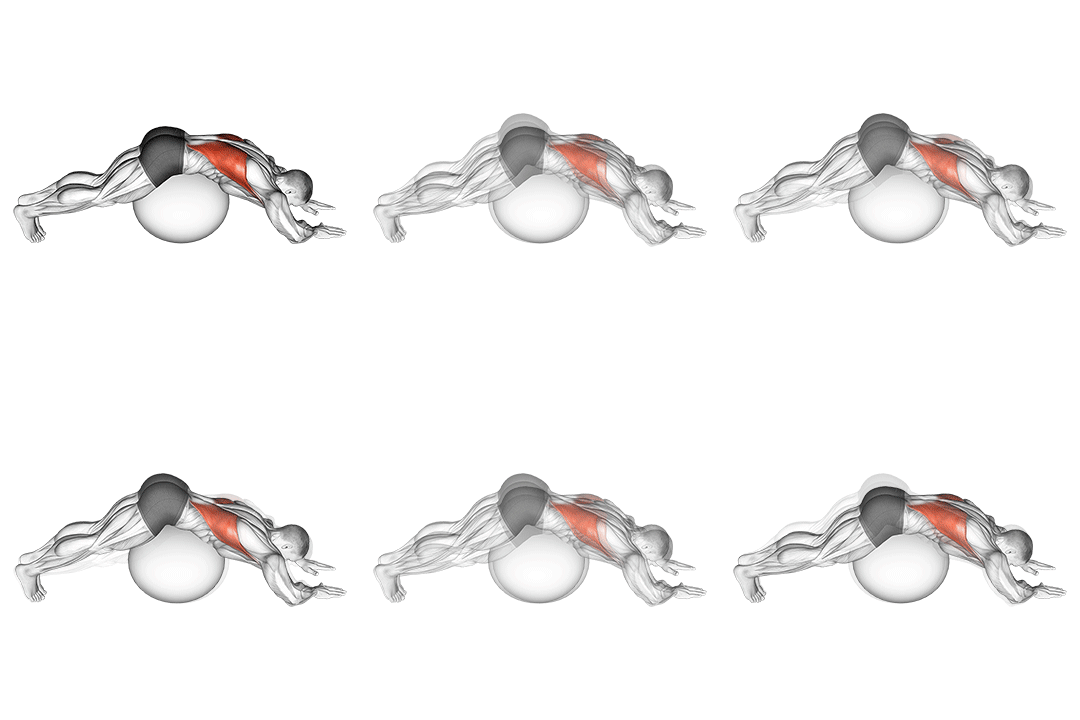
- Lats
- Stability-ball
- Beginner
- Isolation
A looser match: it uses the same equipment, but it works the lats rather than the lower back.
How to perform this exercise
- Sit on the stability ball with your feet flat on the ground and your knees bent at a 90-degree angle.
- Slowly walk your feet forward, rolling the ball down your back until your lower back is resting on the ball.
- Place your hands behind your head or cross them over your chest.
- Engage your core and slowly lower your upper body towards the ground, allowing your lower back to stretch over the ball.
- Hold the stretch for a few seconds, then slowly return to the starting position.
- Repeat for the desired number of repetitions.
Sets and reps: 3 sets of 8 to 12 reps, and add reps before you add load.
Why this matches
- Primary muscle: lats, not lower back
- Equipment: bodyweight only, the same as the Hug A Ball
- Body position: lying on your back, the same as the Hug A Ball
- Balance: harder to stay steady on than the Hug A Ball
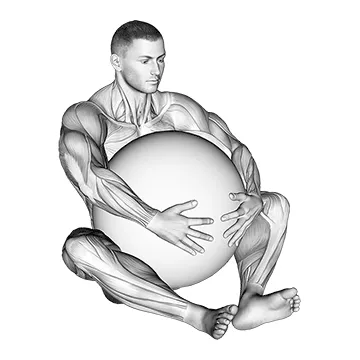
3. Exercise Ball Hug
73% match- Spine
- Stability-ball
- Beginner
- Isolation
A looser match: it uses the same equipment, but it works the spinal erectors rather than the lower back.
How to perform this exercise
- Sit on the stability ball with your feet flat on the ground and your back straight.
- Hold the stability ball with both hands, hugging it close to your chest.
- Engage your core muscles and slowly lean back, keeping your back straight and your feet planted on the ground.
- Continue leaning back until you feel a stretch in your back muscles.
- Hold the position for a few seconds, then slowly return to the starting position.
- Repeat for the desired number of repetitions.
Sets and reps: 3 sets of 8 to 12 reps, and add reps before you add load.
Why this matches
- Primary muscle: spine, not lower back
- Equipment: bodyweight only, the same as the Hug A Ball
- Body position: seated, not lying on your back
- Balance: harder to stay steady on than the Hug A Ball
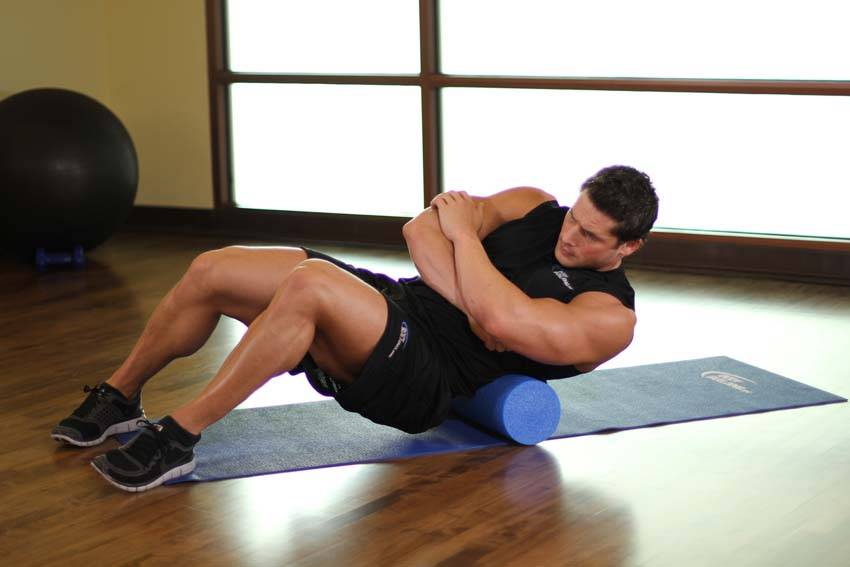
4. Lower Back-smr
70% match- Lower Back
- Foam-roll
- Beginner
- Isolation
A good swap when you have a foam roller to work with, and it still works the lower back.
How to perform this exercise
- In a seated position, place a foam roll under your lower back. Cross your arms in front of you and protract your shoulders. This will be your starting position.
- Raise your hips off of the floor and lean back, keeping your weight on your lower back. Now shift your weight slightly to one side, keeping your weight off of the spine and on the muscles to the side of it. Roll over your lower back, holding points of tension for 10-30 seconds. Repeat on the other side.
Sets and reps: 3 sets of 8 to 12 reps, and add reps before you add load.
Why this matches
- Primary muscle: lower back, the same as the Hug A Ball
- Equipment: bodyweight only, the same as the Hug A Ball
- Body position: lying on your back, the same as the Hug A Ball
- Balance: easier to stay steady on than the Hug A Ball
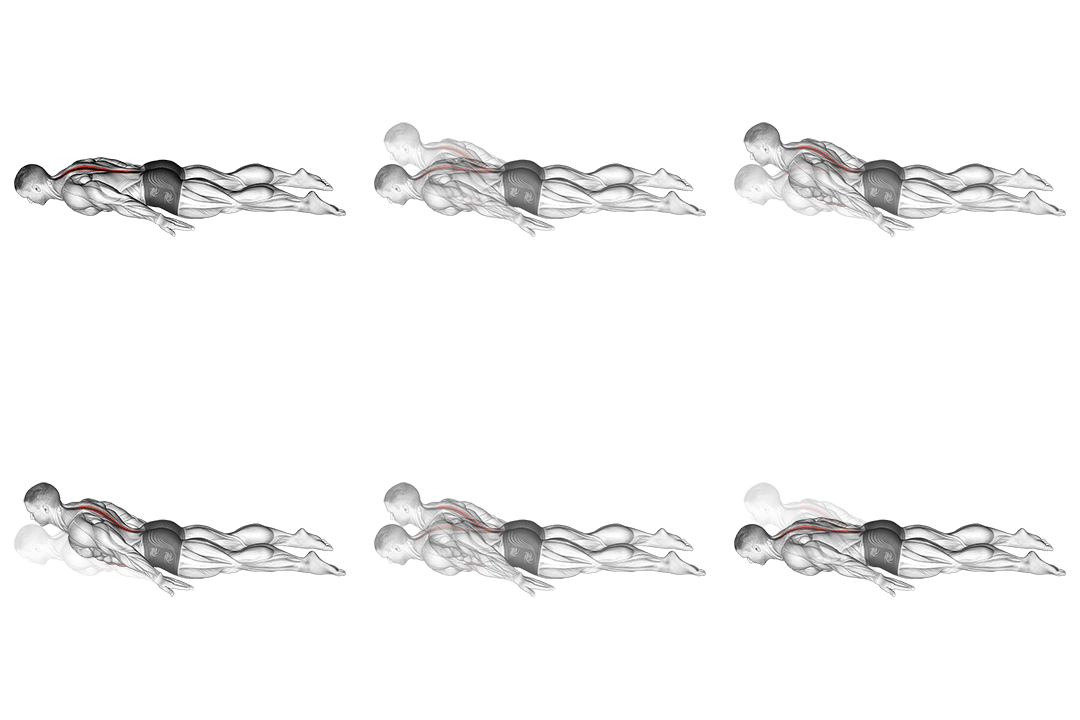
5. One Half Locust
68% match- Erector Spinae
- Bodyweight
- Beginner
- Isolation
A looser match: it works the erector spinae rather than the lower back.
How to perform this exercise
- Lie facedown on the floor.
- Put your left hand under your left hipbone to pad your hip and pubic bone.
- Bend your right knee so you can hold the foot in your right hand.
- Lift the foot in the air and simultaneously lift your shoulders off the floor. This also stretches the right hip flexor and the chest and shoulders. Switch sides. If it doesn't bother your back, you can try it with both arms and legs at the same time.
Sets and reps: 3 sets of 8 to 12 reps, and add reps before you add load.
Why this matches
- Primary muscle: erector spinae, not lower back
- Equipment: bodyweight only, the same as the Hug A Ball
- Body position: lying face down, not lying on your back
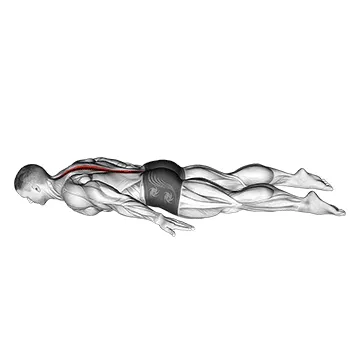
6. Lower Back Curl
68% match- Spine
- Bodyweight
- Intermediate
- Isolation
A looser match: it works the spinal erectors rather than the lower back.
How to perform this exercise
- Lie flat on your stomach with your legs extended and your arms by your sides.
- Engage your glutes and hamstrings, and slowly lift your upper body off the ground, curling your back upwards.
- Pause for a moment at the top, then slowly lower your upper body back down to the starting position.
- Repeat for the desired number of repetitions.
Sets and reps: 3 sets of 10 to 15 reps.
Why this matches
- Primary muscle: spine, not lower back
- Equipment: bodyweight only, the same as the Hug A Ball
- Body position: lying face down, not lying on your back
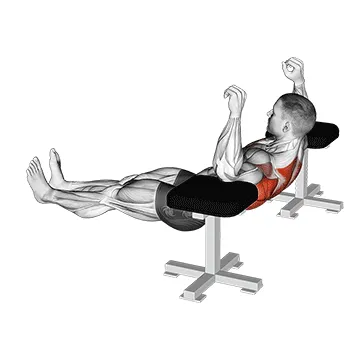
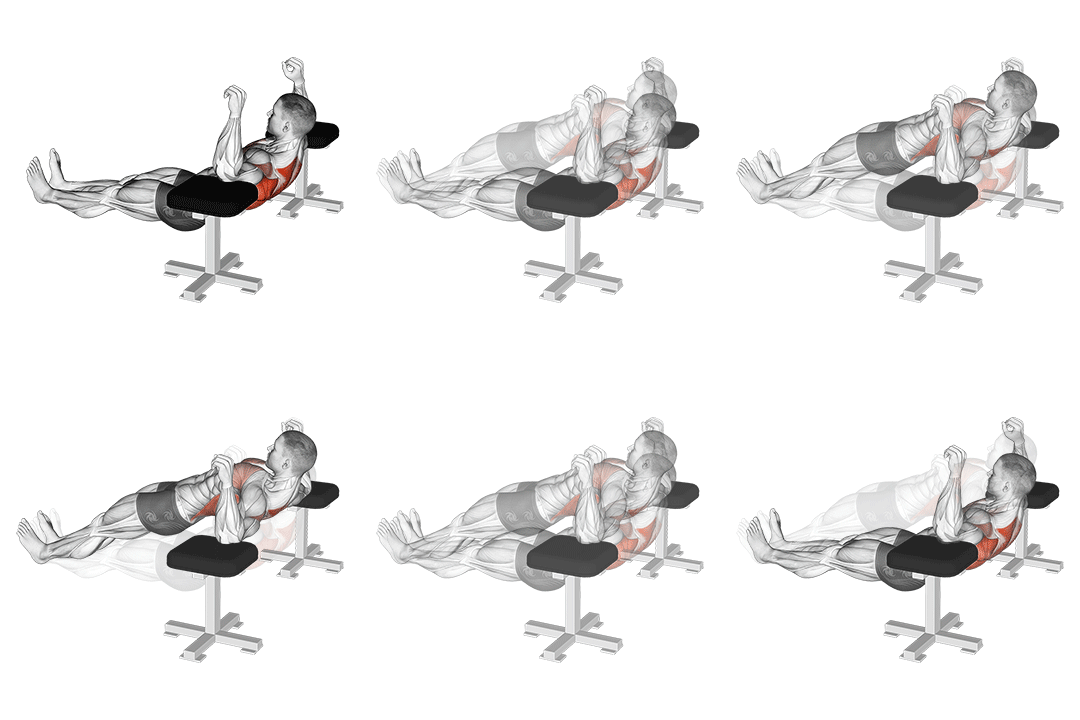
7. Elbow Lift - Reverse Push-up
67% match- Upper Back
- Bodyweight
- Intermediate
- Compound
A looser match: it works the upper back rather than the lower back.
How to perform this exercise
- Start by lying face down on the ground with your legs extended and your hands placed directly under your shoulders.
- Engage your core and press through your palms to lift your upper body off the ground, keeping your elbows close to your sides.
- Pause at the top for a moment, squeezing your upper back muscles.
- Slowly lower your body back down to the starting position.
- Repeat for the desired number of repetitions.
Sets and reps: 3 or 4 sets of 6 to 10 reps.
Why this matches
- Primary muscle: upper back, not lower back
- Equipment: bodyweight only, the same as the Hug A Ball
- Body position: lying on your back, the same as the Hug A Ball
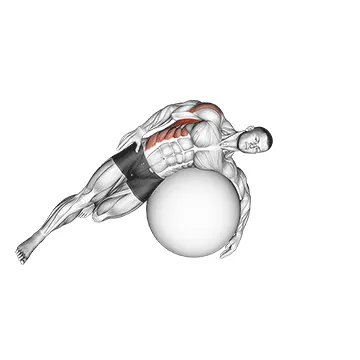
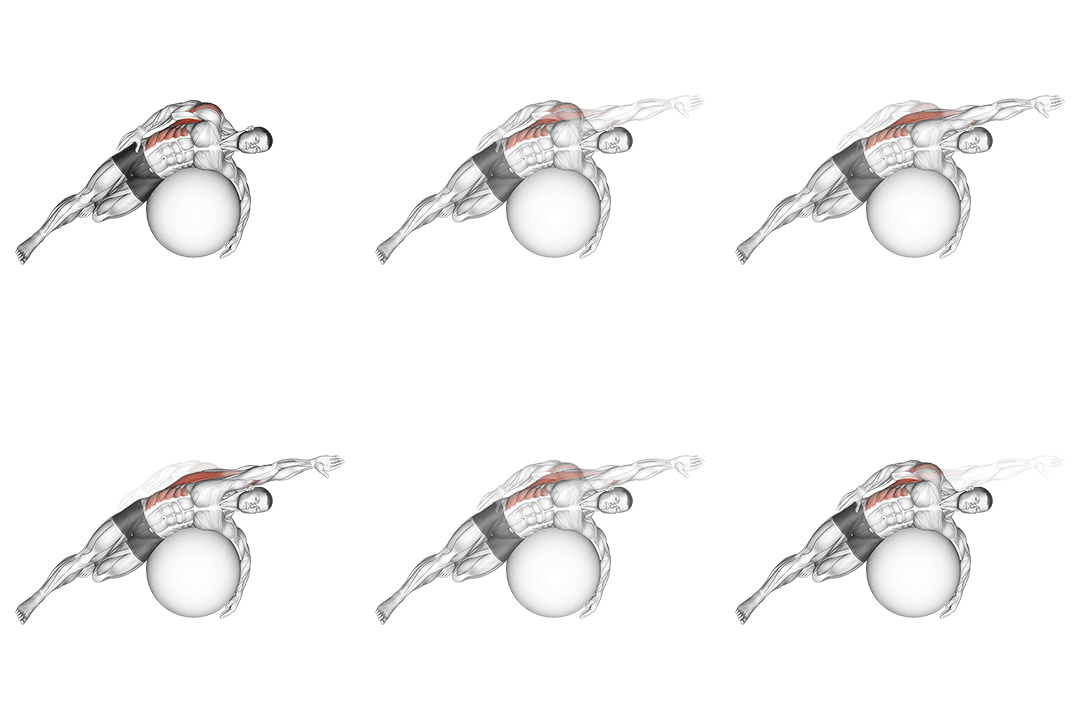
- Lats
- Stability-ball
- Beginner
- Isolation
How to perform this exercise
- Lie on your side with your legs extended and your head supported by the stability ball.
- Place your top arm on the ball for stability.
- Reach your top arm overhead and allow your torso to rotate slightly.
- Feel the stretch in your lat muscles on the side of your body.
- Hold the stretch for 20-30 seconds, then switch sides and repeat.
Sets and reps: 3 sets of 8 to 12 reps on each side, and add reps before you add load.
Why this matches
- Primary muscle: lats, not lower back
- Equipment: bodyweight only, the same as the Hug A Ball
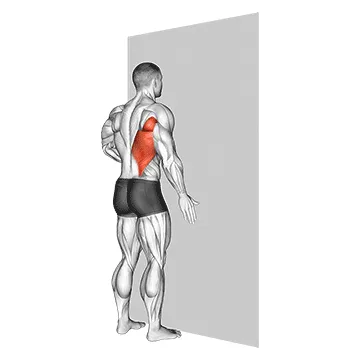
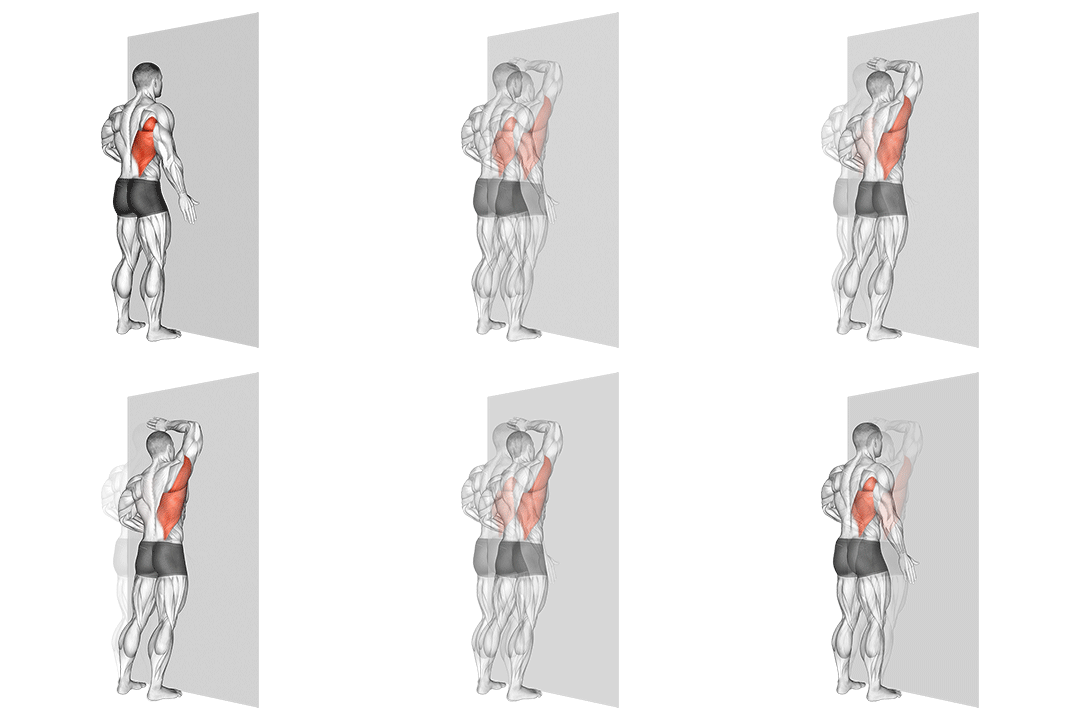
9. One Arm Against Wall
65% match- Lats
- Bodyweight
- Beginner
- Isolation
How to perform this exercise
- Stand facing a wall with your feet shoulder-width apart.
- Extend one arm straight out in front of you and place your palm against the wall.
- Engage your core and lean your body forward, keeping your arm straight and your back flat.
- Slowly push against the wall with your palm, activating your lat muscles.
- Hold the position for a few seconds, then release and repeat with the other arm.
Sets and reps: Hold for 20 to 30 seconds on each side, 3 sets.
Why this matches
- Primary muscle: lats, not lower back
- Equipment: bodyweight only, the same as the Hug A Ball
- Body position: standing, not lying on your back
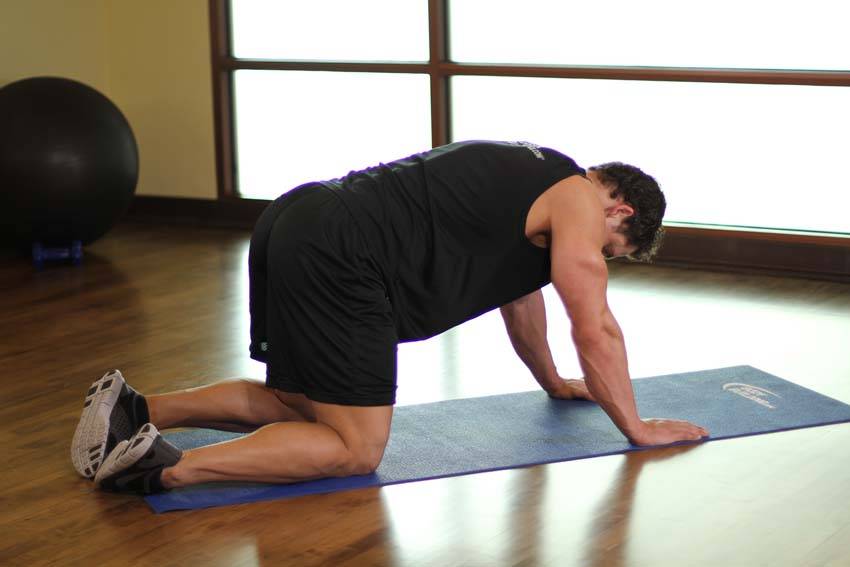
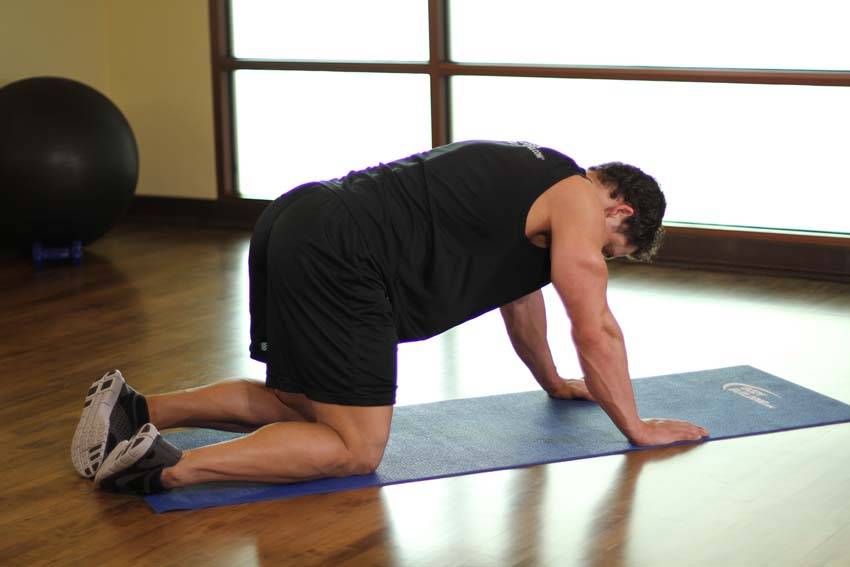
10. Cat Stretch
63% match- Lower Back
- Bodyweight
- Beginner
- Isolation
How to perform this exercise
- Position yourself on the floor on your hands and knees.
- Pull your belly in and round your spine, lower back, shoulders, and neck, letting your head drop.
- Hold for 15 seconds.
Sets and reps: 3 sets of 8 to 12 reps, and add reps before you add load.
Why this matches
- Primary muscle: lower back, the same as the Hug A Ball
- Equipment: bodyweight only, the same as the Hug A Ball
- Body position: kneeling, not lying on your back
Why You Might Need a Hug A Ball Alternative
You might replace Hug A Ball due to lumbar pain, a missing stability ball, or to progress strength and load capacity. Hug A Ball isolates spinal extensors; substitutes can either reduce end-range lumbar extension (safer for disc issues) or shift load to glutes and hamstrings through a hip-hinge pattern. Choose exercises that keep the spine neutral, limit uncontrolled lumbar extension, and maintain continuous tension on the erector spinae. Technique cue: brace your core, hinge from the hips, and control the eccentric phase to minimize shear forces on the lumbar vertebrae.
How to Choose the Right Hug A Ball Substitute
Select a substitute based on the movement pattern (spinal extension vs hip hinge), available equipment, and your injury history. If you need isolation for erectors, choose back extensions and cue a neutral spine with slow eccentrics. For posterior chain strength and load progression, pick RDLs or loaded carries and emphasize hip hinge mechanics and glute activation. Also consider balance demands: bird dogs increase neuromuscular control while deadlifts offer scalable overload. Test a substitute with light sets, watching for lumbar pain and ensuring the erector spinae engages without excessive lumbar flexion.
Hug A Ball FAQ
What muscles does Hug A Ball work?
Hug A Ball primarily targets the erector spinae (lower-back) through spinal extension and anti-flexion stabilization. It also recruits the glutes and hamstrings for hip extension and the obliques for stabilization; cue: maintain a neutral spine and feel the erectors contract at the top of each rep.
What is the best bodyweight alternative to Hug A Ball?
The bird dog is the best bodyweight alternative because it trains lumbar stability and coordinated posterior chain activation without end-range lumbar extension. Cue: keep the pelvis square, extend the opposite arm and leg in line with the torso, and pause while squeezing the glute and lower-back before returning.
Can I build muscle without doing Hug A Ball?
Yes. You can build lower-back muscle with progressive overload via RDLs, weighted back extensions, and heavy carries that increase tension on the erector spinae. Focus on controlled eccentrics, progressive loading, and maintaining posterior chain activation to stimulate hypertrophy.
Find Alternatives for Any Exercise
Search the exercise database and filter the ranked substitutes by the equipment you own.
Similarity scores compare exercise metadata such as movement pattern, muscles, equipment and body position. They are not a safety rating or a check that you own the equipment. Learn about our methodology