

10 Best Kettlebell Thruster Alternatives for Shoulder Power
The Kettlebell Thruster drops you into a squat, then asks you to drive off your heels and press the weight straight overhead before lowering it back to your chest, so a swap has to keep both halves of that job. The Barbell Thruster keeps both with a bar held at shoulder height: you squat down, drive through your heels to stand, and press the bar overhead in the same motion.
Original Exercise: Kettlebell Thruster
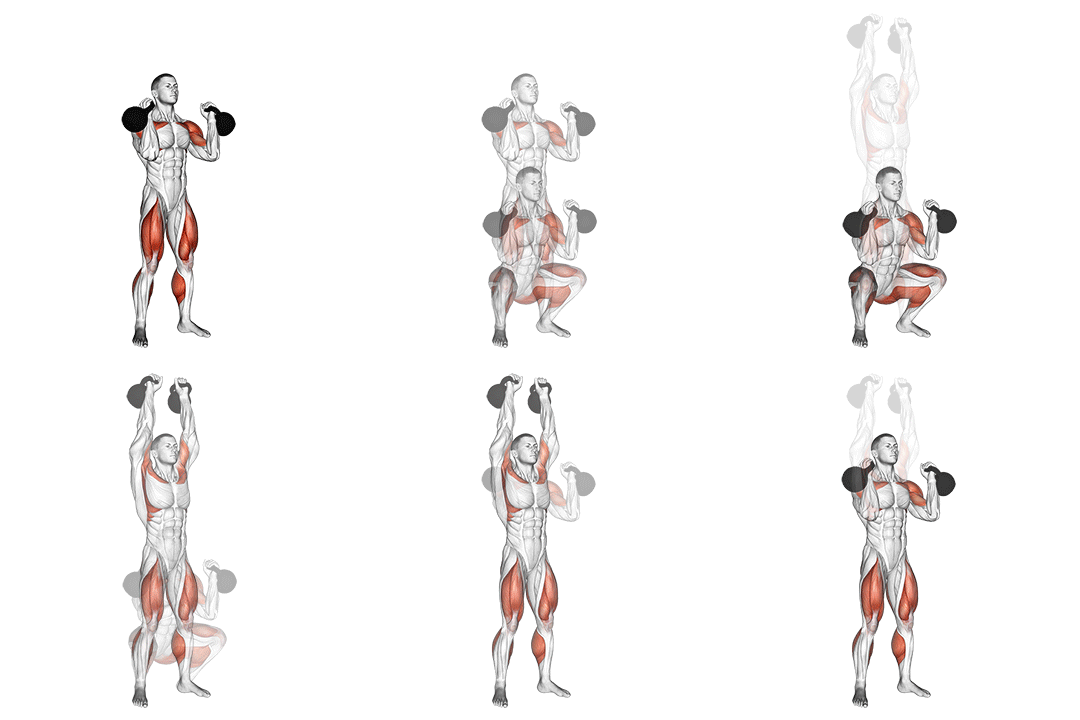
How to Perform Kettlebell Thruster
- Start by standing with your feet shoulder-width apart, holding a kettlebell in front of your chest with both hands, palms facing each other.
- Lower into a squat position by bending your knees and pushing your hips back, keeping your chest up and your back straight.
- As you reach the bottom of the squat, explosively drive through your heels to stand up, simultaneously pressing the kettlebell overhead.
- Lock out your arms at the top of the movement, fully extending your elbows.
- Lower the kettlebell back to the starting position by reversing the movement, bending your elbows and lowering the weight back to your chest.
- Repeat for the desired number of repetitions.
Ranked Kettlebell Thruster Alternatives
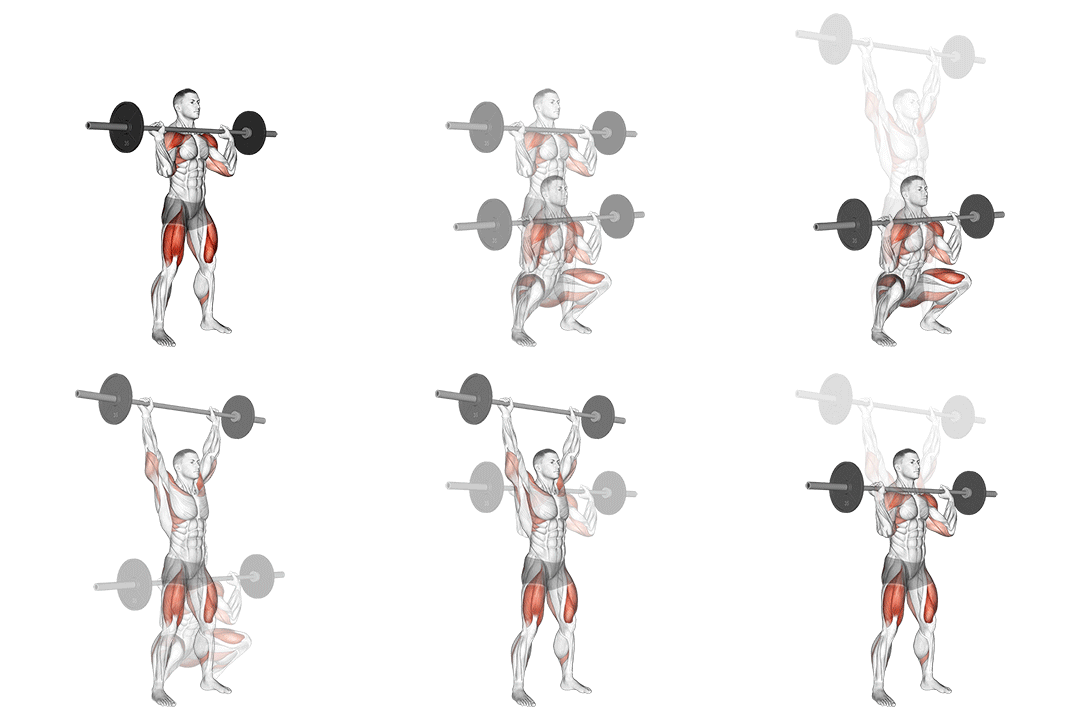
1. Barbell Thruster
95.4% MatchHow to perform this exercise
- Start by standing with your feet shoulder-width apart, holding a barbell at shoulder height with an overhand grip.
- Lower into a squat position by bending your knees and pushing your hips back.
- As you reach the bottom of the squat, explosively drive through your heels to stand up, simultaneously pressing the barbell overhead.
- Lower the barbell back to shoulder height as you lower back into the squat position.
- Repeat for the desired number of repetitions.
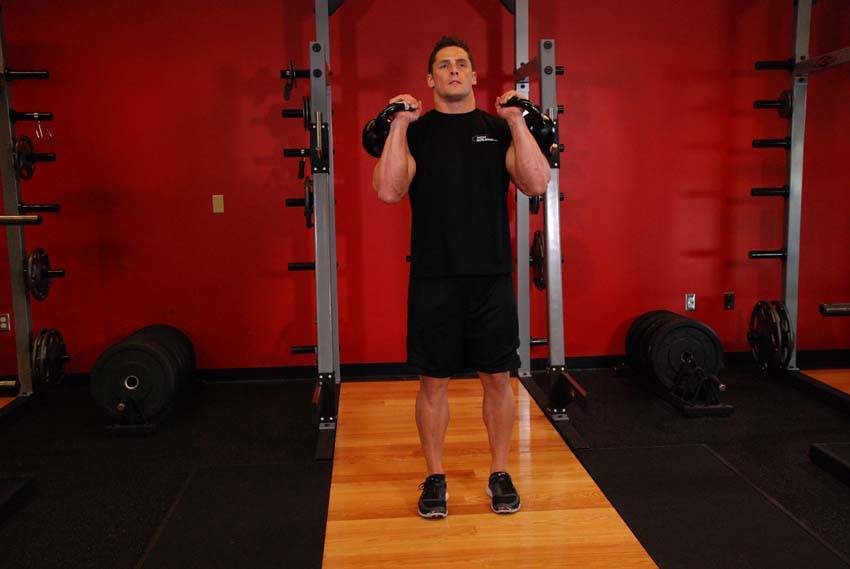
2. Double Kettlebell Jerk
90% MatchHow to perform this exercise
- Hold a kettlebell by the handle in each hand.
- Clean the kettlebells to your shoulders by extending through the legs and hips as you pull the kettlebells towards your shoulders. Rotate your wrists as you do so, so that the palms face forward. This will be your starting position.
- Dip your body by bending the knees, keeping your torso upright.
- Immediately reverse direction, driving through the heels, in essence jumping to create momentum.
- As you do so, press the kettlebells overhead to lockout by extending the arms, using your body's momentum to move the weights.
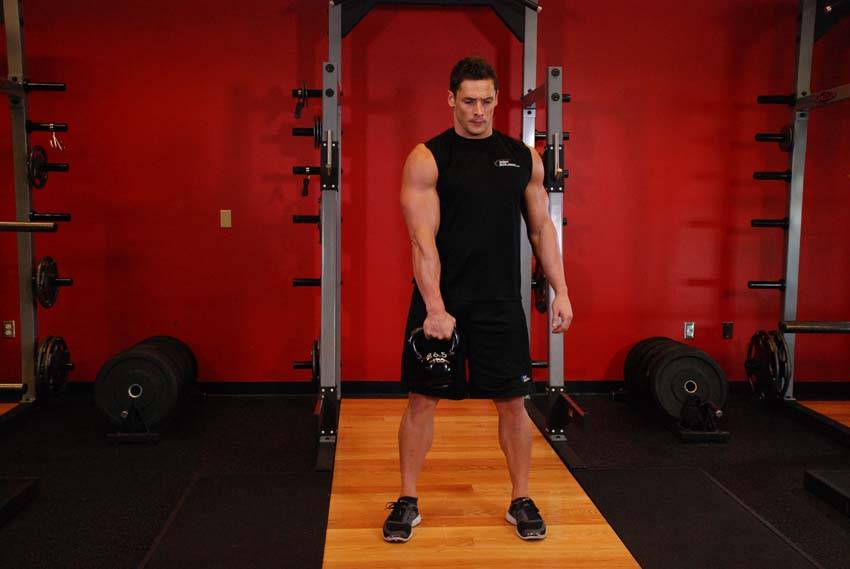
3. One-Arm Kettlebell Split Snatch
89.6% MatchHow to perform this exercise
- Hold a kettlebell in one hand by the handle.
- Squat towards the floor, and then reverse the motion, extending the hips, knees, and finally the ankles, to raise the kettlebell overhead.
- After fully extending the body, descend into a lunge position to receive the weights overhead, one leg forward and one leg back. Ensure you drive through with your hips and lock the ketttlebells overhead in one uninterrupted motion.
- Return to a standing position, holding the weight overhead, and bring the feet together. Lower the weight to return to the starting position.
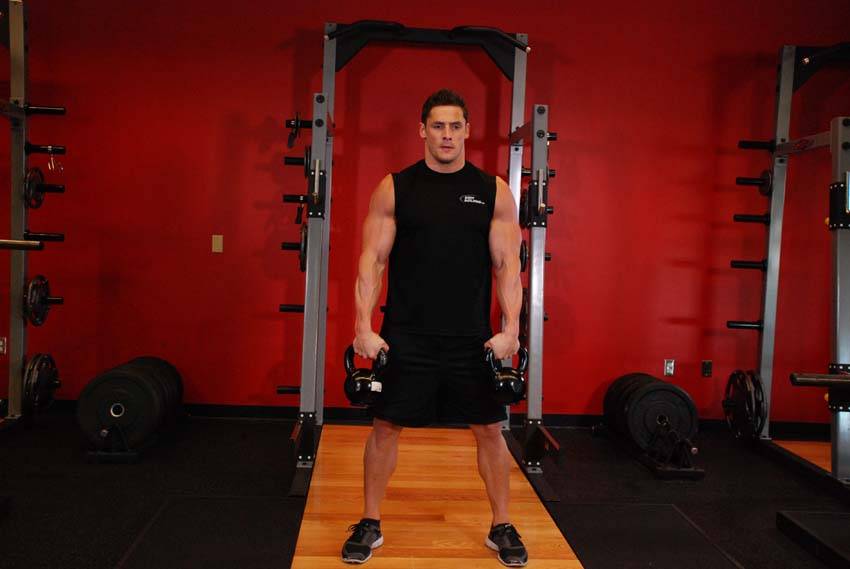
4. Double Kettlebell Snatch
87.9% MatchHow to perform this exercise
- Place two kettlebells behind your feet. Bend your knees and sit back to pick up the kettlebells.
- Swing the kettlebells between your legs forcefully and reverse the direction.
- Drive through with your hips and lock the ketttlebells overhead in one uninterrupted motion.
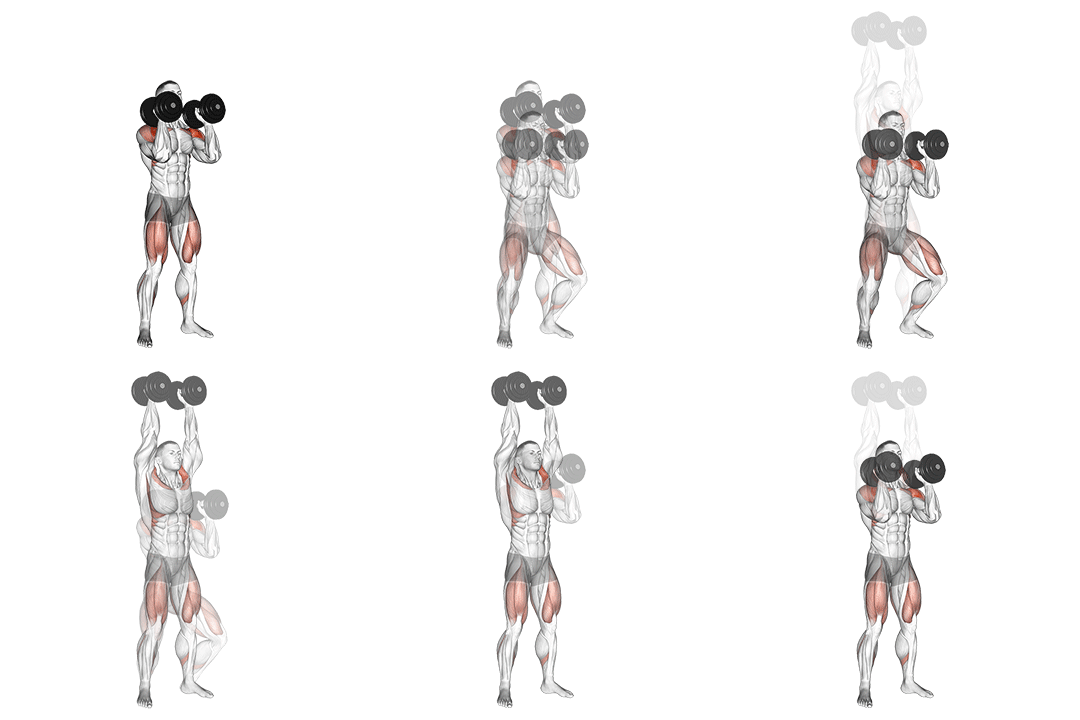
5. Dumbbell Push Press
85% MatchHow to perform this exercise
- Stand with your feet shoulder-width apart, holding a dumbbell in each hand at shoulder level.
- Bend your knees slightly and dip your body down, then explosively extend your legs and press the dumbbells overhead.
- Lock out your arms at the top of the movement, then lower the dumbbells back to shoulder level.
- Repeat for the desired number of repetitions.
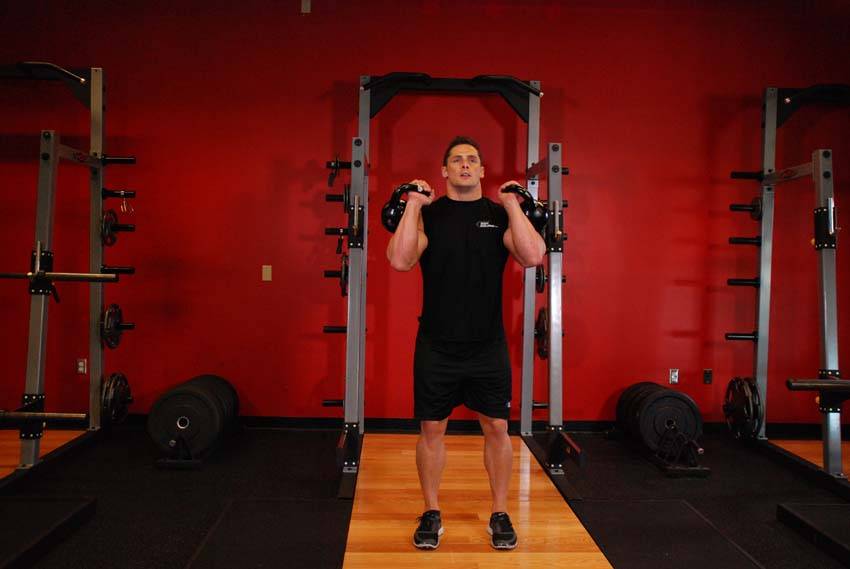
6. Double Kettlebell Push Press
84.4% MatchHow to perform this exercise
- Clean two kettlebells to your shoulders.
- Squat down a few inches and reverse the motion rapidly. Use the momentum from the legs to drive the kettlebells overhead.
- Once the kettlebells are locked out, lower the kettlebells to your shoulders and repeat.
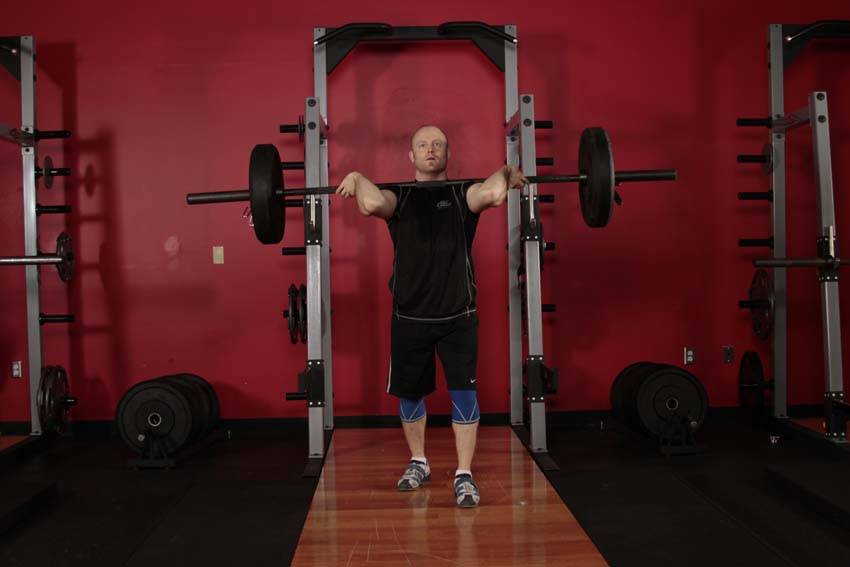
7. Jerk Balance
83.9% MatchHow to perform this exercise
- This drill helps you learn to drive yourself low enough during the jerk and corrects those who move backward during the movement. Begin with the bar racked in the jerk position, with the shoulders forward, torso upright, and the feet split slightly apart.
- Initiate the movement as you would a normal jerk, dipping at the knees while keeping your torso vertical, and driving back up forcefully, using momentum and not your arms to elevate the weight.
- Keep the rear foot in place, using it to drive your body forward into a full split as you jerk the weight. Recover by standing up with the weight overhead.
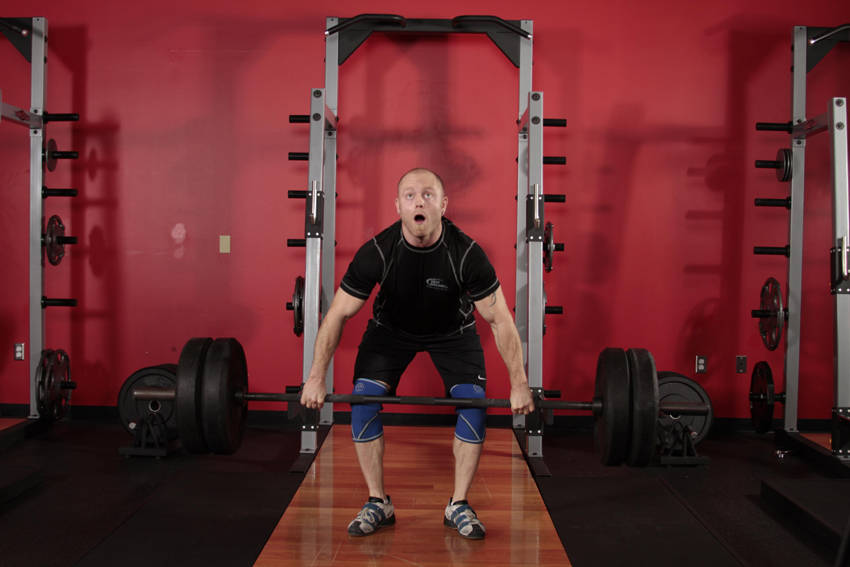
8. Clean And Jerk
82.8% MatchHow to perform this exercise
- With a barbell on the floor close to the shins, take an overhand or hook grip just outside the legs. Lower your hips with the weight focused on the heels, back straight, head facing forward, chest up, with your shoulders just in front of the bar. This will be your starting position.
- Begin the first pull by driving through the heels, extending your knees. Your back angle should stay the same, and your arms should remain straight. Move the weight with control as you continue to above the knees.
- Next comes the second pull, the main source of acceleration for the clean. As the bar approaches the mid-thigh position, begin extending through the hips. In a jumping motion, accelerate by extending the hips, knees, and ankles, using speed to move the bar upward. There should be no need to actively pull through the arms to accelerate the weight; at the end of the second pull, the body should be fully extended, leaning slightly back, with the arms still extended.
- As full extension is achieved, transition into the third pull by aggressively shrugging and flexing the arms with the elbows up and out. At peak extension, aggressively pull yourself down, rotating your elbows under the bar as you do so. Receive the bar in a front squat position, the depth of which is dependent upon the height of the bar at the end of the third pull. The bar should be racked onto the protracted shoulders, lightly touching the throat with the hands relaxed. Continue to descend to the bottom squat position, which will help in the recovery.
- Immediately recover by driving through the heels, keeping the torso upright and elbows up. Continue until you have risen to a standing position.
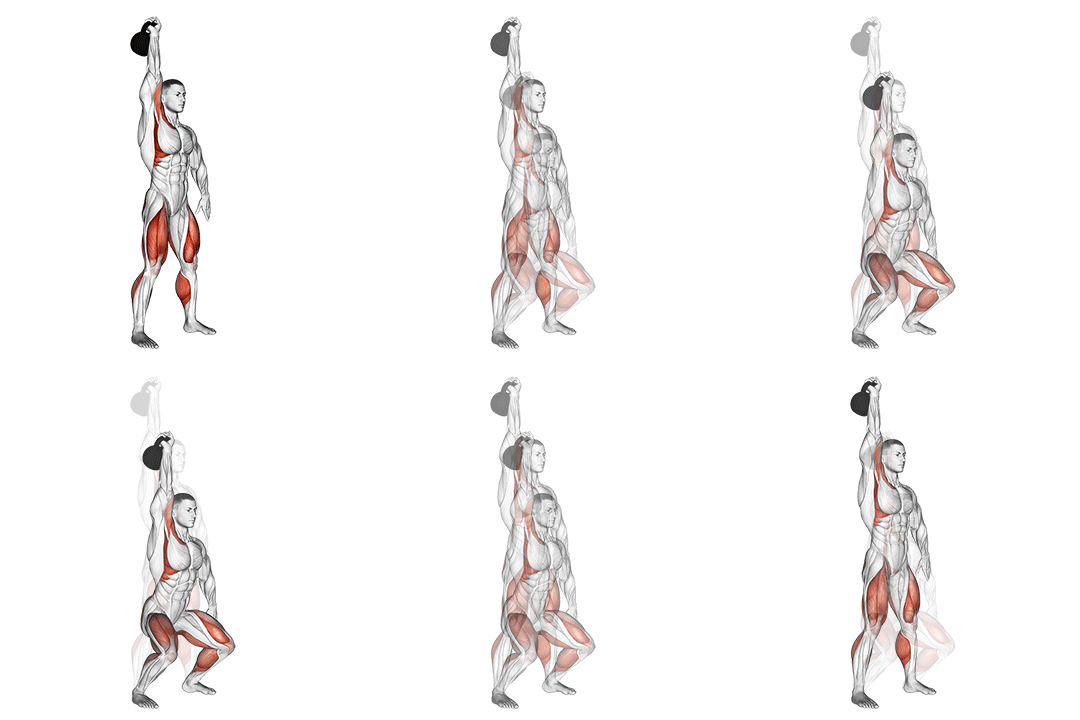
9. Kettlebell One Arm Jerk
80.9% MatchHow to perform this exercise
- Stand with your feet shoulder-width apart, holding a kettlebell in one hand at shoulder height.
- Bend your knees slightly and engage your core.
- Press the kettlebell overhead in a straight line, fully extending your arm.
- As you press the kettlebell overhead, simultaneously dip your knees and quickly straighten them to generate momentum.
- As the kettlebell reaches its highest point, quickly drop underneath it by bending your knees and hips.
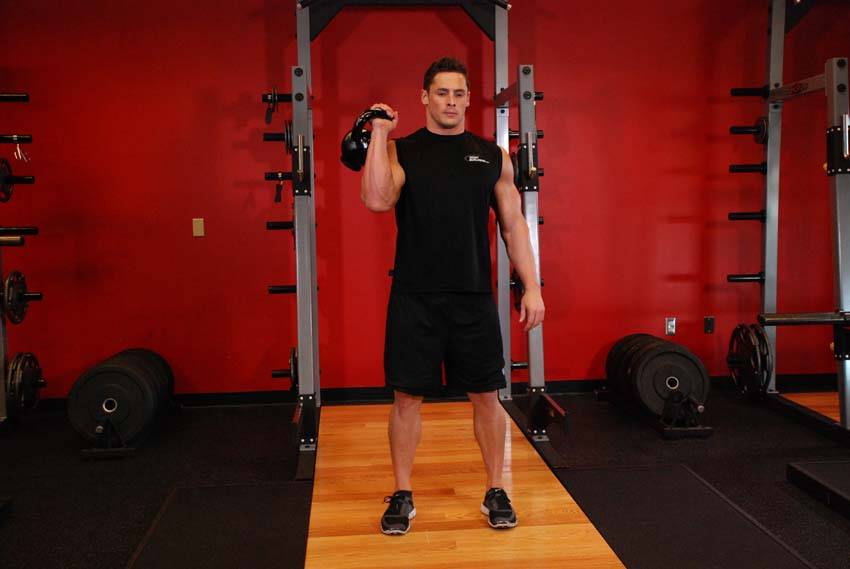
10. One-Arm Kettlebell Split Jerk
80.9% MatchHow to perform this exercise
- Hold a kettlebell by the handle. Clean the kettlebell to your shoulder by extending through the legs and hips as you pull the kettlebell towards your shoulder. Rotate your wrist as you do so, so that the palm faces forward. This will be your starting position.
- Dip your body by bending the knees, keeping your torso upright.
- Immediately reverse direction, driving through the heels, in essence jumping to create momentum. As you do so, press the kettlebell overhead to lockout by extending the arms, using your body's momentum to move the weight.
- Receive the weight overhead by returning to a squat position underneath the weight, positioning one leg in front of you and one leg behind you.
- Keeping the weight overhead, return to a standing position and bring your feet together. Lower the weight to perform the next repetition.
Why You Might Need a Kettlebell Thruster Alternative
A single kettlebell caps how much weight you can drive through the squat and press, and a home gym with no kettlebell, or one too light, stops you from doing the Kettlebell Thruster at all. Each swap keeps the same two part job: bend the knees, drive up through the heels, then lock the weight out overhead. Some swaps move to a barbell to load more plates, or a pair of dumbbells so each hand carries its own weight, a few clean the weight to the shoulders before pressing it, and a couple put one arm under the weight while the other stays out of it. What changes is the tool in your hands, how it gets to your shoulders and how deep you bend before the drive; the finish, arms locked out overhead, stays the same.
How to Choose the Right Substitute
If you already own a barbell, the Barbell Thruster loads more plates than a single kettlebell while keeping the same squat into overhead lockout. With two kettlebells, the Double Kettlebell Push Press cleans both bells to your shoulders, then uses a short squat of a few inches to drive them overhead. Training at home with dumbbells, the Dumbbell Push Press keeps the overhead lockout but drops the squat depth, so there is less to coordinate while learning the timing. If you want the weight overhead on one side at a time, the Kettlebell One Arm Jerk presses a single bell from the shoulder with a knee dip, and the One-arm Kettlebell Split Snatch pulls one bell from a squat straight to lockout and catches it in a split stance, one foot forward and one back.
Frequently Asked Questions
Can I do the Kettlebell Thruster at home?
Yes, if you own a kettlebell or a pair of dumbbells. The Dumbbell Push Press keeps the same overhead lockout with a pair of dumbbells, and the Double Kettlebell Push Press keeps two hands pressing if you already train with two kettlebells, with a shallow dip in place of the full squat. Both fit inside a normal home setup with no barbell required.
Which swap suits a beginner?
The Dumbbell Push Press. It keeps the overhead lockout from the Kettlebell Thruster but drops the deep squat, so there is less to coordinate while you learn the timing. The Barbell Thruster is a reasonable next step once you are comfortable racking a bar across the front of your shoulders.
Do I need a barbell, or can kettlebells alone work?
Kettlebells alone work fine. The Double Kettlebell Jerk, the Double Kettlebell Snatch and the Kettlebell One Arm Jerk need nothing but kettlebells while changing how the weight gets overhead, and the Double Kettlebell Push Press keeps two hands pressing if you want to stay with two bells.
Which alternative changes my footwork?
The One-arm Kettlebell Split Snatch and the Double Kettlebell Jerk both land you in a split stance, one foot forward and one back, as the weight settles overhead, instead of the flat stance you finish a Kettlebell Thruster in. You bring your feet back together to stand up once the weight is locked out, the same way you would recover from either lift.
More Exercise Alternatives
Find Alternatives for Any Exercise
Use the exercise substitution finder to compare ranked alternatives for your available equipment and training preference.
Try the Exercise Substitution Finder →