

10 Best Two-arm Kettlebell Clean Alternatives for Limited Equipment
The Two-arm Kettlebell Clean is done standing with a kettlebell. Ranked closest by our scoring: the Landmine Linear Jammer and Kettlebell Pirate Ships. A harder version, the Two-arm Kettlebell Jerk, is listed below as a progression rather than a swap.
Updated Ranked by our 12-factor similarity model How it works
Original Exercise: Two-arm Kettlebell Clean
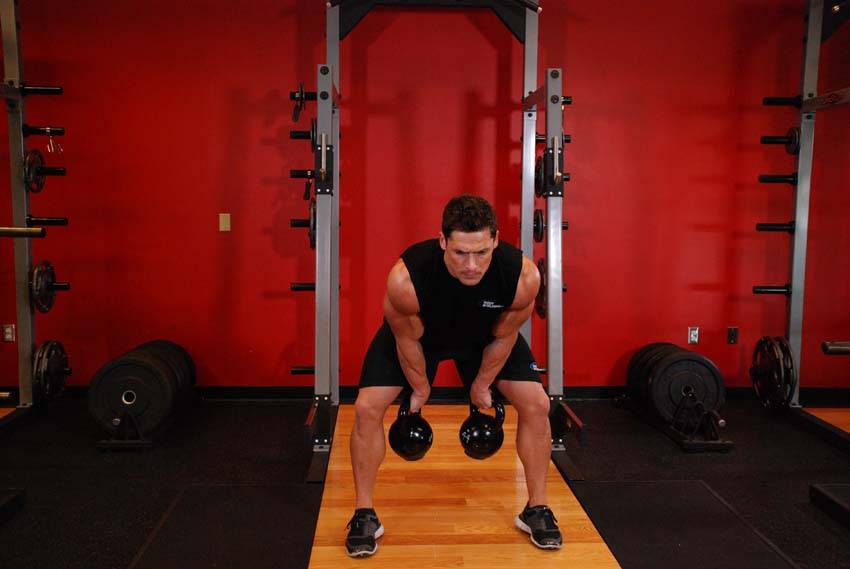
- Primary muscle
- Shoulders
- Equipment
- Kettlebell
- Difficulty
- Intermediate
- Type
- Compound
Secondary muscles: Calves, Glutes, Hamstrings, Lower Back, Traps
How to perform Two-arm Kettlebell Clean
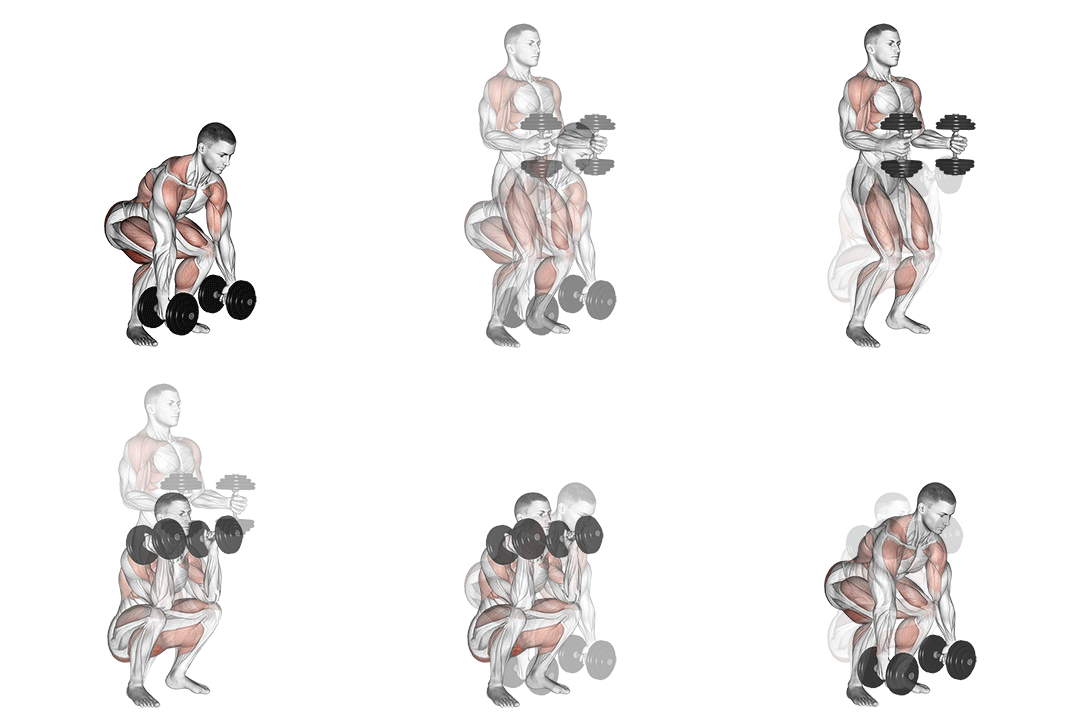
- Place two kettlebells between your feet. To get in the starting position, push your butt back and look straight ahead.
- Clean the kettlebells to your shoulders by extending through the legs and hips as you raise the kettlebells towards your shoulders. Rotate your wrists as you do so.
- Lower the kettlebells back to the starting position and repeat.
Ranked Two-arm Kettlebell Clean Alternatives
10 substitutes, ranked by how closely each one matches the Two-arm Kettlebell Clean on movement pattern, muscles worked, equipment and body position. The higher the score, the less you change. Open "How to perform this exercise" on a card for the steps; every card title links to that exercise's own alternatives page. Harder versions are tagged as progressions and kept out of the top spot even when they score higher.
Best match 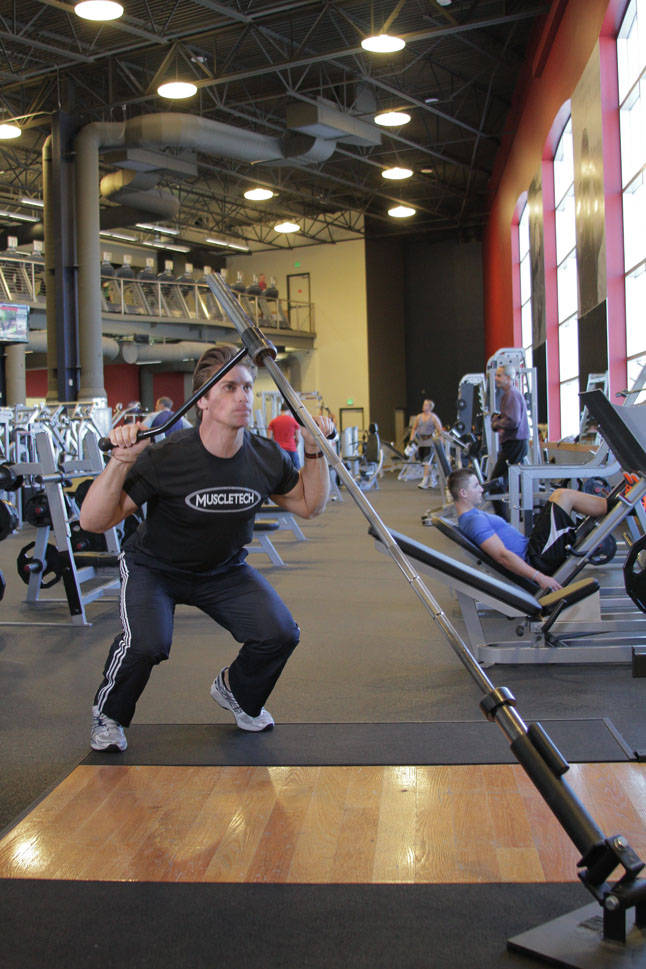
1. Landmine Linear Jammer
79% match- Shoulders
- Barbell
- Advanced
- Compound
A good swap when you have a barbell to work with, and it still works the shoulders.
How to perform this exercise
- Position a bar into landmine or, lacking one, securely anchor it in a corner. Load the bar to an appropriate weight and position the handle attachment on the bar.
- Raise the bar from the floor, taking the handles to your shoulders. This will be your starting position.
- In an athletic stance, squat by flexing your hips and setting your hips back, keeping your arms flexed.
- Reverse the motion by powerfully extending through the hips, knees, and ankles, while also extending the elbows to straighten the arms. This movement should be done explosively, coming out of the squat to full extension as powerfully as possible.
- Return to the starting position.
Sets and reps: 3 to 5 sets of 5 to 8 reps.
Why this matches
- Primary muscle: shoulders, the same as the Two-arm Kettlebell Clean
- Equipment: free weights, the same as the Two-arm Kettlebell Clean
- Body position: standing, the same as the Two-arm Kettlebell Clean
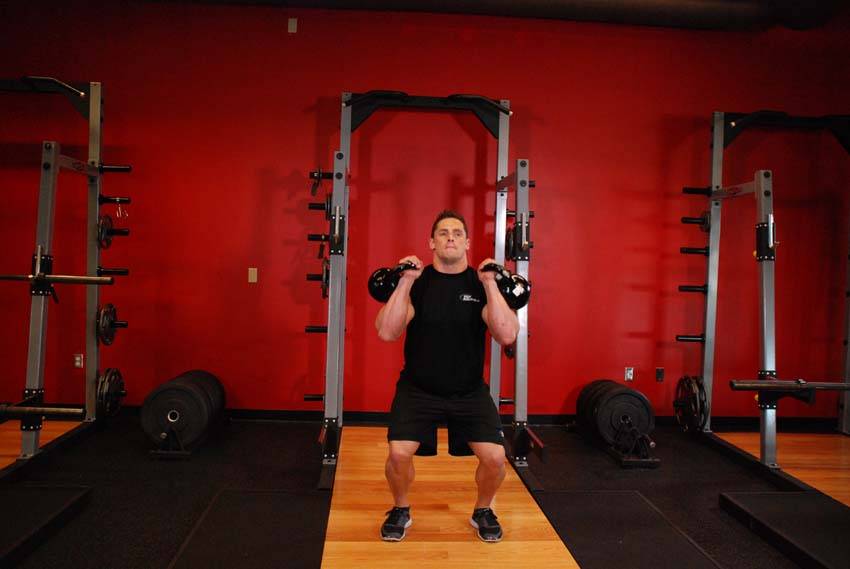
Progression
2. Two-arm Kettlebell Jerk
78% match- Shoulders
- Kettlebell
- Advanced
- Compound
Pick this when you want a harder version that still works the shoulders.
How to perform this exercise
- Clean two kettlebells to your shoulders. Clean the kettlebells to your shoulders by extending through the legs and hips as you swing the kettlebells towards your shoulders. Rotate your wrists as you do so, so that the palms face forward. Squat down a few inches and reverse the motion rapidly driving both kettlebells overhead. Immediately after the initial push, squat down again and get under the kettlebells. Once the kettlebells are locked out, stand upright to complete the exercise.
Sets and reps: 3 to 5 sets of 5 to 8 reps.
Why this matches
- Primary muscle: shoulders, the same as the Two-arm Kettlebell Clean
- Equipment: free weights, the same as the Two-arm Kettlebell Clean
- Body position: standing, the same as the Two-arm Kettlebell Clean
- Balance: harder to stay steady on than the Two-arm Kettlebell Clean
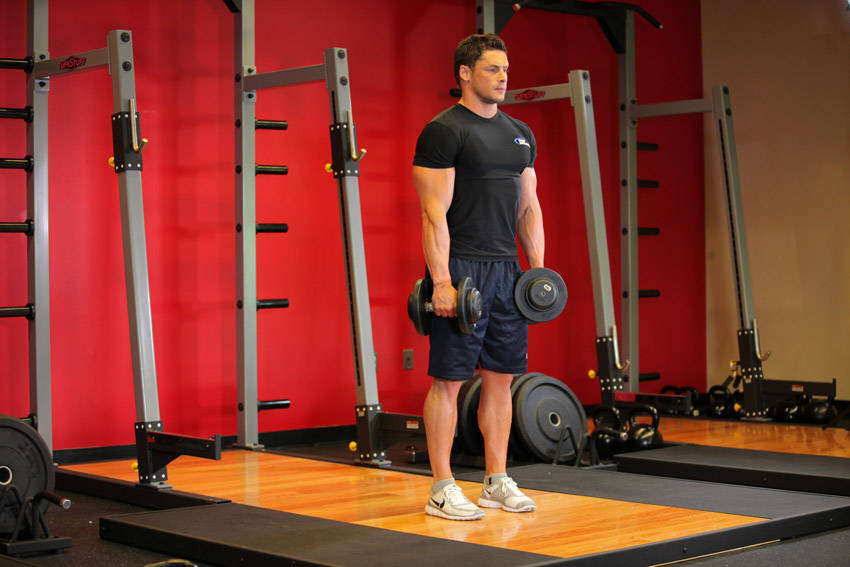
3. Stiff-legged Dumbbell Deadlift
70% match- Hamstrings
- Dumbbell
- Intermediate
- Compound
A looser match: it works the hamstrings rather than the shoulders.
How to perform this exercise
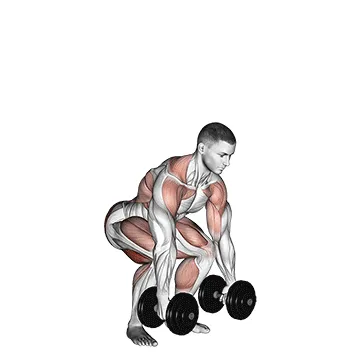
- Grasp a couple of dumbbells holding them by your side at arm's length.
- Stand with your torso straight and your legs spaced using a shoulder width or narrower stance. The knees should be slightly bent. This is your starting position.
- Keeping the knees stationary, lower the dumbbells to over the top of your feet by bending at the waist while keeping your back straight. Keep moving forward as if you were going to pick something from the floor until you feel a stretch on the hamstrings. Exhale as you perform this movement
- Start bringing your torso up straight again by extending your hips and waist until you are back at the starting position. Inhale as you perform this movement.
- Repeat for the recommended amount of repetitions.
Sets and reps: 3 or 4 sets of 6 to 10 reps.
Why this matches
- Primary muscle: hamstrings, not shoulders
- Equipment: free weights, the same as the Two-arm Kettlebell Clean
- Body position: standing, the same as the Two-arm Kettlebell Clean
4. Trap Bar Deadlift
69% match- Glutes
- Trap-bar
- Intermediate
- Compound
A looser match: it works the glutes rather than the shoulders.
How to perform this exercise
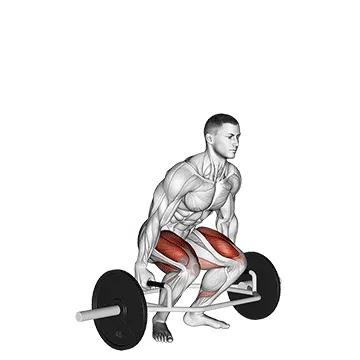
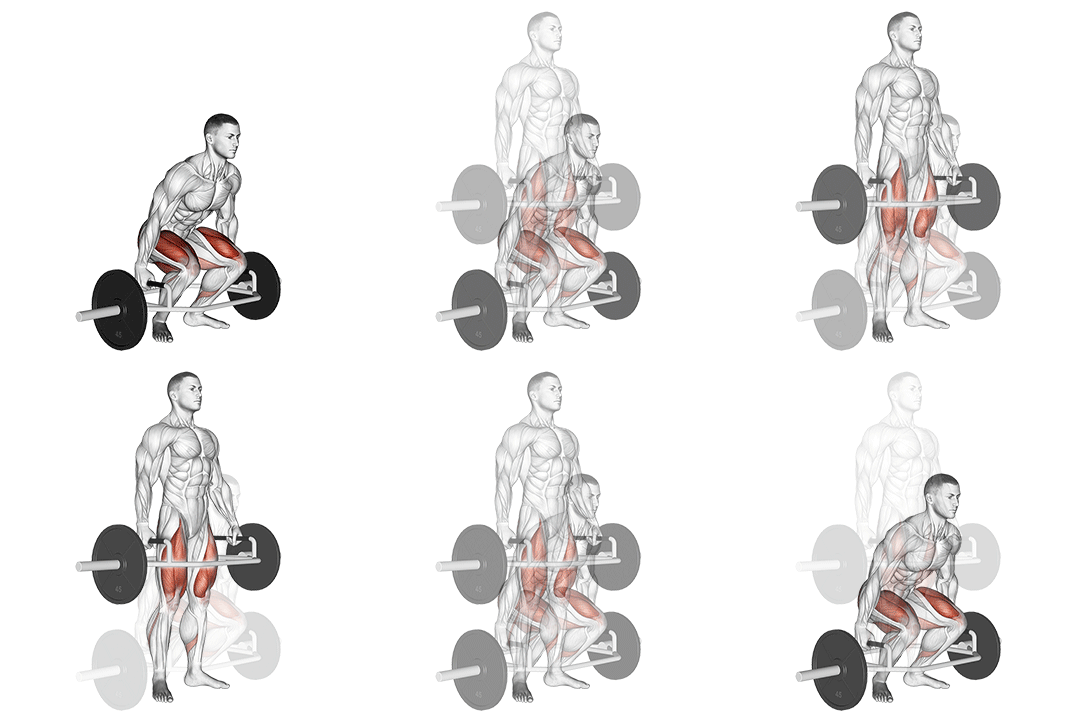
- Stand with your feet shoulder-width apart and the trap bar on the ground in front of you.
- Bend at the hips and knees to lower yourself down and grip the handles of the trap bar with an overhand grip.
- Keep your back straight and chest up as you begin to lift the trap bar off the ground by extending your hips and knees.
- As you lift, focus on driving through your heels and squeezing your glutes at the top of the movement.
- Lower the trap bar back down to the ground by bending at the hips and knees, keeping your back straight throughout the movement.
- Repeat for the desired number of repetitions.
Sets and reps: 3 or 4 sets of 6 to 10 reps.
Why this matches
- Primary muscle: glutes, not shoulders
- Equipment: free weights, the same as the Two-arm Kettlebell Clean
- Body position: standing, the same as the Two-arm Kettlebell Clean
5. Dumbbell Clean
69% match- Glutes
- Dumbbell
- Advanced
- Compound
How to perform this exercise
- Stand with your feet shoulder-width apart, holding a dumbbell in each hand with an overhand grip.
- Bend your knees and lower your hips into a squat position, keeping your back straight and chest up.
- Explosively extend your hips and knees, driving through your heels to jump off the ground.
- As you jump, shrug your shoulders and pull the dumbbells up towards your shoulders, keeping them close to your body.
- Catch the dumbbells at shoulder height, with your elbows pointing forward and your palms facing up.
- Lower the dumbbells back down to the starting position by reversing the movement.
- Repeat for the desired number of repetitions.
Sets and reps: 3 to 5 sets of 5 to 8 reps.
Why this matches
- Primary muscle: glutes, not shoulders
- Equipment: free weights, the same as the Two-arm Kettlebell Clean
- Body position: standing, the same as the Two-arm Kettlebell Clean
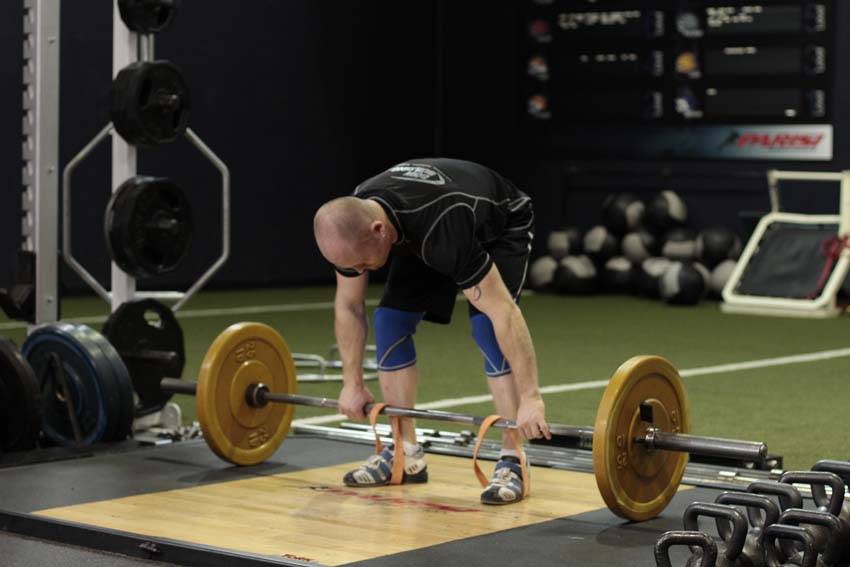
6. Deadlift With Bands
67% match- Erector Spinae
- Barbell
- Advanced
- Compound
A looser match: it works the erector spinae rather than the shoulders.
How to perform this exercise
- To deadlift with short bands, simply loop them over the bar before you start, and step into them to set up. For long bands, they will need to be anchored to a secure base, such as heavy dumbbells or a rack.
- With your feet, and your grip set, take a big breath and then lower your hips and bend the knees until your shins contact the bar. Look forward with your head, keep your chest up and your back arched, and begin driving through the heels to move the weight upward. After the bar passes the knees, aggressively pull the bar back, pulling your shoulder blades together as you drive your hips forward into the bar.
- Lower the bar by bending at the hips and guiding it to the floor.
Sets and reps: 3 to 5 sets of 5 to 8 reps.
Why this matches
- Primary muscle: erector spinae, not shoulders
- Equipment: free weights, the same as the Two-arm Kettlebell Clean
- Body position: standing, the same as the Two-arm Kettlebell Clean
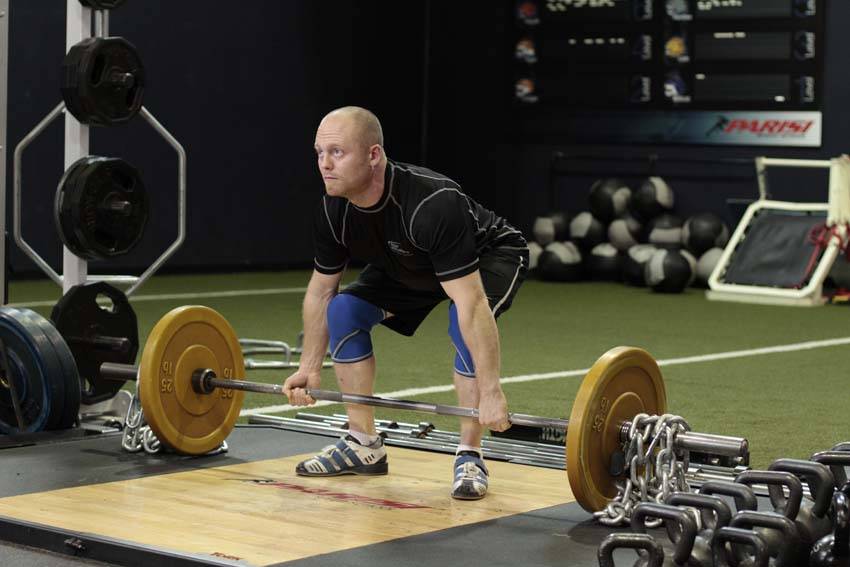
7. Deadlift With Chains
67% match- Erector Spinae
- Barbell
- Advanced
- Compound
How to perform this exercise
- You can attach the chains to the sleeves of the bar, or just drape the middle over the bar so there is a greater weight increase as you lift.
- Approach the bar so that it is centered over your feet. You feet should be about hip width apart. Bend at the hip to grip the bar at shoulder width, allowing your shoulder blades to protract. Typically, you would use an overhand grip or an over/under grip on heavier sets. With your feet, and your grip set, take a big breath and then lower your hips and bend the knees until your shins contact the bar.
- Look forward with your head, keep your chest up and your back arched, and begin driving through the heels to move the weight upward. After the bar passes the knees, aggressively pull the bar back, pulling your shoulder blades together as you drive your hips forward into the bar.
- Lower the bar by bending at the hips and guiding it to the floor.
Sets and reps: 3 to 5 sets of 5 to 8 reps.
Why this matches
- Primary muscle: erector spinae, not shoulders
- Equipment: free weights, the same as the Two-arm Kettlebell Clean
- Body position: standing, the same as the Two-arm Kettlebell Clean
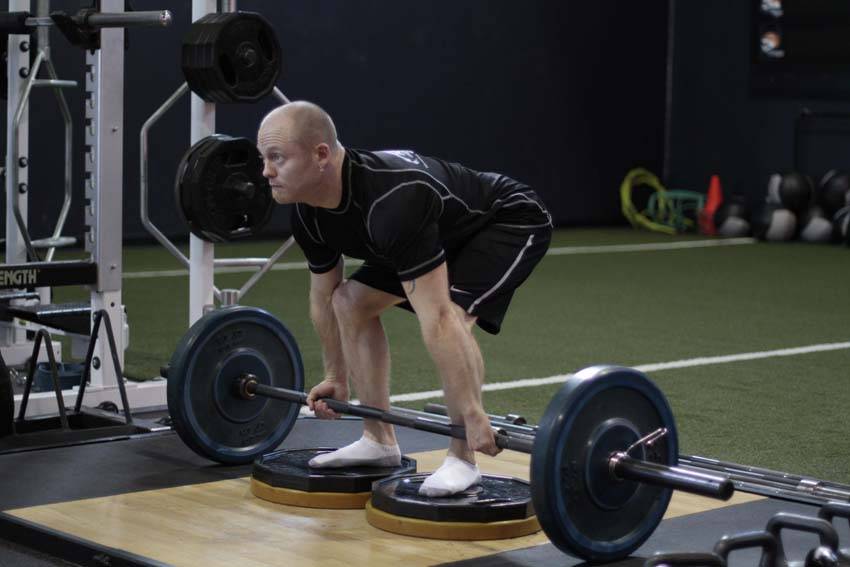
8. Deficit Deadlift
67% match- Erector Spinae
- Barbell
- Advanced
- Compound
How to perform this exercise
- Begin by having a platform or weight plates that you can stand on, usually 1-3 inches in height. Approach the bar so that it is centered over your feet. You feet should be about hip width apart. Bend at the hip to grip the bar at shoulder width, allowing your shoulder blades to protract. Typically, you would use an overhand grip or an over/under grip on heavier sets.
- With your feet, and your grip set, take a big breath and then lower your hips and bend the knees until your shins contact the bar. Look forward with your head, keep your chest up and your back arched, and begin driving through the heels to move the weight upward. After the bar passes the knees, aggressively pull the bar back, pulling your shoulder blades together as you drive your hips forward into the bar.
- Lower the bar by bending at the hips and guiding it to the floor.
Sets and reps: 3 to 5 sets of 5 to 8 reps.
Why this matches
- Primary muscle: erector spinae, not shoulders
- Equipment: free weights, the same as the Two-arm Kettlebell Clean
- Body position: standing, the same as the Two-arm Kettlebell Clean
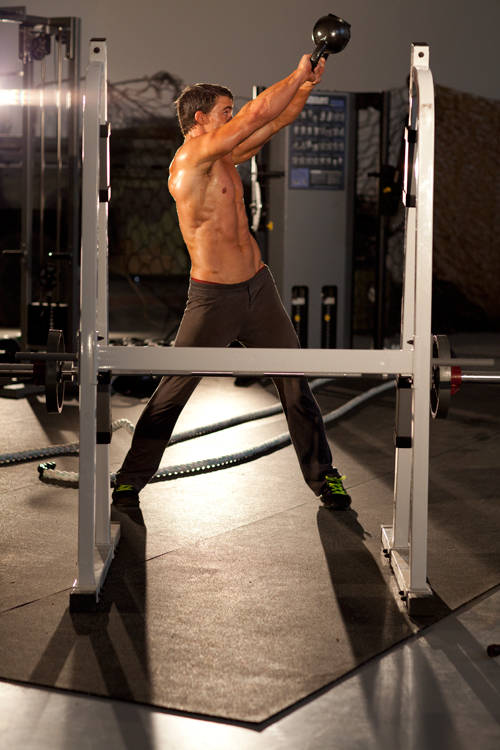
9. Kettlebell Pirate Ships
67% match- Shoulders
- Kettlebell
- Intermediate
- Compound
How to perform this exercise
- With a wide stance, hold a kettlebell with both hands. Allow it to hang at waist level with your arms extended. This will be your starting position.
- Initiate the movement by turning to one side, swinging the kettlebell to head height. Briefly pause at the top of the motion.
- Allow the bell to drop as you rotate to the opposite side, again raising the kettlebell to head height.
- Repeat for the desired amount of repetitions.
Sets and reps: 3 or 4 sets of 6 to 10 reps on each side.
Why this matches
- Primary muscle: shoulders, the same as the Two-arm Kettlebell Clean
- Equipment: free weights, the same as the Two-arm Kettlebell Clean
- Body position: standing, the same as the Two-arm Kettlebell Clean
- Balance: harder to stay steady on than the Two-arm Kettlebell Clean
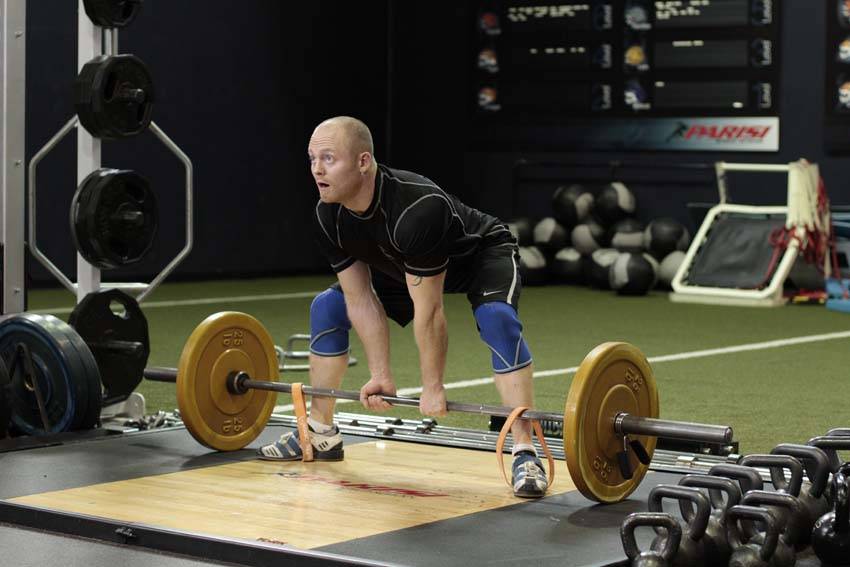
10. Sumo Deadlift With Bands
67% match- Hamstrings
- Barbell
- Advanced
- Compound
How to perform this exercise
- To deadlift with short bands, simply loop them over the bar before you start, and step into them to set up. Ensure that they under the back half of your foot, directly where you are driving into the floor.
- Begin with a bar loaded on the ground. Approach the bar so that the bar intersects the middle of the feet. The feet should be set very wide, near the collars. Bend at the hips to grip the bar. The arms should be directly below the shoulders, inside the legs, and you can use a pronated grip, a mixed grip, or hook grip.
- Take a breath, and then lower your hips, looking forward with your head with your chest up. Drive through the floor, spreading your feet apart, with your weight on the back half of your feet. Extend through the hips and knees.
- As the bar passes through the knees, lean back and drive the hips into the bar, pulling your shoulder blades together.
- Return the weight to the ground by bending at the hips and controlling the weight on the way down.
Sets and reps: 3 to 5 sets of 5 to 8 reps.
Why this matches
- Primary muscle: hamstrings, not shoulders
- Equipment: free weights, the same as the Two-arm Kettlebell Clean
- Body position: standing, the same as the Two-arm Kettlebell Clean
Why You Might Need a Two-arm Kettlebell Clean Alternative
You might substitute the Two-arm Kettlebell Clean because of shoulder pain, lack of kettlebells, poor mobility, or programming goals that favor strength or hypertrophy over power. Substitutes let you reduce load on the wrists and scapula, isolate the deltoids, or emphasize hip extension without the aggressive rack position. For example, use a dumbbell clean to split load between hands and reduce shear on the shoulder; cue: pull with the hips, keep a neutral spine, and absorb the weight by flexing the elbows into the rack. Choose a substitute that preserves the intended movement pattern: hip drive into a shoulder catch.
Two-arm Kettlebell Clean FAQ
What muscles does Two-arm Kettlebell Clean work?
The Two-arm Kettlebell Clean recruits the shoulders (primarily anterior and medial deltoids) along with the traps, upper back, glutes, hamstrings, and core. Biomechanically it relies on hip triple-extension to generate momentum and scapular elevation to catch the weight; cue: drive the hips and keep the scapula slightly retracted on the rack.
Find Alternatives for Any Exercise
Search the exercise database and filter the ranked substitutes by the equipment you own.
Similarity scores compare exercise metadata such as movement pattern, muscles, equipment and body position. They are not a safety rating or a check that you own the equipment. Learn about our methodology