

10 Best Upward Stretch Alternatives for Shoulder Mobility
The Upward Stretch is done standing. Ranked closest by our scoring: the Round The World Shoulder Stretch. A harder version, the Triceps Dip (Between Benches), is listed below as a progression rather than a swap.
Updated Ranked by our 12-factor similarity model How it works
Original Exercise: Upward Stretch
- Primary muscle
- Shoulders
- Equipment
- Bodyweight
- Difficulty
- Beginner
- Type
- Isolation
Secondary muscles: Chest, Lats
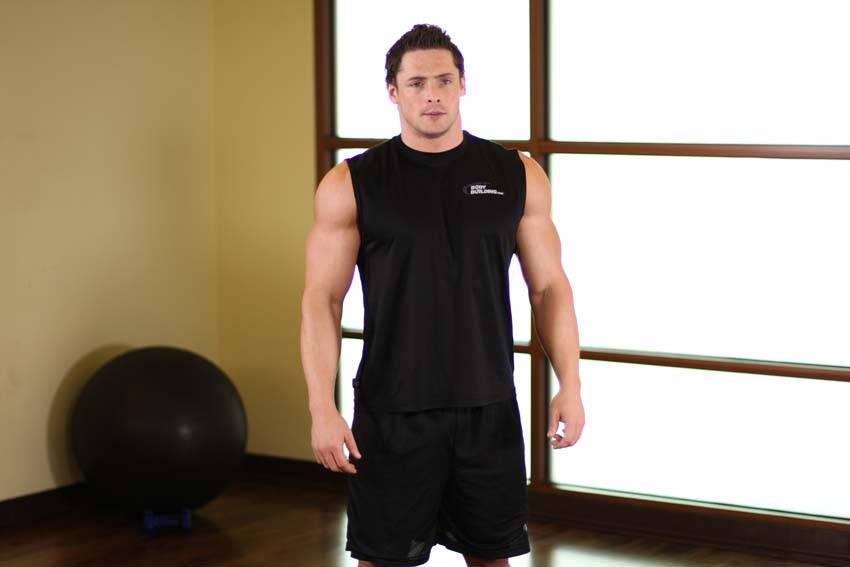
How to perform Upward Stretch
- Extend both hands straight above your head, palms touching.
- Slowly push your hands up and back, keeping your back straight.
Ranked Upward Stretch Alternatives
10 substitutes, ranked by how closely each one matches the Upward Stretch on movement pattern, muscles worked, equipment and body position. The higher the score, the less you change. Open "How to perform this exercise" on a card for the steps; every card title links to that exercise's own alternatives page. Harder versions are tagged as progressions and kept out of the top spot even when they score higher.
1. Chair Upper Body Stretch
85% match- Delts
- Other
- Beginner
- Isolation
A looser match: it works the delts rather than the shoulders.
How to perform this exercise
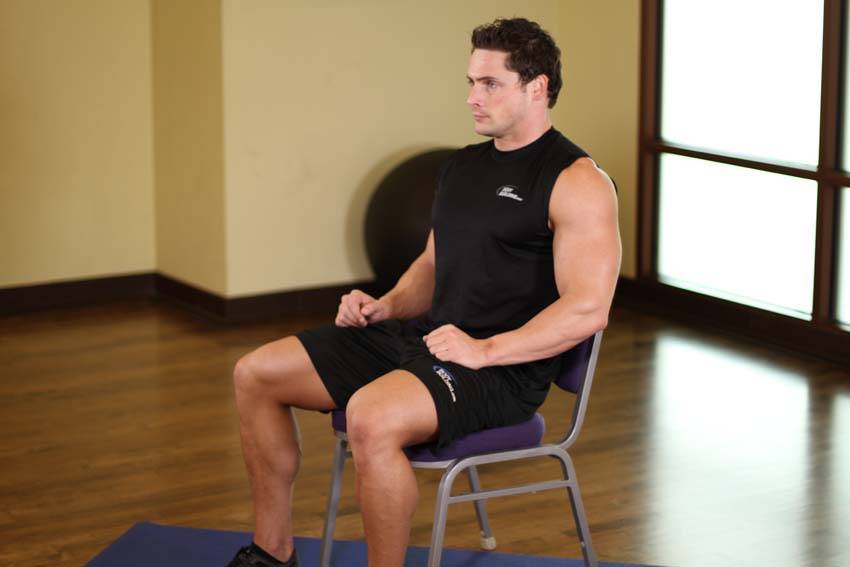
- Sit on the edge of a chair, gripping the back of it.
- Straighten your arms, keeping your back straight, and pull your upper body forward so you feel a stretch. Hold for 20-30 seconds.
Sets and reps: 3 sets of 8 to 12 reps, and add reps before you add load.
Why this matches
- Movement: static stretch, the same as the Upward Stretch
- Primary muscle: delts, not shoulders
- Equipment: bodyweight only, the same as the Upward Stretch
- Body position: standing, the same as the Upward Stretch
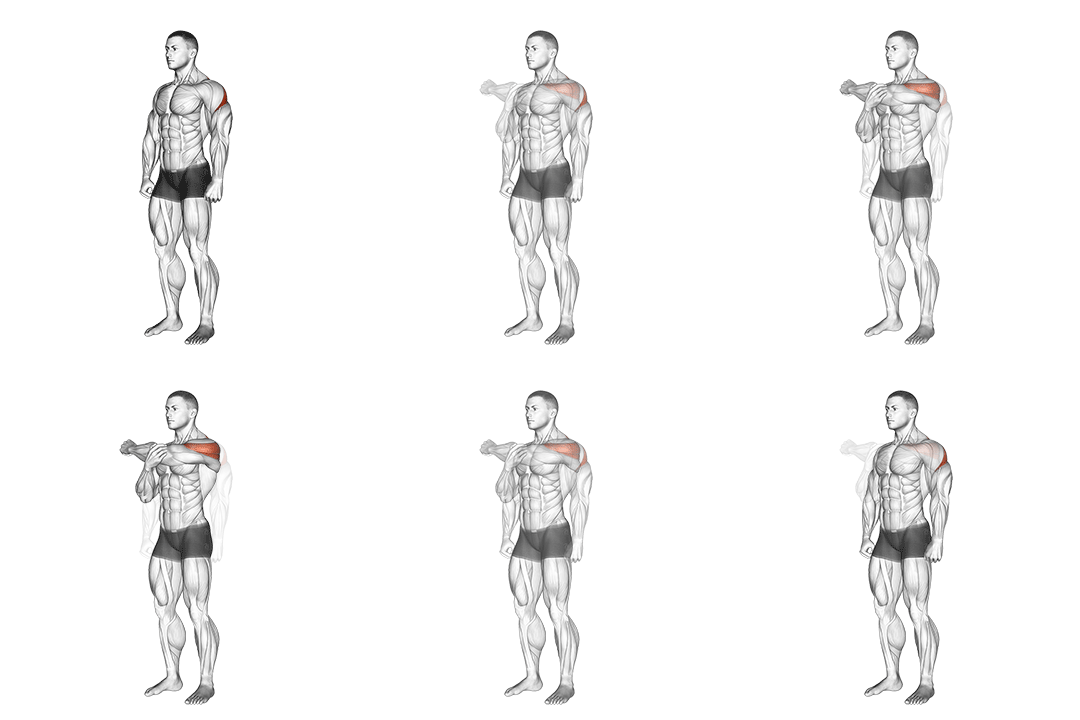
2. Rear Deltoid Stretch
84% match- Delts
- Bodyweight
- Beginner
- Isolation
A looser match: it uses the same equipment, but it works the delts rather than the shoulders.
How to perform this exercise
- Stand tall with your feet shoulder-width apart.
- Extend your right arm across your chest, placing your left hand on your right elbow.
- Gently pull your right arm towards your left shoulder, feeling a stretch in your right shoulder.
- Hold the stretch for 15-30 seconds, then release.
- Repeat on the other side.
Sets and reps: 3 sets of 8 to 12 reps, and add reps before you add load.
Why this matches
- Movement: static stretch, the same as the Upward Stretch
- Primary muscle: delts, not shoulders
- Equipment: bodyweight only, the same as the Upward Stretch
- Body position: standing, the same as the Upward Stretch
3. Shoulder Stretch
81% match- Delts
- Bodyweight
- Beginner
- Isolation
How to perform this exercise
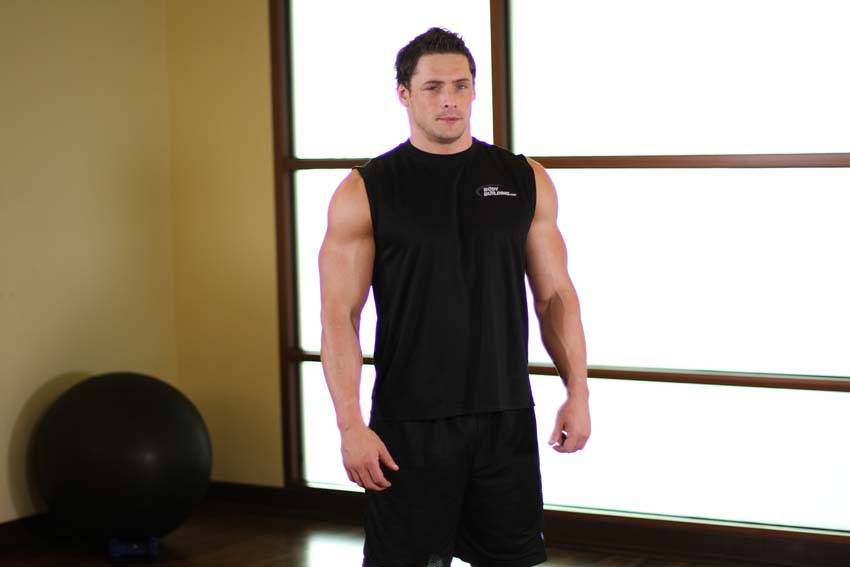
- Reach your left arm across your body and hold it straight.
Sets and reps: Hold for 20 to 30 seconds, 3 sets.
Why this matches
- Movement: static stretch, the same as the Upward Stretch
- Primary muscle: delts, not shoulders
- Equipment: bodyweight only, the same as the Upward Stretch
- Body position: standing, the same as the Upward Stretch
Best match 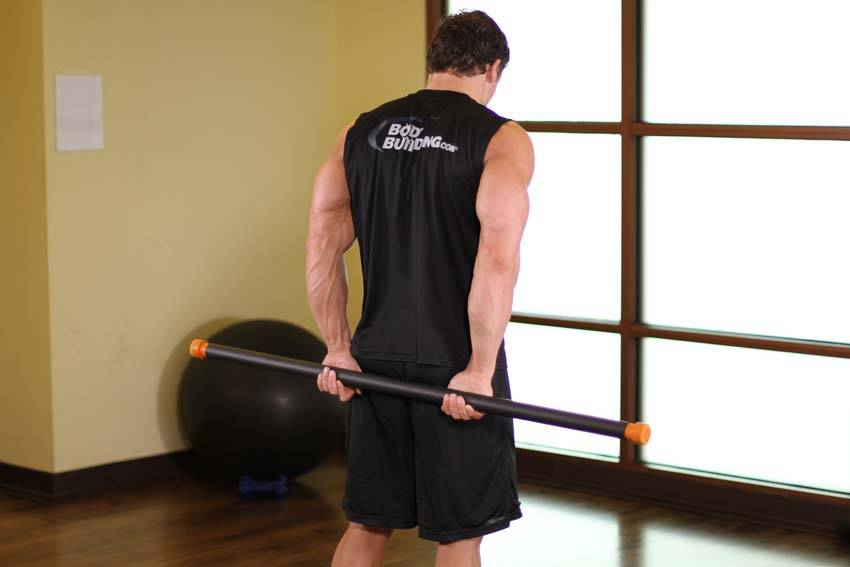
4. Round The World Shoulder Stretch
79% match- Shoulders
- Other
- Beginner
- Isolation
It still works the shoulders, through a different movement.
How to perform this exercise
- Stand up straight with your legs together, holding a bodybar or broomstick.
- Hold the pole behind your hips with a wider than shoulder width grip. Your palms should be down and your thumbs facing out.
- Slowly lift your arms up behind your head. Don't force it if it gets hard to lift further.
Sets and reps: 3 sets of 8 to 12 reps, and add reps before you add load.
Why this matches
- Primary muscle: shoulders, the same as the Upward Stretch
- Equipment: bodyweight only, the same as the Upward Stretch
- Body position: standing, the same as the Upward Stretch
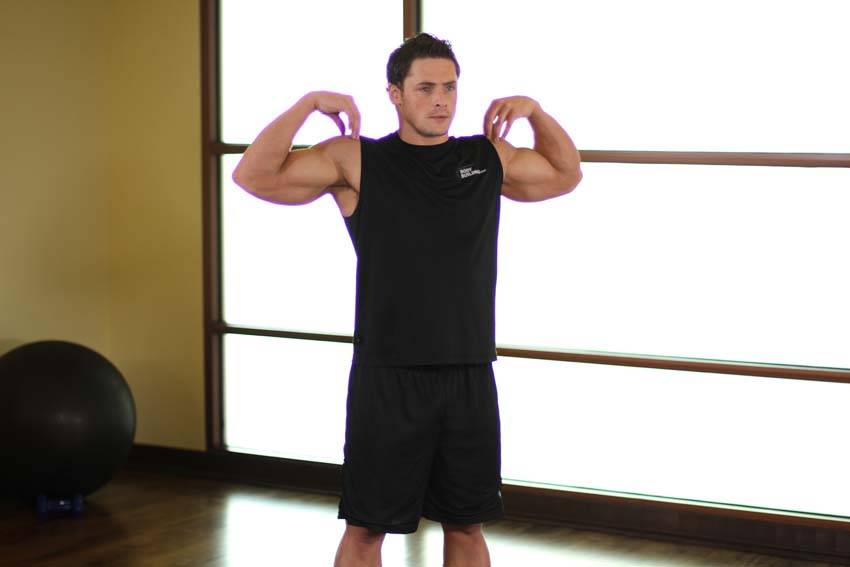
5. Elbow Circles
75% match- Delts
- Bodyweight
- Beginner
- Isolation
How to perform this exercise
- Sit or stand with your feet slightly apart.
- Place your hands on your shoulders with your elbows at shoulder level and pointing out.
- Slowly make a circle with your elbows. Breathe out as you start the circle and breathe in as you complete the circle.
Sets and reps: 3 sets of 8 to 12 reps, and add reps before you add load.
Why this matches
- Primary muscle: delts, not shoulders
- Equipment: bodyweight only, the same as the Upward Stretch
- Body position: standing, the same as the Upward Stretch
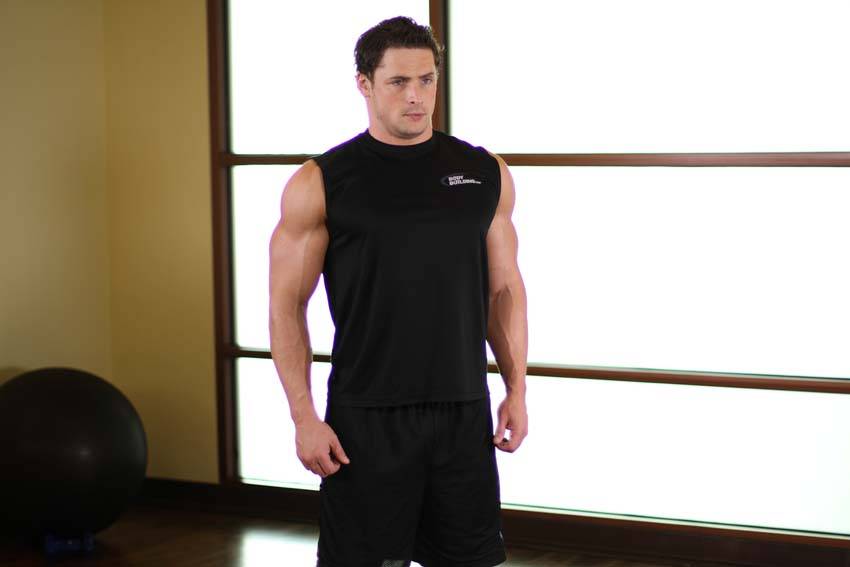
6. Shoulder Circles
65% match- Delts
- Bodyweight
- Beginner
- Isolation
How to perform this exercise
- With shoulders relaxed and arms resting loosely at your sides (or in your lap if you're seated), gently roll your shoulders forward, up, back, and down.
- Reverse direction. You can do this exercise alternating shoulders or both at the same time.
Sets and reps: 3 sets of 8 to 12 reps, and add reps before you add load.
Why this matches
- Primary muscle: delts, not shoulders
- Equipment: bodyweight only, the same as the Upward Stretch
- Body position: standing, the same as the Upward Stretch
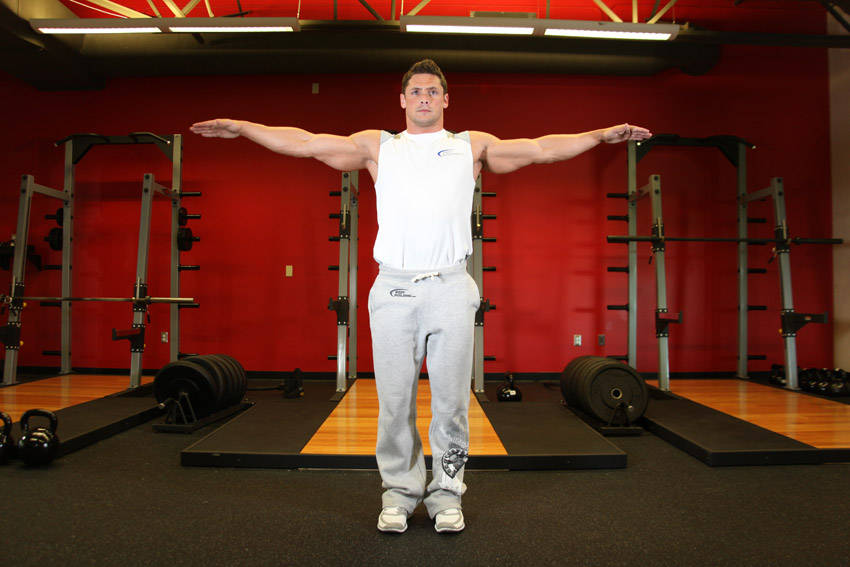
7. Arm Circles
64% match- Delts
- Bodyweight
- Beginner
- Isolation
How to perform this exercise
- Stand up and extend your arms straight out by the sides. The arms should be parallel to the floor and perpendicular (90-degree angle) to your torso. This will be your starting position.
- Slowly start to make circles of about 1 foot in diameter with each outstretched arm. Breathe normally as you perform the movement.
- Continue the circular motion of the outstretched arms for about ten seconds. Then reverse the movement, going the opposite direction.
Sets and reps: 3 sets of 8 to 12 reps, and add reps before you add load.
Why this matches
- Primary muscle: delts, not shoulders
- Equipment: bodyweight only, the same as the Upward Stretch
- Body position: standing, the same as the Upward Stretch
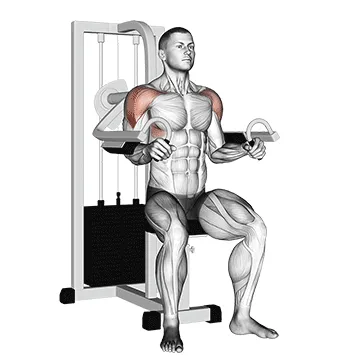
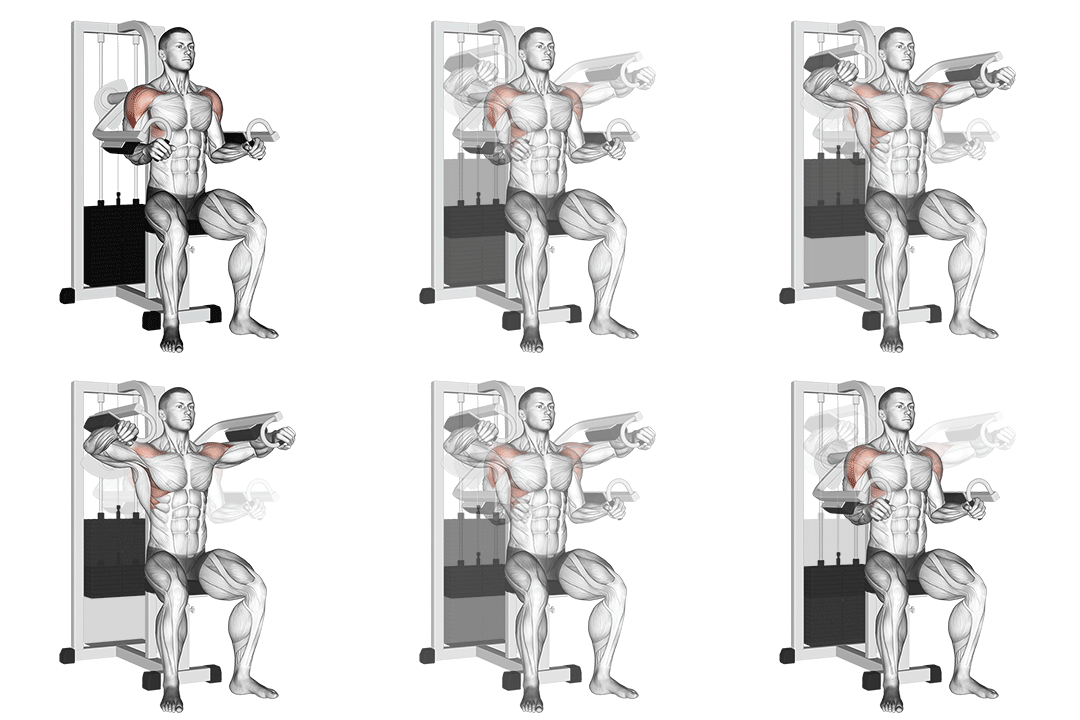
8. Lever Lateral Raise
53% match- Delts
- Lever
- Beginner
- Isolation
How to perform this exercise
- Adjust the seat height and position yourself on the machine with your back against the pad.
- Grasp the handles with an overhand grip and keep your arms straight.
- Exhale and raise your arms out to the sides until they are parallel to the floor.
- Pause for a moment at the top, then inhale and slowly lower your arms back to the starting position.
- Repeat for the desired number of repetitions.
Sets and reps: 3 sets of 10 to 15 reps.
Why this matches
- Primary muscle: delts, not shoulders
- Equipment: a machine, not bodyweight only
- Body position: standing, the same as the Upward Stretch
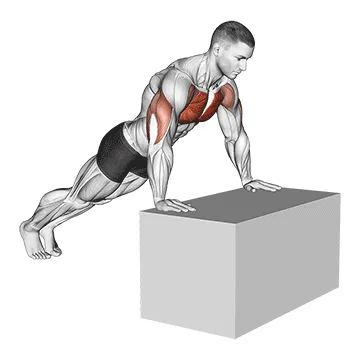
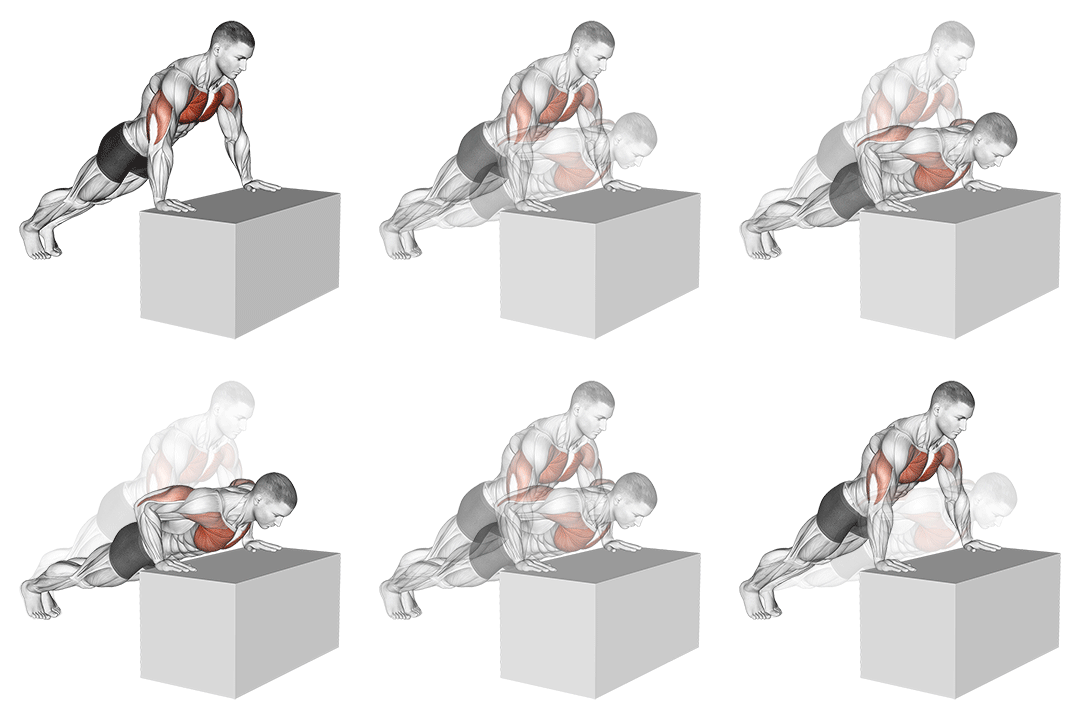
9. Incline Push-up (On Box)
53% match- Pectorals
- Bodyweight
- Beginner
- Compound
How to perform this exercise
- Place your hands on the edge of a box or elevated surface, slightly wider than shoulder-width apart.
- Extend your legs behind you, resting on the balls of your feet, creating a straight line from your head to your heels.
- Lower your chest towards the box by bending your elbows, keeping your body in a straight line.
- Pause for a moment at the bottom, then push yourself back up to the starting position by straightening your arms.
- Repeat for the desired number of repetitions.
Sets and reps: 3 sets of 8 to 12 reps, and add reps before you add load.
Why this matches
- Primary muscle: pectorals, not shoulders
- Equipment: bodyweight only, the same as the Upward Stretch
- Body position: standing, the same as the Upward Stretch
- Balance: harder to stay steady on than the Upward Stretch
Progression
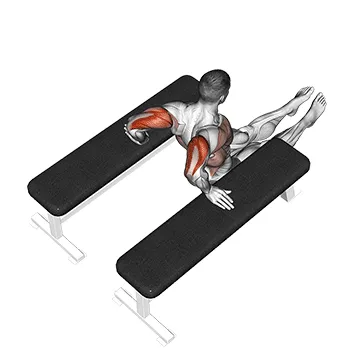
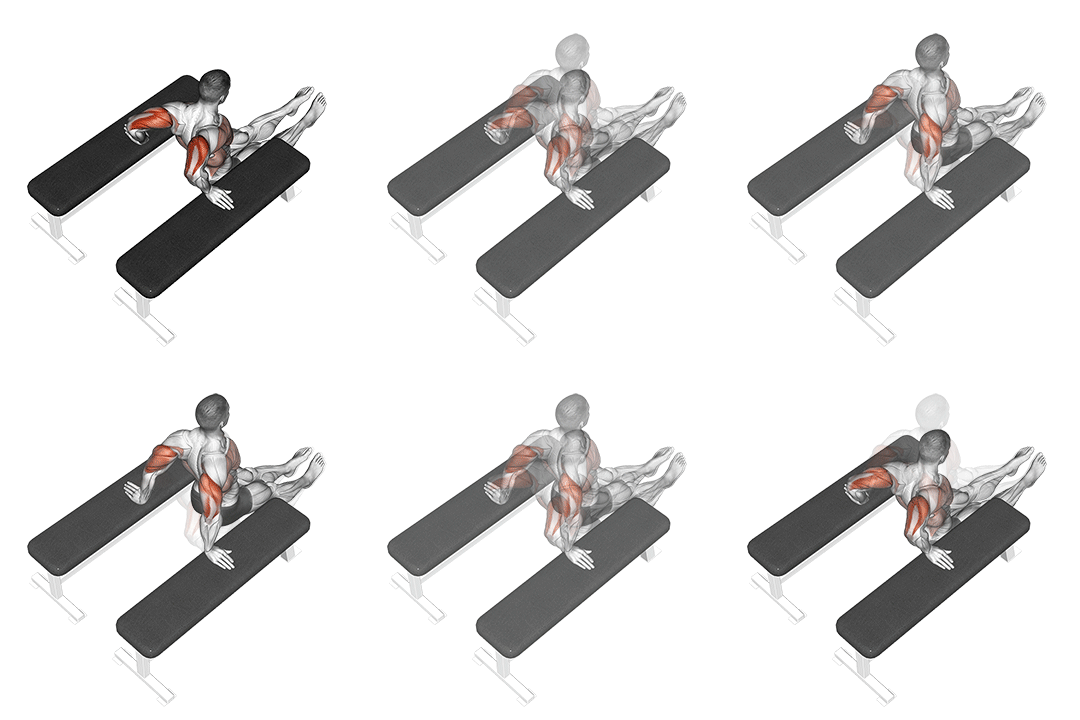
10. Triceps Dip (Between Benches)
51% match- Triceps
- Bodyweight
- Intermediate
- Compound
How to perform this exercise
- Sit on a bench with your hands gripping the edge of the bench, fingers pointing forward.
- Slide your butt off the bench, supporting your weight with your hands.
- Bend your elbows and lower your body towards the ground, keeping your back close to the bench.
- Pause for a moment at the bottom, then push yourself back up to the starting position.
- Repeat for the desired number of repetitions.
Sets and reps: 3 or 4 sets of 6 to 10 reps.
Why this matches
- Primary muscle: triceps, not shoulders
- Equipment: bodyweight only, the same as the Upward Stretch
- Body position: standing, the same as the Upward Stretch
- Balance: harder to stay steady on than the Upward Stretch
Upward Stretch FAQ
What muscles does Upward Stretch work?
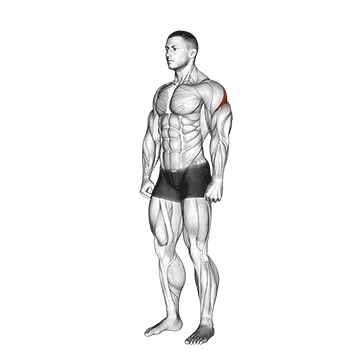
Upward Stretch primarily targets the deltoids, especially the anterior and medial heads, while engaging the upper trapezius, serratus anterior, and rotator cuff for stabilization. The movement depends on scapular upward rotation and glenohumeral elevation; you should feel deltoid and serratus activation as you lift.
What is the best bodyweight alternative to Upward Stretch?
A scapular wall slide is the top bodyweight alternative because it emphasizes scapulothoracic upward rotation and serratus anterior activation with minimal glenohumeral compression. Cue: press forearms into the wall, slide overhead keeping ribs down and shoulders away from ears to feel the serratus and mid-traps.
Find Alternatives for Any Exercise
Search the exercise database and filter the ranked substitutes by the equipment you own.
Similarity scores compare exercise metadata such as movement pattern, muscles, equipment and body position. They are not a safety rating or a check that you own the equipment. Learn about our methodology