

10 Best Lever Incline Chest Press Alternatives for Home Gyms
The Lever Incline Chest Press is done lying on your back with a lever machine. Ranked closest by our scoring: the Leverage Incline Chest Press, the Lever Decline Chest Press and the Leverage Decline Chest Press.
Updated Ranked by our 12-factor similarity model How it works
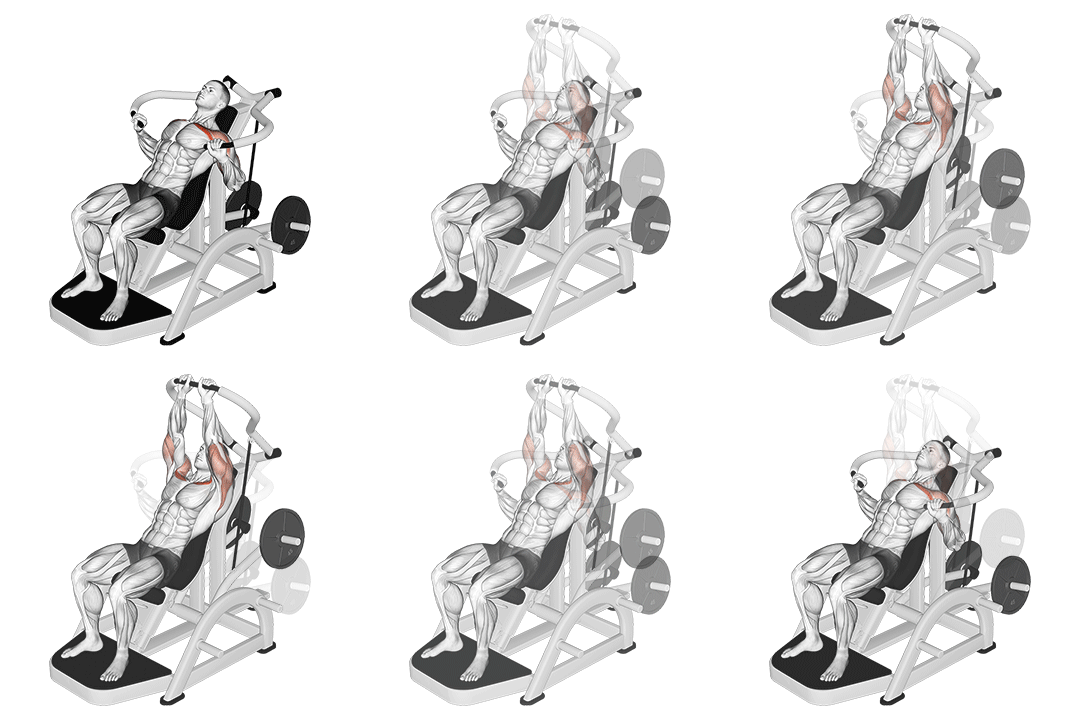
Original Exercise: Lever Incline Chest Press
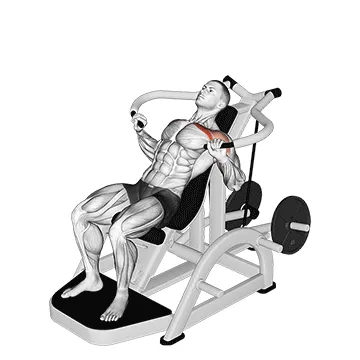
- Primary muscle
- Pectorals
- Equipment
- Lever
- Difficulty
- Intermediate
- Type
- Compound
Secondary muscles: Triceps, Shoulders
How to perform Lever Incline Chest Press
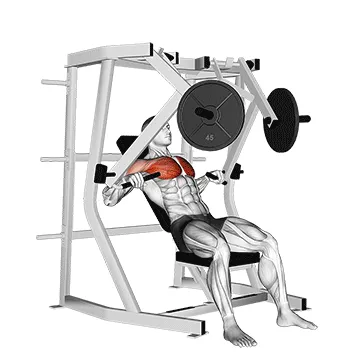
- Adjust the seat height and backrest angle on the leverage machine to a comfortable position.
- Sit on the machine with your back against the backrest and your feet flat on the floor.
- Grasp the handles with an overhand grip and position your hands slightly wider than shoulder-width apart.
- Push the handles forward and away from your body until your arms are fully extended, but without locking your elbows.
- Pause for a moment at the fully extended position, then slowly bend your elbows and lower the handles back towards your chest.
- Repeat for the desired number of repetitions.
Ranked Lever Incline Chest Press Alternatives
10 substitutes, ranked by how closely each one matches the Lever Incline Chest Press on movement pattern, muscles worked, equipment and body position. The higher the score, the less you change. Open "How to perform this exercise" on a card for the steps; every card title links to that exercise's own alternatives page.
Best match 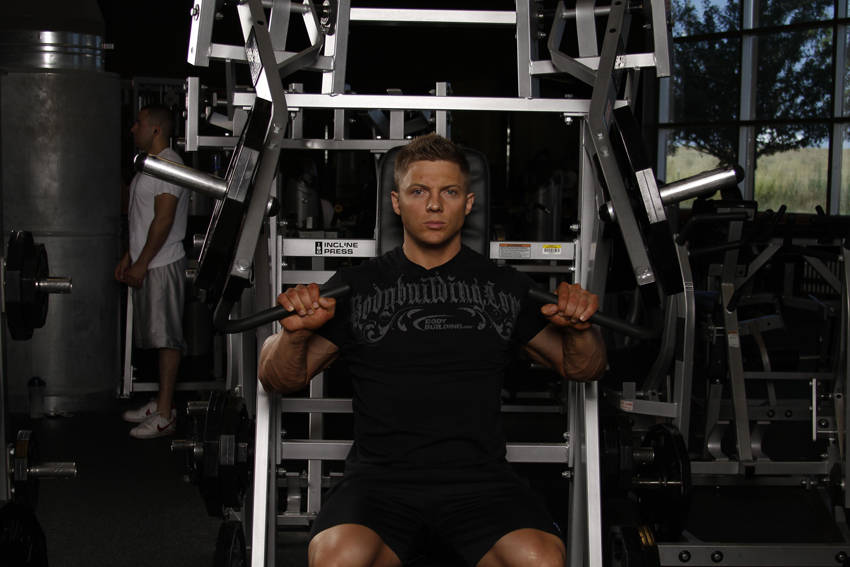
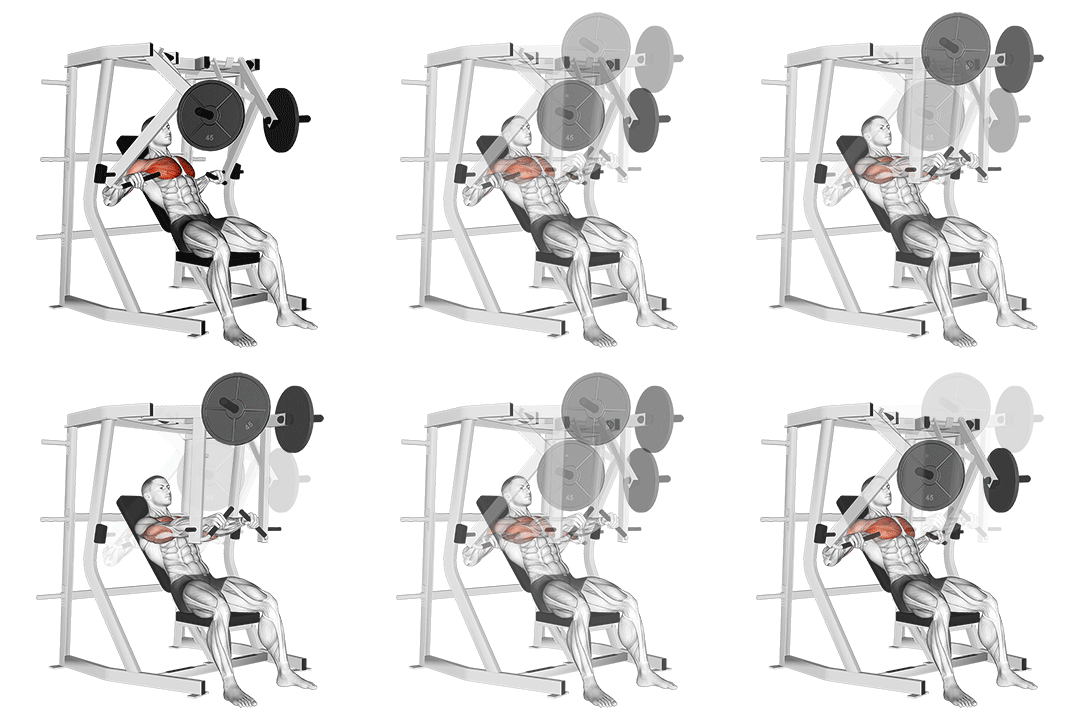
1. Leverage Incline Chest Press
99% match- Pectorals
- Machine
- Intermediate
- Compound
A good swap when you have a machine to work with, and it still works the pectorals.
How to perform this exercise
- Load an appropriate weight onto the pins and adjust the seat for your height. The handles should be near the top of the pectorals at the beginning of the motion. Your chest and head should be up and your shoulder blades retracted. This will be your starting position.
- Press the handles forward by extending through the elbow.
- After a brief pause at the top, return the weight just above the start position, keeping tension on the muscles by not returning the weight to the stops until the set is complete.
Sets and reps: 3 or 4 sets of 6 to 10 reps.
Why this matches
- Movement: incline press, the same as the Lever Incline Chest Press
- Primary muscle: pectorals, the same as the Lever Incline Chest Press
- Equipment: a machine, the same as the Lever Incline Chest Press
- Body position: lying on your back, the same as the Lever Incline Chest Press
2. Lever Decline Chest Press
90% match- Pectorals
- Lever
- Intermediate
- Compound
It uses the same equipment and still works the pectorals.
How to perform this exercise
- Adjust the seat height and backrest of the leverage machine to a comfortable position.
- Sit on the machine with your back against the backrest and your feet flat on the floor.
- Grasp the handles with an overhand grip and position your hands slightly wider than shoulder-width apart.
- Push the handles forward and away from your body until your arms are fully extended.
- Slowly lower the handles back towards your chest, keeping your elbows slightly bent.
- Pause for a moment at the bottom, then push the handles back to the starting position.
- Repeat for the desired number of repetitions.
Sets and reps: 3 or 4 sets of 6 to 10 reps.
Why this matches
- Primary muscle: pectorals, the same as the Lever Incline Chest Press
- Equipment: a machine, the same as the Lever Incline Chest Press
- Body position: lying on your back, the same as the Lever Incline Chest Press
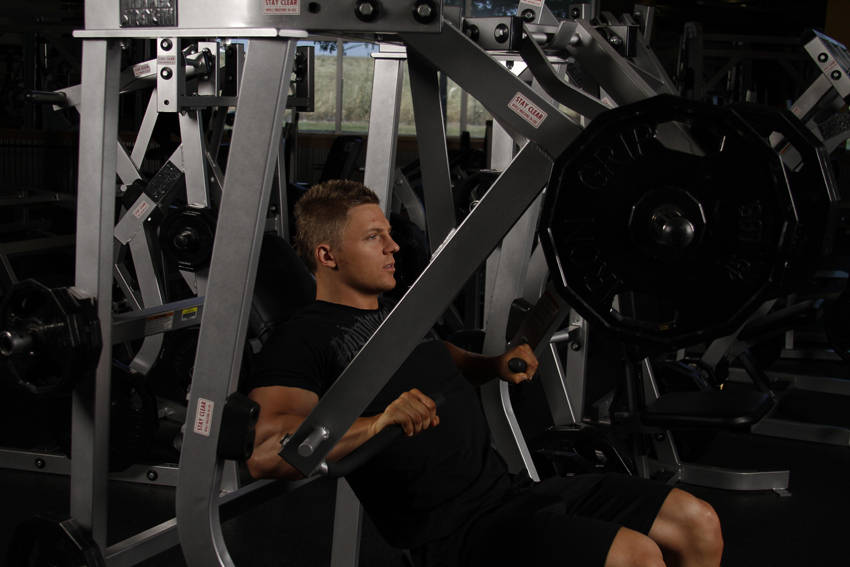
3. Leverage Decline Chest Press
90% match- Pectorals
- Machine
- Beginner
- Compound
How to perform this exercise
- Load an appropriate weight onto the pins and adjust the seat for your height. The handles should be near the bottom of the pectorals at the beginning of the motion. Your chest and head should be up and your shoulder blades retracted. This will be your starting position.
- Press the handles forward by extending through the elbow.
- After a brief pause at the top, return the weight just above the start position, keeping tension on the muscles by not returning the weight to the stops until the set is complete.
Sets and reps: 3 or 4 sets of 6 to 10 reps.
Why this matches
- Primary muscle: pectorals, the same as the Lever Incline Chest Press
- Equipment: a machine, the same as the Lever Incline Chest Press
- Body position: lying on your back, the same as the Lever Incline Chest Press
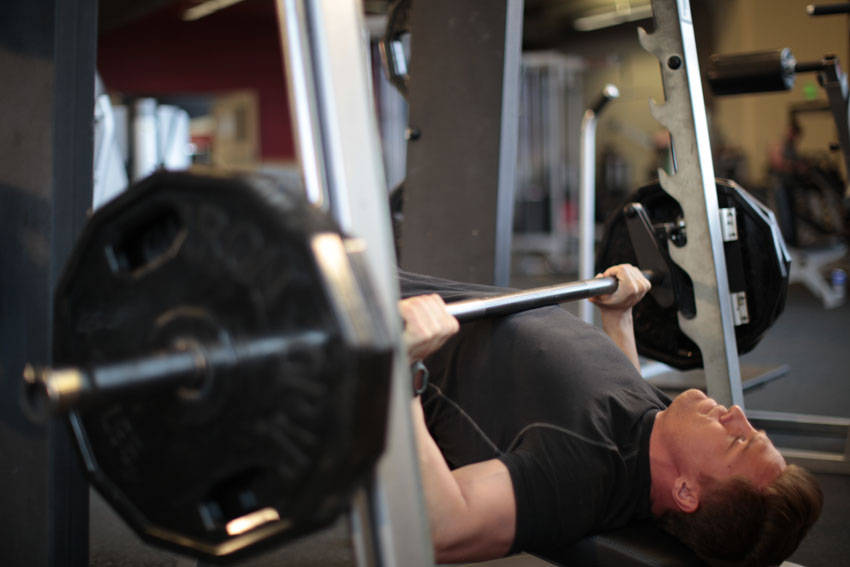
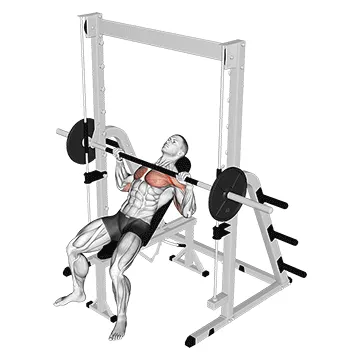
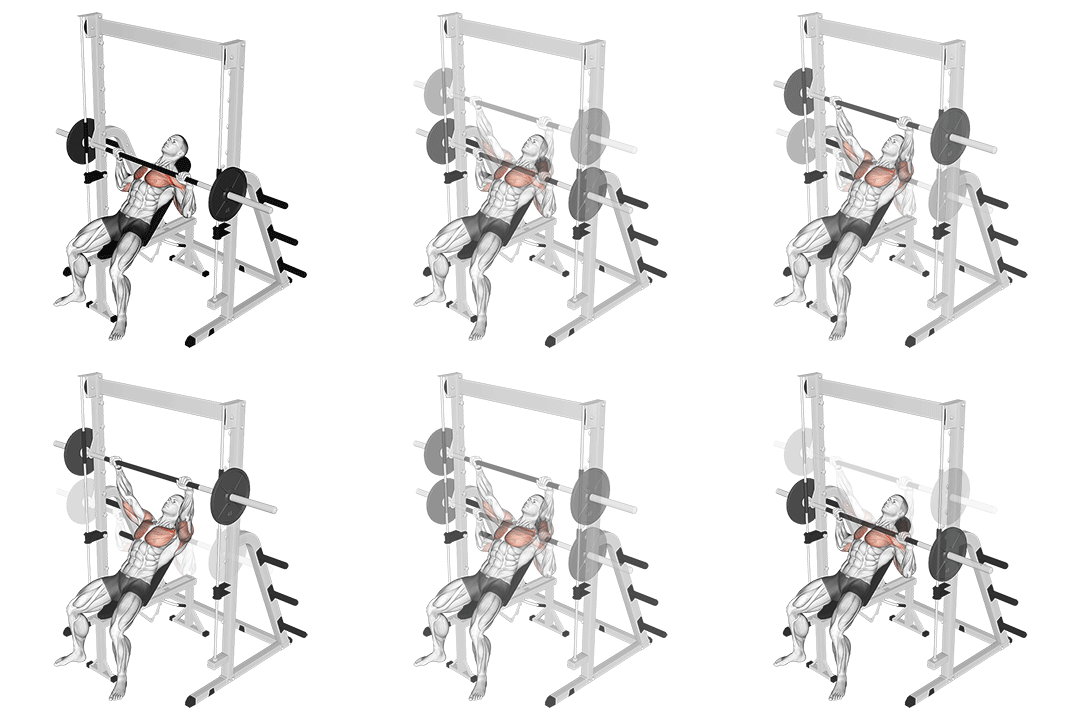
4. Smith Machine Decline Press
89% match- Pectorals
- Smith-machine
- Intermediate
- Compound
A good swap when you have a Smith machine to work with, and it still works the pectorals.
How to perform this exercise
- Position a decline bench in the rack so that the bar will be above your chest. Load an appropriate weight and take your place on the bench.
- Rotate the bar to unhook it from the rack and fully extend your arms. Your back should be slightly arched and your shoulder blades retracted. This will be your starting position.
- Begin the movement by flexing your arms, lowering the bar to your chest.
- Pause briefly, and then extend your arms to push the weight back to the starting position.
- After completing the desired number of repetitions, rotate the bar to rack the weight.
Sets and reps: 3 or 4 sets of 6 to 10 reps.
Why this matches
- Primary muscle: pectorals, the same as the Lever Incline Chest Press
- Equipment: a machine, the same as the Lever Incline Chest Press
- Body position: lying on your back, the same as the Lever Incline Chest Press
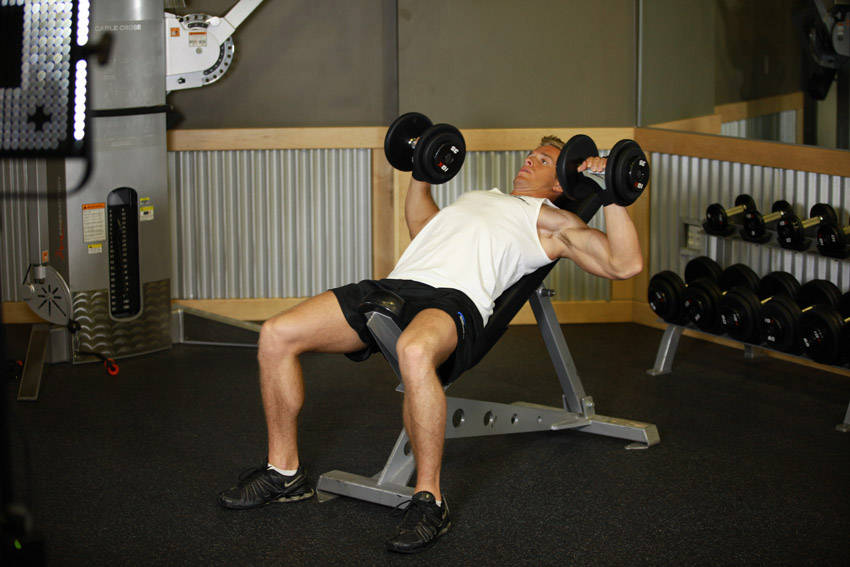
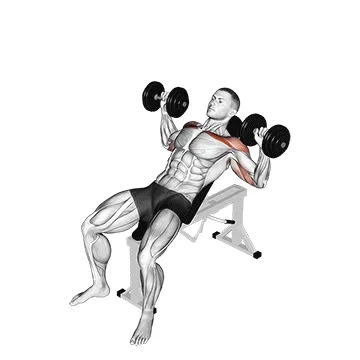
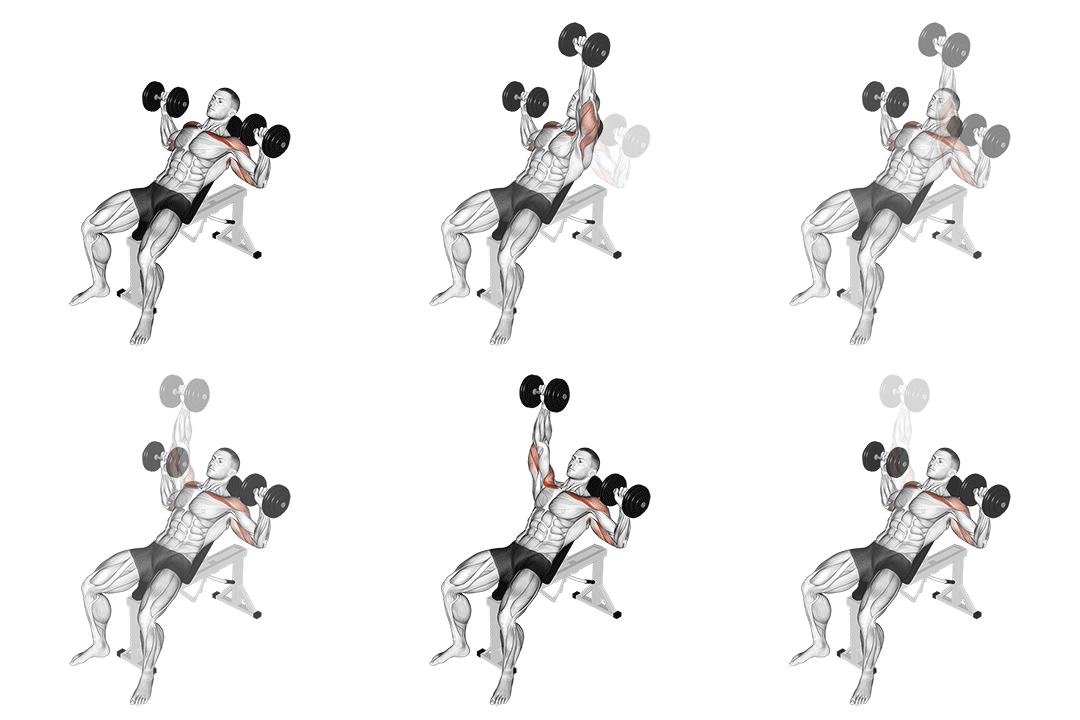
5. Incline Dumbbell Press
85% match- Pectorals
- Dumbbell
- Intermediate
- Compound
A good swap when you have dumbbells to work with, and it still works the pectorals.
How to perform this exercise
- Lie back on an incline bench with a dumbbell in each hand atop your thighs. The palms of your hands will be facing each other.
- Then, using your thighs to help push the dumbbells up, lift the dumbbells one at a time so that you can hold them at shoulder width.
- Once you have the dumbbells raised to shoulder width, rotate your wrists forward so that the palms of your hands are facing away from you. This will be your starting position.
- Be sure to keep full control of the dumbbells at all times. Then breathe out and push the dumbbells up with your chest.
- Lock your arms at the top, hold for a second, and then start slowly lowering the weight. Tip Ideally, lowering the weights should take about twice as long as raising them.
- Repeat the movement for the prescribed amount of repetitions.
- When you are done, place the dumbbells back on your thighs and then on the floor. This is the safest manner to release the dumbbells.
Sets and reps: 3 or 4 sets of 6 to 10 reps.
Why this matches
- Movement: incline press, the same as the Lever Incline Chest Press
- Primary muscle: pectorals, the same as the Lever Incline Chest Press
- Equipment: free weights, not a machine
- Body position: lying on your back, the same as the Lever Incline Chest Press
- Balance: harder to stay steady on than the Lever Incline Chest Press
6. Smith Incline Bench Press
84% match- Pectorals
- Smith-machine
- Intermediate
- Compound
How to perform this exercise
- Adjust the bench to a 30-45 degree incline.
- Sit on the bench with your back flat against the pad and feet firmly on the ground.
- Grasp the barbell with an overhand grip slightly wider than shoulder-width apart.
- Unrack the barbell and lower it slowly towards your upper chest, keeping your elbows slightly tucked in.
- Pause for a moment at the bottom, then push the barbell back up to the starting position, fully extending your arms.
- Repeat for the desired number of repetitions.
Sets and reps: 3 or 4 sets of 6 to 10 reps.
Why this matches
- Primary muscle: pectorals, the same as the Lever Incline Chest Press
- Equipment: a machine, the same as the Lever Incline Chest Press
- Body position: lying on your back, the same as the Lever Incline Chest Press
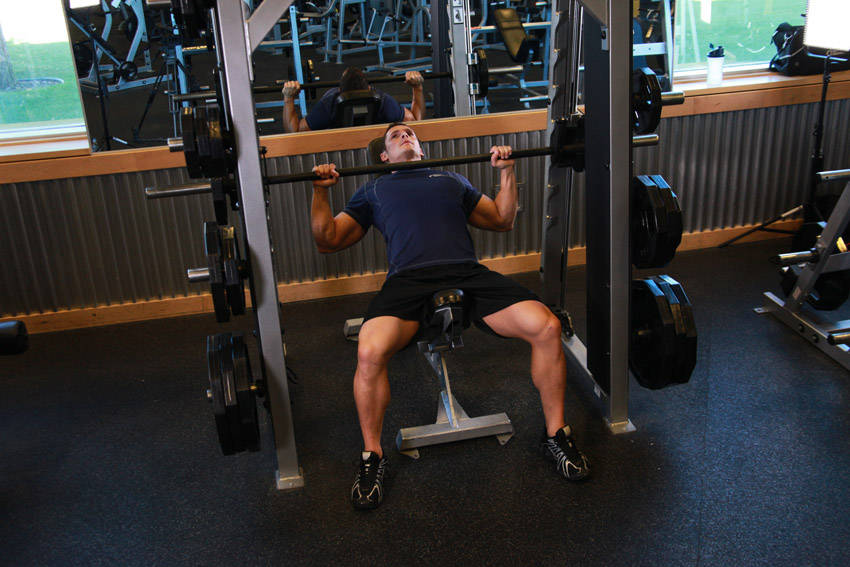
7. Smith Machine Incline Bench Press
84% match- Pectorals
- Machine
- Intermediate
- Compound
How to perform this exercise
- Place an incline bench underneath the smith machine. Place the barbell at a height that you can reach when lying down and your arms are almost fully extended. Once the weight you need is selected, lie down on the incline bench and make sure your upper chest is aligned with the barbell. Using a pronated grip (palms facing forward) that is wider than shoulder width, unlock the bar from the rack and hold it straight over you with your arms locked. This will be your starting position.
- As you breathe in, come down slowly until you feel the bar on your upper chest.
- After a second pause, bring the bar back to the starting position as you breathe out and push the bar using your chest muscles. Lock your arms in the contracted position, hold for a second and then start coming down slowly again. Tip: It should take at least twice as long to go down than to come up.
- Repeat the movement for the prescribed amount of repetitions.
- When you are done, place the bar back in the rack.
Sets and reps: 3 or 4 sets of 6 to 10 reps.
Why this matches
- Primary muscle: pectorals, the same as the Lever Incline Chest Press
- Equipment: a machine, the same as the Lever Incline Chest Press
- Body position: lying on your back, the same as the Lever Incline Chest Press
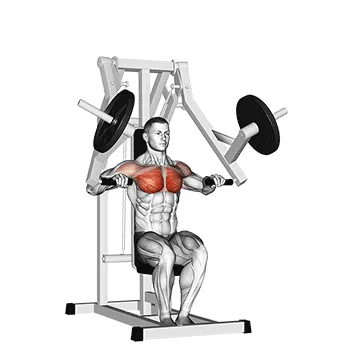
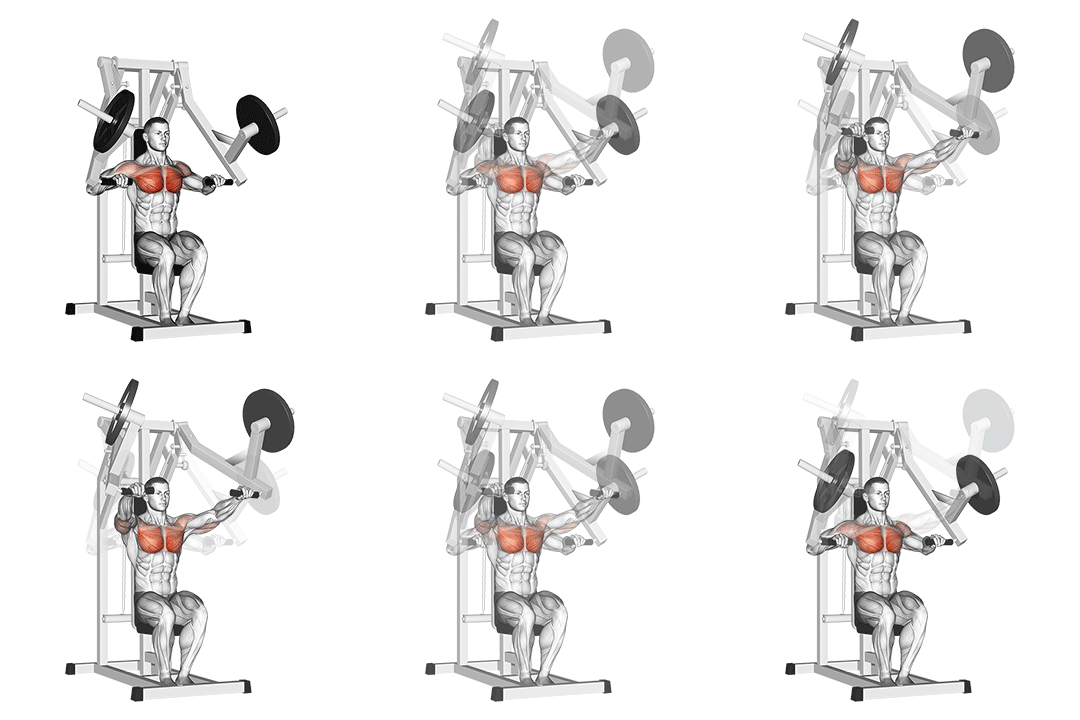
8. Lever Chest Press
82% match- Pectorals
- Lever
- Beginner
- Compound
How to perform this exercise
- Adjust the seat height and position yourself on the machine with your back flat against the pad.
- Grasp the handles with an overhand grip and position your elbows at a 90-degree angle.
- Push the handles forward until your arms are fully extended, exhaling during the movement.
- Pause briefly at the end of the movement, then slowly return to the starting position, inhaling as you do so.
- Repeat for the desired number of repetitions.
Sets and reps: 3 or 4 sets of 6 to 10 reps.
Why this matches
- Primary muscle: pectorals, the same as the Lever Incline Chest Press
- Equipment: a machine, the same as the Lever Incline Chest Press
- Body position: seated, not lying on your back
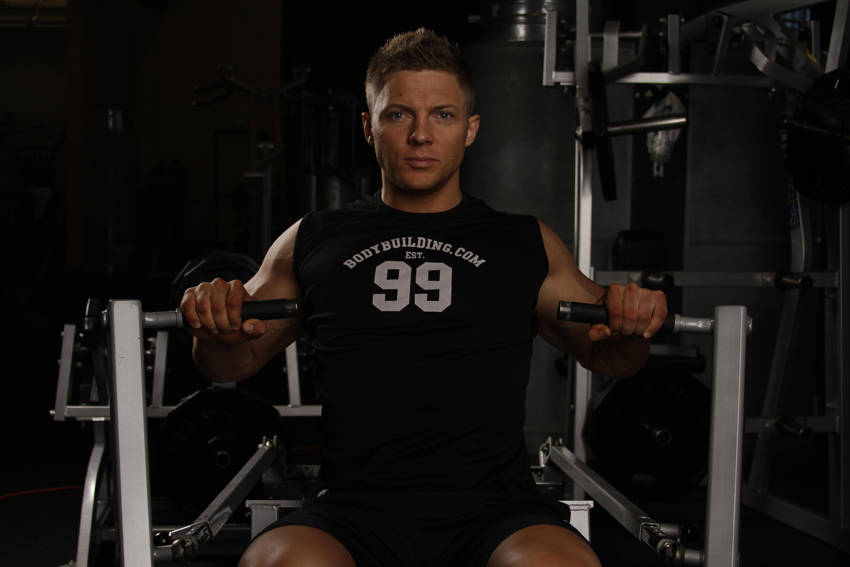
9. Leverage Chest Press
82% match- Pectorals
- Machine
- Beginner
- Compound
How to perform this exercise
- Load an appropriate weight onto the pins and adjust the seat for your height. The handles should be near the bottom or middle of the pectorals at the beginning of the motion.
- Your chest and head should be up and your shoulder blades retracted. This will be your starting position.
- Press the handles forward by extending through the elbow.
- After a brief pause at the top, return the weight just above the start position, keeping tension on the muscles by not returning the weight to the stops until the set is complete.
Sets and reps: 3 or 4 sets of 6 to 10 reps.
Why this matches
- Primary muscle: pectorals, the same as the Lever Incline Chest Press
- Equipment: a machine, the same as the Lever Incline Chest Press
- Body position: seated, not lying on your back
10. Dumbbell Incline Alternate Press
80% match- Pectorals
- Dumbbell
- Intermediate
- Compound
How to perform this exercise
- Sit on an incline bench with a dumbbell in each hand, resting on your thighs.
- Lean back on the bench and use your thighs to help raise the dumbbells to shoulder height, palms facing forward.
- Once at shoulder height, rotate your wrists so that the palms of your hands are facing forward.
- Push the dumbbells up with your chest and shoulders, extending your arms fully.
- Lower the dumbbells back down to the starting position, keeping your elbows slightly bent.
- Repeat for the desired number of repetitions, alternating arms.
Sets and reps: 3 or 4 sets of 6 to 10 reps on each side.
Why this matches
- Movement: incline press, the same as the Lever Incline Chest Press
- Primary muscle: pectorals, the same as the Lever Incline Chest Press
- Equipment: free weights, not a machine
- Body position: lying on your back, the same as the Lever Incline Chest Press
- Balance: harder to stay steady on than the Lever Incline Chest Press
Why You Might Need a Lever Incline Chest Press Alternative
Lifters swap the Lever Incline Chest Press V. 2 for several reasons: machine unavailability, shoulder pain from a fixed arc, or the need for unilateral correction and variety. Fixed-path levers can increase shoulder torque; switching to dumbbells or cables lets you rotate the wrist and reduce impingement, keep elbows at roughly 45 degrees to lower shoulder stress. Equipment limits force bodyweight or cable options, which change stability demands and continuous tension. Goal-specific choices matter too: barbell incline best serves maximal strength, while dumbbells and cables increase range of motion and pec stretch, preserving clavicular head activation while altering recruitment patterns.
Lever Incline Chest Press FAQ
What muscles does Lever Incline Chest Press V. 2 work?
It primarily targets the pectoralis major, especially the clavicular (upper) head, with secondary work from the anterior deltoid and triceps. The inclined pressing vector shifts load upward; drive through the palms and finish with a deliberate pec squeeze to maximize upper-pec activation.
Can I build muscle without doing Lever Incline Chest Press V. 2?
Yes. Use progressive overload through incline dumbbell or barbell presses, cable flyes, or high-quality bodyweight work while increasing load, reps, or time under tension. Emphasize full range of motion, controlled eccentrics, and deliberate pec contraction to ensure consistent upper-pectoral stimulation.
Find Alternatives for Any Exercise
Search the exercise database and filter the ranked substitutes by the equipment you own.
Similarity scores compare exercise metadata such as movement pattern, muscles, equipment and body position. They are not a safety rating or a check that you own the equipment. Learn about our methodology